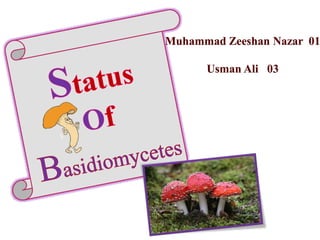
Muhammad Zeeshan Nazar 01
Usman Ali 03
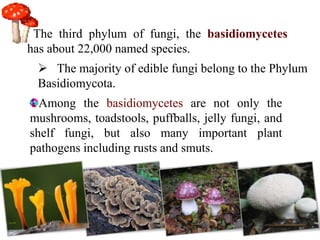
Among the basidiomycetes are not only the
mushrooms, toadstools, puffballs, jelly fungi, and
shelf fungi, but also many important plant
pathogens including rusts and smuts.
The third phylum of fungi, the basidiomycetes
has about 22,000 named species.
 The majority of edible fungi belong to the Phylum
Basidiomycota.
These mushroom-producing basidiomycetes are
sometimes referred to as "gill fungi" because of
the presence of gill-like structures on the underside
of the cap. The "gills" are actually compacted
hyphae on which the basidia are borne.
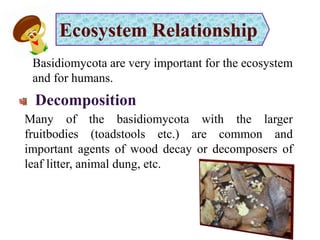
Many of the basidiomycota with the larger
fruitbodies (toadstools etc.) are common and
important agents of wood decay or decomposers of
leaf litter, animal dung, etc.
Basidiomycota are very important for the ecosystem
and for humans.
Decomposition
Ecosystem Relationship
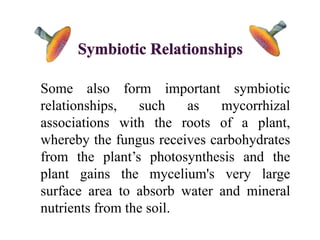
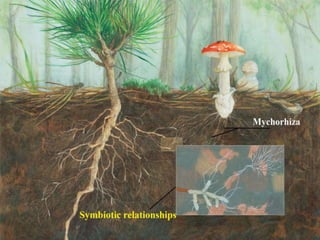
Some also form important symbiotic
relationships, such as mycorrhizal
associations with the roots of a plant,
whereby the fungus receives carbohydrates
from the plant’s photosynthesis and the
plant gains the mycelium's very large
surface area to absorb water and mineral
nutrients from the soil.
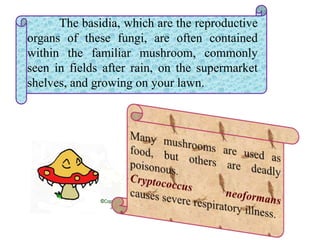
The basidia, which are the reproductive
organs of these fungi, are often contained
within the familiar mushroom, commonly
seen in fields after rain, on the supermarket
shelves, and growing on your lawn.
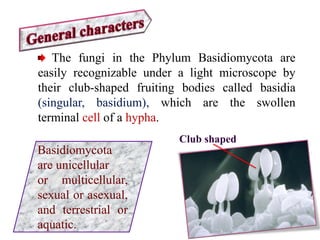
Basidiomycota
are unicellular
or multicellular,
sexual or asexual,
and terrestrial or
aquatic.
The fungi in the Phylum Basidiomycota are
easily recognizable under a light microscope by
their club-shaped fruiting bodies called basidia
(singular, basidium), which are the swollen
terminal cell of a hypha.
Club shaped
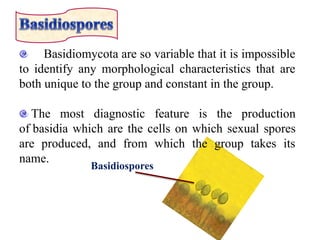
Basidiospores
Basidiomycota are so variable that it is impossible
to identify any morphological characteristics that are
both unique to the group and constant in the group.
The most diagnostic feature is the production
of basidia which are the cells on which sexual spores
are produced, and from which the group takes its
name.
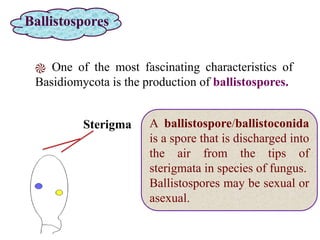
֎ One of the most fascinating characteristics of
Basidiomycota is the production of ballistospores.
Ballistospores
A ballistospore/ballistoconida
is a spore that is discharged into
the air from the tips of
sterigmata in species of fungus.
Ballistospores may be sexual or
asexual.
Sterigma
Clamp connections
Not all Basidiomycetes produce these, but when a
fungus does it will always be a basidiomycete.
A clamp connection is a structure formed by
growing hyphal cells of certain fungi to ensure each cell,
or segment of hypha separated by septa receives a set of
different nuclei, which are obtained through mating of
hyphae.
It is used to create genetic variation within the hypha.
As a group, the basidiomycota
have some highly characteristic
features, which separate them
from other fungi. They are the
most evolutionarily advanced
fungi, and even their hyphae
have a dinstinctly "cellular"
composition.
Basidiomycetes are named for their characteristic
sexual reproductive structure, the basidium.
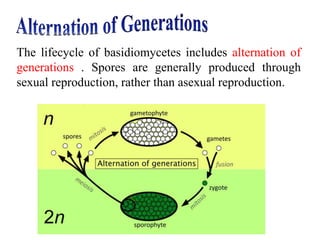
The lifecycle of basidiomycetes includes alternation of
generations . Spores are generally produced through
sexual reproduction, rather than asexual reproduction.
2 Multicellular stages alternate
Sporophyte represents the diploid generation (2n).
 Produce spores by meiosis.
 A spore undergoes mitosis to become a
gametophyte.
Gametophyte represents haploid generation (n).
 Produce gametes.
 A sperm and egg fuse, forming a diploid zygote
that undergoes mitosis and become the sporophyte.
Alternation of generations ???
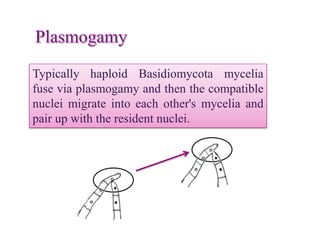
Typically haploid Basidiomycota mycelia
fuse via plasmogamy and then the compatible
nuclei migrate into each other's mycelia and
pair up with the resident nuclei.
In the basidium, nuclei of
two different mating strains
fuse (karyogamy), giving
rise to a diploid zygote that
then undergoes meiosis.
This is the dikaryotic stage
of the basidiomyces lifecyle
and it is the dominant stage.
Karyogamy
Generally in basidiomycetes,
Karyogamy occurs by clamp
connection.
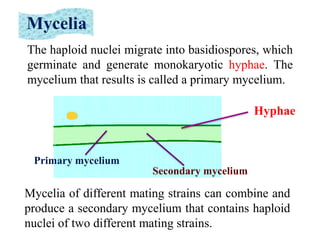
The haploid nuclei migrate into basidiospores, which
germinate and generate monokaryotic hyphae. The
mycelium that results is called a primary mycelium.
Mycelia of different mating strains can combine and
produce a secondary mycelium that contains haploid
nuclei of two different mating strains.
Mycelia
Primary mycelium
Secondary mycelium
Hyphae
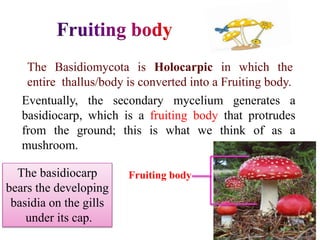
Eventually, the secondary mycelium generates a
basidiocarp, which is a fruiting body that protrudes
from the ground; this is what we think of as a
mushroom.
Fruiting body
The Basidiomycota is Holocarpic in which the
entire thallus/body is converted into a Fruiting body.
The basidiocarp
bears the developing
basidia on the gills
under its cap.
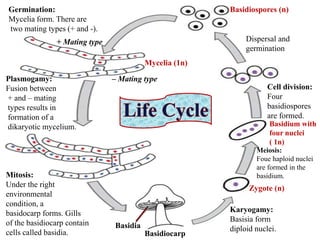
Plasmogamy:
Fusion between
+ and – mating
types results in
formation of a
dikaryotic mycelium.
Mitosis:
Under the right
environmental
condition, a
basidocarp forms. Gills
of the basidiocarp contain
cells called basidia.
Cell division:
Four
basidiospores
are formed.
Basidium with
four nuclei
( 1n)
Meiosis:
Foue haploid nuclei
are formed in the
basidium.
Germination:
Mycelia form. There are
two mating types (+ and -).
+ Mating type
– Mating type
Mycelia (1n)
Karyogamy:
Basisia form
diploid nuclei.
Zygote (n)
Dispersal and
germination
Basidiospores (n)
Basidia
Basidiocarp
Basidiomycetes

Basidiomycetes

  • 2.
    Muhammad Zeeshan Nazar01 Usman Ali 03
  • 3.
    Among the basidiomycetesare not only the mushrooms, toadstools, puffballs, jelly fungi, and shelf fungi, but also many important plant pathogens including rusts and smuts. The third phylum of fungi, the basidiomycetes has about 22,000 named species.  The majority of edible fungi belong to the Phylum Basidiomycota.
  • 4.
    These mushroom-producing basidiomycetesare sometimes referred to as "gill fungi" because of the presence of gill-like structures on the underside of the cap. The "gills" are actually compacted hyphae on which the basidia are borne.
  • 5.
    Many of thebasidiomycota with the larger fruitbodies (toadstools etc.) are common and important agents of wood decay or decomposers of leaf litter, animal dung, etc. Basidiomycota are very important for the ecosystem and for humans. Decomposition Ecosystem Relationship
  • 6.
    Some also formimportant symbiotic relationships, such as mycorrhizal associations with the roots of a plant, whereby the fungus receives carbohydrates from the plant’s photosynthesis and the plant gains the mycelium's very large surface area to absorb water and mineral nutrients from the soil.
  • 8.
    The basidia, whichare the reproductive organs of these fungi, are often contained within the familiar mushroom, commonly seen in fields after rain, on the supermarket shelves, and growing on your lawn.
  • 9.
    Basidiomycota are unicellular or multicellular, sexualor asexual, and terrestrial or aquatic. The fungi in the Phylum Basidiomycota are easily recognizable under a light microscope by their club-shaped fruiting bodies called basidia (singular, basidium), which are the swollen terminal cell of a hypha. Club shaped
  • 10.
    Basidiospores Basidiomycota are sovariable that it is impossible to identify any morphological characteristics that are both unique to the group and constant in the group. The most diagnostic feature is the production of basidia which are the cells on which sexual spores are produced, and from which the group takes its name.
  • 11.
    ֎ One ofthe most fascinating characteristics of Basidiomycota is the production of ballistospores. Ballistospores A ballistospore/ballistoconida is a spore that is discharged into the air from the tips of sterigmata in species of fungus. Ballistospores may be sexual or asexual. Sterigma
  • 12.
    Clamp connections Not allBasidiomycetes produce these, but when a fungus does it will always be a basidiomycete. A clamp connection is a structure formed by growing hyphal cells of certain fungi to ensure each cell, or segment of hypha separated by septa receives a set of different nuclei, which are obtained through mating of hyphae. It is used to create genetic variation within the hypha.
  • 14.
    As a group,the basidiomycota have some highly characteristic features, which separate them from other fungi. They are the most evolutionarily advanced fungi, and even their hyphae have a dinstinctly "cellular" composition. Basidiomycetes are named for their characteristic sexual reproductive structure, the basidium.
  • 15.
    The lifecycle ofbasidiomycetes includes alternation of generations . Spores are generally produced through sexual reproduction, rather than asexual reproduction.
  • 16.
    2 Multicellular stagesalternate Sporophyte represents the diploid generation (2n).  Produce spores by meiosis.  A spore undergoes mitosis to become a gametophyte. Gametophyte represents haploid generation (n).  Produce gametes.  A sperm and egg fuse, forming a diploid zygote that undergoes mitosis and become the sporophyte. Alternation of generations ???
  • 17.
    Typically haploid Basidiomycotamycelia fuse via plasmogamy and then the compatible nuclei migrate into each other's mycelia and pair up with the resident nuclei.
  • 18.
    In the basidium,nuclei of two different mating strains fuse (karyogamy), giving rise to a diploid zygote that then undergoes meiosis. This is the dikaryotic stage of the basidiomyces lifecyle and it is the dominant stage. Karyogamy Generally in basidiomycetes, Karyogamy occurs by clamp connection.
  • 19.
    The haploid nucleimigrate into basidiospores, which germinate and generate monokaryotic hyphae. The mycelium that results is called a primary mycelium. Mycelia of different mating strains can combine and produce a secondary mycelium that contains haploid nuclei of two different mating strains. Mycelia Primary mycelium Secondary mycelium Hyphae
  • 20.
    Eventually, the secondarymycelium generates a basidiocarp, which is a fruiting body that protrudes from the ground; this is what we think of as a mushroom. Fruiting body The Basidiomycota is Holocarpic in which the entire thallus/body is converted into a Fruiting body. The basidiocarp bears the developing basidia on the gills under its cap.
  • 21.
    Plasmogamy: Fusion between + and– mating types results in formation of a dikaryotic mycelium. Mitosis: Under the right environmental condition, a basidocarp forms. Gills of the basidiocarp contain cells called basidia. Cell division: Four basidiospores are formed. Basidium with four nuclei ( 1n) Meiosis: Foue haploid nuclei are formed in the basidium. Germination: Mycelia form. There are two mating types (+ and -). + Mating type – Mating type Mycelia (1n) Karyogamy: Basisia form diploid nuclei. Zygote (n) Dispersal and germination Basidiospores (n) Basidia Basidiocarp