PRESENTED BY : AQIL QURESHI
UNIVERSITY OF EDUCATION TOWNSHIP
CAMPUS
 Introduction
 Structure of Lichens
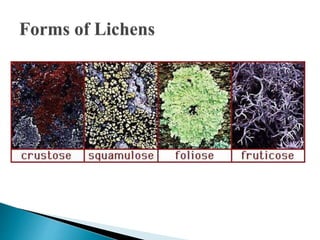
 Forms of Lichens
 Classification of Lichens
 Species and Common Naming of Lichens
 Vegetative Reproduction
 Asexual and Sexual Reproduction
 Economic Importance of Lichens
 Order : Lechano Rales
 Kingdom : Fungi
 Genus : Lichens
 The intimate symbiotic association of fungi and algae is
called lichens.
 The algae of lichens mostly belong to chlorophyta and
cynobacteria.
 Lichens are abundant growing on bark, leaves and
mosses.
 The fungus is called mycobiont. The
photosynthesizing organism is called a photobiont.
 The part of lichen that is not involved in reproduction is
called Thallus.
 Thallus is composed of following parts:
 Upper Cortex
 Algal Zone
 Medulla
 Lower Cortex
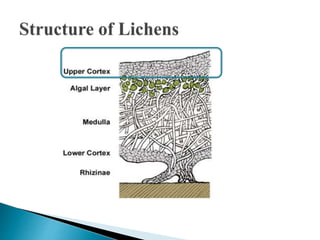
 Upper Cortex: Cortex is a protective skin of densely
packed fungal filaments. Upper cortex present on the
top side.
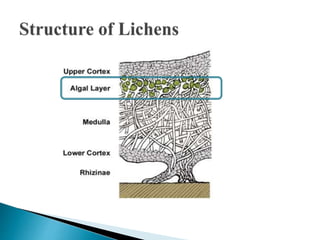
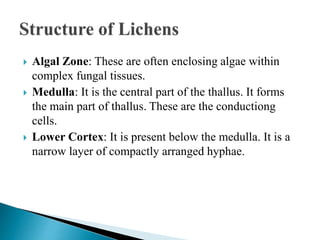
 Algal Zone: These are often enclosing algae within
complex fungal tissues.
 Algal Zone: These are often enclosing algae within
complex fungal tissues.
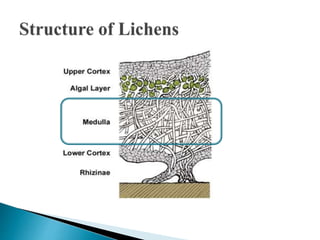
 Medulla: It is the central part of the thallus. It forms
the main part of thallus. These are the conductiong
cells.
 Algal Zone: These are often enclosing algae within
complex fungal tissues.
 Medulla: It is the central part of the thallus. It forms
the main part of thallus. These are the conductiong
cells.
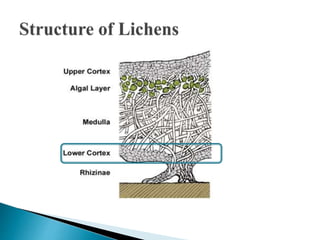
 Lower Cortex: It is present below the medulla. It is a
narrow layer of compactly arranged hyphae.
 The lichens are divided into three groups on the basis
of thallus.
 Crustose Lichens:The thallus from crust like structure.
It is closely adhere to the substrate.
 Example: Graphics
 Foliose Lichens: In this case, thallus has leaf like
lobes. They are free from the substrate.
 Example: Physcia, Permellia.
 Fructicose Lichens: The thallus are cylindrical ribbon
like and branched.
 Example: Cladonia, Usnea
 There are two groups of lichens:
 Ascolichens: In this case, lichens belong to
Ascomycota. Majority of the lichens belongs to this
group.
 Basidiolichens: In this case, lichens belong to
Basidomycota.
 There are about 20,000 known species of lichens.
 Some lichens have lost the ability to reproduce
sexually. But they are still taken as specie.
 Common names for lichens may contain the word moss
like Reindeer moss and Iceland moss.
 Vegetative reproduction occurs by different methods:
 Fragmentation: It is most effective way of
reproduction.
 It is found in foliose and fruticose lichens.
 Mechanical stress or death of some cells breaks the
thallus into fragments.
 Each fragment has growing areas.
 There growing areas grow to form new thallus.
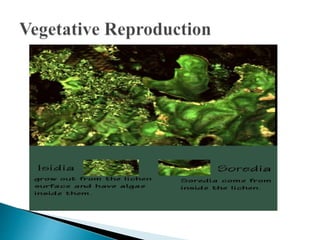
 Isidia:These are small papilla like outgrowths.
 These are present on the upper surface of thallus.
 Each isidium is composed of algal cells and fungal
hyphae.
 Isidia detach from the body. Isidia are found in
Permellia etc.
 Soredia: Soredia are small bud like outgrowths formed
on the surface of thallus.
 Soredia are composed of many algal cells with few
fungal hyphae.
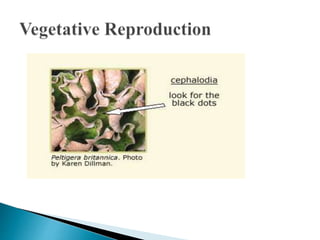
 Cephalodia: They are external or internal gall like
outgrowths.
 They are dark in colour.
 They consist of fungal hyphae enclosed in algal cells.
 Asexual reproduction takes place by pycnidiospores,
conidia oidia formation.
 In some cases, hyphae break down into small pieces
known as oidia.
 While pycniospores are produced within the flask
shaped structures known as pycnidia.
 Sexual reproduction is oogamous, Ascogonium and
spermatia are formed.
 Oogamous characterized by fusion of a small actively
motile male gamete and a large immobile female
gamete.
 Ascogonium
 The female sex organ in ascomycetous fungi.
 The hyphae, in fungi of the Ascomycota, that grow
from the ascogonium after it has fused with the
antheridium.
 Spermatia
 A nonmotile male gamete, as in red algae and certain
fungi.
 Colorless cell of certain fungi and lichens, developed
within spermagonia.
 Role in nitrogen fixation
 Food
 Biodegradation
 As dyes
 Antibiotic metabolites
 Traditional medicine
 Role in Nitogen Fixation: Cynobacteria are involved
in nitrogen fixation.This nitrogen increases the fertility
of soil.
 Food: some used as a staple food.It was cooked as a
bread, pudding, soup, or salad.
 Biodegradation:Lichens can degrade polyester resins.
 As dyes: Many lichens produce secondary compounds
and pigments.
 Antibiotic Metabolites: Lichens produce metabolites.
These are useful in the medical community.
 A few are associated to antiseptic.
 Traditional Medicine: Lichens are also used in
nonscientific traditional medicine practices of many
cultures.
Lichens

Lichens

  • 2.
    PRESENTED BY :AQIL QURESHI UNIVERSITY OF EDUCATION TOWNSHIP CAMPUS
  • 3.
     Introduction  Structureof Lichens  Forms of Lichens  Classification of Lichens  Species and Common Naming of Lichens  Vegetative Reproduction  Asexual and Sexual Reproduction  Economic Importance of Lichens
  • 4.
     Order :Lechano Rales  Kingdom : Fungi  Genus : Lichens  The intimate symbiotic association of fungi and algae is called lichens.  The algae of lichens mostly belong to chlorophyta and cynobacteria.  Lichens are abundant growing on bark, leaves and mosses.  The fungus is called mycobiont. The photosynthesizing organism is called a photobiont.
  • 5.
     The partof lichen that is not involved in reproduction is called Thallus.  Thallus is composed of following parts:  Upper Cortex  Algal Zone  Medulla  Lower Cortex  Upper Cortex: Cortex is a protective skin of densely packed fungal filaments. Upper cortex present on the top side.
  • 7.
     Algal Zone:These are often enclosing algae within complex fungal tissues.
  • 9.
     Algal Zone:These are often enclosing algae within complex fungal tissues.  Medulla: It is the central part of the thallus. It forms the main part of thallus. These are the conductiong cells.
  • 11.
     Algal Zone:These are often enclosing algae within complex fungal tissues.  Medulla: It is the central part of the thallus. It forms the main part of thallus. These are the conductiong cells.  Lower Cortex: It is present below the medulla. It is a narrow layer of compactly arranged hyphae.
  • 13.
     The lichensare divided into three groups on the basis of thallus.  Crustose Lichens:The thallus from crust like structure. It is closely adhere to the substrate.  Example: Graphics  Foliose Lichens: In this case, thallus has leaf like lobes. They are free from the substrate.  Example: Physcia, Permellia.  Fructicose Lichens: The thallus are cylindrical ribbon like and branched.  Example: Cladonia, Usnea
  • 15.
     There aretwo groups of lichens:  Ascolichens: In this case, lichens belong to Ascomycota. Majority of the lichens belongs to this group.  Basidiolichens: In this case, lichens belong to Basidomycota.
  • 16.
     There areabout 20,000 known species of lichens.  Some lichens have lost the ability to reproduce sexually. But they are still taken as specie.  Common names for lichens may contain the word moss like Reindeer moss and Iceland moss.
  • 17.
     Vegetative reproductionoccurs by different methods:  Fragmentation: It is most effective way of reproduction.  It is found in foliose and fruticose lichens.  Mechanical stress or death of some cells breaks the thallus into fragments.  Each fragment has growing areas.  There growing areas grow to form new thallus.  Isidia:These are small papilla like outgrowths.  These are present on the upper surface of thallus.
  • 18.
     Each isidiumis composed of algal cells and fungal hyphae.  Isidia detach from the body. Isidia are found in Permellia etc.  Soredia: Soredia are small bud like outgrowths formed on the surface of thallus.  Soredia are composed of many algal cells with few fungal hyphae.
  • 20.
     Cephalodia: Theyare external or internal gall like outgrowths.  They are dark in colour.  They consist of fungal hyphae enclosed in algal cells.
  • 22.
     Asexual reproductiontakes place by pycnidiospores, conidia oidia formation.  In some cases, hyphae break down into small pieces known as oidia.  While pycniospores are produced within the flask shaped structures known as pycnidia.  Sexual reproduction is oogamous, Ascogonium and spermatia are formed.  Oogamous characterized by fusion of a small actively motile male gamete and a large immobile female gamete.
  • 23.
     Ascogonium  Thefemale sex organ in ascomycetous fungi.  The hyphae, in fungi of the Ascomycota, that grow from the ascogonium after it has fused with the antheridium.  Spermatia  A nonmotile male gamete, as in red algae and certain fungi.  Colorless cell of certain fungi and lichens, developed within spermagonia.
  • 24.
     Role innitrogen fixation  Food  Biodegradation  As dyes  Antibiotic metabolites  Traditional medicine
  • 25.
     Role inNitogen Fixation: Cynobacteria are involved in nitrogen fixation.This nitrogen increases the fertility of soil.  Food: some used as a staple food.It was cooked as a bread, pudding, soup, or salad.  Biodegradation:Lichens can degrade polyester resins.  As dyes: Many lichens produce secondary compounds and pigments.
  • 26.
     Antibiotic Metabolites:Lichens produce metabolites. These are useful in the medical community.  A few are associated to antiseptic.  Traditional Medicine: Lichens are also used in nonscientific traditional medicine practices of many cultures.