Welcome you all


BY:lokendra yadav
ULTRA SOUND
        A
  REVOLUTION
       IN
MEDICAL IMAGING
WHAT IS MEDICAL
IMAGING?


           ?
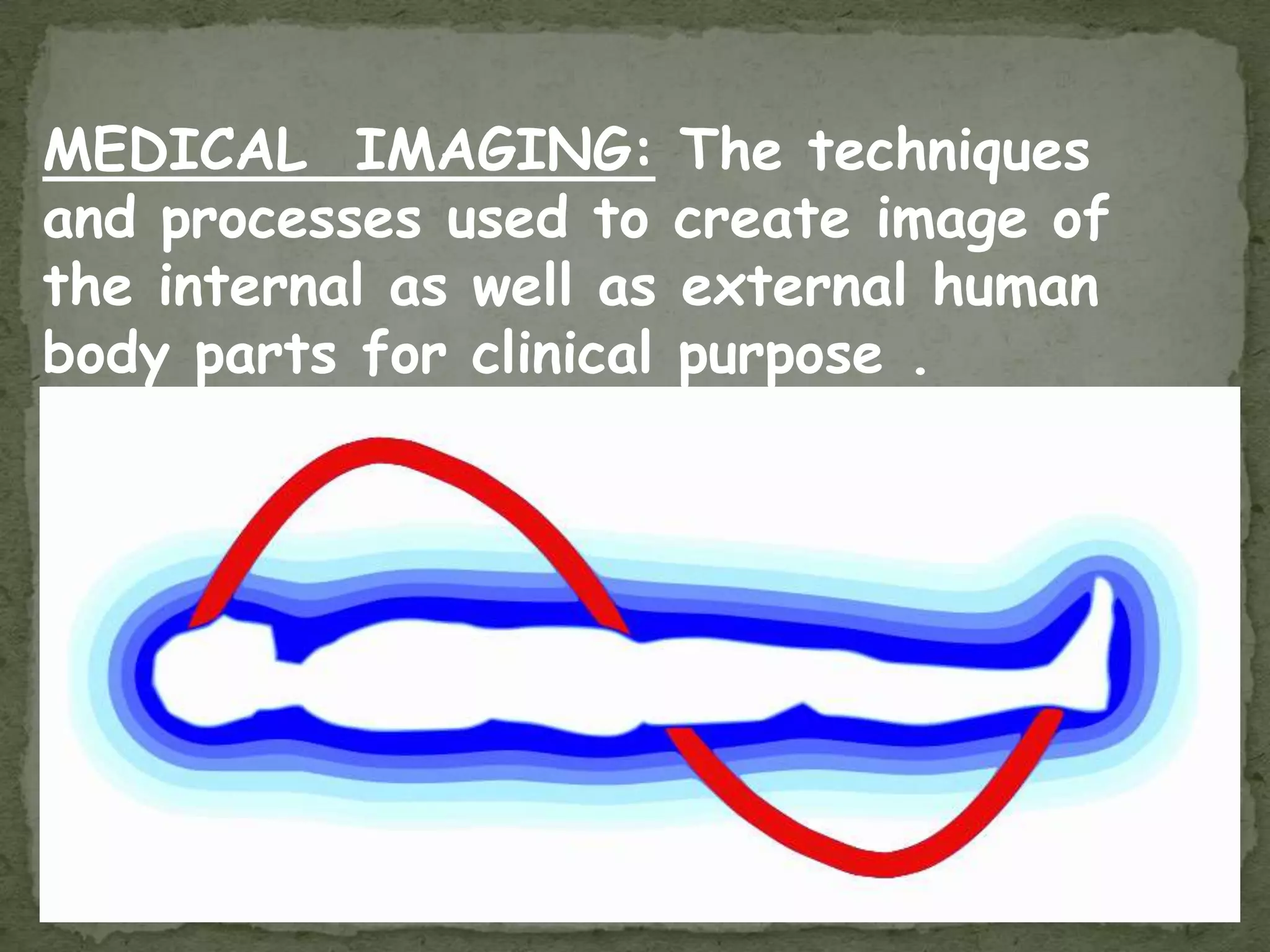
MEDICAL IMAGING:          The techniques
and processes used to     create image of
the internal as well as   external human
body parts for clinical   purpose .
why medical imaging is required?

Medical imaging provides a pictorial status
of particular organ which is to be treated

It makes a surgical targets more clear and
precise

It provides a pictorial status of fetus
development right from 4th weak to 36th- 38th
week

It make therapeutic targets easy to detect
TYPES OF MEDICAL IMAGING WIDELY
USED

X-RAY
MAMOGRAPHY
CONTRAST RADIOGRAPHY
ULTRA SOUND
CT SCAN
MRI
SPECT(SINGLE PHOTON EMMISION
TOMOGRAPHY)
PET(POSITRON EMISSION
TOMOGRAPHY)
HISTORY OF
ULTRASOUND……………..
PIZOELECTRIC IS DEVELOPED BY THE
CURIES IN 1880 USING NATURAL
QUARTZ

SONAR was first time used in
war time 1940


Diagnosis medical
WHAT IS
ULTRA SOUND

    ?
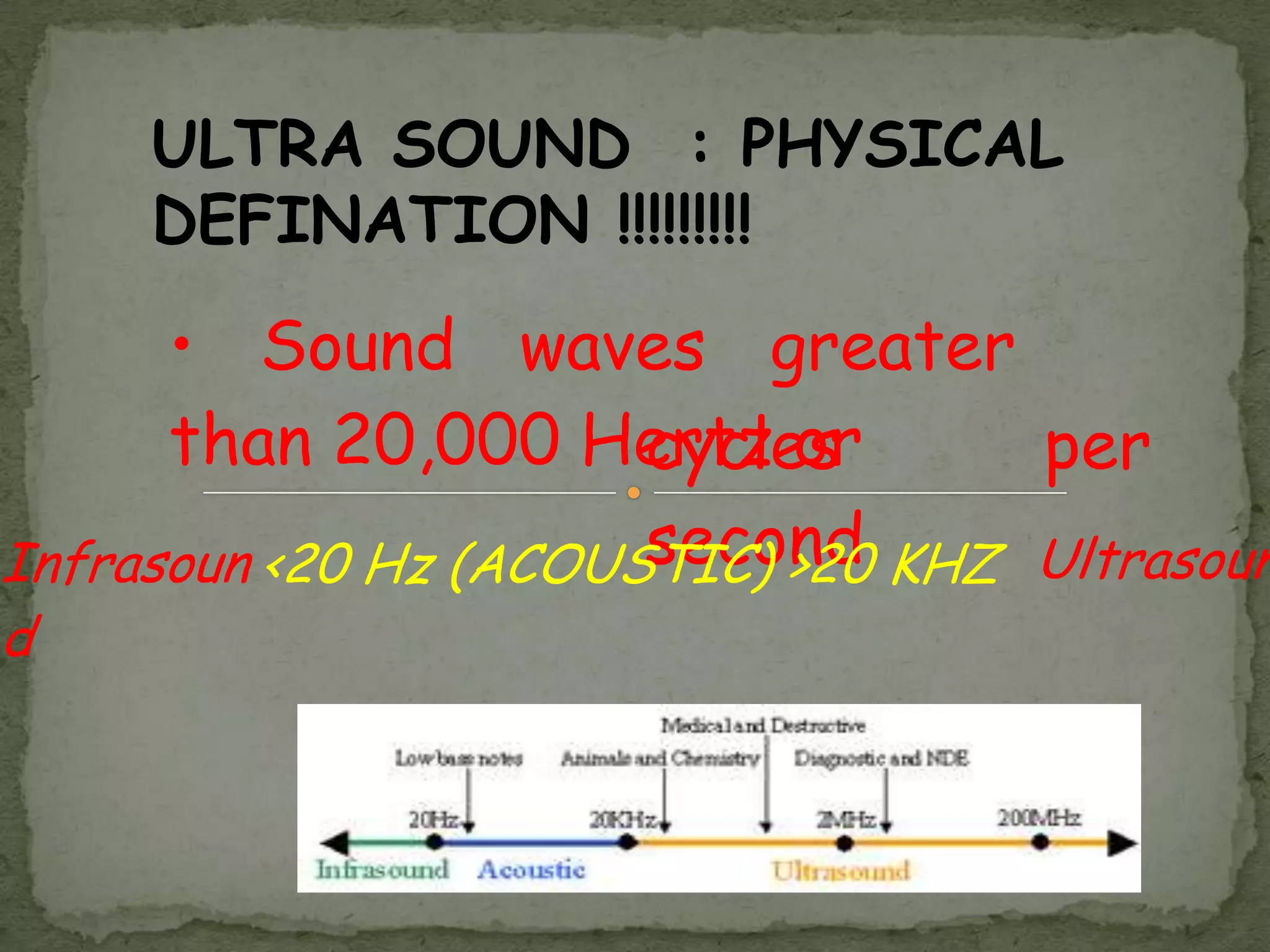
ULTRA SOUND : PHYSICAL
     DEFINATION !!!!!!!!!
      • Sound waves greater
      than 20,000 Hertz or
                       cycles       per
                       second
Infrasoun <20 Hz (ACOUSTIC) >20 KHZ Ultrasoun
d
ULTRA SOUND : MEDICAL
DEFINATION!!!
DIGNOSTIC MEDICAL
ULTRASOUND IS THE USE OF HIGH
FREQUENCY SOUND TO AID IN
DIGNOSIS AND TREATMENT OF
PATIENT.


FREQUENCY RANGES USED IN
MEDICAL ULTRASOUND ARE 2-
15 MHZ
Piezoelectric
      Effect The principle
 Definition:                       of
converting    energy    by    applying
pressure to a crystal
                    .


The reverse of the piezoelectric
effect converts the energy back to its
original form
piezoelectric effect Ultrasound
           Transducers
•A transducer converts one type
of energy into another
• Based upon   :pulse-echo principle
 occurring      with       ultrasound
the
 crystals, ultrasound transducers
 piezoelectric
 convert:
   – Electricity into sound = pulse
   – Sound into electricity = echo
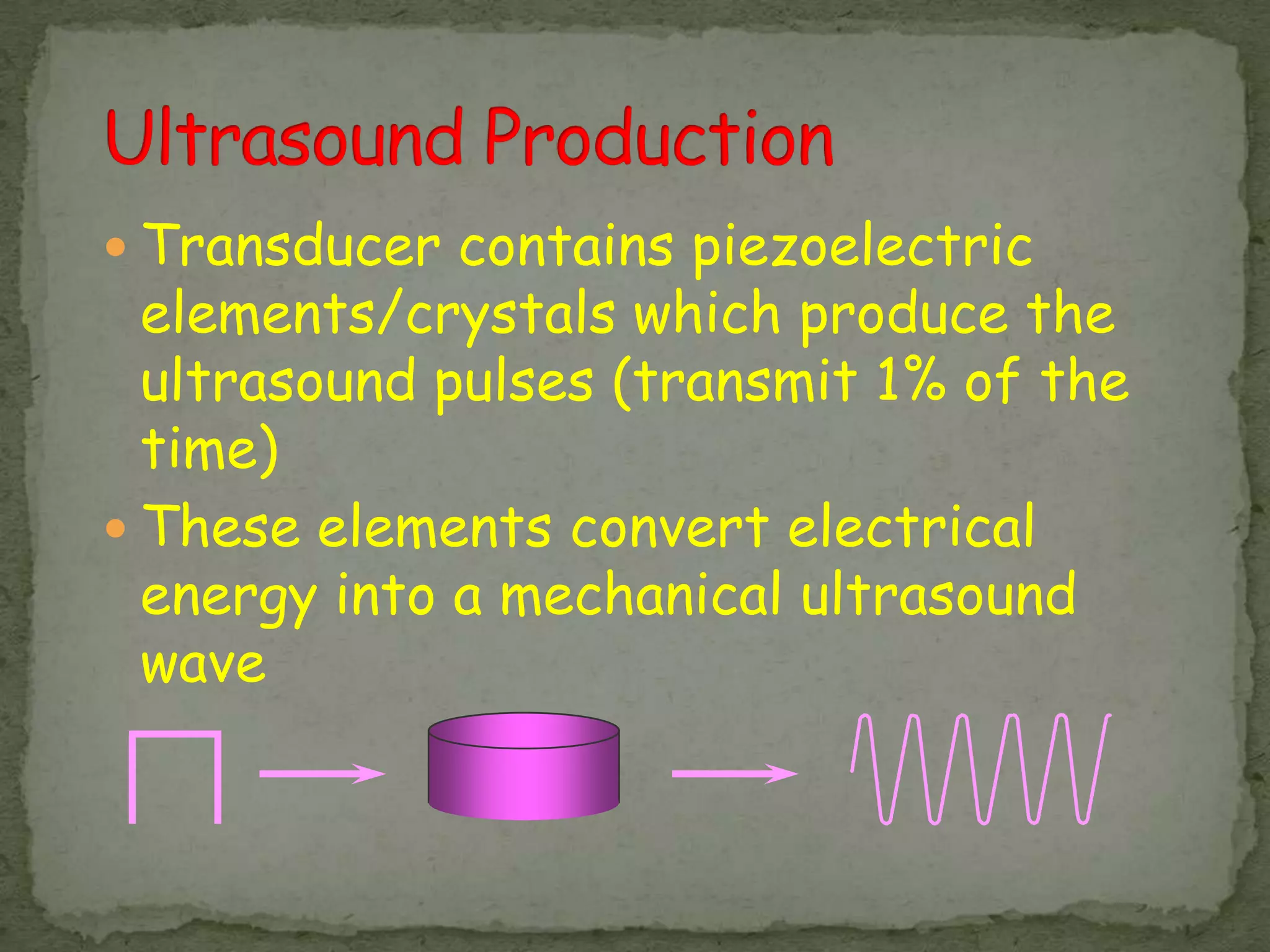
 Transducer contains piezoelectric
  elements/crystals which produce the
  ultrasound pulses (transmit 1% of the
  time)
 These elements convert electrical
  energy into a mechanical ultrasound
  wave
PULSE
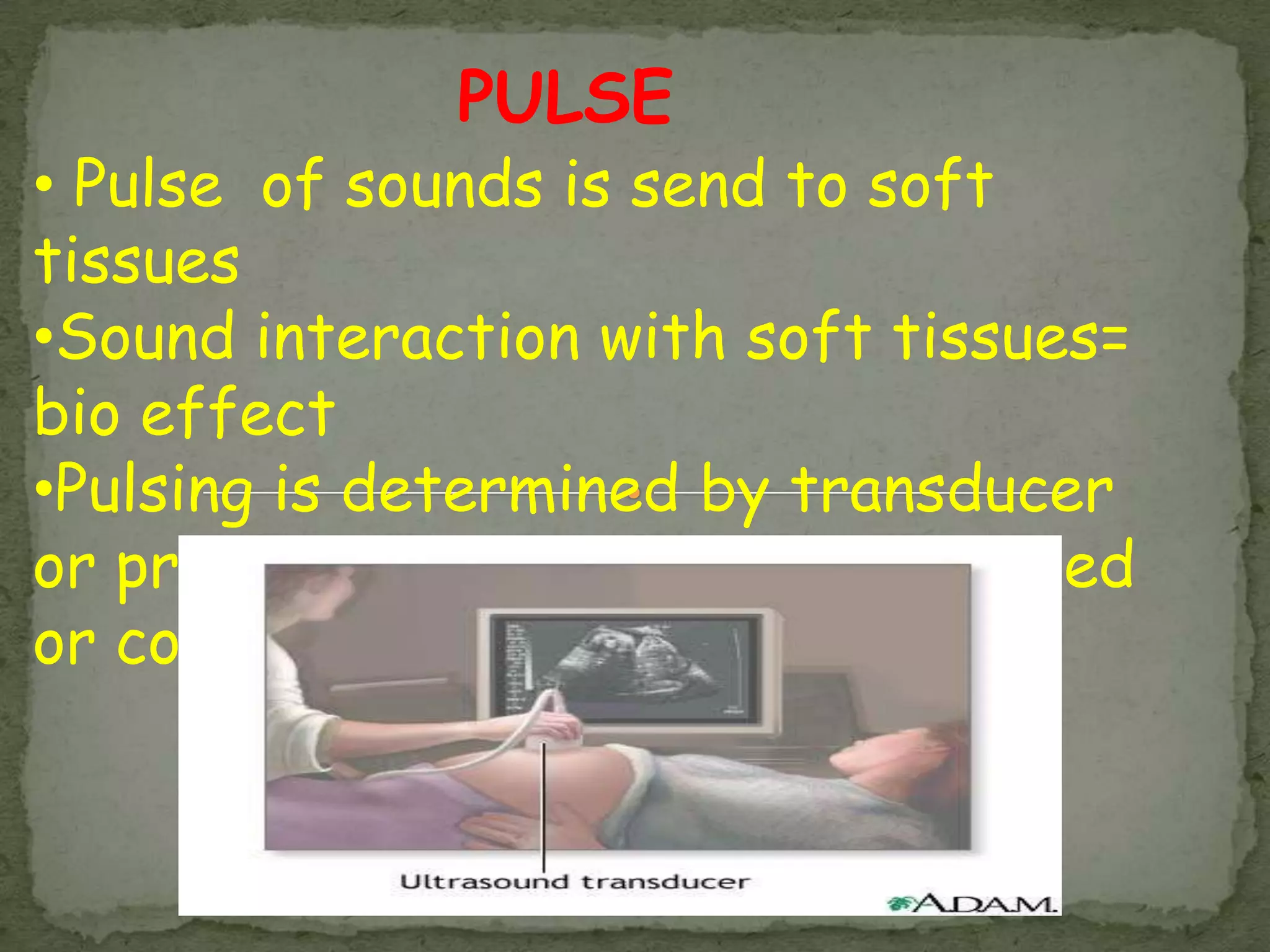
• Pulse of sounds is send to soft
tissues
•Sound interaction with soft tissues=
bio effect
•Pulsing is determined by transducer
or probe crystal and ins not operated
or control
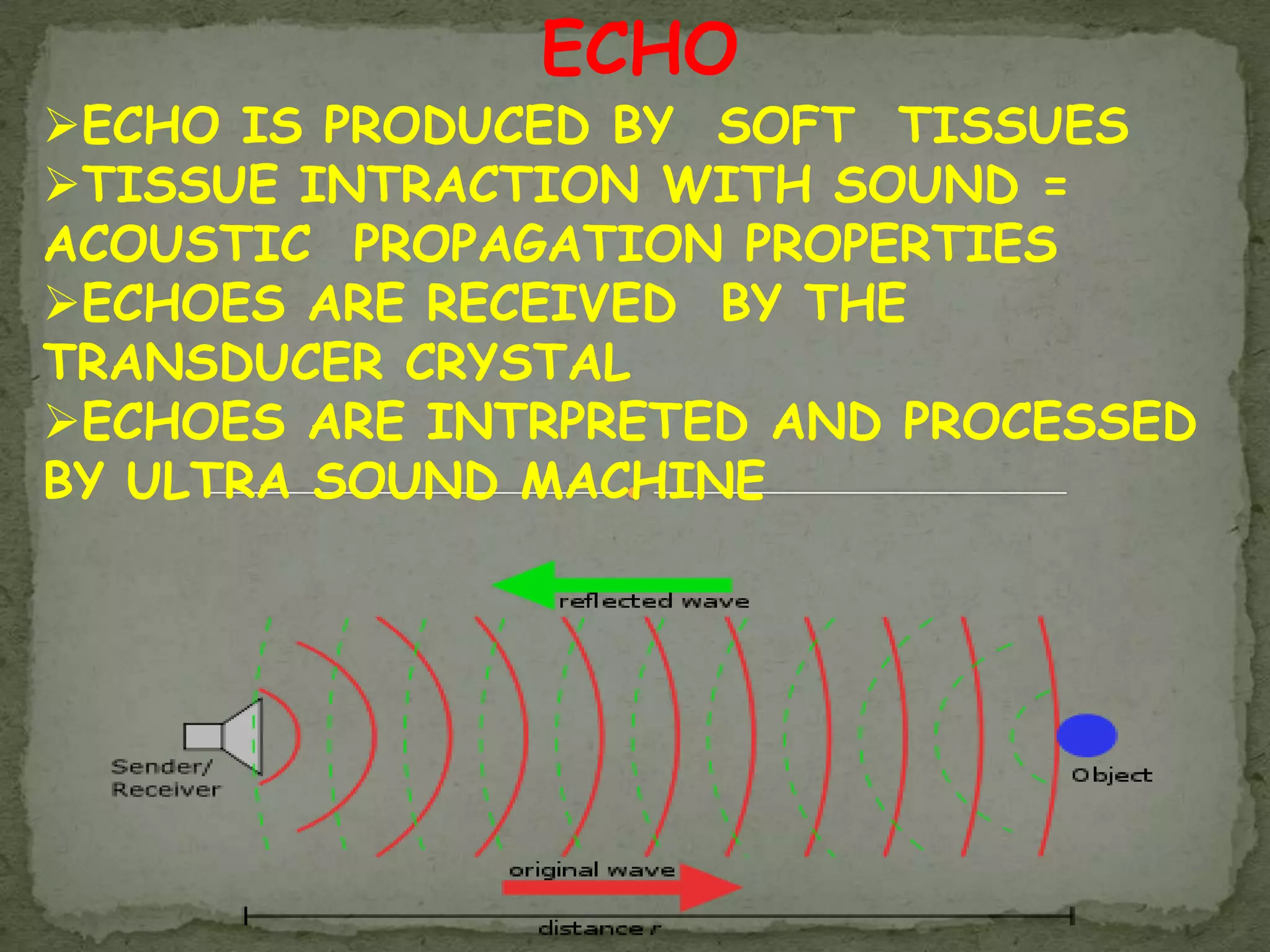
ECHO
ECHO IS PRODUCED BY SOFT TISSUES
TISSUE INTRACTION WITH SOUND =
ACOUSTIC PROPAGATION PROPERTIES
ECHOES ARE RECEIVED BY THE
TRANSDUCER CRYSTAL
ECHOES ARE INTRPRETED AND PROCESSED
BY ULTRA SOUND MACHINE
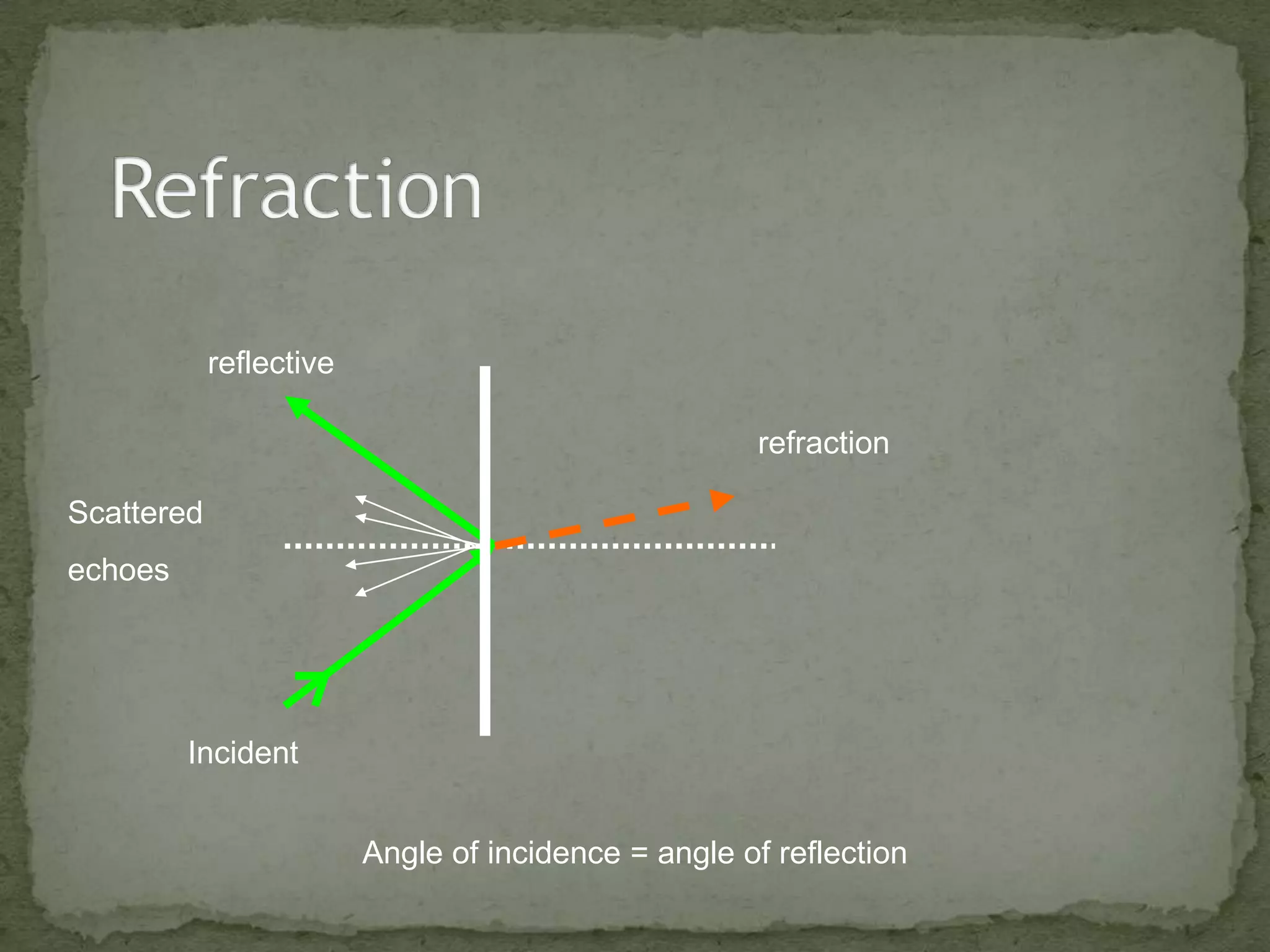
reflective

                                                      refraction

Scattered
echoes


         Incident


                         Angle of incidence = angle of reflection
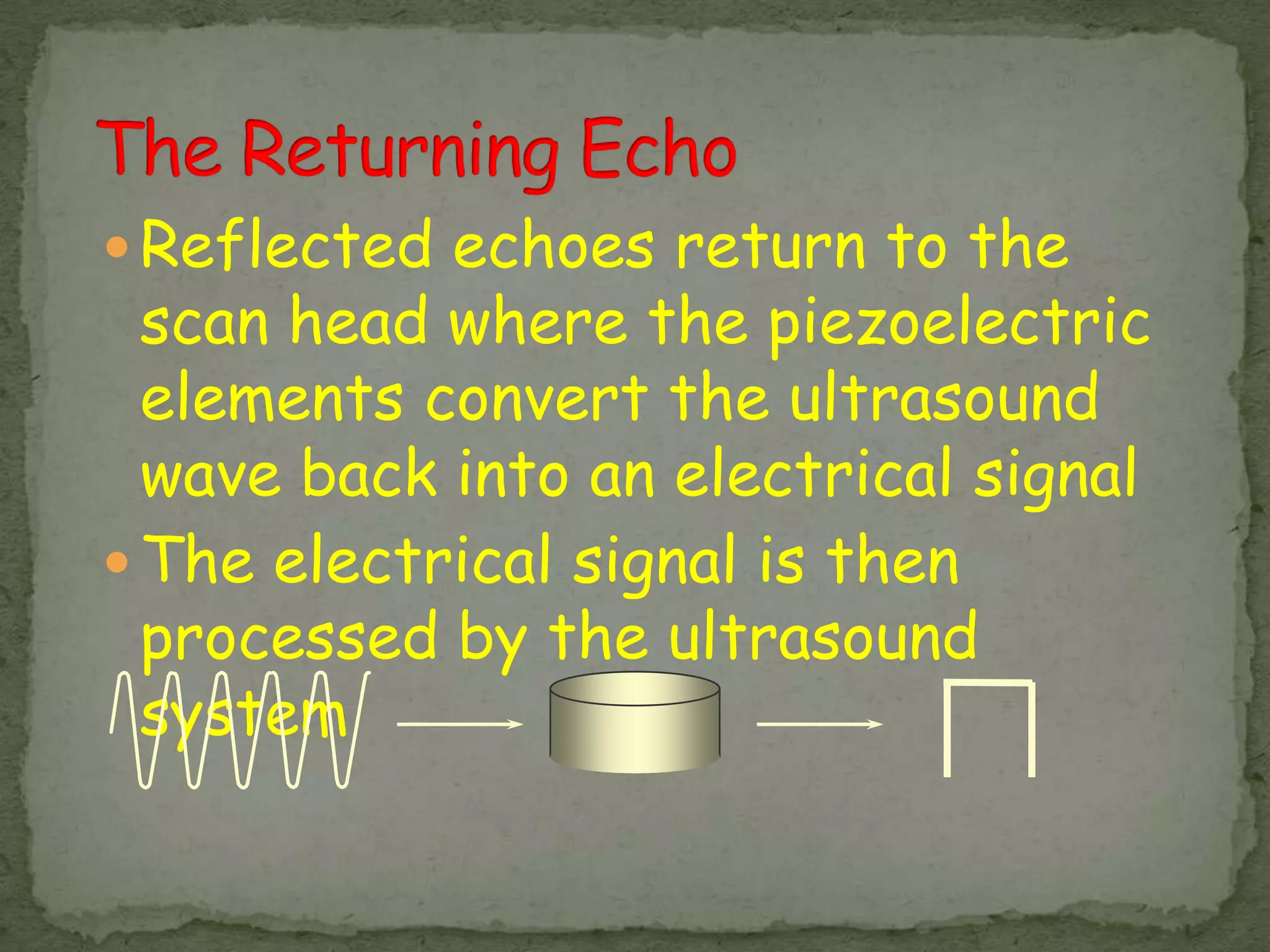
 Reflected echoes return to the
  scan head where the piezoelectric
  elements convert the ultrasound
  wave back into an electrical signal
 The electrical signal is then
  processed by the ultrasound
  system
FACTORS AFFECTING
ULTRASOUND
FREQUENCY
WAVELENGTH
BANDWIDTH
ATTENUATION
TIME GAIN COMPENSATION
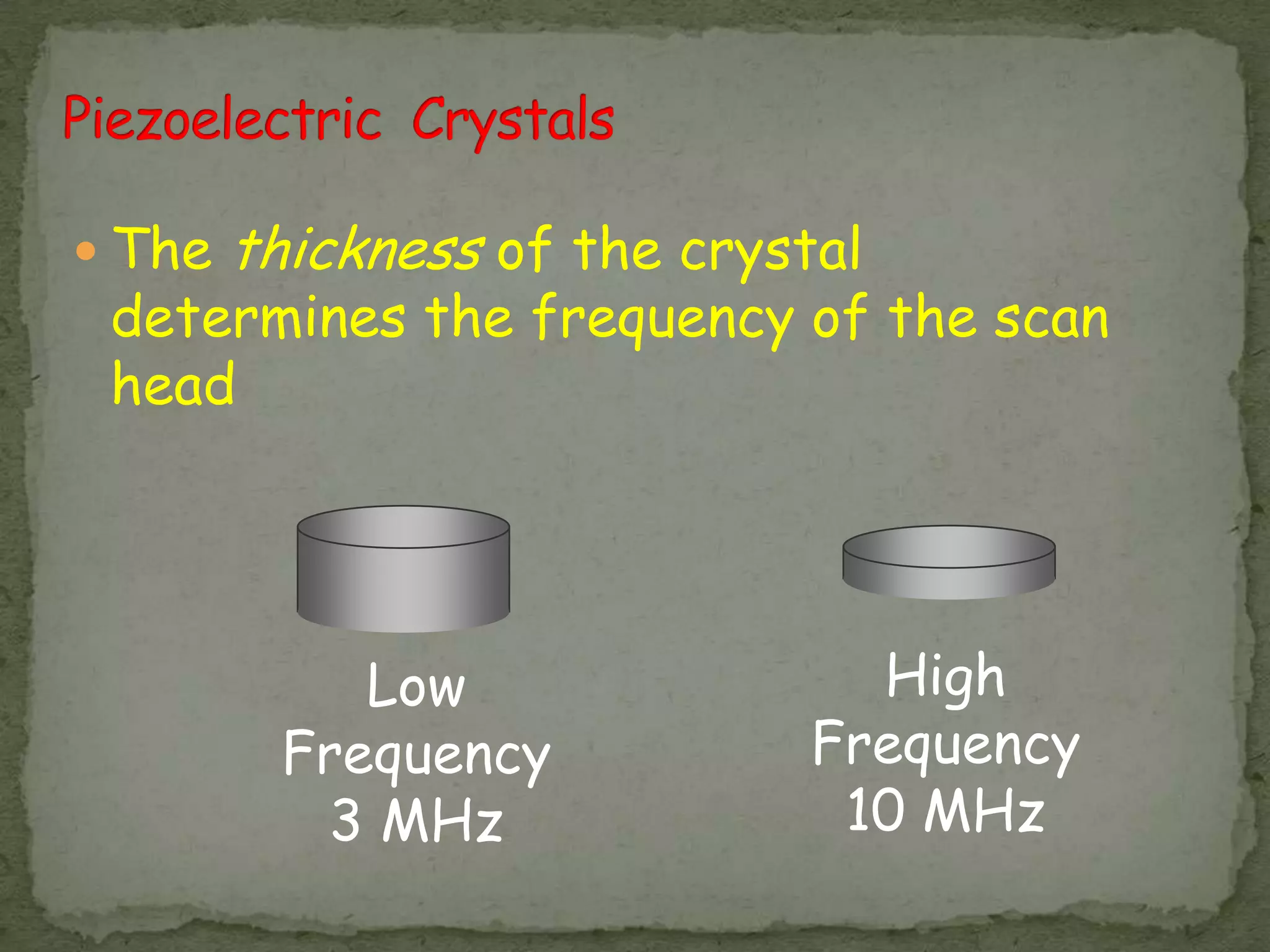
 The   thickness of the crystal
 determines the frequency of the scan
 head


            Low                 High
         Frequency            Frequency
          3 MHz                10 MHz
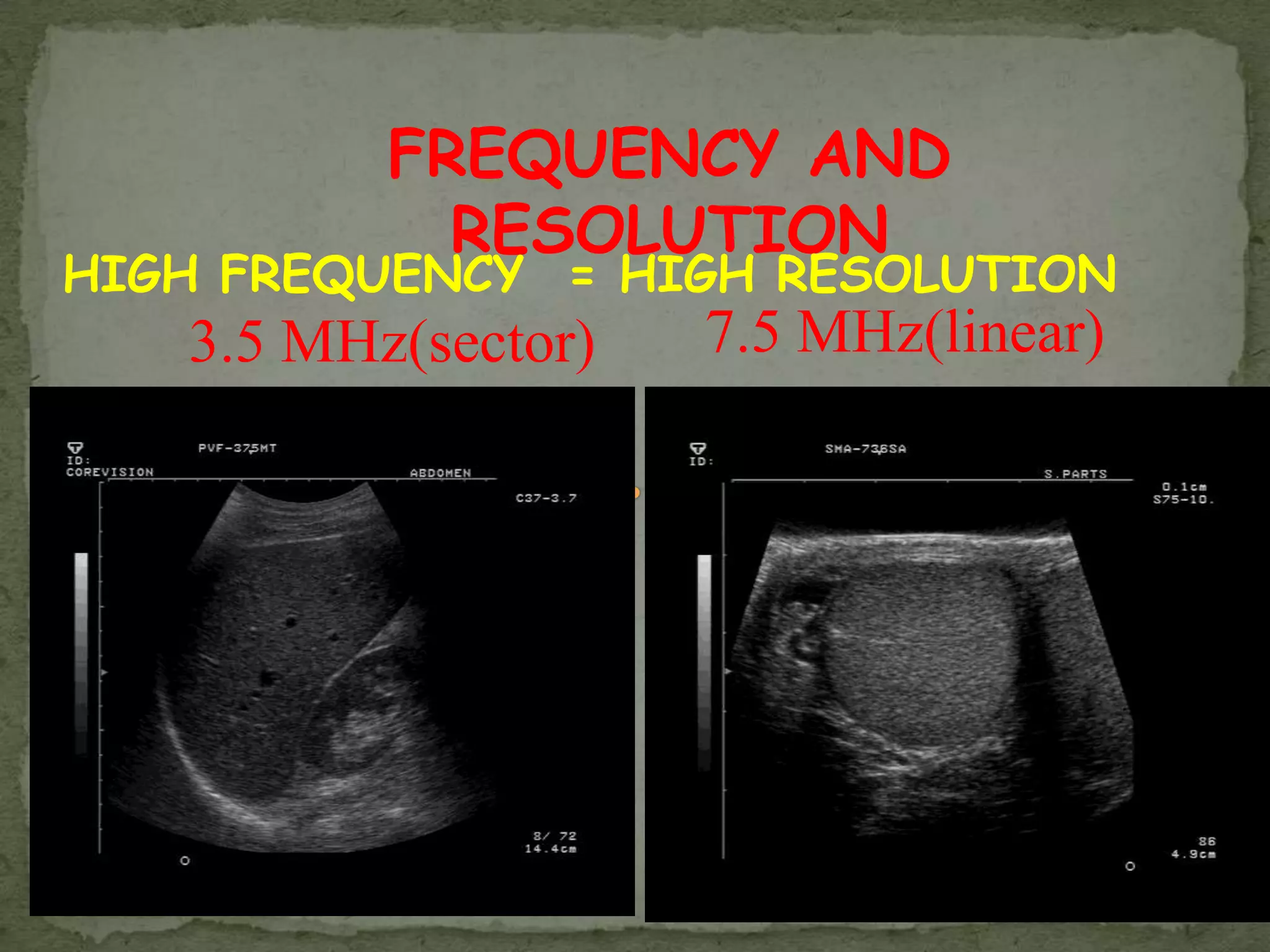
FREQUENCY AND
            RESOLUTION
HIGH FREQUENCY = HIGH RESOLUTION
   3.5 MHz(sector)   7.5 MHz(linear)
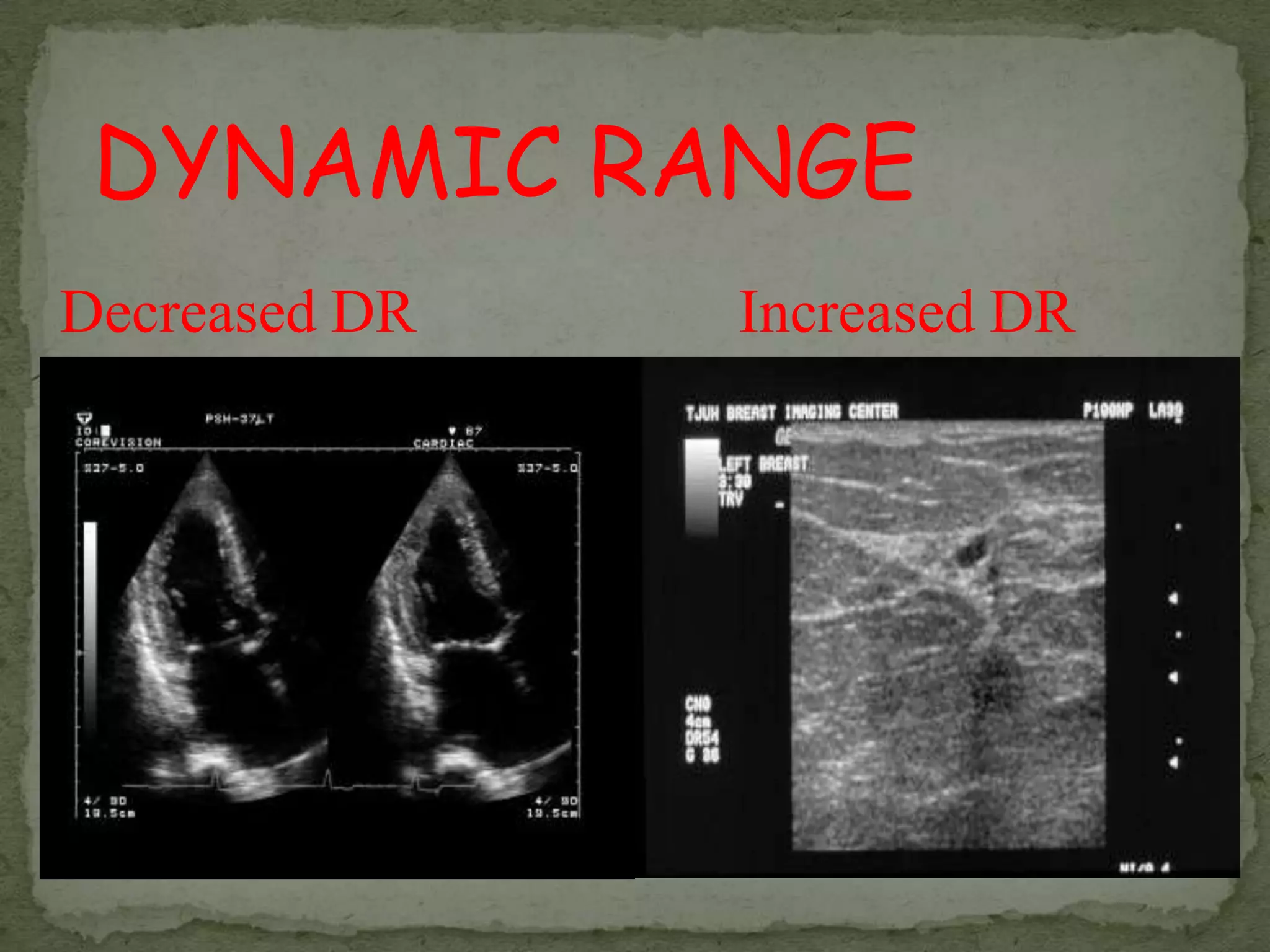
DYNAMIC RANGE
Decreased DR   Increased DR
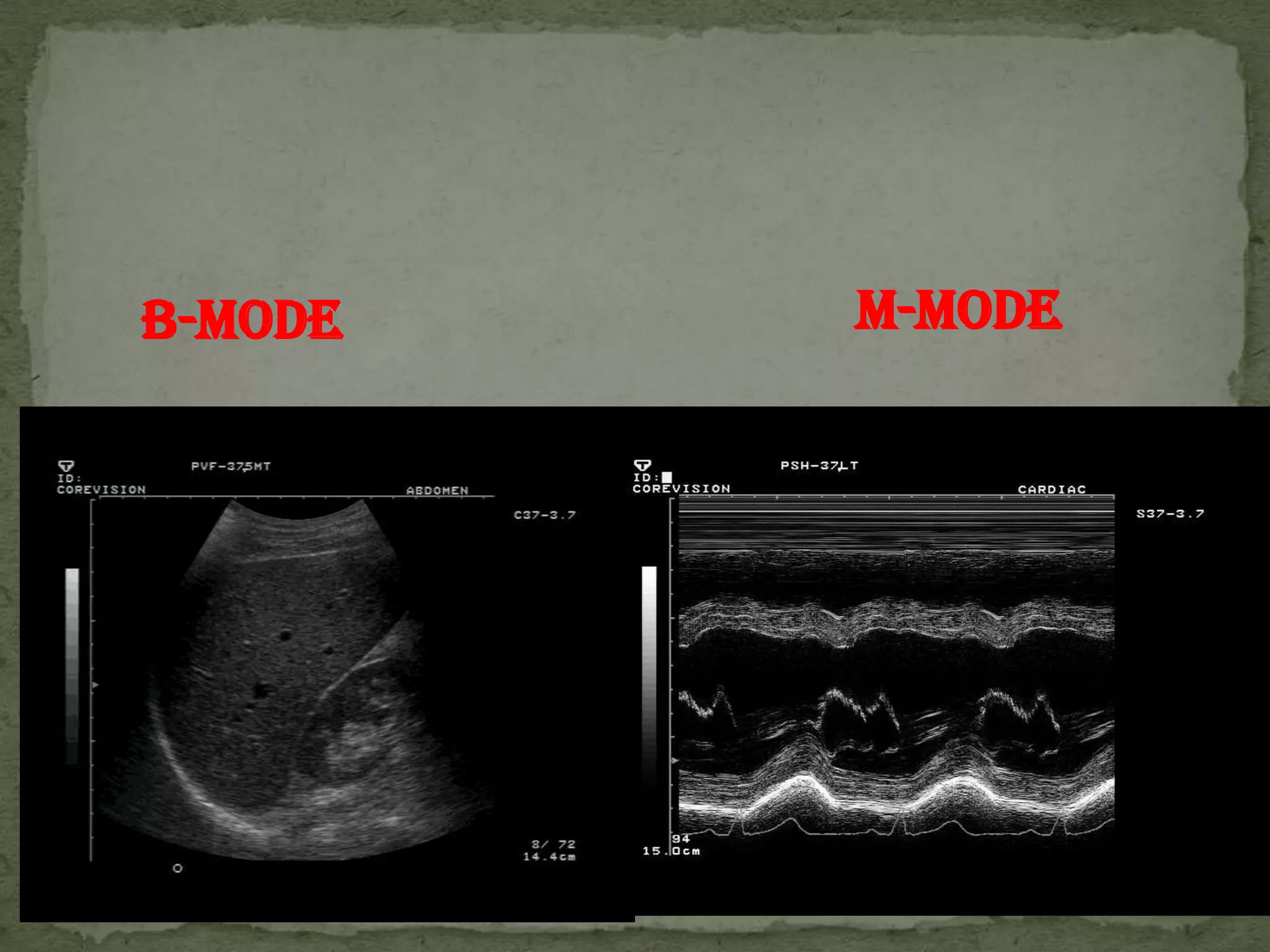
B-MODE   M-MODE
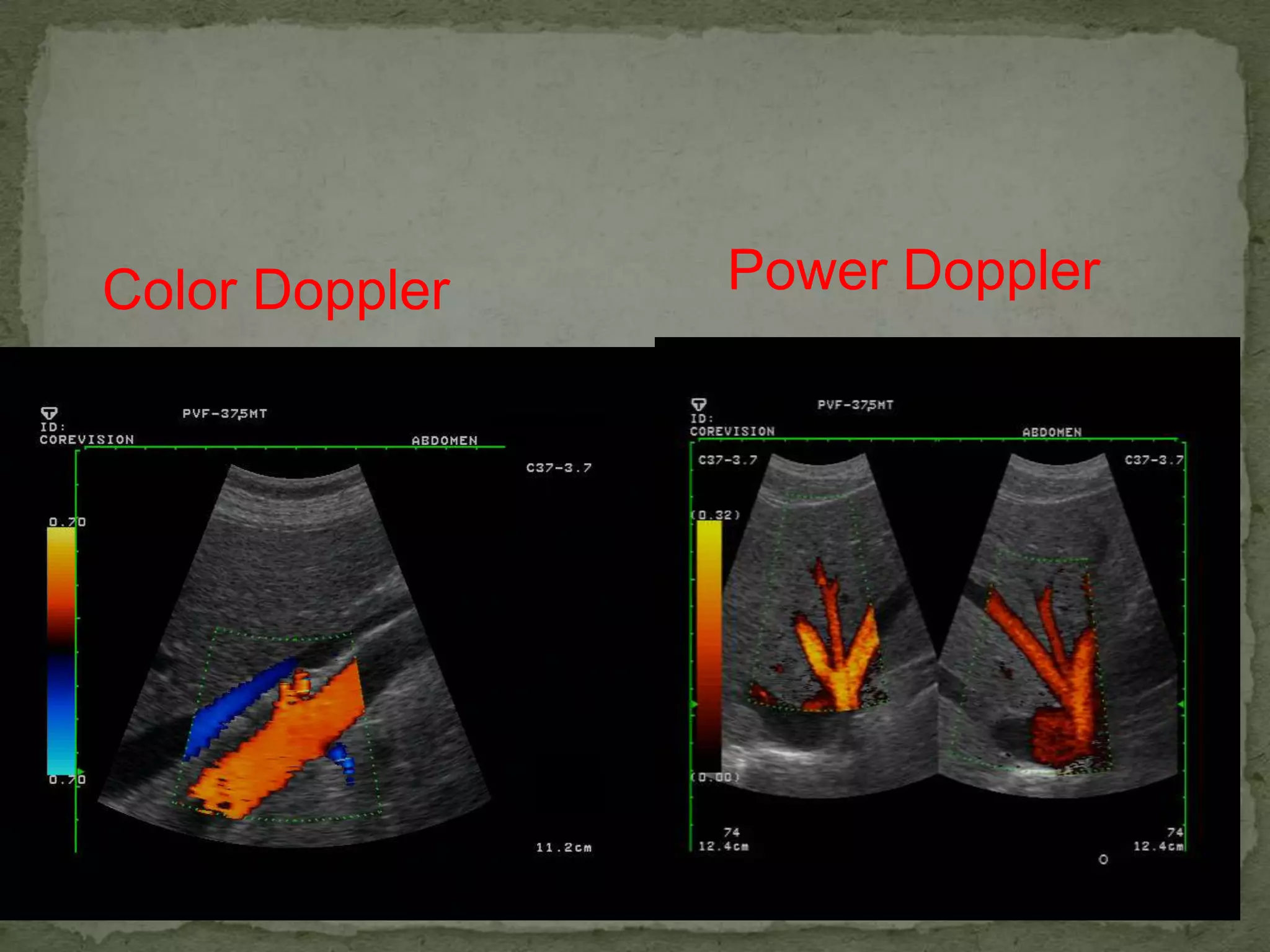
Color Doppler   Power Doppler
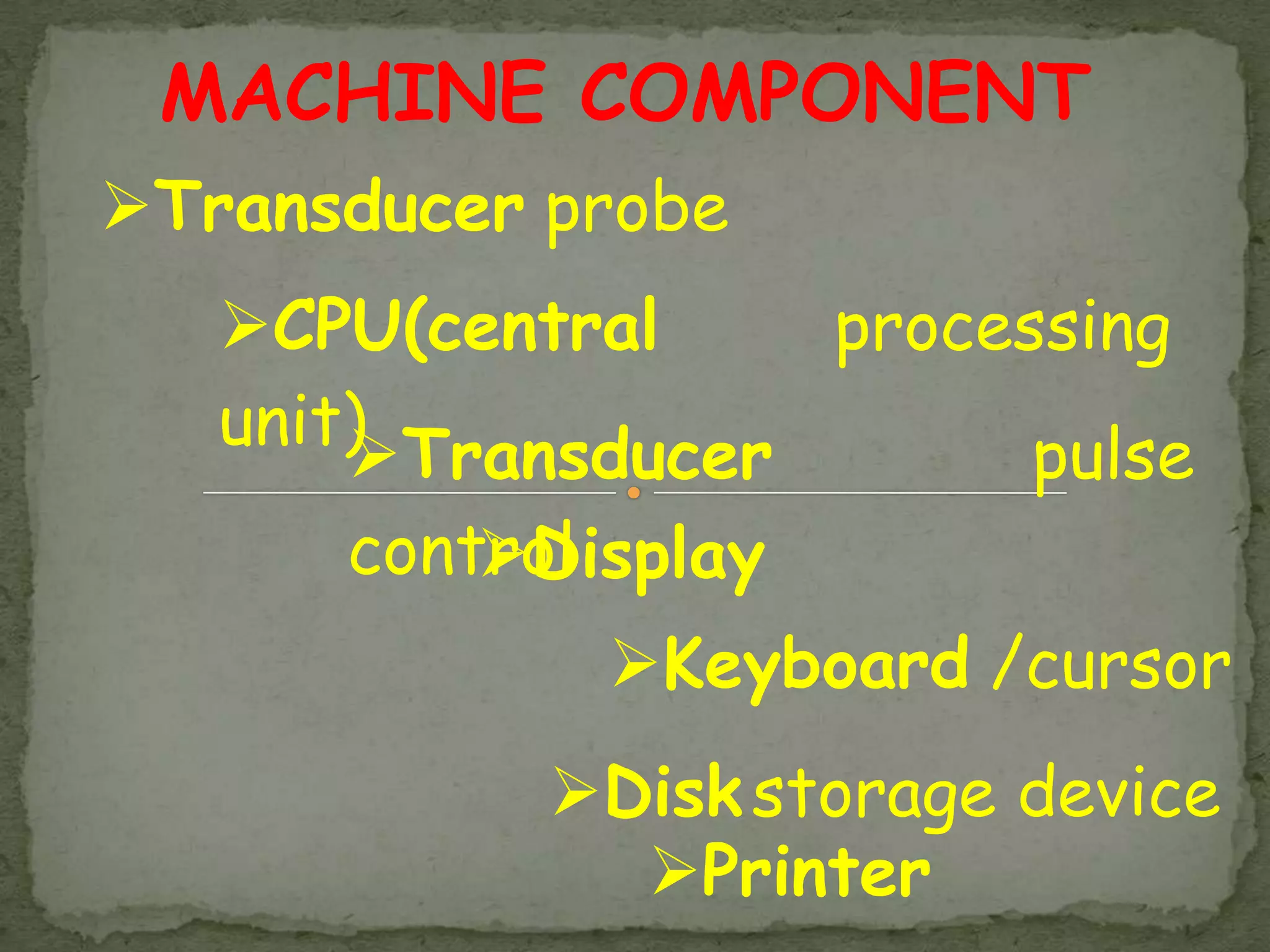
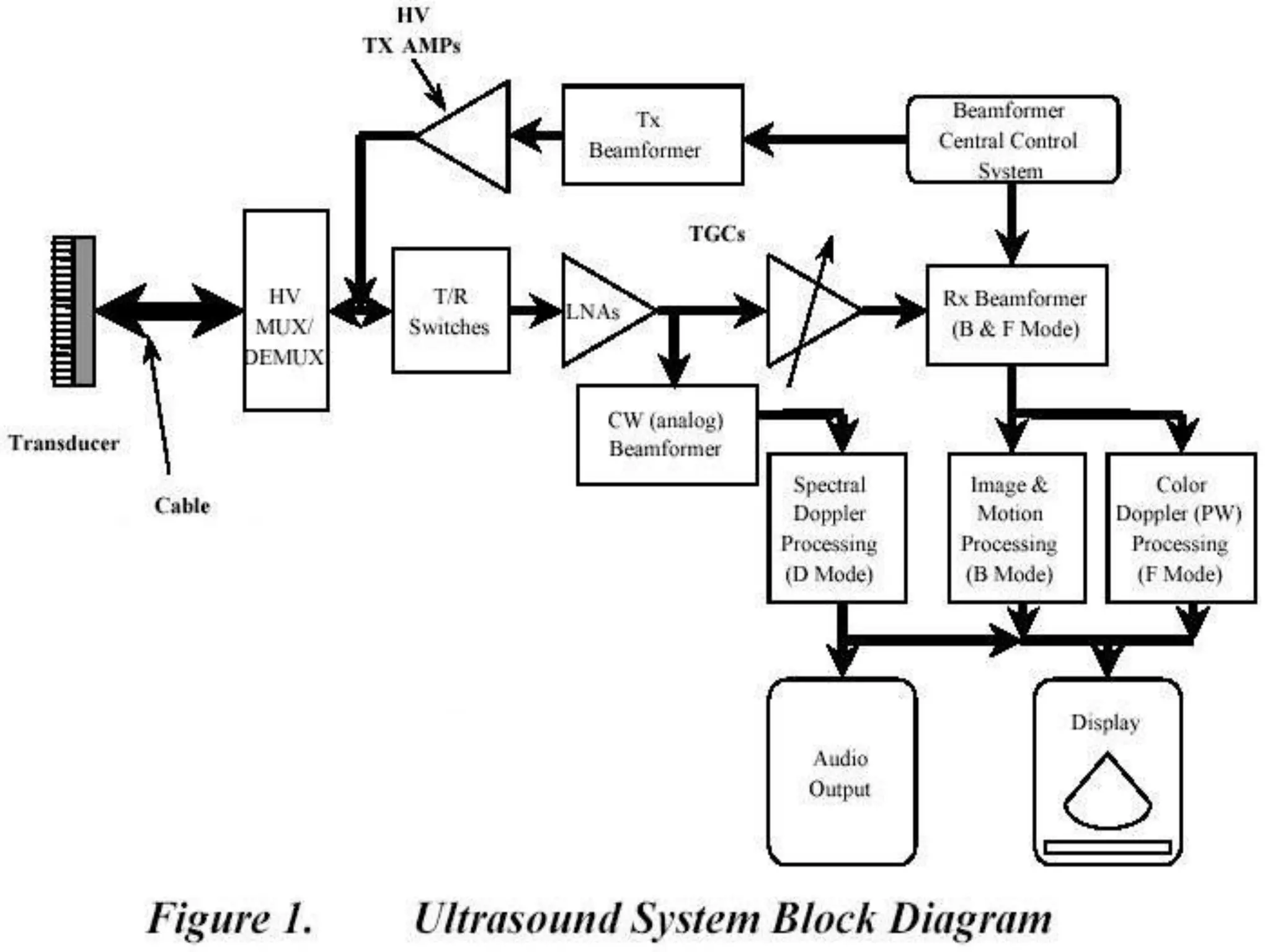
MACHINE COMPONENT
Transducer probe
   CPU(central     processing
   unit)
       Transducer        pulse
       control
           Display
              Keyboard /cursor
            Disk storage device
              Printer
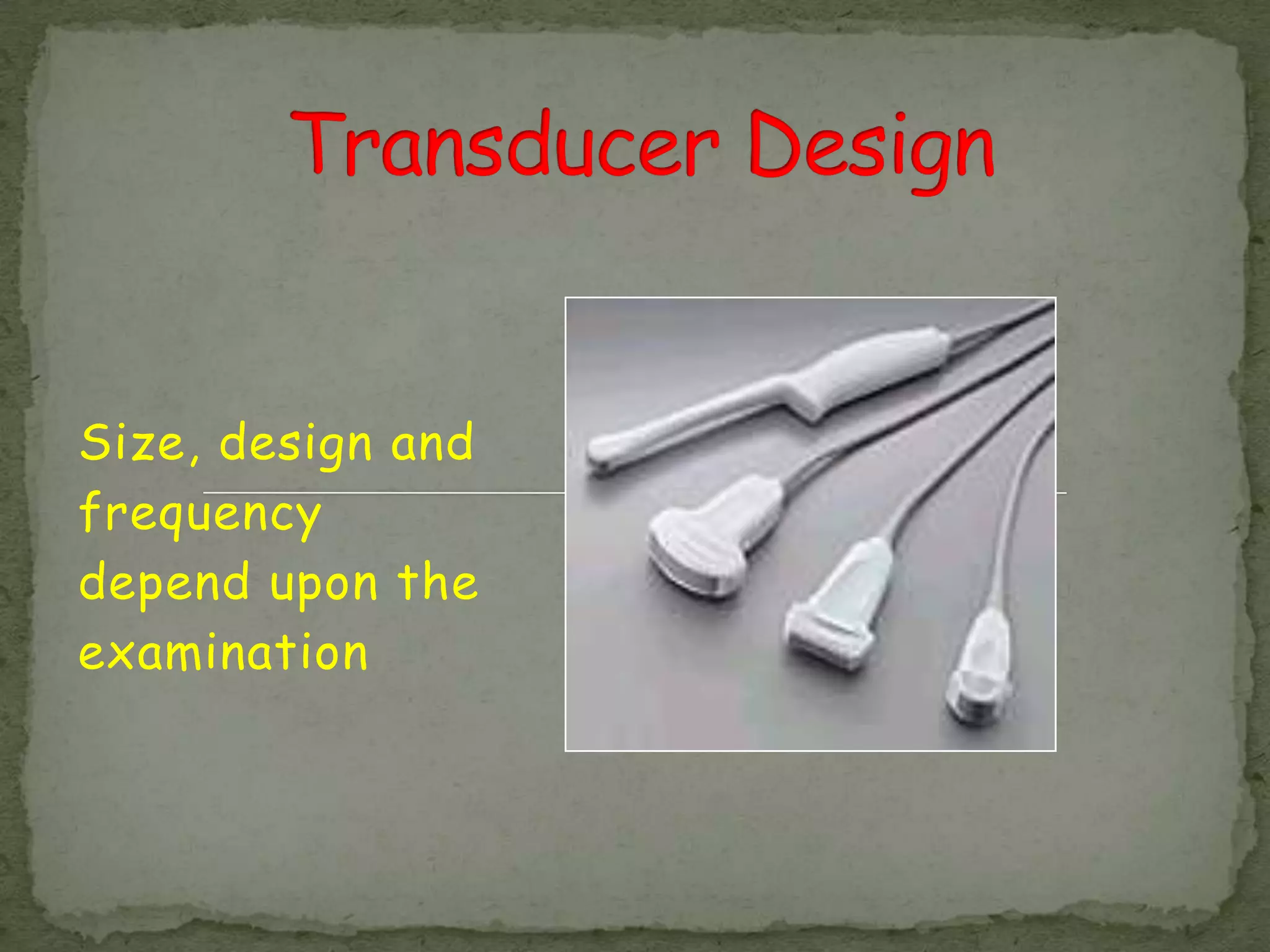
Size, design and
frequency
depend upon the
examination
Electrical signal produces ‘dots’ on the
                   screen

 Brightness of the dots is proportional to
    the strength of the returning echoes
   Location of the dots is determined by
travel time. The velocity in tissue is assumed
           constant at 1540m/sec
                    Distance = Velocity
                                 Time
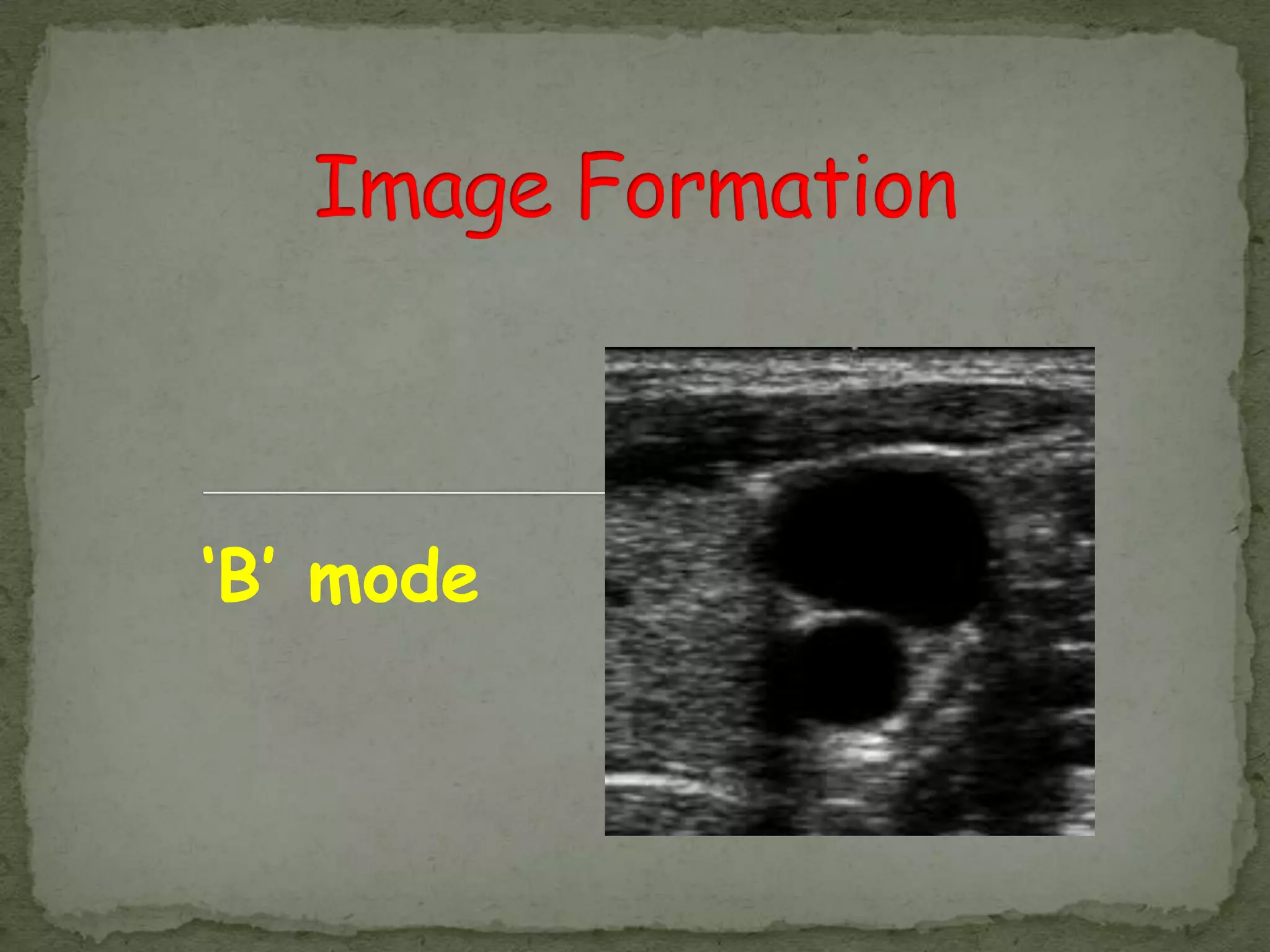
„B‟ mode
Interactions of Ultrasound with
             Tissue
 • Acoustic impedance (AI) is dependent on the
   density of the material in which sound is
   propagated
     - the greater the impedance the denser the
    material.
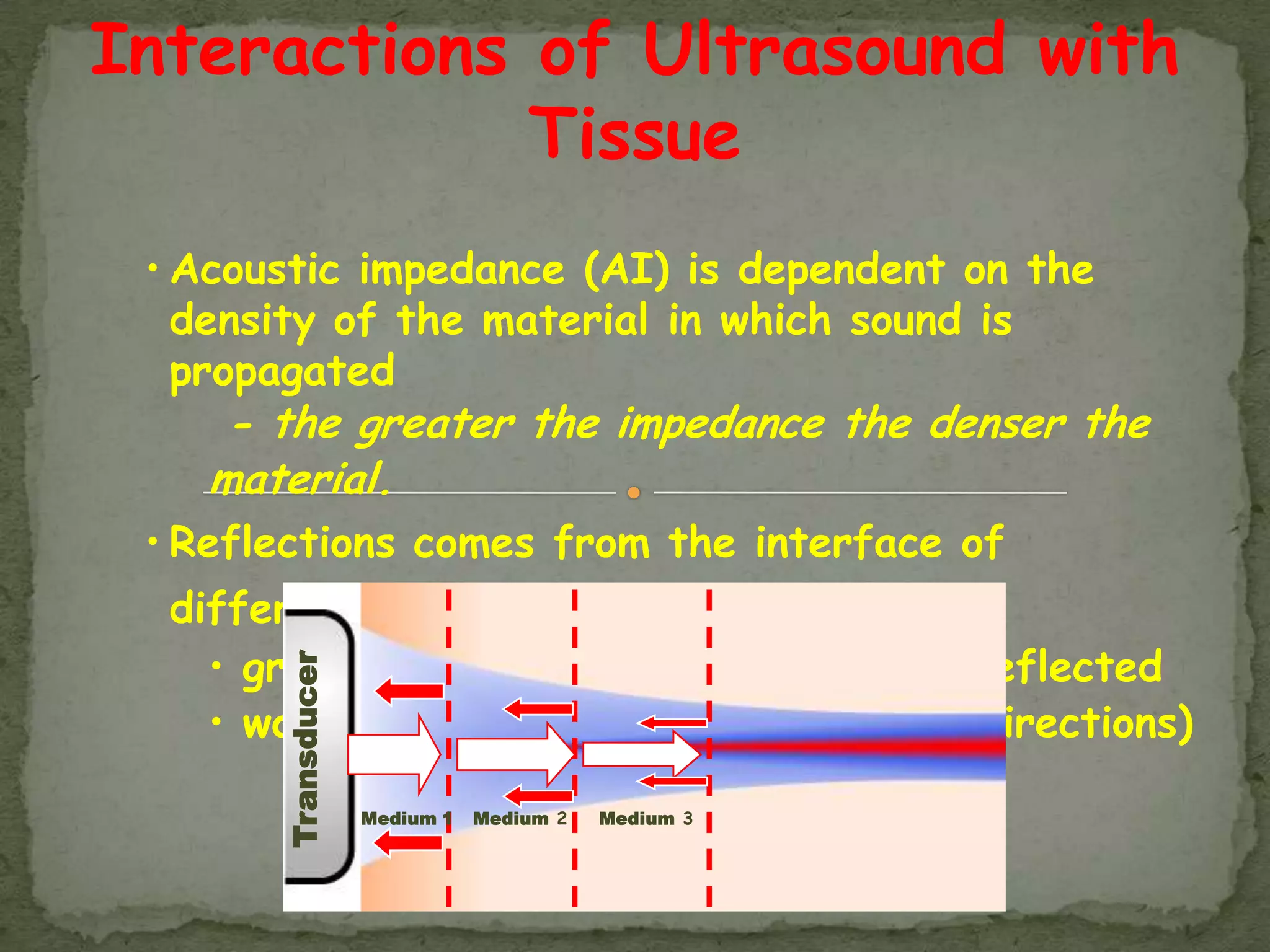
 • Reflections comes from the interface of
  different AI‟s
    • greater  of the AI = more signal reflected
       Transducer


    • works both ways (send and receive directions)

                    Medium 1   Medium 2   Medium 3
Sound is attenuated by tissue
  More tissue to penetrate = more
        attenuation of signal
Compensate by adjusting gain based on
                depth
           near field / far field
                AKA: TGC
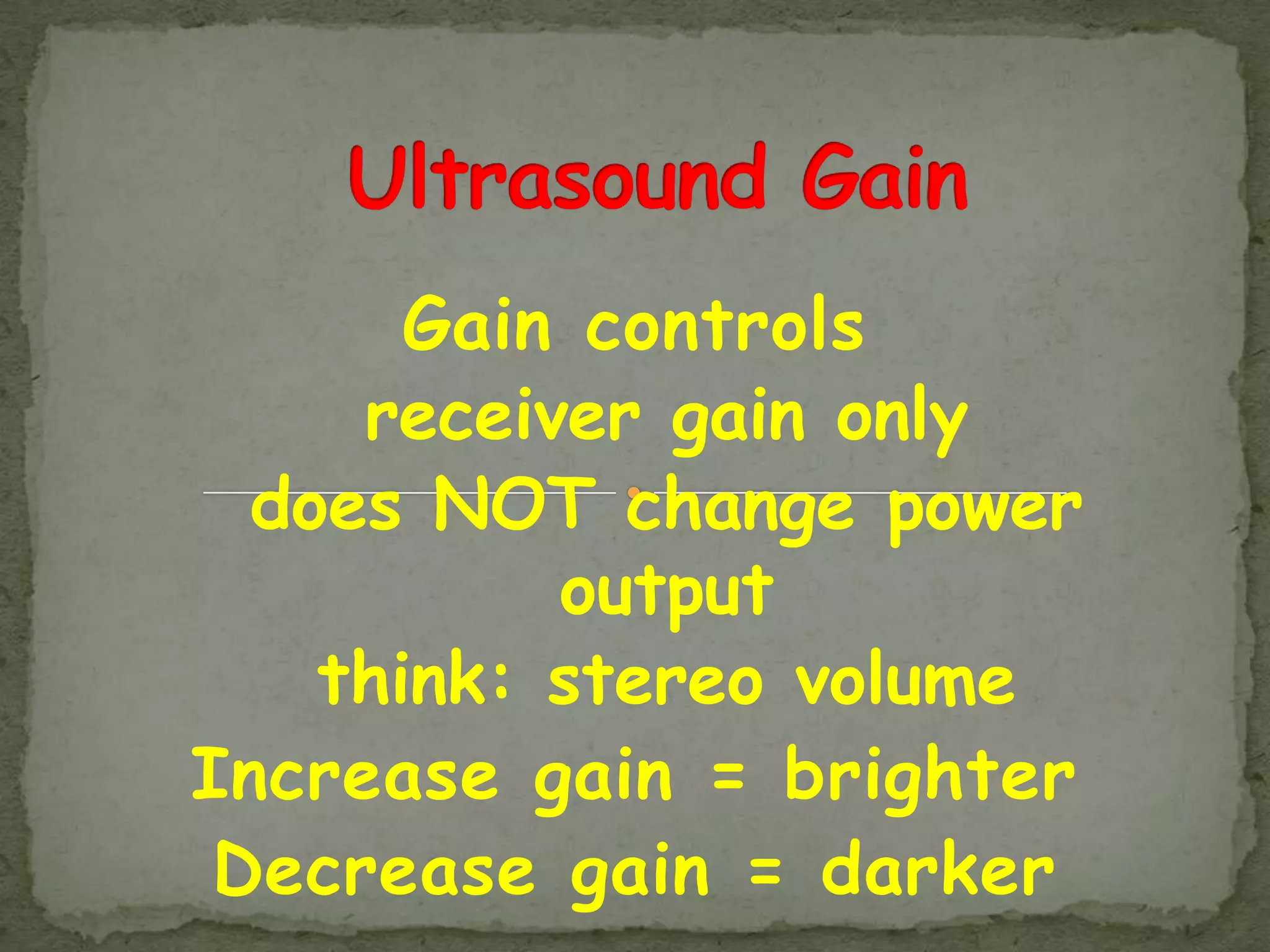
Gain controls
     receiver gain only
  does NOT change power
           output
    think: stereo volume
Increase gain = brighter
 Decrease gain = darker
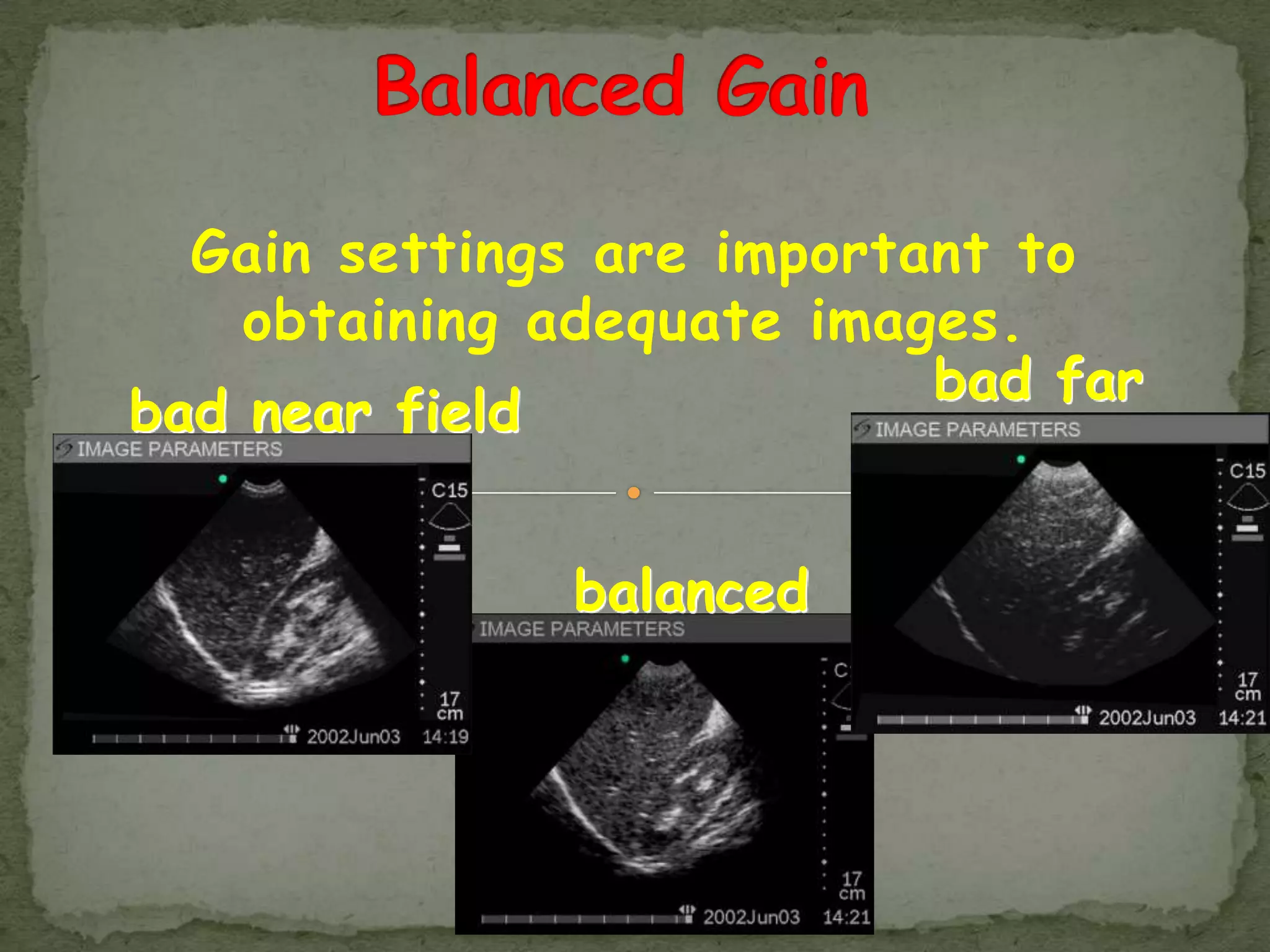
Gain settings are important to
    obtaining adequate images.
                           bad far
bad near field
                           field

              balanced
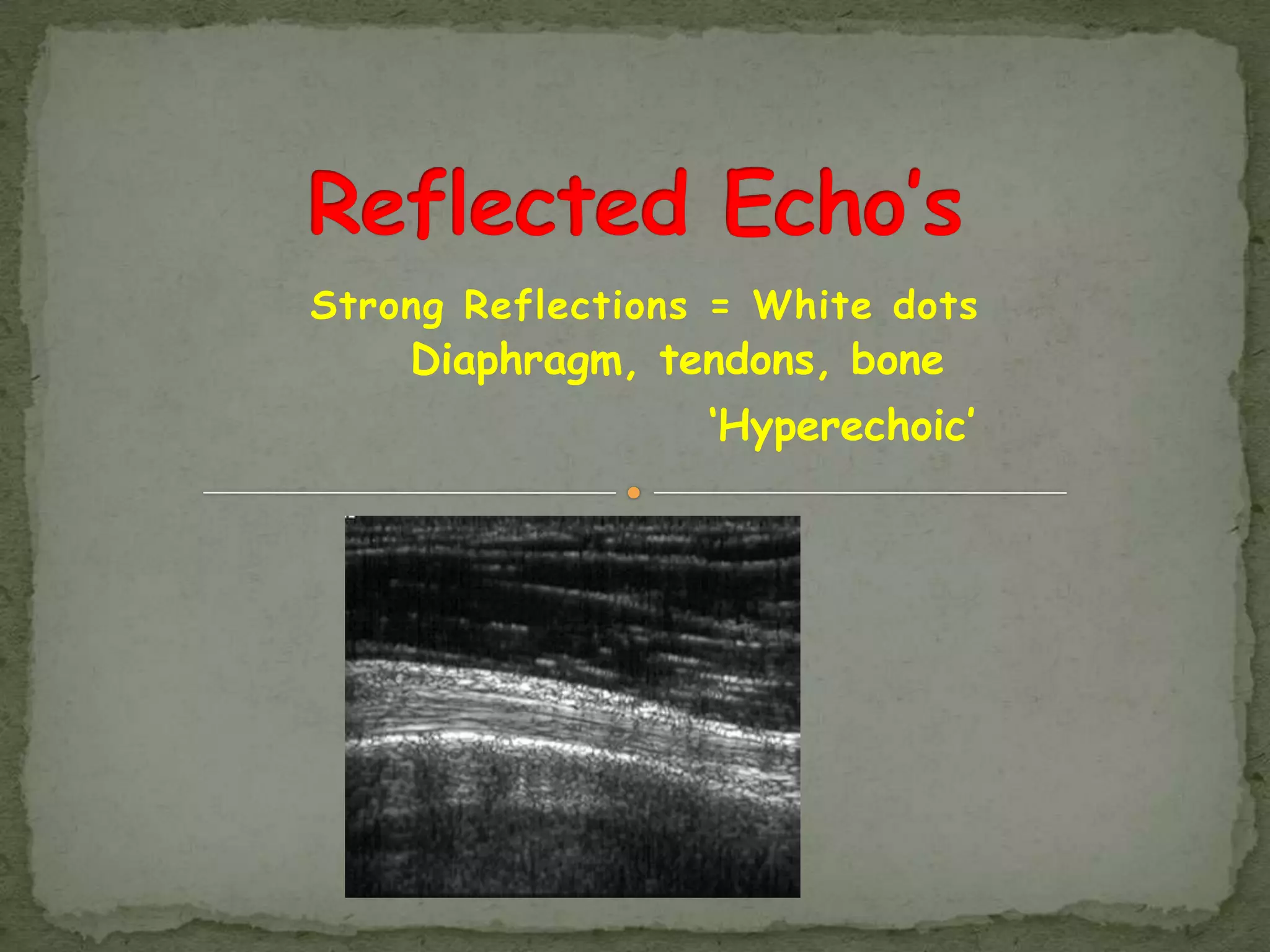
Strong Reflections = White dots
    Diaphragm, tendons, bone
                  „Hyperechoic‟
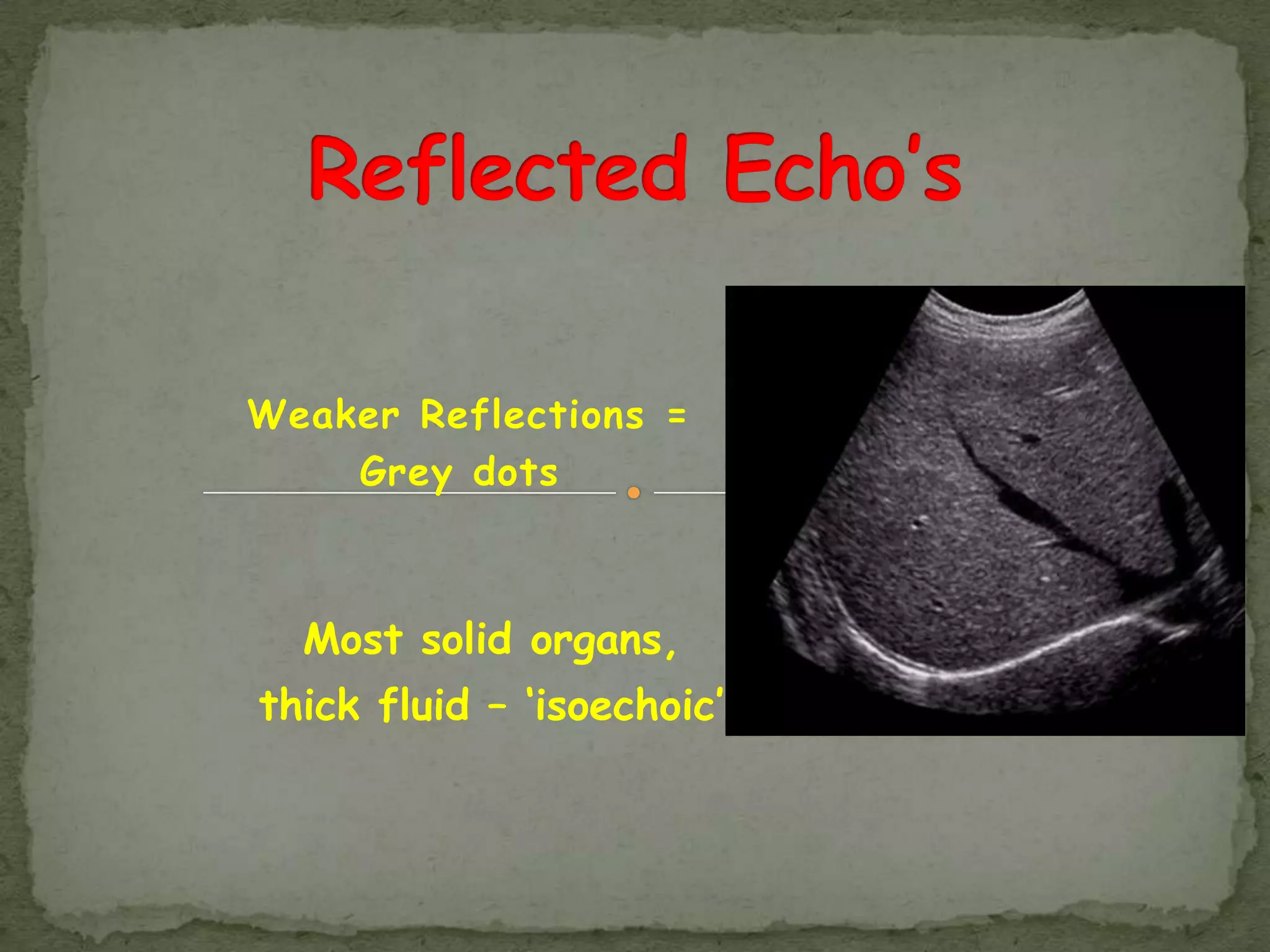
Weaker Reflections =
    Grey dots


  Most solid organs,
thick fluid – „isoechoic‟
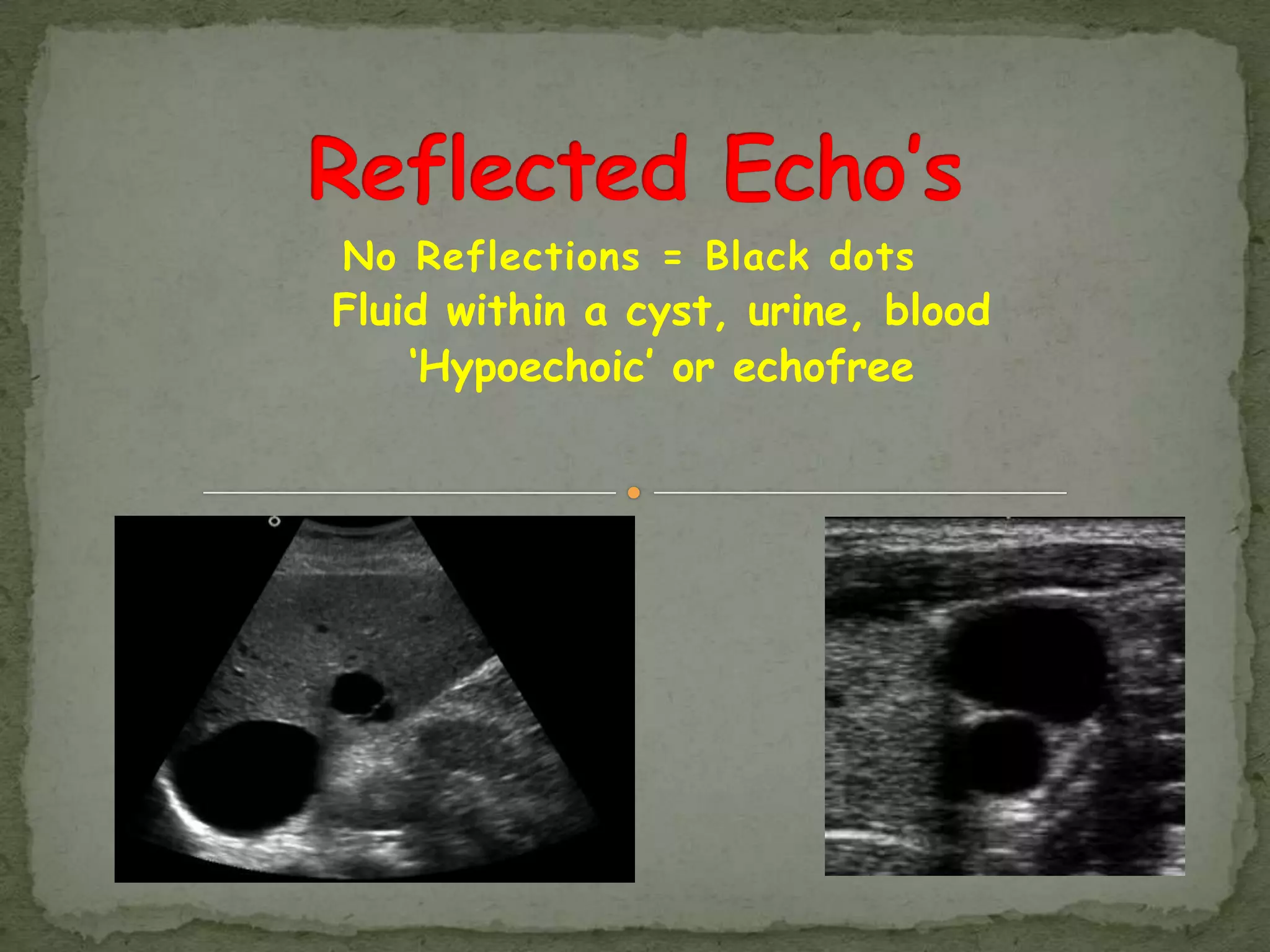
No Reflections = Black dots
Fluid within a cyst, urine, blood
    „Hypoechoic‟ or echofree
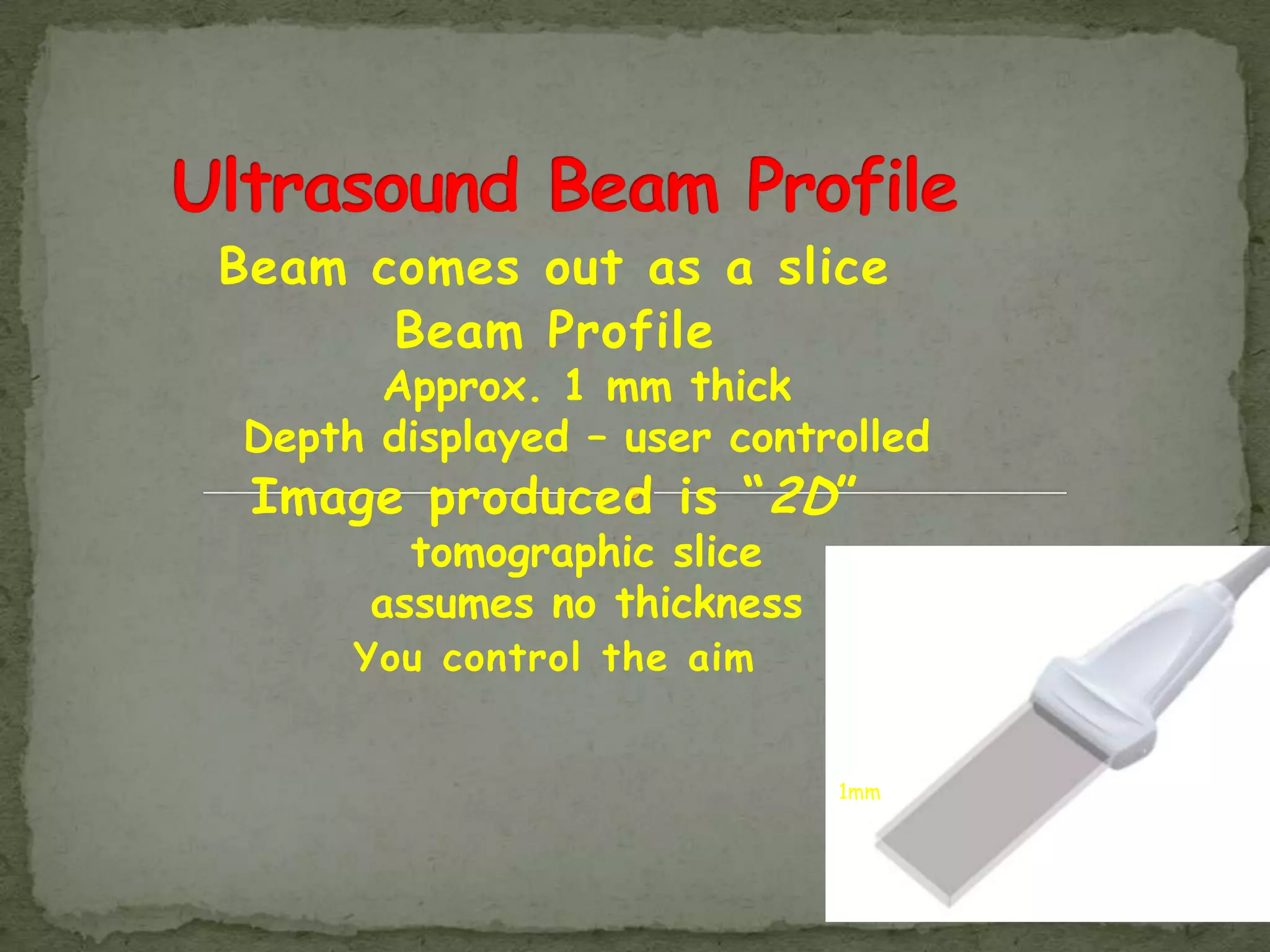
Beam comes out as a slice
      Beam Profile
      Approx. 1 mm thick
Depth displayed – user controlled
 Image produced is “ 2D ”
        tomographic slice
      assumes no thickness
     You control the aim


                             1mm
The ultimate goal of any ultrasound
system is to make like tissues look the
same and unlike tissues look different
Resolving capability of the system
          axial/lateral resolution
             spatial resolution
            contrast resolution
            temporal resolution
          Processing Power
ability to capture, preserve and display the
                 information
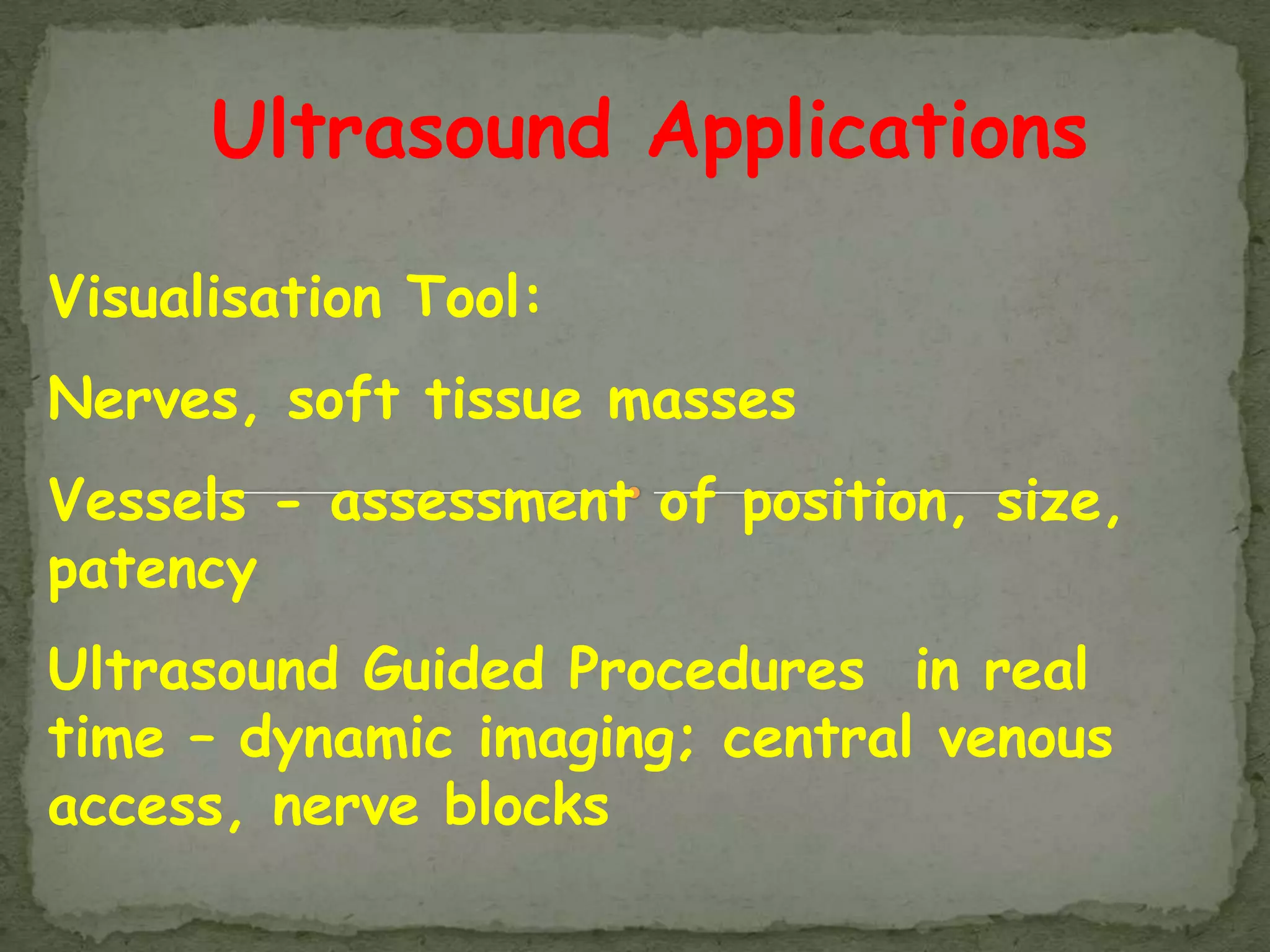
Ultrasound Applications

Visualisation Tool:
Nerves, soft tissue masses
Vessels - assessment of position, size,
patency
Ultrasound Guided Procedures in real
time – dynamic imaging; central venous
access, nerve blocks
Imaging

Know your anatomy – Skin, muscle,
tendons, nerves and vessels
Recognise normal appearances –
compare sides!
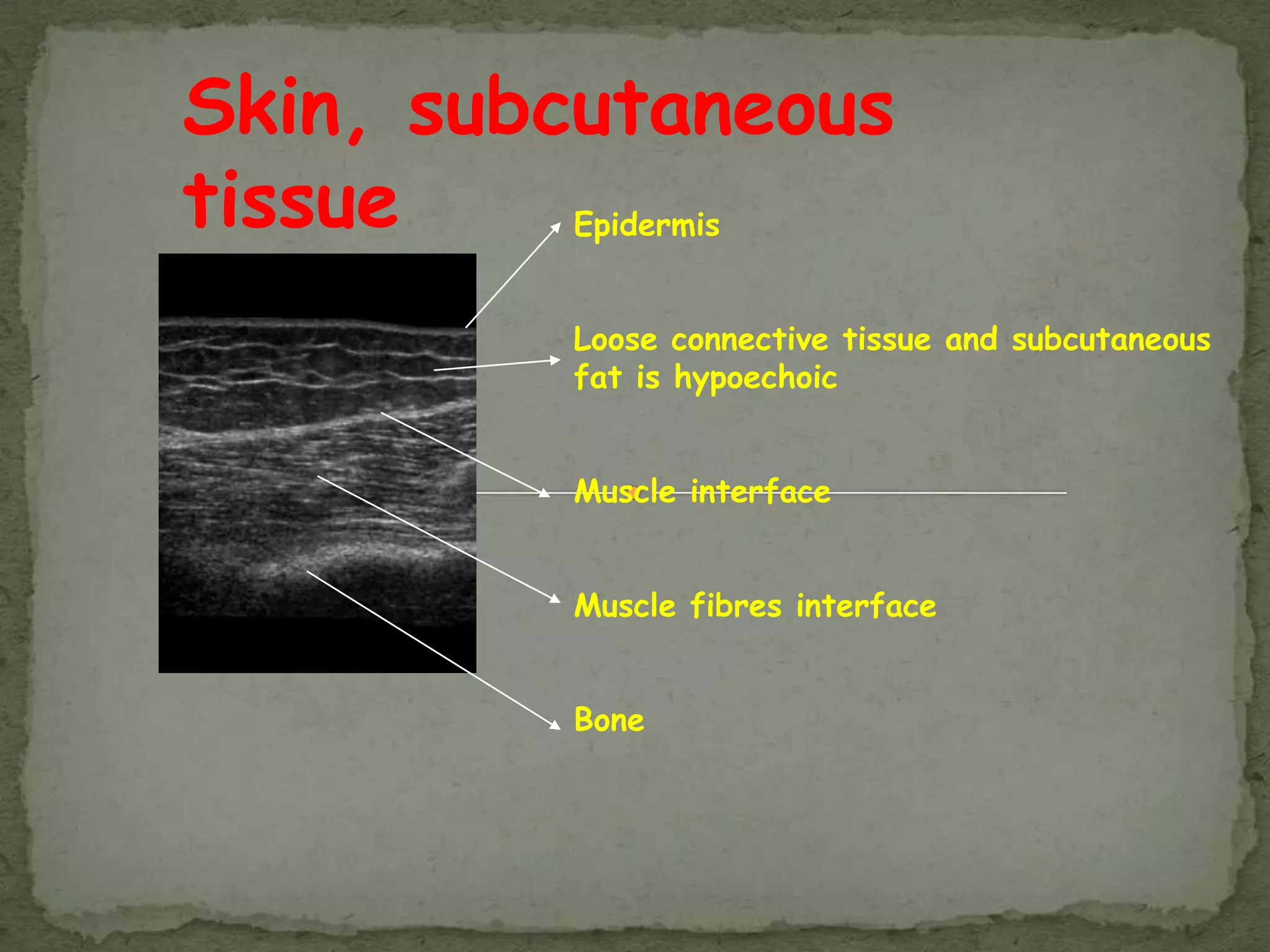
Skin, subcutaneous
tissue    Epidermis


          Loose connective tissue and subcutaneous
          fat is hypoechoic


          Muscle interface


          Muscle fibres interface


          Bone
Summary
 • Resolution determines image clarity
 • Electronic Arrays may be sector or linear

• Frequency & wavelength are inversely proportional

 • Attenuation & frequency are inversely related

 • Display mode chosen determines how image is
 registered
• Diagnostic Medical Ultrasound is safe!
conclusion
•Imaging tool – Must have the knowledge to
understand how the image is formed


•Dynamic technique


•Acquisition and interpretation dependant
upon the skills of the operator.
Basics of ultrasound machine

Basics of ultrasound machine

  • 1.
  • 2.
    ULTRA SOUND A REVOLUTION IN MEDICAL IMAGING
  • 3.
  • 4.
    MEDICAL IMAGING: The techniques and processes used to create image of the internal as well as external human body parts for clinical purpose .
  • 5.
    why medical imagingis required? Medical imaging provides a pictorial status of particular organ which is to be treated It makes a surgical targets more clear and precise It provides a pictorial status of fetus development right from 4th weak to 36th- 38th week It make therapeutic targets easy to detect
  • 6.
    TYPES OF MEDICALIMAGING WIDELY USED X-RAY MAMOGRAPHY CONTRAST RADIOGRAPHY ULTRA SOUND CT SCAN MRI SPECT(SINGLE PHOTON EMMISION TOMOGRAPHY) PET(POSITRON EMISSION TOMOGRAPHY)
  • 7.
    HISTORY OF ULTRASOUND…………….. PIZOELECTRIC ISDEVELOPED BY THE CURIES IN 1880 USING NATURAL QUARTZ SONAR was first time used in war time 1940 Diagnosis medical
  • 8.
  • 9.
    ULTRA SOUND :PHYSICAL DEFINATION !!!!!!!!! • Sound waves greater than 20,000 Hertz or cycles per second Infrasoun <20 Hz (ACOUSTIC) >20 KHZ Ultrasoun d
  • 10.
    ULTRA SOUND :MEDICAL DEFINATION!!! DIGNOSTIC MEDICAL ULTRASOUND IS THE USE OF HIGH FREQUENCY SOUND TO AID IN DIGNOSIS AND TREATMENT OF PATIENT. FREQUENCY RANGES USED IN MEDICAL ULTRASOUND ARE 2- 15 MHZ
  • 11.
    Piezoelectric Effect The principle  Definition: of converting energy by applying pressure to a crystal . The reverse of the piezoelectric effect converts the energy back to its original form
  • 12.
    piezoelectric effect Ultrasound Transducers •A transducer converts one type of energy into another • Based upon :pulse-echo principle occurring with ultrasound the crystals, ultrasound transducers piezoelectric convert: – Electricity into sound = pulse – Sound into electricity = echo
  • 13.
     Transducer containspiezoelectric elements/crystals which produce the ultrasound pulses (transmit 1% of the time)  These elements convert electrical energy into a mechanical ultrasound wave
  • 14.
    PULSE • Pulse ofsounds is send to soft tissues •Sound interaction with soft tissues= bio effect •Pulsing is determined by transducer or probe crystal and ins not operated or control
  • 15.
    ECHO ECHO IS PRODUCEDBY SOFT TISSUES TISSUE INTRACTION WITH SOUND = ACOUSTIC PROPAGATION PROPERTIES ECHOES ARE RECEIVED BY THE TRANSDUCER CRYSTAL ECHOES ARE INTRPRETED AND PROCESSED BY ULTRA SOUND MACHINE
  • 16.
    reflective refraction Scattered echoes Incident Angle of incidence = angle of reflection
  • 17.
     Reflected echoesreturn to the scan head where the piezoelectric elements convert the ultrasound wave back into an electrical signal  The electrical signal is then processed by the ultrasound system
  • 18.
  • 19.
     The thickness of the crystal determines the frequency of the scan head Low High Frequency Frequency 3 MHz 10 MHz
  • 20.
    FREQUENCY AND RESOLUTION HIGH FREQUENCY = HIGH RESOLUTION 3.5 MHz(sector) 7.5 MHz(linear)
  • 21.
  • 22.
    B-MODE M-MODE
  • 23.
    Color Doppler Power Doppler
  • 24.
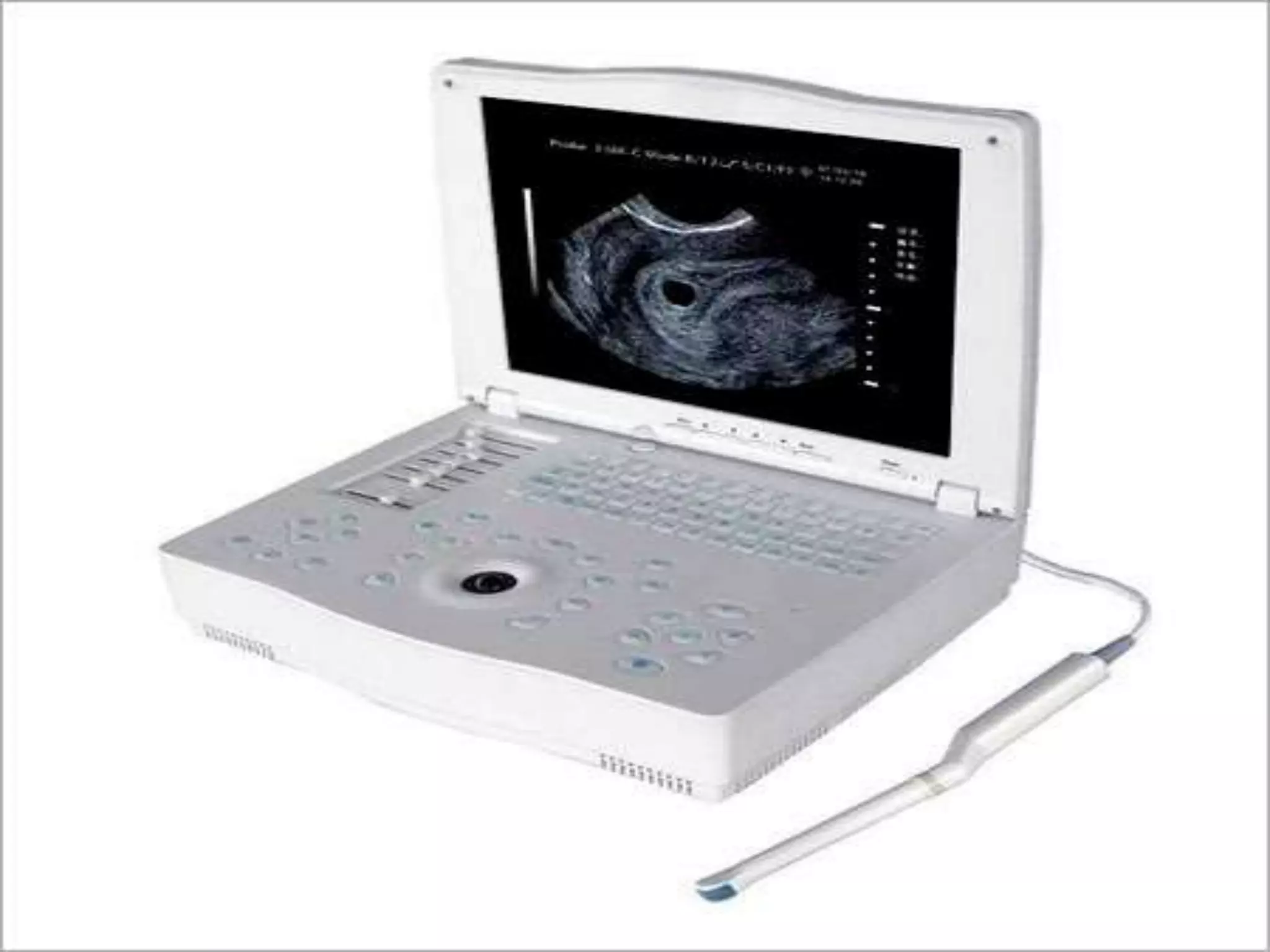
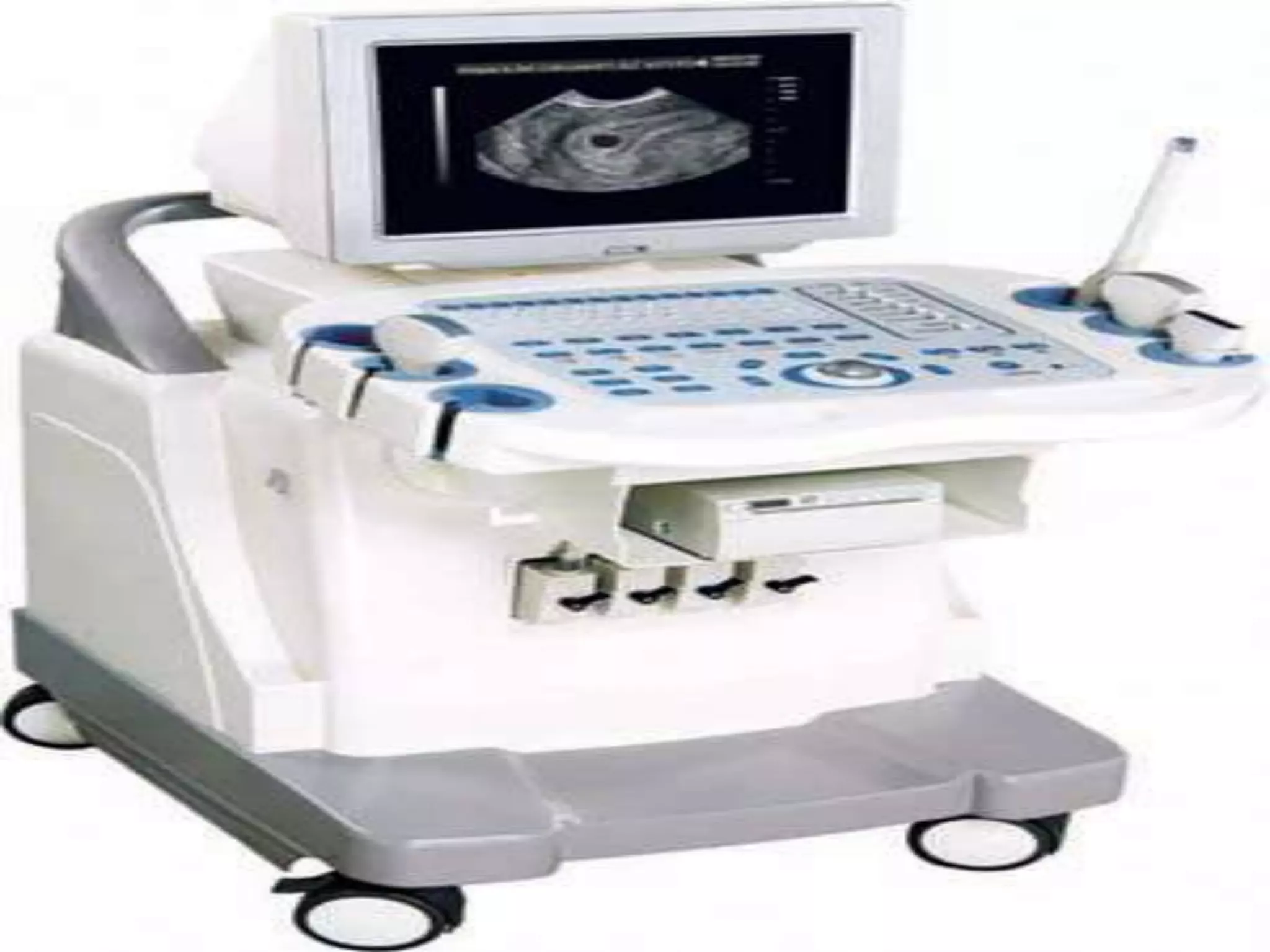
    MACHINE COMPONENT Transducer probe CPU(central processing unit) Transducer pulse control Display Keyboard /cursor Disk storage device Printer
  • 27.
  • 28.
    Electrical signal produces‘dots’ on the screen Brightness of the dots is proportional to the strength of the returning echoes Location of the dots is determined by travel time. The velocity in tissue is assumed constant at 1540m/sec  Distance = Velocity Time
  • 29.
  • 30.
    Interactions of Ultrasoundwith Tissue • Acoustic impedance (AI) is dependent on the density of the material in which sound is propagated - the greater the impedance the denser the material. • Reflections comes from the interface of different AI‟s • greater  of the AI = more signal reflected Transducer • works both ways (send and receive directions) Medium 1 Medium 2 Medium 3
  • 31.
    Sound is attenuatedby tissue More tissue to penetrate = more attenuation of signal Compensate by adjusting gain based on depth near field / far field AKA: TGC
  • 32.
    Gain controls receiver gain only does NOT change power output think: stereo volume Increase gain = brighter Decrease gain = darker
  • 33.
    Gain settings areimportant to obtaining adequate images. bad far bad near field field balanced
  • 34.
    Strong Reflections =White dots Diaphragm, tendons, bone „Hyperechoic‟
  • 35.
    Weaker Reflections = Grey dots Most solid organs, thick fluid – „isoechoic‟
  • 36.
    No Reflections =Black dots Fluid within a cyst, urine, blood „Hypoechoic‟ or echofree
  • 37.
    Beam comes outas a slice Beam Profile Approx. 1 mm thick Depth displayed – user controlled Image produced is “ 2D ” tomographic slice assumes no thickness You control the aim 1mm
  • 38.
    The ultimate goalof any ultrasound system is to make like tissues look the same and unlike tissues look different
  • 39.
    Resolving capability ofthe system axial/lateral resolution spatial resolution contrast resolution temporal resolution Processing Power ability to capture, preserve and display the information
  • 40.
    Ultrasound Applications Visualisation Tool: Nerves,soft tissue masses Vessels - assessment of position, size, patency Ultrasound Guided Procedures in real time – dynamic imaging; central venous access, nerve blocks
  • 41.
    Imaging Know your anatomy– Skin, muscle, tendons, nerves and vessels Recognise normal appearances – compare sides!
  • 42.
    Skin, subcutaneous tissue Epidermis Loose connective tissue and subcutaneous fat is hypoechoic Muscle interface Muscle fibres interface Bone
  • 45.
    Summary • Resolutiondetermines image clarity • Electronic Arrays may be sector or linear • Frequency & wavelength are inversely proportional • Attenuation & frequency are inversely related • Display mode chosen determines how image is registered • Diagnostic Medical Ultrasound is safe!
  • 46.
    conclusion •Imaging tool –Must have the knowledge to understand how the image is formed •Dynamic technique •Acquisition and interpretation dependant upon the skills of the operator.