Structure of Matter
                    The atomic model
During the ppt, click the atom for answers to questions& to return back again
Brainstorm . . .
What do we know about the structure of an atom?
Brainstorm . . .
What do we know about the structure of an atom?


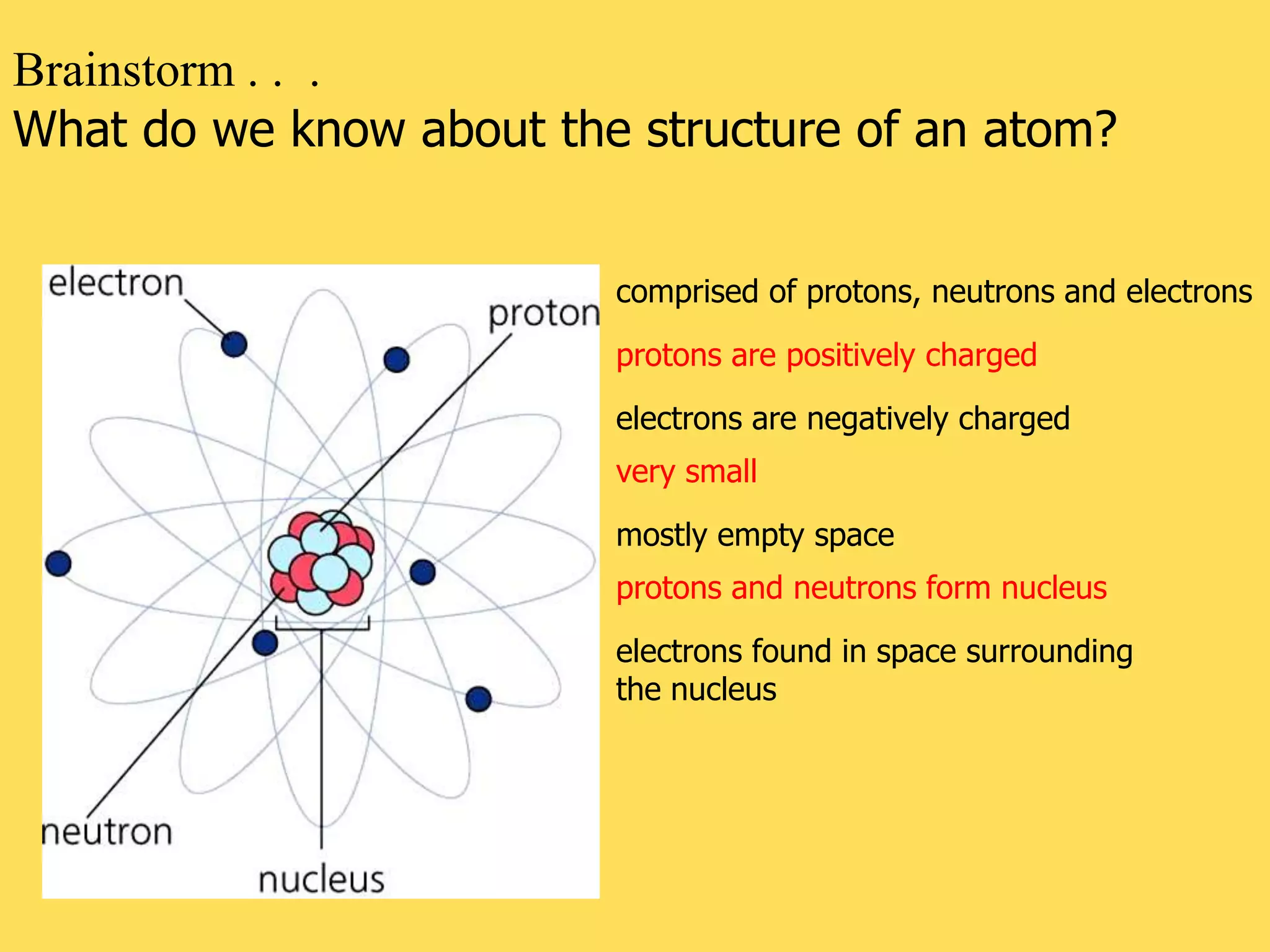
                         comprised of protons, neutrons and electrons

                         protons are positively charged

                         electrons are negatively charged
                         very small

                         mostly empty space
                         protons and neutrons form nucleus

                         electrons found in space surrounding
                         the nucleus
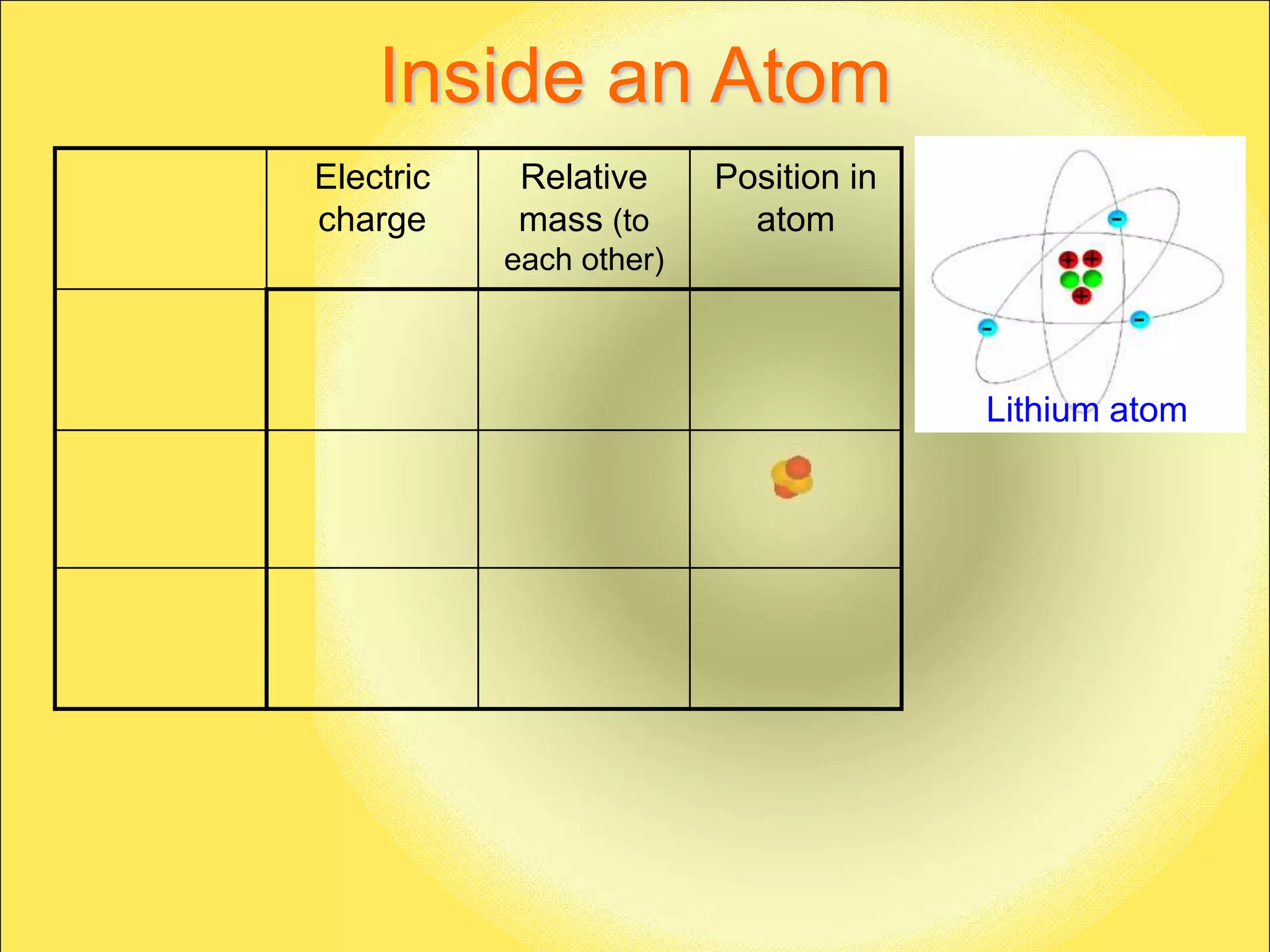
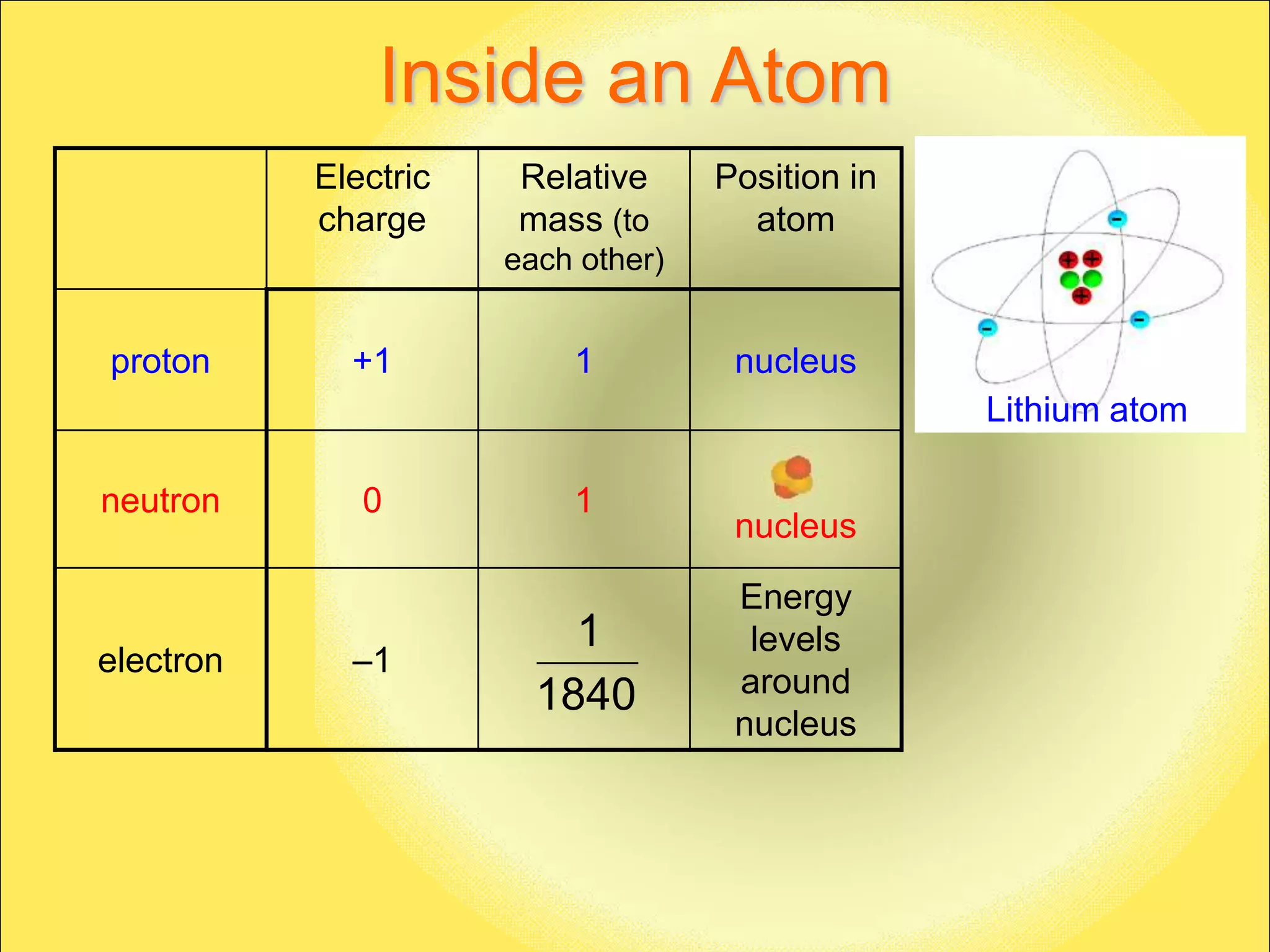
Inside an Atom
Electric    Relative     Position in
charge      mass (to       atom
           each other)


                                       Lithium atom
Inside an Atom
           Electric    Relative     Position in
           charge      mass (to       atom
                      each other)


proton       +1           1          nucleus
                                                  Lithium atom

neutron       0           1
                                     nucleus

                                     Energy
                          1           levels
electron     –1
                        1840         around
                                     nucleus
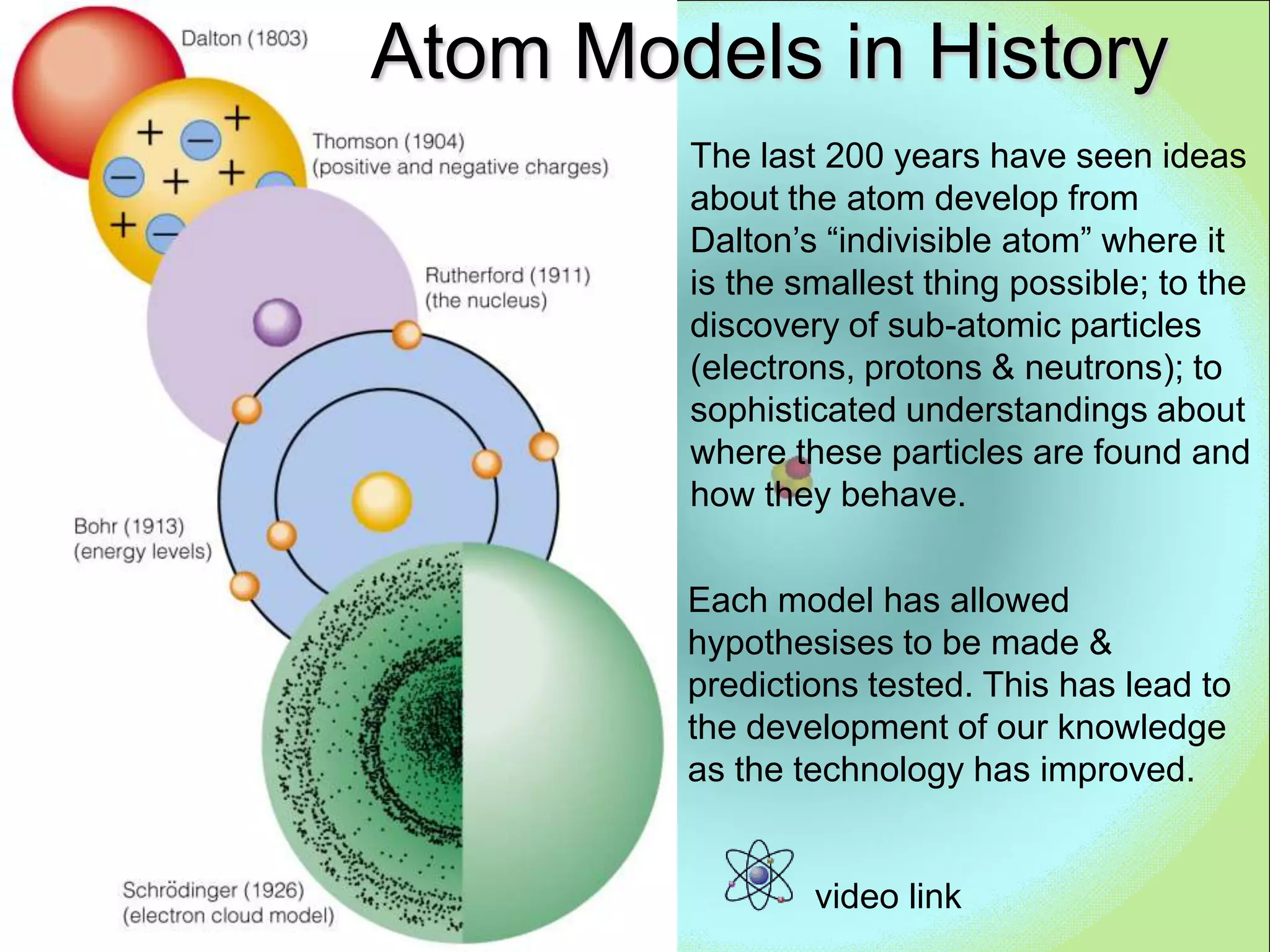
Atom Models in History
        The last 200 years have seen ideas
        about the atom develop from
        Dalton’s “indivisible atom” where it
        is the smallest thing possible; to the
        discovery of sub-atomic particles
        (electrons, protons & neutrons); to
        sophisticated understandings about
        where these particles are found and
        how they behave.

        Each model has allowed
        hypothesises to be made &
        predictions tested. This has lead to
        the development of our knowledge
        as the technology has improved.


                video link
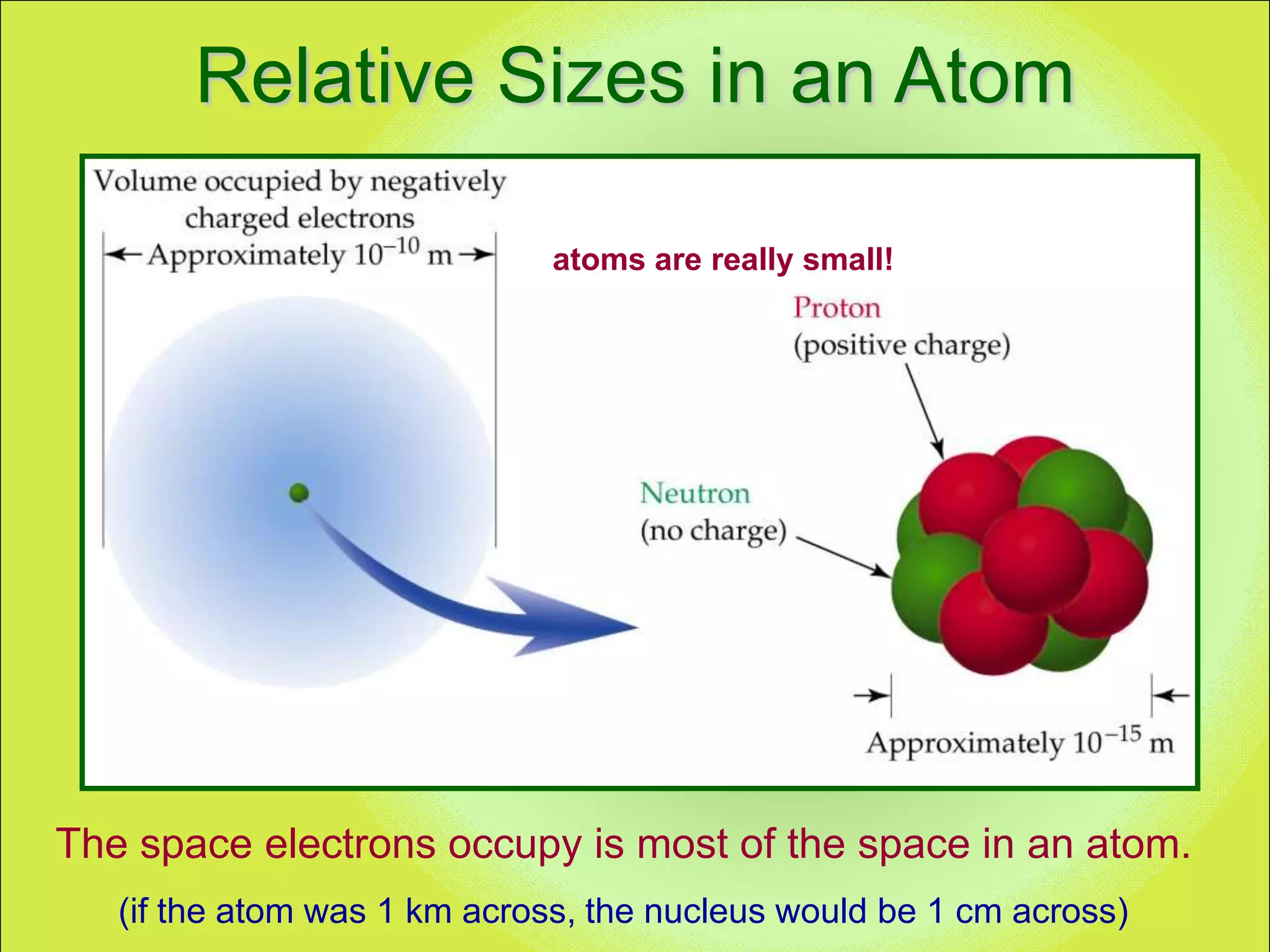
Relative Sizes in an Atom

                              atoms are really small!


The space electrons occupy is most of the space in an atom.
   (if the atom was 1 km across, the nucleus would be 1 cm across)
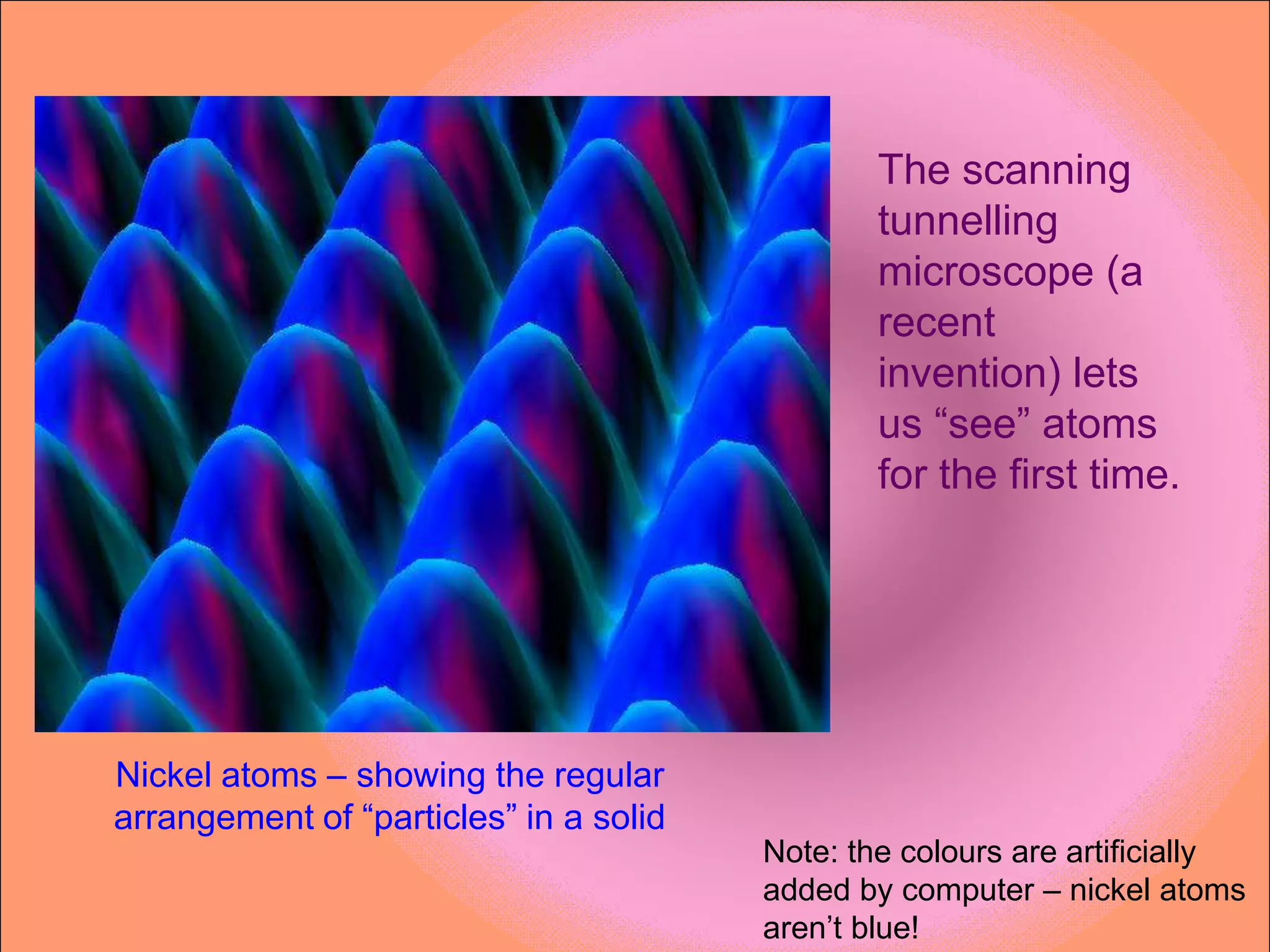
The scanning
                                                tunnelling
                                                microscope (a
                                                recent
                                                invention) lets
                                                us “see” atoms
                                                for the first time.


Nickel atoms – showing the regular
arrangement of “particles” in a solid
                                        Note: the colours are artificially
                                        added by computer – nickel atoms
                                        aren’t blue!
Review of Building
Atoms Exercise
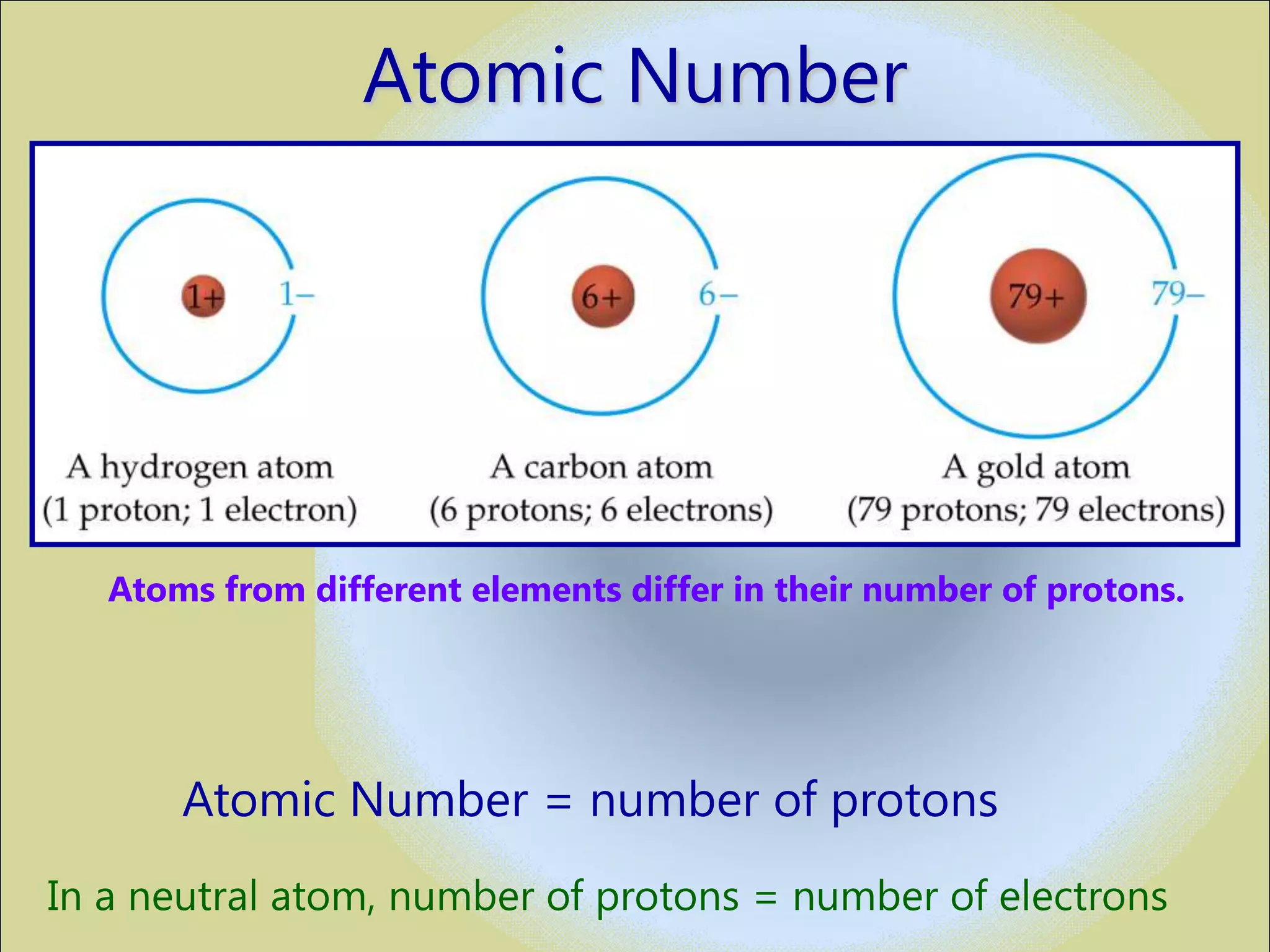
Atomic Number


                                                      Lithium atom


   Atoms from different elements differ in their number of protons.


       Atomic Number = number of protons
In a neutral atom, number of protons = number of electrons
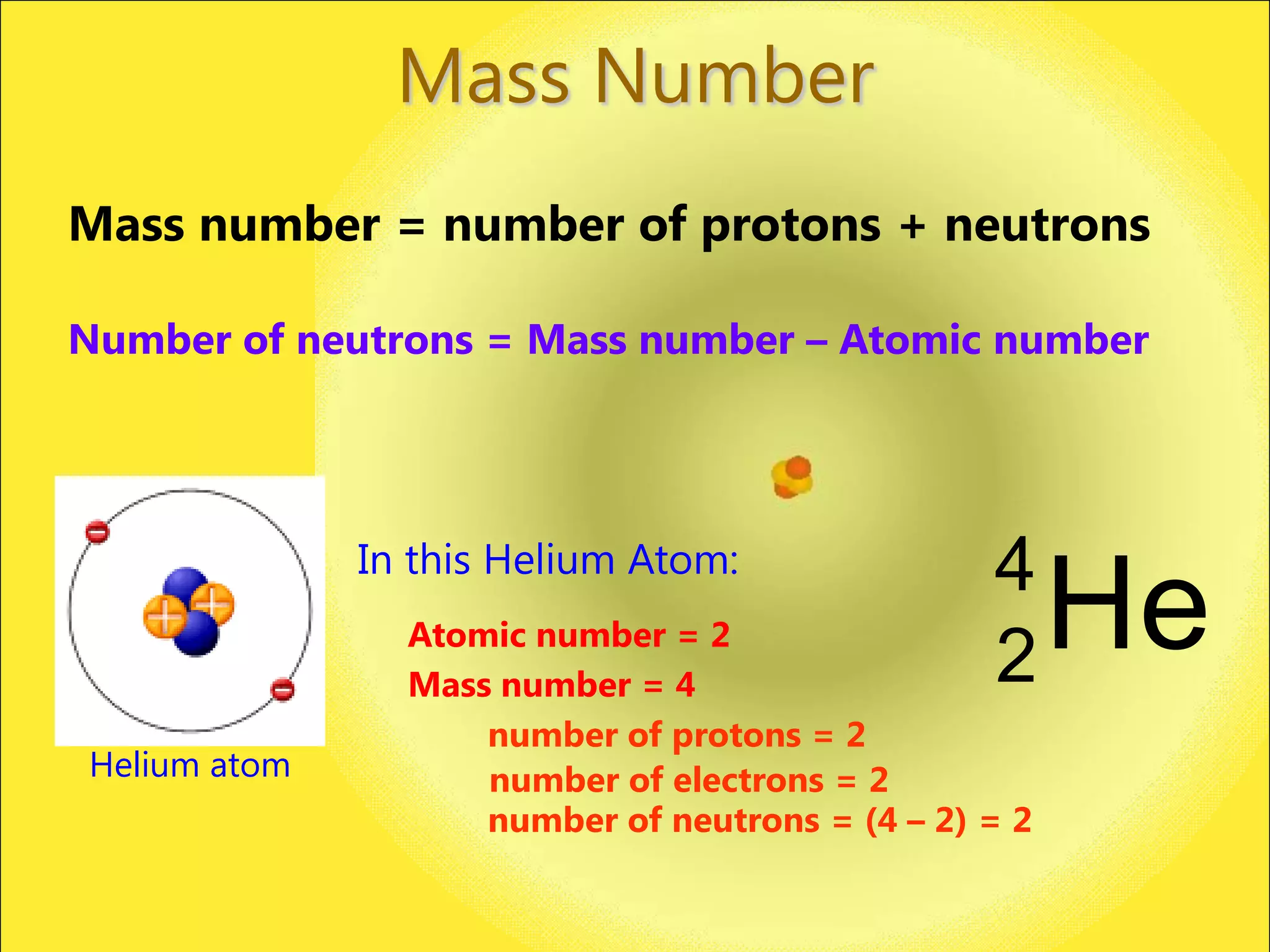
Mass Number
Mass number = number of protons + neutrons

Number of neutrons = Mass number – Atomic number


              In this Helium Atom:               4
                Atomic number = 2
                Mass number = 4                  2     He
                    number of protons = 2
Helium atom         number of electrons = 2
                    number of neutrons = (4 – 2) = 2
Ions
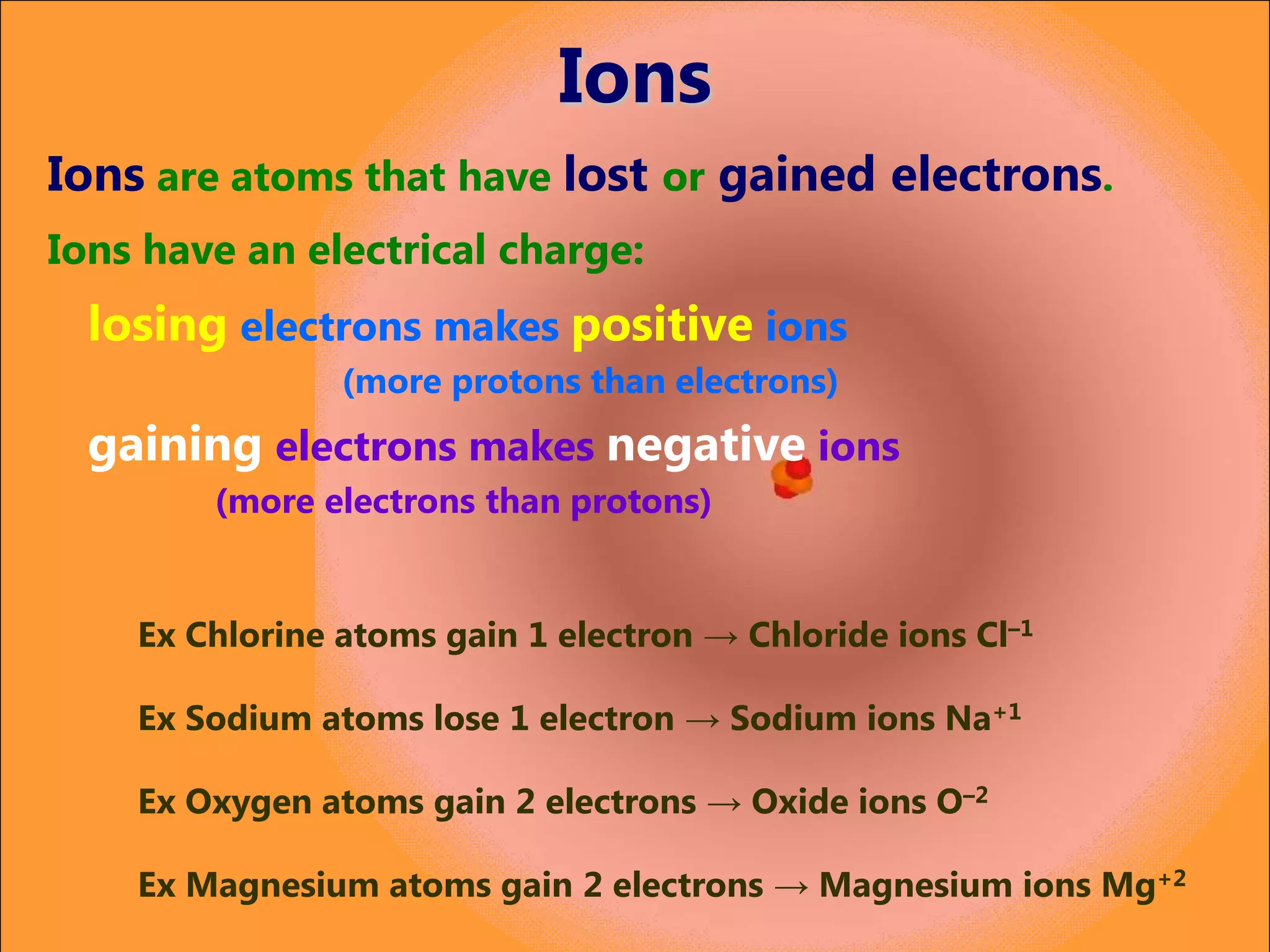
Ions are atoms that have lost or gained electrons.
Ions have an electrical charge:
  losing electrons makes positive ions
                (more protons than electrons)
  gaining electrons makes negative ions
        (more electrons than protons)


    Ex Chlorine atoms gain 1 electron → Chloride ions Cl–1

    Ex Sodium atoms lose 1 electron → Sodium ions Na+1

    Ex Oxygen atoms gain 2 electrons → Oxide ions O–2

    Ex Magnesium atoms gain 2 electrons → Magnesium ions Mg+2

Basic Atomic Structure

  • 1.
    Structure of Matter The atomic model During the ppt, click the atom for answers to questions& to return back again
  • 2.
    Brainstorm . .. What do we know about the structure of an atom?
  • 3.
    Brainstorm . .. What do we know about the structure of an atom? comprised of protons, neutrons and electrons protons are positively charged electrons are negatively charged very small mostly empty space protons and neutrons form nucleus electrons found in space surrounding the nucleus
  • 4.
    Inside an Atom Electric Relative Position in charge mass (to atom each other) Lithium atom
  • 5.
    Inside an Atom Electric Relative Position in charge mass (to atom each other) proton +1 1 nucleus Lithium atom neutron 0 1 nucleus Energy 1 levels electron –1 1840 around nucleus
  • 6.
    Atom Models inHistory The last 200 years have seen ideas about the atom develop from Dalton’s “indivisible atom” where it is the smallest thing possible; to the discovery of sub-atomic particles (electrons, protons & neutrons); to sophisticated understandings about where these particles are found and how they behave. Each model has allowed hypothesises to be made & predictions tested. This has lead to the development of our knowledge as the technology has improved. video link
  • 7.
    Relative Sizes inan Atom atoms are really small! The space electrons occupy is most of the space in an atom. (if the atom was 1 km across, the nucleus would be 1 cm across)
  • 8.
    The scanning tunnelling microscope (a recent invention) lets us “see” atoms for the first time. Nickel atoms – showing the regular arrangement of “particles” in a solid Note: the colours are artificially added by computer – nickel atoms aren’t blue!
  • 9.
  • 10.
    Atomic Number Lithium atom Atoms from different elements differ in their number of protons. Atomic Number = number of protons In a neutral atom, number of protons = number of electrons
  • 11.
    Mass Number Mass number= number of protons + neutrons Number of neutrons = Mass number – Atomic number In this Helium Atom: 4 Atomic number = 2 Mass number = 4 2 He number of protons = 2 Helium atom number of electrons = 2 number of neutrons = (4 – 2) = 2
  • 12.
    Ions Ions are atomsthat have lost or gained electrons. Ions have an electrical charge: losing electrons makes positive ions (more protons than electrons) gaining electrons makes negative ions (more electrons than protons) Ex Chlorine atoms gain 1 electron → Chloride ions Cl–1 Ex Sodium atoms lose 1 electron → Sodium ions Na+1 Ex Oxygen atoms gain 2 electrons → Oxide ions O–2 Ex Magnesium atoms gain 2 electrons → Magnesium ions Mg+2