Topic 1.2 Atoms
Topic 2: Atoms

 Why study Atoms?

 Without a knowledge and understanding of what at
   atom is and what it is made of how can a scientist
   hope to understand or predict how something will
   react and bond to make a new compound.
 Without this knowledge what is the purpose of
   Chemistry (or indeed Biology or Physics)?
 Without this fundamental knowledge there can be
   no understanding of Science.
Take a risk, it’s what scientists do!

   There is no wrong answer!

   Using what you know and understand so far draw
      (and label if you can) what you think an atom looks
      like. Put a box around it and write: “This is what I
      believed an atom looked like on 11/8/2011”

      It will be interesting to look back in a few lessons to
      see how close your understanding was to the
      current understanding of what an atom looks like.


                                                         11/8/2011
The atom has taken a LONG time to work out

    In groups you are provided with the history of the
      discovery of the atom.

    In your group you have to try to place this history
      into the correct order, you will then have to re-draw
      your idea of the atom based on this information.

    Divide the cards between the group, read them
      carefully then discuss as a group and try to place
      them in chronological order.
Time to take another risk

 Based on your new learning, draw a new labeled
   diagram of what you think the atom looks like.

 This is an individual activity, it doesn’t matter what
   the person next to you thinks!


 After you have finished your diagram, compare and
   discuss with the rest of your group then on the
   spare paper try to agree on a group model.
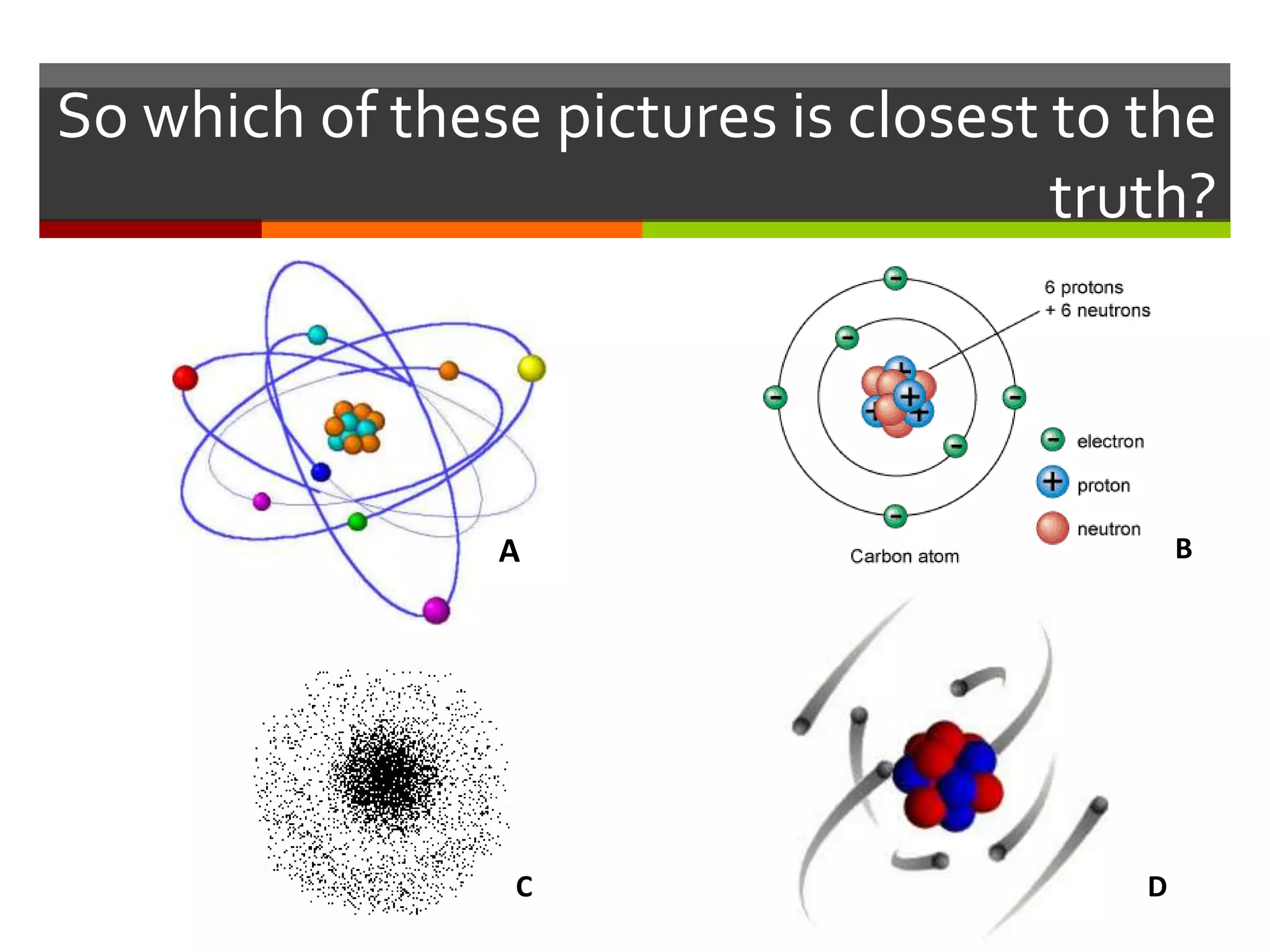
So which of these pictures is closest to the
                                      truth?


                A                            B


                 C                       D
So what does an atom look like?

 We’re still not exactly sure!

 Even with the most advanced technology that we
   have they are too small to observe, an individual
   atom is less than a 10th of a 1,000,000th of a
   millimeter in diameter! Or 0.00000001mm, as in
   10,000,000 of them side by side would just fill a
   1mm gap on your ruler

 So they are really rather small, but if you think that
   is small, just wait…
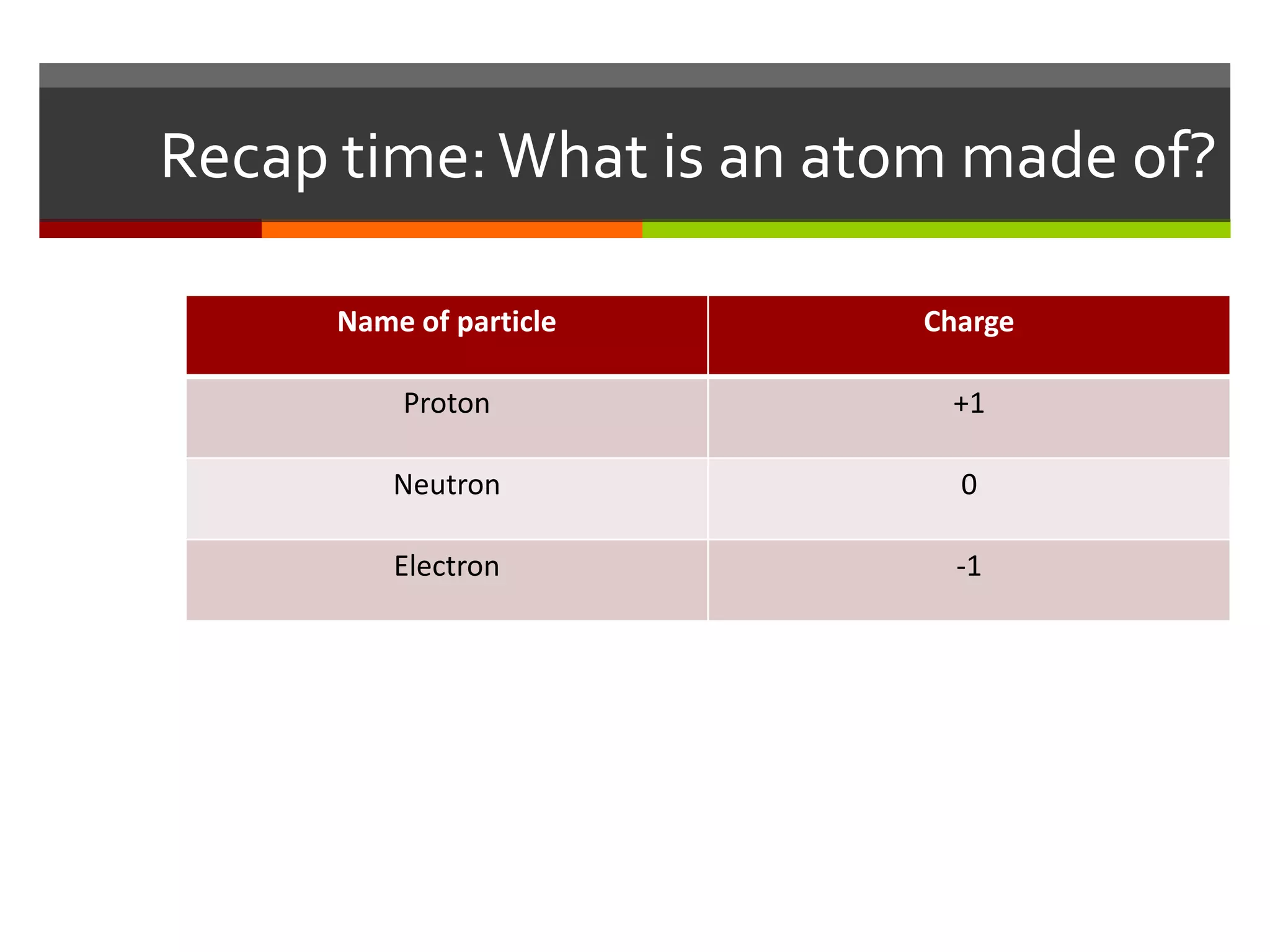
Recap time: What is an atom made of?

      Name of particle    Charge

          Proton           +1

          Neutron           0

          Electron          -1
So what use are atoms?

 All substances are made of atoms.


 A substance that is made of only one type of atom
   is called and element. Elements are shown in the
   Periodic Table.


 Looking at the Periodic Table, can you identify
   where the metals are and where the non-metals
   are?
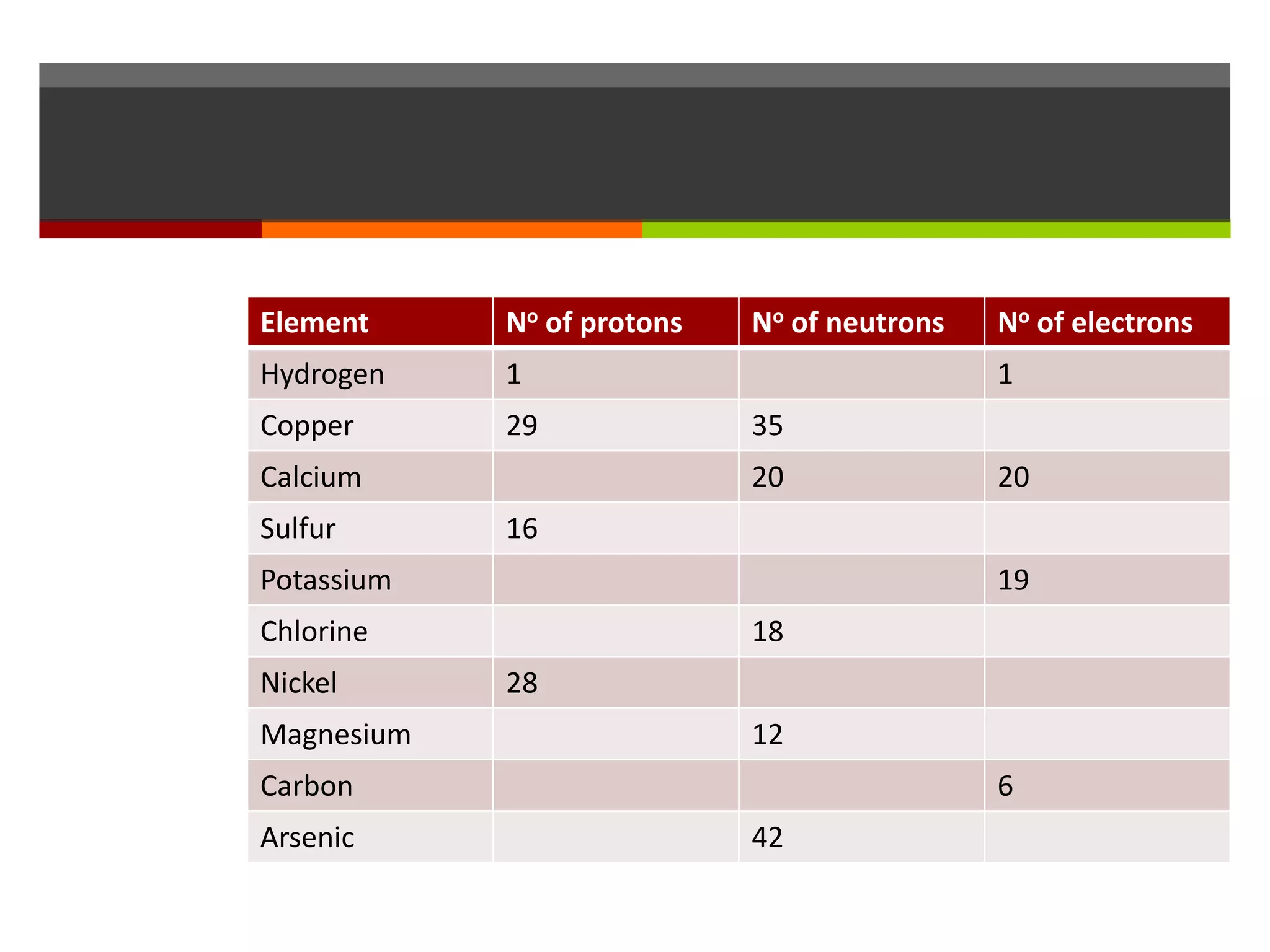
 In each element the number of electrons is equal to
   the number of protons, the number of neutrons can
   change.

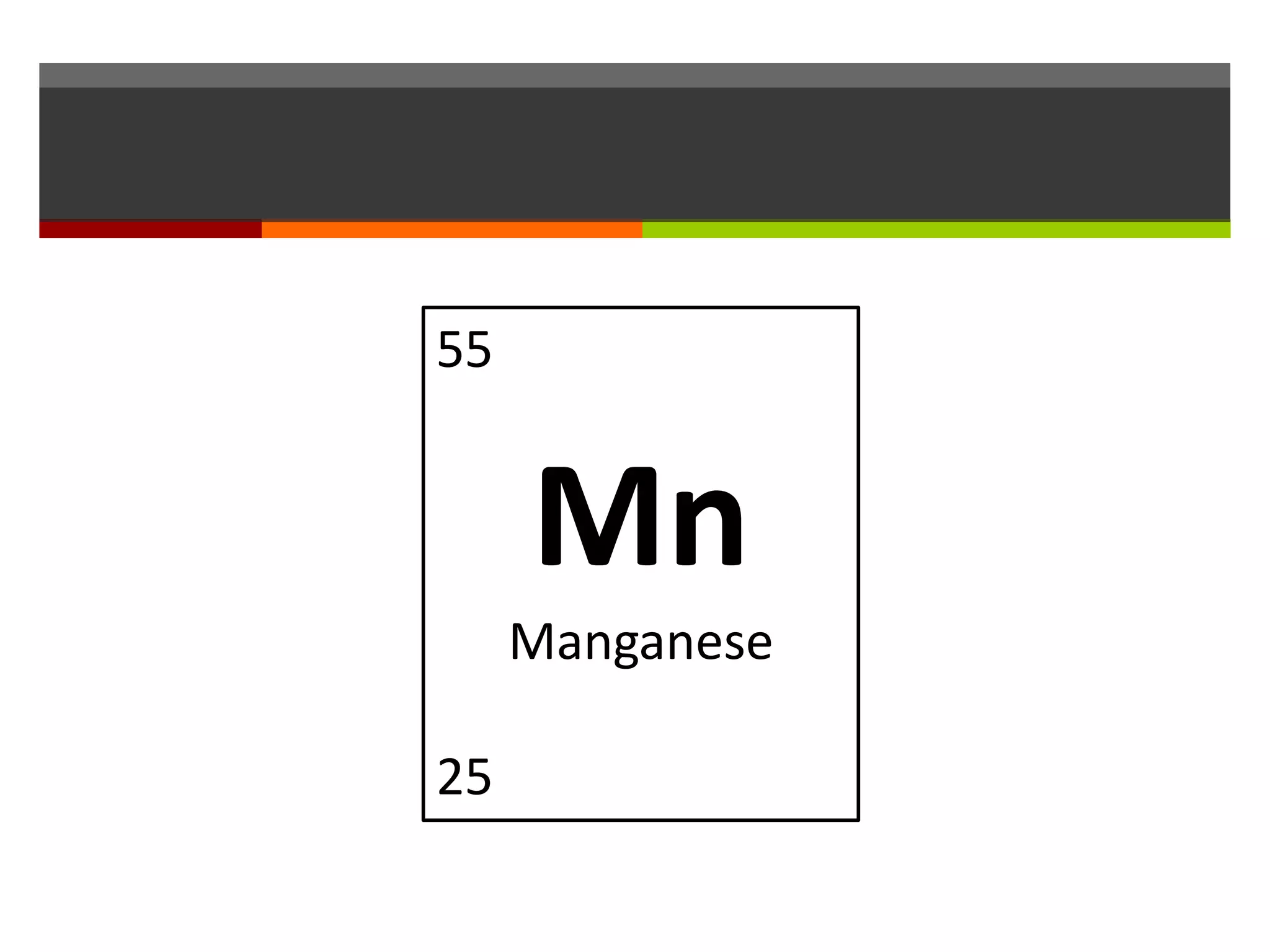
 The atomic number is the number of protons an
   atom has.

 The atomic ,ass number is the number of protons
   plus the number of protons.
55


     Mn
     Manganese

25
Element     No of protons   No of neutrons   No of electrons
Hydrogen    1                                1
Copper      29              35
Calcium                     20               20
Sulfur      16
Potassium                                    19
Chlorine                    18
Nickel      28
Magnesium                   12
Carbon                                       6
Arsenic                     42
Proton number = type of element

  All atoms of a particular element have the same
    number of protons.


  Atoms of different elements have different number
    of protons.


  What happens to the number of protons as you go
    across the Periodic Table from left to right?
The number of neutrons

 What are isotopes?

 What makes them different?

 What keeps them the same?

 What makes them useful?

 What are some common examples and what are
   their uses?
Relative atomic mass - Ar

 The relative atomic mass shown on the periodic
   table is an average mass of all the isotopes of an
   element compared (relative) to the mass of the 12C
   isotope.

 Even the mass shown for C on the Periodic Table is
   measured relative to the 12C isotope.

 At GCSE you do not have to calculate this!
Electrons

 Each atom has the same number of electrons as it
   does protons.
 Protons have a positive charge, each proton has a
   charge of +1
 Electrons have a negative charge, each electron has
   a charge of -1
 The charges of the protons and the electrons cancel
   each other out so that there is no overall charge on
   an atom.
Locating the electrons

 The electrons orbit the nucleus of an atom in
   energy levels (or shells).

 The electrons occupy the lowest available energy
   levels (the ones nearest the nucleus) first.


 The position of the outermost electron dictates the
   reactivity of an element.
Flame tests

 When heated by a Bunsen burner flame each
   metallic element will ‘emit’ a specific colour of
   visible light – this is called its atomic spectrum.


 Place a splint into a small sample of a salt and place
   into the roaring flame of a Bunsen burner – record
   the name of the salt and the colour of the flame it
   produces.
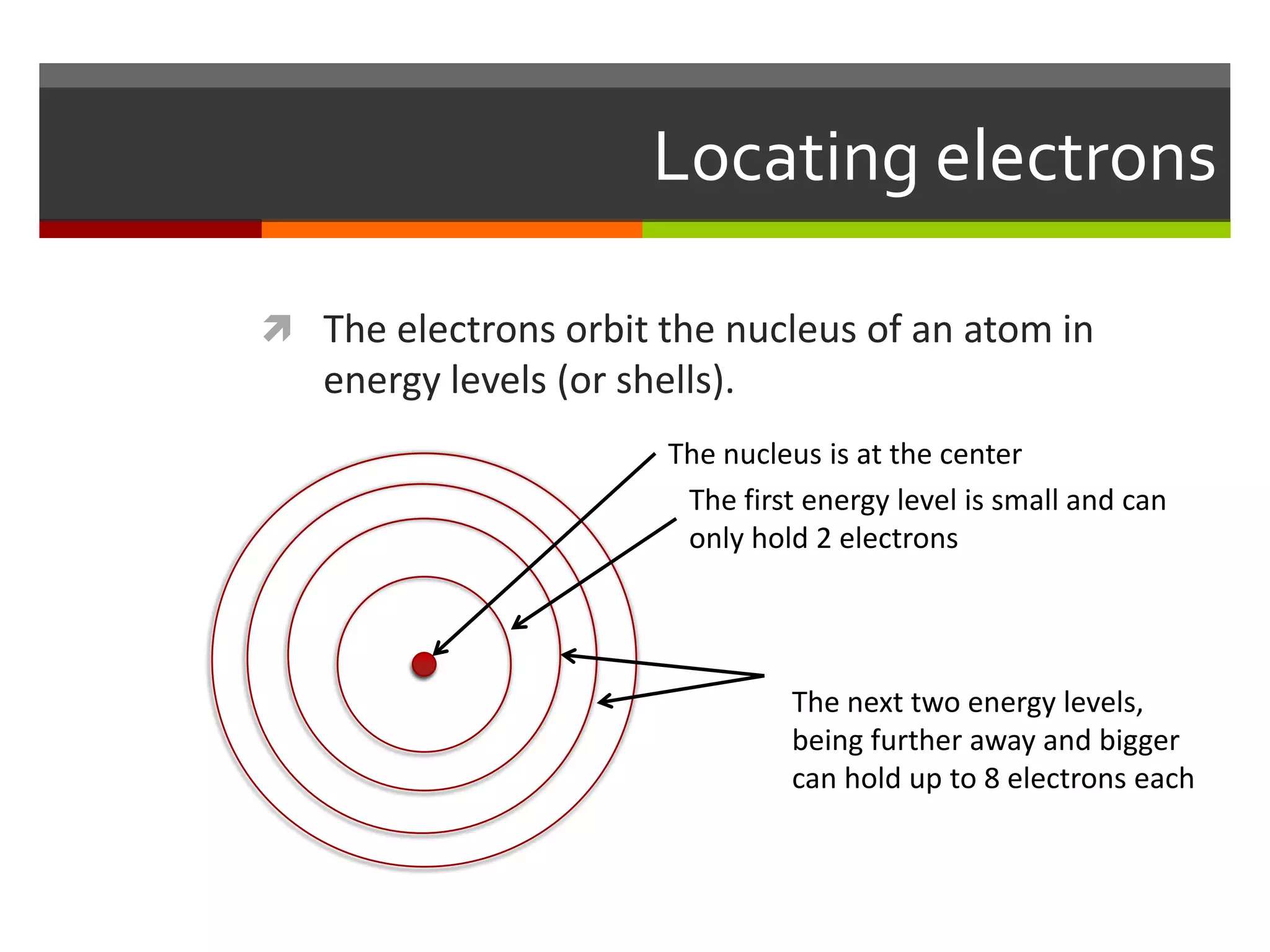
Locating electrons

 The electrons orbit the nucleus of an atom in
   energy levels (or shells).
                        The nucleus is at the center
                         The first energy level is small and can
                         only hold 2 electrons


                                 The next two energy levels,
                                 being further away and bigger
                                 can hold up to 8 electrons each
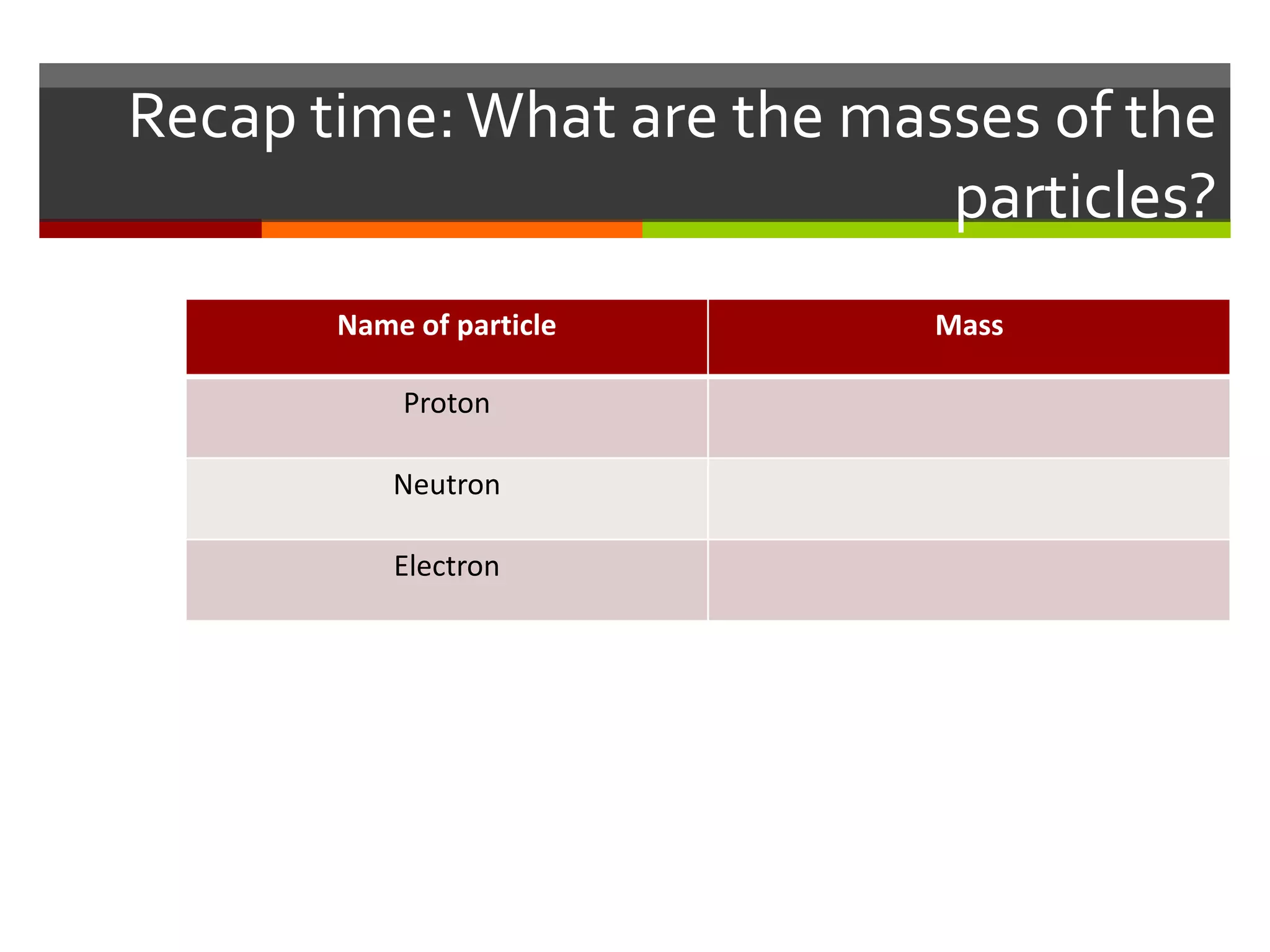
Recap time: What are the masses of the
                            particles?
       Name of particle     Mass

           Proton

           Neutron

           Electron

Topic 1.2 atoms

  • 1.
  • 2.
    Topic 2: Atoms Why study Atoms?  Without a knowledge and understanding of what at atom is and what it is made of how can a scientist hope to understand or predict how something will react and bond to make a new compound.  Without this knowledge what is the purpose of Chemistry (or indeed Biology or Physics)?  Without this fundamental knowledge there can be no understanding of Science.
  • 3.
    Take a risk,it’s what scientists do!  There is no wrong answer!  Using what you know and understand so far draw (and label if you can) what you think an atom looks like. Put a box around it and write: “This is what I believed an atom looked like on 11/8/2011”  It will be interesting to look back in a few lessons to see how close your understanding was to the current understanding of what an atom looks like. 11/8/2011
  • 4.
    The atom hastaken a LONG time to work out  In groups you are provided with the history of the discovery of the atom.  In your group you have to try to place this history into the correct order, you will then have to re-draw your idea of the atom based on this information.  Divide the cards between the group, read them carefully then discuss as a group and try to place them in chronological order.
  • 5.
    Time to takeanother risk  Based on your new learning, draw a new labeled diagram of what you think the atom looks like.  This is an individual activity, it doesn’t matter what the person next to you thinks!  After you have finished your diagram, compare and discuss with the rest of your group then on the spare paper try to agree on a group model.
  • 6.
    So which ofthese pictures is closest to the truth? A B C D
  • 7.
    So what doesan atom look like?  We’re still not exactly sure!  Even with the most advanced technology that we have they are too small to observe, an individual atom is less than a 10th of a 1,000,000th of a millimeter in diameter! Or 0.00000001mm, as in 10,000,000 of them side by side would just fill a 1mm gap on your ruler  So they are really rather small, but if you think that is small, just wait…
  • 8.
    Recap time: Whatis an atom made of? Name of particle Charge Proton +1 Neutron 0 Electron -1
  • 9.
    So what useare atoms?  All substances are made of atoms.  A substance that is made of only one type of atom is called and element. Elements are shown in the Periodic Table.  Looking at the Periodic Table, can you identify where the metals are and where the non-metals are?
  • 10.
     In eachelement the number of electrons is equal to the number of protons, the number of neutrons can change.  The atomic number is the number of protons an atom has.  The atomic ,ass number is the number of protons plus the number of protons.
  • 11.
    55 Mn Manganese 25
  • 12.
    Element No of protons No of neutrons No of electrons Hydrogen 1 1 Copper 29 35 Calcium 20 20 Sulfur 16 Potassium 19 Chlorine 18 Nickel 28 Magnesium 12 Carbon 6 Arsenic 42
  • 13.
    Proton number =type of element  All atoms of a particular element have the same number of protons.  Atoms of different elements have different number of protons.  What happens to the number of protons as you go across the Periodic Table from left to right?
  • 14.
    The number ofneutrons  What are isotopes?  What makes them different?  What keeps them the same?  What makes them useful?  What are some common examples and what are their uses?
  • 15.
    Relative atomic mass- Ar  The relative atomic mass shown on the periodic table is an average mass of all the isotopes of an element compared (relative) to the mass of the 12C isotope.  Even the mass shown for C on the Periodic Table is measured relative to the 12C isotope.  At GCSE you do not have to calculate this!
  • 16.
    Electrons  Each atomhas the same number of electrons as it does protons.  Protons have a positive charge, each proton has a charge of +1  Electrons have a negative charge, each electron has a charge of -1  The charges of the protons and the electrons cancel each other out so that there is no overall charge on an atom.
  • 17.
    Locating the electrons The electrons orbit the nucleus of an atom in energy levels (or shells).  The electrons occupy the lowest available energy levels (the ones nearest the nucleus) first.  The position of the outermost electron dictates the reactivity of an element.
  • 18.
    Flame tests  Whenheated by a Bunsen burner flame each metallic element will ‘emit’ a specific colour of visible light – this is called its atomic spectrum.  Place a splint into a small sample of a salt and place into the roaring flame of a Bunsen burner – record the name of the salt and the colour of the flame it produces.
  • 19.
    Locating electrons  Theelectrons orbit the nucleus of an atom in energy levels (or shells). The nucleus is at the center The first energy level is small and can only hold 2 electrons The next two energy levels, being further away and bigger can hold up to 8 electrons each
  • 20.
    Recap time: Whatare the masses of the particles? Name of particle Mass Proton Neutron Electron

Editor's Notes

  • #19 The colour is caused by the excitation of the outermost electron, the energy gap that the electron moves corresponds to the wavelength of visible light observed (E = hν)
  • #20 Point out how the number of electrons that an energy level can hold corresponds to the shape of the periodic table
  • #21 Proton = 1, neutron = 1, electron = very small (1/2000)