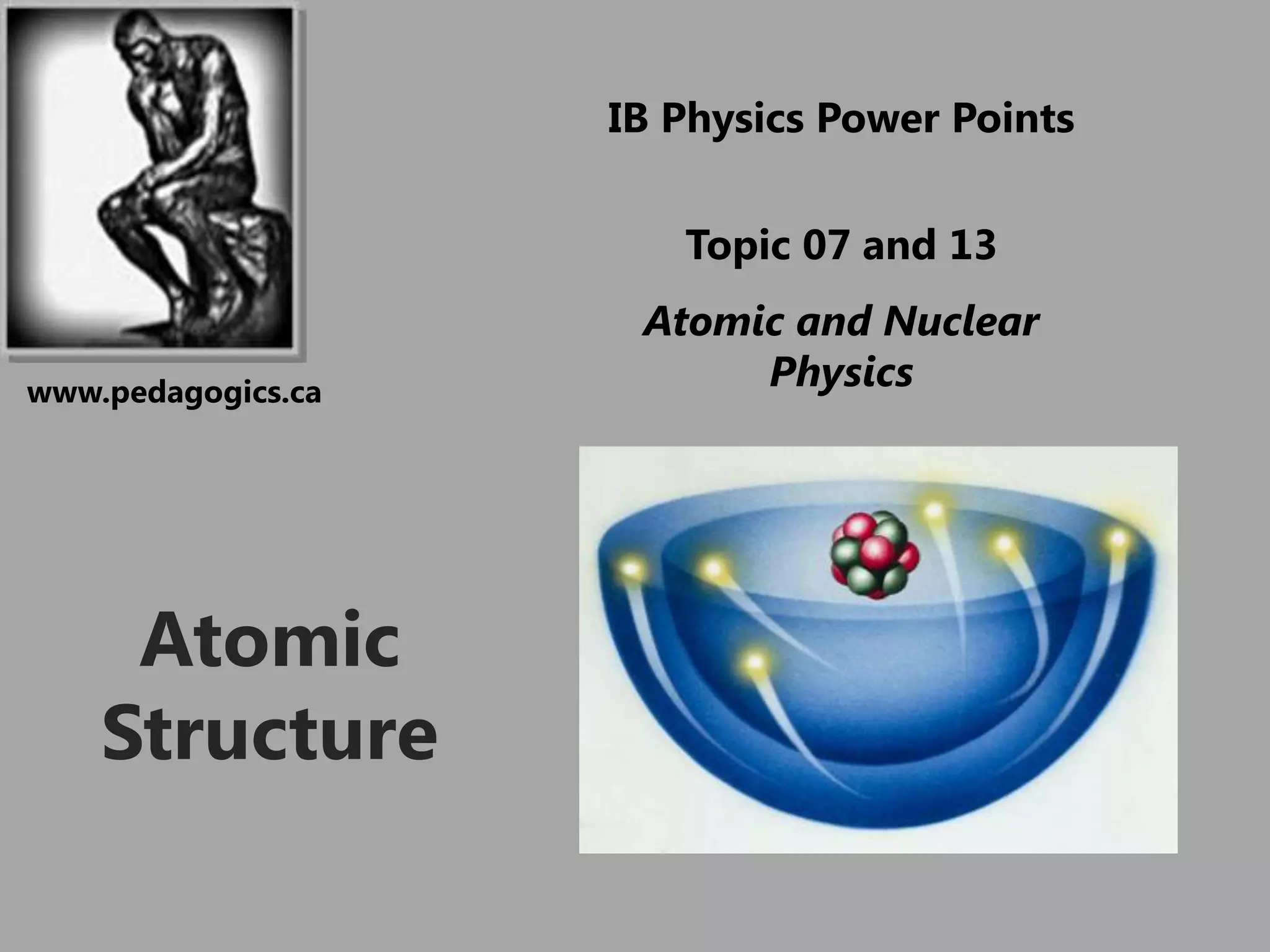
IB Physics Power Points

                       Topic 07 and 13
                     Atomic and Nuclear
www.pedagogics.ca
                          Physics


     Atomic
    Structure
Part 1
Development of an Atomic Model


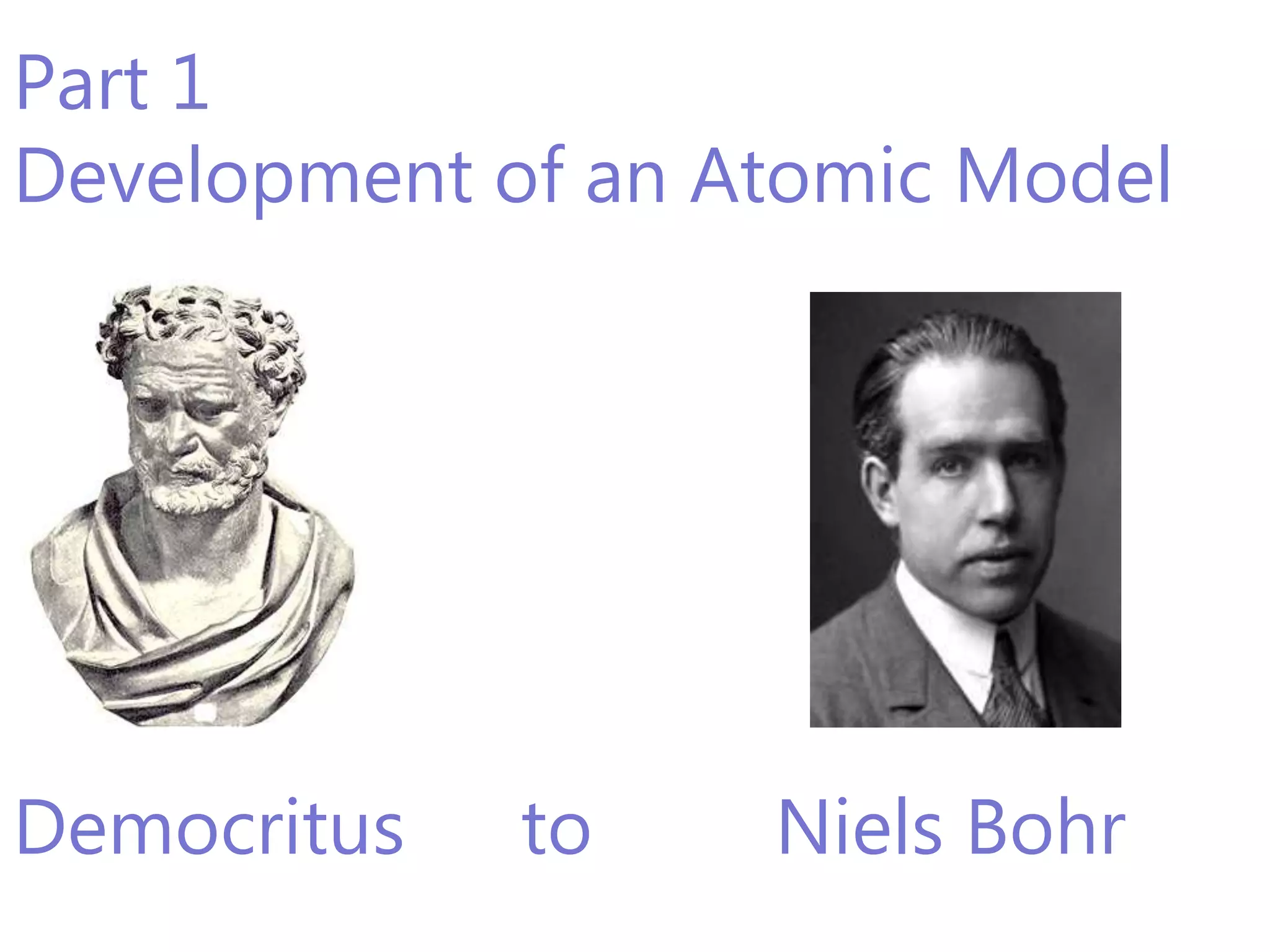
Democritus   to    Niels Bohr
Early ideas about atoms
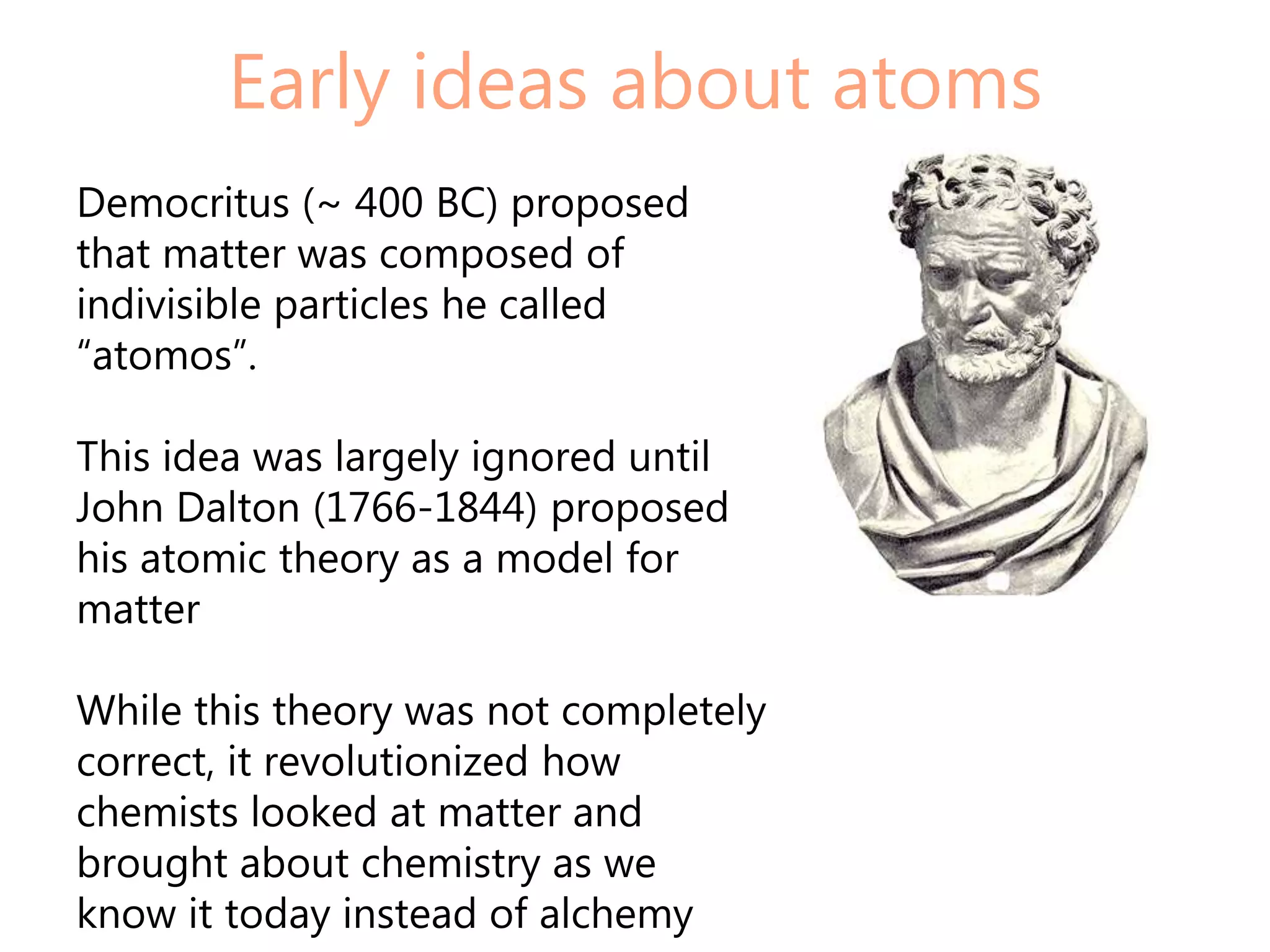
Democritus (~ 400 BC) proposed
that matter was composed of
indivisible particles he called
“atomos”.

This idea was largely ignored until
John Dalton (1766-1844) proposed
his atomic theory as a model for
matter

While this theory was not completely
correct, it revolutionized how
chemists looked at matter and
brought about chemistry as we
know it today instead of alchemy
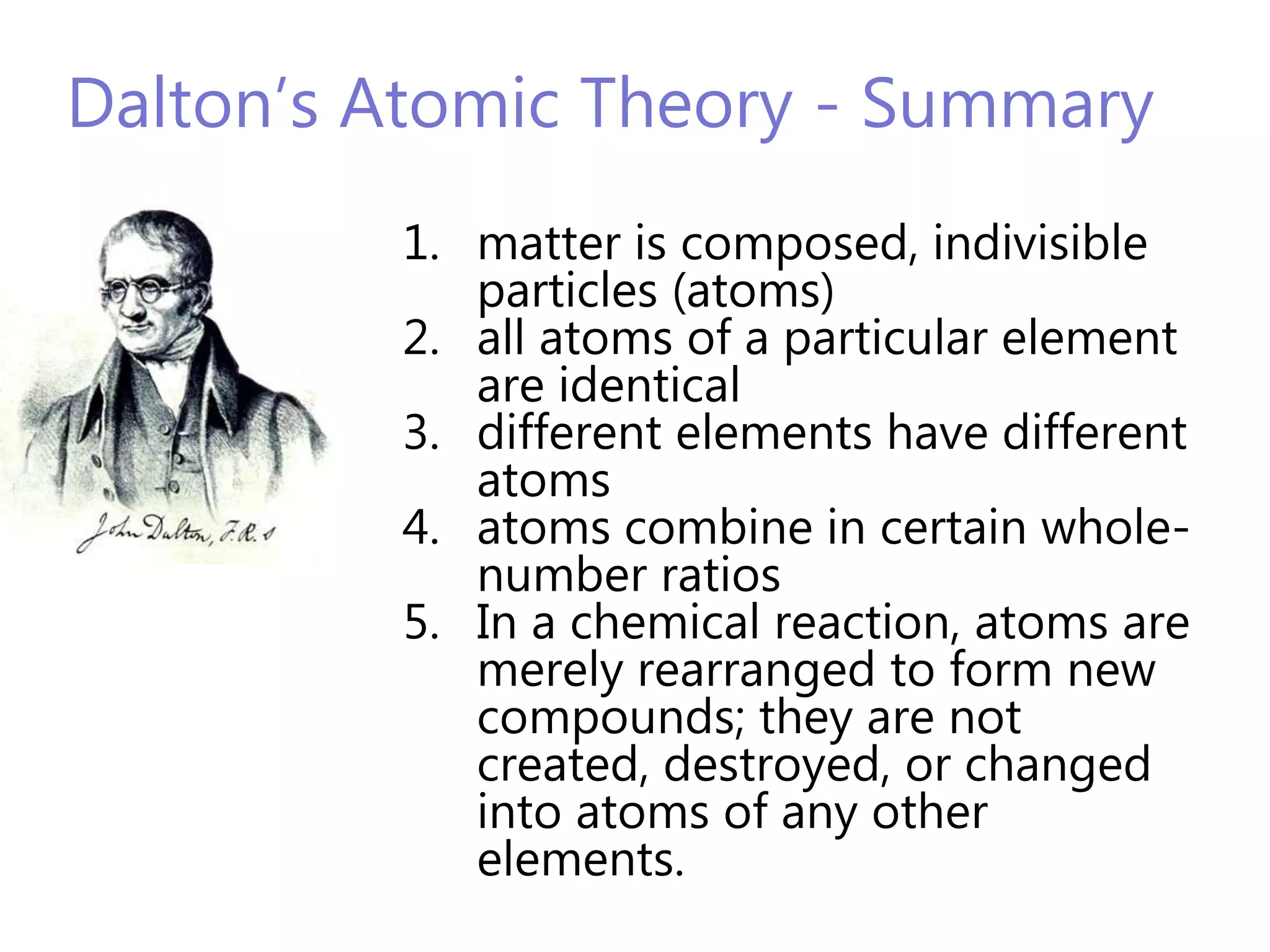
Dalton’s Atomic Theory - Summary
         1. matter is composed, indivisible
            particles (atoms)
         2. all atoms of a particular element
            are identical
         3. different elements have different
            atoms
         4. atoms combine in certain whole-
            number ratios
         5. In a chemical reaction, atoms are
            merely rearranged to form new
            compounds; they are not
            created, destroyed, or changed
            into atoms of any other
            elements.
Dalton’s theory states

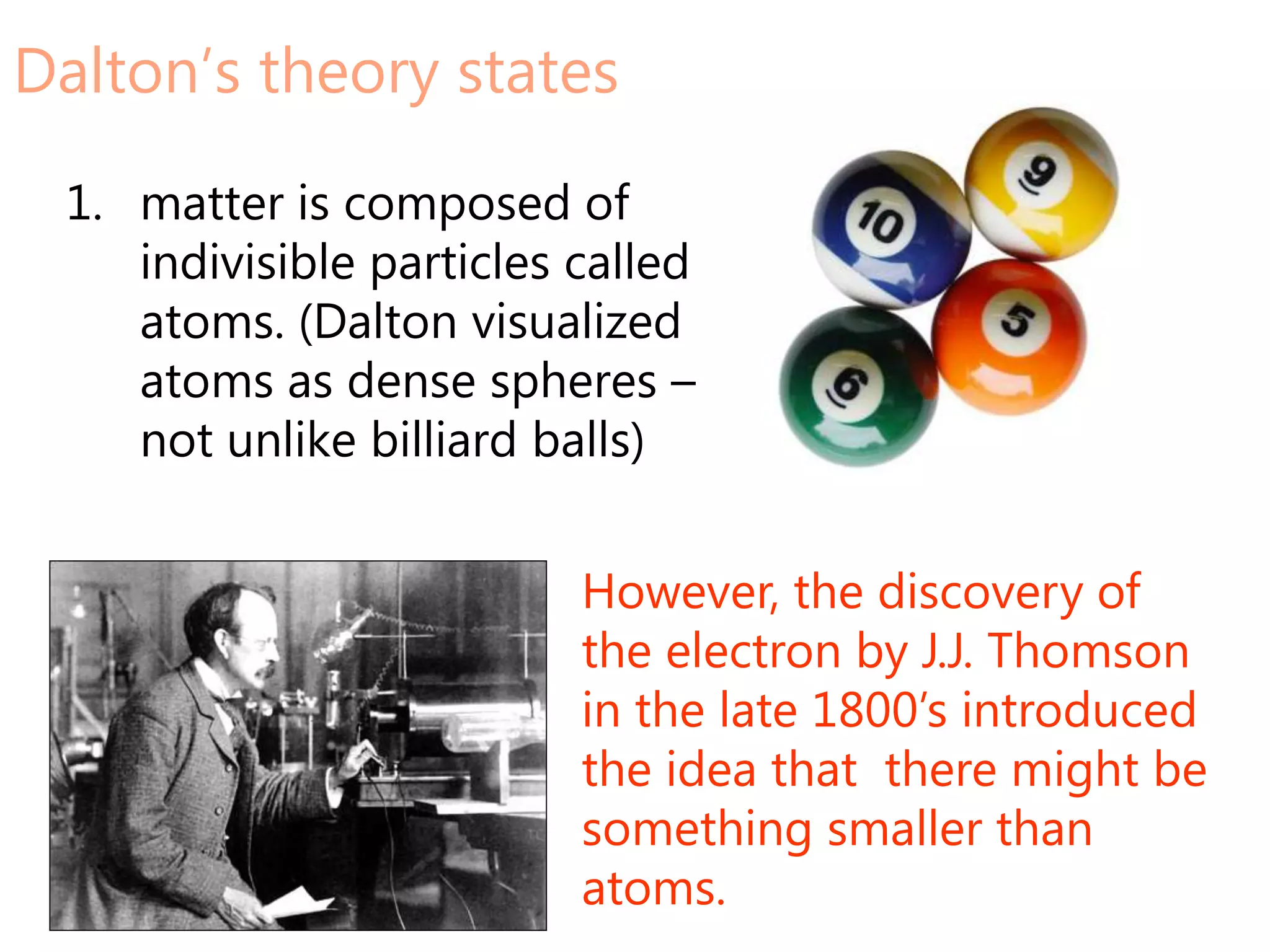
 1. matter is composed of
    indivisible particles called
    atoms. (Dalton visualized
    atoms as dense spheres –
    not unlike billiard balls)


                          However, the discovery of
                          the electron by J.J. Thomson
                          in the late 1800’s introduced
                          the idea that there might be
                          something smaller than
                          atoms.
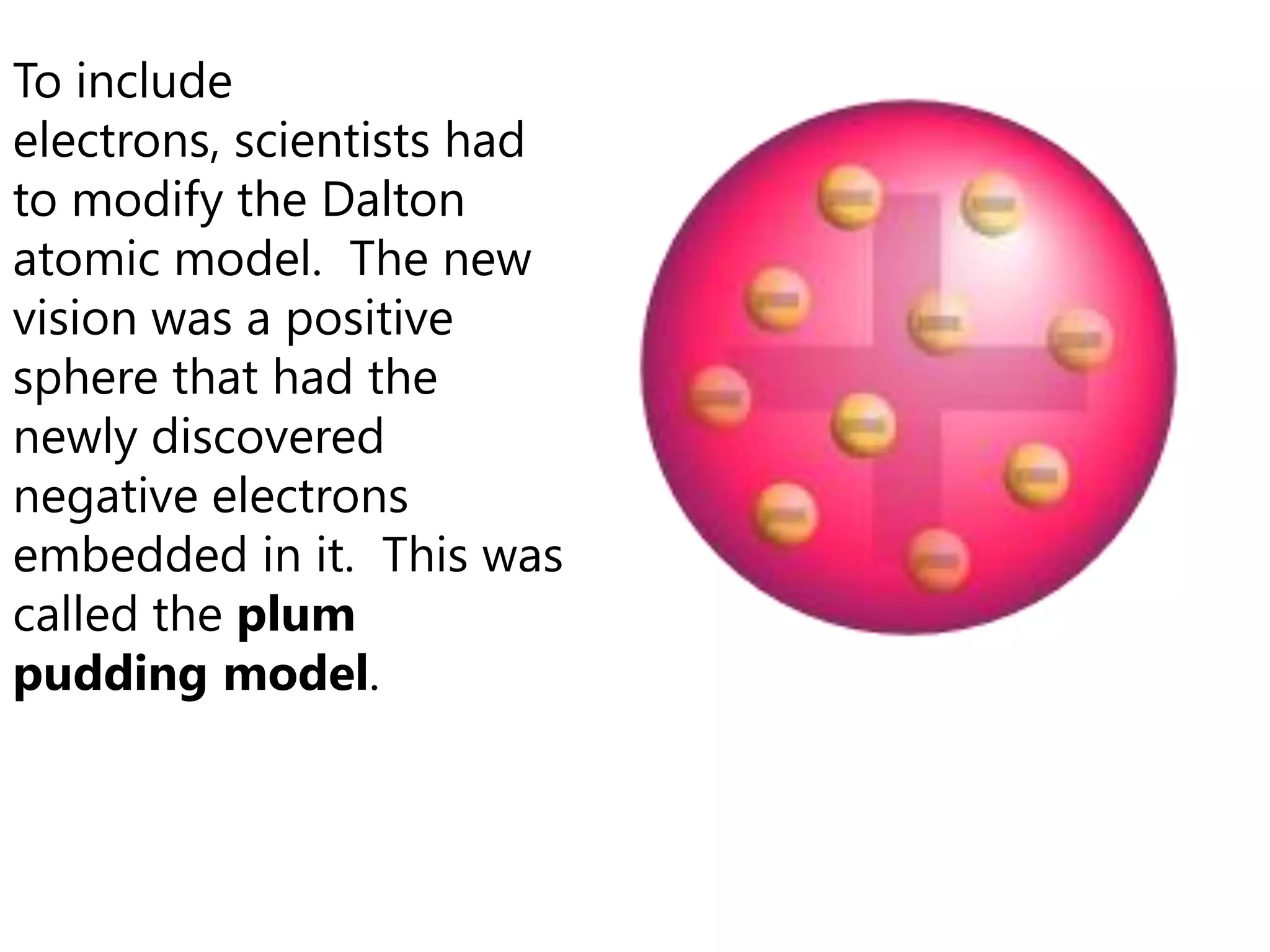
To include
electrons, scientists had
to modify the Dalton
atomic model. The new
vision was a positive
sphere that had the
newly discovered
negative electrons
embedded in it. This was
called the plum
pudding model.
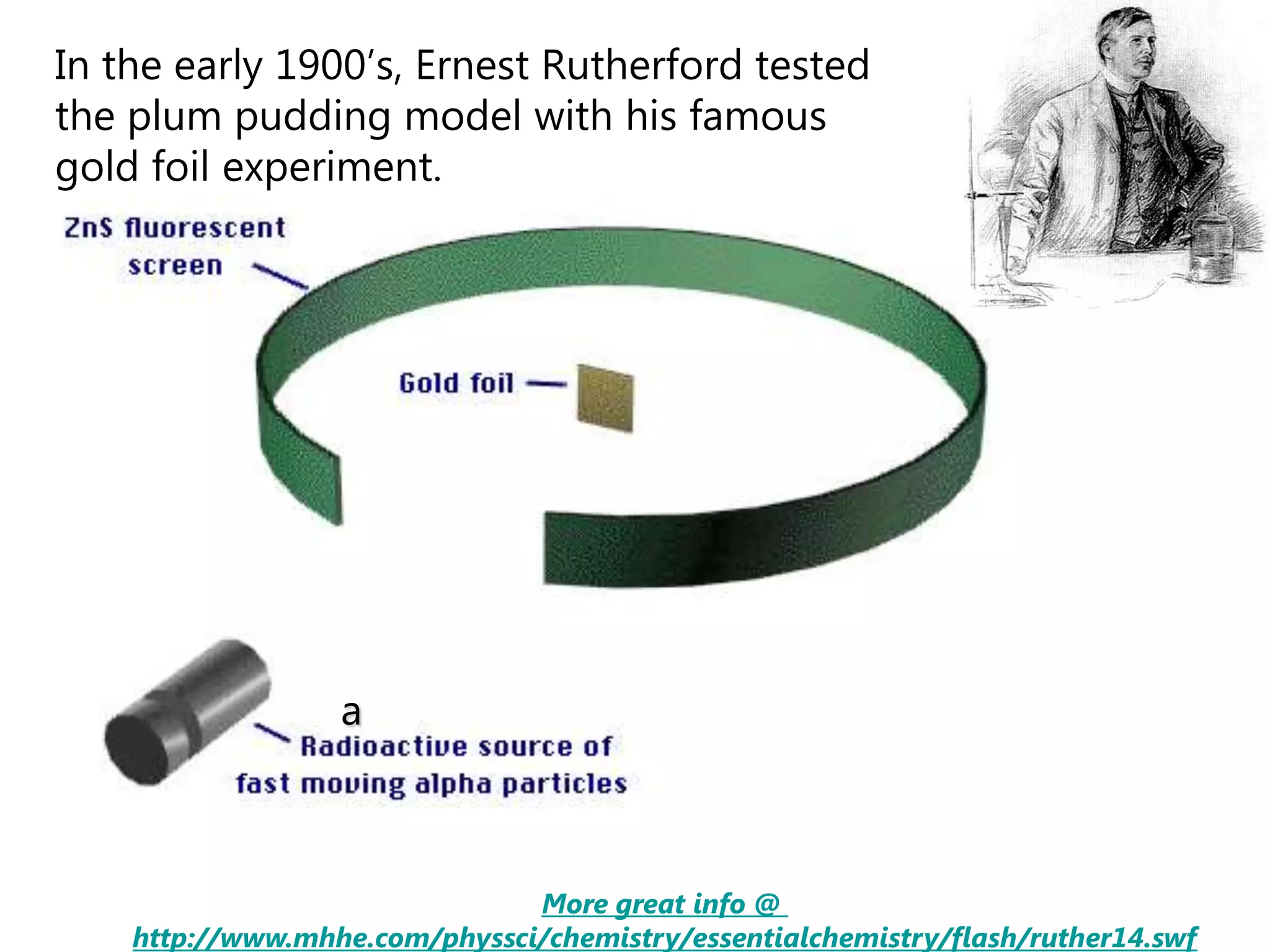
In the early 1900’s, Ernest Rutherford tested
the plum pudding model with his famous
gold foil experiment.


                  a


                               More great info @
    http://www.mhhe.com/physsci/chemistry/essentialchemistry/flash/ruther14.swf
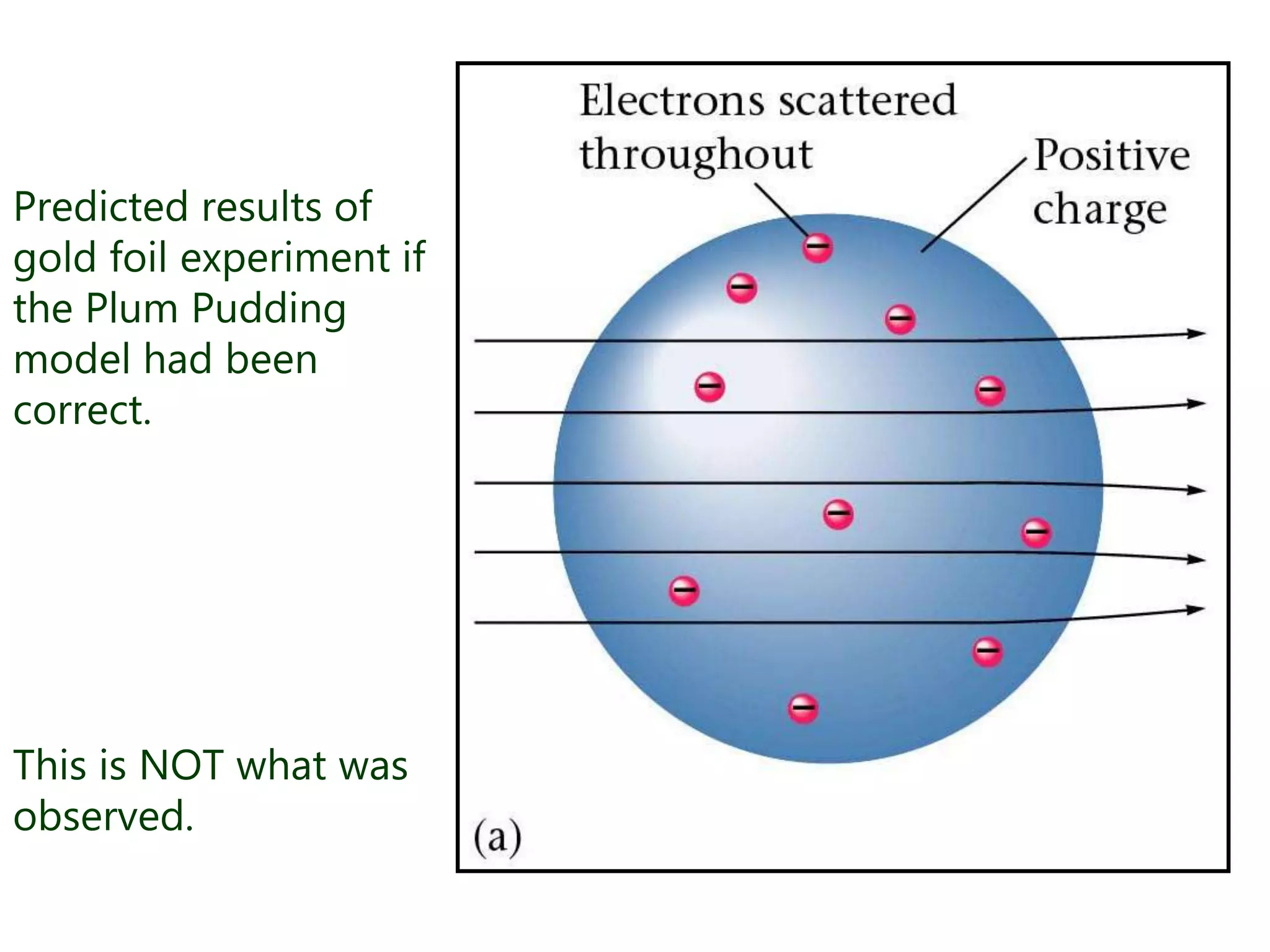
Predicted results of
gold foil experiment if
the Plum Pudding
model had been
correct.


This is NOT what was
observed.
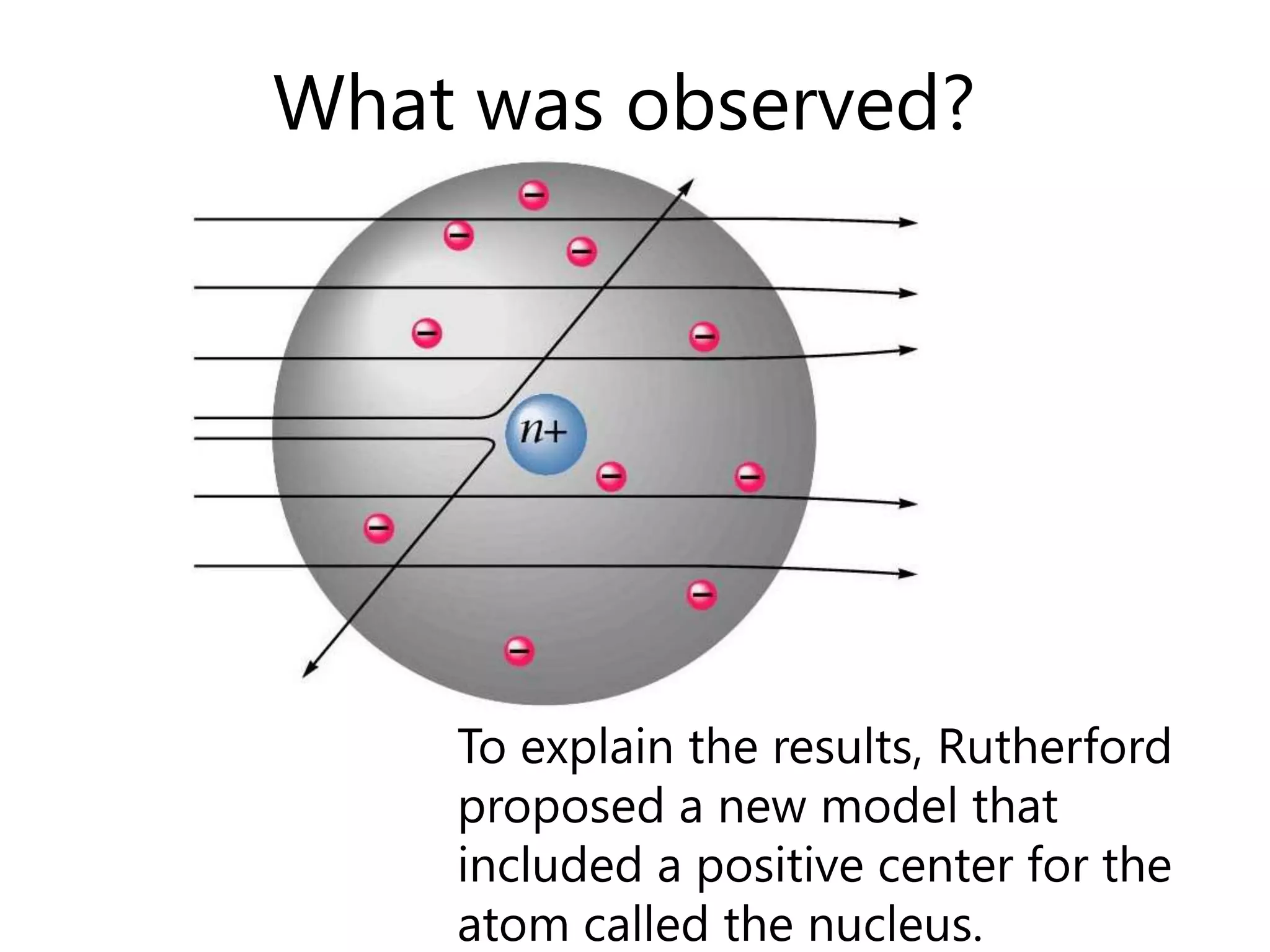
What was observed?


    To explain the results, Rutherford
    proposed a new model that
    included a positive center for the
    atom called the nucleus.
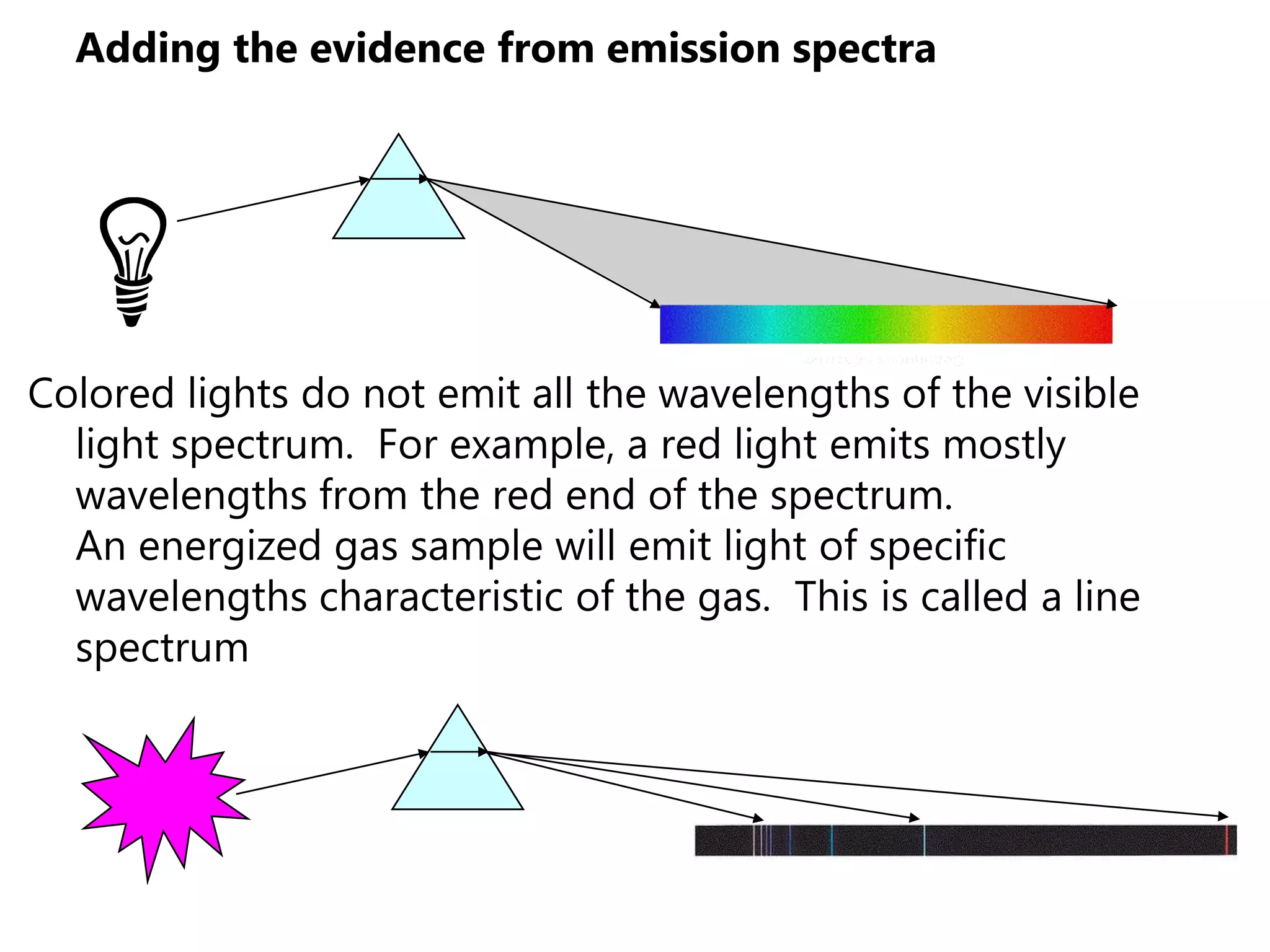
Adding the evidence from emission spectra


Colored lights do not emit all the wavelengths of the visible
  light spectrum. For example, a red light emits mostly
  wavelengths from the red end of the spectrum.
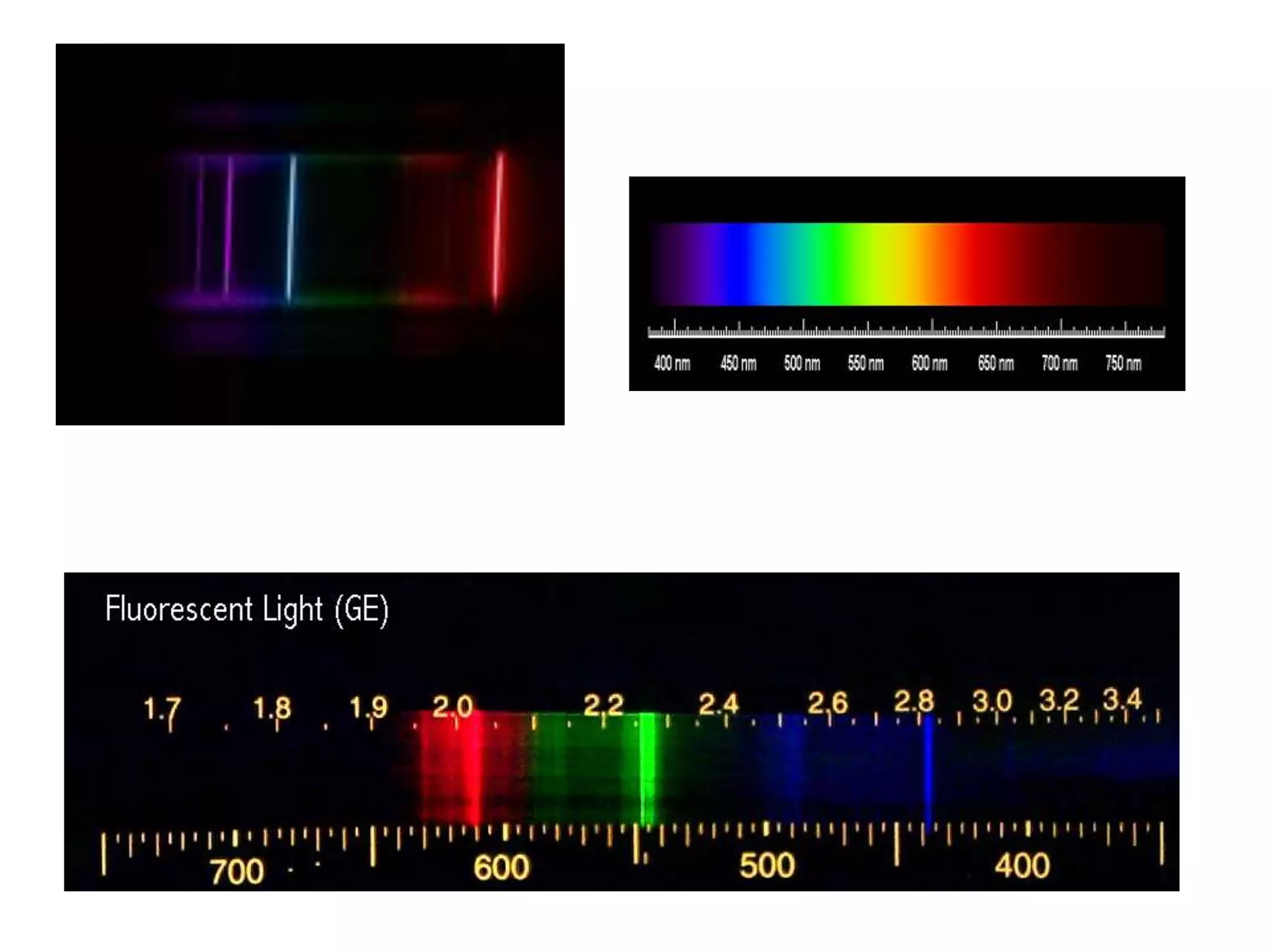
  An energized gas sample will emit light of specific
  wavelengths characteristic of the gas. This is called a line
  spectrum
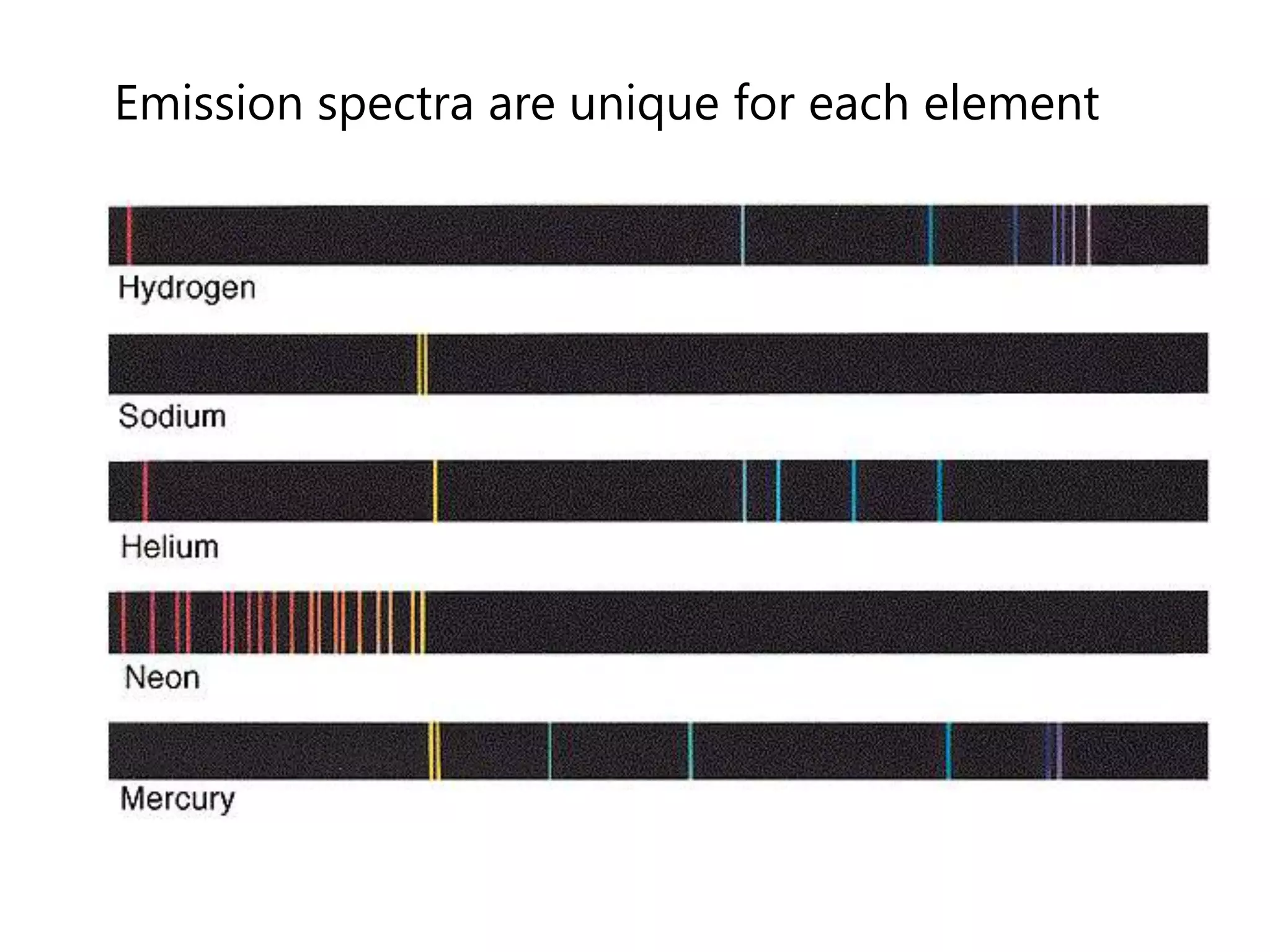
Emission spectra are unique for each element
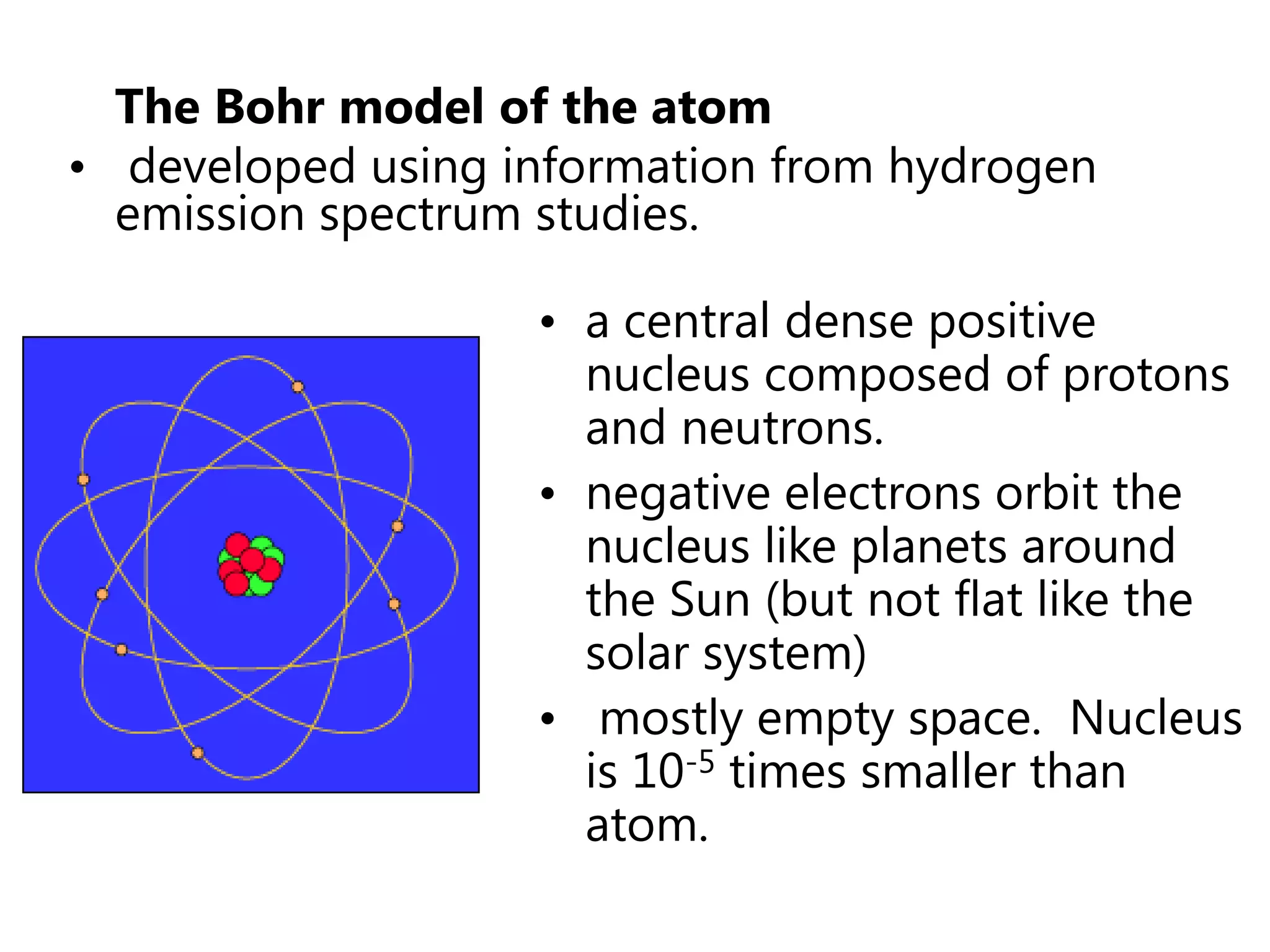
The Bohr model of the atom
• developed using information from hydrogen
  emission spectrum studies.

                   • a central dense positive
                     nucleus composed of protons
                     and neutrons.
                   • negative electrons orbit the
                     nucleus like planets around
                     the Sun (but not flat like the
                     solar system)
                   • mostly empty space. Nucleus
                     is 10-5 times smaller than
                     atom.
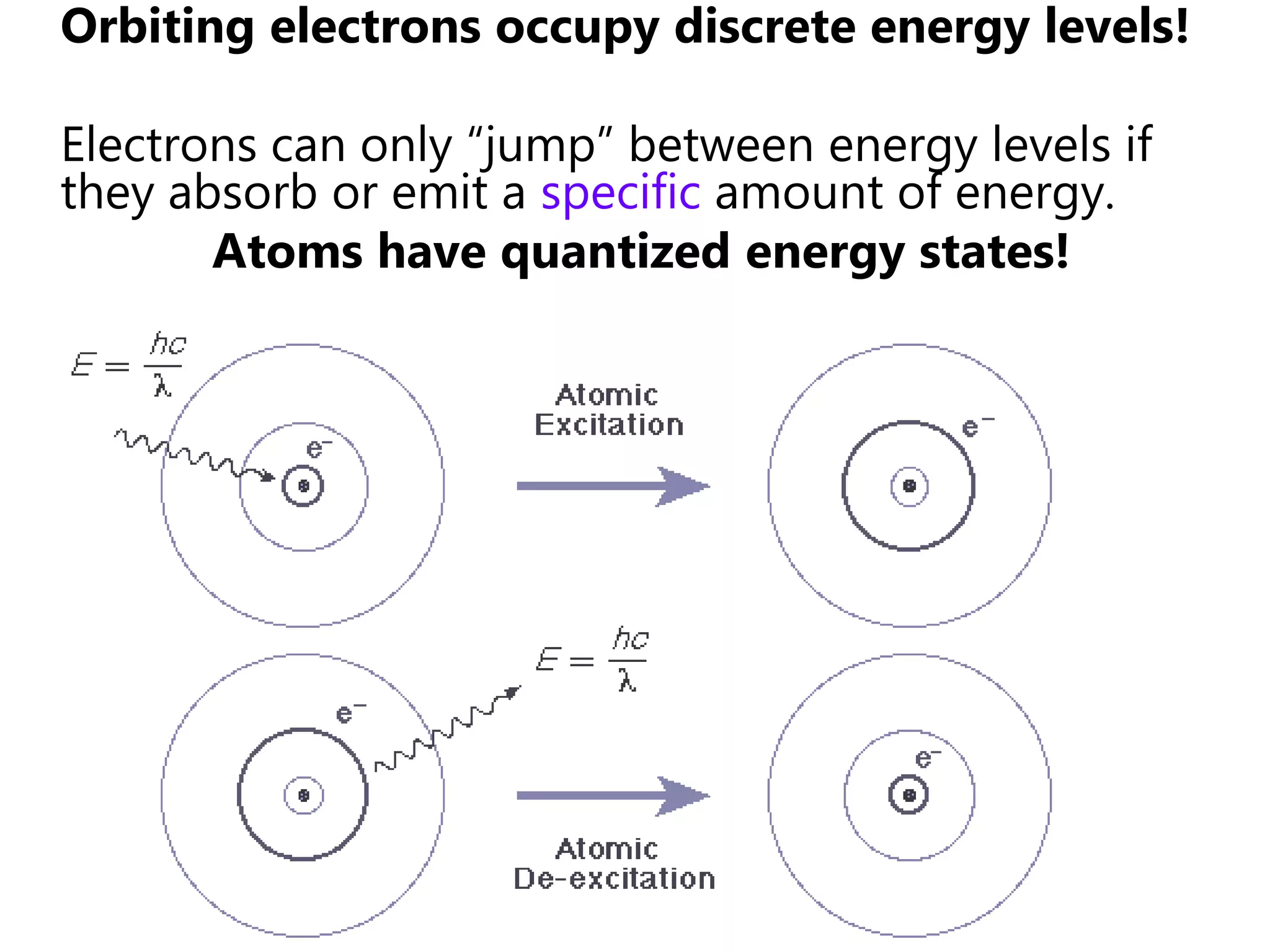
Orbiting electrons occupy discrete energy levels!

Electrons can only “jump” between energy levels if
they absorb or emit a specific amount of energy.
       Atoms have quantized energy states!
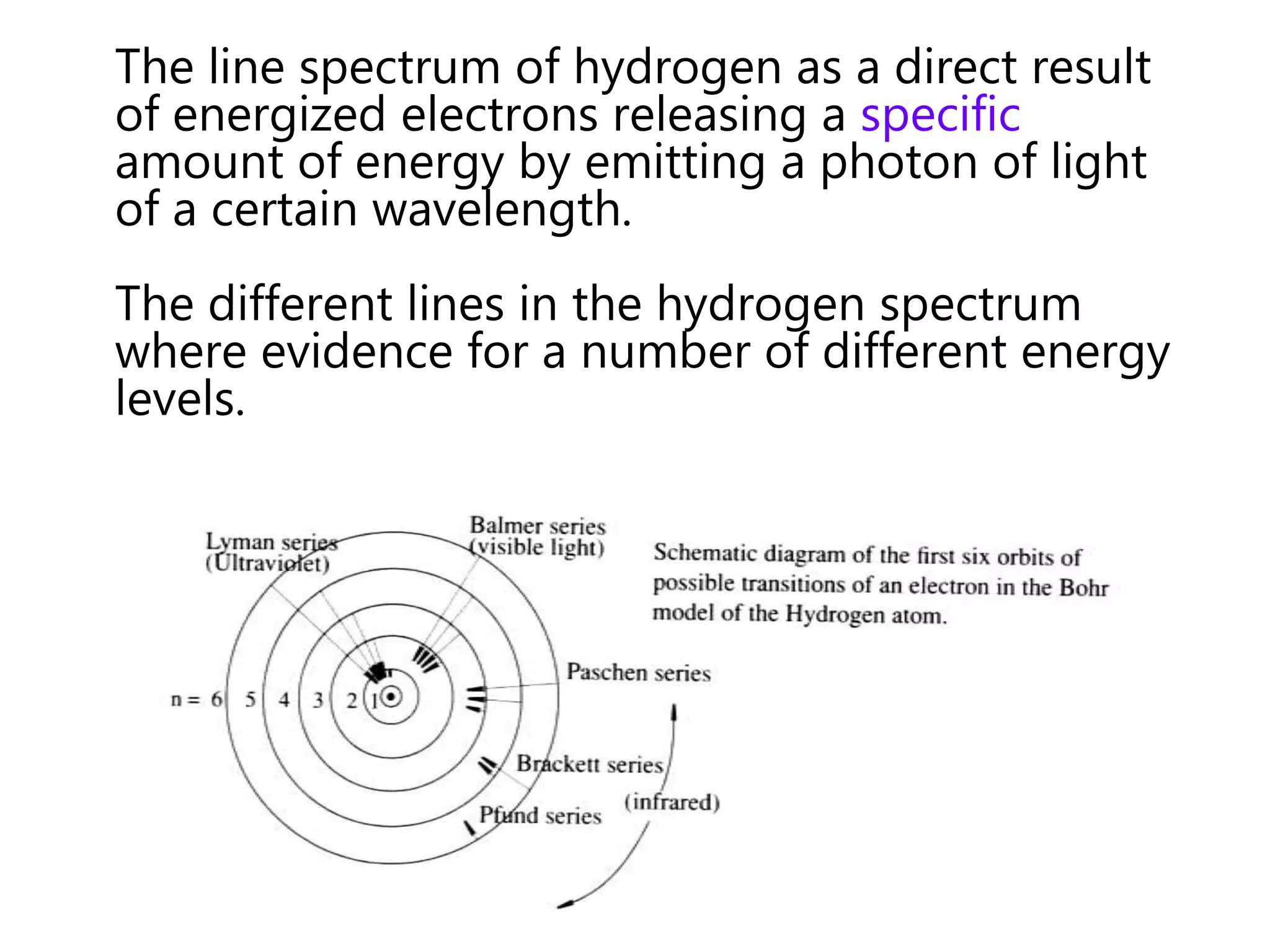
The line spectrum of hydrogen as a direct result
of energized electrons releasing a specific
amount of energy by emitting a photon of light
of a certain wavelength.
The different lines in the hydrogen spectrum
where evidence for a number of different energy
levels.
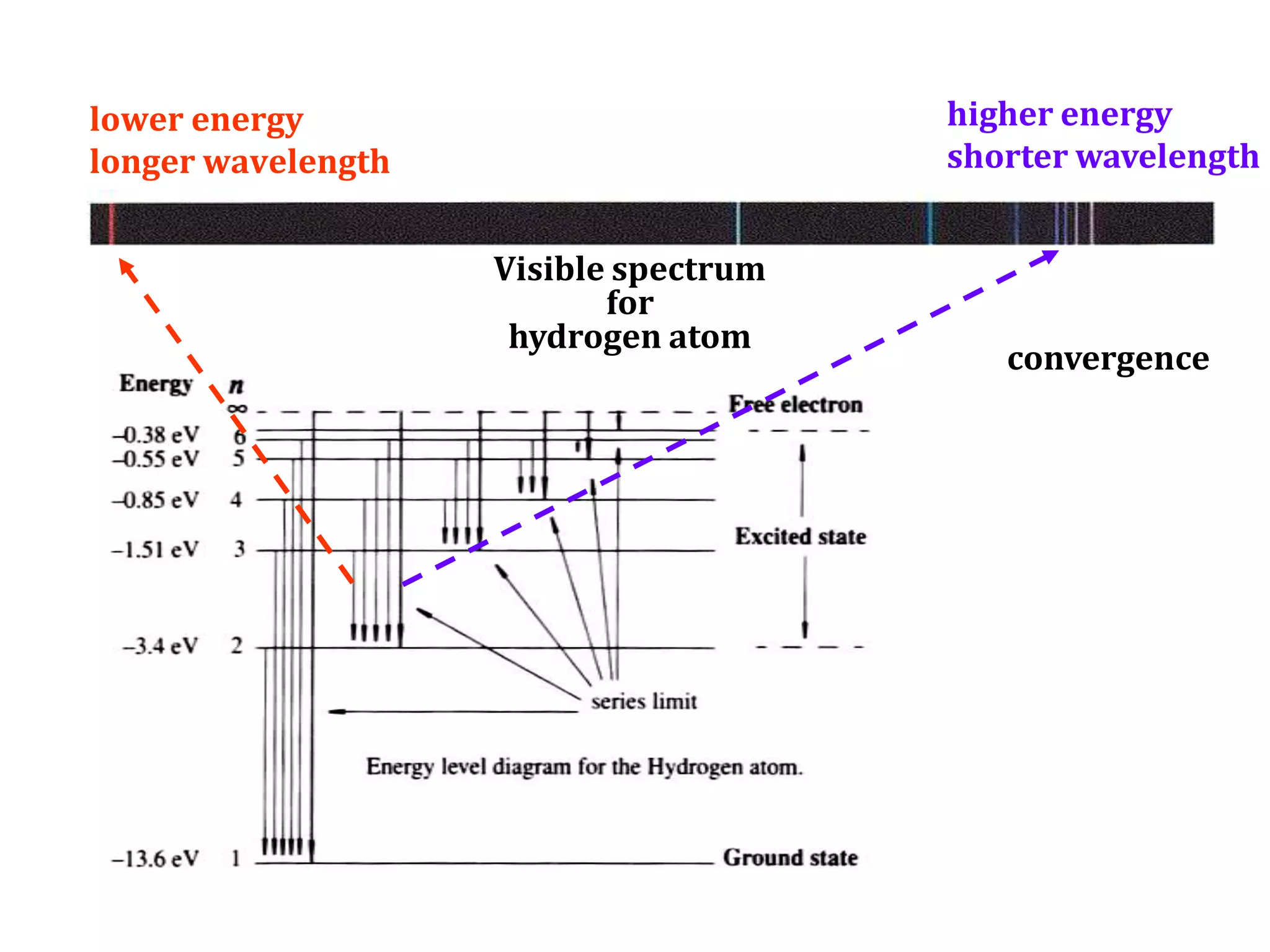
lower energy                           higher energy
longer wavelength                      shorter wavelength


                    Visible spectrum
                           for
                     hydrogen atom
                                          convergence
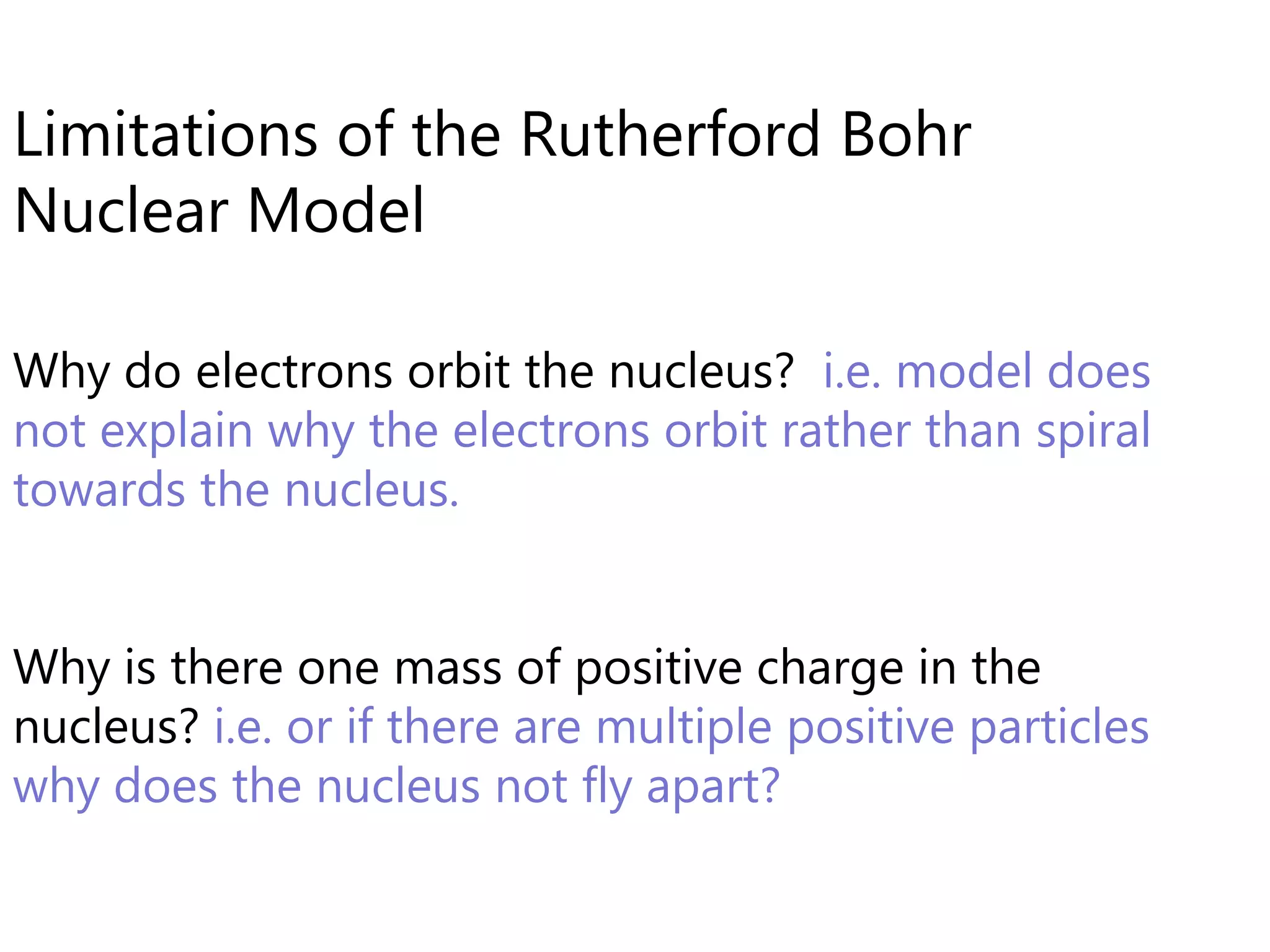
Limitations of the Rutherford Bohr
Nuclear Model

Why do electrons orbit the nucleus? i.e. model does
not explain why the electrons orbit rather than spiral
towards the nucleus.


Why is there one mass of positive charge in the
nucleus? i.e. or if there are multiple positive particles
why does the nucleus not fly apart?
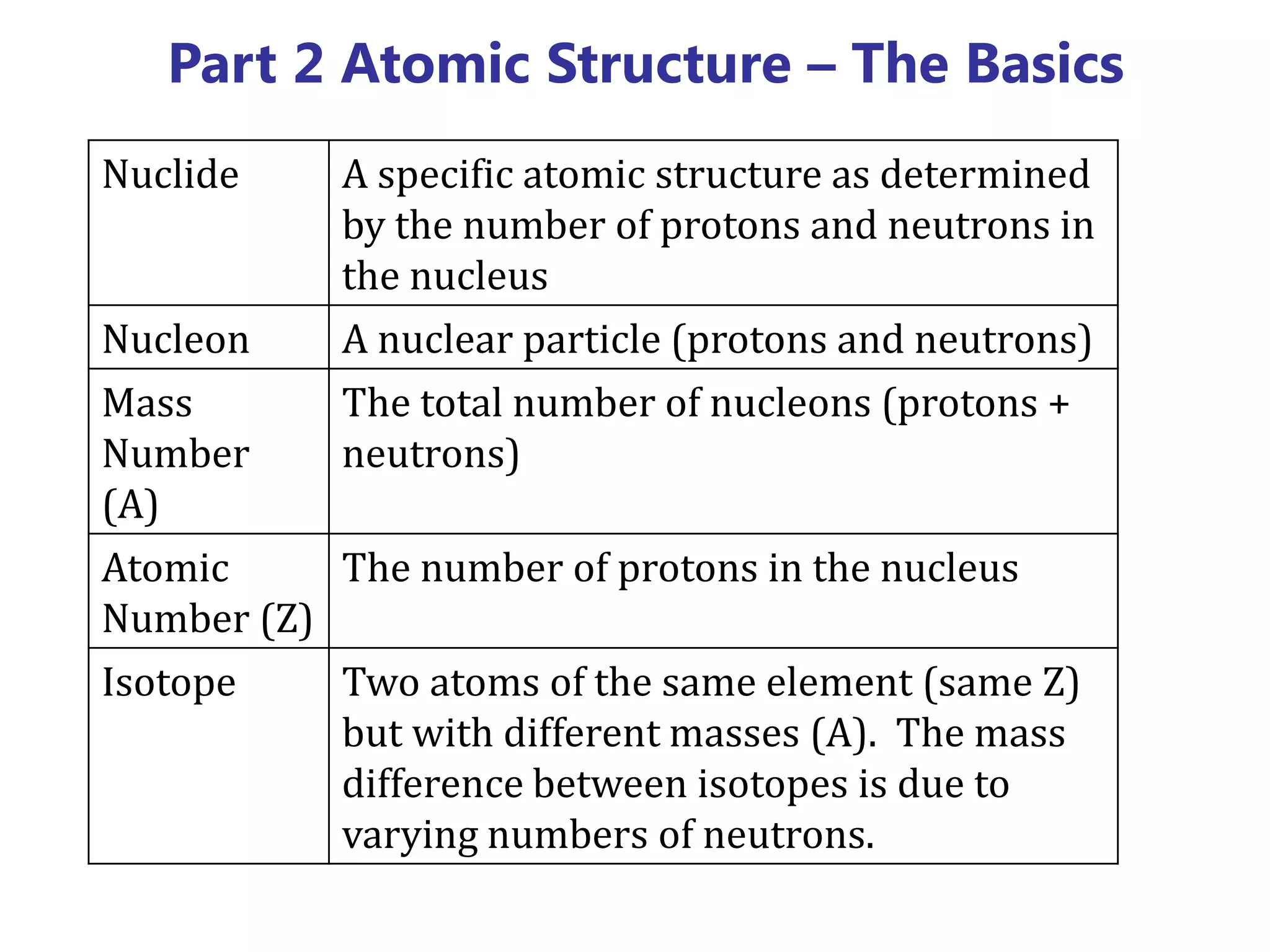
Part 2 Atomic Structure – The Basics
Nuclide     A specific atomic structure as determined
            by the number of protons and neutrons in
            the nucleus
Nucleon     A nuclear particle (protons and neutrons)
Mass        The total number of nucleons (protons +
Number      neutrons)
(A)
Atomic     The number of protons in the nucleus
Number (Z)
Isotope     Two atoms of the same element (same Z)
            but with different masses (A). The mass
            difference between isotopes is due to
            varying numbers of neutrons.
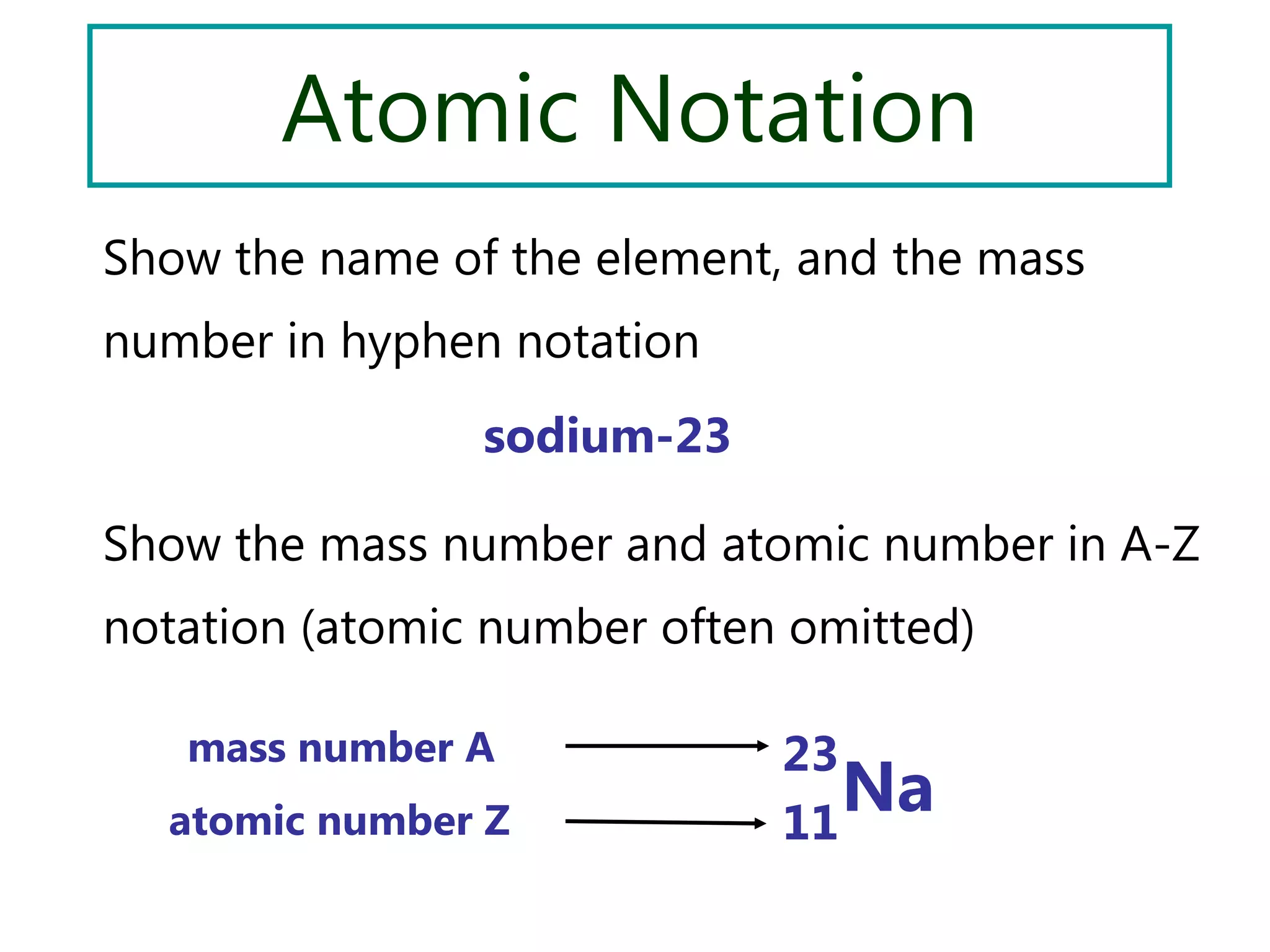
Atomic Notation
Show the name of the element, and the mass
number in hyphen notation
                sodium-23

Show the mass number and atomic number in A-Z
notation (atomic number often omitted)

   mass number A             23
  atomic number Z            11
                                Na
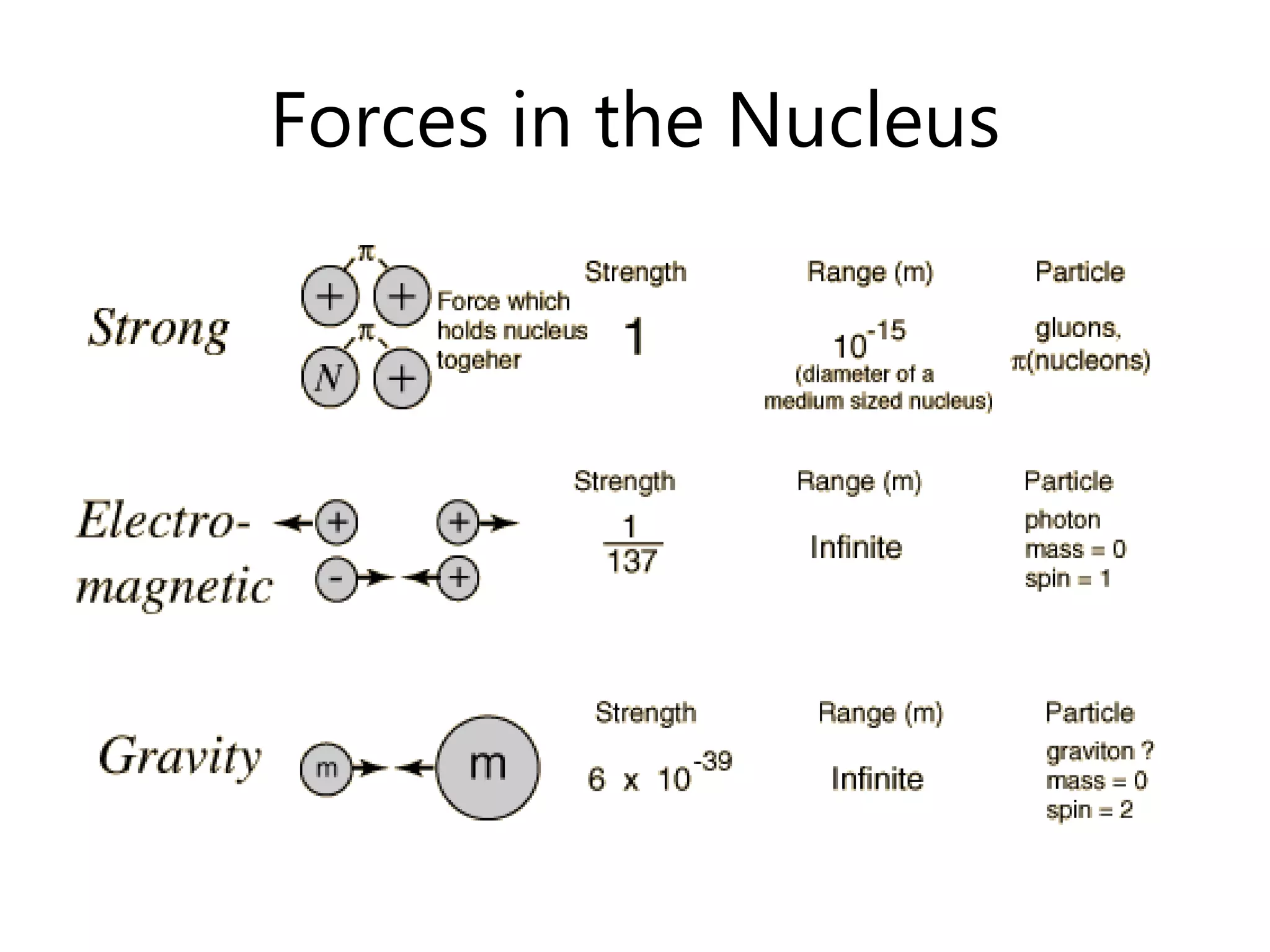
Forces in the Nucleus

Ppt djy 2011 1 topic 7 atomic structure sl intro

  • 1.
    IB Physics PowerPoints Topic 07 and 13 Atomic and Nuclear www.pedagogics.ca Physics Atomic Structure
  • 2.
    Part 1 Development ofan Atomic Model Democritus to Niels Bohr
  • 3.
    Early ideas aboutatoms Democritus (~ 400 BC) proposed that matter was composed of indivisible particles he called “atomos”. This idea was largely ignored until John Dalton (1766-1844) proposed his atomic theory as a model for matter While this theory was not completely correct, it revolutionized how chemists looked at matter and brought about chemistry as we know it today instead of alchemy
  • 4.
    Dalton’s Atomic Theory- Summary 1. matter is composed, indivisible particles (atoms) 2. all atoms of a particular element are identical 3. different elements have different atoms 4. atoms combine in certain whole- number ratios 5. In a chemical reaction, atoms are merely rearranged to form new compounds; they are not created, destroyed, or changed into atoms of any other elements.
  • 5.
    Dalton’s theory states 1. matter is composed of indivisible particles called atoms. (Dalton visualized atoms as dense spheres – not unlike billiard balls) However, the discovery of the electron by J.J. Thomson in the late 1800’s introduced the idea that there might be something smaller than atoms.
  • 6.
    To include electrons, scientistshad to modify the Dalton atomic model. The new vision was a positive sphere that had the newly discovered negative electrons embedded in it. This was called the plum pudding model.
  • 7.
    In the early1900’s, Ernest Rutherford tested the plum pudding model with his famous gold foil experiment. a More great info @ http://www.mhhe.com/physsci/chemistry/essentialchemistry/flash/ruther14.swf
  • 8.
    Predicted results of goldfoil experiment if the Plum Pudding model had been correct. This is NOT what was observed.
  • 9.
    What was observed? To explain the results, Rutherford proposed a new model that included a positive center for the atom called the nucleus.
  • 10.
    Adding the evidencefrom emission spectra Colored lights do not emit all the wavelengths of the visible light spectrum. For example, a red light emits mostly wavelengths from the red end of the spectrum. An energized gas sample will emit light of specific wavelengths characteristic of the gas. This is called a line spectrum
  • 11.
    Emission spectra areunique for each element
  • 13.
    The Bohr modelof the atom • developed using information from hydrogen emission spectrum studies. • a central dense positive nucleus composed of protons and neutrons. • negative electrons orbit the nucleus like planets around the Sun (but not flat like the solar system) • mostly empty space. Nucleus is 10-5 times smaller than atom.
  • 14.
    Orbiting electrons occupydiscrete energy levels! Electrons can only “jump” between energy levels if they absorb or emit a specific amount of energy. Atoms have quantized energy states!
  • 15.
    The line spectrumof hydrogen as a direct result of energized electrons releasing a specific amount of energy by emitting a photon of light of a certain wavelength. The different lines in the hydrogen spectrum where evidence for a number of different energy levels.
  • 16.
    lower energy higher energy longer wavelength shorter wavelength Visible spectrum for hydrogen atom convergence
  • 17.
    Limitations of theRutherford Bohr Nuclear Model Why do electrons orbit the nucleus? i.e. model does not explain why the electrons orbit rather than spiral towards the nucleus. Why is there one mass of positive charge in the nucleus? i.e. or if there are multiple positive particles why does the nucleus not fly apart?
  • 18.
    Part 2 AtomicStructure – The Basics Nuclide A specific atomic structure as determined by the number of protons and neutrons in the nucleus Nucleon A nuclear particle (protons and neutrons) Mass The total number of nucleons (protons + Number neutrons) (A) Atomic The number of protons in the nucleus Number (Z) Isotope Two atoms of the same element (same Z) but with different masses (A). The mass difference between isotopes is due to varying numbers of neutrons.
  • 19.
    Atomic Notation Show thename of the element, and the mass number in hyphen notation sodium-23 Show the mass number and atomic number in A-Z notation (atomic number often omitted) mass number A 23 atomic number Z 11 Na
  • 20.