Compounds,
Chemical Formulas,
& Covalent Bonds
A compound is a substance made up of two or more
different elements.
Compounds are different from their elements.
Compounds and the elements that make them up
often have different properties. Can you name some
examples?
NaCl - salt
Na - very reactive metal
Cl - poisonous gas
From Elements to Compounds
H20 - water
H - very reactive gas
O - gas
A chemical bond is a force that holds atoms together
in a compound.
We will learn how atoms can form bonds by sharing
valence electrons
We will learn how to write and read a chemical
formula.
What will we Learn Today?
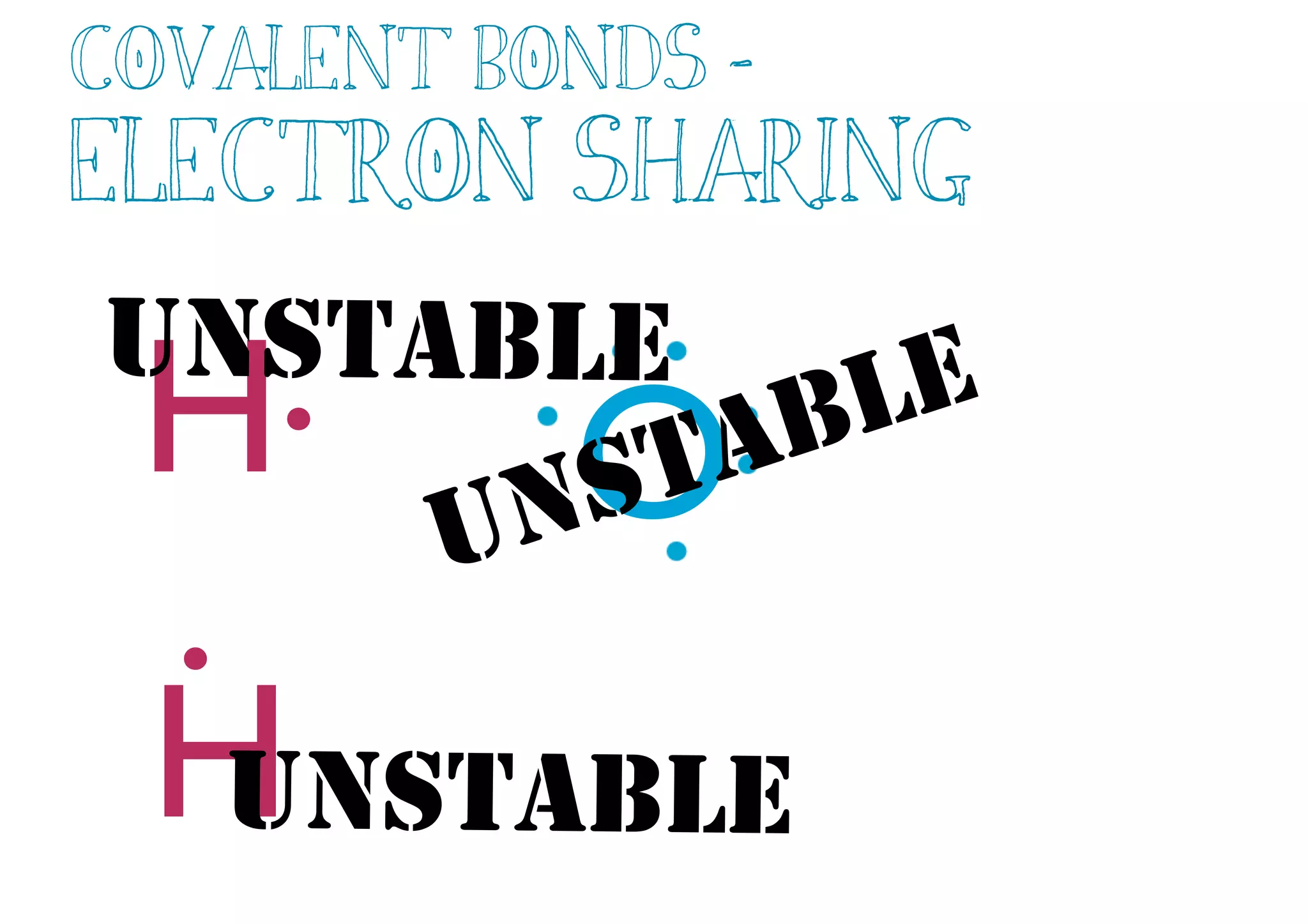
Atoms can become more chemically stable by
sharing valence electrons.
When unstable, nonmetal atoms bond, they do this
by sharing valence electrons.
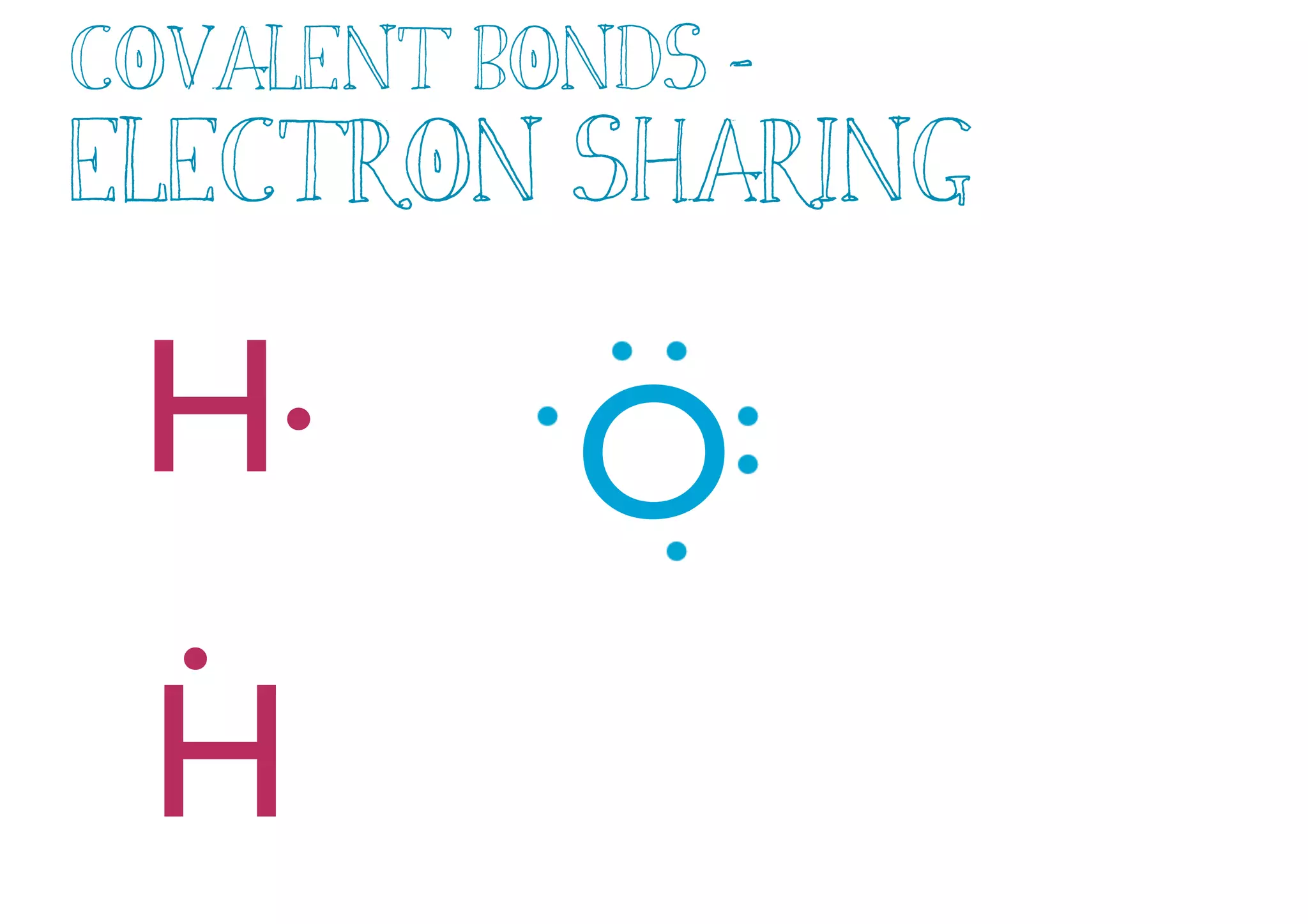
A covalent bond is a chemical bond formed when
two atoms share one or more pairs of valence
electrons forming a stable covalent compound.
Covalent Bonds -
Electron Sharing
H
.
OH.
UNSTABLEUNSTABLE
UNSTABLE
Covalent Bonds -
Electron Sharing
H
.
OH.
Covalent Bonds -
Electron Sharing
H
.OH.
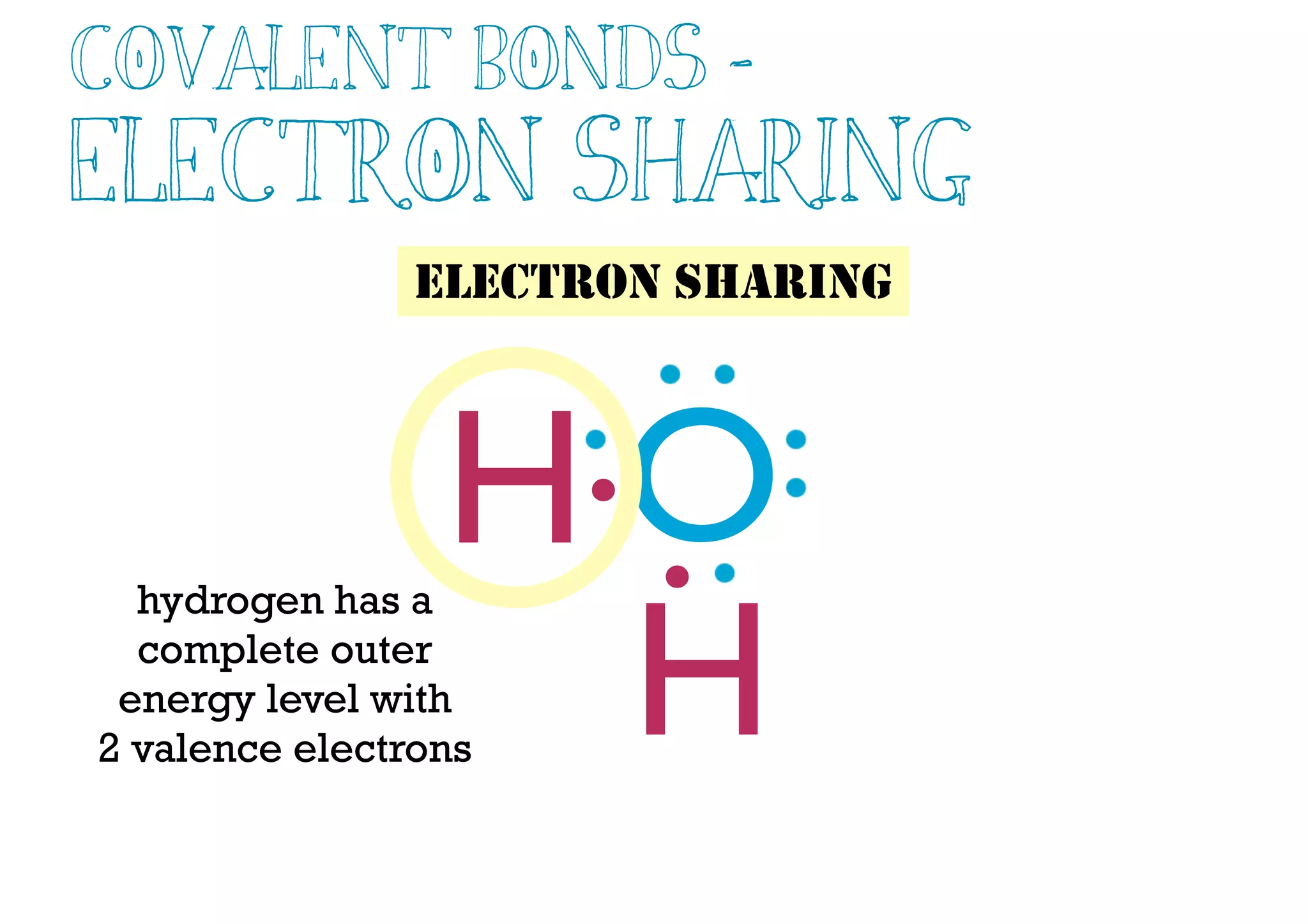
ELECTRON SHARING
hydrogen has a
complete outer
energy level with
2 valence electrons
Covalent Bonds -
Electron Sharing
H
.OH.
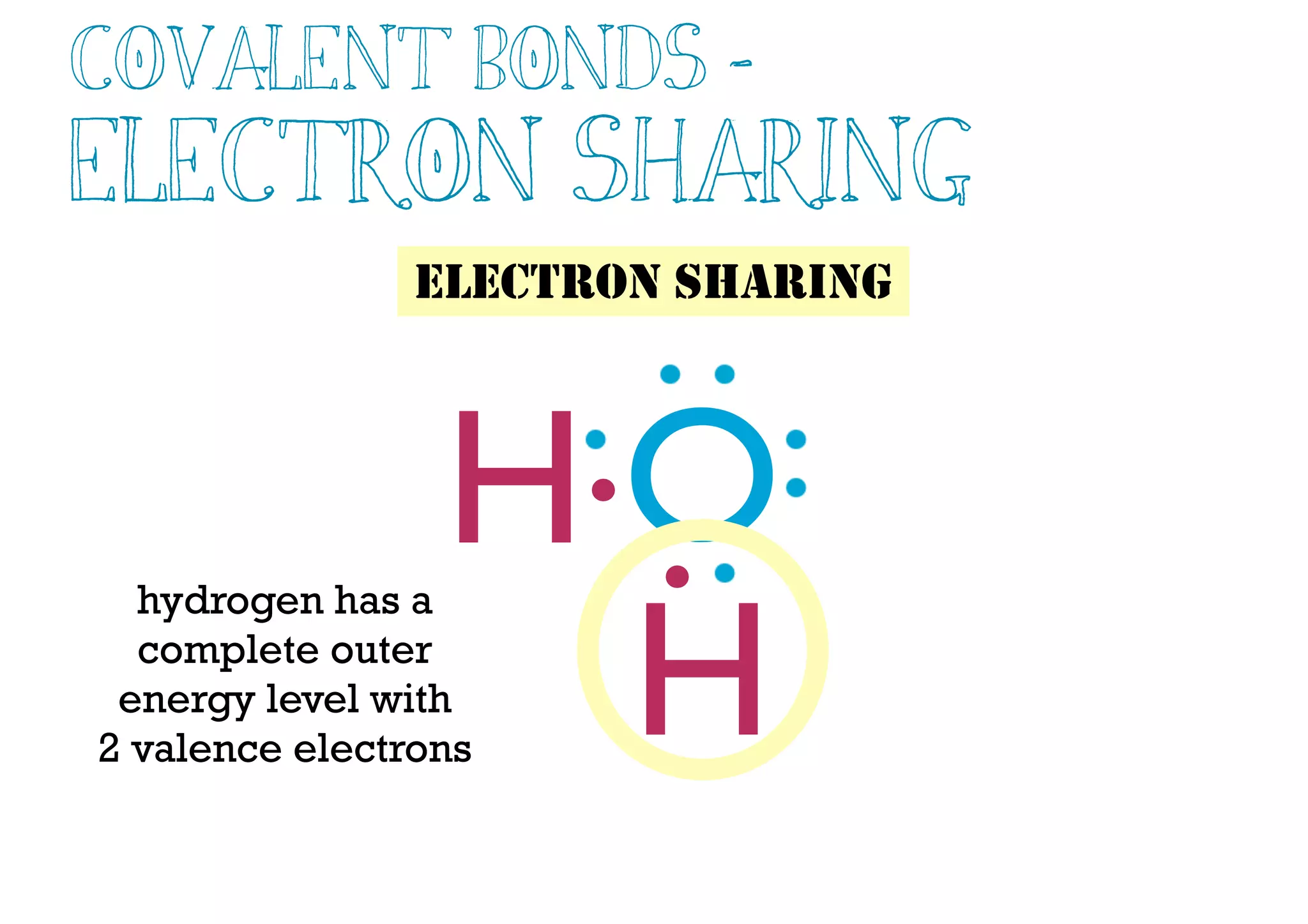
ELECTRON SHARING
hydrogen has a
complete outer
energy level with
2 valence electrons
Covalent Bonds -
Electron Sharing
H
.OH.
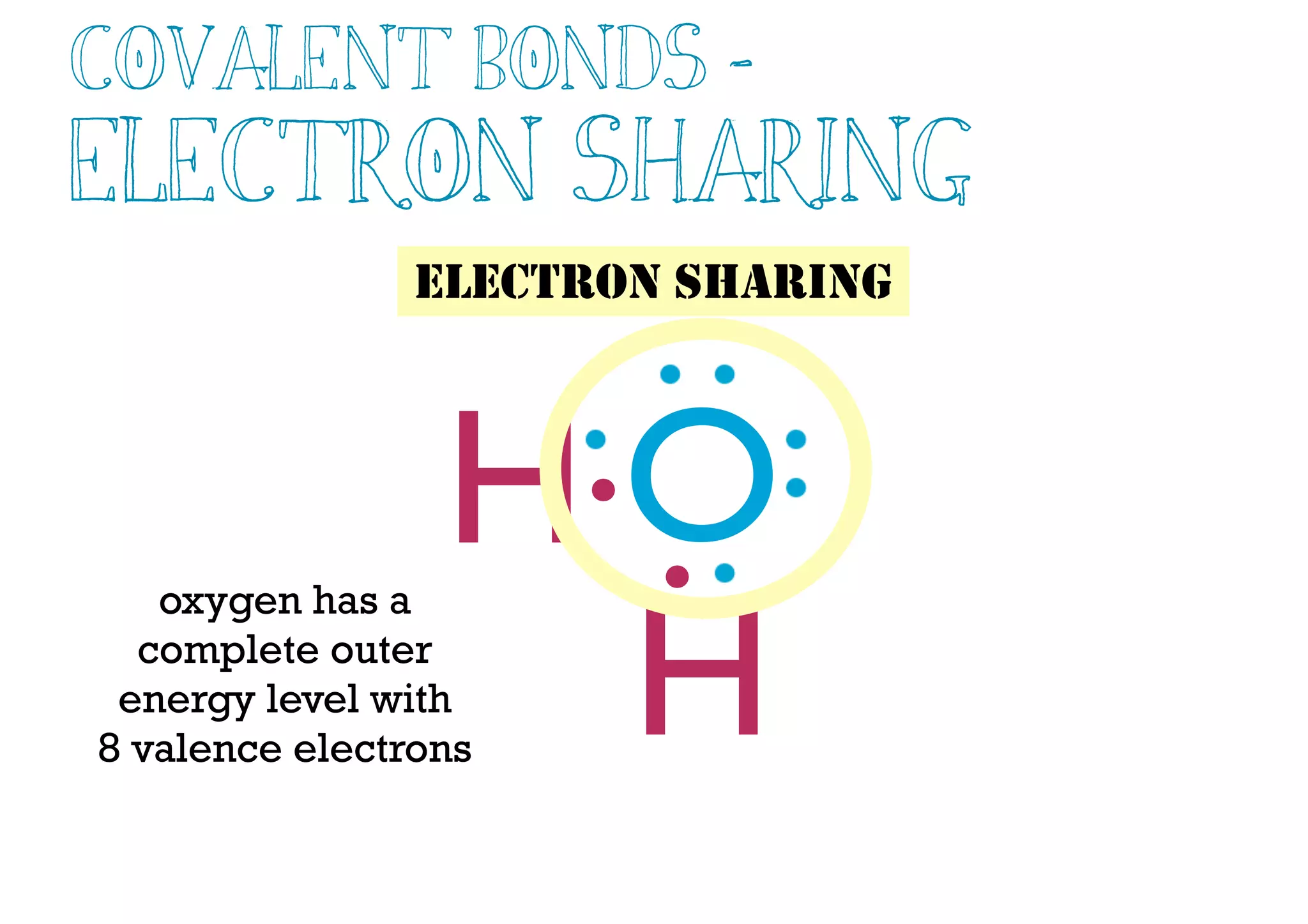
ELECTRON SHARING
oxygen has a
complete outer
energy level with
8 valence electrons
Covalent Bonds -
Electron Sharing
Covalent Bonds -
Electron Sharing
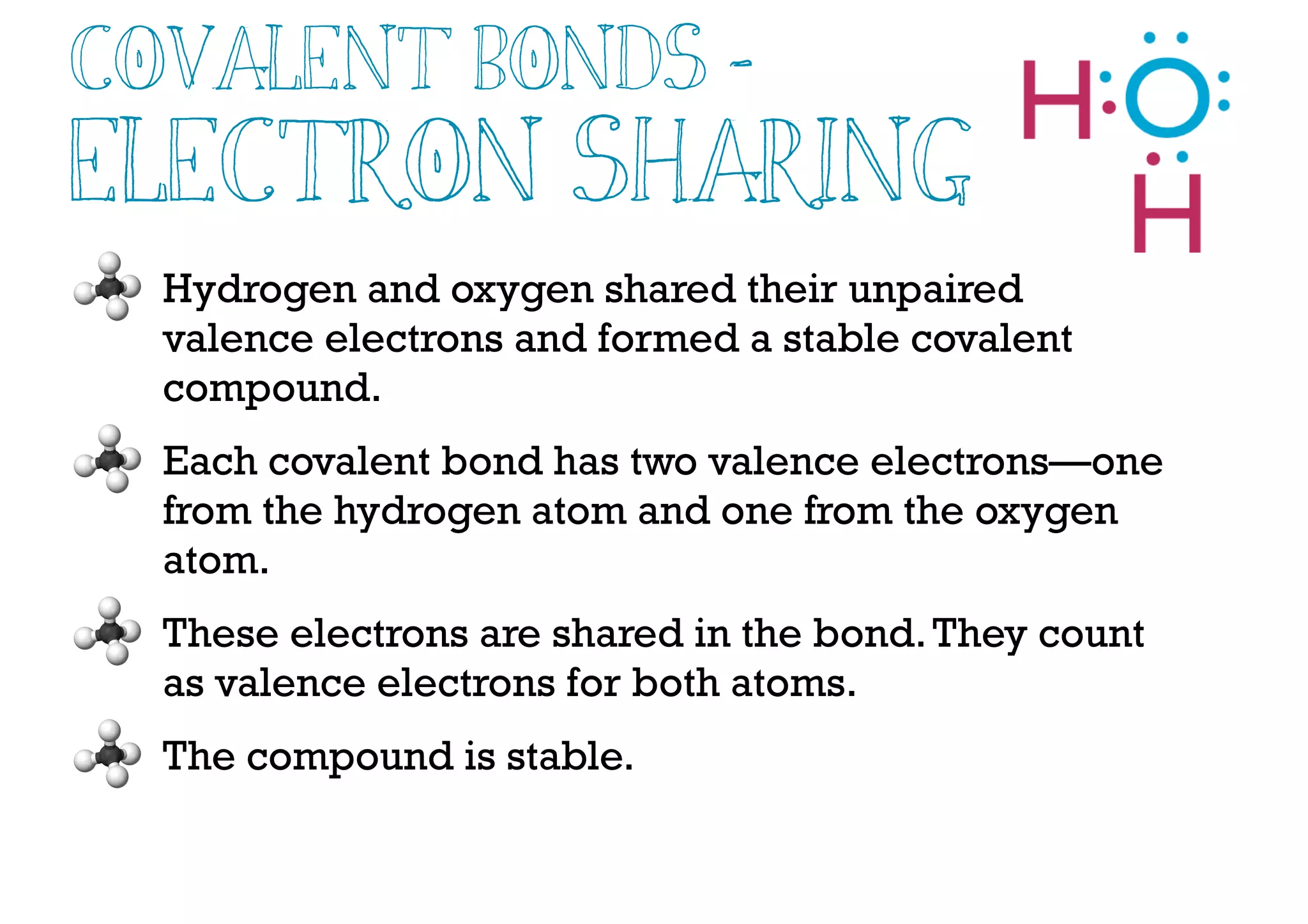
Hydrogen and oxygen shared their unpaired
valence electrons and formed a stable covalent
compound.
Each covalent bond has two valence electrons—one
from the hydrogen atom and one from the oxygen
atom.
These electrons are shared in the bond.They count
as valence electrons for both atoms.
The compound is stable.
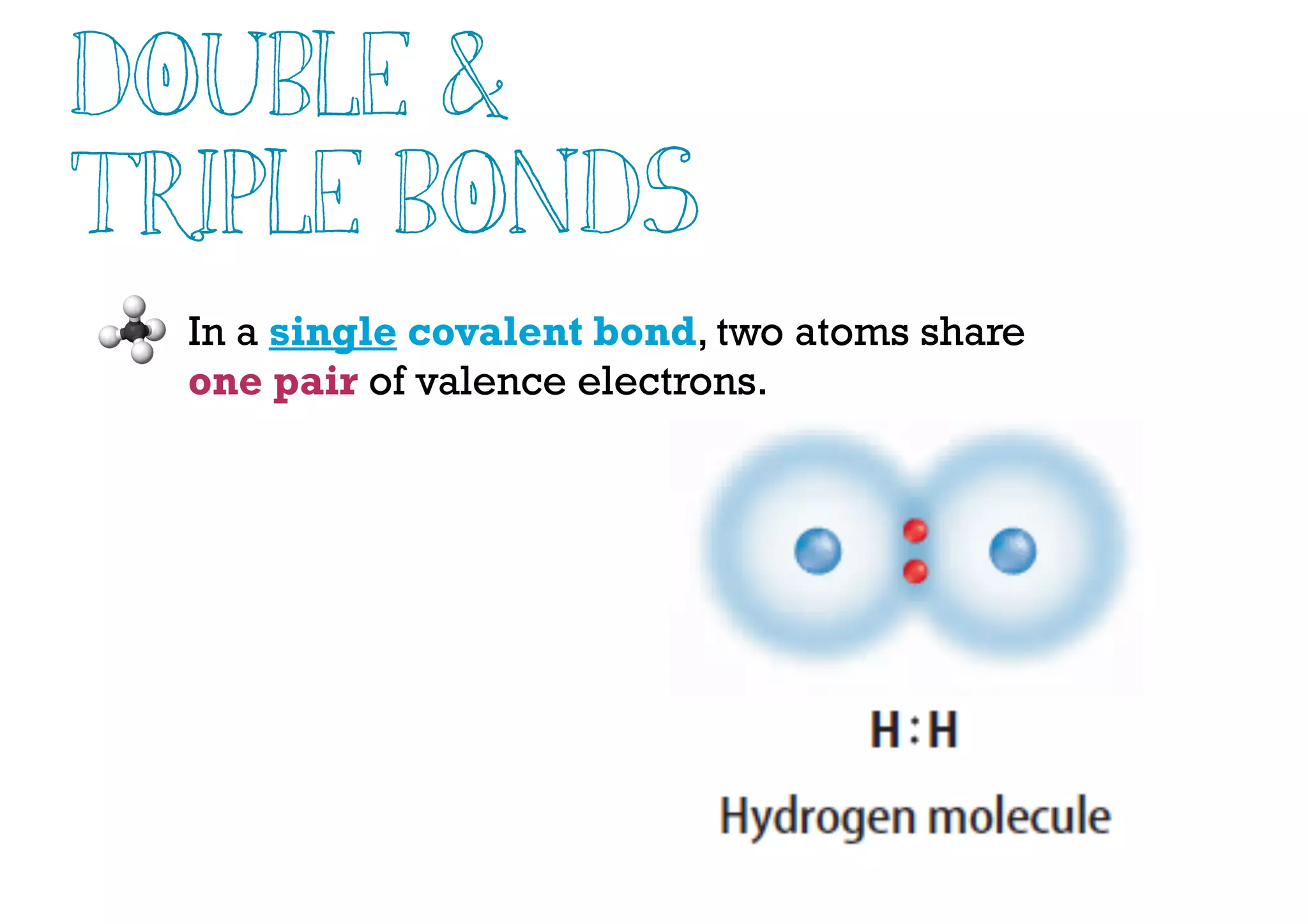
In a single covalent bond, two atoms share
one pair of valence electrons.
Double &
Triple Bonds
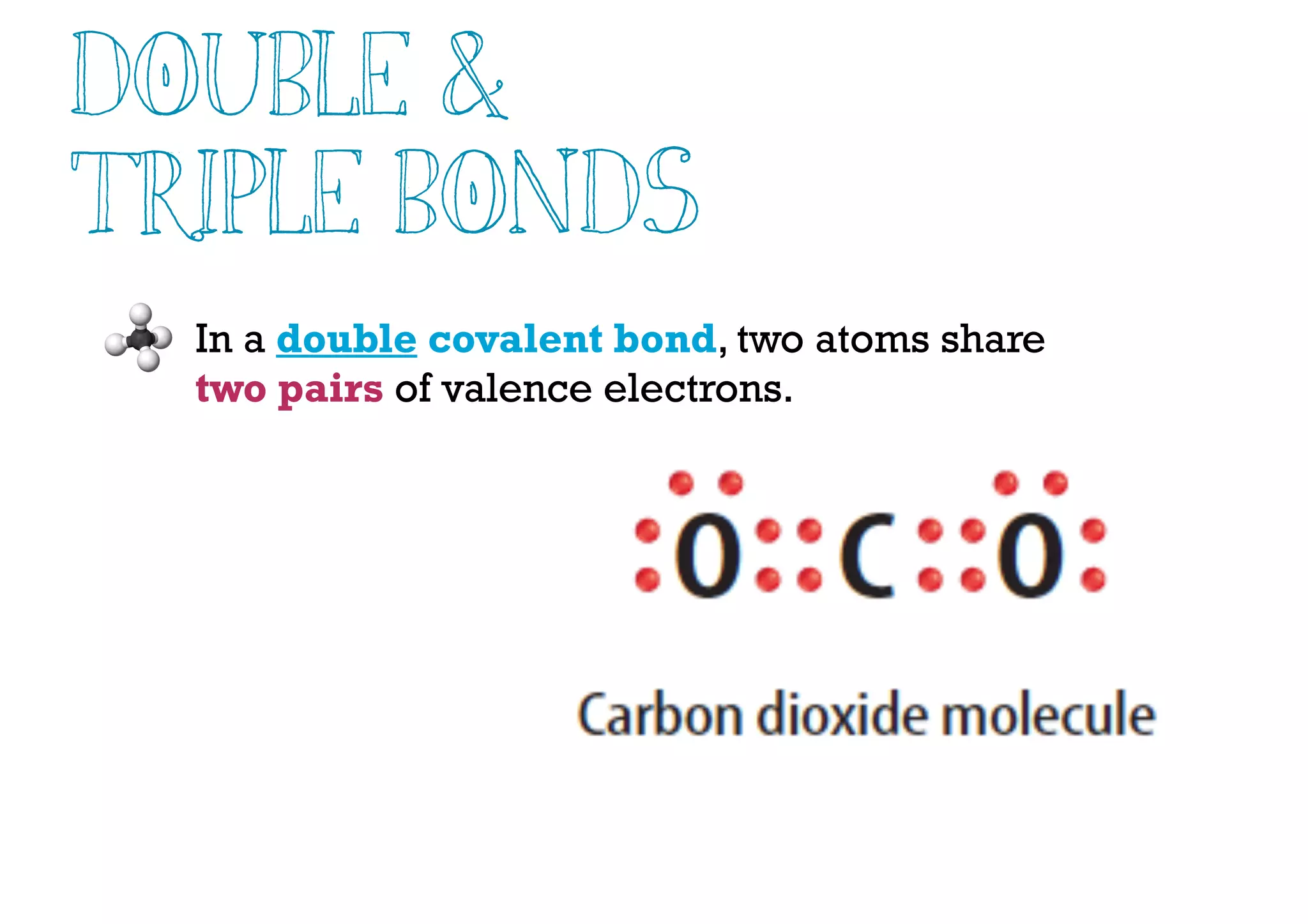
In a double covalent bond, two atoms share
two pairs of valence electrons.
Double &
Triple Bonds
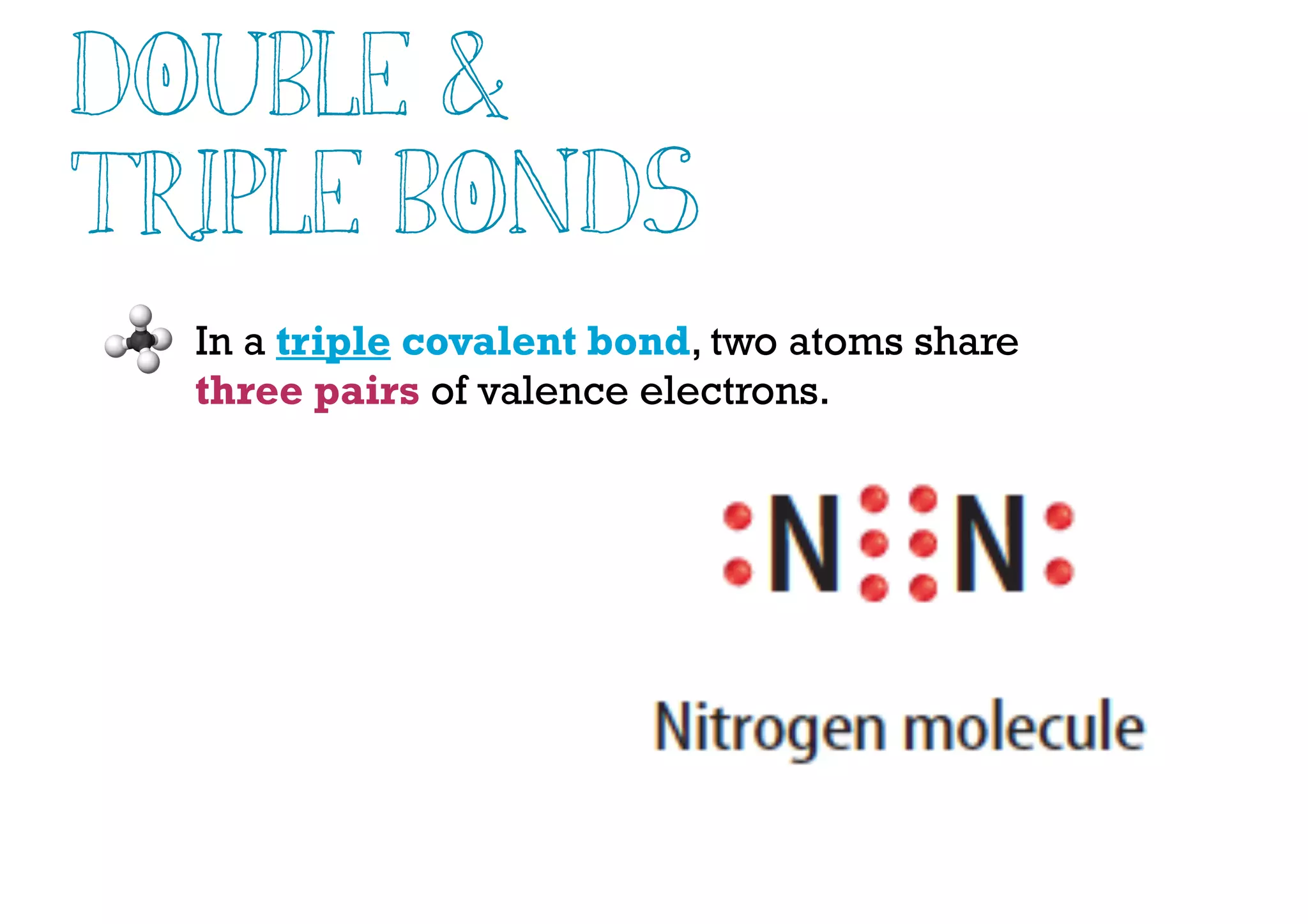
In a triple covalent bond, two atoms share
three pairs of valence electrons.
Double &
Triple Bonds
Double &
Triple Bonds
The more electrons that two atoms share, the
stronger the covalent bond is between them.
Double bonds are stronger than single bonds.
Triple bonds are stronger than double bonds.
Properties
of COvalent Compounds
low melting points
low boiling points
usually gases or liquids at room temperature, but
can be solids
poor conductors of thermal energy and electricity
Molecules
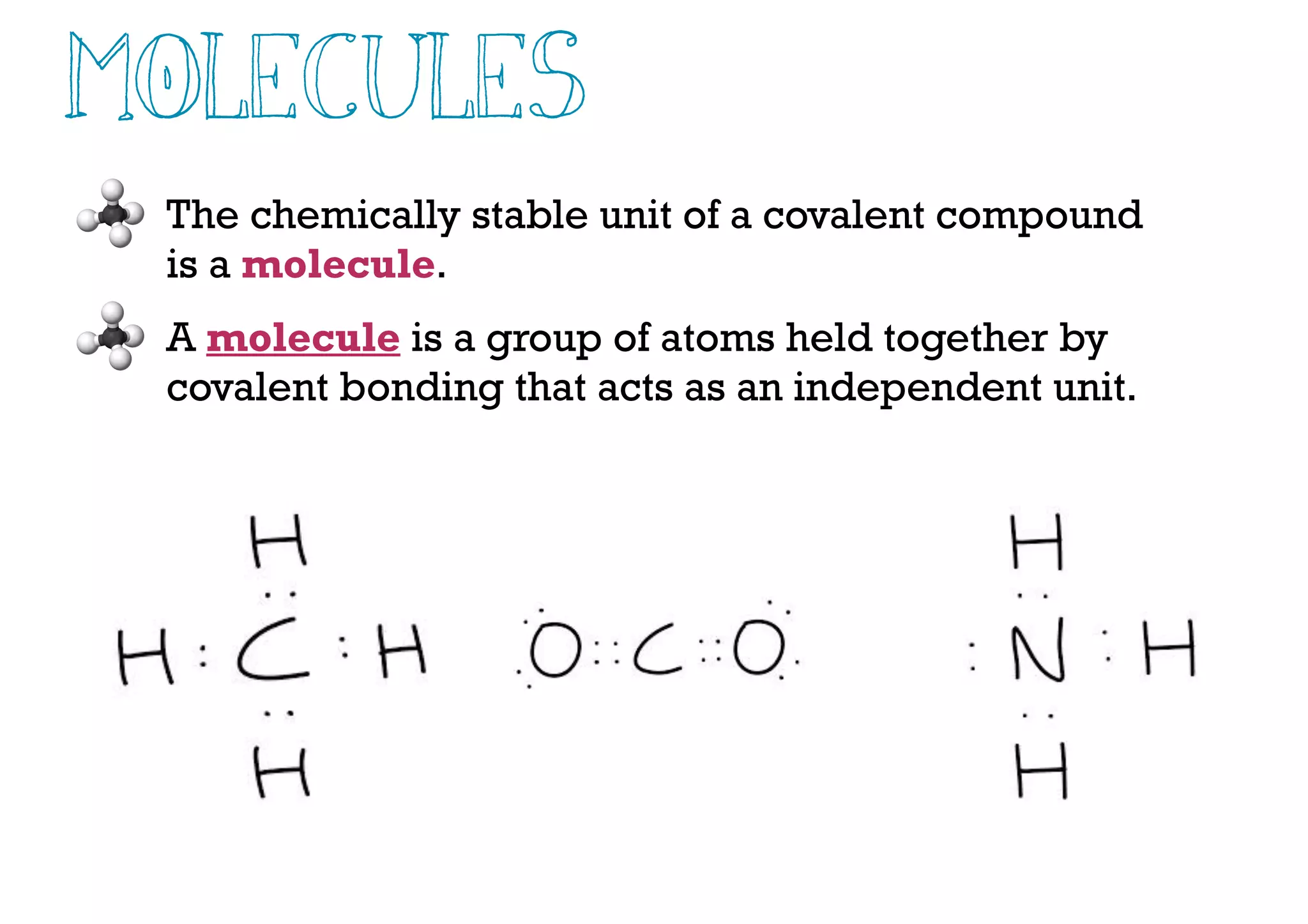
The chemically stable unit of a covalent compound
is a molecule.
A molecule is a group of atoms held together by
covalent bonding that acts as an independent unit.
Polar Molecules
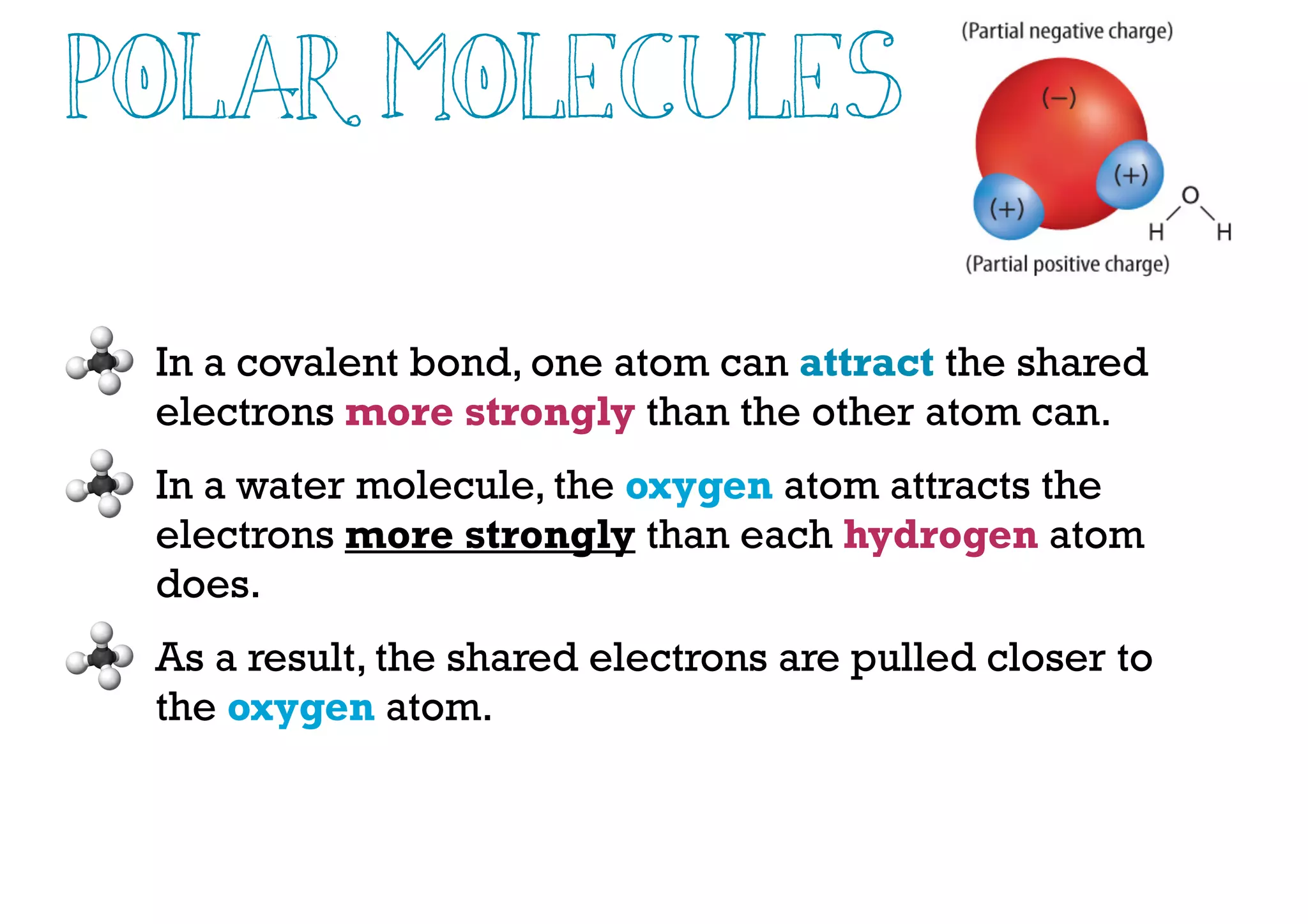
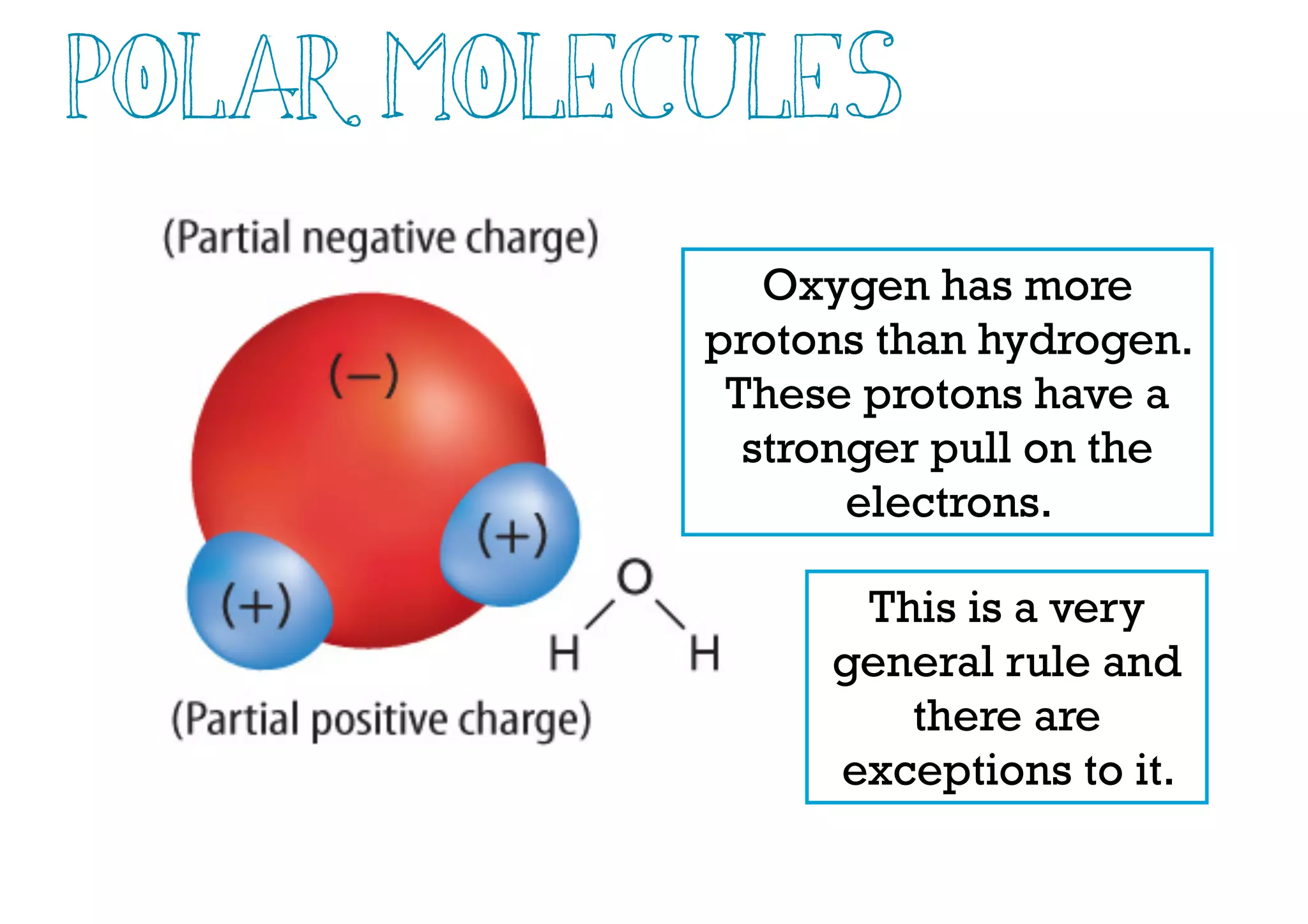
In a covalent bond, one atom can attract the shared
electrons more strongly than the other atom can.
In a water molecule, the oxygen atom attracts the
electrons more strongly than each hydrogen atom
does.
As a result, the shared electrons are pulled closer to
the oxygen atom.
Polar Molecules
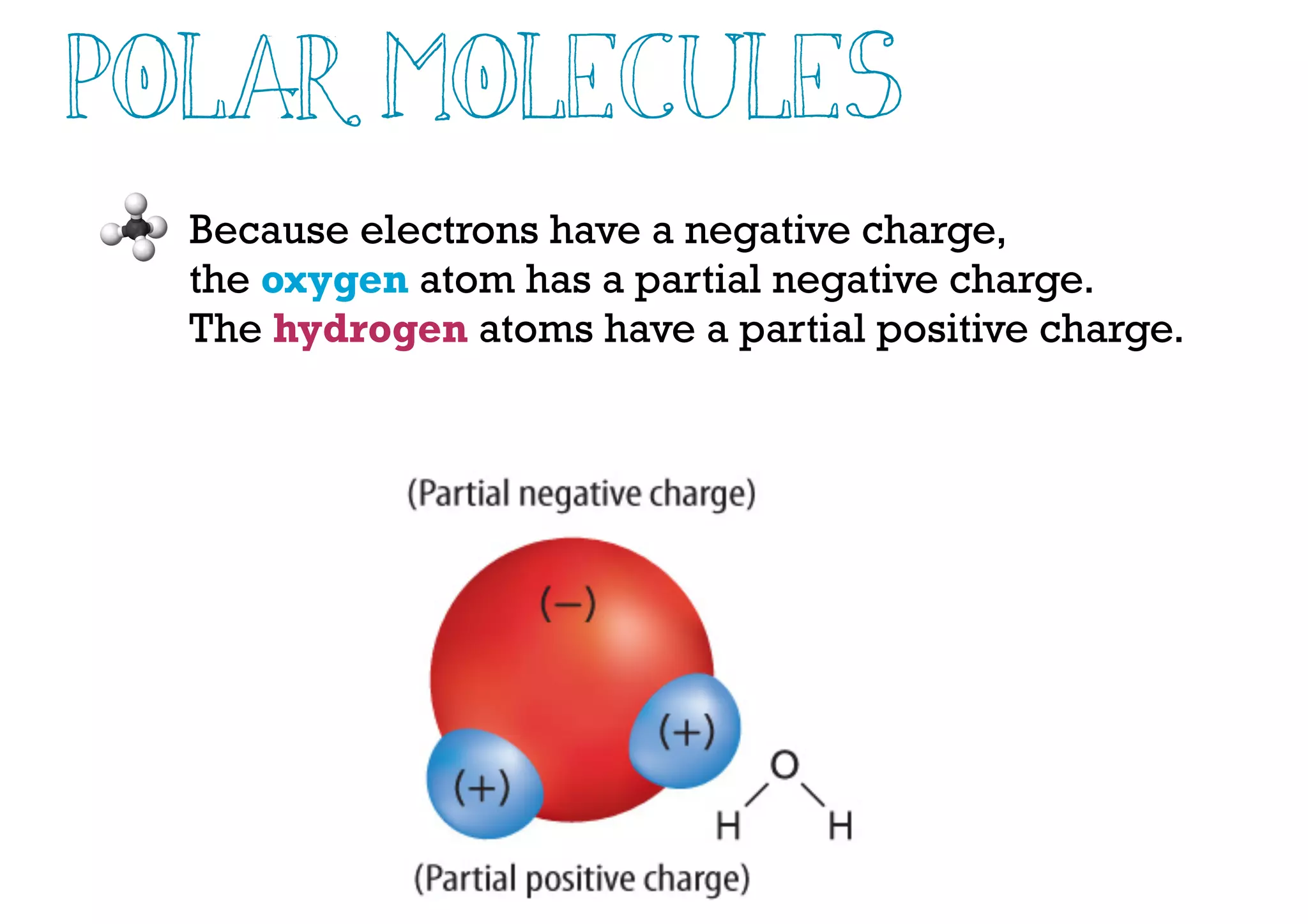
Because electrons have a negative charge,
the oxygen atom has a partial negative charge.
The hydrogen atoms have a partial positive charge.
Polar Molecules
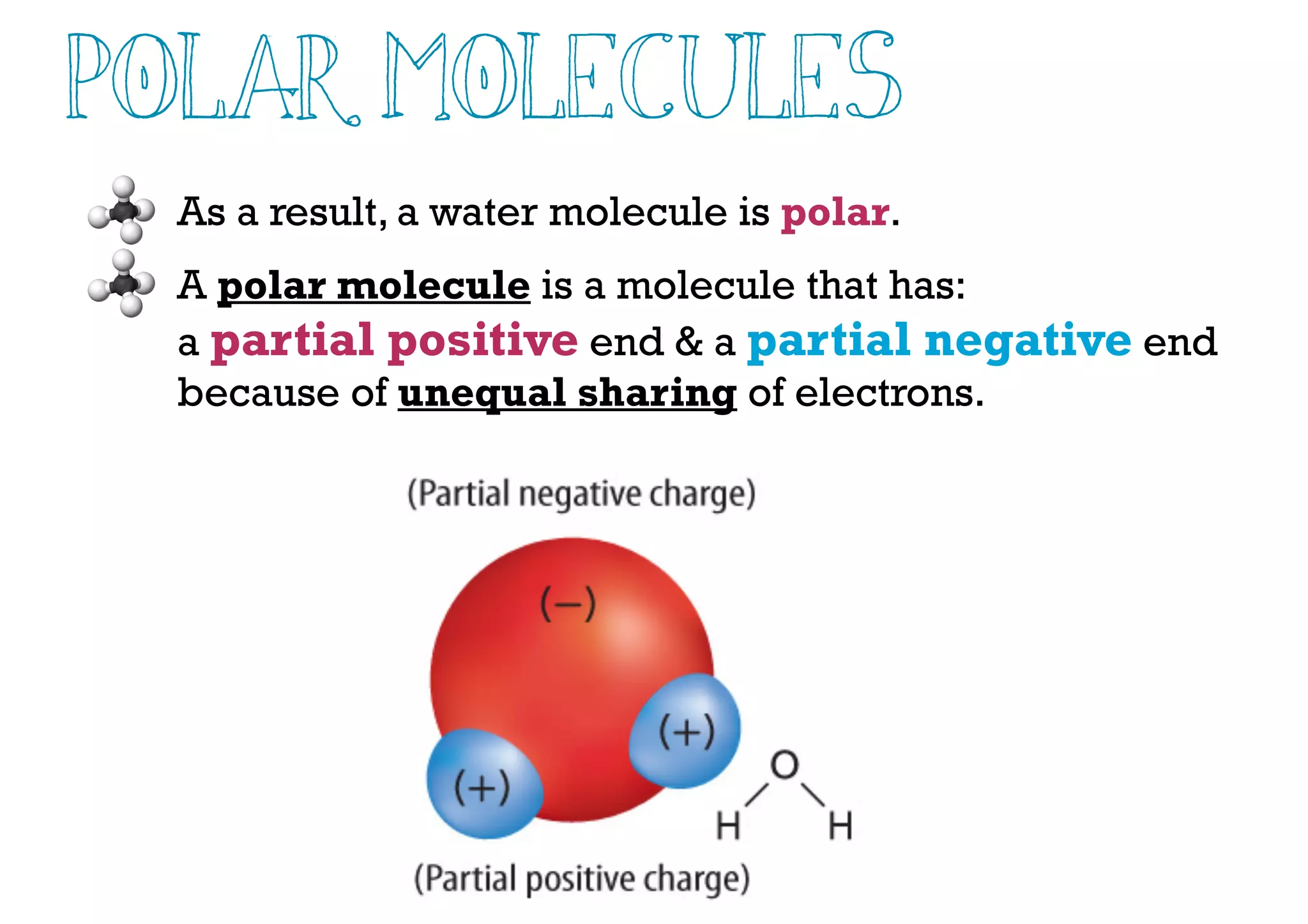
As a result, a water molecule is polar.
A polar molecule is a molecule that has:
a partial positive end & a partial negative end
because of unequal sharing of electrons.
Polar Molecules
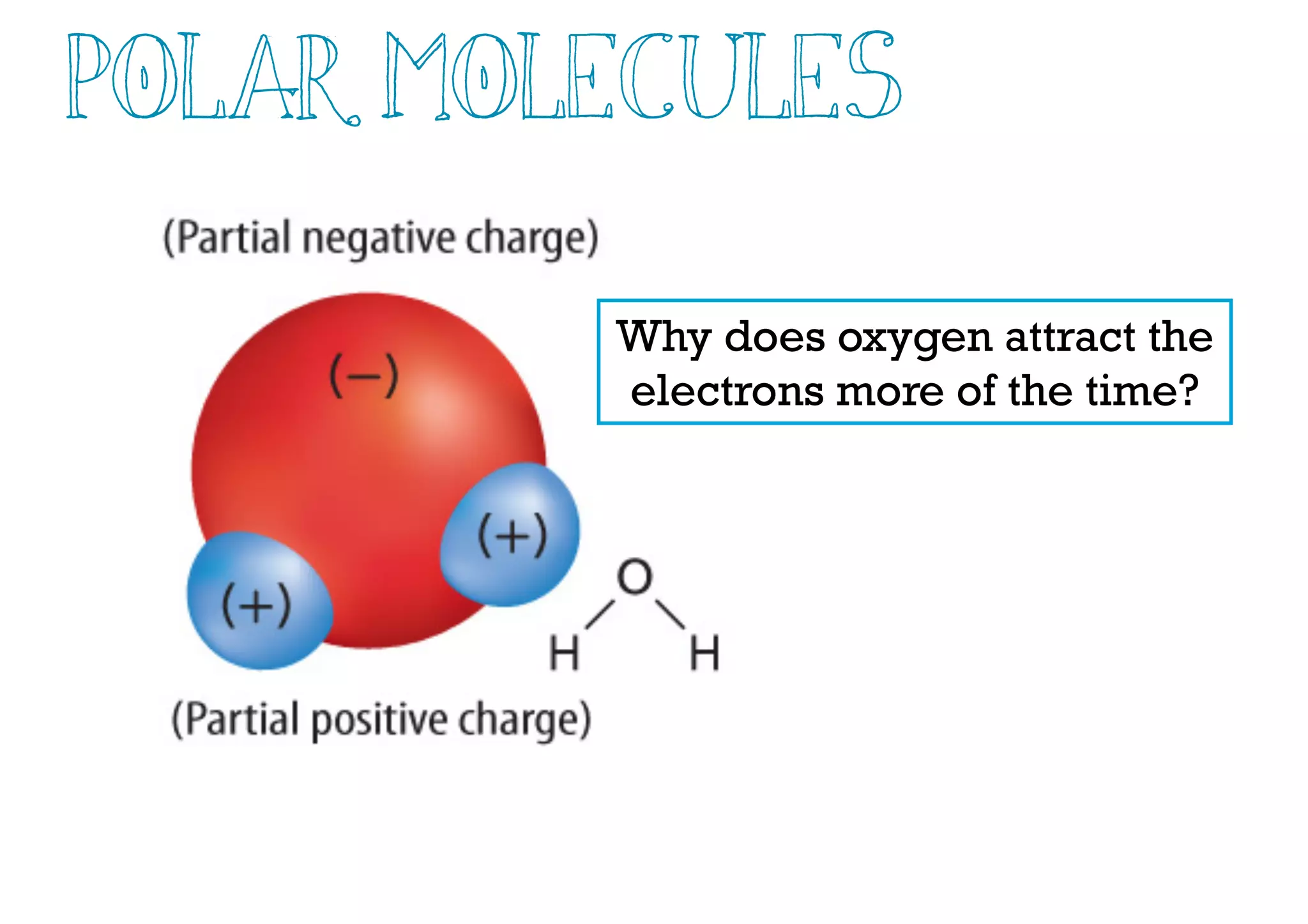
Why does oxygen attract the
electrons more of the time?
Polar Molecules
Oxygen has more
protons than hydrogen.
These protons have a
stronger pull on the
electrons.
This is a very
general rule and
there are
exceptions to it.
Polar Molecules
Polar Molecules
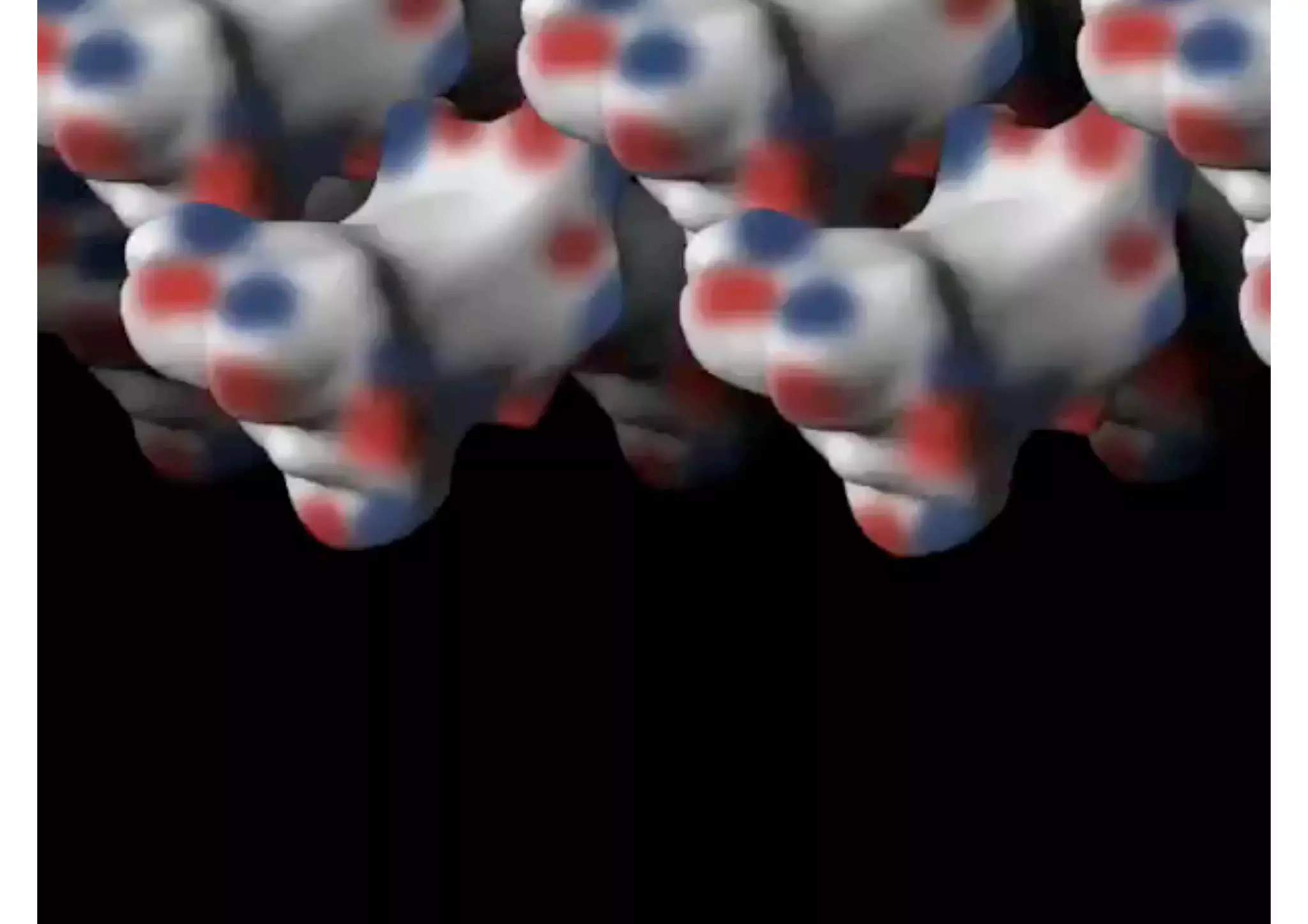
The charges on the ends of a polar molecule affect
its properties.
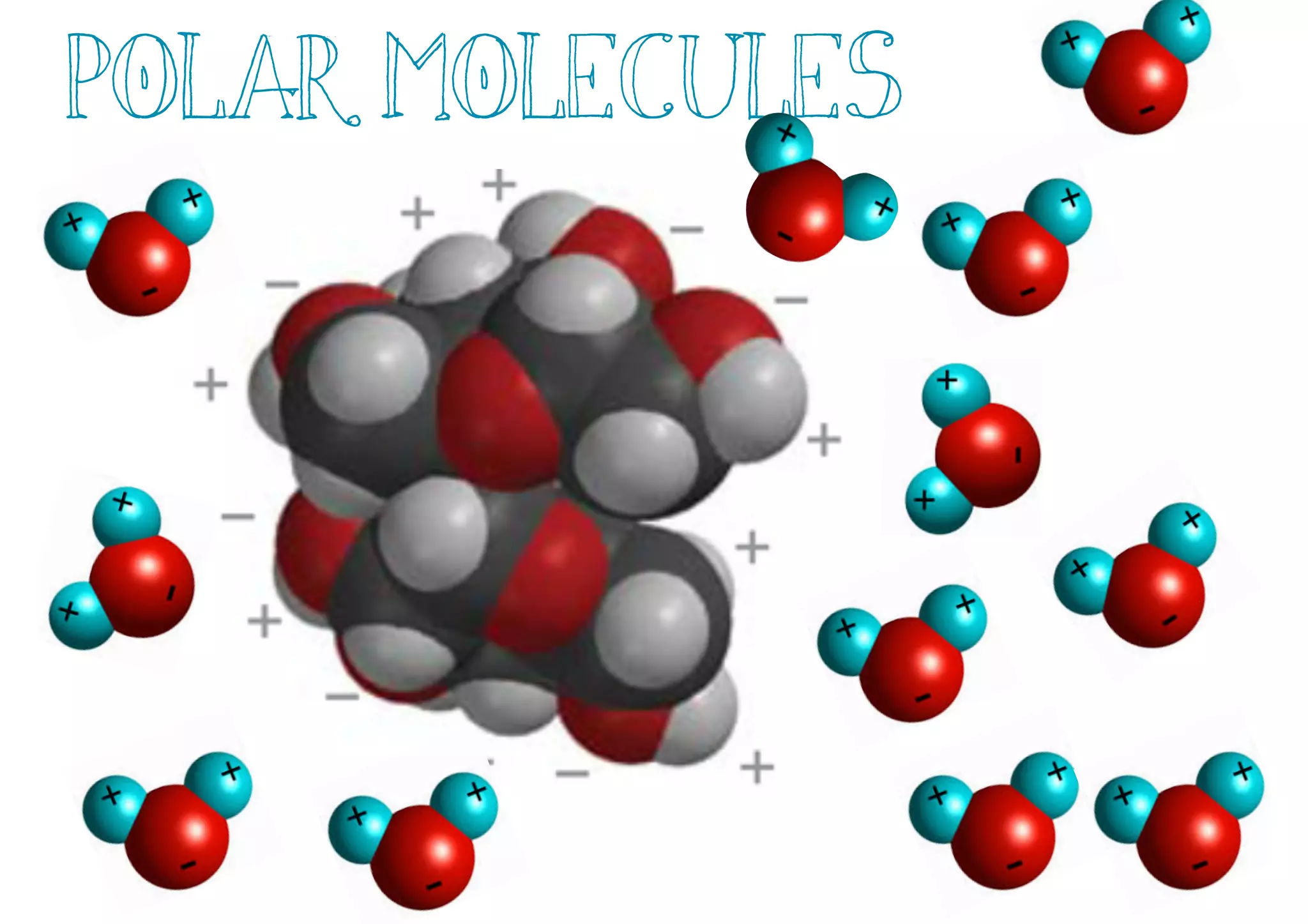
Polar molecules will dissolve other polar molecules,
but will not dissolve nonpolar molecules.
Sugar, for example, dissolves easily in water
because both sugar and water are polar.
The negative end of a water molecule pulls on the
positive end of a sugar molecule and vice versa.
This causes the sugar molecules to separate from
one another and mix with the water molecules.
Polar Molecules
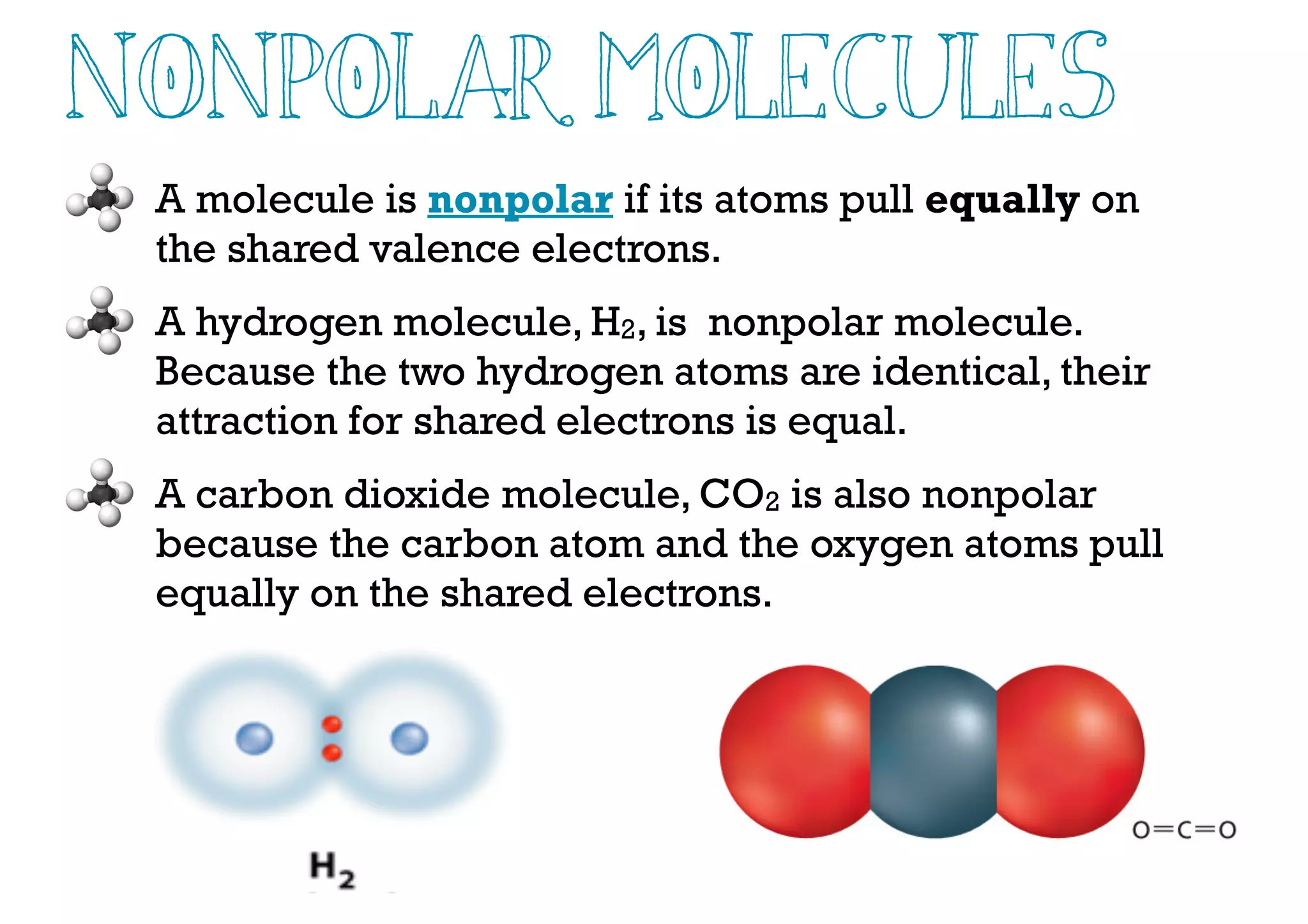
NonPolar Molecules
A molecule is nonpolar if its atoms pull equally on
the shared valence electrons.
A hydrogen molecule, H2, is nonpolar molecule.
Because the two hydrogen atoms are identical, their
attraction for shared electrons is equal.
A carbon dioxide molecule, CO2 is also nonpolar
because the carbon atom and the oxygen atoms pull
equally on the shared electrons.
Like Dissolves Like
A nonpolar compound will not easily dissolve in a
polar compound.
Water is polar. Is oil polar or nonpolar?
Polar compounds dissolve in other
polar compounds.
Nonpolar compounds dissolve in other
nonpolar compounds.
Like Dissolves Like
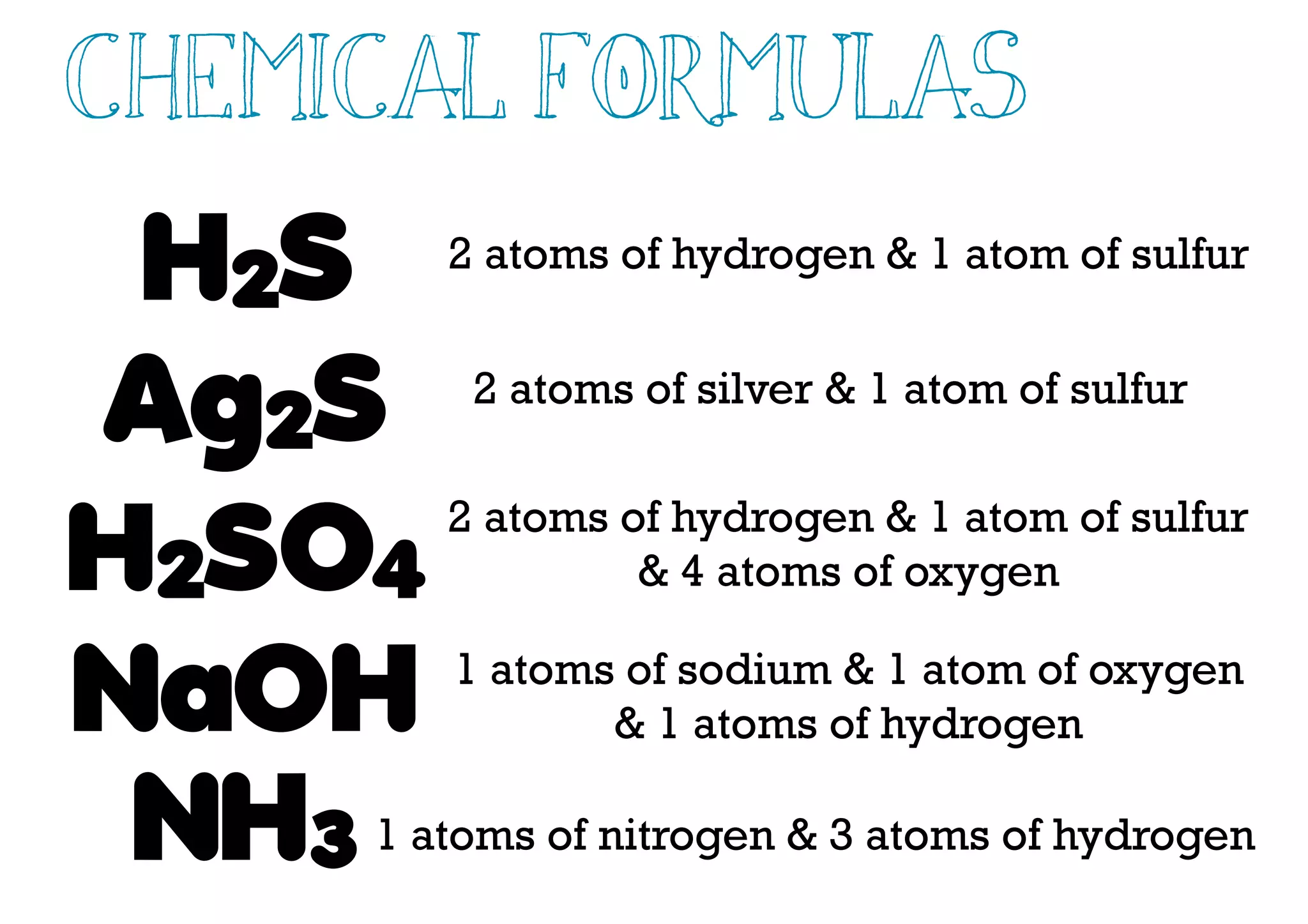
A chemical formula is a group of chemical symbols
and numbers that represent the elements and the
number of atoms of each element that make up a
compound.
Chemical Formulas
H2S Ag2S NH3
H2SO4 NaOH
Chemical Formulas
H2S
Ag2S
NH3
H2SO4
NaOH
2 atoms of hydrogen & 1 atom of sulfur
2 atoms of silver & 1 atom of sulfur
2 atoms of hydrogen & 1 atom of sulfur
& 4 atoms of oxygen
1 atoms of sodium & 1 atom of oxygen
& 1 atoms of hydrogen
1 atoms of nitrogen & 3 atoms of hydrogen
A chemical formula
identifies the types of
atoms in a compound
or a molecule.
However, a formula
does not explain the
shape or appearance
of the molecule.
Models can provide
different information
about a molecule. Each
one can show the
molecule in a different
way.
Chemical Formulas
Chemical
Formulas

Compounds, chem formulas & covalent bonds

  • 1.
  • 2.
    A compound isa substance made up of two or more different elements. Compounds are different from their elements. Compounds and the elements that make them up often have different properties. Can you name some examples? NaCl - salt Na - very reactive metal Cl - poisonous gas From Elements to Compounds H20 - water H - very reactive gas O - gas A chemical bond is a force that holds atoms together in a compound.
  • 3.
    We will learnhow atoms can form bonds by sharing valence electrons We will learn how to write and read a chemical formula. What will we Learn Today?
  • 4.
    Atoms can becomemore chemically stable by sharing valence electrons. When unstable, nonmetal atoms bond, they do this by sharing valence electrons. A covalent bond is a chemical bond formed when two atoms share one or more pairs of valence electrons forming a stable covalent compound. Covalent Bonds - Electron Sharing
  • 5.
  • 6.
  • 7.
    H .OH. ELECTRON SHARING hydrogen hasa complete outer energy level with 2 valence electrons Covalent Bonds - Electron Sharing
  • 8.
    H .OH. ELECTRON SHARING hydrogen hasa complete outer energy level with 2 valence electrons Covalent Bonds - Electron Sharing
  • 9.
    H .OH. ELECTRON SHARING oxygen hasa complete outer energy level with 8 valence electrons Covalent Bonds - Electron Sharing
  • 11.
    Covalent Bonds - ElectronSharing Hydrogen and oxygen shared their unpaired valence electrons and formed a stable covalent compound. Each covalent bond has two valence electrons—one from the hydrogen atom and one from the oxygen atom. These electrons are shared in the bond.They count as valence electrons for both atoms. The compound is stable.
  • 12.
    In a singlecovalent bond, two atoms share one pair of valence electrons. Double & Triple Bonds
  • 13.
    In a doublecovalent bond, two atoms share two pairs of valence electrons. Double & Triple Bonds
  • 14.
    In a triplecovalent bond, two atoms share three pairs of valence electrons. Double & Triple Bonds
  • 15.
    Double & Triple Bonds Themore electrons that two atoms share, the stronger the covalent bond is between them. Double bonds are stronger than single bonds. Triple bonds are stronger than double bonds.
  • 17.
    Properties of COvalent Compounds lowmelting points low boiling points usually gases or liquids at room temperature, but can be solids poor conductors of thermal energy and electricity
  • 18.
    Molecules The chemically stableunit of a covalent compound is a molecule. A molecule is a group of atoms held together by covalent bonding that acts as an independent unit.
  • 19.
    Polar Molecules In acovalent bond, one atom can attract the shared electrons more strongly than the other atom can. In a water molecule, the oxygen atom attracts the electrons more strongly than each hydrogen atom does. As a result, the shared electrons are pulled closer to the oxygen atom.
  • 20.
    Polar Molecules Because electronshave a negative charge, the oxygen atom has a partial negative charge. The hydrogen atoms have a partial positive charge.
  • 21.
    Polar Molecules As aresult, a water molecule is polar. A polar molecule is a molecule that has: a partial positive end & a partial negative end because of unequal sharing of electrons.
  • 22.
    Polar Molecules Why doesoxygen attract the electrons more of the time?
  • 23.
    Polar Molecules Oxygen hasmore protons than hydrogen. These protons have a stronger pull on the electrons. This is a very general rule and there are exceptions to it.
  • 24.
  • 25.
    Polar Molecules The chargeson the ends of a polar molecule affect its properties. Polar molecules will dissolve other polar molecules, but will not dissolve nonpolar molecules. Sugar, for example, dissolves easily in water because both sugar and water are polar. The negative end of a water molecule pulls on the positive end of a sugar molecule and vice versa. This causes the sugar molecules to separate from one another and mix with the water molecules.
  • 26.
  • 28.
    NonPolar Molecules A moleculeis nonpolar if its atoms pull equally on the shared valence electrons. A hydrogen molecule, H2, is nonpolar molecule. Because the two hydrogen atoms are identical, their attraction for shared electrons is equal. A carbon dioxide molecule, CO2 is also nonpolar because the carbon atom and the oxygen atoms pull equally on the shared electrons.
  • 29.
    Like Dissolves Like Anonpolar compound will not easily dissolve in a polar compound. Water is polar. Is oil polar or nonpolar?
  • 30.
    Polar compounds dissolvein other polar compounds. Nonpolar compounds dissolve in other nonpolar compounds. Like Dissolves Like
  • 31.
    A chemical formulais a group of chemical symbols and numbers that represent the elements and the number of atoms of each element that make up a compound. Chemical Formulas H2S Ag2S NH3 H2SO4 NaOH
  • 32.
    Chemical Formulas H2S Ag2S NH3 H2SO4 NaOH 2 atomsof hydrogen & 1 atom of sulfur 2 atoms of silver & 1 atom of sulfur 2 atoms of hydrogen & 1 atom of sulfur & 4 atoms of oxygen 1 atoms of sodium & 1 atom of oxygen & 1 atoms of hydrogen 1 atoms of nitrogen & 3 atoms of hydrogen
  • 33.
    A chemical formula identifiesthe types of atoms in a compound or a molecule. However, a formula does not explain the shape or appearance of the molecule. Models can provide different information about a molecule. Each one can show the molecule in a different way. Chemical Formulas
  • 34.