Microbiology
Microbiology is the study of all living organisms that are
too small to be visible with the naked eye.
 Pure microbiology
 Bacteriology
 Mycology
 Phycology
 Protozoology
 Parasitology
 Immunology
 Virology
Microbial Diversity
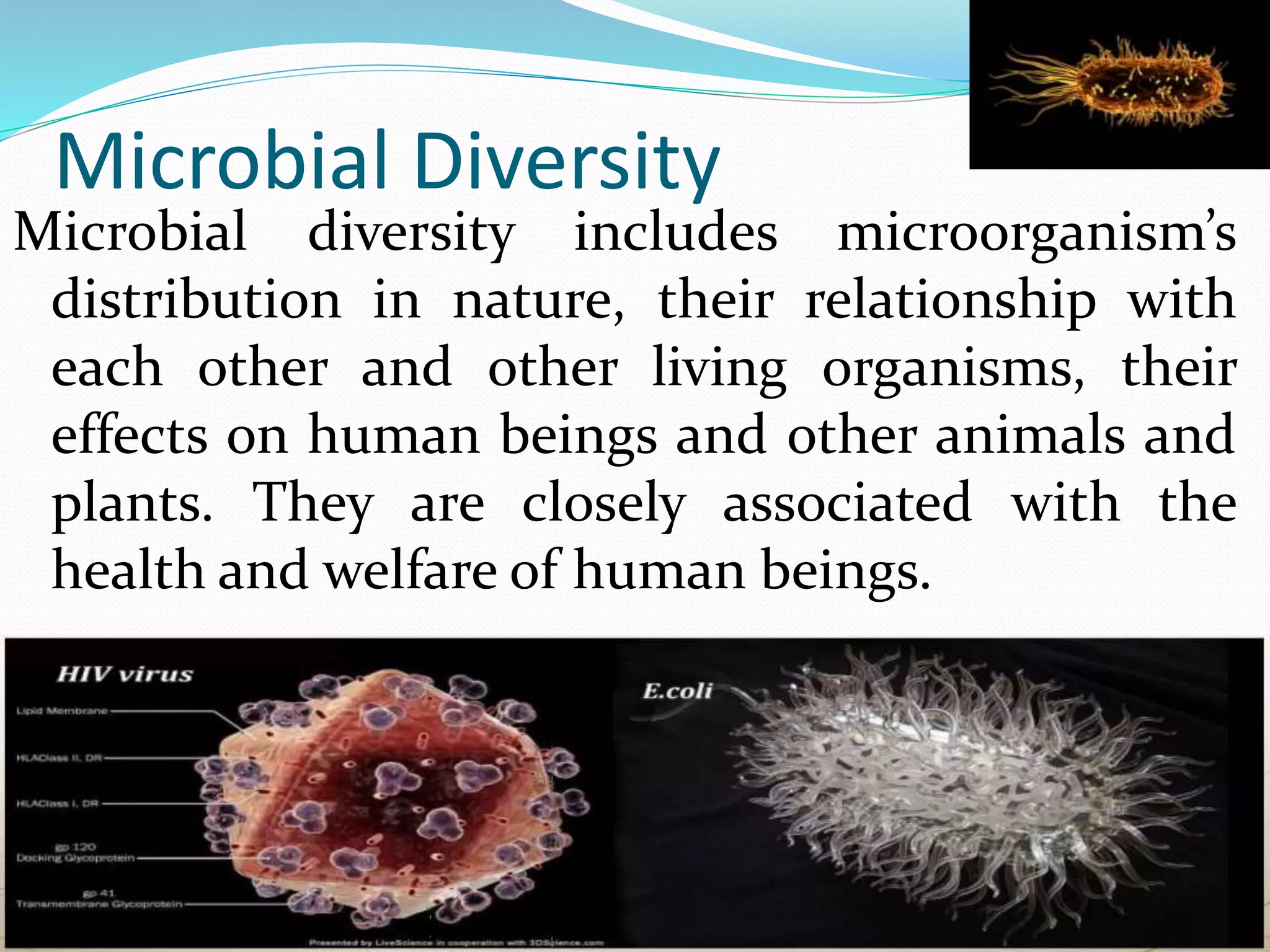
Microbial diversity includes microorganism’s
distribution in nature, their relationship with
each other and other living organisms, their
effects on human beings and other animals and
plants. They are closely associated with the
health and welfare of human beings.
Bacteriology
 The study of bacteria & the subdivision of
microbiology involves the identification, classification,
and characterization of bacterial species.
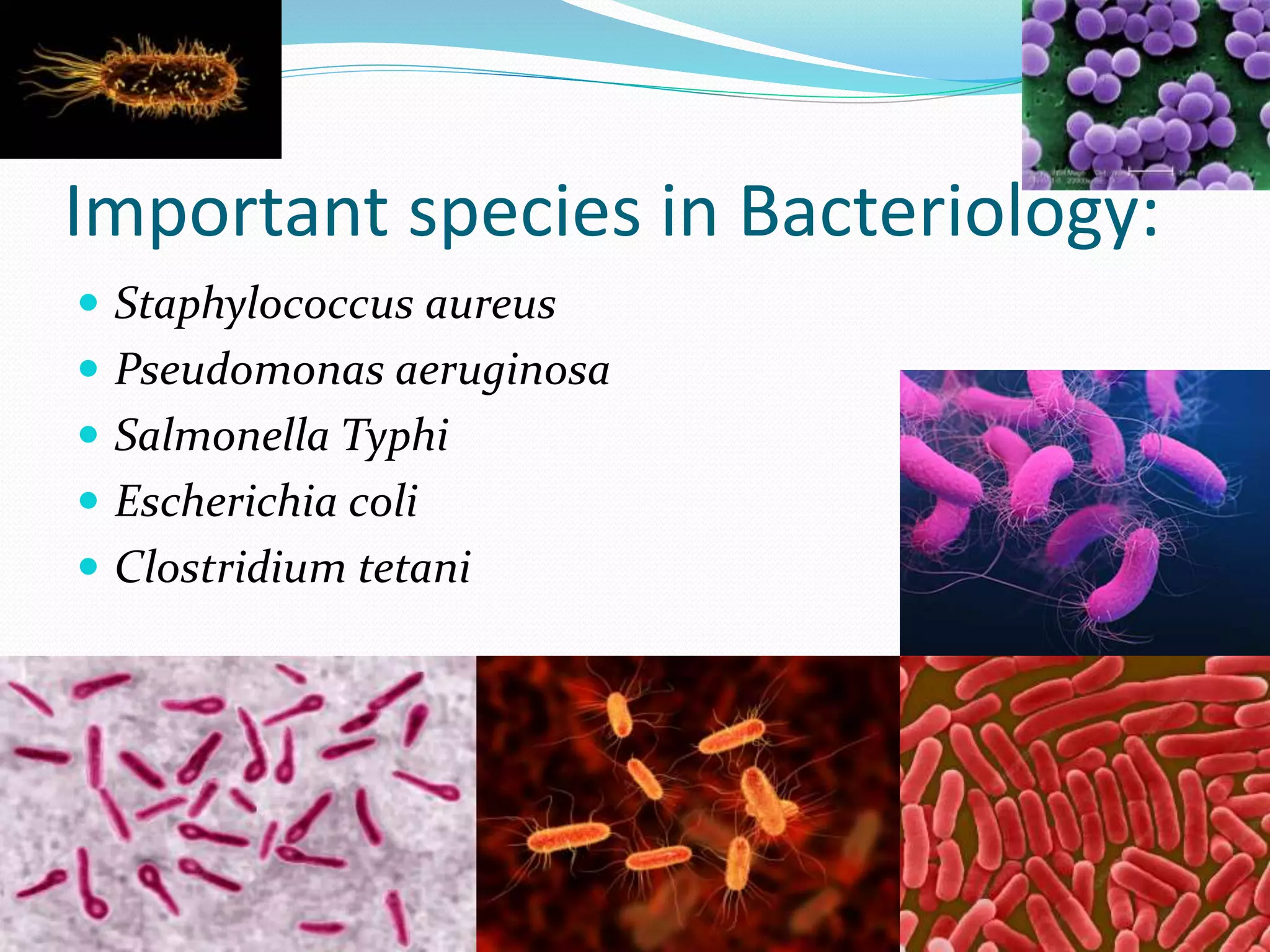
Important species in Bacteriology:
 Staphylococcus aureus
 Pseudomonas aeruginosa
 Salmonella Typhi
 Escherichia coli
 Clostridium tetani
Habitat of Bacteria
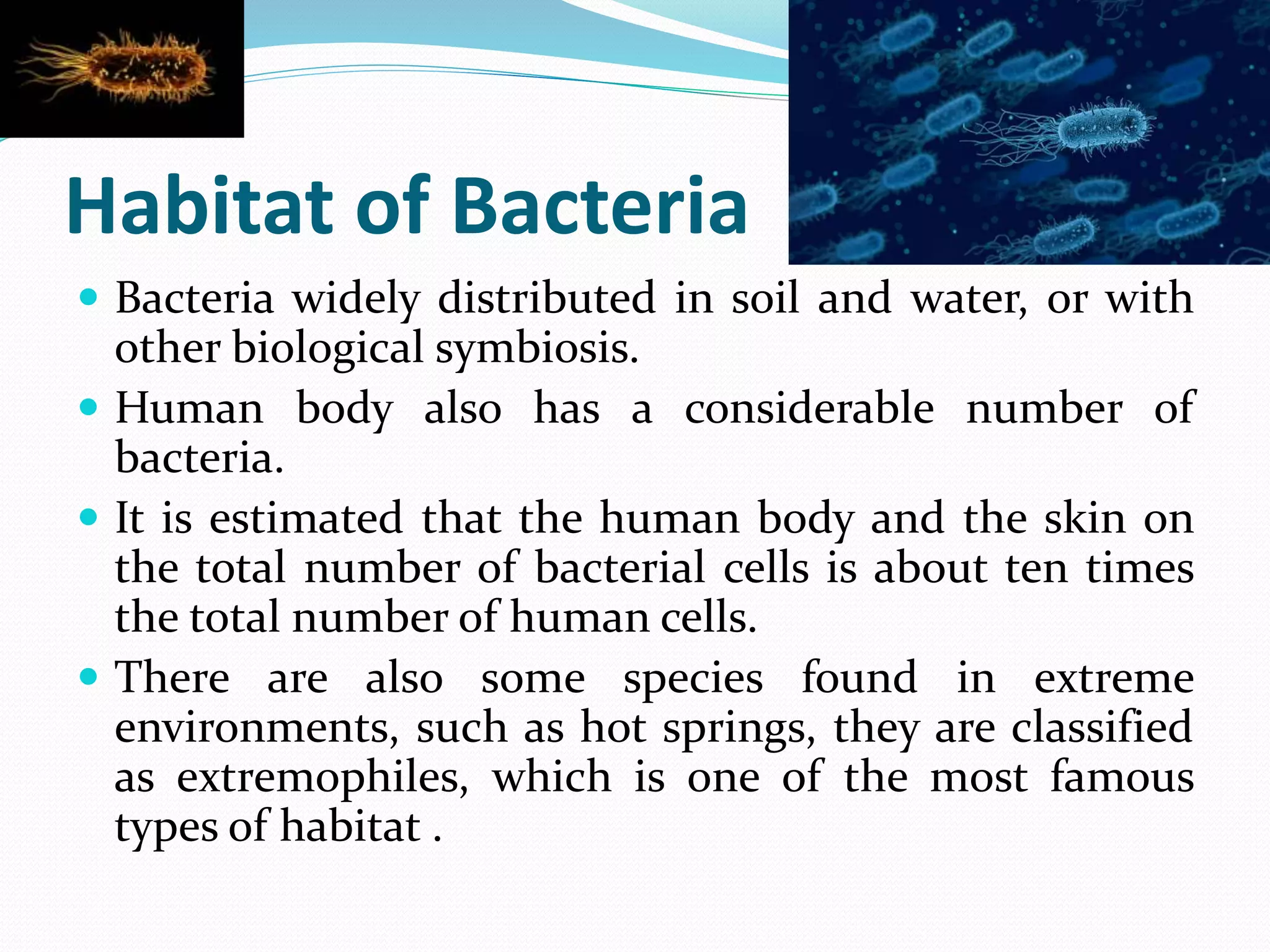
 Bacteria widely distributed in soil and water, or with
other biological symbiosis.
 Human body also has a considerable number of
bacteria.
 It is estimated that the human body and the skin on
the total number of bacterial cells is about ten times
the total number of human cells.
 There are also some species found in extreme
environments, such as hot springs, they are classified
as extremophiles, which is one of the most famous
types of habitat .
Virus
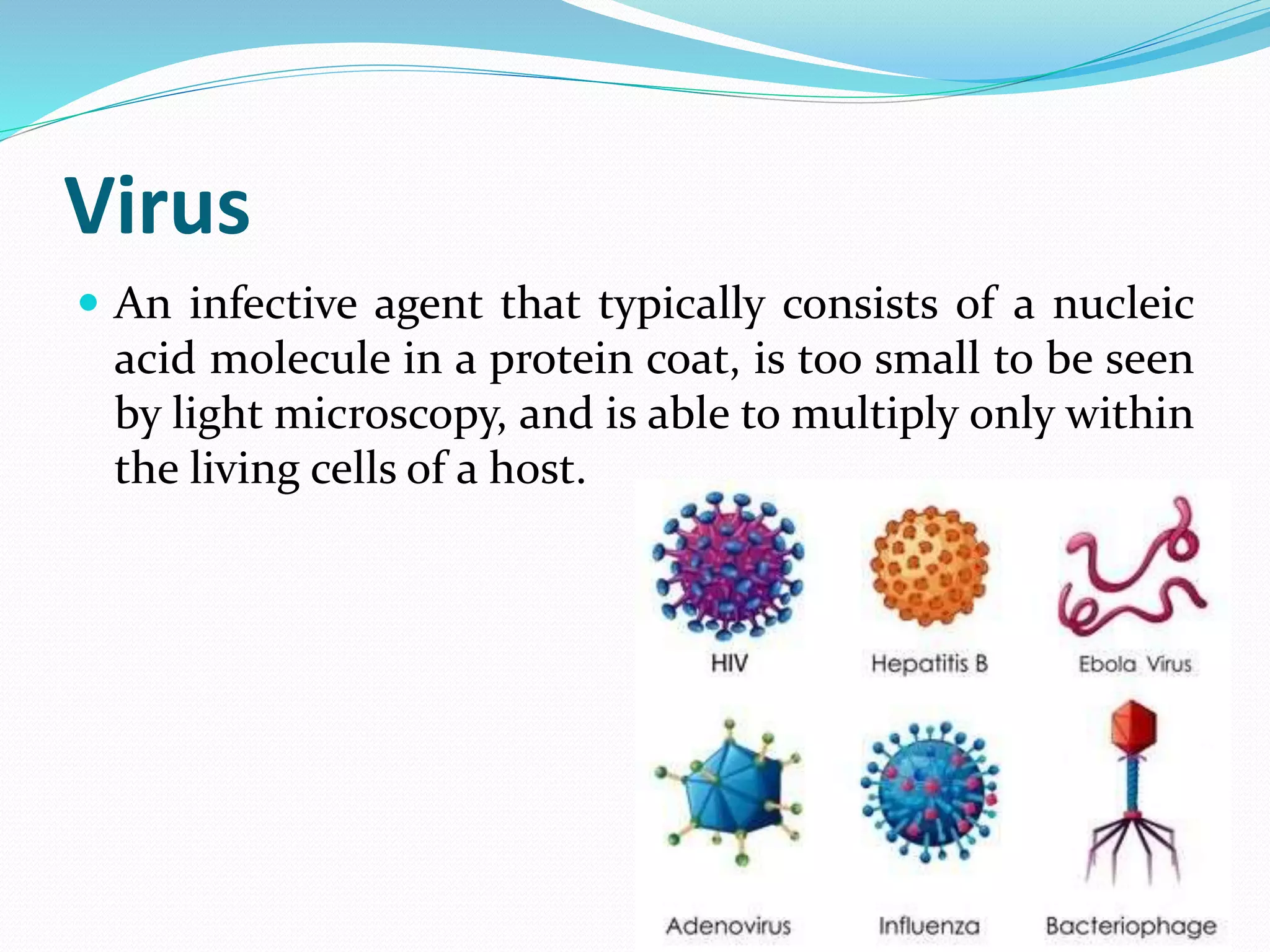
 An infective agent that typically consists of a nucleic
acid molecule in a protein coat, is too small to be seen
by light microscopy, and is able to multiply only within
the living cells of a host.
Habitat of Viruses
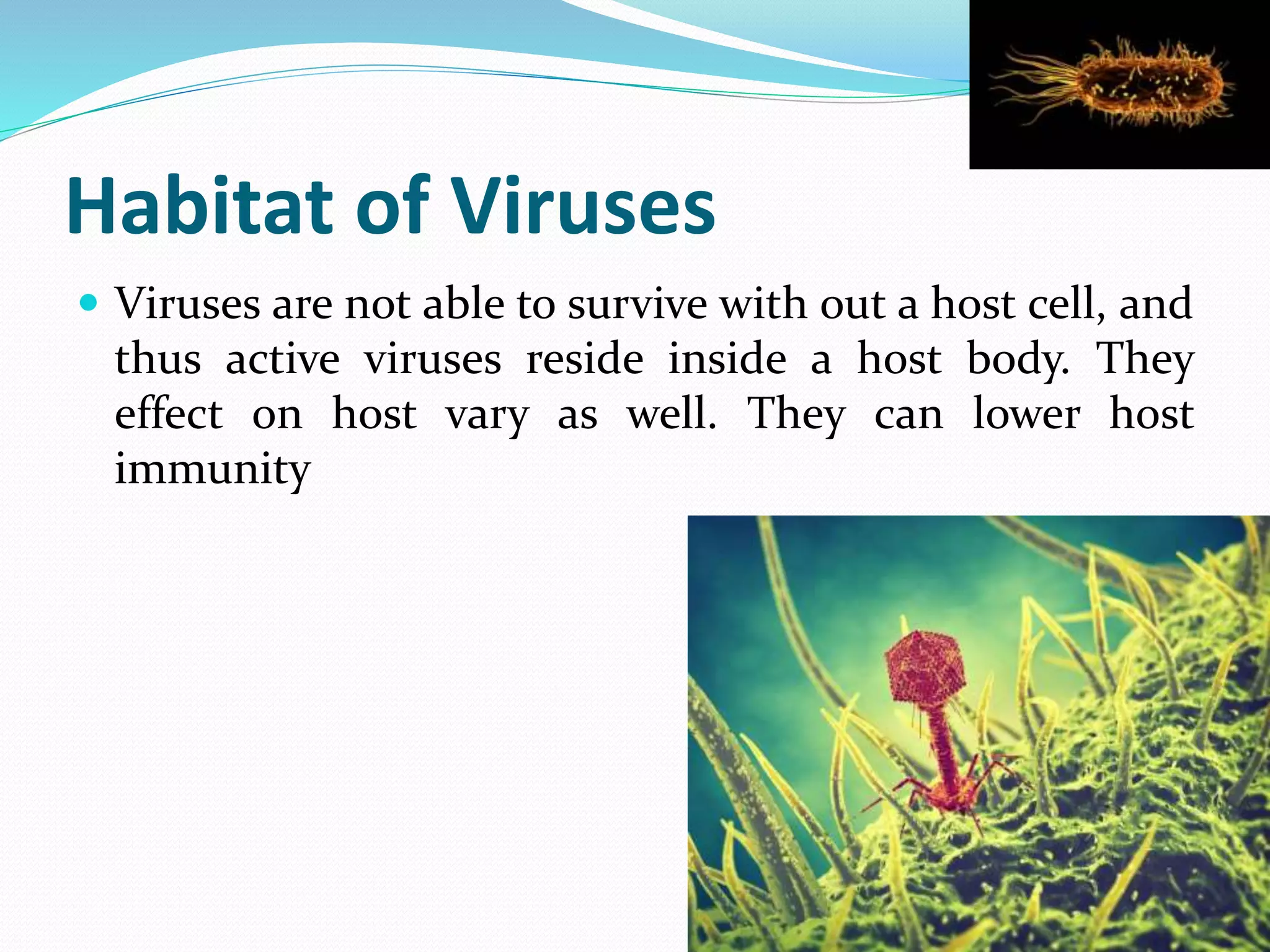
 Viruses are not able to survive with out a host cell, and
thus active viruses reside inside a host body. They
effect on host vary as well. They can lower host
immunity
Fungus
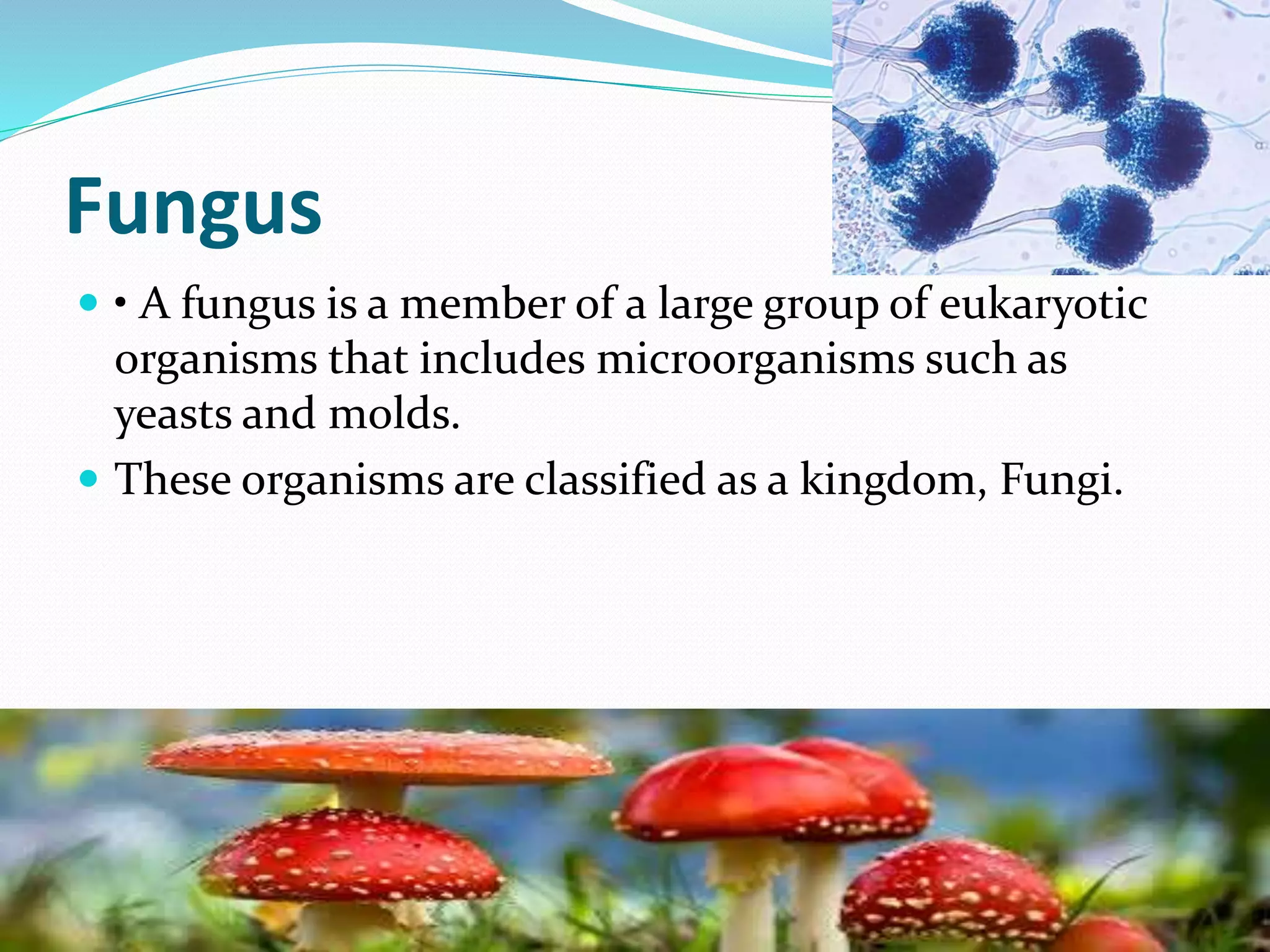
 • A fungus is a member of a large group of eukaryotic
organisms that includes microorganisms such as
yeasts and molds.
 These organisms are classified as a kingdom, Fungi.
Molds
 The term mold is applied to a large and taxonomically
diverse number of fungal species where their growth
results in a moldy appearance of objects, especially
food.
Habitat & Distribution
 Fungi have a worldwide distribution, and grow in a
wide range of habitats, including extreme
environments such as deserts or areas with high salt
concentrations or ionizing radiation, as well as in deep
sea sediments.
 Most grow in terrestrial environments, though several
species live partly or solely in aquatic habitats.
 Around 100,000 species of fungi have been formally
described by taxonomists.
 The fungal kingdom has been estimated to contain
about 1.5 million species.
Yeast:
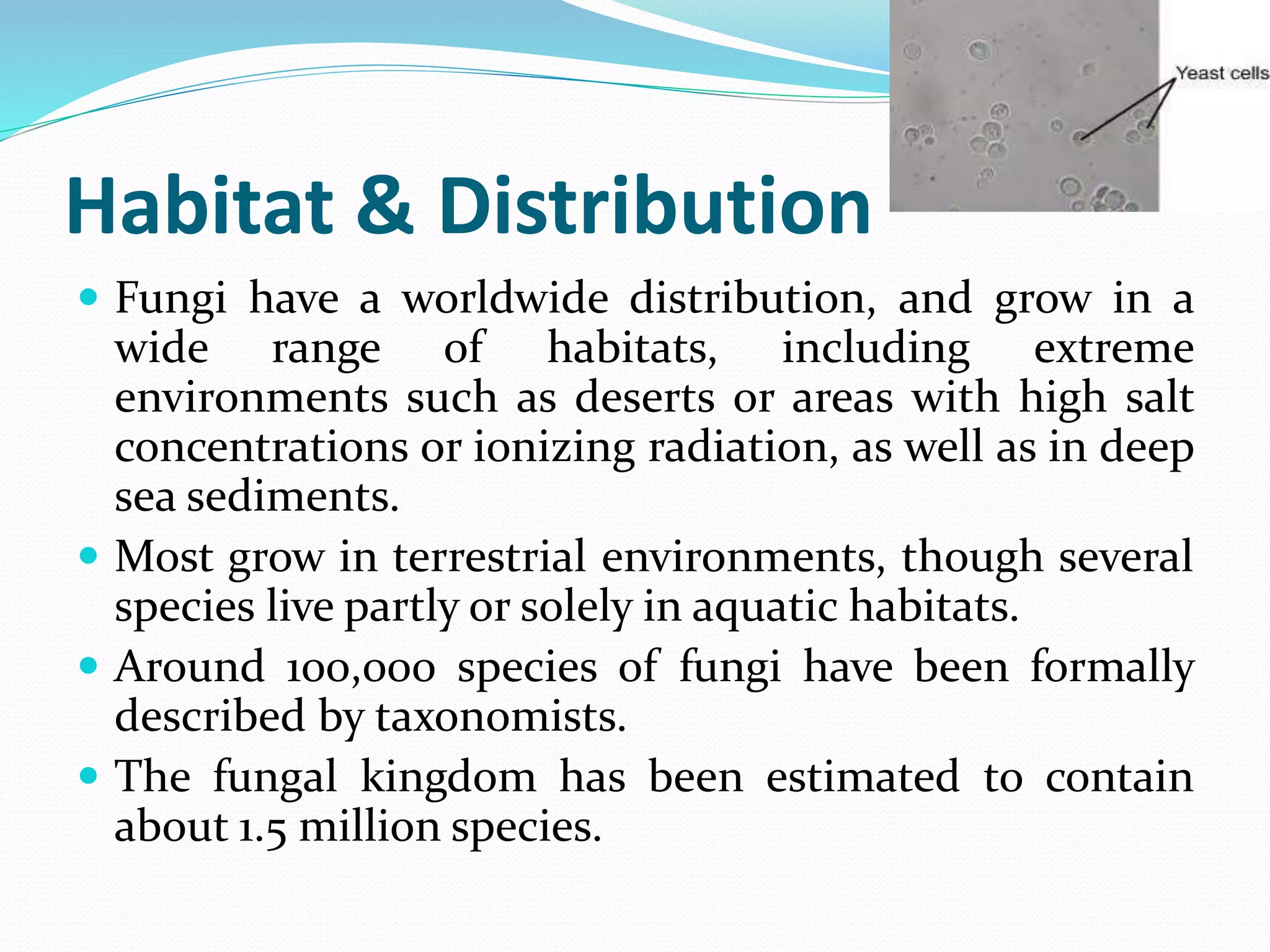
 Yeasts are eukaryotic microorganisms, classified in the
Kingdom fungi.
 Yeasts are unicellular, although some species with
yeast forms may become multicellular
NUTRITION AND GROWTH
 Use organic compounds as a source of energy
 Do not require sunlight to grow
 Carbon is obtained mostly from hexose sugars, such as
glucose and fructose.
 Grow best in a neutral or slightly acidic pH
environment.
 Some species can metabolize pentose sugars like
ribose, alcohols, and organic acids
Usages:
 In bakery industries.
 Producing Alcoholic beverages like mead, Beer , Wine
etc.
 In food spoilage.
 Saccharomyces cerevisiae, is used in baking as a
leavening agent
 Brewer's yeast is also very rich in essential minerals
and the B vitamins(except B12)
THANK YOU …

Microbiology and Microbial Diversities

  • 2.
    Microbiology Microbiology is thestudy of all living organisms that are too small to be visible with the naked eye.  Pure microbiology  Bacteriology  Mycology  Phycology  Protozoology  Parasitology  Immunology  Virology
  • 5.
    Microbial Diversity Microbial diversityincludes microorganism’s distribution in nature, their relationship with each other and other living organisms, their effects on human beings and other animals and plants. They are closely associated with the health and welfare of human beings.
  • 6.
    Bacteriology  The studyof bacteria & the subdivision of microbiology involves the identification, classification, and characterization of bacterial species.
  • 7.
    Important species inBacteriology:  Staphylococcus aureus  Pseudomonas aeruginosa  Salmonella Typhi  Escherichia coli  Clostridium tetani
  • 8.
    Habitat of Bacteria Bacteria widely distributed in soil and water, or with other biological symbiosis.  Human body also has a considerable number of bacteria.  It is estimated that the human body and the skin on the total number of bacterial cells is about ten times the total number of human cells.  There are also some species found in extreme environments, such as hot springs, they are classified as extremophiles, which is one of the most famous types of habitat .
  • 9.
    Virus  An infectiveagent that typically consists of a nucleic acid molecule in a protein coat, is too small to be seen by light microscopy, and is able to multiply only within the living cells of a host.
  • 11.
    Habitat of Viruses Viruses are not able to survive with out a host cell, and thus active viruses reside inside a host body. They effect on host vary as well. They can lower host immunity
  • 12.
    Fungus  • Afungus is a member of a large group of eukaryotic organisms that includes microorganisms such as yeasts and molds.  These organisms are classified as a kingdom, Fungi.
  • 13.
    Molds  The termmold is applied to a large and taxonomically diverse number of fungal species where their growth results in a moldy appearance of objects, especially food.
  • 14.
    Habitat & Distribution Fungi have a worldwide distribution, and grow in a wide range of habitats, including extreme environments such as deserts or areas with high salt concentrations or ionizing radiation, as well as in deep sea sediments.  Most grow in terrestrial environments, though several species live partly or solely in aquatic habitats.  Around 100,000 species of fungi have been formally described by taxonomists.  The fungal kingdom has been estimated to contain about 1.5 million species.
  • 15.
    Yeast:  Yeasts areeukaryotic microorganisms, classified in the Kingdom fungi.  Yeasts are unicellular, although some species with yeast forms may become multicellular
  • 16.
    NUTRITION AND GROWTH Use organic compounds as a source of energy  Do not require sunlight to grow  Carbon is obtained mostly from hexose sugars, such as glucose and fructose.  Grow best in a neutral or slightly acidic pH environment.  Some species can metabolize pentose sugars like ribose, alcohols, and organic acids
  • 17.
    Usages:  In bakeryindustries.  Producing Alcoholic beverages like mead, Beer , Wine etc.  In food spoilage.  Saccharomyces cerevisiae, is used in baking as a leavening agent  Brewer's yeast is also very rich in essential minerals and the B vitamins(except B12)
  • 18.