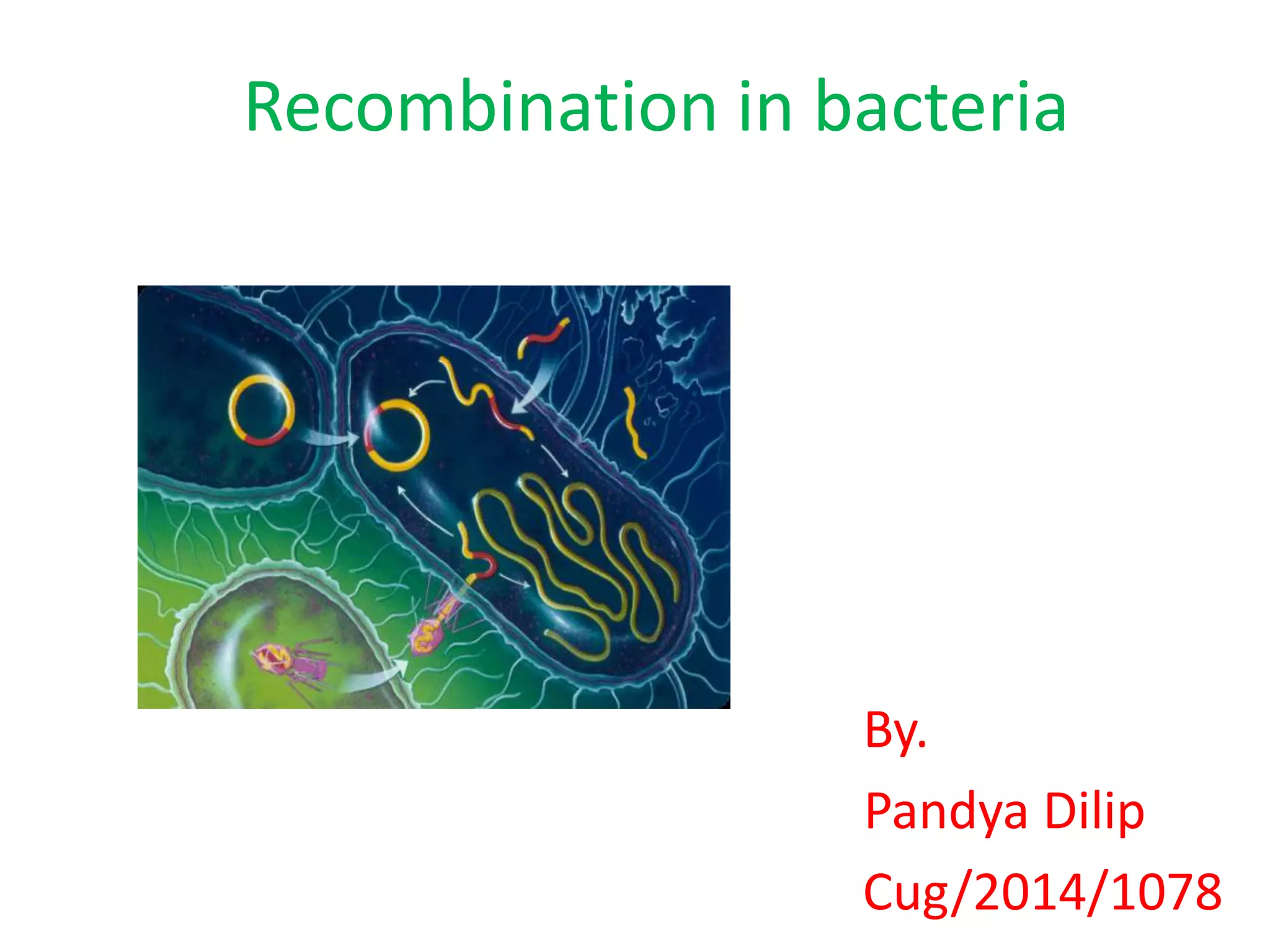
Recombination in bacteria 
By. 
Pandya Dilip 
Cug/2014/1078
Gene transfer in becteria 
• transfer genetic material from one becteria to 
another becteria 
• In bacteria genetic transfer can happen three 
ways: 
– Transduction 
– Conjugation 
– transformation
Transduction
Transduction 
• Definition: gene transfer from a donor to a 
recipient by way of a bacteriophage 
• Discover by lederberg & zinder in 1951 
• Bacteriophage (phage): A virus that infects 
bcteria
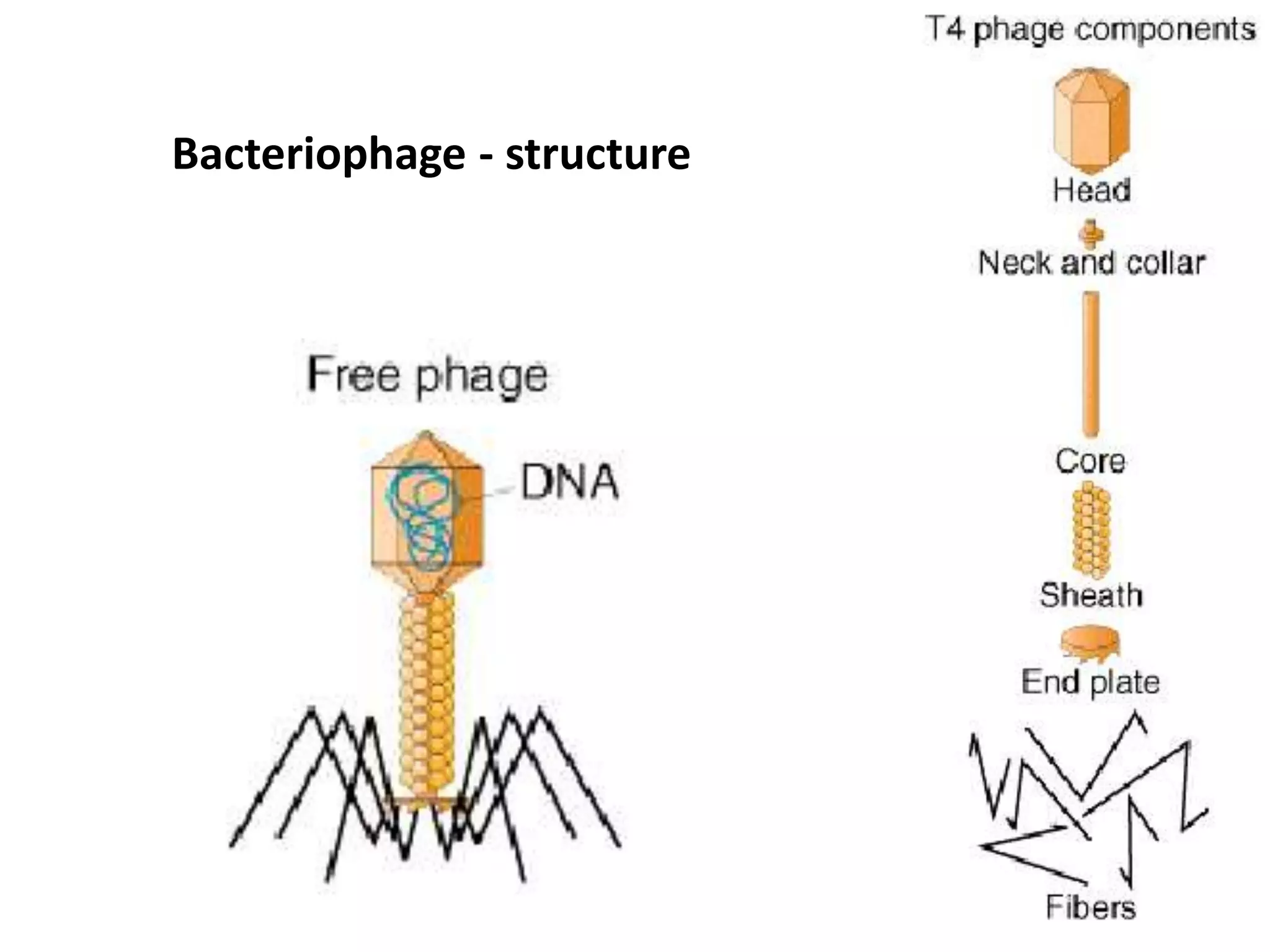
Bacteriophage - structure
Types of Bacteriophage 
• Bacteriophages have been classified into two types 
on the basis of their interaction with a bactria cell. 
1. Virulent phages. 
2. Temperate phages. 
• Virulent – always multiply & lyse the host cell after 
infection. 
• Temperate phage: That have a choice between two 
life-style after infection.
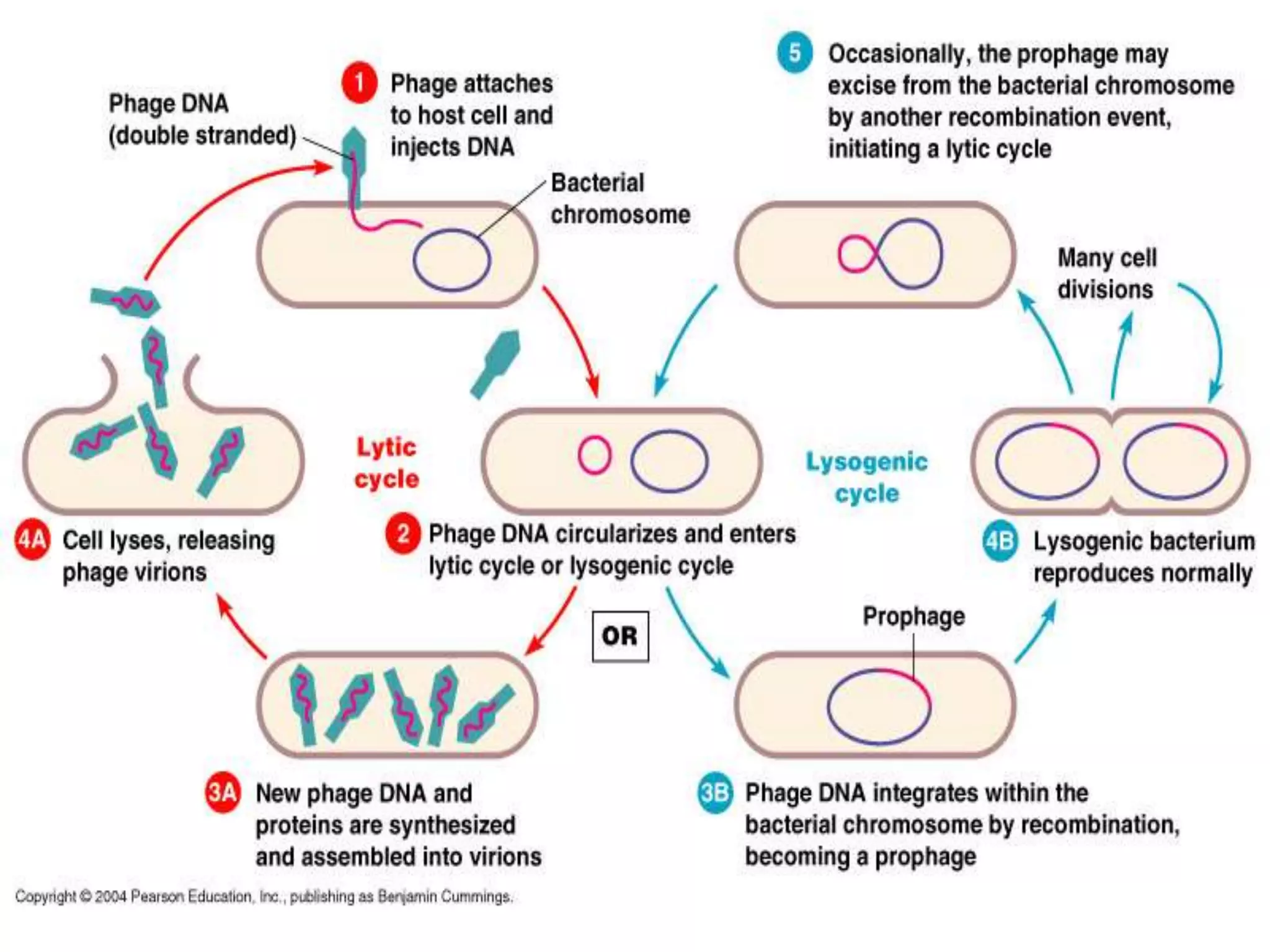
1.Lytic cycle 
2.lysogenic cycle 
• 1. Lytic cycle = they reproduce & lyse their 
host cell just like virulent phages. 
• Lysogenic cycle = their chromosome are 
integrated in to the chromosome of the host.
Transduction 
• Types of transduction 
1. Generalized - Transduction in 
which potentially any donor 
bacterial gene can be transferred. 
2. Specialized- Transduction in which 
only certain donor genes can be 
transferred
Generalized transduction 
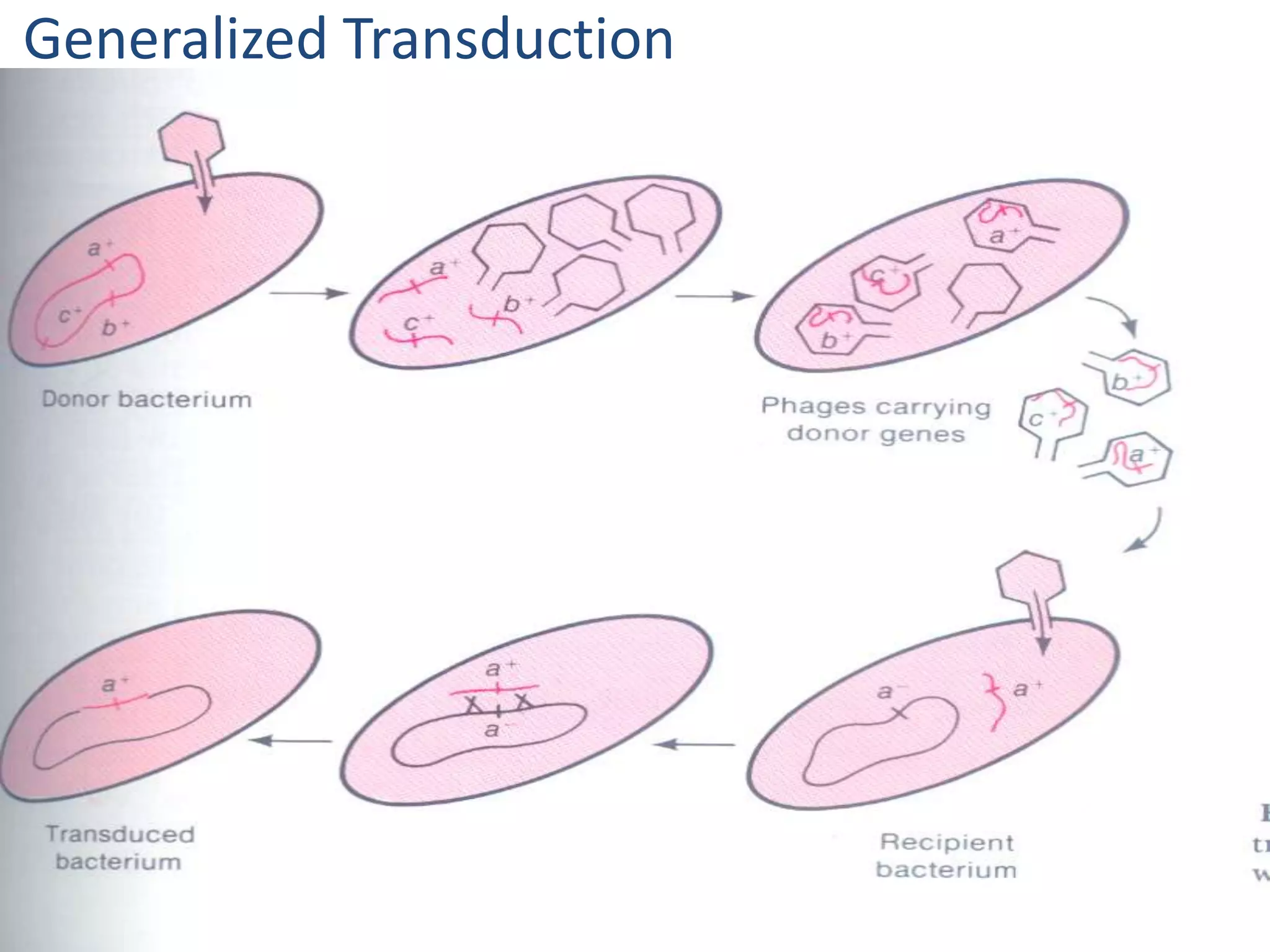
• Starts with the LYTIC CYCLE where a T- even 
phage infects E. coli killing the host cell, and 
synthesizing >100 copies of itself. 
• The T-even phage randomly packages bacterial 
DNA in a few defective phages. 
• Once a T – even phage infects another E. coli, this 
genetic information can be recombined into the 
host cell without causing the lytic cycle. 
• New genetic information is thereby transduced 
from one bacteria to another.
Generalized Transduction
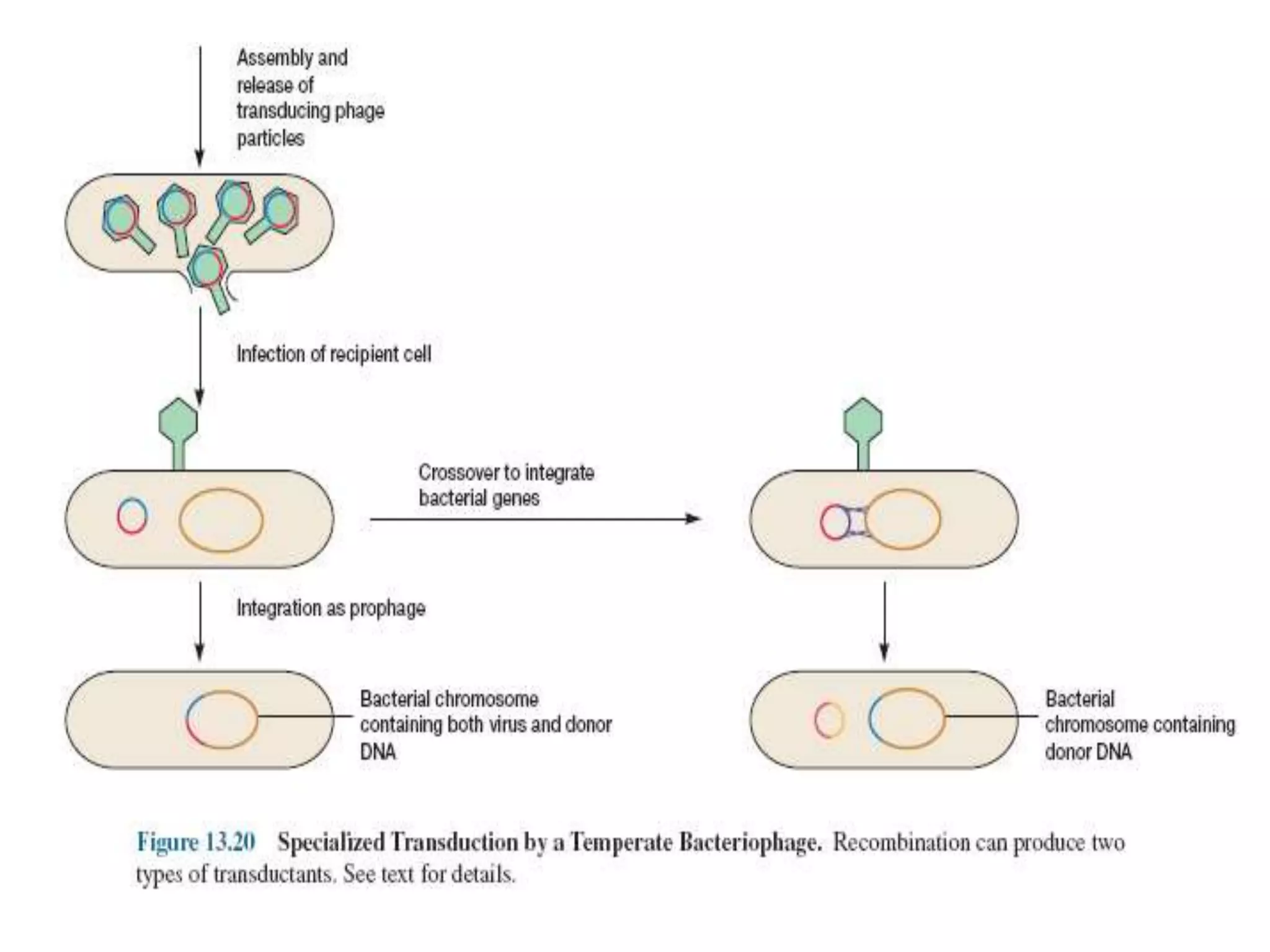
Specialized Transduction 
• In specialized transducing particle carries only specific 
portions of the bacterial genome. 
• Specialized transduction by a temperate bacteriophages 
which chromosome are able to integrate at a specific 
attachment site on host chromosome. 
• Phages chromosome & bacterial chromosome is a attach 
specific attachment site by a covalently in prophages. 
• The gal transducing phage (lambda) makes ~ 2,000 copies 
of itself with the gal gene, and infects other E.coli. 
• When gal integrates into the nucleoid of other E. coli, it 
may provide these bacteria with a new capacity to 
metabolize galactose.
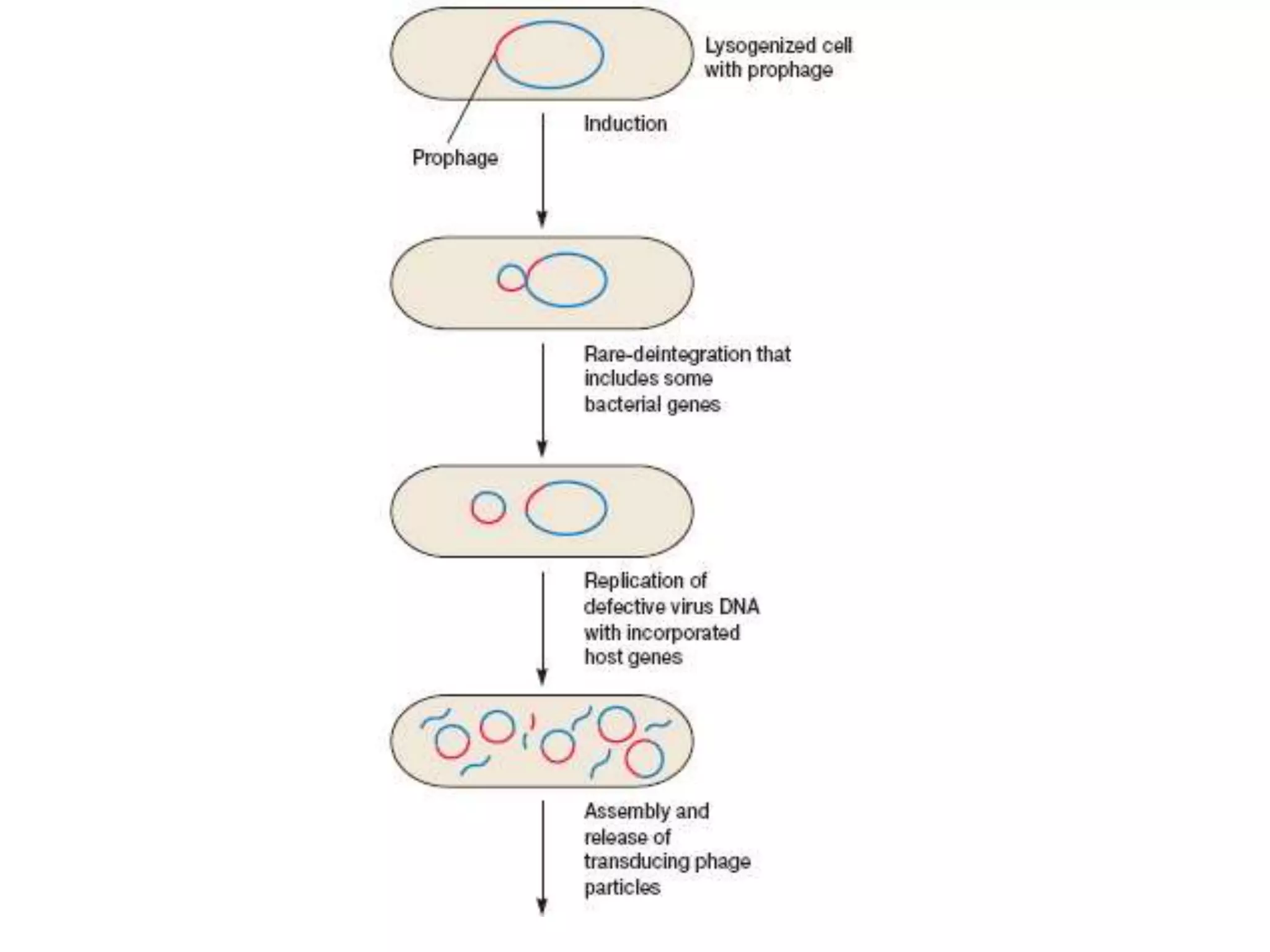
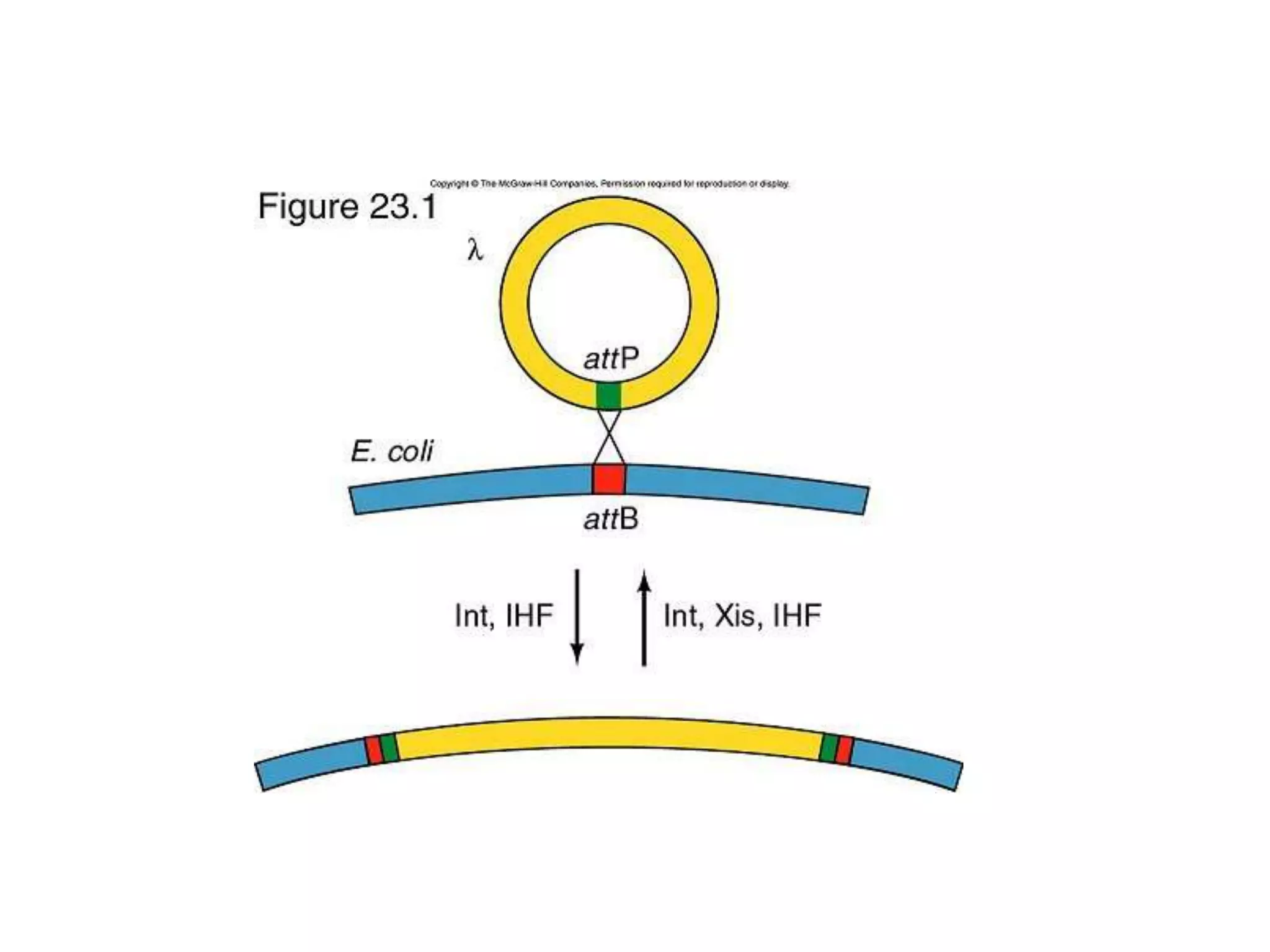
• The best-studied example of specialized 
transduction is the lambda phage. The lambda 
genome inserts into the host chromosome at 
specific locations known as attachment or att 
sites. 
• The phage att sites and bacterial att sites are 
similar and can complex with each other.
conjugation 
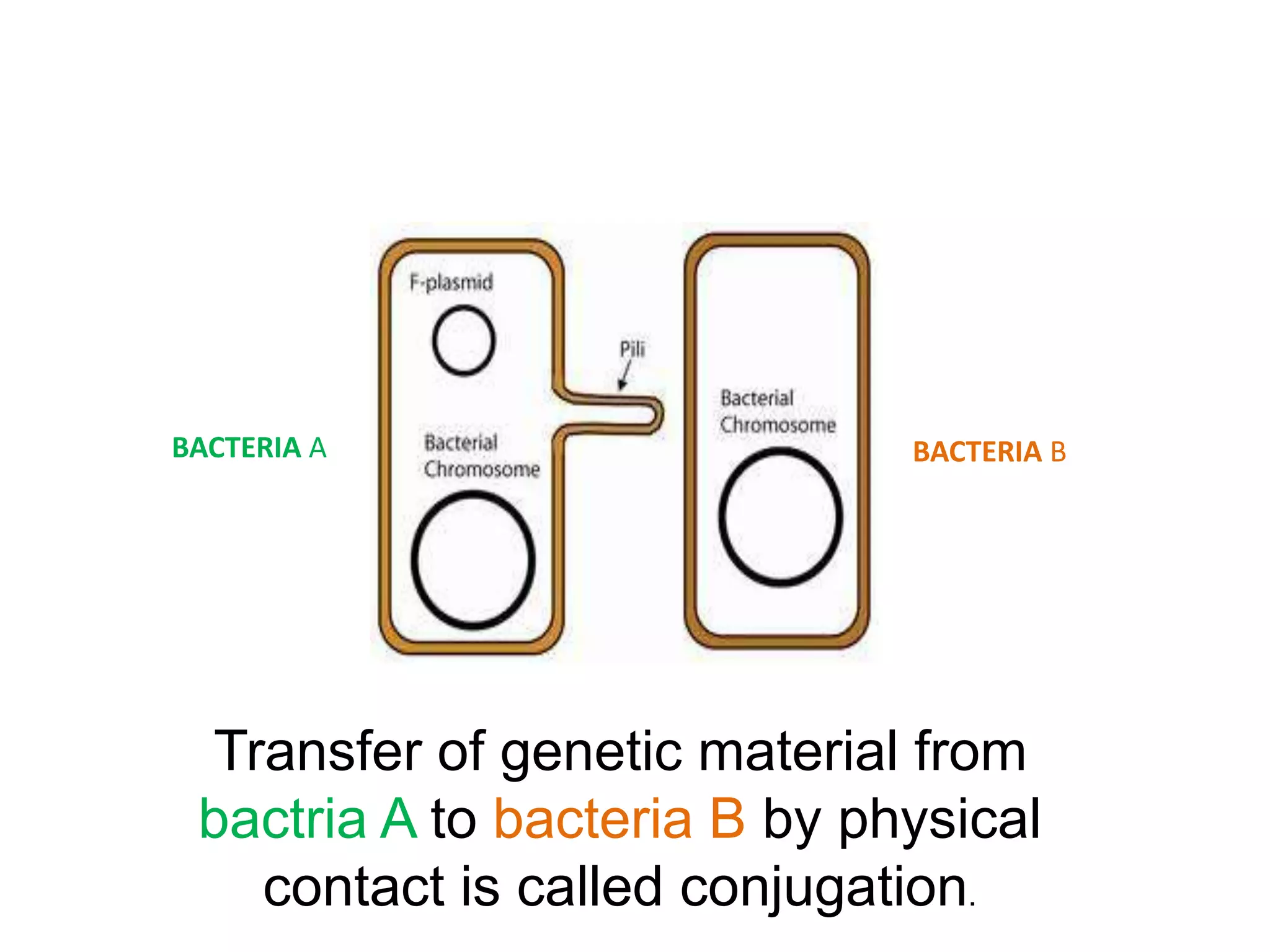
• Bacterial conjugation is the transfer of genetic 
material (plasmid) between bacterial cells by 
direct cell-to-cell contact or by a bridge-like 
connection between two cells. 
• Discovered in 1946 by Joshua Lederberg and 
Edward Tatum,
BACTERIA A BACTERIA B 
Transfer of genetic material from 
bactria A to bacteria B by physical 
contact is called conjugation.
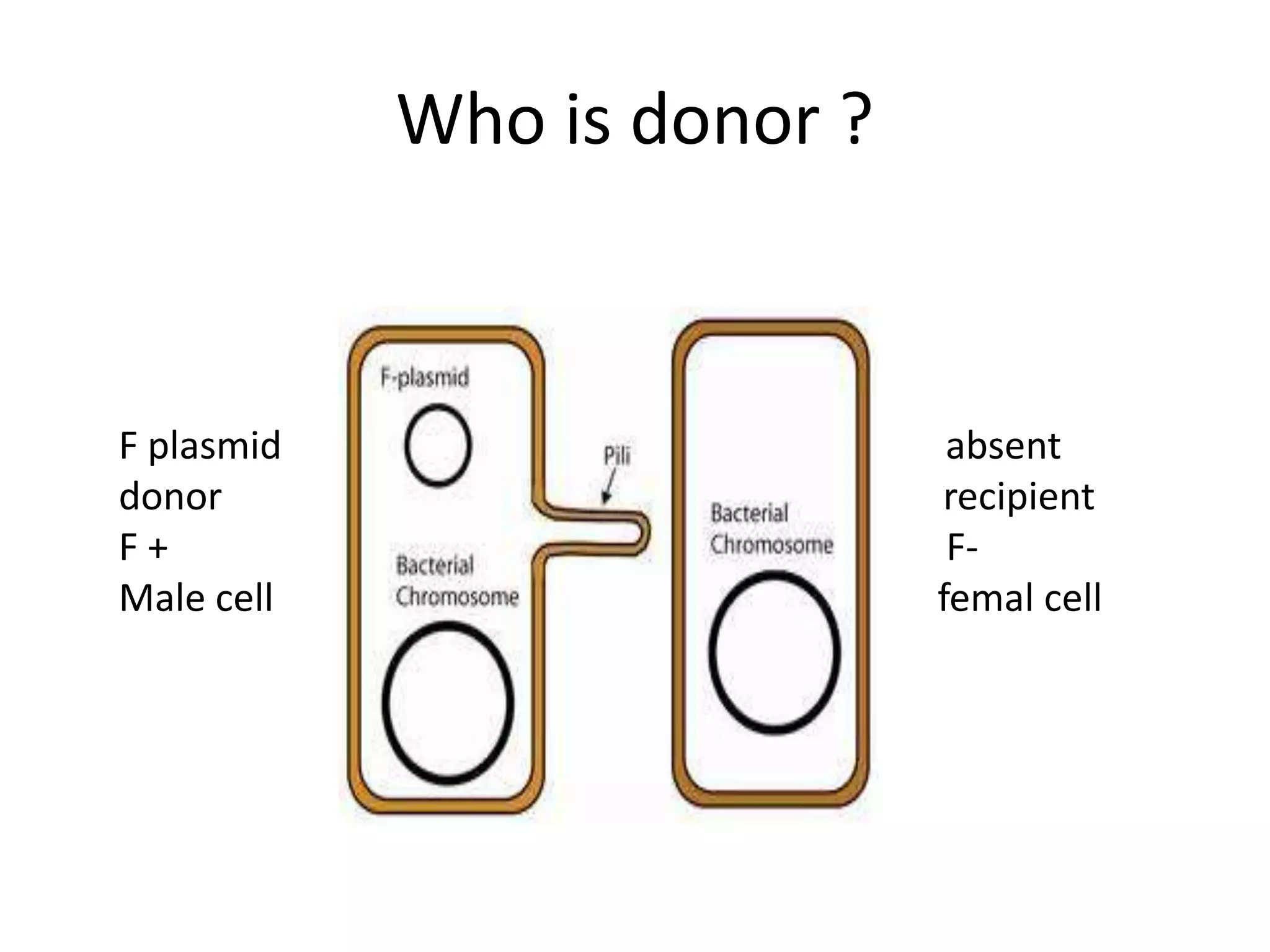
Who is donor ? 
F plasmid absent 
donor recipient 
F + F-Male 
cell femal cell
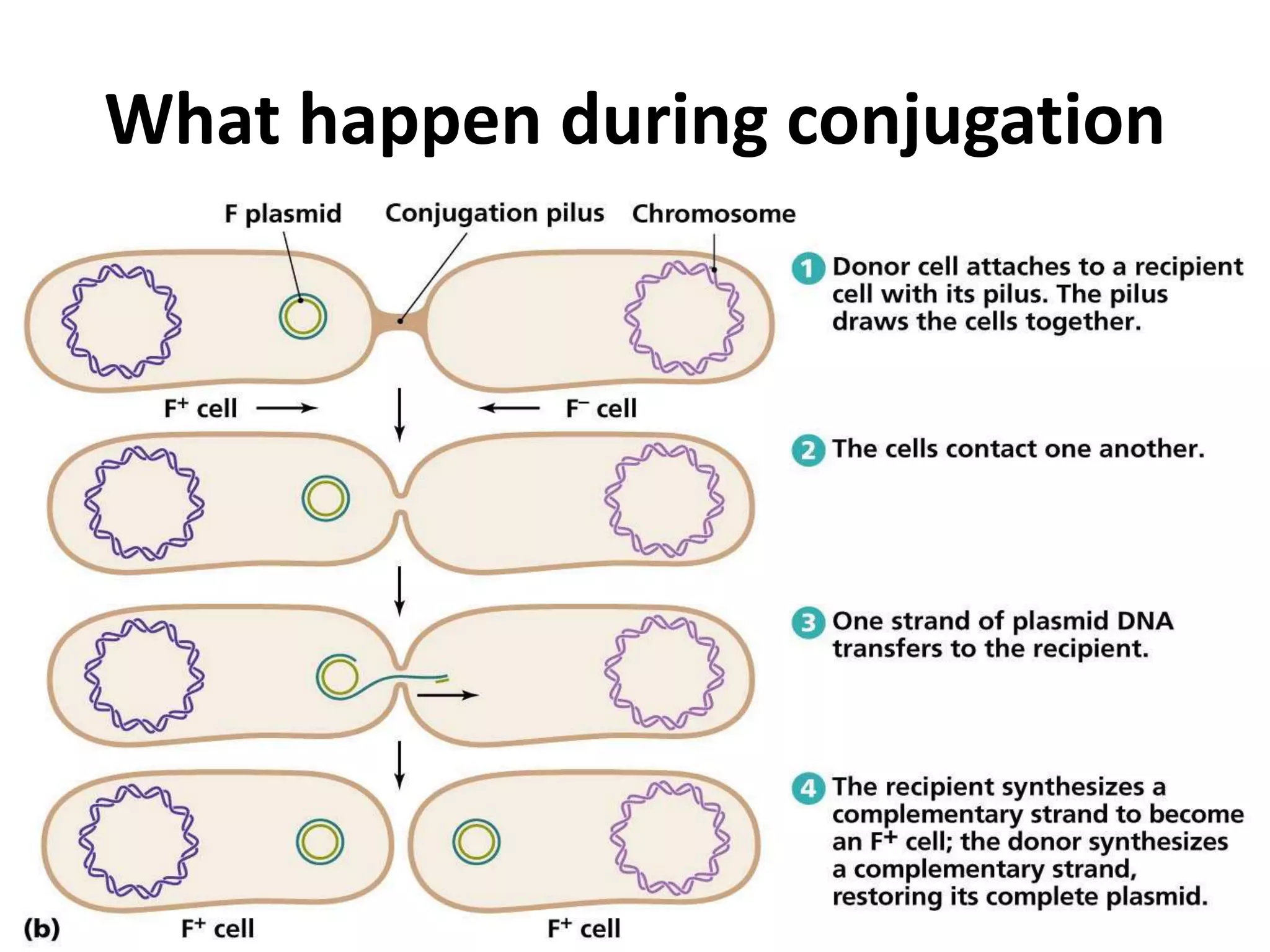
What happen during conjugation
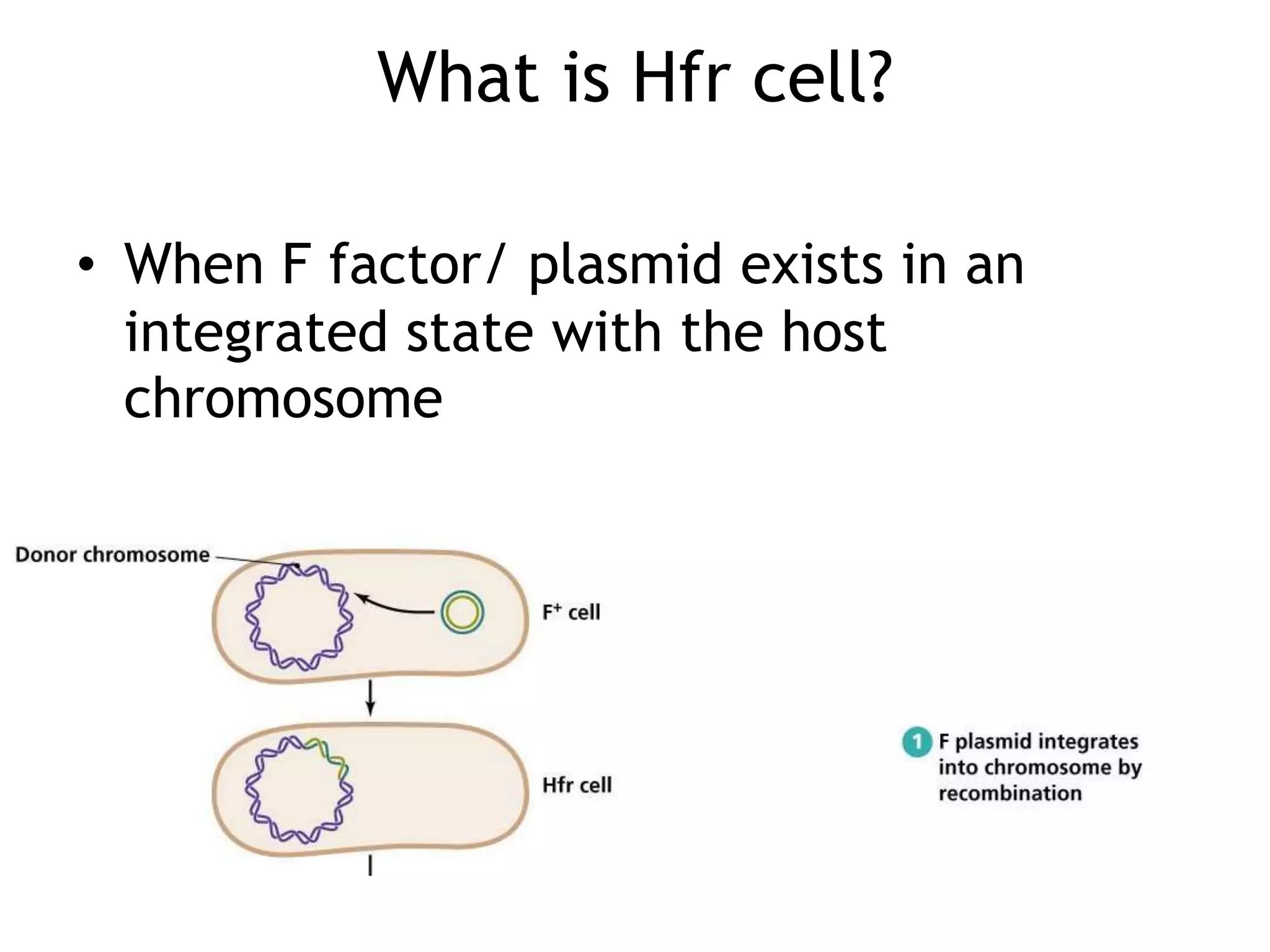
What is Hfr cell? 
• When F factor/ plasmid exists in an 
integrated state with the host 
chromosome
Hfr conjugation
Recombination in bacteria

Recombination in bacteria

  • 1.
    Recombination in bacteria By. Pandya Dilip Cug/2014/1078
  • 2.
    Gene transfer inbecteria • transfer genetic material from one becteria to another becteria • In bacteria genetic transfer can happen three ways: – Transduction – Conjugation – transformation
  • 3.
  • 4.
    Transduction • Definition:gene transfer from a donor to a recipient by way of a bacteriophage • Discover by lederberg & zinder in 1951 • Bacteriophage (phage): A virus that infects bcteria
  • 5.
  • 6.
    Types of Bacteriophage • Bacteriophages have been classified into two types on the basis of their interaction with a bactria cell. 1. Virulent phages. 2. Temperate phages. • Virulent – always multiply & lyse the host cell after infection. • Temperate phage: That have a choice between two life-style after infection.
  • 7.
    1.Lytic cycle 2.lysogeniccycle • 1. Lytic cycle = they reproduce & lyse their host cell just like virulent phages. • Lysogenic cycle = their chromosome are integrated in to the chromosome of the host.
  • 9.
    Transduction • Typesof transduction 1. Generalized - Transduction in which potentially any donor bacterial gene can be transferred. 2. Specialized- Transduction in which only certain donor genes can be transferred
  • 10.
    Generalized transduction •Starts with the LYTIC CYCLE where a T- even phage infects E. coli killing the host cell, and synthesizing >100 copies of itself. • The T-even phage randomly packages bacterial DNA in a few defective phages. • Once a T – even phage infects another E. coli, this genetic information can be recombined into the host cell without causing the lytic cycle. • New genetic information is thereby transduced from one bacteria to another.
  • 11.
  • 12.
    Specialized Transduction •In specialized transducing particle carries only specific portions of the bacterial genome. • Specialized transduction by a temperate bacteriophages which chromosome are able to integrate at a specific attachment site on host chromosome. • Phages chromosome & bacterial chromosome is a attach specific attachment site by a covalently in prophages. • The gal transducing phage (lambda) makes ~ 2,000 copies of itself with the gal gene, and infects other E.coli. • When gal integrates into the nucleoid of other E. coli, it may provide these bacteria with a new capacity to metabolize galactose.
  • 15.
    • The best-studiedexample of specialized transduction is the lambda phage. The lambda genome inserts into the host chromosome at specific locations known as attachment or att sites. • The phage att sites and bacterial att sites are similar and can complex with each other.
  • 17.
    conjugation • Bacterialconjugation is the transfer of genetic material (plasmid) between bacterial cells by direct cell-to-cell contact or by a bridge-like connection between two cells. • Discovered in 1946 by Joshua Lederberg and Edward Tatum,
  • 18.
    BACTERIA A BACTERIAB Transfer of genetic material from bactria A to bacteria B by physical contact is called conjugation.
  • 19.
    Who is donor? F plasmid absent donor recipient F + F-Male cell femal cell
  • 21.
    What happen duringconjugation
  • 22.
    What is Hfrcell? • When F factor/ plasmid exists in an integrated state with the host chromosome
  • 23.