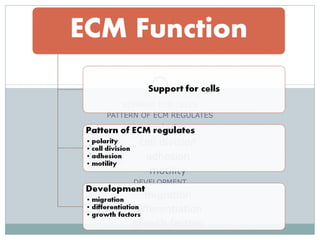
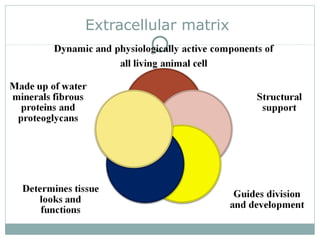
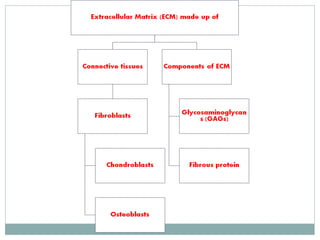
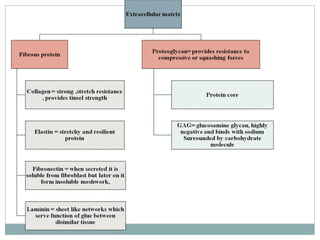
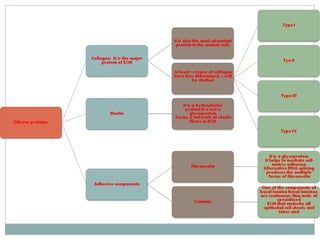

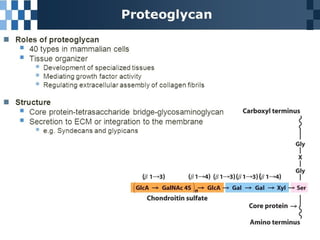
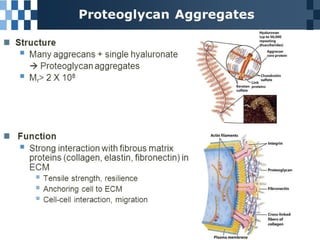
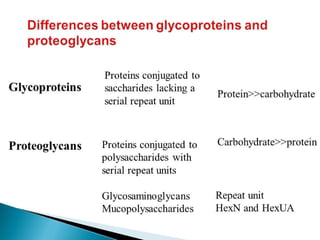

The extracellular matrix surrounds animal cells outside of their plasma membranes, filling spaces between cells and adhering them together. It consists of secreted proteins and polysaccharides found most abundantly in connective tissues. One example is the basal lamina, a thin sheet on which epithelial cells rest that surrounds muscle, fat, and nerve cells. The differences in extracellular matrices result from variations in types, amounts, and organization of their major components: matrix proteins, polysaccharides, and adhesion proteins. The pattern of the extracellular matrix regulates key cell processes like polarity, division, adhesion, motility, development, migration, and differentiation by responding to growth factors.


