S.Muneeswari
I MSC Microbiology
21PY09
What is DNA Polymerase
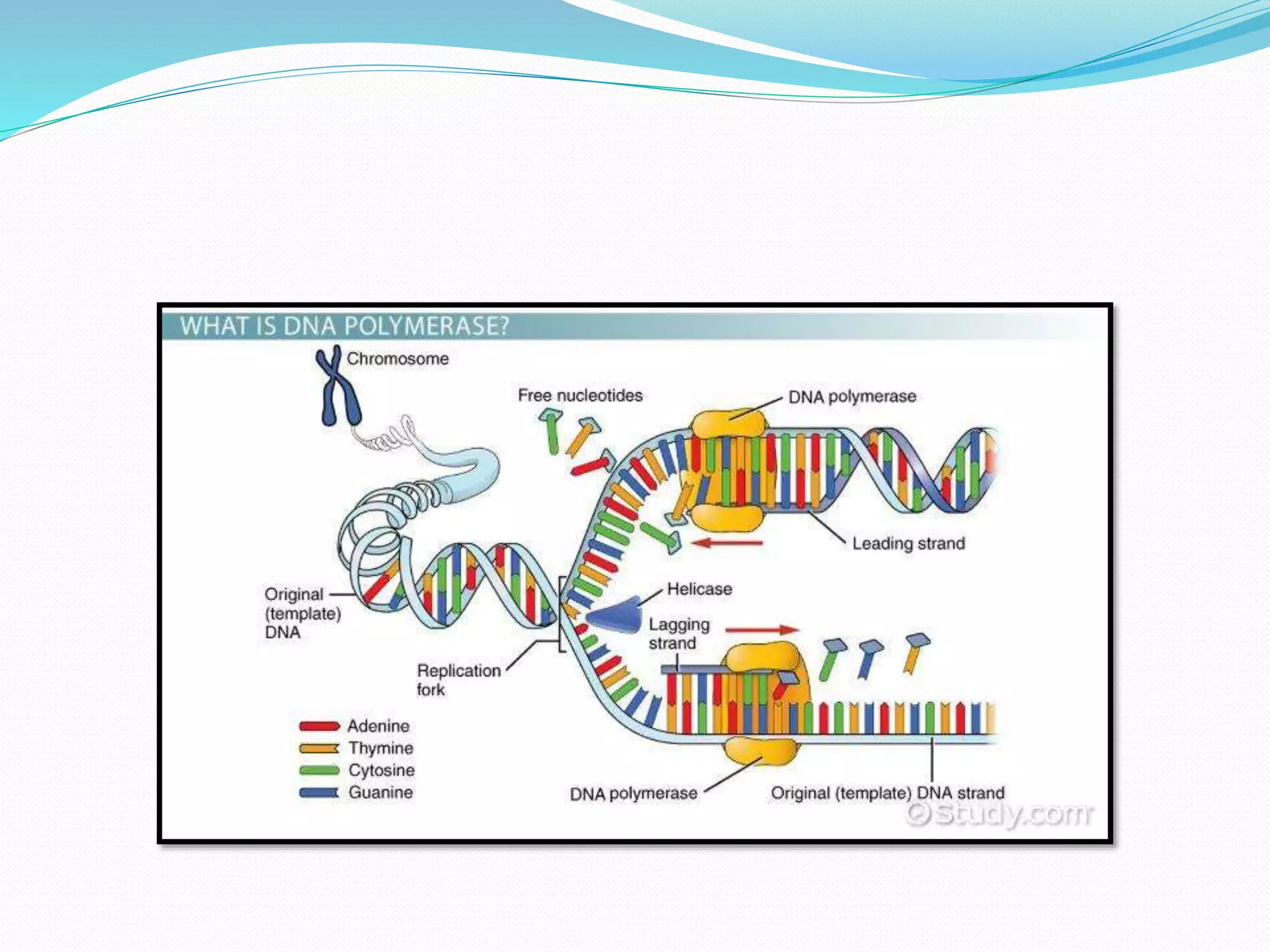
DNA Polymerases are a group of
enzymes that catalyse the synthesis of
DNA during replication.
The main function of DNA
polymerases is to duplicate the DNA content
of a cell during cell division.
History
 Arthur Kornberg purified and characterized DNA
polymerase from E.coli for the first time.
 It is a single-chain polypeptide now known as DNA
polymerase-I.
 Scientists have now found five DNA polymerases
in E. coli.
Prokaryotic DNA Polymerase
Types and Function
 There are five DNA polymerases identified in E.coli.
That is…
DNA polymerase I
DNA polymerase II
DNA polymerase III
DNA polymerase IV
DNA polymerase V
DNA polymerase
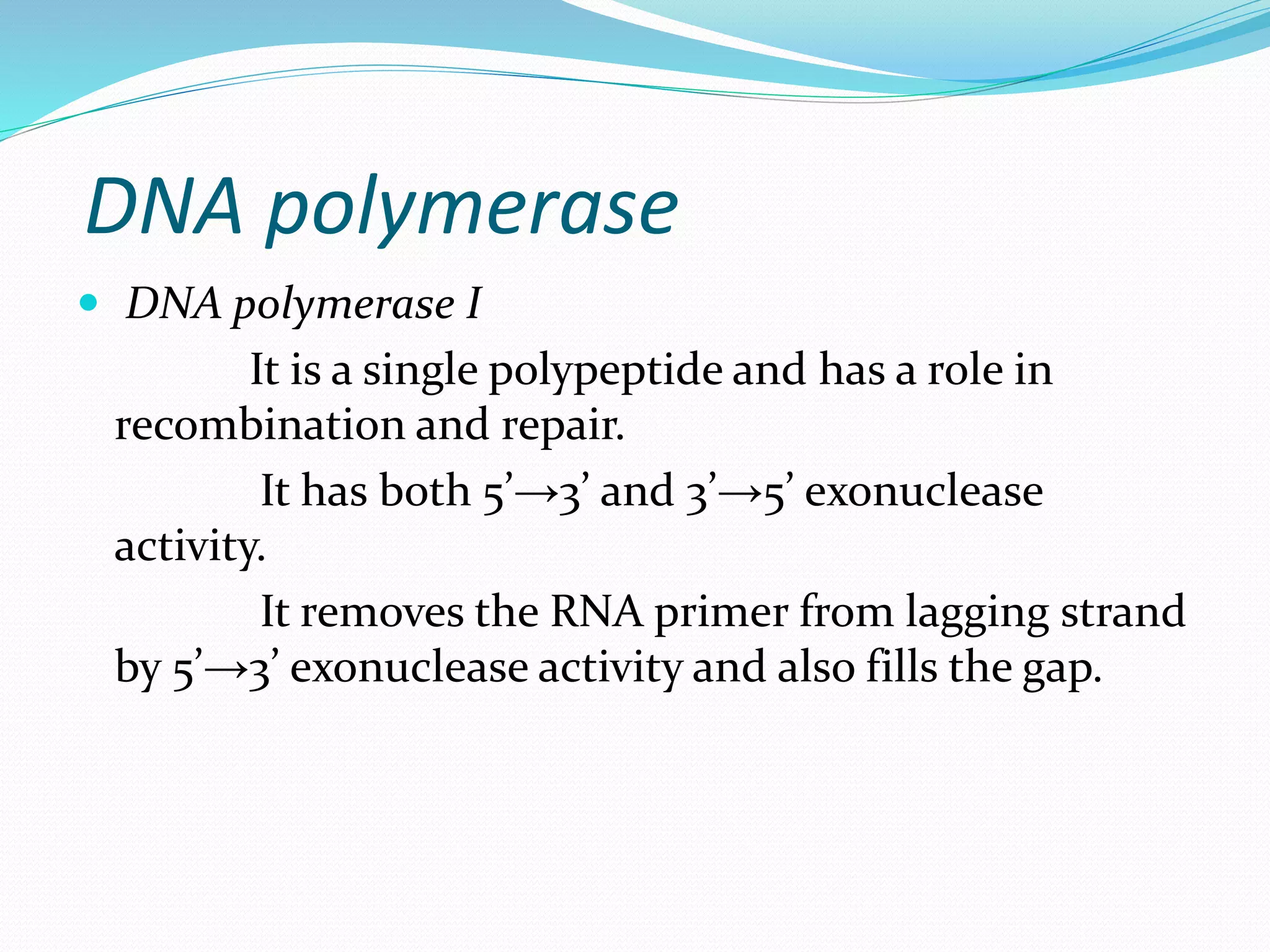
 DNA polymerase I
It is a single polypeptide and has a role in
recombination and repair.
It has both 5’→3’ and 3’→5’ exonuclease
activity.
It removes the RNA primer from lagging strand
by 5’→3’ exonuclease activity and also fills the gap.
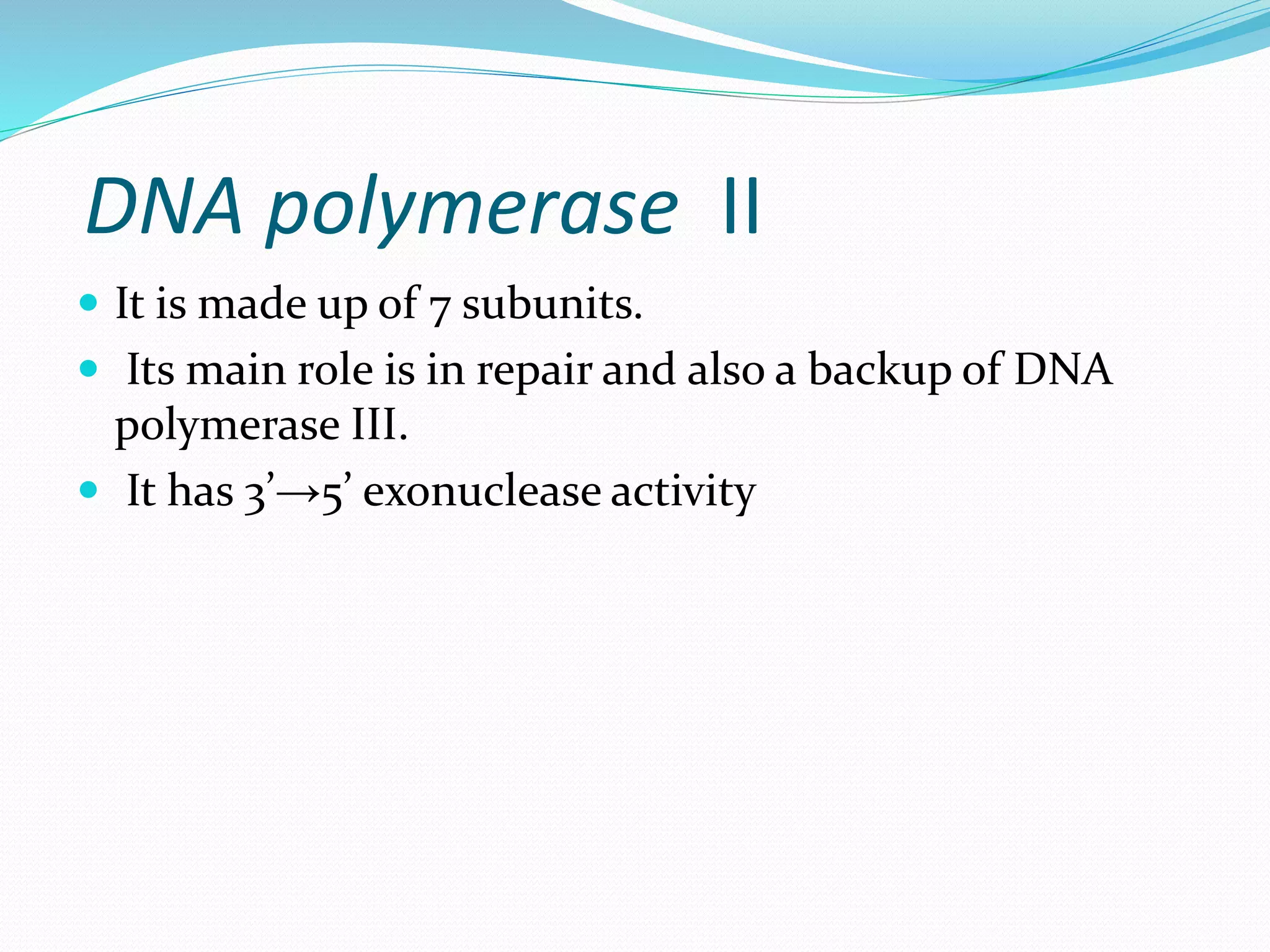
DNA polymerase II
 It is made up of 7 subunits.
 Its main role is in repair and also a backup of DNA
polymerase III.
 It has 3’→5’ exonuclease activity
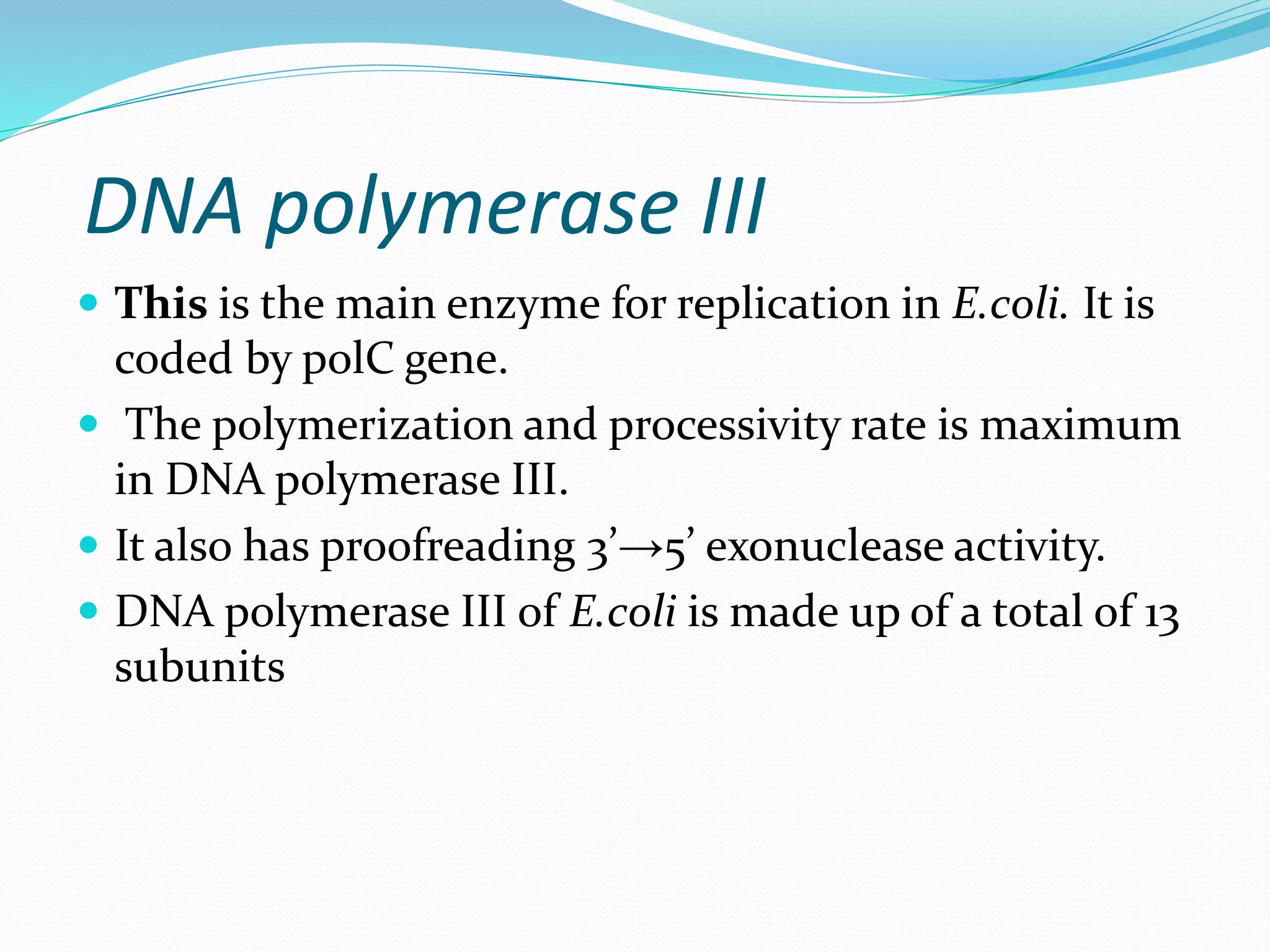
DNA polymerase III
 This is the main enzyme for replication in E.coli. It is
coded by polC gene.
 The polymerization and processivity rate is maximum
in DNA polymerase III.
 It also has proofreading 3’→5’ exonuclease activity.
 DNA polymerase III of E.coli is made up of a total of 13
subunits
DNA polymerase IV
 Its main role is in DNA repair during SOS response,
when DNA replication is started at the replication
fork.
 DNA polymerase II, IV and V are translesion
polymerases
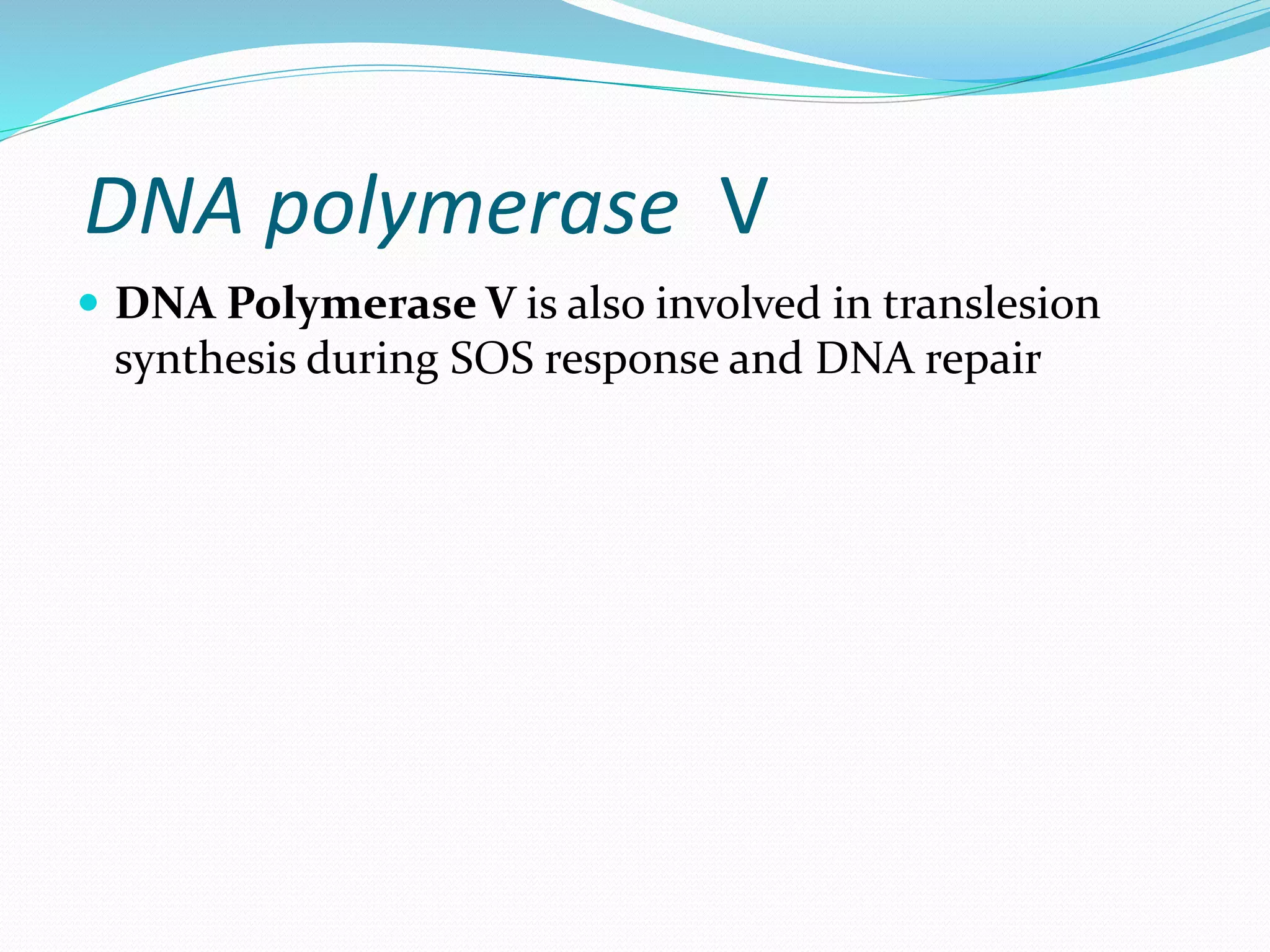
DNA polymerase V
 DNA Polymerase V is also involved in translesion
synthesis during SOS response and DNA repair
Eukaryotic DNA Polymerase
 Like prokaryotic cells, eukaryotic cells also have many
DNA polymerases, which perform different functions,
e.g. mitochondrial DNA replication, nuclear DNA
replication, etc.
 The nuclear DNA replication is mainly done by DNA
polymerase 𝝳 and 𝜶.
 There are at least 15 DNA polymerases identified in
human beings.
DNA Polymerase.pptx

DNA Polymerase.pptx

  • 1.
  • 2.
    What is DNAPolymerase DNA Polymerases are a group of enzymes that catalyse the synthesis of DNA during replication. The main function of DNA polymerases is to duplicate the DNA content of a cell during cell division.
  • 4.
    History  Arthur Kornbergpurified and characterized DNA polymerase from E.coli for the first time.  It is a single-chain polypeptide now known as DNA polymerase-I.  Scientists have now found five DNA polymerases in E. coli.
  • 5.
    Prokaryotic DNA Polymerase Typesand Function  There are five DNA polymerases identified in E.coli. That is… DNA polymerase I DNA polymerase II DNA polymerase III DNA polymerase IV DNA polymerase V
  • 6.
    DNA polymerase  DNApolymerase I It is a single polypeptide and has a role in recombination and repair. It has both 5’→3’ and 3’→5’ exonuclease activity. It removes the RNA primer from lagging strand by 5’→3’ exonuclease activity and also fills the gap.
  • 7.
    DNA polymerase II It is made up of 7 subunits.  Its main role is in repair and also a backup of DNA polymerase III.  It has 3’→5’ exonuclease activity
  • 8.
    DNA polymerase III This is the main enzyme for replication in E.coli. It is coded by polC gene.  The polymerization and processivity rate is maximum in DNA polymerase III.  It also has proofreading 3’→5’ exonuclease activity.  DNA polymerase III of E.coli is made up of a total of 13 subunits
  • 9.
    DNA polymerase IV Its main role is in DNA repair during SOS response, when DNA replication is started at the replication fork.  DNA polymerase II, IV and V are translesion polymerases
  • 10.
    DNA polymerase V DNA Polymerase V is also involved in translesion synthesis during SOS response and DNA repair
  • 11.
    Eukaryotic DNA Polymerase Like prokaryotic cells, eukaryotic cells also have many DNA polymerases, which perform different functions, e.g. mitochondrial DNA replication, nuclear DNA replication, etc.  The nuclear DNA replication is mainly done by DNA polymerase 𝝳 and 𝜶.  There are at least 15 DNA polymerases identified in human beings.