Automatic Train Collision
and
Accident Avoidance System
By,
R.Pradeep Raj
III Year EEE,
Mepco Schlenk Engineering College.
Contents
• Importance of this topic
• Rail accidents – An overview
• Ideas suggested :
– Automated Braking in Trains
– Real-time Train monitoring
– Alert system using Pattern Recognition
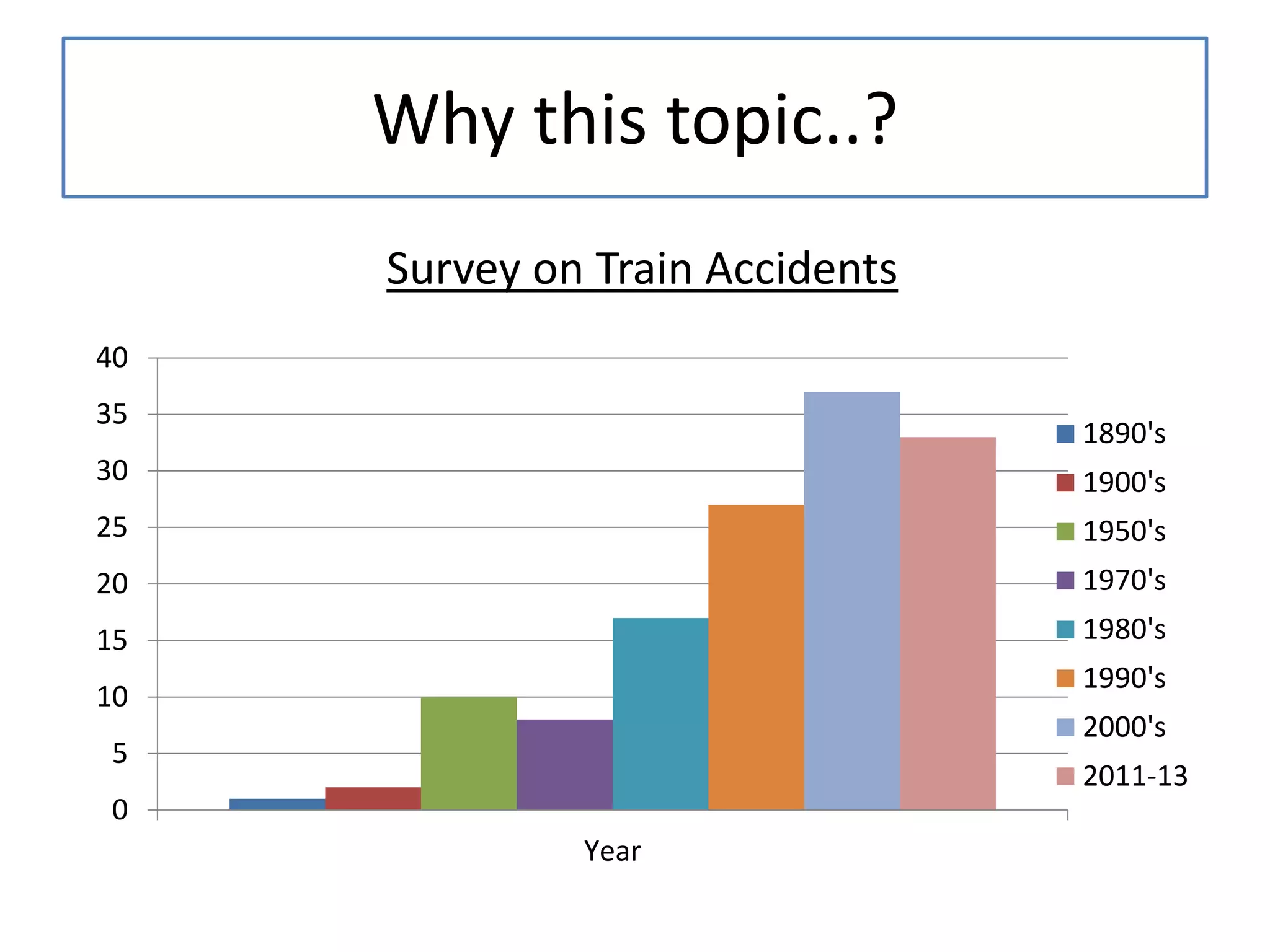
Why this topic..?
0
5
10
15
20
25
30
35
40
Year
1890's
1900's
1950's
1970's
1980's
1990's
2000's
2011-13
Survey on Train Accidents
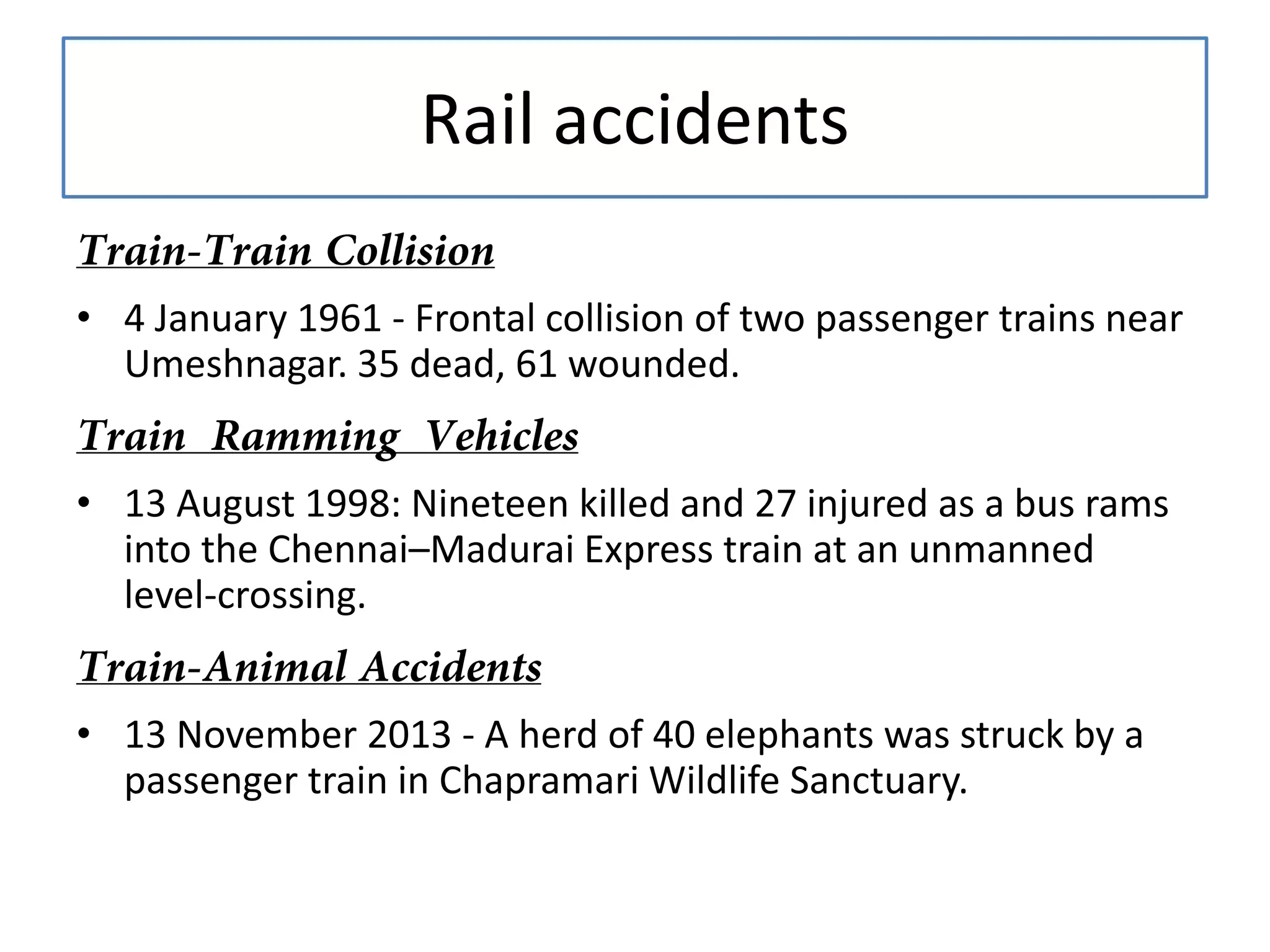
Rail accidents
• 4 January 1961 - Frontal collision of two passenger trains near
Umeshnagar. 35 dead, 61 wounded.
• 13 August 1998: Nineteen killed and 27 injured as a bus rams
into the Chennai–Madurai Express train at an unmanned
level-crossing.
• 13 November 2013 - A herd of 40 elephants was struck by a
passenger train in Chapramari Wildlife Sanctuary.
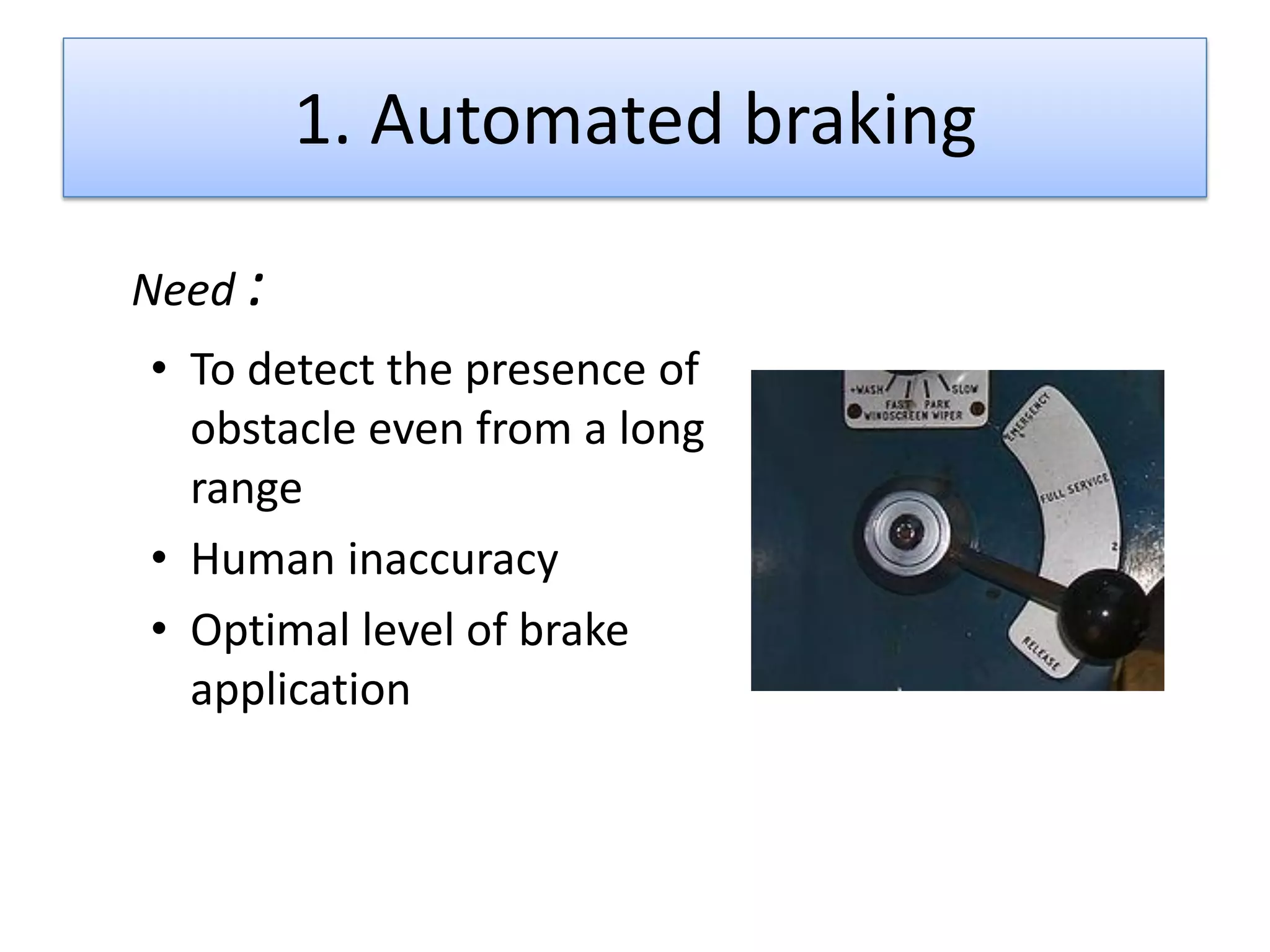
1. Automated braking
• To detect the presence of
obstacle even from a long
range
• Human inaccuracy
• Optimal level of brake
application
Need :
Braking System
Types :
• Vacuum brake (obsolete)
• Air brake (currently in use) - Westinghouse Brake
The average braking distance of a train moving
at a speed of 100 km/hr is about 300m.
Dynamic Braking
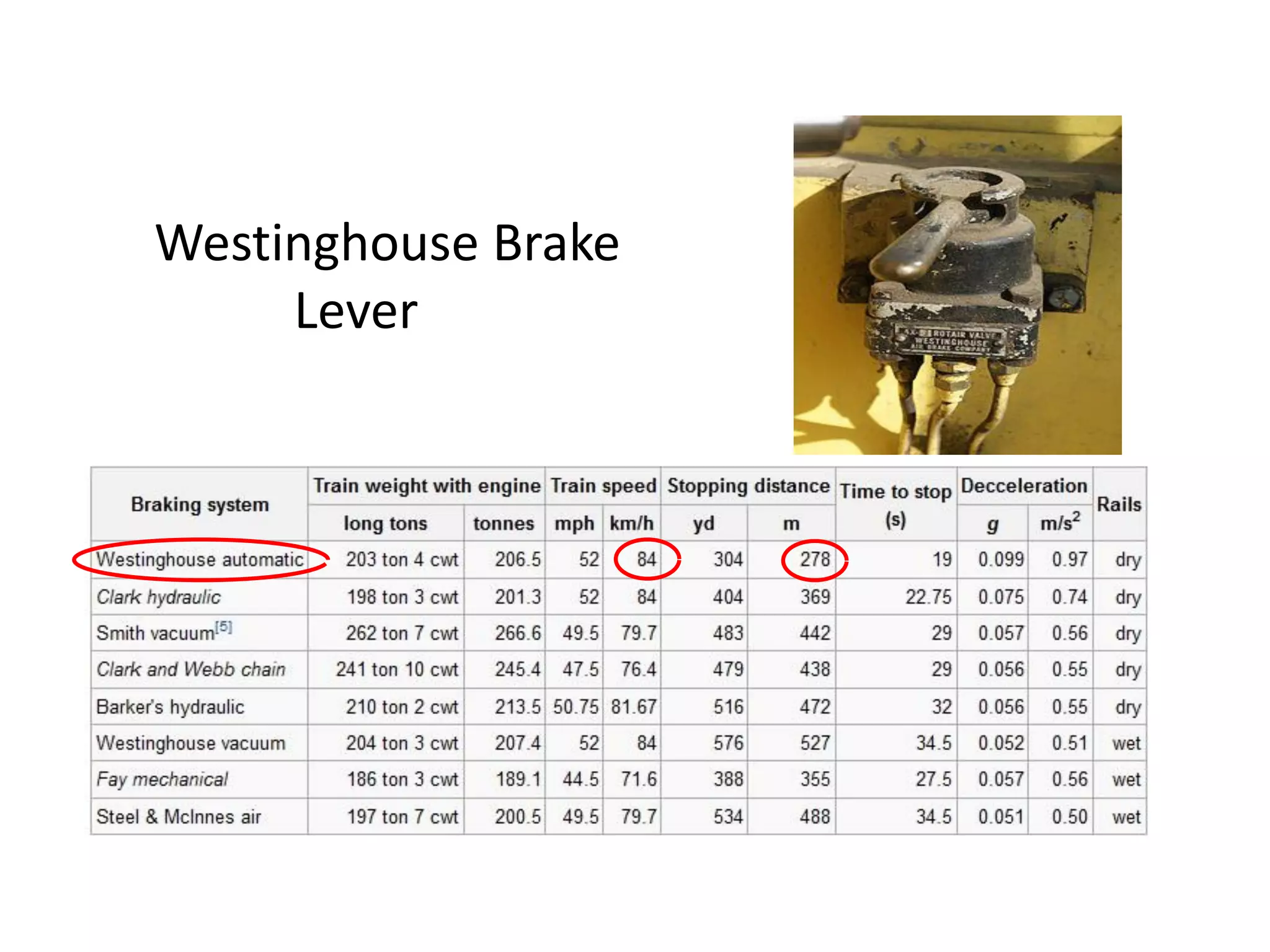
Westinghouse Brake
Lever
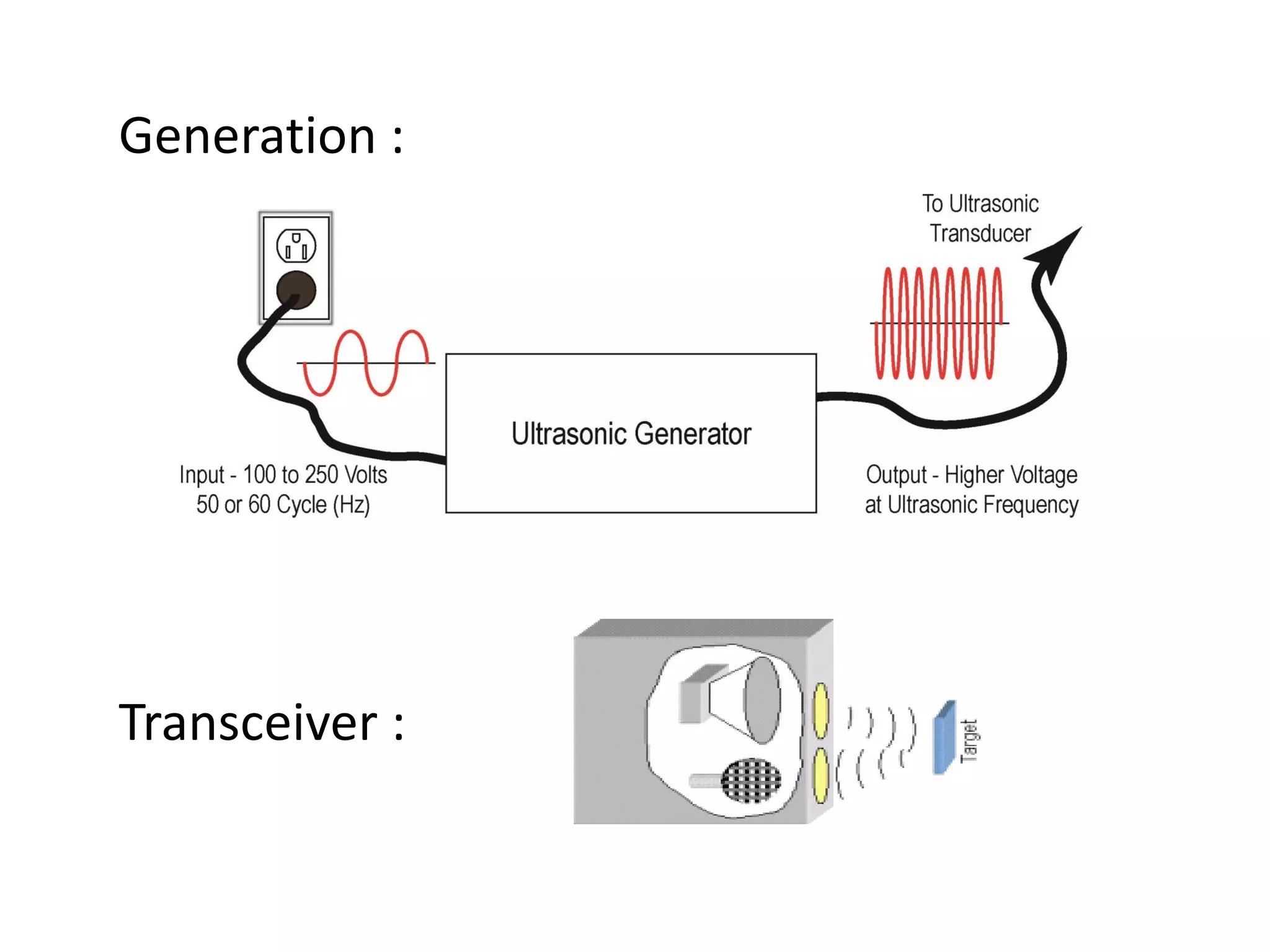
Ultrasonic Transducer
 Production of high frequency sound waves around
18,000 hertz
 Works on the principle of Piezo-electric Effect
 Generated by Piezo-electric crystal
 Also produced by Magneto-striction effect
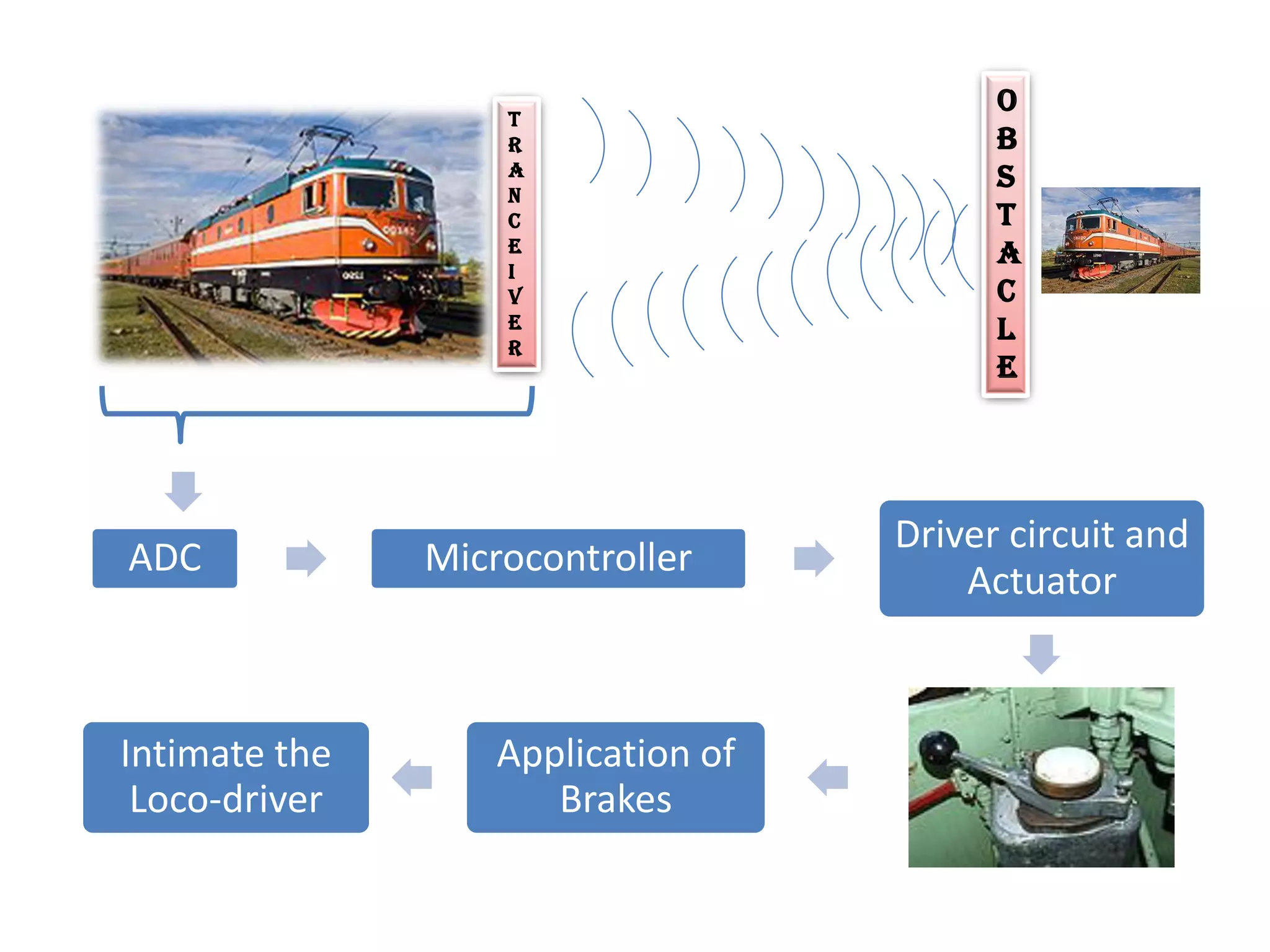
Time interval between sending and reception
Generation :
Transceiver :
O
B
S
T
A
C
L
E
ADC Microcontroller
Driver circuit and
Actuator
T
R
A
N
C
E
I
V
E
R
Application of
Brakes
Intimate the
Loco-driver
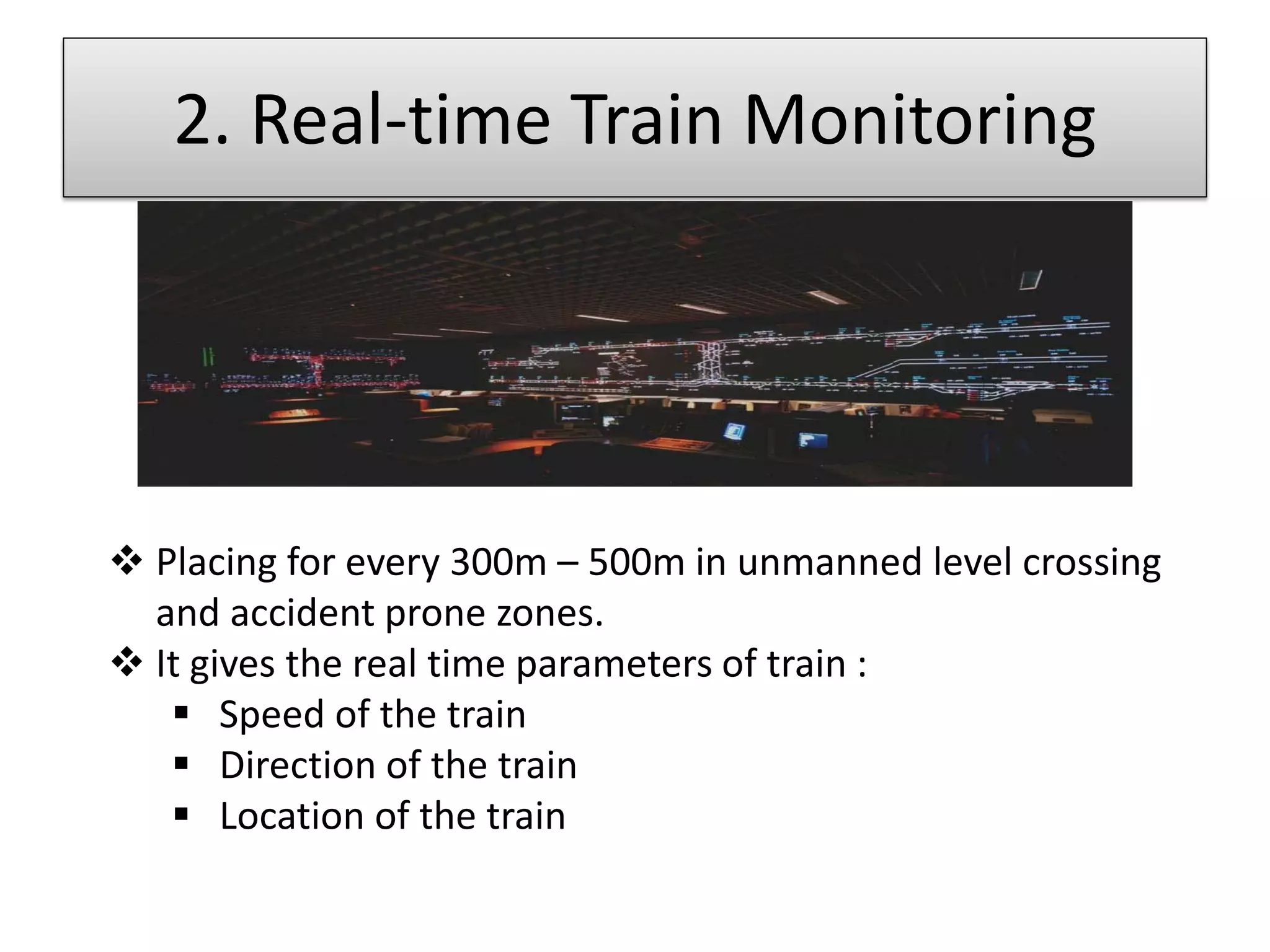
2. Real-time Train Monitoring
 Placing for every 300m – 500m in unmanned level crossing
and accident prone zones.
 It gives the real time parameters of train :
 Speed of the train
 Direction of the train
 Location of the train
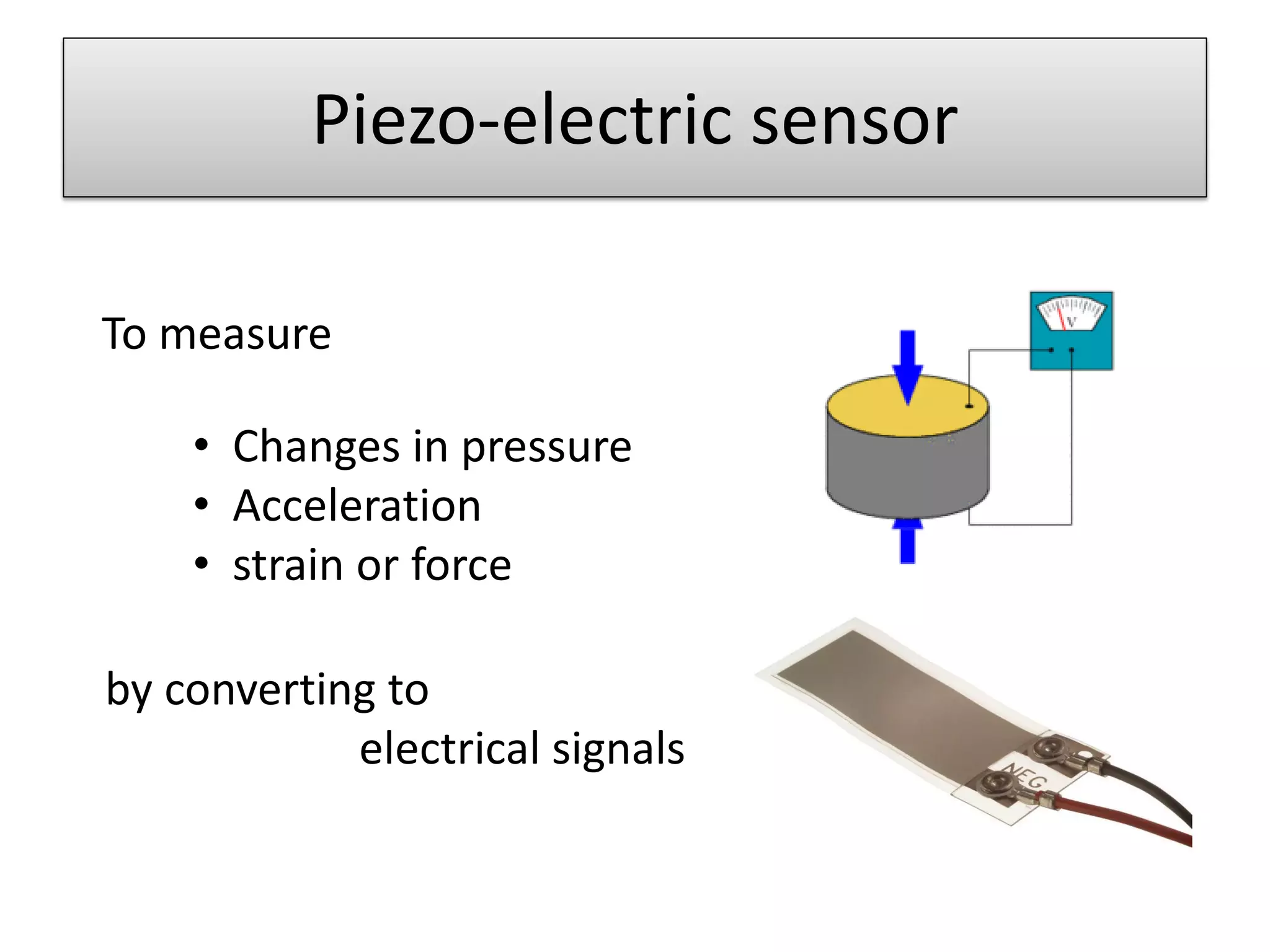
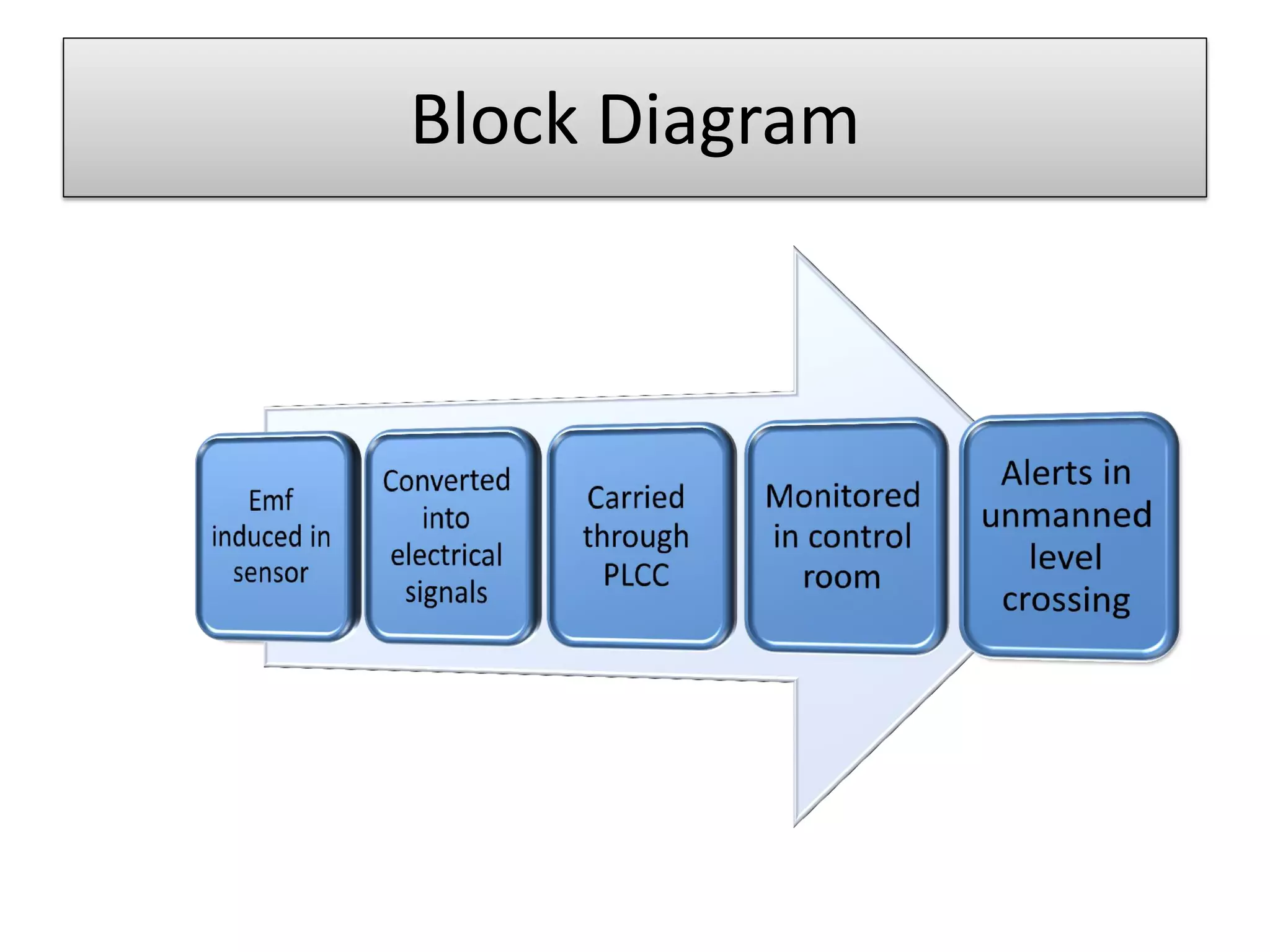
Piezo-electric sensor
• Changes in pressure
• Acceleration
• strain or force
by converting to
electrical signals
To measure
Block Diagram
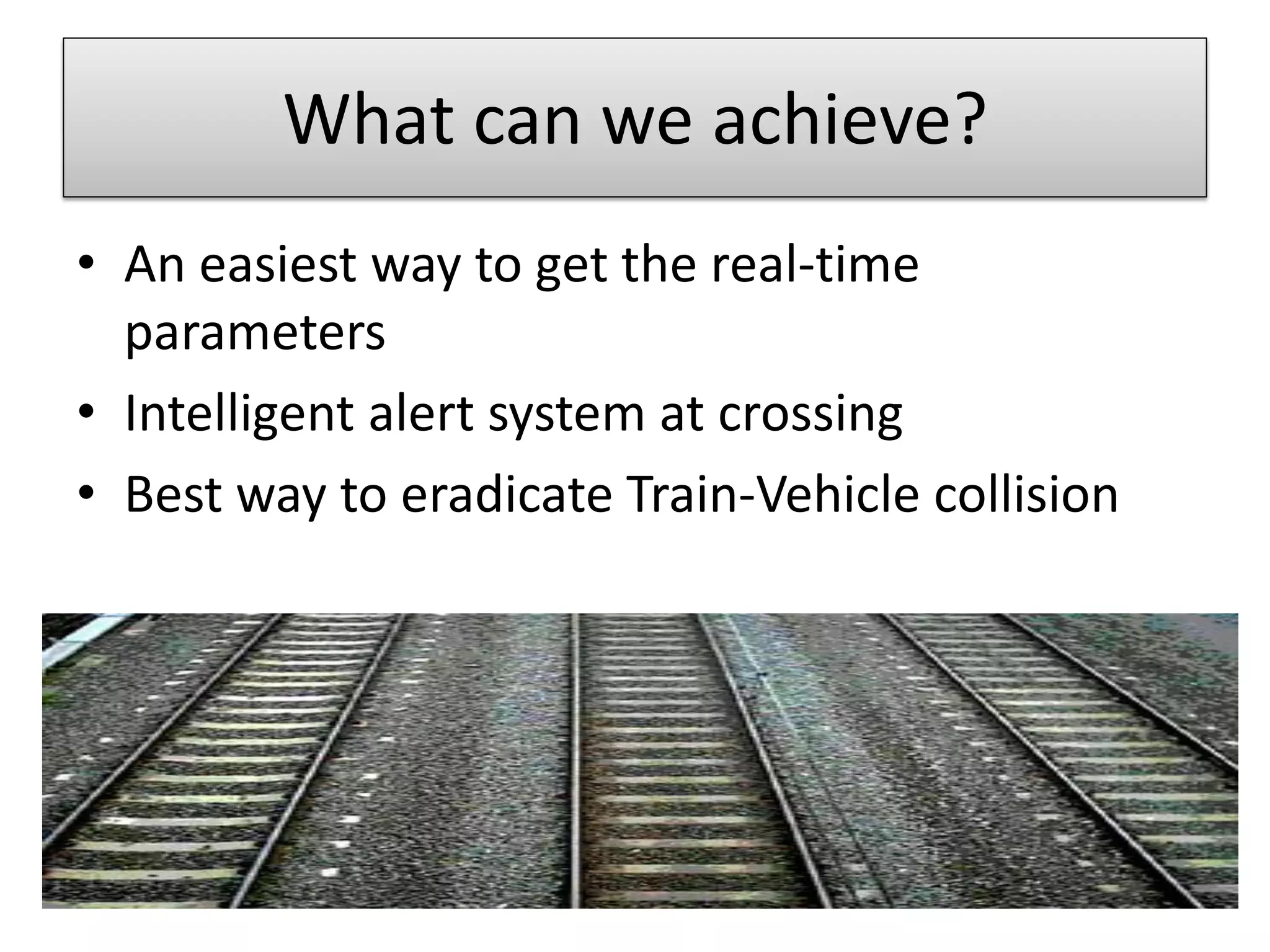
What can we achieve?
• An easiest way to get the real-time
parameters
• Intelligent alert system at crossing
• Best way to eradicate Train-Vehicle collision
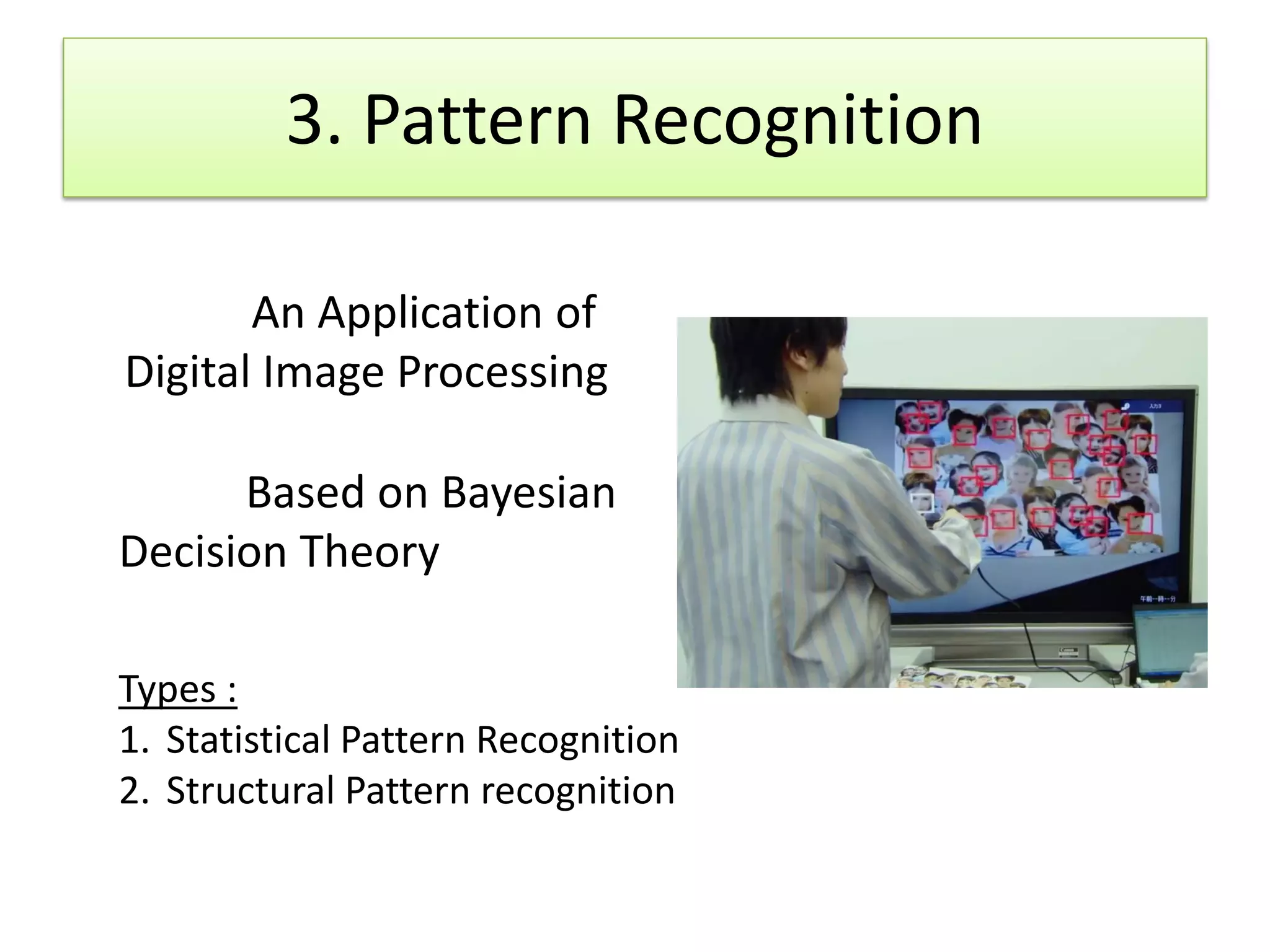
3. Pattern Recognition
An Application of
Digital Image Processing
Based on Bayesian
Decision Theory
Types :
1. Statistical Pattern Recognition
2. Structural Pattern recognition
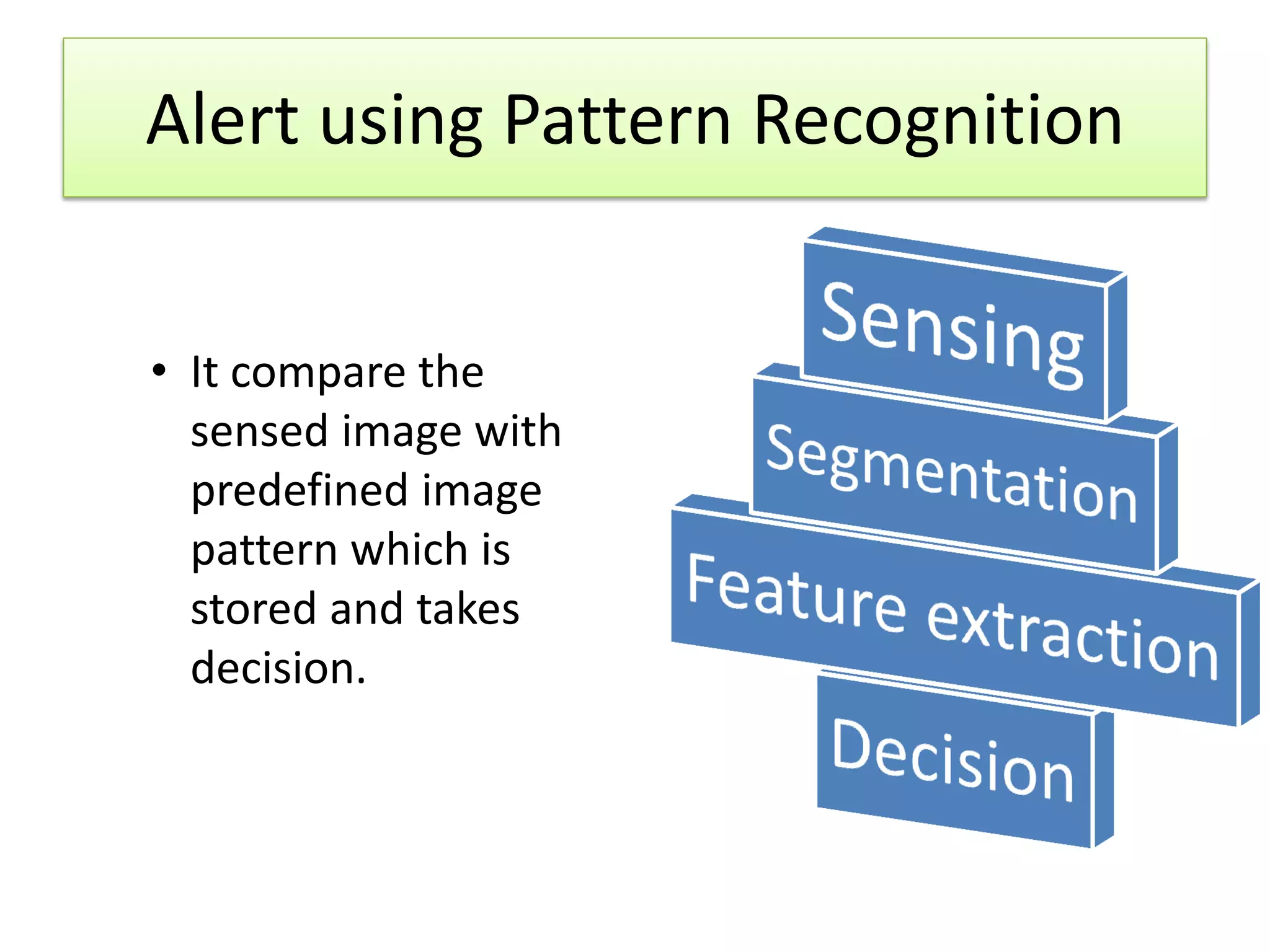
Alert using Pattern Recognition
• It compare the
sensed image with
predefined image
pattern which is
stored and takes
decision.
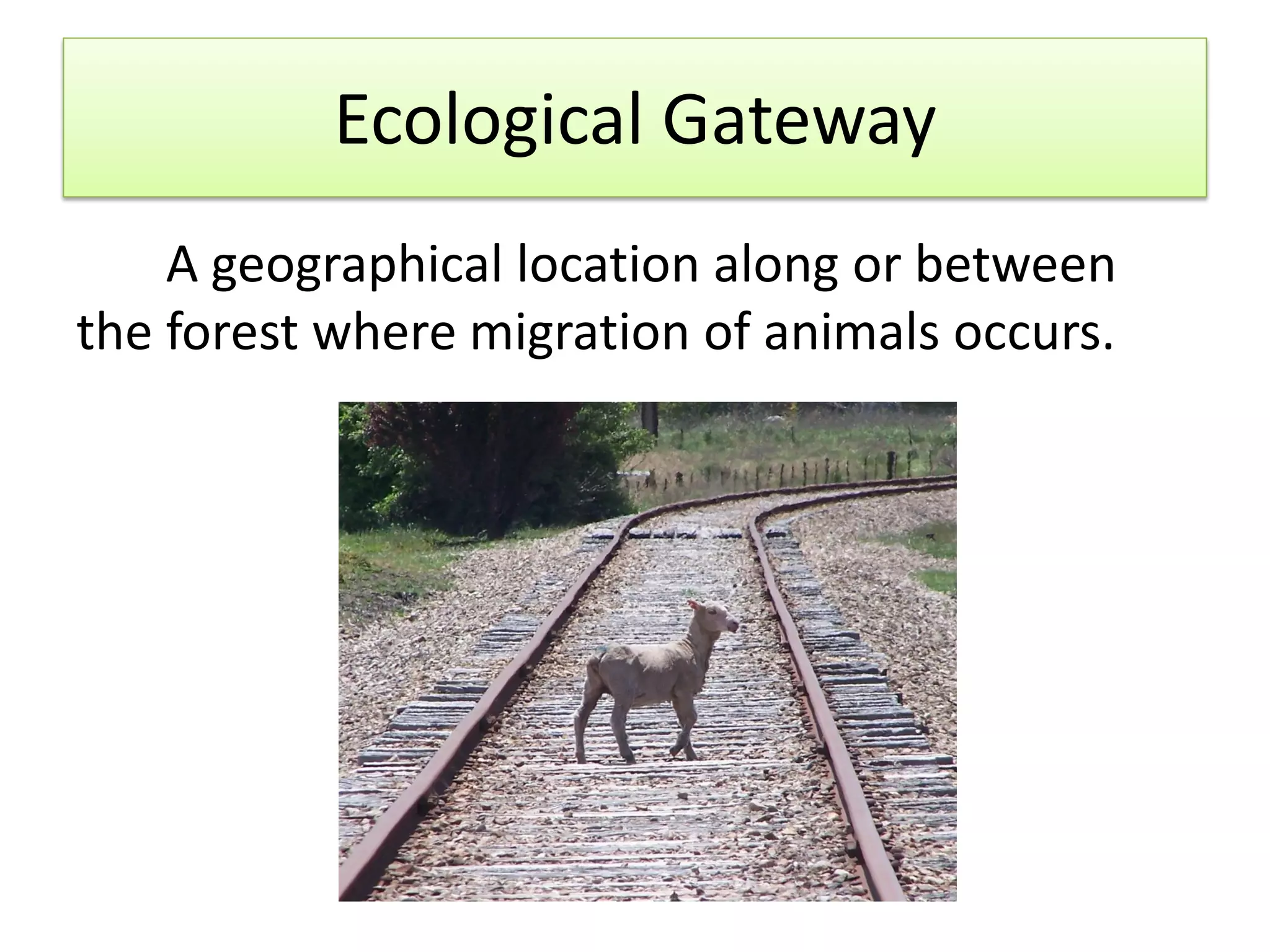
Ecological Gateway
A geographical location along or between
the forest where migration of animals occurs.
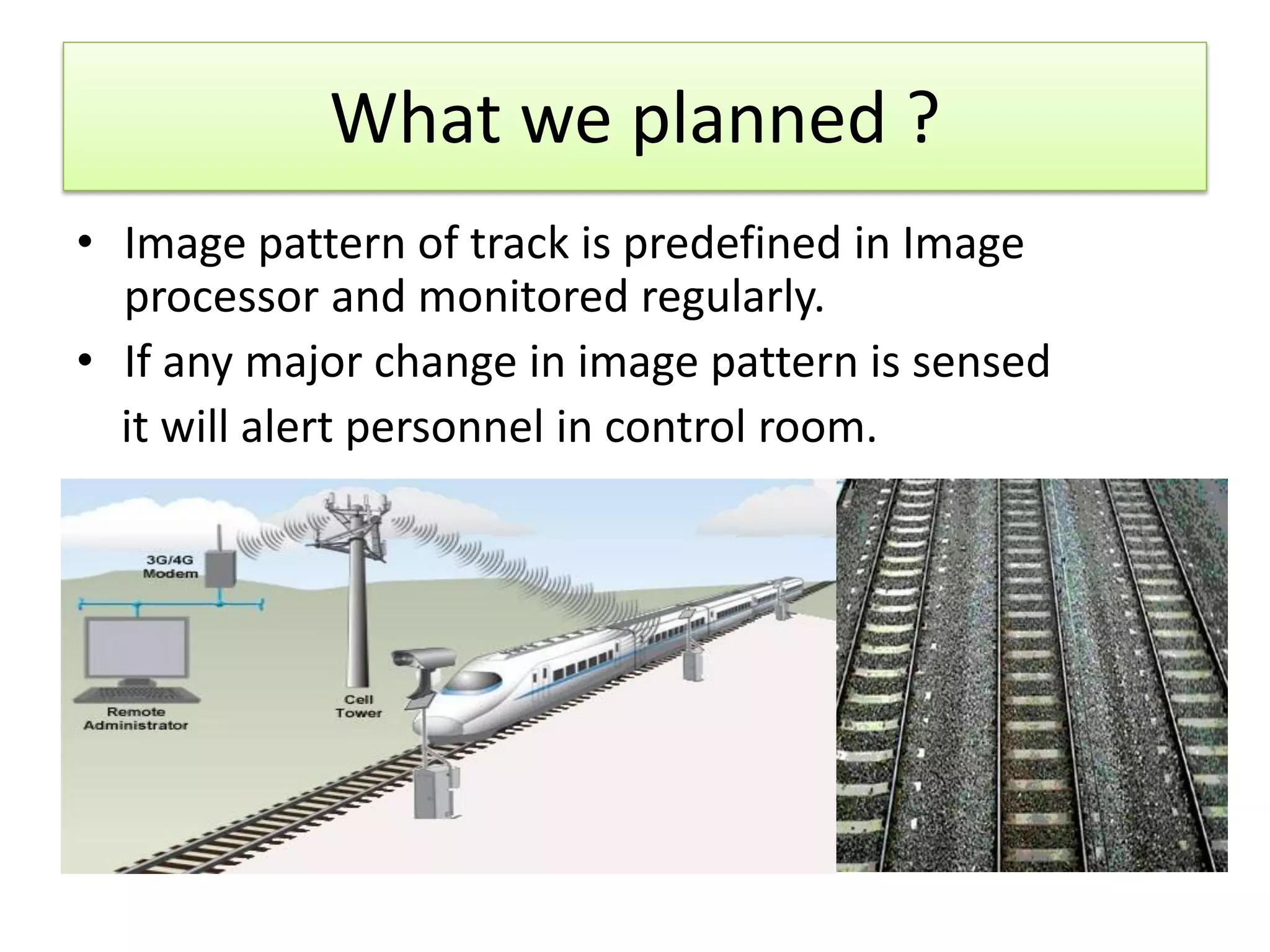
What we planned ?
• Image pattern of track is predefined in Image
processor and monitored regularly.
• If any major change in image pattern is sensed
it will alert personnel in control room.
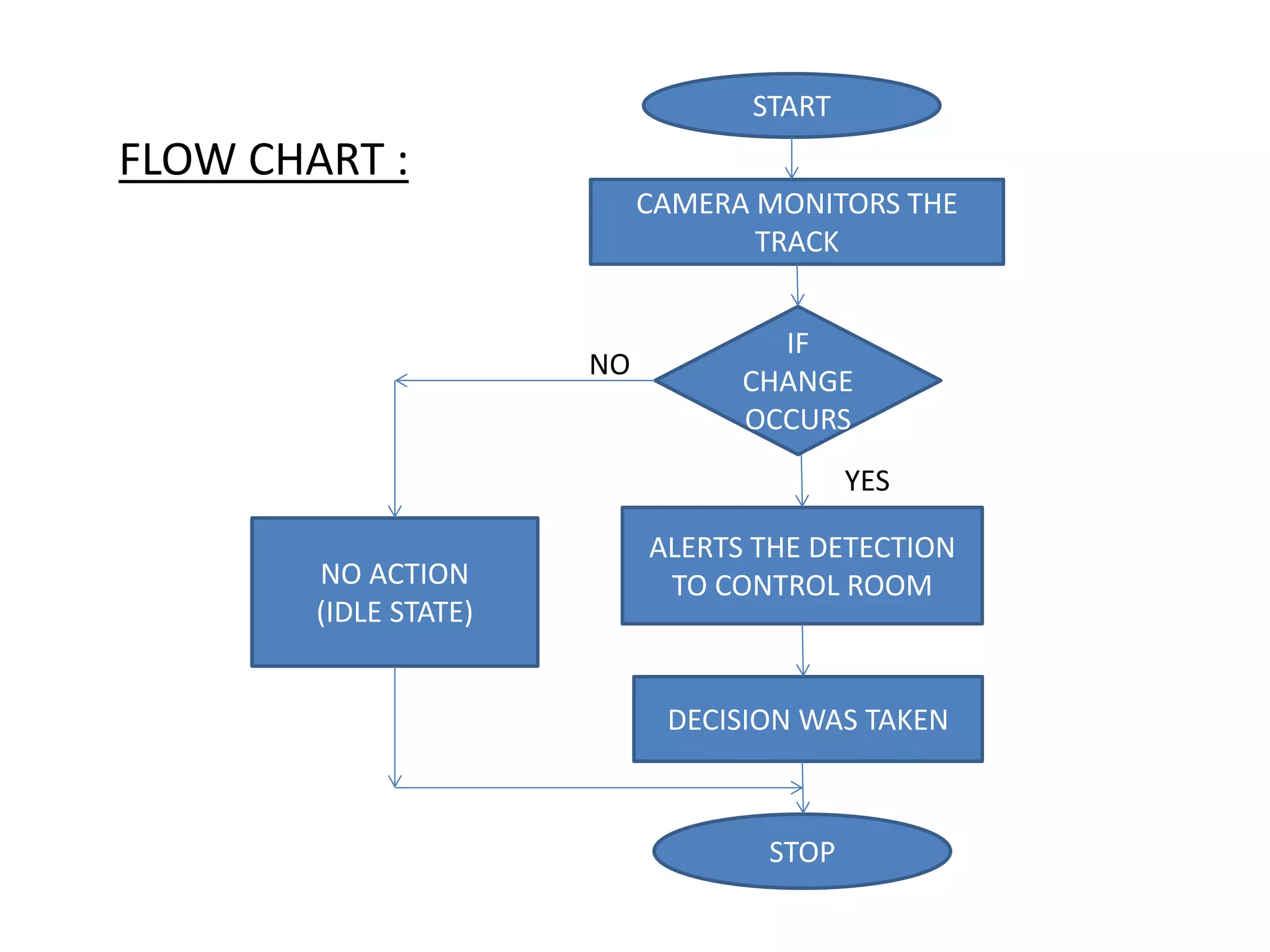
START
CAMERA MONITORS THE
TRACK
IF
CHANGE
OCCURS
ALERTS THE DETECTION
TO CONTROL ROOM
DECISION WAS TAKEN
STOP
NO ACTION
(IDLE STATE)
NO
YES
FLOW CHART :
Pros of the Idea
• No need to monitor the track for 24*7
• Animal collision is greatly reduced
• Needs to be installed only in specified area
Conclusion
0
10
20
30
40
Year
1890's
1900's
1950's
1970's
1980's
1990's
2000's
2011-13
2020's
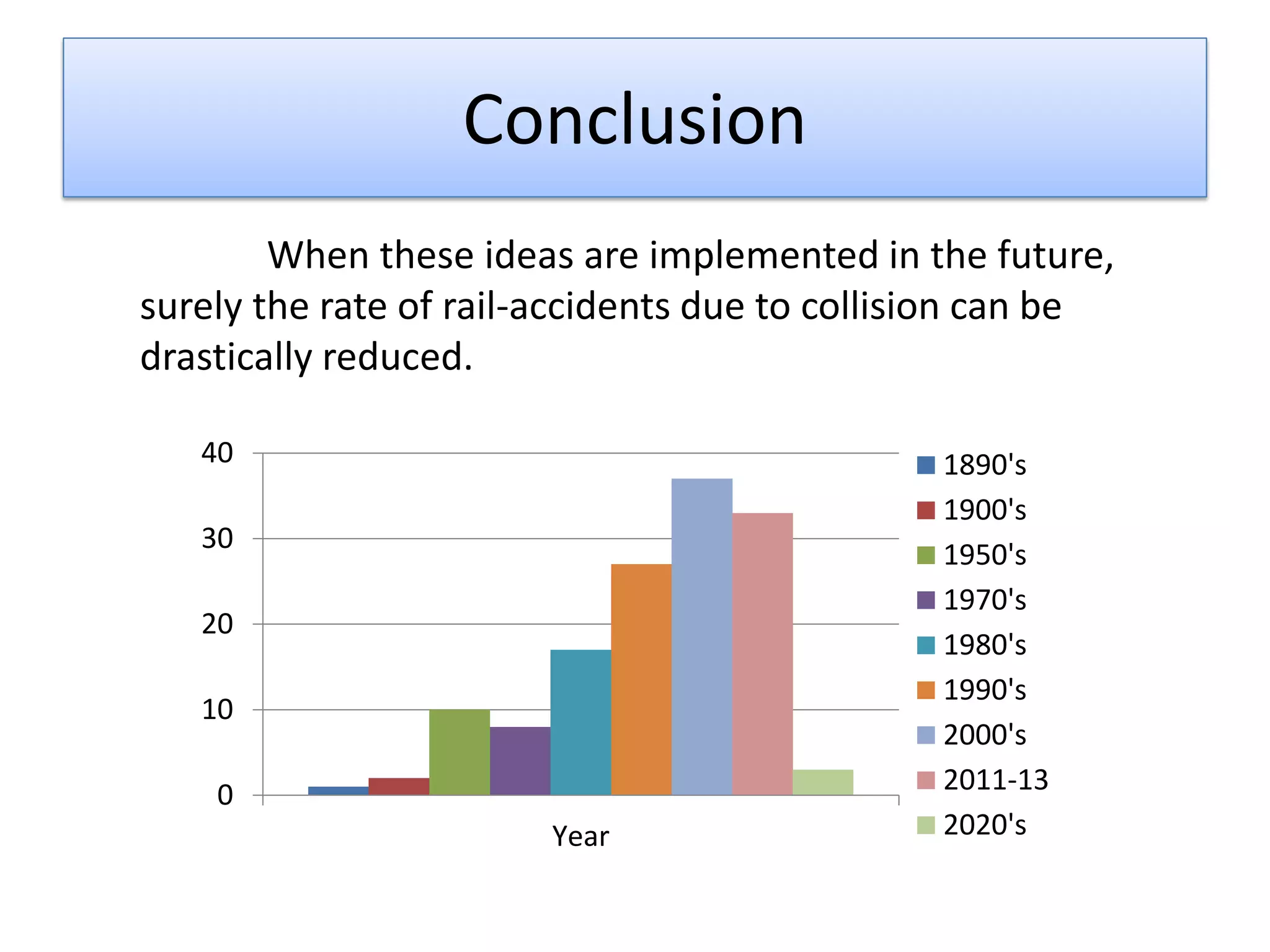
When these ideas are implemented in the future,
surely the rate of rail-accidents due to collision can be
drastically reduced.
Automatic Train collision and Accident Avoidance system

Automatic Train collision and Accident Avoidance system