Automatic Train Collision
and
Accident Avoidance System
By
R.Pradeep Raj
(pradeeprajr93@gmail.com)
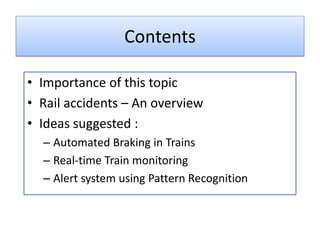
Contents
• Importance of this topic
• Rail accidents – An overview
• Ideas suggested :
– Automated Braking in Trains
– Real-time Train monitoring
– Alert system using Pattern Recognition
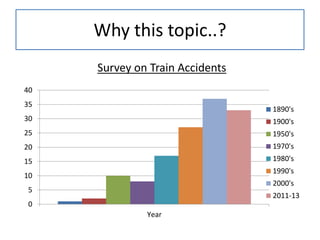
Why this topic..?
Survey on Train Accidents
40
35

1890's

30

1900's

25

1950's

20

1970's

15

1980's
1990's

10

2000's

5

2011-13

0
Year
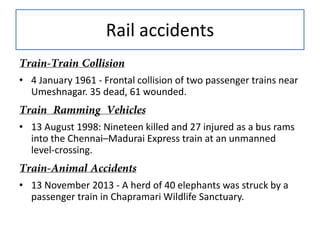
Rail accidents
• 4 January 1961 - Frontal collision of two passenger trains near
Umeshnagar. 35 dead, 61 wounded.
• 13 August 1998: Nineteen killed and 27 injured as a bus rams
into the Chennai–Madurai Express train at an unmanned
level-crossing.
• 13 November 2013 - A herd of 40 elephants was struck by a
passenger train in Chapramari Wildlife Sanctuary.
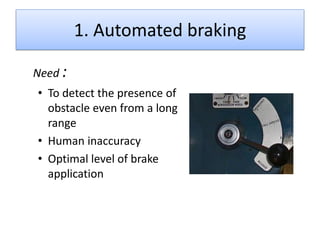
1. Automated braking
Need :
• To detect the presence of
obstacle even from a long
range
• Human inaccuracy
• Optimal level of brake
application
Braking System
Types :
• Vacuum brake (obsolete)
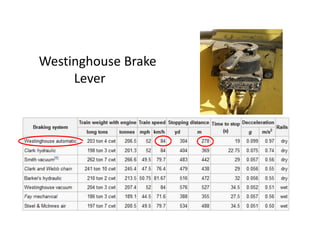
• Air brake (currently in use) - Westinghouse Brake
The average braking distance of a train moving
at a speed of 100 km/hr is about 300m.

Dynamic Braking
Westinghouse Brake
Lever
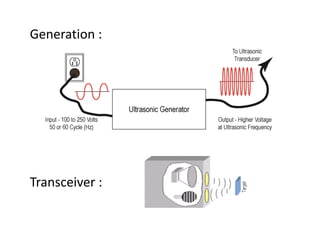
Ultrasonic Transducer
 Production of high frequency sound waves around
18,000 hertz
 Works on the principle of Piezo-electric Effect
 Generated by Piezo-electric crystal
 Also produced by Magneto-striction effect
Time interval between sending and reception
Generation :

Transceiver :
T
R
A
N
C
E
I
V
E
R

ADC

Intimate the
Loco-driver

Microcontroller

Application of
Brakes

O
B
S
T
A
C
L
E

Driver circuit and
Actuator
2. Real-time Train Monitoring

 Placing for every 300m – 500m in unmanned level crossing
and accident prone zones.
 It gives the real time parameters of train :
 Speed of the train
 Direction of the train
 Location of the train
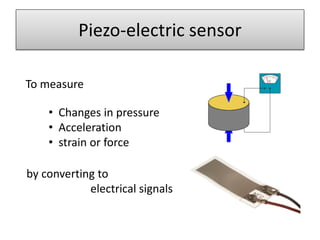
Piezo-electric sensor
To measure
• Changes in pressure
• Acceleration
• strain or force
by converting to
electrical signals
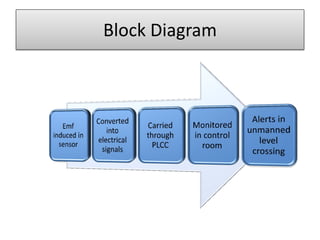
Block Diagram
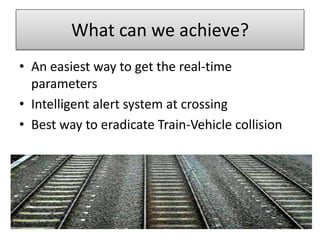
What can we achieve?
• An easiest way to get the real-time
parameters
• Intelligent alert system at crossing
• Best way to eradicate Train-Vehicle collision
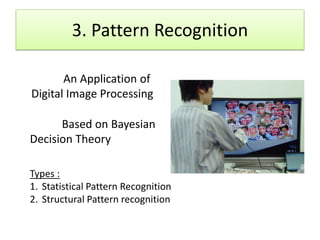
3. Pattern Recognition
An Application of
Digital Image Processing
Based on Bayesian
Decision Theory
Types :
1. Statistical Pattern Recognition
2. Structural Pattern recognition
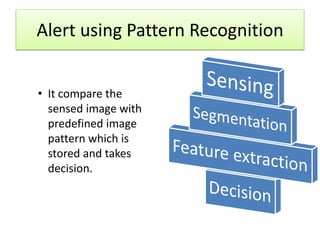
Alert using Pattern Recognition
• It compare the
sensed image with
predefined image
pattern which is
stored and takes
decision.
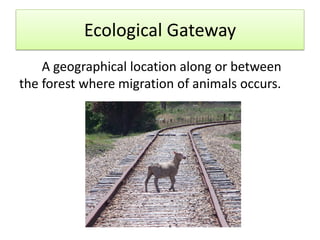
Ecological Gateway
A geographical location along or between
the forest where migration of animals occurs.
What we planned ?
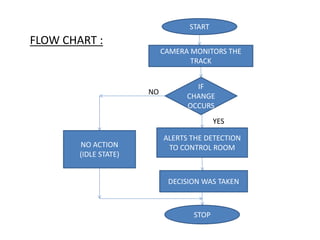
• Image pattern of track is predefined in Image
processor and monitored regularly.
• If any major change in image pattern is sensed
it will alert personnel in control room.
START

FLOW CHART :
CAMERA MONITORS THE
TRACK

NO

IF
CHANGE
OCCURS
YES

NO ACTION
(IDLE STATE)

ALERTS THE DETECTION
TO CONTROL ROOM

DECISION WAS TAKEN

STOP
Pros of the Idea
• No need to monitor the track for 24*7
• Animal collision is greatly reduced
• Needs to be installed only in specified area
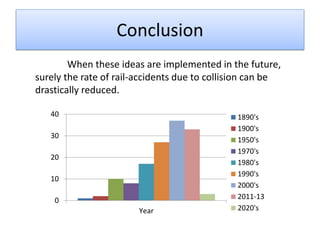
Conclusion
When these ideas are implemented in the future,
surely the rate of rail-accidents due to collision can be
drastically reduced.
40

30
20
10
0
Year

1890's
1900's
1950's
1970's
1980's
1990's
2000's
2011-13
2020's
Automatic Train Collision and Accidence Avoidance system

Automatic Train Collision and Accidence Avoidance system

  • 1.
    Automatic Train Collision and AccidentAvoidance System By R.Pradeep Raj (pradeeprajr93@gmail.com)
  • 2.
    Contents • Importance ofthis topic • Rail accidents – An overview • Ideas suggested : – Automated Braking in Trains – Real-time Train monitoring – Alert system using Pattern Recognition
  • 3.
    Why this topic..? Surveyon Train Accidents 40 35 1890's 30 1900's 25 1950's 20 1970's 15 1980's 1990's 10 2000's 5 2011-13 0 Year
  • 4.
    Rail accidents • 4January 1961 - Frontal collision of two passenger trains near Umeshnagar. 35 dead, 61 wounded. • 13 August 1998: Nineteen killed and 27 injured as a bus rams into the Chennai–Madurai Express train at an unmanned level-crossing. • 13 November 2013 - A herd of 40 elephants was struck by a passenger train in Chapramari Wildlife Sanctuary.
  • 5.
    1. Automated braking Need: • To detect the presence of obstacle even from a long range • Human inaccuracy • Optimal level of brake application
  • 6.
    Braking System Types : •Vacuum brake (obsolete) • Air brake (currently in use) - Westinghouse Brake The average braking distance of a train moving at a speed of 100 km/hr is about 300m. Dynamic Braking
  • 7.
  • 8.
    Ultrasonic Transducer  Productionof high frequency sound waves around 18,000 hertz  Works on the principle of Piezo-electric Effect  Generated by Piezo-electric crystal  Also produced by Magneto-striction effect Time interval between sending and reception
  • 9.
  • 10.
  • 11.
    2. Real-time TrainMonitoring  Placing for every 300m – 500m in unmanned level crossing and accident prone zones.  It gives the real time parameters of train :  Speed of the train  Direction of the train  Location of the train
  • 12.
    Piezo-electric sensor To measure •Changes in pressure • Acceleration • strain or force by converting to electrical signals
  • 13.
  • 14.
    What can weachieve? • An easiest way to get the real-time parameters • Intelligent alert system at crossing • Best way to eradicate Train-Vehicle collision
  • 15.
    3. Pattern Recognition AnApplication of Digital Image Processing Based on Bayesian Decision Theory Types : 1. Statistical Pattern Recognition 2. Structural Pattern recognition
  • 16.
    Alert using PatternRecognition • It compare the sensed image with predefined image pattern which is stored and takes decision.
  • 17.
    Ecological Gateway A geographicallocation along or between the forest where migration of animals occurs.
  • 18.
    What we planned? • Image pattern of track is predefined in Image processor and monitored regularly. • If any major change in image pattern is sensed it will alert personnel in control room.
  • 19.
    START FLOW CHART : CAMERAMONITORS THE TRACK NO IF CHANGE OCCURS YES NO ACTION (IDLE STATE) ALERTS THE DETECTION TO CONTROL ROOM DECISION WAS TAKEN STOP
  • 20.
    Pros of theIdea • No need to monitor the track for 24*7 • Animal collision is greatly reduced • Needs to be installed only in specified area
  • 21.
    Conclusion When these ideasare implemented in the future, surely the rate of rail-accidents due to collision can be drastically reduced. 40 30 20 10 0 Year 1890's 1900's 1950's 1970's 1980's 1990's 2000's 2011-13 2020's