

Authentic  Assessment February, 2012 Suzanne Evans, SHHS Cynthia Sistek-Chandler, SOE Assessment Colloquium
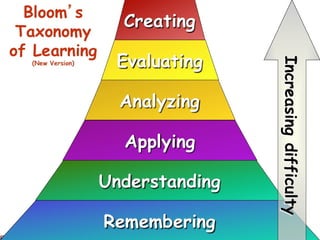
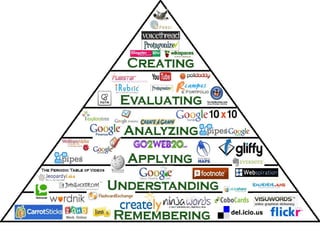
Objectives for Session Examine authentic assessments linked to Bloom ’ s and Domains  Identify assessments currently used Explore technology based assessment tools and their relationship to Bloom ’ s Create action plans for assessment
Challenge Try a new assessment format beyond a traditional test or quiz. Stretch into a new domain. Try a new technology tool.
What is Assessment? Assessment is the systematic gathering and analyzing of information to  inform  and  improve  student learning or programs of student learning in light of  goal-oriented expectations. Walvoord, B. & Johnson, V. (1998)  Effective Grading: A Tool for Learning and  Assessment , Anderson Jossey-Bass.
Assessment is…  “ … an ongoing process aimed at understanding and improving student learning”  (AAHE, Angelo, 1995) Set appropriate criteria & standards for learning Gather, analyze, and interpret evidence to determine how well performance matches expectations & standards Use resulting info to document, explain, and improve performance Angelo, 1995
Activity #1 Brainstorm on your own One or more currently using One would like to use
What is Authentic Assessment?  “ Assessment that evaluates the student’s ability to use their knowledge and to perform tasks that are approximate those found in the work place or other venues outside of the classroom setting.” Janet Fulks
Authentic Assessment A form of assessment in which students are asked to perform real-world tasks that demonstrate meaningful application of essential knowledge and skills.   Student performance on a task is typically scored on a rubric to determine how successfully the student has met specific standards. (Mueller, 2008)
What is Authentic Assessment? Reflects Explicit Criteria Exhibits Reliability Represents Valid Content Assesses Higher Level Learning Simulates Real World Experiences Includes Multiple Domains
Is it Authentic? Learning Outcome Product or performance-based assessment  Real-world relevance Application of knowledge Integration of domains Demonstration of competencies
Is this  Authentic Assessment? End of chapter quiz? Case Study Portfolio Essay Oral Presentation
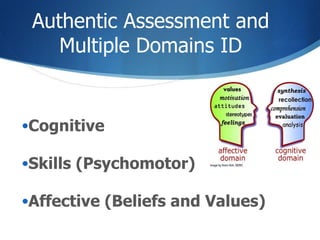
Authentic Assessment and Multiple Domains ID Cognitive Skills (Psychomotor) Affective (Beliefs and Values)
Choosing the  Right Assessment Tool?
 
 
Tools for the 21 st  Century Web 2.0 Tools Google  Apps  Voki, Jing and Recordings  Webspiration for Visual, Collaborative Learning Wikispaces, Creating and Synthesizing
 
Google Applications Video from  Google Docs in Plain English
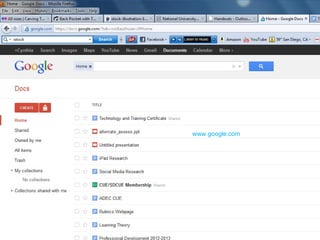
Google Docs www.google.com
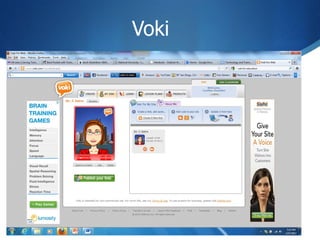
Voki
Oral Presentation Recordings Communications Lesson: Delivery  by Rachel Marco Brief Description: College students learn how to identify and read nonverbal communication and its impact on an audience. Students learn the ins and outs of body language and how it can be perceived by an audience.
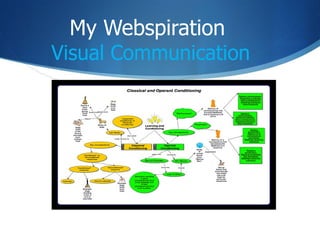
My Webspiration  Visual Communication
Wikispaces http://cynthiaedtech.wikispaces.com / Collaborative Editable  Posting of synthesis Group Work
Challenge Try a new assessment format (beyond a traditional test or quiz) Stretch into a new domain Try a new technology tool
Stretch into a new domain, with new technology, and a new technology tool!
References  Angelo, T. A. Assessment,  AAHE Bulletin,  April 1995, p.11. http :// jfmueller.faculty.noctrl.edu/501/project.htm   Presentation on Slideshare.net Scribd  http :// www.scribd.com/doc/83011015 Walvoord, B. & Johnson, V. (1998)  Effective  Grading: A Tool for Learning and Assessment , Anderson Jossey-Bass. Wikispaces  http://cynthiaedtech.wikispaces.com/

Authentic Assessment, Sistek-Chandler & Evans

  • 1.
    Authentic AssessmentFebruary, 2012 Suzanne Evans, SHHS Cynthia Sistek-Chandler, SOE Assessment Colloquium
  • 2.
    Objectives for SessionExamine authentic assessments linked to Bloom ’ s and Domains Identify assessments currently used Explore technology based assessment tools and their relationship to Bloom ’ s Create action plans for assessment
  • 3.
    Challenge Try anew assessment format beyond a traditional test or quiz. Stretch into a new domain. Try a new technology tool.
  • 4.
    What is Assessment?Assessment is the systematic gathering and analyzing of information to inform and improve student learning or programs of student learning in light of goal-oriented expectations. Walvoord, B. & Johnson, V. (1998) Effective Grading: A Tool for Learning and Assessment , Anderson Jossey-Bass.
  • 5.
    Assessment is… “ … an ongoing process aimed at understanding and improving student learning” (AAHE, Angelo, 1995) Set appropriate criteria & standards for learning Gather, analyze, and interpret evidence to determine how well performance matches expectations & standards Use resulting info to document, explain, and improve performance Angelo, 1995
  • 6.
    Activity #1 Brainstormon your own One or more currently using One would like to use
  • 7.
    What is AuthenticAssessment? “ Assessment that evaluates the student’s ability to use their knowledge and to perform tasks that are approximate those found in the work place or other venues outside of the classroom setting.” Janet Fulks
  • 8.
    Authentic Assessment Aform of assessment in which students are asked to perform real-world tasks that demonstrate meaningful application of essential knowledge and skills.  Student performance on a task is typically scored on a rubric to determine how successfully the student has met specific standards. (Mueller, 2008)
  • 9.
    What is AuthenticAssessment? Reflects Explicit Criteria Exhibits Reliability Represents Valid Content Assesses Higher Level Learning Simulates Real World Experiences Includes Multiple Domains
  • 10.
    Is it Authentic?Learning Outcome Product or performance-based assessment Real-world relevance Application of knowledge Integration of domains Demonstration of competencies
  • 11.
    Is this Authentic Assessment? End of chapter quiz? Case Study Portfolio Essay Oral Presentation
  • 12.
    Authentic Assessment andMultiple Domains ID Cognitive Skills (Psychomotor) Affective (Beliefs and Values)
  • 13.
    Choosing the Right Assessment Tool?
  • 14.
  • 15.
  • 16.
    Tools for the21 st Century Web 2.0 Tools Google Apps Voki, Jing and Recordings Webspiration for Visual, Collaborative Learning Wikispaces, Creating and Synthesizing
  • 17.
  • 18.
    Google Applications Videofrom Google Docs in Plain English
  • 19.
  • 20.
  • 21.
    Oral Presentation RecordingsCommunications Lesson: Delivery by Rachel Marco Brief Description: College students learn how to identify and read nonverbal communication and its impact on an audience. Students learn the ins and outs of body language and how it can be perceived by an audience.
  • 22.
    My Webspiration Visual Communication
  • 23.
    Wikispaces http://cynthiaedtech.wikispaces.com /Collaborative Editable Posting of synthesis Group Work
  • 24.
    Challenge Try anew assessment format (beyond a traditional test or quiz) Stretch into a new domain Try a new technology tool
  • 25.
    Stretch into anew domain, with new technology, and a new technology tool!
  • 26.
    References Angelo,T. A. Assessment, AAHE Bulletin, April 1995, p.11. http :// jfmueller.faculty.noctrl.edu/501/project.htm Presentation on Slideshare.net Scribd http :// www.scribd.com/doc/83011015 Walvoord, B. & Johnson, V. (1998) Effective Grading: A Tool for Learning and Assessment , Anderson Jossey-Bass. Wikispaces http://cynthiaedtech.wikispaces.com/

Editor's Notes

  • #5 *
  • #9 Authentic Assessment: A form of assessment in which students are asked to perform real-world tasks that demonstrate meaningful application of essential knowledge and skills -- Jon Mueller Authentic Assessment: Students are asked to perform real-world tasks that demonstrate meaningful application of essential knowledge and skills http://jonathan.mueller.faculty.noctrl.edu/toolbox/whatisit.htm *
  • #20 What is Google Docs?
  • #23 Visually track and communicate plans and projects with diagrams and outlines With WebspirationPRO’s Diagram View, you visually brainstorm, organize, comprehend, and communicate ideas and information. WebspirationPRO supports many different types of visual thinking methodologies, such as concept maps, process flows, webs and idea maps, making it easy for you to pick the one that best fits your project or your personal thinking style. WebspirationPRO’s integrated Outline View provides powerful organizing to expand your ideas and information into plans and reports. With WebspirationPRO’s collaboration capabilities, no matter what project or document you are working on, you can co-create and collaborate with team members, study groups and colleagues. WebspirationPRO facilitates visual thinking to brainstorm and develop ideas, concepts and plans. With it, you and your peers can co-create and share knowledge. WebspirationPRO brings the power of visual thinking and outlining to the web for anytime, anywhere thinking, planning and collaboration.