
Kathleen Nickle

                  Toyo University
                    Tokyo, Japan
What it is:
 A project as a summative assessment

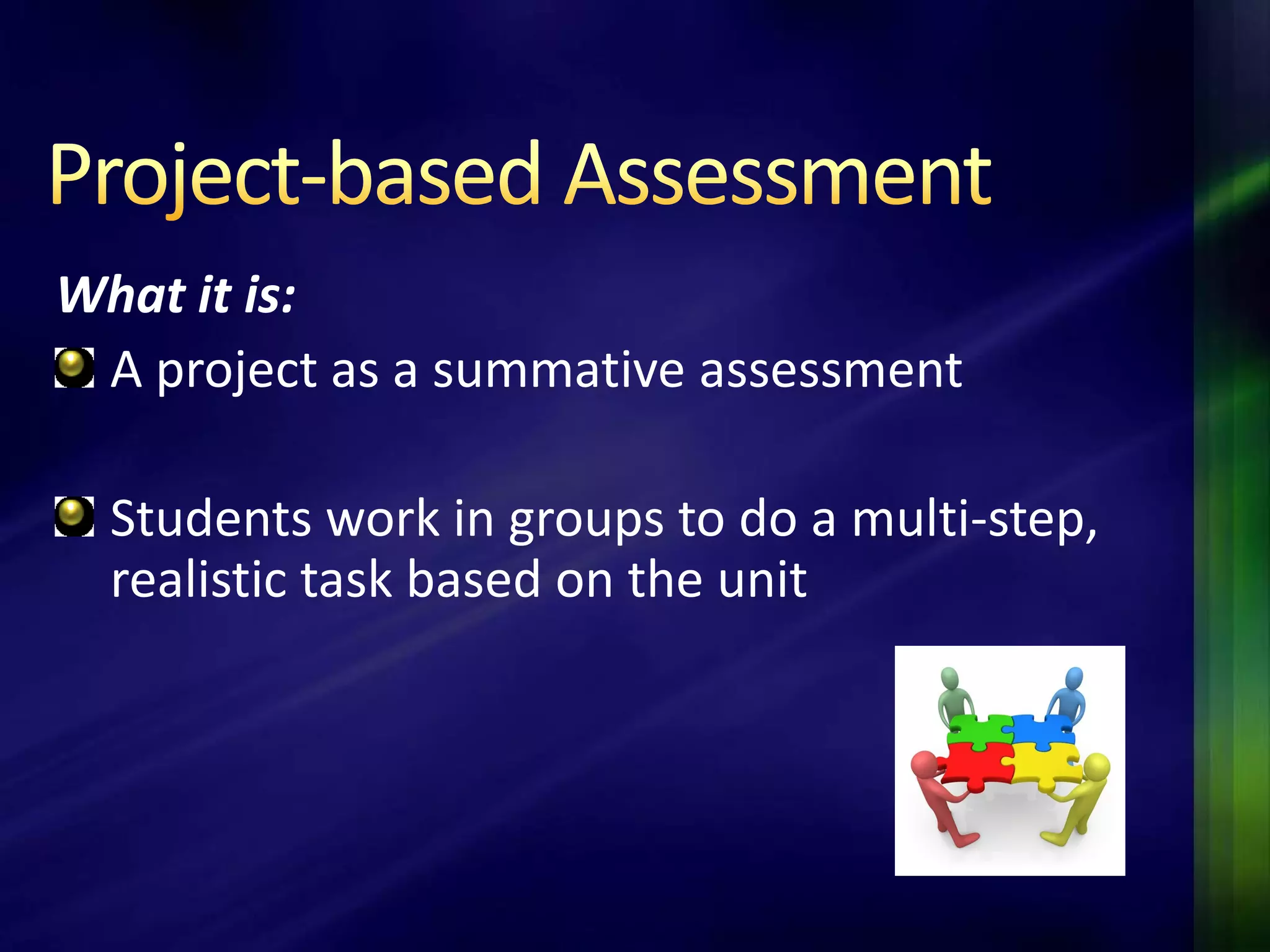
  Students work in groups to do a multi-step,
  realistic task based on the unit
Intensive, supplemental EFL program
   13 sections of 20-30 students each (approx. same level)
   6 teachers


Goals:
   Increase the number of students who study abroad
   Increase general English competence of Toyo students

Program consists of:
   Reading and Writing class
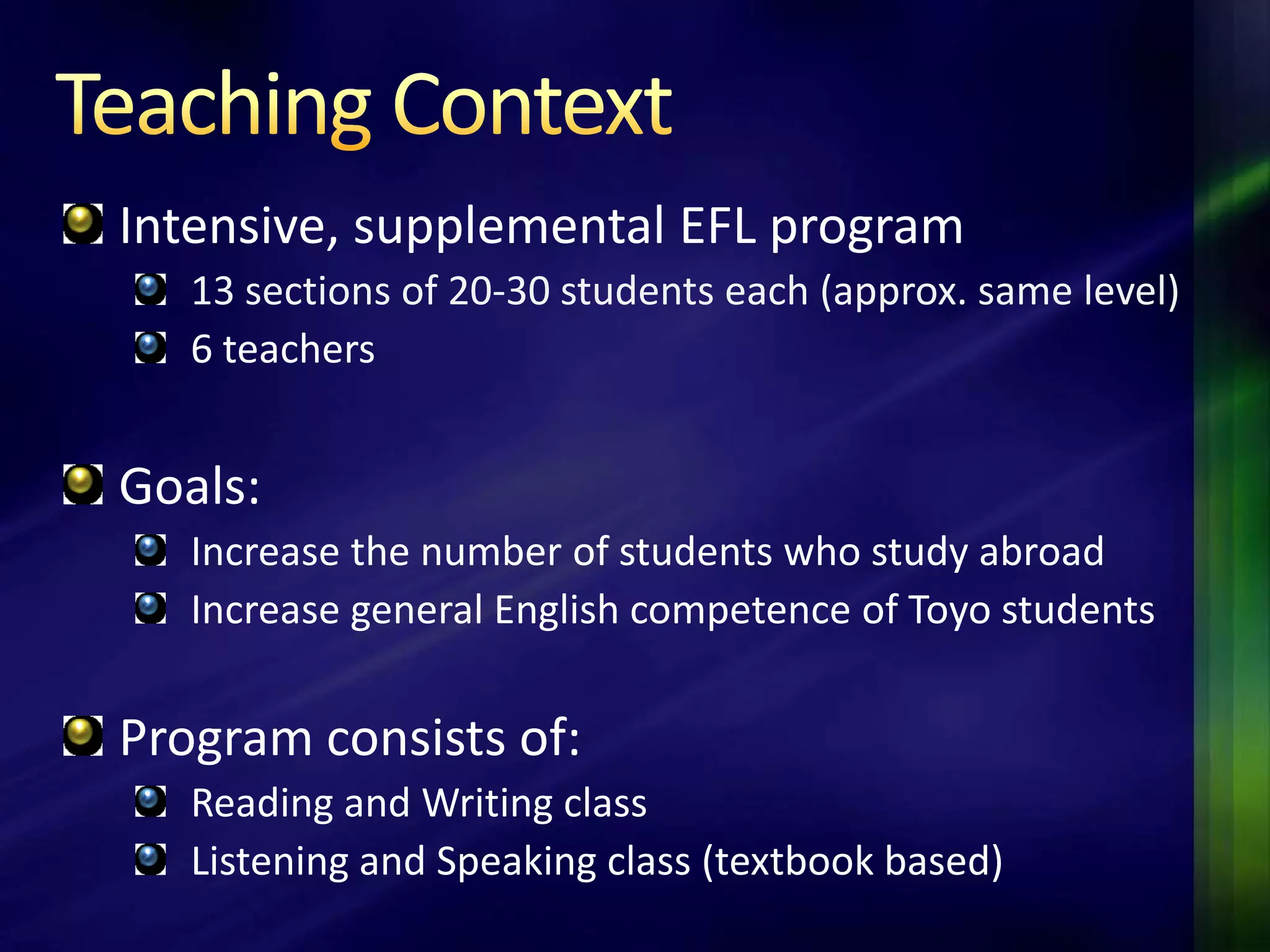
   Listening and Speaking class (textbook based)
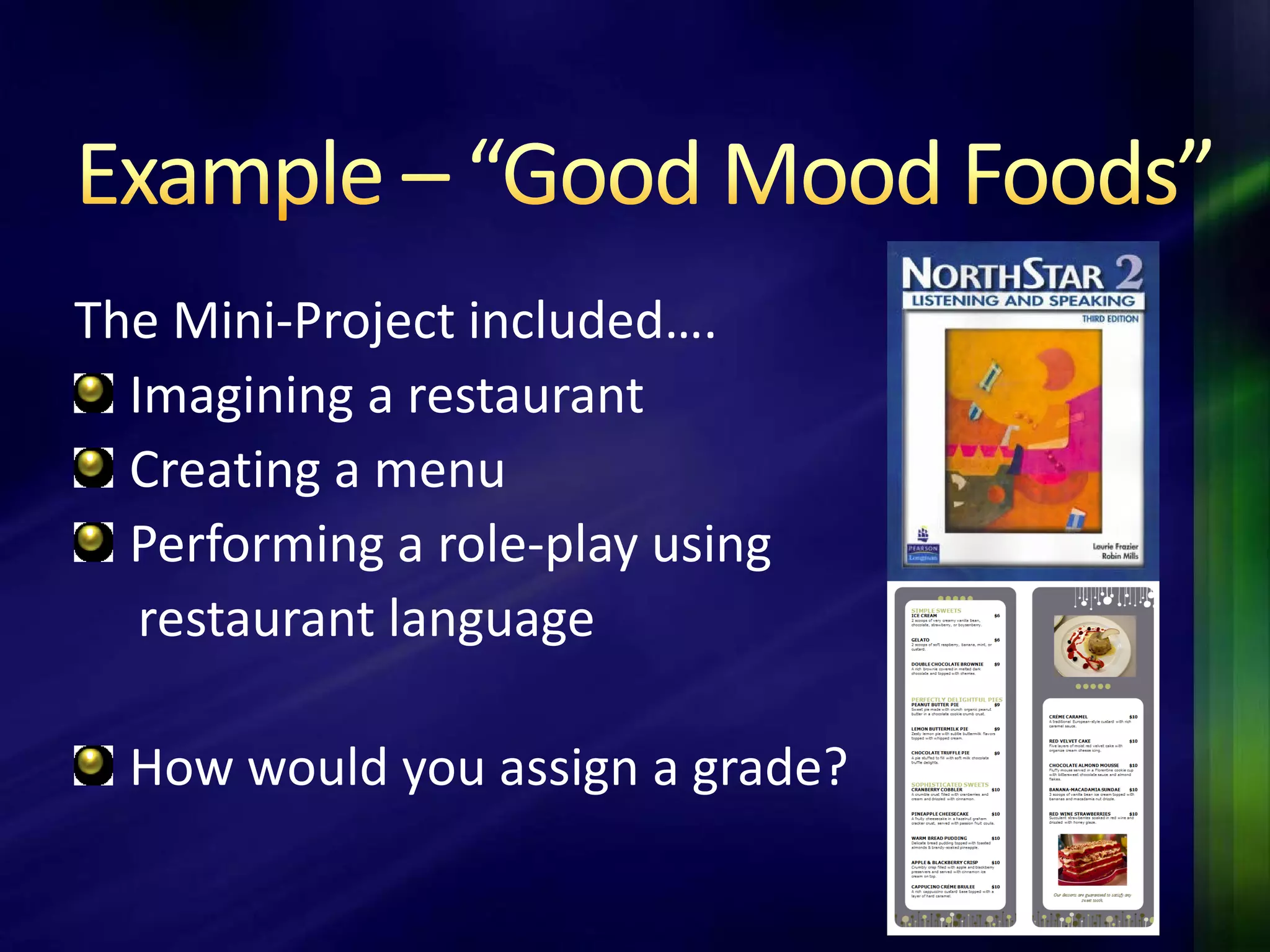
The Mini-Project included….
  Imagining a restaurant
  Creating a menu
  Performing a role-play using
   restaurant language

  How would you assign a grade?
1. Have you used project-based assessment?
   What projects did you assign?

2. How did you assign grades for the projects?
   Were the grades for groups or individuals?

3. What are some potential benefits of using
   projects for assessment?
Benefits
Designing an Assessment Plan
Considerations
Selecting or Developing Tools
Sample Assessment Plans
Q&A
Some benefits of project-based assessment:
  Motivation
  Learning transfer to real-life
  Complex thinking & problem solving
  Communicative setting
  Student autonomy
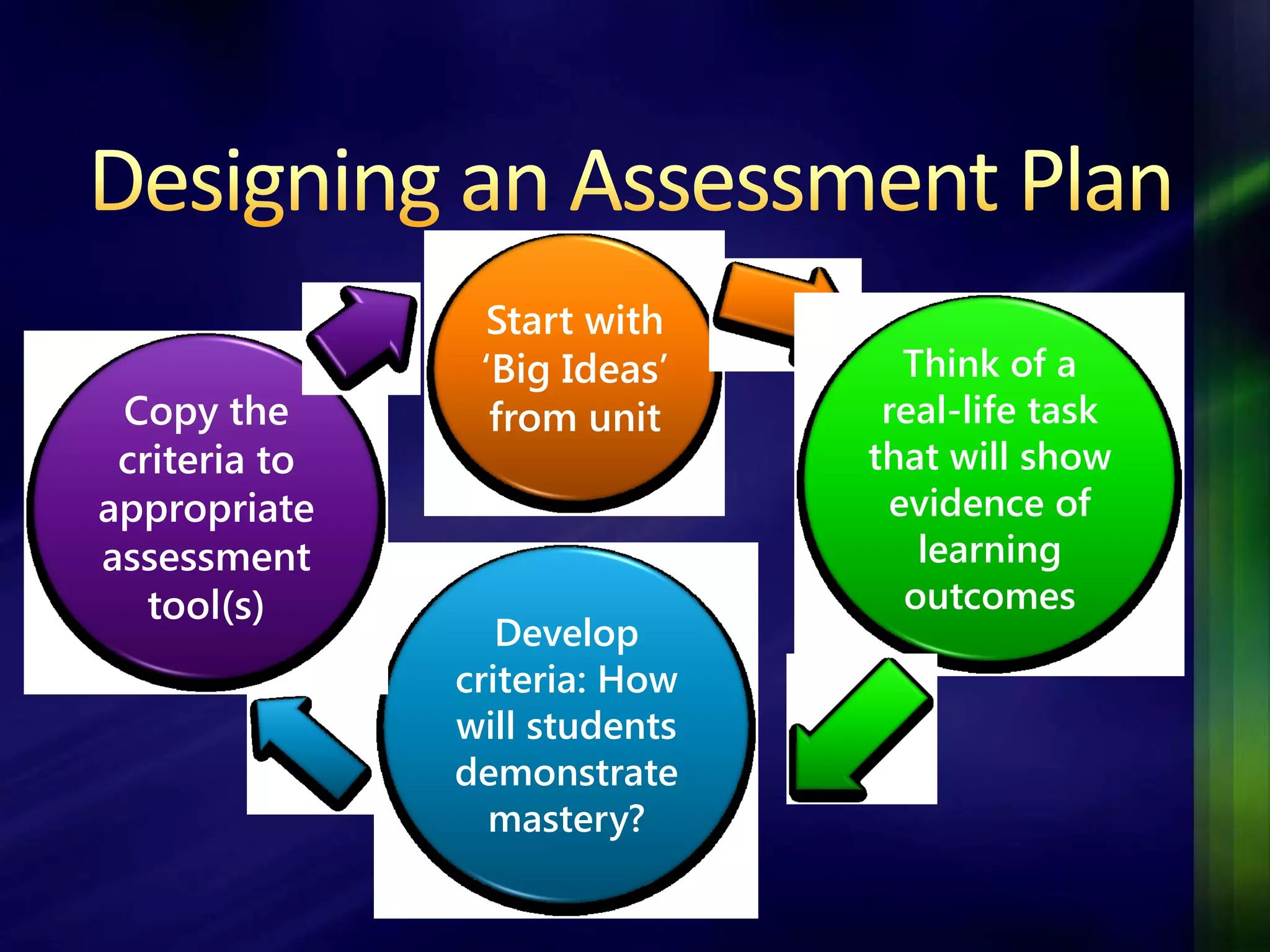
Start with
                ‘Big Ideas’       Think of a
 Copy the        from unit      real-life task
 criteria to                   that will show
appropriate                      evidence of
assessment                         learning
   tool(s)                        outcomes
                  Develop
               criteria: How
               will students
               demonstrate
                 mastery?
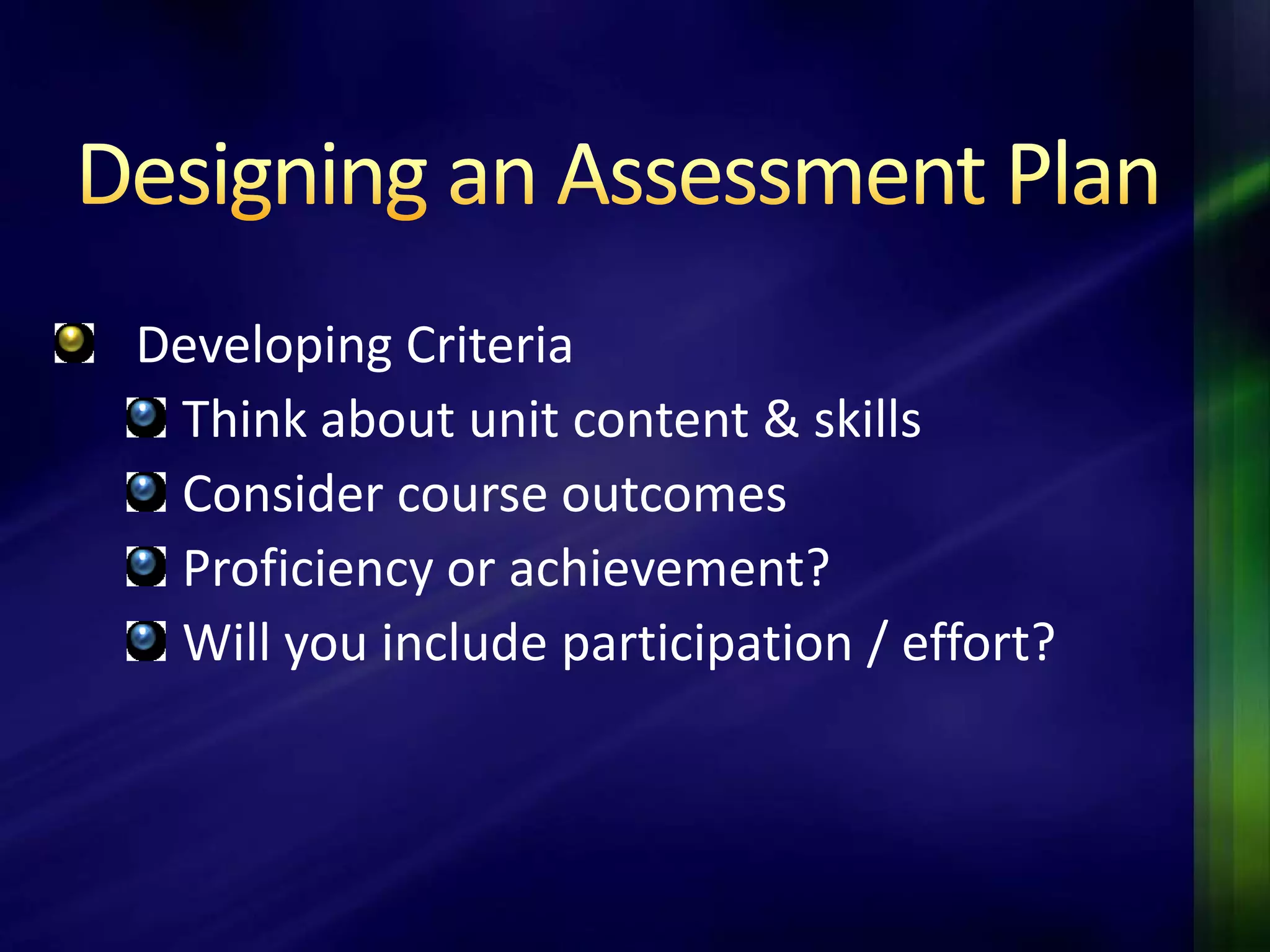
Developing Criteria
 Think about unit content & skills
 Consider course outcomes
 Proficiency or achievement?
 Will you include participation / effort?
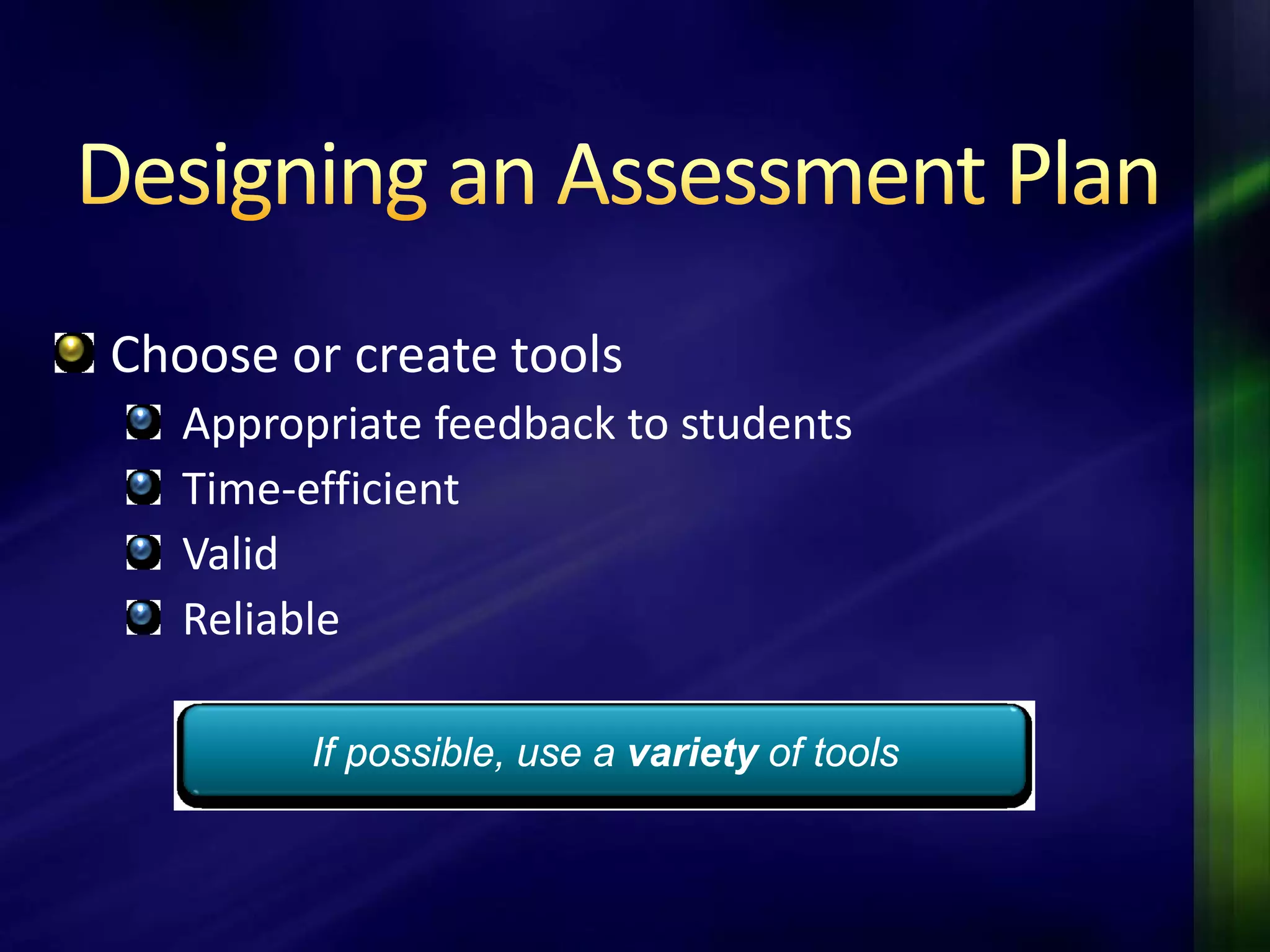
Choose or create tools
   Appropriate feedback to students
   Time-efficient
   Valid
   Reliable

         If possible, use a variety of tools
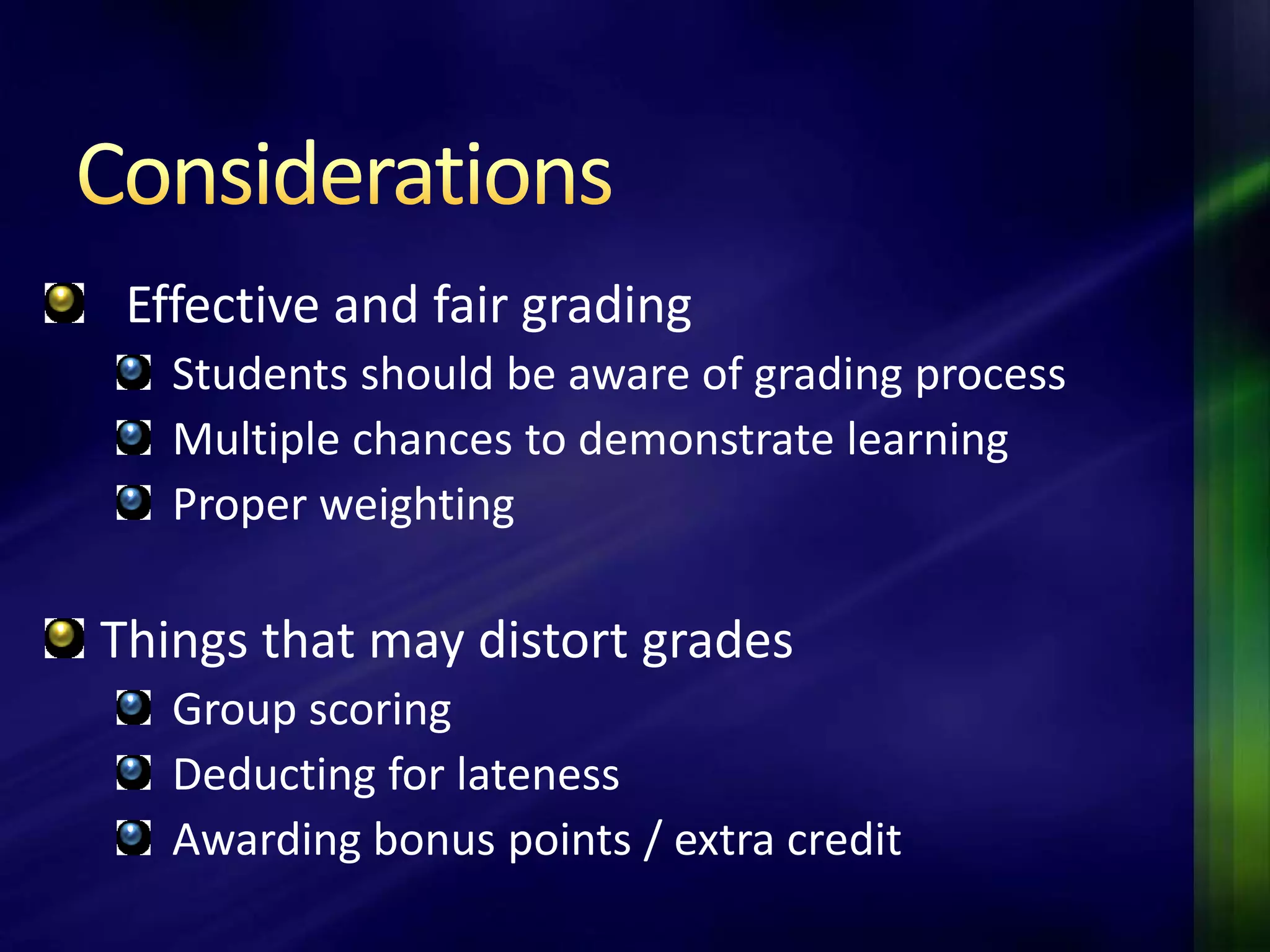
Effective and fair grading
   Students should be aware of grading process
   Multiple chances to demonstrate learning
   Proper weighting

Things that may distort grades
   Group scoring
   Deducting for lateness
   Awarding bonus points / extra credit
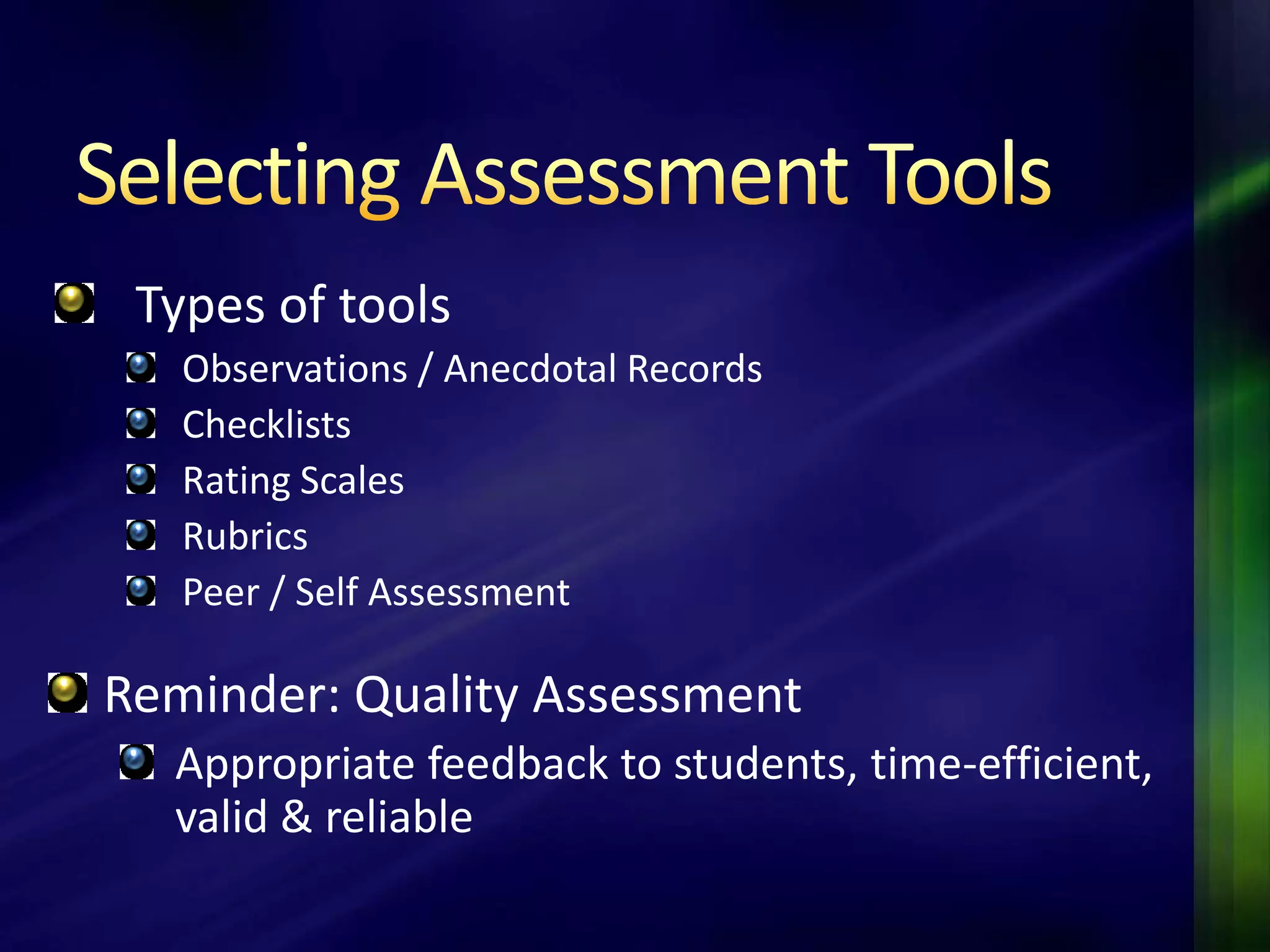
Types of tools
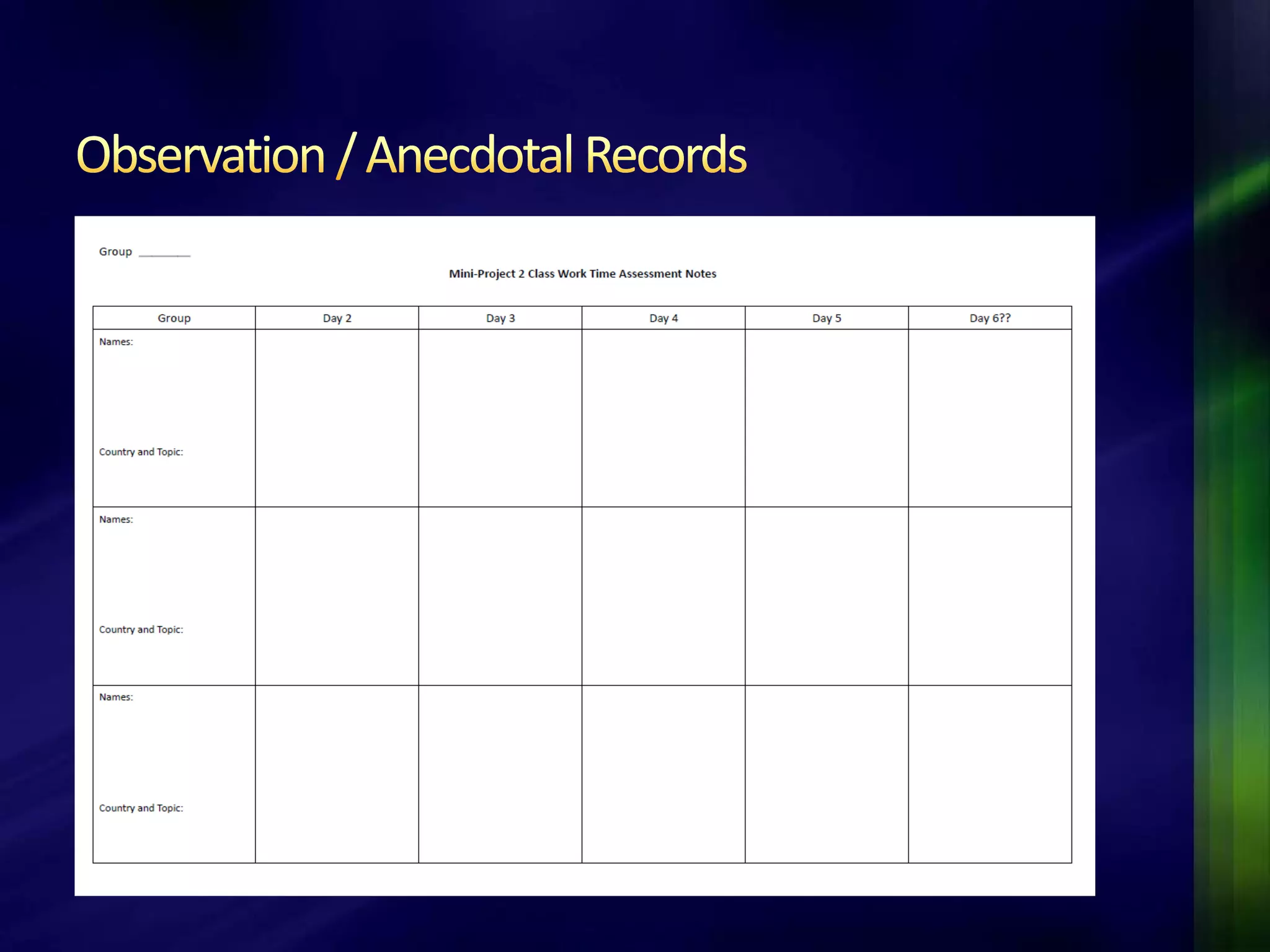
   Observations / Anecdotal Records
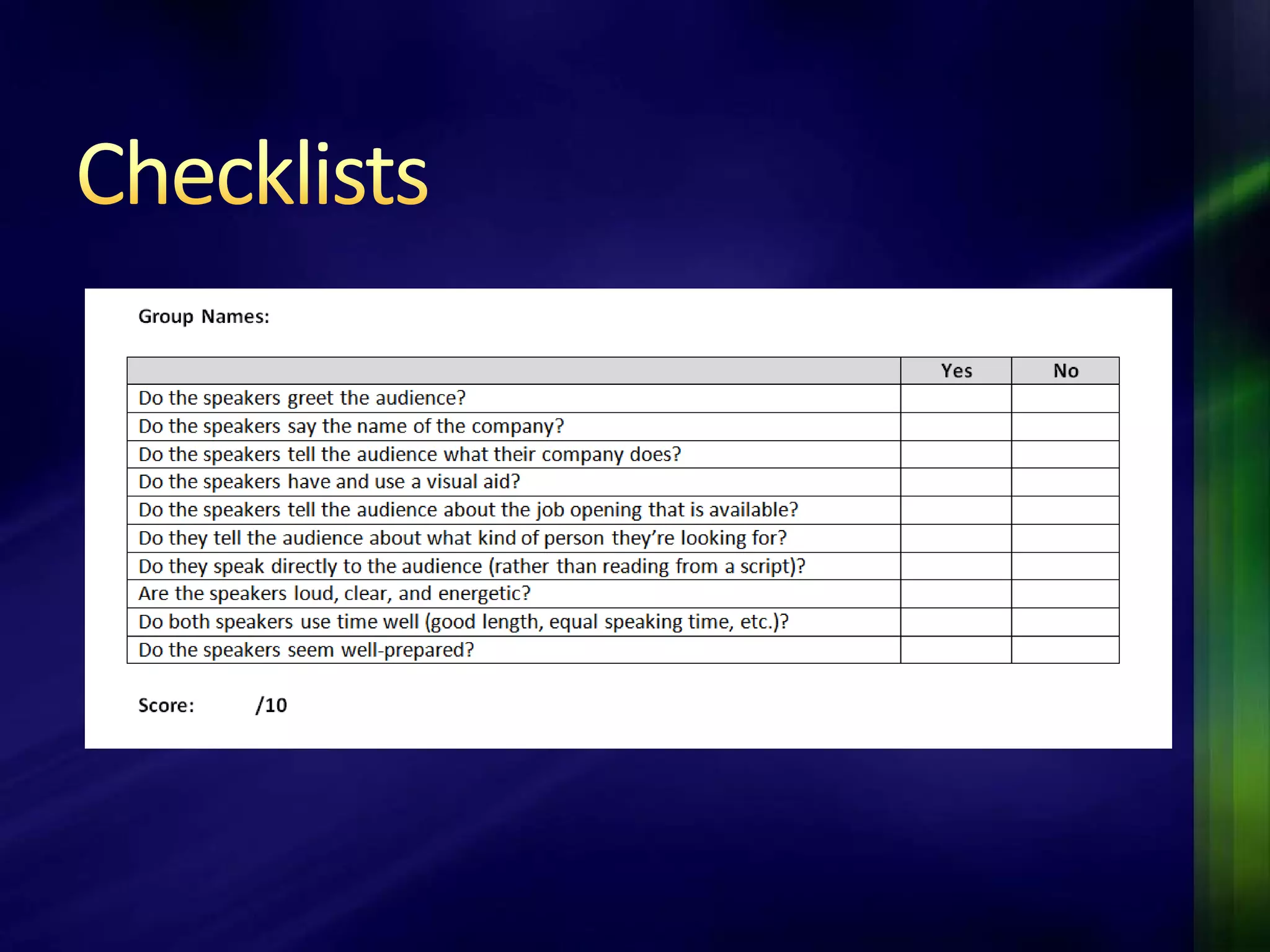
   Checklists
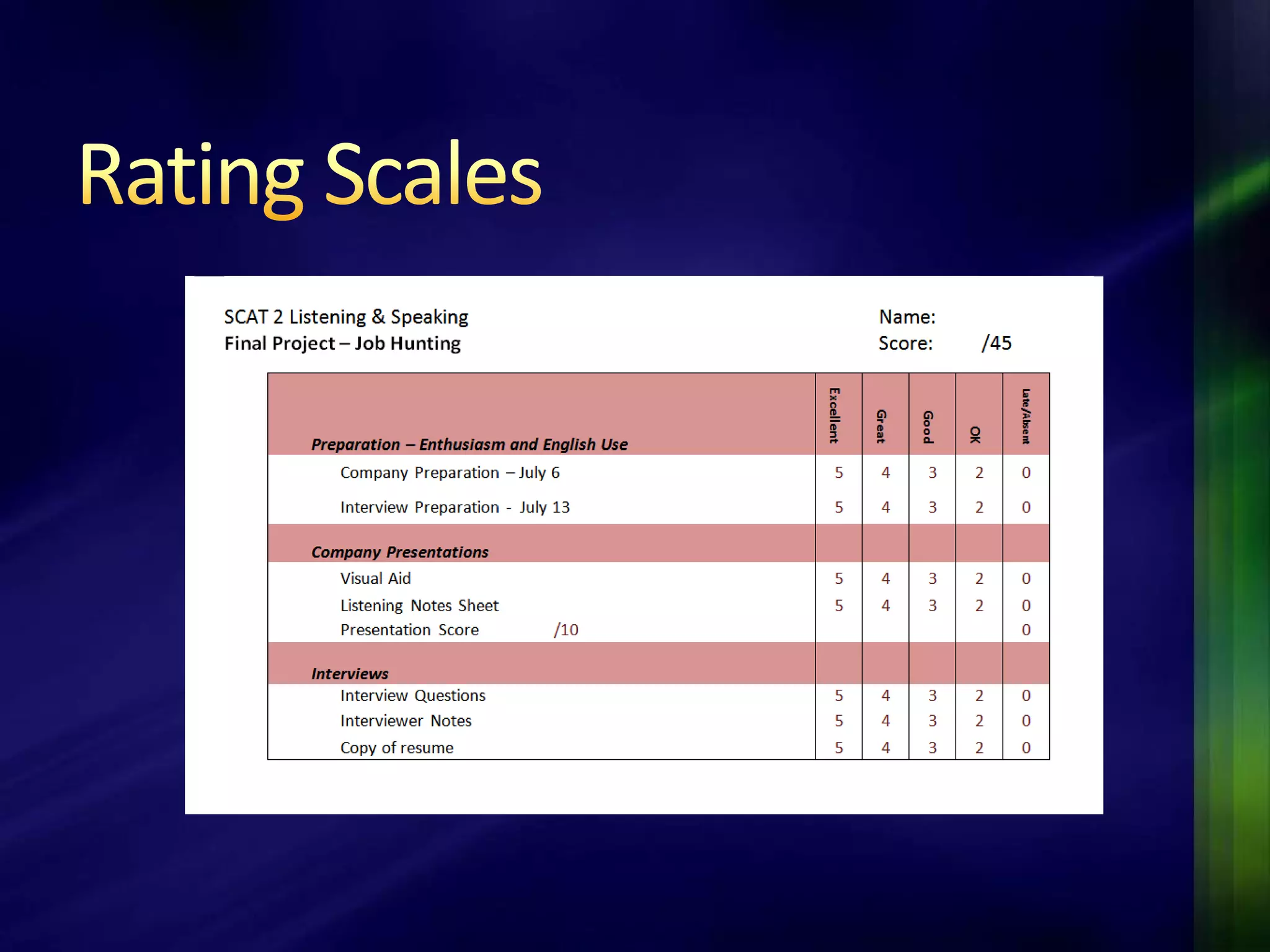
   Rating Scales
   Rubrics
   Peer / Self Assessment

Reminder: Quality Assessment
  Appropriate feedback to students, time-efficient,
  valid & reliable
Focused on a specific task
Recorded immediately & individually

  Advantages / Disadvantages
Lists steps in the process to successfully
complete the task
Uses a yes/no scale

   Advantages / Disadvantages
Similar to a checklist but shows the degree to
which a criteria is met
Teacher rates each criteria with a number
(1=poor 5=great)

   Advantages / Disadvantages
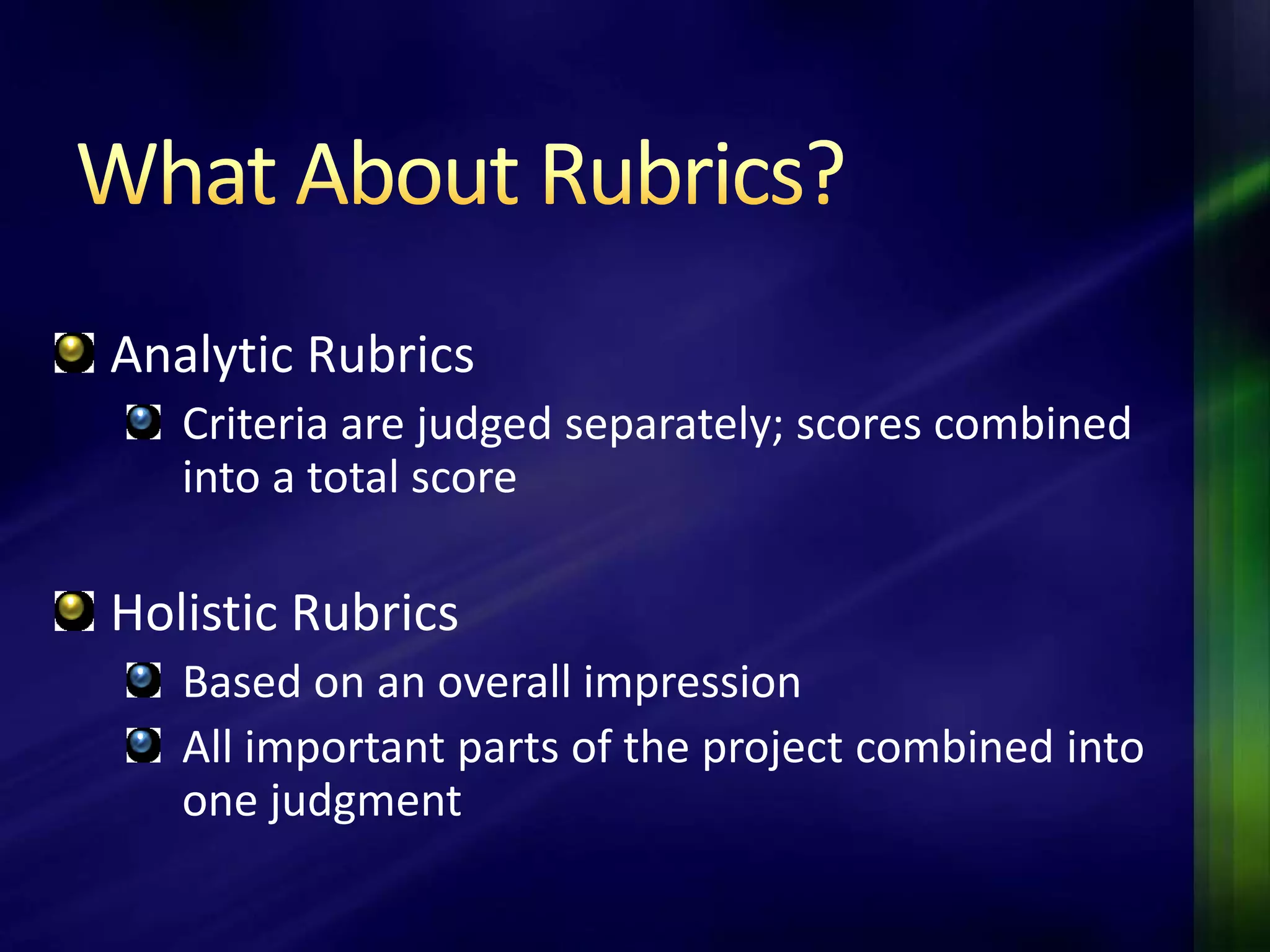
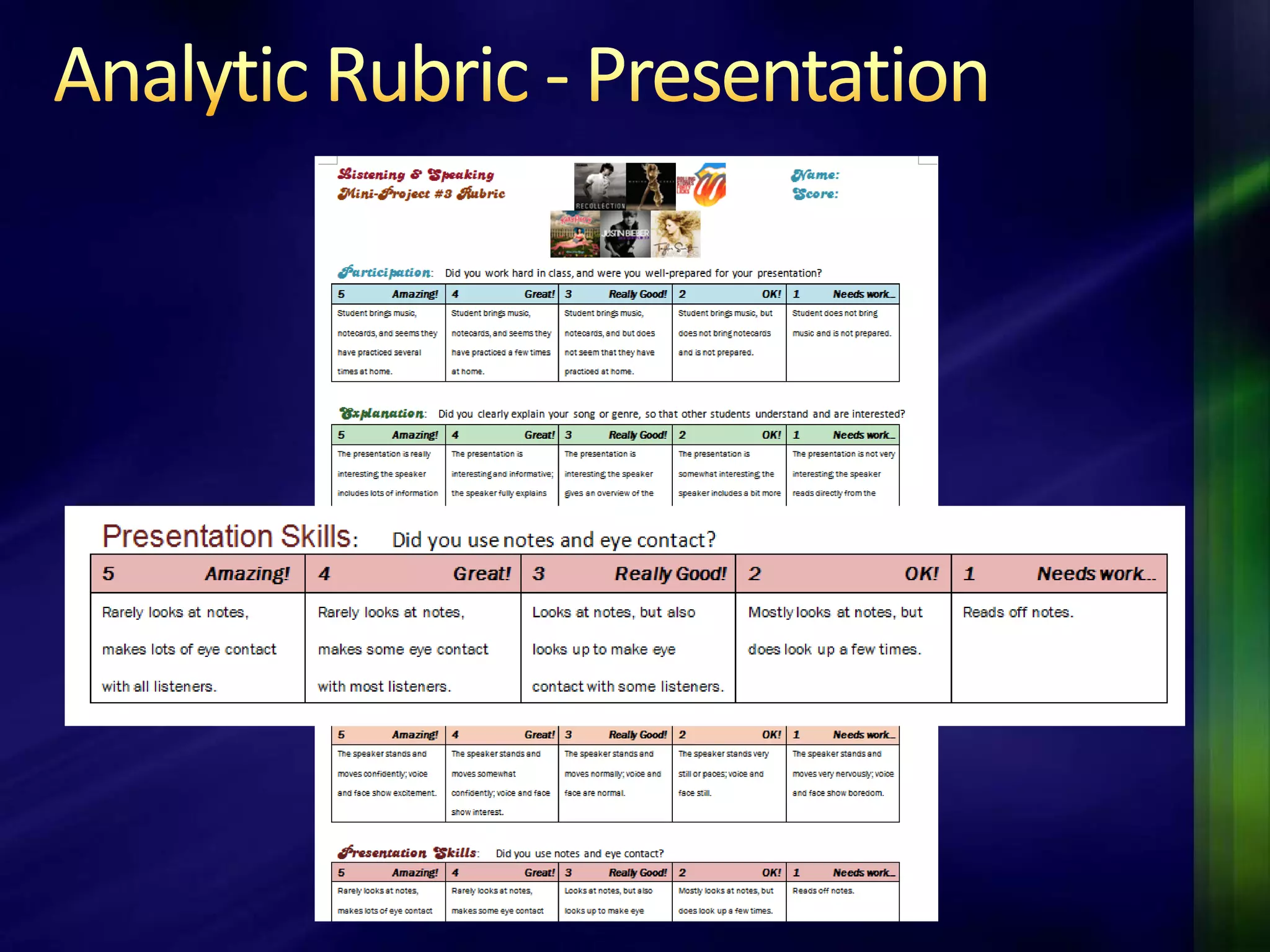
Analytic Rubrics
   Criteria are judged separately; scores combined
   into a total score

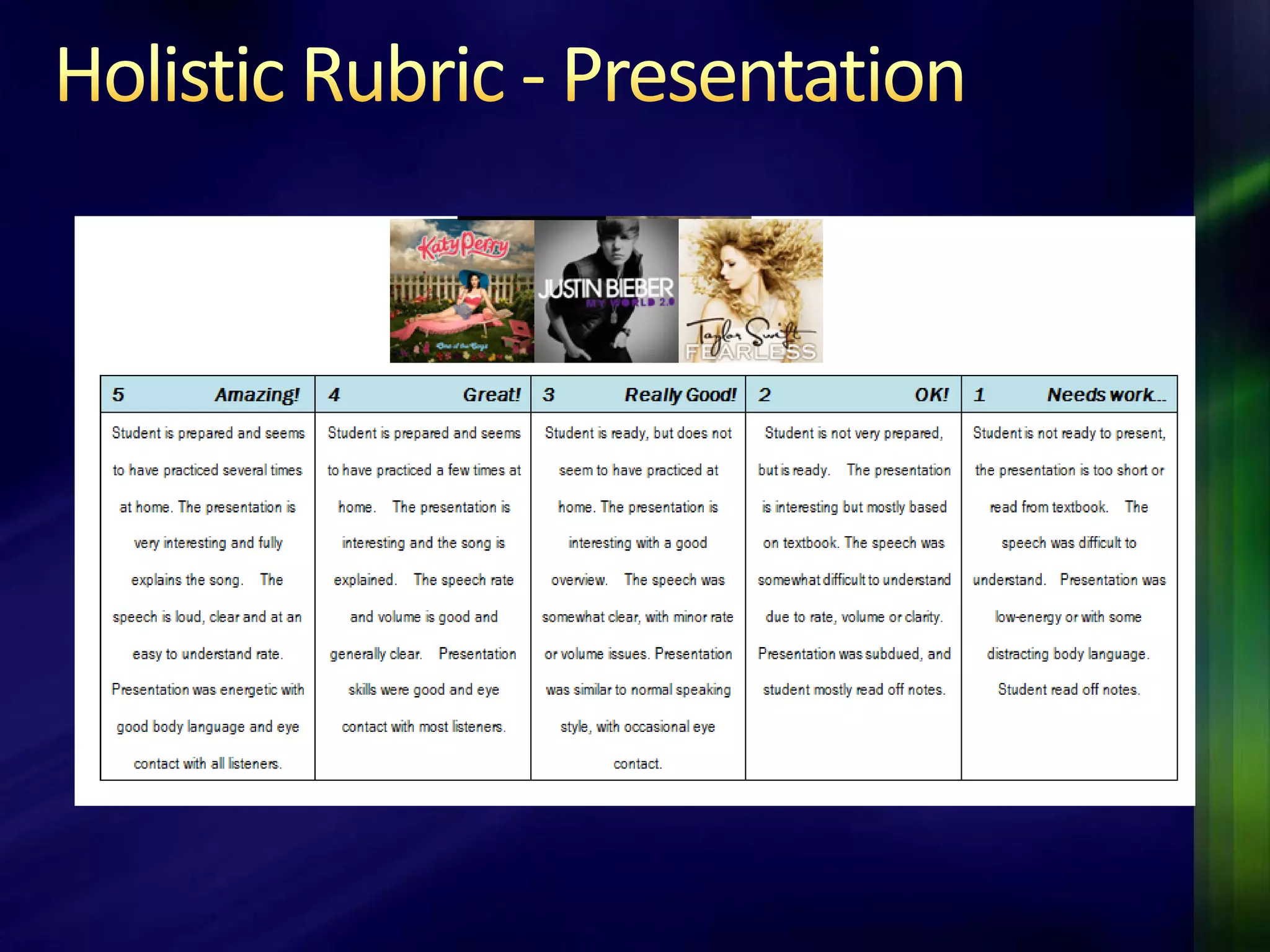
Holistic Rubrics
   Based on an overall impression
   All important parts of the project combined into
   one judgment
Create clear boundaries between levels
Describe what the student has done,
not what she has failed to do
Avoid double-jeopardy
Use positive language
The project included…
  Researching rules of etiquette
  Creating “do” and “don’t” role-plays
  Leading the class in discussion questions

* Students were assigned roles to delegate the workload
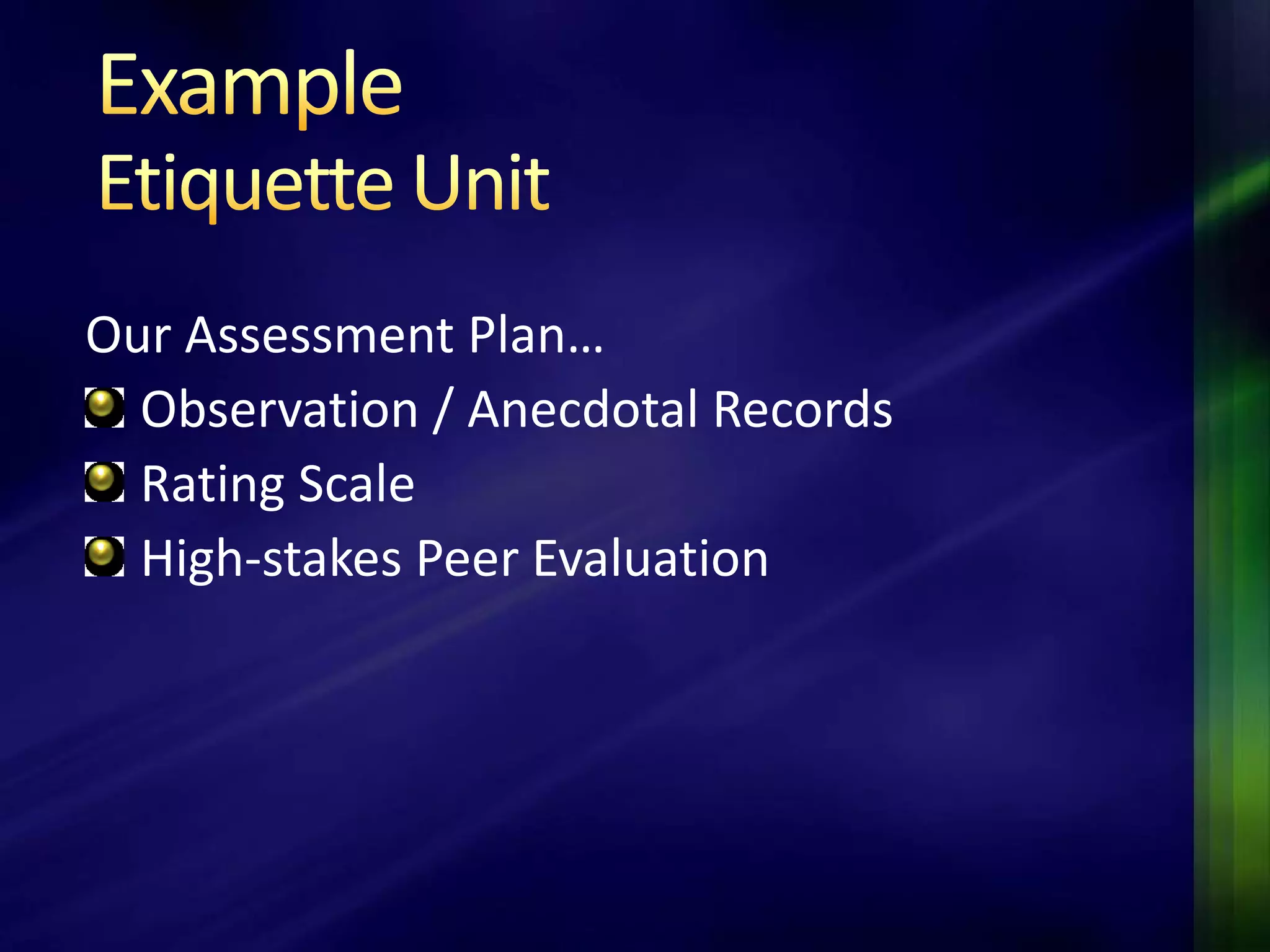
Our Assessment Plan…
  Observation / Anecdotal Records
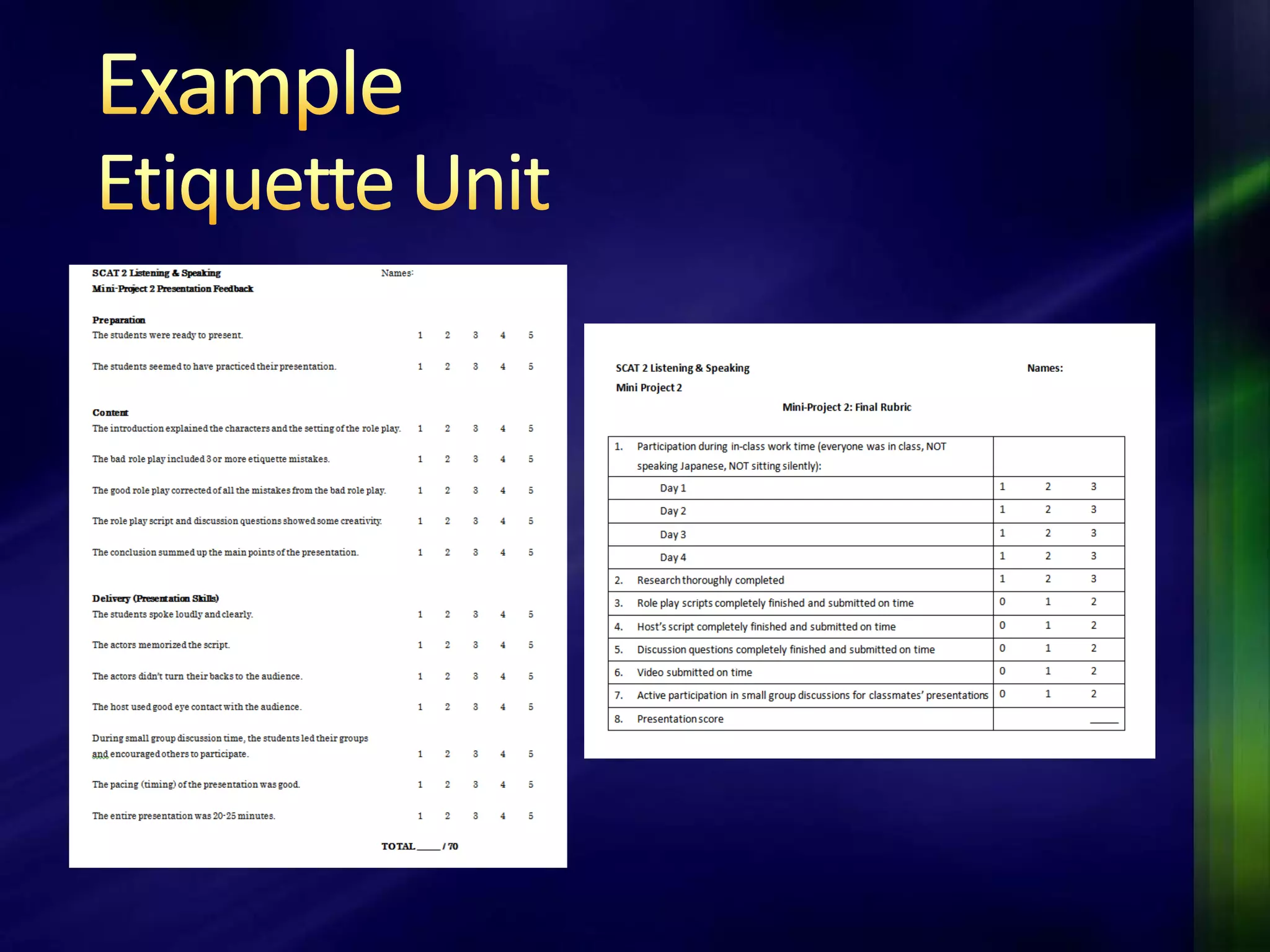
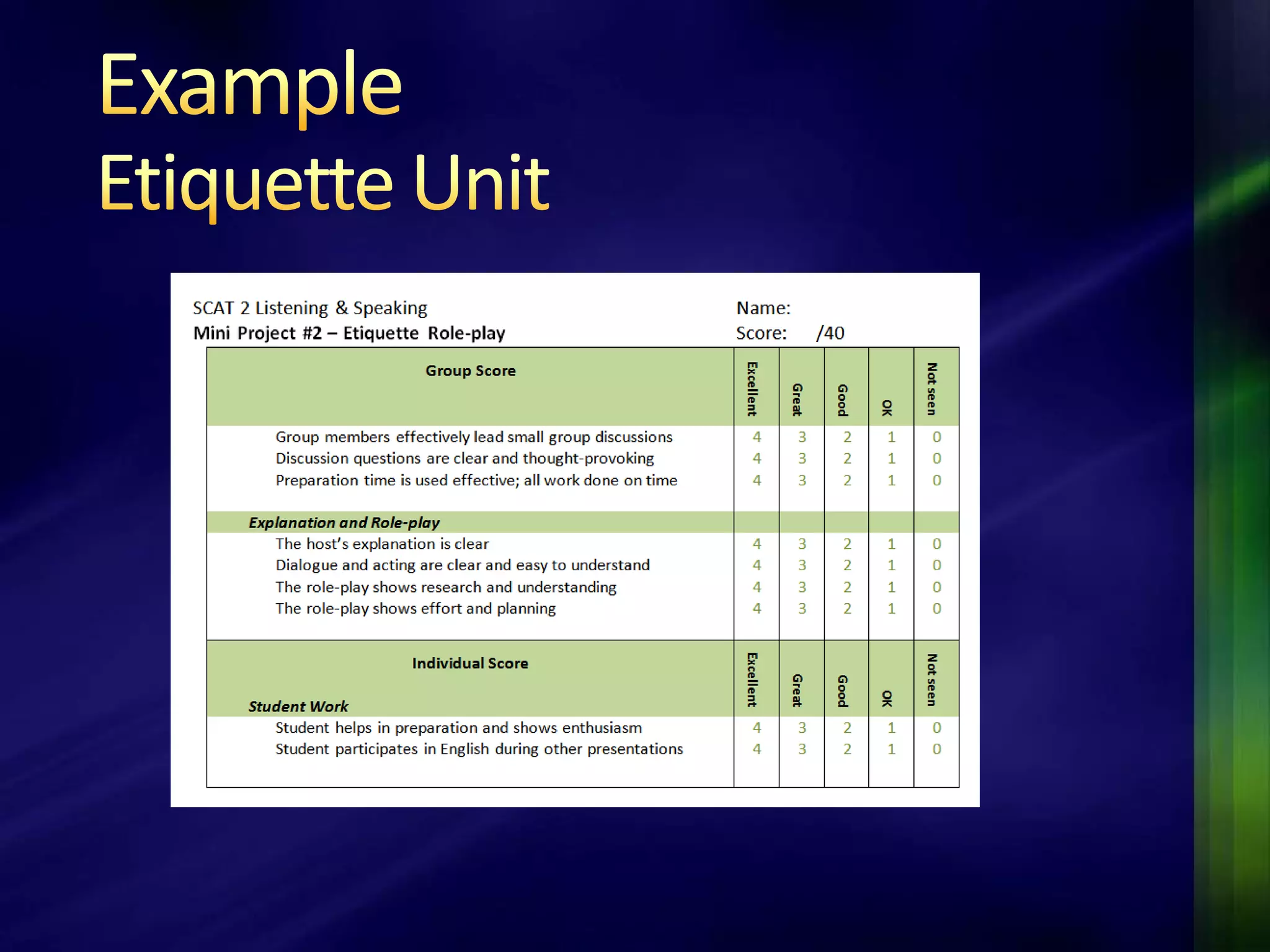
  Rating Scale
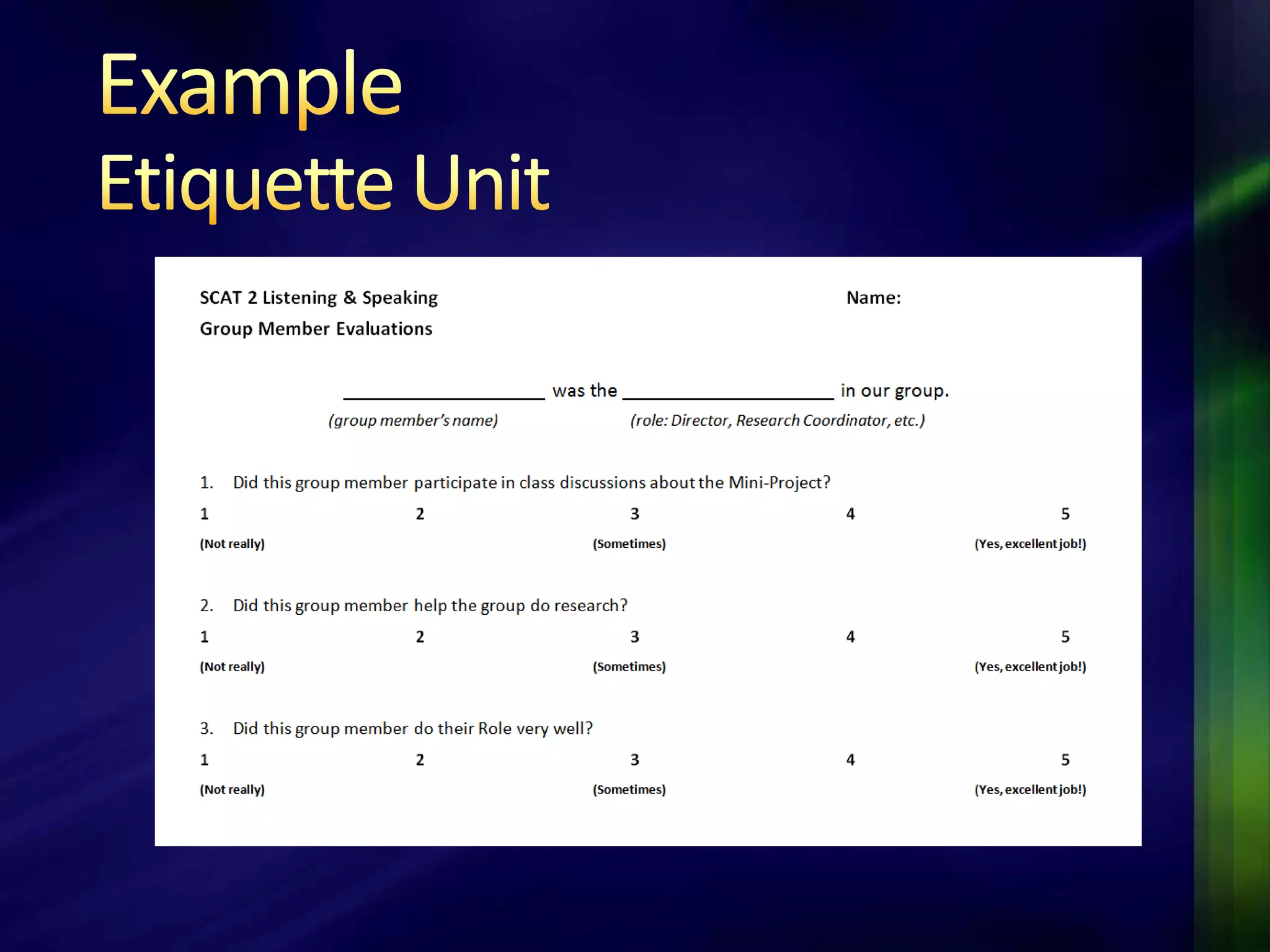
  High-stakes Peer Evaluation
The project included…
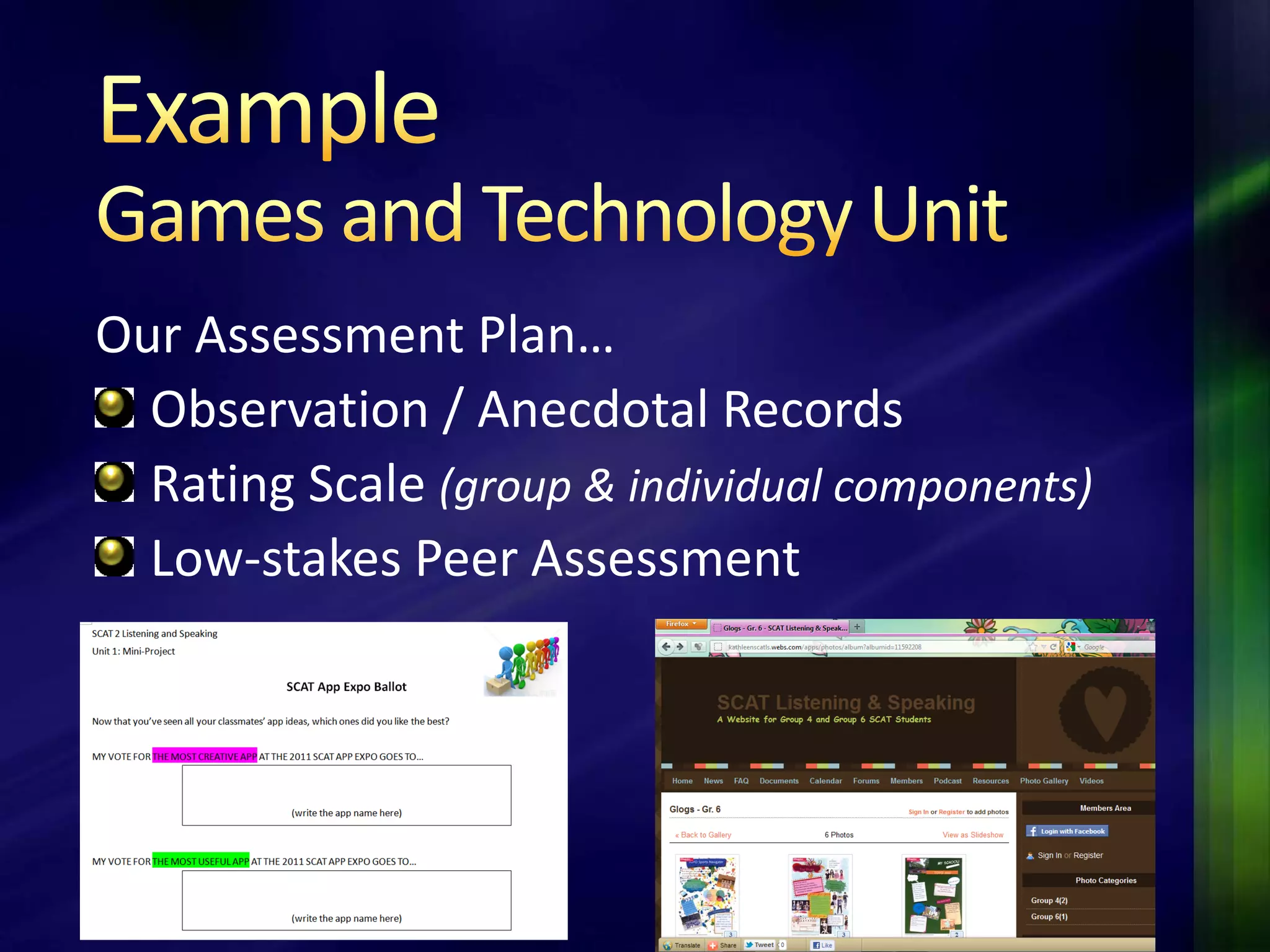
  Imagining a new app
  Creating a glog to advertise
  Giving a presentation
  Listening & giving feedback to other groups

                  http://edu.glogster.com
Our Assessment Plan…
  Observation / Anecdotal Records
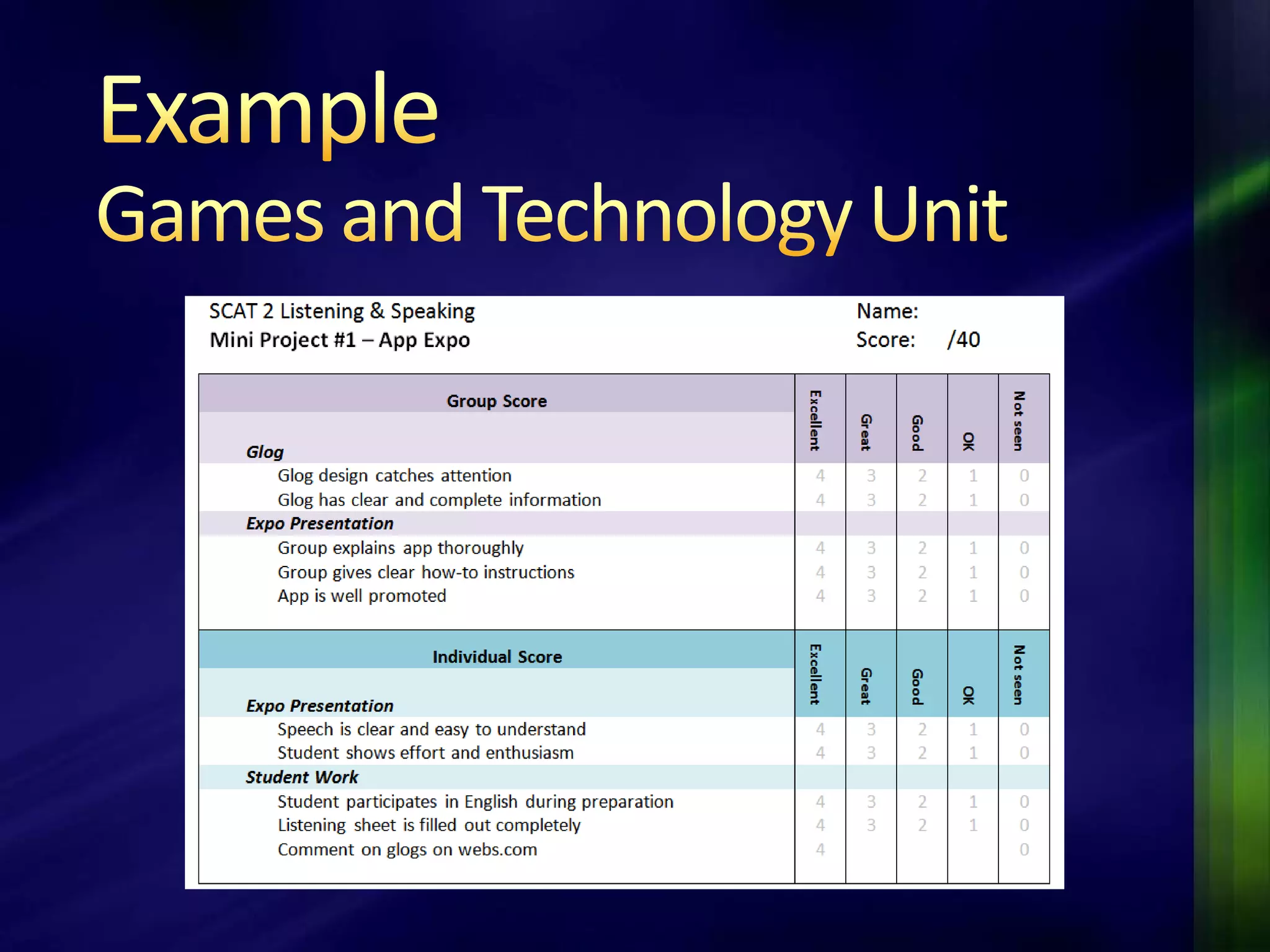
  Rating Scale (group & individual components)
  Low-stakes Peer Assessment
The Project Included….
  Imagining a restaurant
  Creating a menu
  Performing a role-play using
   restaurant language

  How did we assess?
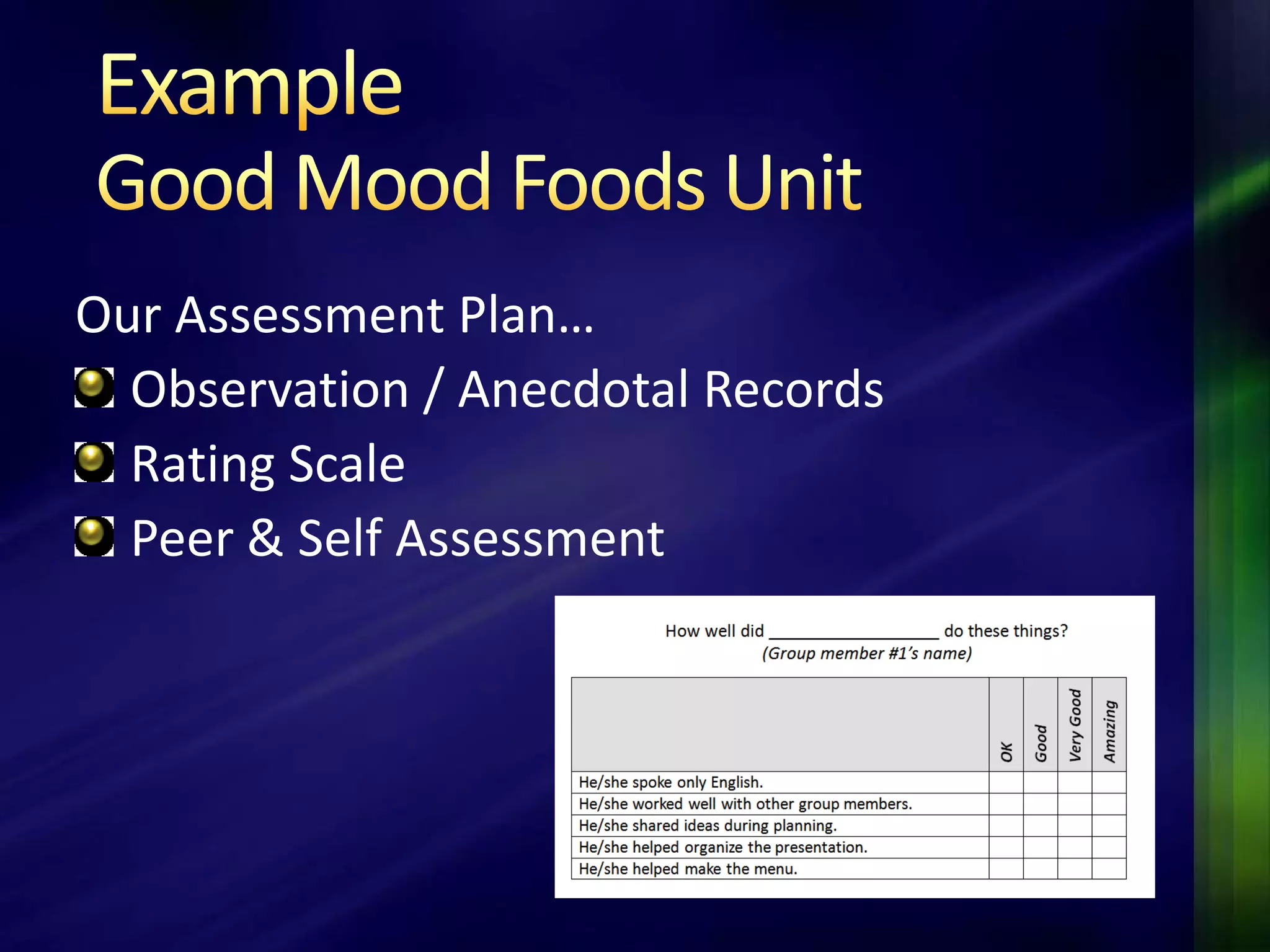
Our Assessment Plan…
  Observation / Anecdotal Records
  Rating Scale
  Peer & Self Assessment
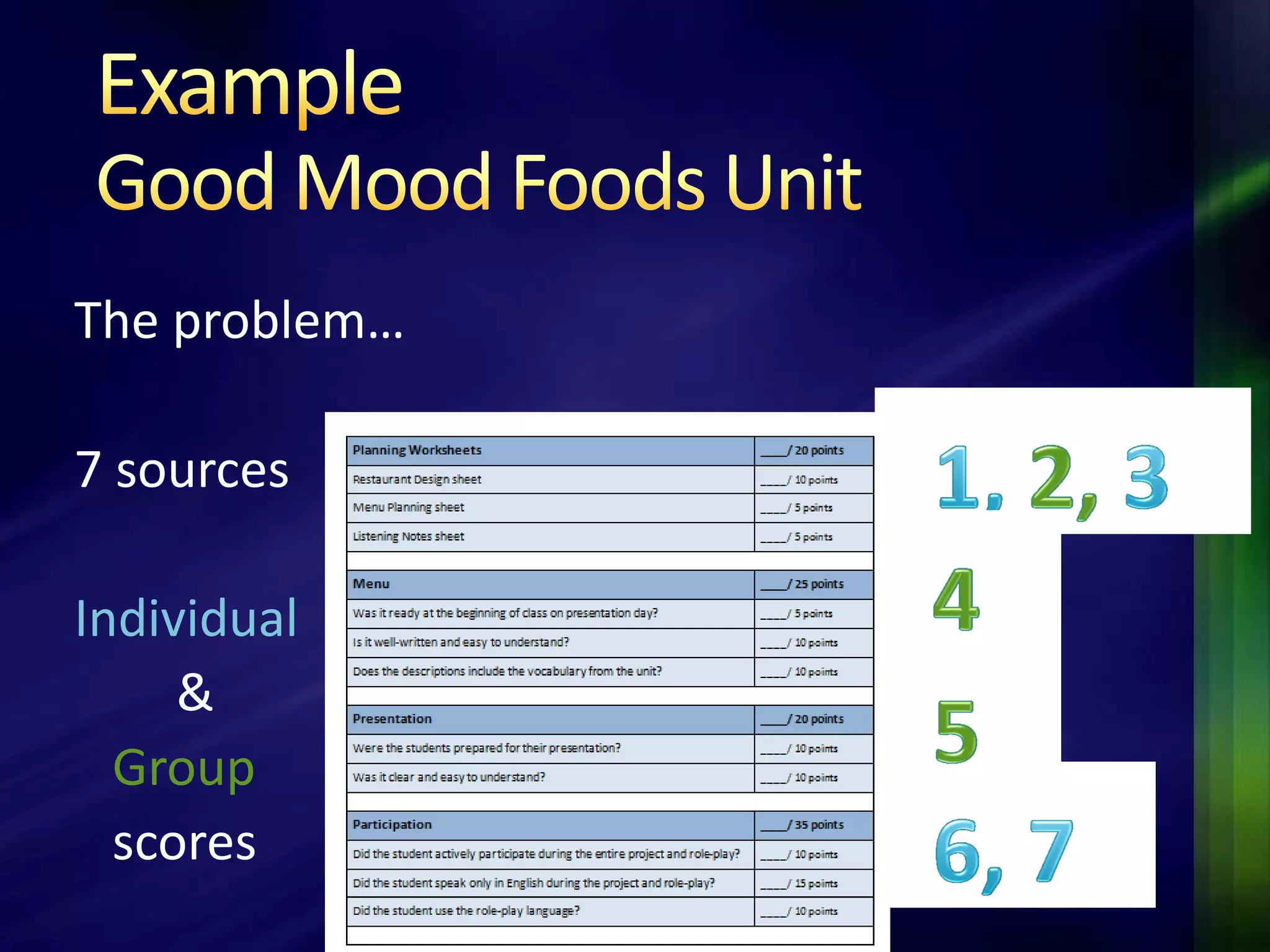
The problem…

7 sources

Individual
     &
  Group
  scores
Do the grades reflect student mastery of the
course / unit outcomes?
Do the students receive quality / useable
feedback?
Do the tools work consistently?
Are the tools manageable for
teachers / time?
Slides available at:
   http://

Contact information:
   kathleen_n@toyo.jp

Making a plan iatefl

  • 1.
    Kathleen Nickle Toyo University Tokyo, Japan
  • 2.
    What it is: A project as a summative assessment Students work in groups to do a multi-step, realistic task based on the unit
  • 3.
    Intensive, supplemental EFLprogram 13 sections of 20-30 students each (approx. same level) 6 teachers Goals: Increase the number of students who study abroad Increase general English competence of Toyo students Program consists of: Reading and Writing class Listening and Speaking class (textbook based)
  • 4.
    The Mini-Project included…. Imagining a restaurant Creating a menu Performing a role-play using restaurant language How would you assign a grade?
  • 5.
    1. Have youused project-based assessment? What projects did you assign? 2. How did you assign grades for the projects? Were the grades for groups or individuals? 3. What are some potential benefits of using projects for assessment?
  • 6.
    Benefits Designing an AssessmentPlan Considerations Selecting or Developing Tools Sample Assessment Plans Q&A
  • 7.
    Some benefits ofproject-based assessment: Motivation Learning transfer to real-life Complex thinking & problem solving Communicative setting Student autonomy
  • 8.
    Start with ‘Big Ideas’ Think of a Copy the from unit real-life task criteria to that will show appropriate evidence of assessment learning tool(s) outcomes Develop criteria: How will students demonstrate mastery?
  • 9.
    Developing Criteria Thinkabout unit content & skills Consider course outcomes Proficiency or achievement? Will you include participation / effort?
  • 10.
    Choose or createtools Appropriate feedback to students Time-efficient Valid Reliable If possible, use a variety of tools
  • 11.
    Effective and fairgrading Students should be aware of grading process Multiple chances to demonstrate learning Proper weighting Things that may distort grades Group scoring Deducting for lateness Awarding bonus points / extra credit
  • 12.
    Types of tools Observations / Anecdotal Records Checklists Rating Scales Rubrics Peer / Self Assessment Reminder: Quality Assessment Appropriate feedback to students, time-efficient, valid & reliable
  • 14.
    Focused on aspecific task Recorded immediately & individually Advantages / Disadvantages
  • 16.
    Lists steps inthe process to successfully complete the task Uses a yes/no scale Advantages / Disadvantages
  • 18.
    Similar to achecklist but shows the degree to which a criteria is met Teacher rates each criteria with a number (1=poor 5=great) Advantages / Disadvantages
  • 19.
    Analytic Rubrics Criteria are judged separately; scores combined into a total score Holistic Rubrics Based on an overall impression All important parts of the project combined into one judgment
  • 22.
    Create clear boundariesbetween levels Describe what the student has done, not what she has failed to do Avoid double-jeopardy Use positive language
  • 23.
    The project included… Researching rules of etiquette Creating “do” and “don’t” role-plays Leading the class in discussion questions * Students were assigned roles to delegate the workload
  • 25.
    Our Assessment Plan… Observation / Anecdotal Records Rating Scale High-stakes Peer Evaluation
  • 29.
    The project included… Imagining a new app Creating a glog to advertise Giving a presentation Listening & giving feedback to other groups http://edu.glogster.com
  • 30.
    Our Assessment Plan… Observation / Anecdotal Records Rating Scale (group & individual components) Low-stakes Peer Assessment
  • 32.
    The Project Included…. Imagining a restaurant Creating a menu Performing a role-play using restaurant language How did we assess?
  • 33.
    Our Assessment Plan… Observation / Anecdotal Records Rating Scale Peer & Self Assessment
  • 34.
  • 35.
    Do the gradesreflect student mastery of the course / unit outcomes? Do the students receive quality / useable feedback? Do the tools work consistently? Are the tools manageable for teachers / time?
  • 36.
    Slides available at: http:// Contact information: kathleen_n@toyo.jp