Adoption of Innovation:
Faculty Perceptions and
Tech Savvy Indicators
http://goo.gl/yTCNSt
Cynthia Sistek-Chandler, EdD
cchandler@nu.edu @cynthiachandler
Michael Myers, PhD, MSEd
mmyers@nu.edu @mpmyersphd
Study
• Survey over a 2-year period
• Data from over 300 faculty
• Evaluation of Innovation
• Interactions with the newly adopted learning
management system (LMS)
• Comfort with applications
• Use of social media
• Other perceptual self-reported data
Key Point
Adoption of innovation is directly related to
the perception of one’s personal
competency and to the frequency and
type of training or professional
development with that innovation. 0.05)
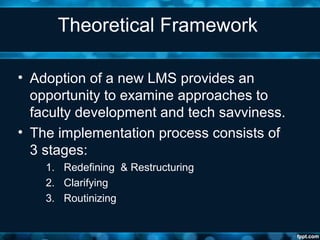
Theoretical Framework
• Adoption of a new LMS provides an
opportunity to examine approaches to
faculty development and tech savviness.
• The implementation process consists of
3 stages:
1. Redefining & Restructuring
2. Clarifying
3. Routinizing
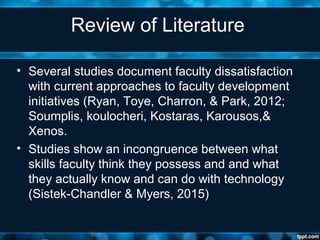
Review of Literature
• Several studies document faculty dissatisfaction
with current approaches to faculty development
initiatives (Ryan, Toye, Charron, & Park, 2012;
Soumplis, koulocheri, Kostaras, Karousos,&
Xenos.
• Studies show an incongruence between what
skills faculty think they possess and and what
they actually know and can do with technology
(Sistek-Chandler & Myers, 2015)
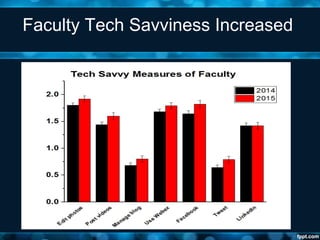
Faculty Tech Savviness Increased
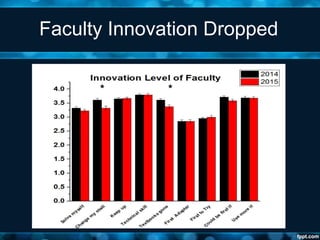
Faculty Innovation Dropped
* *
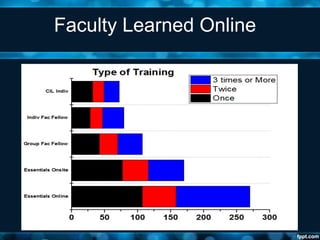
Faculty Learned Online
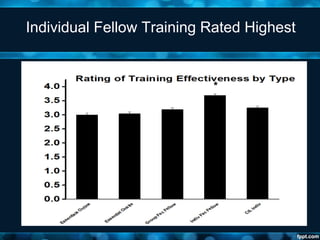
Individual Fellow Training Rated Highest
*
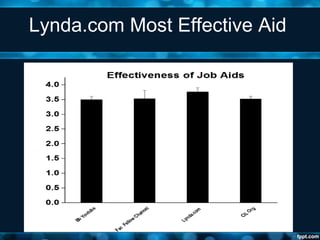
Lynda.com Most Effective Aid
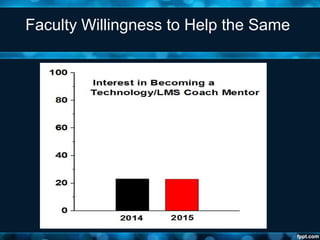
Faculty Willingness to Help the Same
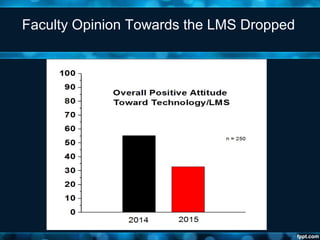
Faculty Opinion Towards the LMS Dropped
Summary
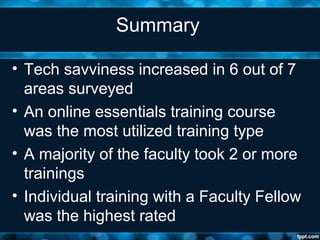
• Tech savviness increased in 6 out of 7
areas surveyed
• An online essentials training course
was the most utilized training type
• A majority of the faculty took 2 or more
trainings
• Individual training with a Faculty Fellow
was the highest rated
Summary
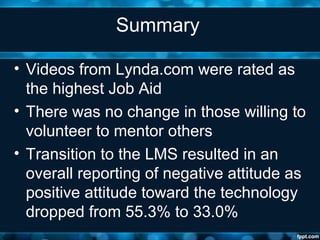
• Videos from Lynda.com were rated as
the highest Job Aid
• There was no change in those willing to
volunteer to mentor others
• Transition to the LMS resulted in an
overall reporting of negative attitude as
positive attitude toward the technology
dropped from 55.3% to 33.0%
Questions/ Comments
References
References
References
References

E learn2016r ver_mike

  • 1.
    Adoption of Innovation: FacultyPerceptions and Tech Savvy Indicators http://goo.gl/yTCNSt Cynthia Sistek-Chandler, EdD cchandler@nu.edu @cynthiachandler Michael Myers, PhD, MSEd mmyers@nu.edu @mpmyersphd
  • 2.
    Study • Survey overa 2-year period • Data from over 300 faculty • Evaluation of Innovation • Interactions with the newly adopted learning management system (LMS) • Comfort with applications • Use of social media • Other perceptual self-reported data
  • 3.
    Key Point Adoption ofinnovation is directly related to the perception of one’s personal competency and to the frequency and type of training or professional development with that innovation. 0.05)
  • 4.
    Theoretical Framework • Adoptionof a new LMS provides an opportunity to examine approaches to faculty development and tech savviness. • The implementation process consists of 3 stages: 1. Redefining & Restructuring 2. Clarifying 3. Routinizing
  • 5.
    Review of Literature •Several studies document faculty dissatisfaction with current approaches to faculty development initiatives (Ryan, Toye, Charron, & Park, 2012; Soumplis, koulocheri, Kostaras, Karousos,& Xenos. • Studies show an incongruence between what skills faculty think they possess and and what they actually know and can do with technology (Sistek-Chandler & Myers, 2015)
  • 7.
  • 8.
  • 9.
  • 10.
  • 11.
  • 12.
  • 13.
    Faculty Opinion Towardsthe LMS Dropped
  • 14.
    Summary • Tech savvinessincreased in 6 out of 7 areas surveyed • An online essentials training course was the most utilized training type • A majority of the faculty took 2 or more trainings • Individual training with a Faculty Fellow was the highest rated
  • 15.
    Summary • Videos fromLynda.com were rated as the highest Job Aid • There was no change in those willing to volunteer to mentor others • Transition to the LMS resulted in an overall reporting of negative attitude as positive attitude toward the technology dropped from 55.3% to 33.0%
  • 17.
  • 18.
  • 19.
  • 20.
  • 21.