Downloaded 17 times
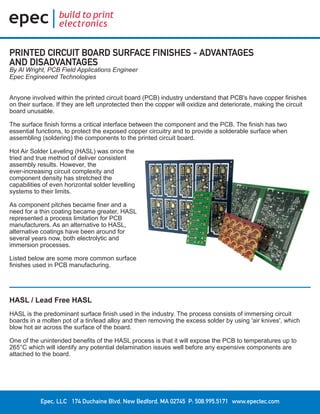
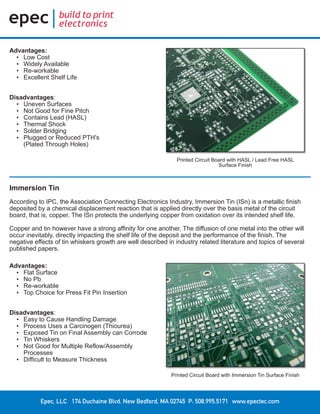
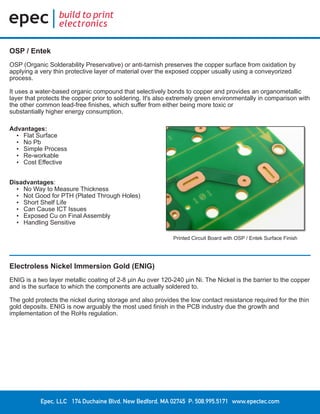
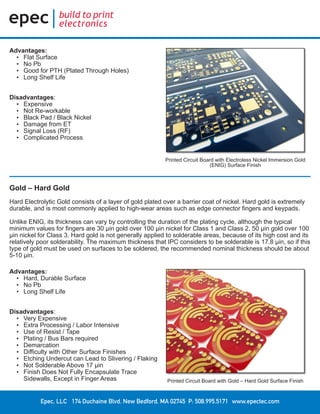

The document discusses various printed circuit board surface finishes, including their advantages and disadvantages. HASL is the most common surface finish but is not suitable for fine pitch components or RoHS compliance. Alternative finishes like immersion tin, OSP, and ENIG provide flatter surfaces and RoHS compliance but have other tradeoffs in cost, complexity of processing, and susceptibility to damage or corrosion. The key is selecting the appropriate surface finish based on the specific performance requirements of the project while considering both functionality and cost effectiveness. Consulting a PCB fabricator can help ensure the right combination of surface finish and material.


