ANTICHOLINERGIC DRUGS
Dr. D. K. Brahma
Associate Professor
Department of Pharmacology
NEIGRIHMS, Shillong
Introduction
• Drugs which block Cholinoreceptors have
important clinical effects, some of which are
of great clinical value
• What are the Cholinoreceptors learned so far?
- RECALL !
• Muscarinic and Nicotinic
– M1, M2, M3, M4 and M5
– NN and NM
Cholinergic Receptors
• Conventionally – Anticholinergic drugs are those
which block actions of Ach autonomic effectors and I
the CNS exerted through Muscarinic receptors
• Nicotinic (NN) antagonists – ganglion blockers
• NM Blockers – neuromuscular blockers
• Atropine is the prototype – many synthetic and semi
synthetics are available now
• All are competitive antagonists
• Guinea pig Ileum – demonstration
Classification – anticholinergic
drugs
• Natural: Atropine and Hyoscine (scopolamine)
• Semisynthetic derivatives: Homatropine, Atropine
methonitrate, Hyoscine butylbromide, Ipratropium
bromide, Tiotropium bromide
• Synthetic Compounds:
• Mydriatics: Cyclopentolate and Tropicamide
• Antisecretory-antispasmodics:
 Quartenary ammonium compounds: Propantheline, Oxyphenonium,
Clidinium, Pipenzolate methylbromide, Glycopyrrolate, Isopropamide
 Tertiary amines: Dicyclomine, Valethamate, Pirenzepine
• Vasicoselective: Oxybutynin, Flvoxate, Tolterodine
• Antiprkinsonian: Trihexyphenidyl (Benzhexol),
Procyclidine, Biperiden
• Additionally – TCAs, Phenothiazines and antihistaminics
Atropine as Prototype
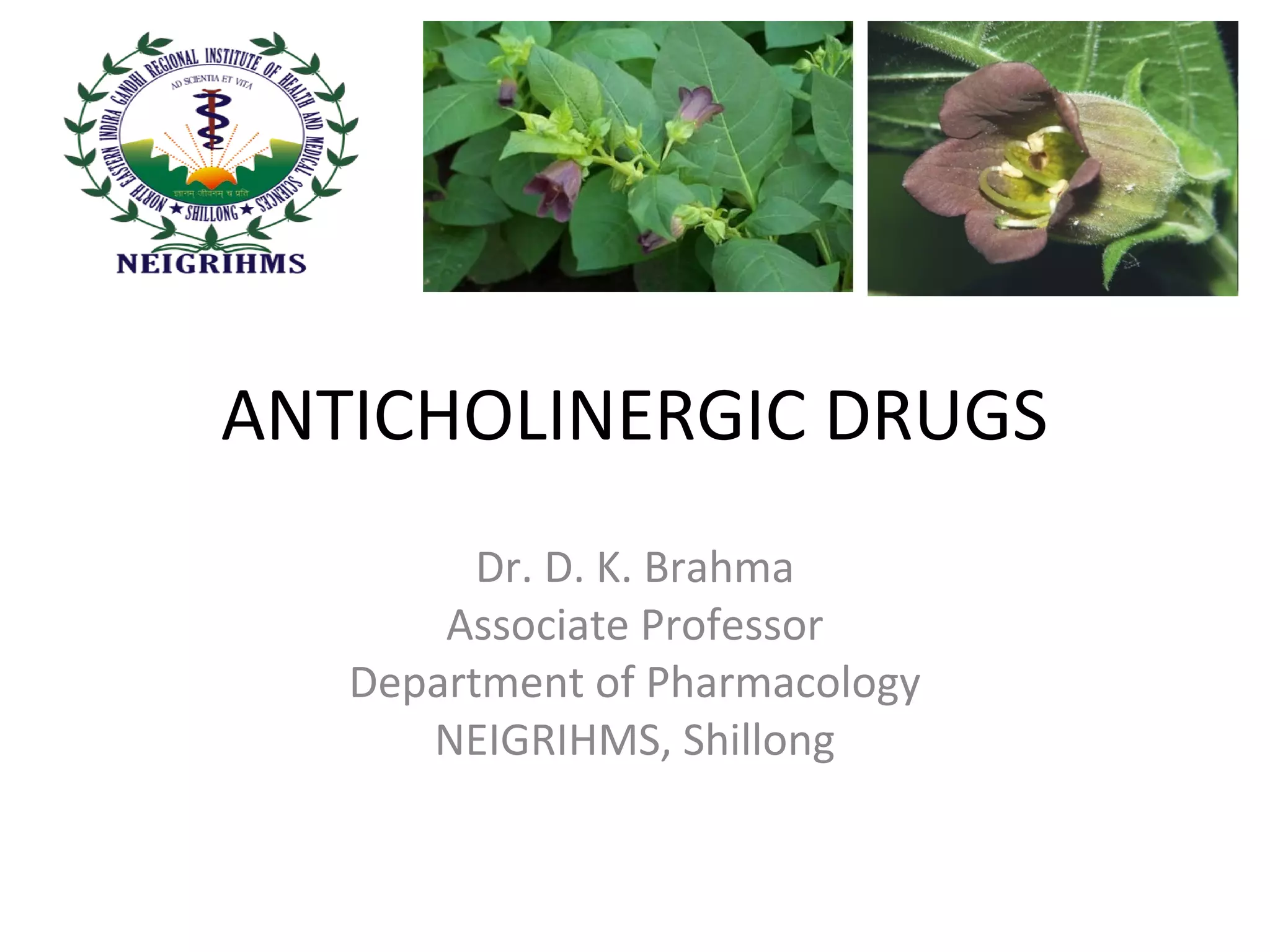
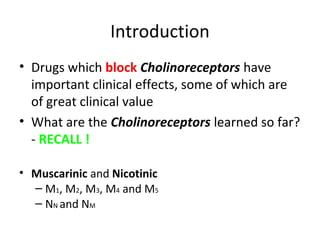
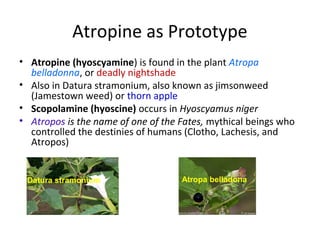
• Atropine (hyoscyamine) is found in the plant Atropa
belladonna, or deadly nightshade
• Also in Datura stramonium, also known as jimsonweed
(Jamestown weed) or thorn apple
• Scopolamine (hyoscine) occurs in Hyoscyamus niger
• Atropos is the name of one of the Fates, mythical beings who
controlled the destinies of humans (Clotho, Lachesis, and
Atropos)
Datura stramonium Atropa belladona
Atropine - Chemistry
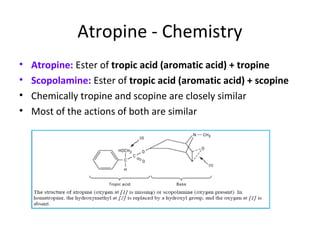
• Atropine: Ester of tropic acid (aromatic acid) + tropine
• Scopolamine: Ester of tropic acid (aromatic acid) + scopine
• Chemically tropine and scopine are closely similar
• Most of the actions of both are similar
Atropine – Mechanism of Action
• Atropine causes reversible (surmountable)
blockade of cholinomimetic actions at
muscarinic receptors
– blockade by a small dose of atropine can be
overcome by a larger concentration of
acetylcholine or equivalent muscarinic agonist
• Atropine is highly selective for muscarinic
receptors
• Does not distinguish between the M1, M2, and
M3
• Some quaternary amine antimuscarinic agents
have significant ganglion-blocking actions
Atropine - Pharmacokinetics
• Absorption:
– The natural alkaloids and most tertiary antimuscarinic drugs are well absorbed
from the gut and conjunctiva – some even over the skin (scopolamine)
– Penetrates cornea freely
– Quaternary ones – only upto 30%
• Distribution:
– Atropine and the other tertiary agents are widely distributed in the body
– Scopolamine is rapidly and fully distributed into the central nervous system
where it has greater effects than most other antimuscarinic drugs
– Quaternary derivatives are poorly taken up by the brain
• Metabolism:
– Atropine is metabolized in liver by conjugation and 60% excretes unchanged
in urine
– Effects disappear quickly within 2 Hrs except eye
– Hyoscine is more completely metabolized
• Preparations: Atropine IM or IV; Hyoscine – Oral/IM/transdermal
Pharmacological actions - CNS
• Overall CNS stimulant
• At low dose - Atropine has only peripheral effects and
minimal stimulant effect on CNS – low entry
• Scopolamine has more marked central effects (depressant) –
amnesia and drowsiness
• Atropine stimulates many medullary centres – vagal,
respiratory and vasomotor
• Depresses vestibular excitation – antimotion sickness
property
• Blocks basal ganglia cholinergic over activity – blocks tremor,
rigidity
Pharmacological actions of
Atropine - CVS
• Heart: Moderate and high doses: TACHYCARDIA (Blockade of
M2 receptor on SA node - vagal tone decreases HR)
– Higher the vagal tone – more Bradycardia - in young adults
– AVN – Atropine abbreviates refractory period of AVN– facilitates AV
conduction rate (reduced PR interval in ECG)
– IM/SC injection initially – transient BRADYCARDIA – may be due to
inhibition of prejunctional postsynaptic M1 autoreceptor inhibition (not
due to stimulation of vagal centre)
– Evidenced by Pirenzepine (selective M1 blocker) injection does not cross
BBB
• BP: No consistent effect – tachycardia and VMC stimulation – raises
BP; but histamine release and direct vasodilator action counteract
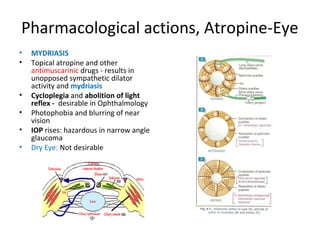
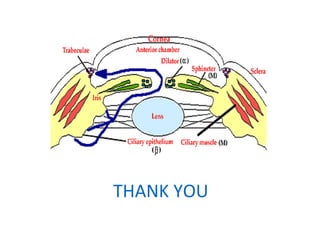
Pharmacological actions, Atropine-Eye
• MYDRIASIS
• Topical atropine and other
antimuscarinic drugs - results in
unopposed sympathetic dilator
activity and mydriasis
• Cycloplegia and abolition of light
reflex - desirable in Ophthalmology
• Photophobia and blurring of near
vision
• IOP rises: hazardous in narrow angle
glaucoma
• Dry Eye: Not desirable
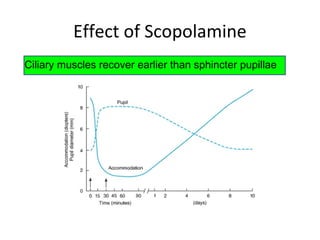
Effect of Scopolamine
Ciliary muscles recover earlier than sphincter pupillae
In Last class ……
• Discussed on Pharmacological actions of
Atropine on –
• CNS
• CVS
• Eye
Atropine on Smooth Muscle
• Respiratory: Bronchodilatation and reduction in airway
resistance – COPD and asthma patients
– Also antagonizes vagal mediated over activity due to Histamine, PG,
leucotrienes etc.
• Urinary: Relaxation of ureter & bladder – urinary
retention in older males with BHP
– Sometimes useful in increasing bladder capacity and controlling
detrussor hyperreflexia - neurogenic bladder/enuresis
• Visceral SM: Relaxation – mediated by M3 blockade
– Tone and amplitude of contraction of Stomach and Intestine reduced
• Passage of chyme reduced – CONSTIPATON and relieve of SPASM
– But, less peristalsis suppression – ENS
– More effective to exogenous ACh administration
Atropine on Glands
• Decreases salivary, sweat, tracheobronchial and lachrymal
secretions (M3 blockade)
– dryness of mouth, dry skin and conjunctiva and difficulty in talking and
swallowing
• Stomach (M1): decreases acid, pepsin and mucus secretions –
pH of gastric contents may increase – in empty stomach
• But pH not interfered– as also decreases bicarbonate (HCO3)
secretion – Higher doses required to cause acidity
• Atropine is less efficacious than H2 blockers
• No effect on intestinal and pancreatic secretion
• No effect on bile production
Pharmacological actions of
Atropine – contd.
• Temperature: Increases – decrease sweating
+ stimulation of temperature regulating
centre in hypothalumus
• Local anaesthetic action: on cornea
• Enhances ACh and NA release – PARADOXICAL
• Sensitivity of organs – Saliva, sweat, bronchial
secretion > smooth muscle of intestine and
bladder > gastric gland and smooth muscle
ATROPINE SUBSTITUTES
Semi synthetics and Synthetics
Atropine Substitutes
• Semisynthetic: Mydriatic, antispasmodic, bronchodilator etc.
• Synthetic: Mydriatic, antisecretory-antispasmodic (quaternary
- antisecretory or tertiary), vasicoselective, antiparkinsoian
• Quaternary compounds (for peripheral action only in GIT):
– Incomplete oral absorption
– Poor CNS and eye penetration
– Slow elimination – longer acting
– Higher Nicotinic blocking property – postural hypotension and
impotence
– Neuromuscular blockade at higher doses
Individual drugs – atropine substitutes
- semisynthetic
• Hyoscine Butylbromide: Oesophageal and GIT spastic conditions –
Buscopan – Oral/IM
• Atropine methonitrate: Abdominal colics and hypercidity – Oral/IM
• Ipratropium Bromide: Selective action on Bronchial SM - dilatation
– Does not alter volume and cosistency of respiratory secretion
– Enhanced mucocilliary clearance (contrast to Atropine)
– Slowly acting (slow onset and late peak) Bronchodilator - 1-2 Hrs
(prophylactic use) – contrast to sympathomimetics – 4-6 Hrs
– Acts mainly on larger Central airways (contrast to sympathomimetics)
– More effective in COPD than Asthma
– ADRs: cough, bad taste and nervousness – rare systemic effects
• Tiotropium bromide: Ipratropium congener – longer acting
and more M1/M3 selective
Atropine substitutes – Quaternary
• Propantheline: Used in peptic ulcer and gastritis –
reduces gastric acid secretion – mild side effects –
not popular now
• Oxyphenonium: Peptic ulcer and gastric
hypermotility
• Clinidium: Nervous dyspepsia, gastritis, IBS, colic etc.
• Pipenzolate methyl bromide: Flatulent dyspepsia,
infantile colics
• Glycopyrrolate: IM/oral – rapid acting without
central effects – preanaesthetic medication
Atropine substitutes –
Tertiary Amines
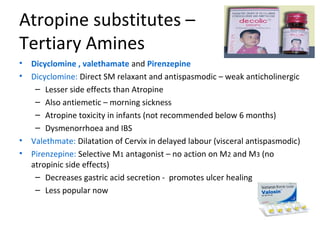
• Dicyclomine , valethamate and Pirenzepine
• Dicyclomine: Direct SM relaxant and antispasmodic – weak anticholinergic
– Lesser side effects than Atropine
– Also antiemetic – morning sickness
– Atropine toxicity in infants (not recommended below 6 months)
– Dysmenorrhoea and IBS
• Valethmate: Dilatation of Cervix in delayed labour (visceral antispasmodic)
• Pirenzepine: Selective M1 antagonist – no action on M2 and M3 (no
atropinic side effects)
– Decreases gastric acid secretion - promotes ulcer healing
– Less popular now
Atropine substitutes
- vasicoselective – contd.
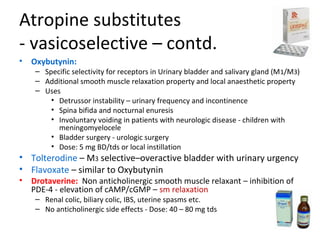
• Oxybutynin:
– Specific selectivity for receptors in Urinary bladder and salivary gland (M1/M3)
– Additional smooth muscle relaxation property and local anaesthetic property
– Uses
• Detrussor instability – urinary frequency and incontinence
• Spina bifida and nocturnal enuresis
• Involuntary voiding in patients with neurologic disease - children with
meningomyelocele
• Bladder surgery - urologic surgery
• Dose: 5 mg BD/tds or local instillation
• Tolterodine – M3 selective–overactive bladder with urinary urgency
• Flavoxate – similar to Oxybutynin
• Drotaverine: Non anticholinergic smooth muscle relaxant – inhibition of
PDE-4 - elevation of cAMP/cGMP – sm relaxation
– Renal colic, biliary colic, IBS, uterine spasms etc.
– No anticholinergic side effects - Dose: 40 – 80 mg tds
Atropine substitutes
- Mydriatics
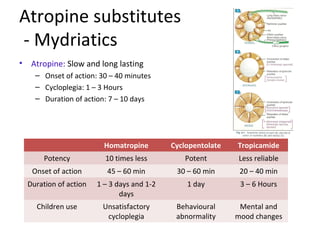
• Atropine: Slow and long lasting
– Onset of action: 30 – 40 minutes
– Cycloplegia: 1 – 3 Hours
– Duration of action: 7 – 10 days
Homatropine Cyclopentolate Tropicamide
Potency 10 times less Potent Less reliable
Onset of action 45 – 60 min 30 – 60 min 20 – 40 min
Duration of action 1 – 3 days and 1-2
days
1 day 3 – 6 Hours
Children use Unsatisfactory
cycloplegia
Behavioural
abnormality
Mental and
mood changes
Atropine: Therapeutic uses -
antisecretory
1. Preanaesthetic medication: atropine, hyoscine and
glycopyrrolate etc.
– Defn.: Refers to use of drugs before anaesthesia to make it more pleasant and
safe
– Irritant GA (ether) – salivary and tracheobronchial secretion
– To reduce secretions and also halothane induced ventricular arrhythmia (in
vagal slowing down)
– To prevent laryngospasm – increased respiratory secretions cause reflex
laryngospasm
1. Peptic ulcer: Fasting and neurogenic phase only – Gastric
phase not reduced – Not popular anymore
2. Pulmonary embolism: reduces reflex pulmonary secretions
3. Hyperhidrosis
Atropine: Therapeutic uses -
antispasmodic
1. Intestinal and renal colic and abdominal cramps – not in
biliary colic
2. Diarrhoea (nervous and drug induced) – Lomotil --- not in
infective ones
3. Spastic constipation, IBS
4. Pylorospasm, gastric hypermotility, gastritis, nervous
dyspepsia etc.
5. Urinary frequency and urgency and nocturnal enuresis
(children) - ???
6. Dysmenorrhoea
Atropine: Therapeutic uses – Bronchial
asthma, asthmatic bronchitis and COPD
• Reflex vagal activity – bronchoconstriction and
increased secretion – in bronchitis and COPD – lesser
in asthma
• Oral Atropine – bronchodilatation
– Disadvantages: dry up secretions in RT – inspissations and
plugging in bronchioles – collapse – plus decreased
mucocilliary clearance
– Inhaled Ipratropium Br – does not decrease secretions
and impair mucociliary clearance - useful in bronchitis and
COPD
– For regular prophylaxis – not to terminate acute attack
Anticholinergics -Mydriatic and
Cycloplegic - Ophthalmic uses
• Used as eye drop or ointment:
– Diagnostic: Atropine 1% ointment is used
• Measurement of refractive error – mydriasis and cycloplegia
• Preferred ones: Homatropine, Tropicamide and cyclopentolate – shorter
action
• However – no cycloplegia in children by newer ones
• Atropine 1% ointment still preferred in children below 5 yrs
– Ophthalmic examination of retina – fundoscopy (shorter
acting preferred)
– Therapeutic :
• For resting eye: Iritis, iridocyclitis, keratitis, corneal ulcer etc.
• Alternating with miotics (prevention of synechia)
Uses of anticholinergics – contd.
• CVS: Myocardial Infarction, Digitalis toxicity – to counteract reflex vagal
bradycardia and partial heart block
• Parkinsonism: Mild cases of parkinsonism (early cases), Drug induced
Parkinsonism and adjunct to Levodopa
• Motion sickness:
– Hyoscine (scopolamine) is the drug used – Oral, injection and transdermal
patch
– 0.2 mg orally given as prophylaxis before journey – lasts 4-6 hours –
transdermal preparations
– Not effective in other type of vomiting
• Twilight sleep and maniacal states: Hyoscine - sedation and amnesia – lie
detector
• Atropine: Antidote for Anti-ChE & Mushroom poisoning, and to block
Muscarinic effects of Neostigmine, Cobra envenomation
Anticholinergic - ADRs
• Commonly occurring but of non serious type
• Mydriasis and cycloplegia – using as antisecretory or
Preanaesthetic medication
• Belladona Poisoning: Drug overdose and consumption of
seeds of berries of belladona/datura
– Symptoms:
• Dry mouth, difficulty in swallowing and talking
• Dry, flushed and hot skin (face & neck), fever, decreased bowel sound,
dilated pupil, photophobia, difficulty in micturation
• Excitement, psychotic behavior, delirium and hallucinations
• Hypotension, weak and rapid pulse, respiratory depression and
cardiovascular collapse
• Convulsions and coma
Belladona Poisoning - Treatment
• Diagnosis: Methacholine 5 mg or Neostigmine
1 mg SC – no muscarinic effects
• Treatment:
– Gastric lavage in case of ingestion – tannic acid
– Dark Room and cold sponging and ice bags
– Physostigmine 1–3 mg SC or IV
– Maintenance of blood volume, assisted
respiration and Diazepam to control convulsions
– Other supportive measures
Anticholinergic - contraindications
• Glaucoma – Narrow angle (Precipitation of
angle closure)
• BHP – urinary retention
• Acid peptic ulcer diseases (Non-selective
ones) – precipitation of symptoms
Drugs acting on Ganglions
Drugs acting on Autonomic ganglia
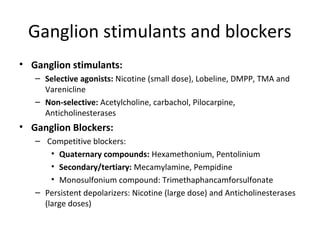
• ACh is excitatory neurotransmitter - parasympathetic
and sympathetic
• Drugs which inhibit synthesis or release – interfere
with ganglionic transmission
• NN mediate rapid depolarization of ganglion cells
– also present are M1 & M2, adrenergic, dopaminergic,
amino acid, peptidergic receptors - slow – mediate slowly
developing and longer lasting effects
– Released from preganglionic cholinergic terminals – but by
themselves
– One transmitter – one cell junction ... Over simplification
Ganglion stimulants and blockers
• Ganglion stimulants:
– Selective agonists: Nicotine (small dose), Lobeline, DMPP, TMA and
Varenicline
– Non-selective: Acetylcholine, carbachol, Pilocarpine,
Anticholinesterases
• Ganglion Blockers:
– Competitive blockers:
• Quaternary compounds: Hexamethonium, Pentolinium
• Secondary/tertiary: Mecamylamine, Pempidine
• Monosulfonium compound: Trimethaphancamforsulfonate
– Persistent depolarizers: Nicotine (large dose) and Anticholinesterases
(large doses)
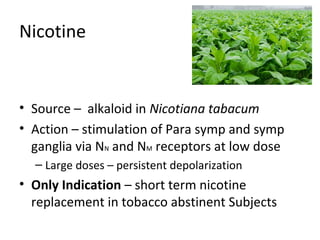
Nicotine
• Source – alkaloid in Nicotiana tabacum
• Action – stimulation of Para symp and symp
ganglia via NN and NM receptors at low dose
– Large doses – persistent depolarization
• Only Indication – short term nicotine
replacement in tobacco abstinent Subjects
Pharmacotherapy of smoking
cessation
• Difficult to quit - Nicotine dependence – counseling and motivation
• Aim of treatment:
– To reduce the craving for satisfying (reward) effects of nicotine
– To suppress the physical withdrawal symptoms
• Drugs: Nicotine replacement, Partial agonists of α4β2 Nicotinic receptors
(Varenicline) and antidepressants (Bupropion)
• Nicotine transdermal: once daily on the hip/abdomen/chest/upper arm –
supresses nicotine withdrawal but craving only partially (10, 20, 30 cm2
patches)
– Also nicotine chewing gum - alternative of patches (NULIFE 1, 2, 4 mg
chewing gums)
– ADRs of nicotine replacement: headache, dyspepsia, abdominal cramps, loose
motion, flu like symptoms etc
Varenicline
• Partial agonists of α4β2 NR receptor
• MOA: Reinforcing effects mediated by α4β2 NR – nucleus
accumbens and mesolimbic areas
– Normally, activation of α4β2 NR by nicotine – induces DA release –
satisfaction/reward and reinforcing effect
– PA activity of varenicline - nicotine substitution, but blocks reward effects of
smoking
– Reduce craving and withdrawal symptoms
– Comparable to nicotine replacement and Bupropion
• ADRs: Mood changes, irrational behaviour, appetite and taste
disturbances, sleep disorder and agitation – suicidal thoughts
• Bupropion: atypical antidepressant – discussed elsewhere
• Ganglion blockers – no clinical use anymore
Summary
• Atropine and its Pharmacological Effects
– Therapeutic uses of Atropine
– Mechanism of Mydriasis and Cycloplegia
• Names of Atropine Substitutes with their Uses
– Details of Atropine Substitutes – Ipratropium
bromide, Dicyclomine, Oxybutynin
• Treatment of Atropine Poisoning
• Names of Ganglion Stimulants and Blockers
Drugs – antismoking drugs (short note)
THANK YOU

Anticholinergics and drugs acting on autonomic ganglia- drdhriti

  • 1.
    ANTICHOLINERGIC DRUGS Dr. D.K. Brahma Associate Professor Department of Pharmacology NEIGRIHMS, Shillong
  • 2.
    Introduction • Drugs whichblock Cholinoreceptors have important clinical effects, some of which are of great clinical value • What are the Cholinoreceptors learned so far? - RECALL ! • Muscarinic and Nicotinic – M1, M2, M3, M4 and M5 – NN and NM
  • 3.
    Cholinergic Receptors • Conventionally– Anticholinergic drugs are those which block actions of Ach autonomic effectors and I the CNS exerted through Muscarinic receptors • Nicotinic (NN) antagonists – ganglion blockers • NM Blockers – neuromuscular blockers • Atropine is the prototype – many synthetic and semi synthetics are available now • All are competitive antagonists • Guinea pig Ileum – demonstration
  • 4.
    Classification – anticholinergic drugs •Natural: Atropine and Hyoscine (scopolamine) • Semisynthetic derivatives: Homatropine, Atropine methonitrate, Hyoscine butylbromide, Ipratropium bromide, Tiotropium bromide • Synthetic Compounds: • Mydriatics: Cyclopentolate and Tropicamide • Antisecretory-antispasmodics:  Quartenary ammonium compounds: Propantheline, Oxyphenonium, Clidinium, Pipenzolate methylbromide, Glycopyrrolate, Isopropamide  Tertiary amines: Dicyclomine, Valethamate, Pirenzepine • Vasicoselective: Oxybutynin, Flvoxate, Tolterodine • Antiprkinsonian: Trihexyphenidyl (Benzhexol), Procyclidine, Biperiden • Additionally – TCAs, Phenothiazines and antihistaminics
  • 5.
    Atropine as Prototype •Atropine (hyoscyamine) is found in the plant Atropa belladonna, or deadly nightshade • Also in Datura stramonium, also known as jimsonweed (Jamestown weed) or thorn apple • Scopolamine (hyoscine) occurs in Hyoscyamus niger • Atropos is the name of one of the Fates, mythical beings who controlled the destinies of humans (Clotho, Lachesis, and Atropos) Datura stramonium Atropa belladona
  • 6.
    Atropine - Chemistry •Atropine: Ester of tropic acid (aromatic acid) + tropine • Scopolamine: Ester of tropic acid (aromatic acid) + scopine • Chemically tropine and scopine are closely similar • Most of the actions of both are similar
  • 7.
    Atropine – Mechanismof Action • Atropine causes reversible (surmountable) blockade of cholinomimetic actions at muscarinic receptors – blockade by a small dose of atropine can be overcome by a larger concentration of acetylcholine or equivalent muscarinic agonist • Atropine is highly selective for muscarinic receptors • Does not distinguish between the M1, M2, and M3 • Some quaternary amine antimuscarinic agents have significant ganglion-blocking actions
  • 8.
    Atropine - Pharmacokinetics •Absorption: – The natural alkaloids and most tertiary antimuscarinic drugs are well absorbed from the gut and conjunctiva – some even over the skin (scopolamine) – Penetrates cornea freely – Quaternary ones – only upto 30% • Distribution: – Atropine and the other tertiary agents are widely distributed in the body – Scopolamine is rapidly and fully distributed into the central nervous system where it has greater effects than most other antimuscarinic drugs – Quaternary derivatives are poorly taken up by the brain • Metabolism: – Atropine is metabolized in liver by conjugation and 60% excretes unchanged in urine – Effects disappear quickly within 2 Hrs except eye – Hyoscine is more completely metabolized • Preparations: Atropine IM or IV; Hyoscine – Oral/IM/transdermal
  • 9.
    Pharmacological actions -CNS • Overall CNS stimulant • At low dose - Atropine has only peripheral effects and minimal stimulant effect on CNS – low entry • Scopolamine has more marked central effects (depressant) – amnesia and drowsiness • Atropine stimulates many medullary centres – vagal, respiratory and vasomotor • Depresses vestibular excitation – antimotion sickness property • Blocks basal ganglia cholinergic over activity – blocks tremor, rigidity
  • 10.
    Pharmacological actions of Atropine- CVS • Heart: Moderate and high doses: TACHYCARDIA (Blockade of M2 receptor on SA node - vagal tone decreases HR) – Higher the vagal tone – more Bradycardia - in young adults – AVN – Atropine abbreviates refractory period of AVN– facilitates AV conduction rate (reduced PR interval in ECG) – IM/SC injection initially – transient BRADYCARDIA – may be due to inhibition of prejunctional postsynaptic M1 autoreceptor inhibition (not due to stimulation of vagal centre) – Evidenced by Pirenzepine (selective M1 blocker) injection does not cross BBB • BP: No consistent effect – tachycardia and VMC stimulation – raises BP; but histamine release and direct vasodilator action counteract
  • 11.
    Pharmacological actions, Atropine-Eye •MYDRIASIS • Topical atropine and other antimuscarinic drugs - results in unopposed sympathetic dilator activity and mydriasis • Cycloplegia and abolition of light reflex - desirable in Ophthalmology • Photophobia and blurring of near vision • IOP rises: hazardous in narrow angle glaucoma • Dry Eye: Not desirable
  • 12.
    Effect of Scopolamine Ciliarymuscles recover earlier than sphincter pupillae
  • 13.
    In Last class…… • Discussed on Pharmacological actions of Atropine on – • CNS • CVS • Eye
  • 14.
    Atropine on SmoothMuscle • Respiratory: Bronchodilatation and reduction in airway resistance – COPD and asthma patients – Also antagonizes vagal mediated over activity due to Histamine, PG, leucotrienes etc. • Urinary: Relaxation of ureter & bladder – urinary retention in older males with BHP – Sometimes useful in increasing bladder capacity and controlling detrussor hyperreflexia - neurogenic bladder/enuresis • Visceral SM: Relaxation – mediated by M3 blockade – Tone and amplitude of contraction of Stomach and Intestine reduced • Passage of chyme reduced – CONSTIPATON and relieve of SPASM – But, less peristalsis suppression – ENS – More effective to exogenous ACh administration
  • 15.
    Atropine on Glands •Decreases salivary, sweat, tracheobronchial and lachrymal secretions (M3 blockade) – dryness of mouth, dry skin and conjunctiva and difficulty in talking and swallowing • Stomach (M1): decreases acid, pepsin and mucus secretions – pH of gastric contents may increase – in empty stomach • But pH not interfered– as also decreases bicarbonate (HCO3) secretion – Higher doses required to cause acidity • Atropine is less efficacious than H2 blockers • No effect on intestinal and pancreatic secretion • No effect on bile production
  • 16.
    Pharmacological actions of Atropine– contd. • Temperature: Increases – decrease sweating + stimulation of temperature regulating centre in hypothalumus • Local anaesthetic action: on cornea • Enhances ACh and NA release – PARADOXICAL • Sensitivity of organs – Saliva, sweat, bronchial secretion > smooth muscle of intestine and bladder > gastric gland and smooth muscle
  • 17.
  • 18.
    Atropine Substitutes • Semisynthetic:Mydriatic, antispasmodic, bronchodilator etc. • Synthetic: Mydriatic, antisecretory-antispasmodic (quaternary - antisecretory or tertiary), vasicoselective, antiparkinsoian • Quaternary compounds (for peripheral action only in GIT): – Incomplete oral absorption – Poor CNS and eye penetration – Slow elimination – longer acting – Higher Nicotinic blocking property – postural hypotension and impotence – Neuromuscular blockade at higher doses
  • 19.
    Individual drugs –atropine substitutes - semisynthetic • Hyoscine Butylbromide: Oesophageal and GIT spastic conditions – Buscopan – Oral/IM • Atropine methonitrate: Abdominal colics and hypercidity – Oral/IM • Ipratropium Bromide: Selective action on Bronchial SM - dilatation – Does not alter volume and cosistency of respiratory secretion – Enhanced mucocilliary clearance (contrast to Atropine) – Slowly acting (slow onset and late peak) Bronchodilator - 1-2 Hrs (prophylactic use) – contrast to sympathomimetics – 4-6 Hrs – Acts mainly on larger Central airways (contrast to sympathomimetics) – More effective in COPD than Asthma – ADRs: cough, bad taste and nervousness – rare systemic effects • Tiotropium bromide: Ipratropium congener – longer acting and more M1/M3 selective
  • 20.
    Atropine substitutes –Quaternary • Propantheline: Used in peptic ulcer and gastritis – reduces gastric acid secretion – mild side effects – not popular now • Oxyphenonium: Peptic ulcer and gastric hypermotility • Clinidium: Nervous dyspepsia, gastritis, IBS, colic etc. • Pipenzolate methyl bromide: Flatulent dyspepsia, infantile colics • Glycopyrrolate: IM/oral – rapid acting without central effects – preanaesthetic medication
  • 21.
    Atropine substitutes – TertiaryAmines • Dicyclomine , valethamate and Pirenzepine • Dicyclomine: Direct SM relaxant and antispasmodic – weak anticholinergic – Lesser side effects than Atropine – Also antiemetic – morning sickness – Atropine toxicity in infants (not recommended below 6 months) – Dysmenorrhoea and IBS • Valethmate: Dilatation of Cervix in delayed labour (visceral antispasmodic) • Pirenzepine: Selective M1 antagonist – no action on M2 and M3 (no atropinic side effects) – Decreases gastric acid secretion - promotes ulcer healing – Less popular now
  • 22.
    Atropine substitutes - vasicoselective– contd. • Oxybutynin: – Specific selectivity for receptors in Urinary bladder and salivary gland (M1/M3) – Additional smooth muscle relaxation property and local anaesthetic property – Uses • Detrussor instability – urinary frequency and incontinence • Spina bifida and nocturnal enuresis • Involuntary voiding in patients with neurologic disease - children with meningomyelocele • Bladder surgery - urologic surgery • Dose: 5 mg BD/tds or local instillation • Tolterodine – M3 selective–overactive bladder with urinary urgency • Flavoxate – similar to Oxybutynin • Drotaverine: Non anticholinergic smooth muscle relaxant – inhibition of PDE-4 - elevation of cAMP/cGMP – sm relaxation – Renal colic, biliary colic, IBS, uterine spasms etc. – No anticholinergic side effects - Dose: 40 – 80 mg tds
  • 23.
    Atropine substitutes - Mydriatics •Atropine: Slow and long lasting – Onset of action: 30 – 40 minutes – Cycloplegia: 1 – 3 Hours – Duration of action: 7 – 10 days Homatropine Cyclopentolate Tropicamide Potency 10 times less Potent Less reliable Onset of action 45 – 60 min 30 – 60 min 20 – 40 min Duration of action 1 – 3 days and 1-2 days 1 day 3 – 6 Hours Children use Unsatisfactory cycloplegia Behavioural abnormality Mental and mood changes
  • 24.
    Atropine: Therapeutic uses- antisecretory 1. Preanaesthetic medication: atropine, hyoscine and glycopyrrolate etc. – Defn.: Refers to use of drugs before anaesthesia to make it more pleasant and safe – Irritant GA (ether) – salivary and tracheobronchial secretion – To reduce secretions and also halothane induced ventricular arrhythmia (in vagal slowing down) – To prevent laryngospasm – increased respiratory secretions cause reflex laryngospasm 1. Peptic ulcer: Fasting and neurogenic phase only – Gastric phase not reduced – Not popular anymore 2. Pulmonary embolism: reduces reflex pulmonary secretions 3. Hyperhidrosis
  • 25.
    Atropine: Therapeutic uses- antispasmodic 1. Intestinal and renal colic and abdominal cramps – not in biliary colic 2. Diarrhoea (nervous and drug induced) – Lomotil --- not in infective ones 3. Spastic constipation, IBS 4. Pylorospasm, gastric hypermotility, gastritis, nervous dyspepsia etc. 5. Urinary frequency and urgency and nocturnal enuresis (children) - ??? 6. Dysmenorrhoea
  • 26.
    Atropine: Therapeutic uses– Bronchial asthma, asthmatic bronchitis and COPD • Reflex vagal activity – bronchoconstriction and increased secretion – in bronchitis and COPD – lesser in asthma • Oral Atropine – bronchodilatation – Disadvantages: dry up secretions in RT – inspissations and plugging in bronchioles – collapse – plus decreased mucocilliary clearance – Inhaled Ipratropium Br – does not decrease secretions and impair mucociliary clearance - useful in bronchitis and COPD – For regular prophylaxis – not to terminate acute attack
  • 27.
    Anticholinergics -Mydriatic and Cycloplegic- Ophthalmic uses • Used as eye drop or ointment: – Diagnostic: Atropine 1% ointment is used • Measurement of refractive error – mydriasis and cycloplegia • Preferred ones: Homatropine, Tropicamide and cyclopentolate – shorter action • However – no cycloplegia in children by newer ones • Atropine 1% ointment still preferred in children below 5 yrs – Ophthalmic examination of retina – fundoscopy (shorter acting preferred) – Therapeutic : • For resting eye: Iritis, iridocyclitis, keratitis, corneal ulcer etc. • Alternating with miotics (prevention of synechia)
  • 28.
    Uses of anticholinergics– contd. • CVS: Myocardial Infarction, Digitalis toxicity – to counteract reflex vagal bradycardia and partial heart block • Parkinsonism: Mild cases of parkinsonism (early cases), Drug induced Parkinsonism and adjunct to Levodopa • Motion sickness: – Hyoscine (scopolamine) is the drug used – Oral, injection and transdermal patch – 0.2 mg orally given as prophylaxis before journey – lasts 4-6 hours – transdermal preparations – Not effective in other type of vomiting • Twilight sleep and maniacal states: Hyoscine - sedation and amnesia – lie detector • Atropine: Antidote for Anti-ChE & Mushroom poisoning, and to block Muscarinic effects of Neostigmine, Cobra envenomation
  • 29.
    Anticholinergic - ADRs •Commonly occurring but of non serious type • Mydriasis and cycloplegia – using as antisecretory or Preanaesthetic medication • Belladona Poisoning: Drug overdose and consumption of seeds of berries of belladona/datura – Symptoms: • Dry mouth, difficulty in swallowing and talking • Dry, flushed and hot skin (face & neck), fever, decreased bowel sound, dilated pupil, photophobia, difficulty in micturation • Excitement, psychotic behavior, delirium and hallucinations • Hypotension, weak and rapid pulse, respiratory depression and cardiovascular collapse • Convulsions and coma
  • 30.
    Belladona Poisoning -Treatment • Diagnosis: Methacholine 5 mg or Neostigmine 1 mg SC – no muscarinic effects • Treatment: – Gastric lavage in case of ingestion – tannic acid – Dark Room and cold sponging and ice bags – Physostigmine 1–3 mg SC or IV – Maintenance of blood volume, assisted respiration and Diazepam to control convulsions – Other supportive measures
  • 31.
    Anticholinergic - contraindications •Glaucoma – Narrow angle (Precipitation of angle closure) • BHP – urinary retention • Acid peptic ulcer diseases (Non-selective ones) – precipitation of symptoms
  • 32.
    Drugs acting onGanglions
  • 33.
    Drugs acting onAutonomic ganglia • ACh is excitatory neurotransmitter - parasympathetic and sympathetic • Drugs which inhibit synthesis or release – interfere with ganglionic transmission • NN mediate rapid depolarization of ganglion cells – also present are M1 & M2, adrenergic, dopaminergic, amino acid, peptidergic receptors - slow – mediate slowly developing and longer lasting effects – Released from preganglionic cholinergic terminals – but by themselves – One transmitter – one cell junction ... Over simplification
  • 34.
    Ganglion stimulants andblockers • Ganglion stimulants: – Selective agonists: Nicotine (small dose), Lobeline, DMPP, TMA and Varenicline – Non-selective: Acetylcholine, carbachol, Pilocarpine, Anticholinesterases • Ganglion Blockers: – Competitive blockers: • Quaternary compounds: Hexamethonium, Pentolinium • Secondary/tertiary: Mecamylamine, Pempidine • Monosulfonium compound: Trimethaphancamforsulfonate – Persistent depolarizers: Nicotine (large dose) and Anticholinesterases (large doses)
  • 35.
    Nicotine • Source –alkaloid in Nicotiana tabacum • Action – stimulation of Para symp and symp ganglia via NN and NM receptors at low dose – Large doses – persistent depolarization • Only Indication – short term nicotine replacement in tobacco abstinent Subjects
  • 36.
    Pharmacotherapy of smoking cessation •Difficult to quit - Nicotine dependence – counseling and motivation • Aim of treatment: – To reduce the craving for satisfying (reward) effects of nicotine – To suppress the physical withdrawal symptoms • Drugs: Nicotine replacement, Partial agonists of α4β2 Nicotinic receptors (Varenicline) and antidepressants (Bupropion) • Nicotine transdermal: once daily on the hip/abdomen/chest/upper arm – supresses nicotine withdrawal but craving only partially (10, 20, 30 cm2 patches) – Also nicotine chewing gum - alternative of patches (NULIFE 1, 2, 4 mg chewing gums) – ADRs of nicotine replacement: headache, dyspepsia, abdominal cramps, loose motion, flu like symptoms etc
  • 37.
    Varenicline • Partial agonistsof α4β2 NR receptor • MOA: Reinforcing effects mediated by α4β2 NR – nucleus accumbens and mesolimbic areas – Normally, activation of α4β2 NR by nicotine – induces DA release – satisfaction/reward and reinforcing effect – PA activity of varenicline - nicotine substitution, but blocks reward effects of smoking – Reduce craving and withdrawal symptoms – Comparable to nicotine replacement and Bupropion • ADRs: Mood changes, irrational behaviour, appetite and taste disturbances, sleep disorder and agitation – suicidal thoughts • Bupropion: atypical antidepressant – discussed elsewhere • Ganglion blockers – no clinical use anymore
  • 38.
    Summary • Atropine andits Pharmacological Effects – Therapeutic uses of Atropine – Mechanism of Mydriasis and Cycloplegia • Names of Atropine Substitutes with their Uses – Details of Atropine Substitutes – Ipratropium bromide, Dicyclomine, Oxybutynin • Treatment of Atropine Poisoning • Names of Ganglion Stimulants and Blockers Drugs – antismoking drugs (short note)
  • 39.