ANTI-CHOLINERGIC
DRUGS
Dr. Dwividendra Kumar Nim
Assistant Professor
Department of Pharmacology
Motilal Nehru Medical College, Prayagraj (U.P)
Introduction
• Drugs which block Cholinoreceptors have
important clinical effects, some of which are
of great clinical value
• What are the Cholinoreceptors learned so far?
- RECALL !
• Muscarinic and Nicotinic
– M1, M2, M3, M4 and M5
– NN and NM
Cholinergic Receptors
•
•
•
•
•
•
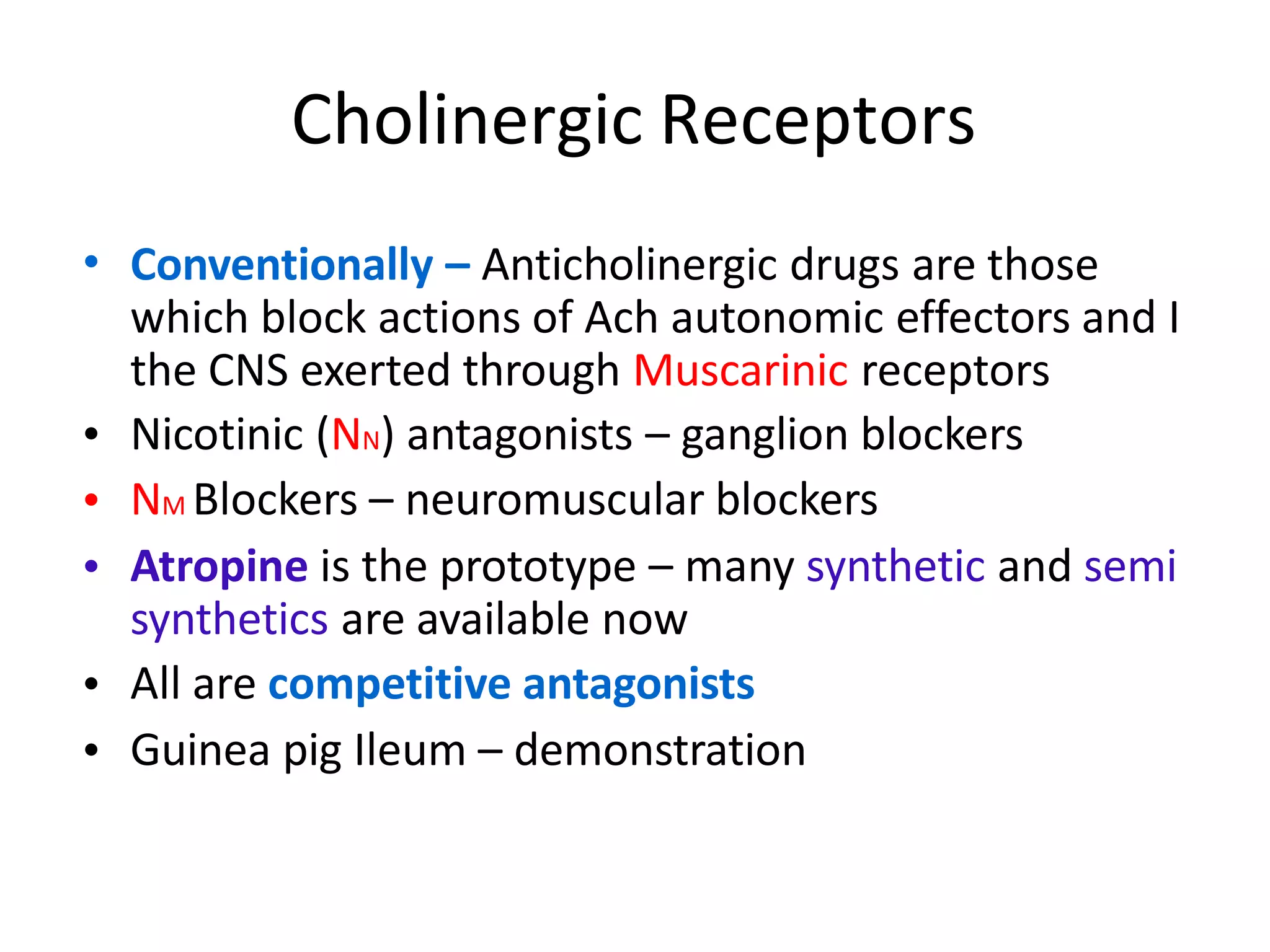
Conventionally – Anticholinergic drugs are those
which block actions of Ach autonomic effectors and I
the CNS exerted through Muscarinic receptors
Nicotinic (NN) antagonists – ganglion blockers
NM Blockers – neuromuscular blockers
Atropine is the prototype – many synthetic and semi
synthetics are available now
All are competitive antagonists
Guinea pig Ileum – demonstration
Classification – anticholinergic
drugs
•
•
•
•
•
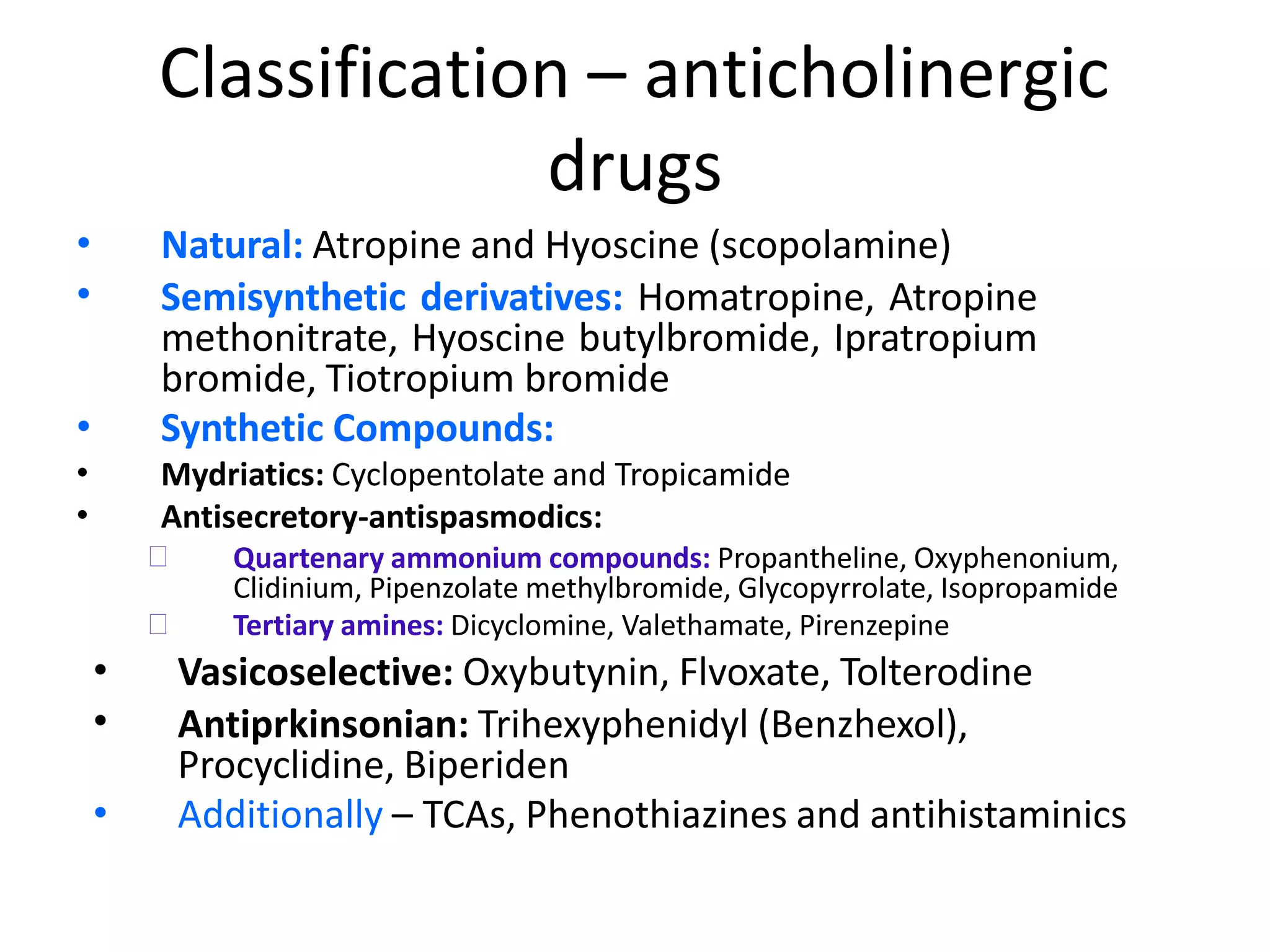
Natural: Atropine and Hyoscine (scopolamine)
Semisynthetic derivatives: Homatropine, Atropine
methonitrate, Hyoscine butylbromide, Ipratropium
bromide, Tiotropium bromide
Synthetic Compounds:
Mydriatics: Cyclopentolate and Tropicamide
Antisecretory-antispasmodics:


Quartenary ammonium compounds: Propantheline, Oxyphenonium,
Clidinium, Pipenzolate methylbromide, Glycopyrrolate, Isopropamide
Tertiary amines: Dicyclomine, Valethamate, Pirenzepine
•
•
•
Vasicoselective: Oxybutynin, Flvoxate, Tolterodine
Antiprkinsonian: Trihexyphenidyl (Benzhexol),
Procyclidine, Biperiden
Additionally – TCAs, Phenothiazines and antihistaminics
Atropine as Prototype
•
•
•
•
Atropine (hyoscyamine) is found in the plant Atropa
belladonna, or deadly nightshade
Also in Datura stramonium, also known as jimsonweed
(Jamestown weed) or thorn apple
Scopolamine (hyoscine) occurs in Hyoscyamus niger
Atropos is the name of one of the Fates, mythical beings who
controlled the destinies of humans (Clotho, Lachesis, and
Atropos)
Datura stramonium Atropa belladona
Atropine - Chemistry
•
•
•
•
Atropine: Ester of tropic acid (aromatic acid) + tropine
Scopolamine: Ester of tropic acid (aromatic acid) + scopine
Chemically tropine and scopine are closely similar
Most of the actions of both are similar
Atropine – Mechanism of Action
• Atropine causes reversible (surmountable)
blockade of cholinomimetic actions at
muscarinic receptors
– blockade by a small dose of atropine can be
overcome by a larger concentration of
acetylcholine or equivalent muscarinic agonist
• Atropine is highly selective for muscarinic
receptors
• Does not distinguish between the M1, M2, and
M3
• Some quaternary amine antimuscarinic agents
have significant ganglion-blocking actions
Atropine - Pharmacokinetics
Absorption:
• The natural alkaloids and most tertiary antimuscarinic drugs are well
absorbed from the gut and conjunctiva – some even over the skin
(scopolamine)
• Penetrates cornea freely
• Quaternary ones – only upto 30%
Distribution:
• Atropine and the other tertiary agents are widely distributed in
the body
• Scopolamine is rapidly and fully distributed into the central
nervous system where it has greater effects than most other
antimuscarinic drugs
• Quaternary derivatives are poorly taken up by the brain
Metabolism:
– Atropine is metabolized in liver by conjugation and 60% excretes
unchanged in urine
– Effects disappear quickly within 2 Hrs except eye
– Hyoscine is more completely metabolized
Preparations: Atropine IM or IV; Hyoscine – Oral/IM/transdermal
Pharmacological actions - CNS
•
•
•
•
•
•
Overall CNS stimulant
At low dose - Atropine has only peripheral effects and
minimal stimulant effect on CNS – low entry
Scopolamine has more marked central effects (depressant) –
amnesia and drowsiness
Atropine stimulates many medullary centres – vagal,
respiratory and vasomotor
Depresses vestibular excitation – antimotion sickness
property
Blocks basal ganglia cholinergic over activity – blocks tremor,
rigidity
Pharmacological actions of Atropine - CVS
• Heart: Moderate and high doses: TACHYCARDIA (Blockade of
M2 receptor on SA node - vagal tone decreases HR)
• Higher the vagal tone – more Bradycardia - in young adults
• AVN – Atropine abbreviates refractory period of AVN–
facilitates AV conduction rate (reduced PR interval in ECG)
• IM/SC injection initially – transient BRADYCARDIA – may be
due to inhibition of prejunctional postsynaptic M1
autoreceptor inhibition (not due to stimulation of vagal
centre)
• Evidenced by Pirenzepine (selective M1 blocker) injection does
not cross BBB
• BP: No consistent effect – tachycardia and VMC stimulation –
raises BP; but histamine release and direct vasodilator action
counteract
Pharmacological actions, Atropine-Eye
•
•
•
•
•
•
MYDRIASIS
Topical atropine and other
antimuscarinic drugs - results in
unopposed sympathetic dilator
activity and mydriasis
Cycloplegia and abolition of light
reflex - desirable in Ophthalmology
Photophobia and blurring of near
vision
IOP rises: hazardous in narrow angle
glaucoma
Dry Eye: Not desirable
Effect of Scopolamine
Ciliary muscles recover earlier than sphincter pupillae
Atropine on Smooth Muscle
•
•
•
Respiratory: Bronchodilatation and reduction in airway
resistance – COPD and asthma patients
– Also antagonizes vagal mediated over activity due to Histamine, PG,
leucotrienes etc.
Urinary: Relaxation of ureter & bladder – urinary
retention in older males with BHP
– Sometimes useful in increasing bladder capacity and controlling
detrussor hyperreflexia - neurogenic bladder/enuresis
Visceral SM: Relaxation – mediated by M3 blockade
– Tone and amplitude of contraction of Stomach and Intestine reduced
• Passage of chyme reduced – CONSTIPATON and relieve of SPASM
– But, less peristalsis suppression – ENS
– More effective to exogenous ACh administration
Atropine on Glands
•
•
•
•
•
•
Decreases salivary, sweat, tracheobronchial and lachrymal
secretions (M3 blockade)
– dryness of mouth, dry skin and conjunctiva and difficulty in talking and
swallowing
Stomach (M1): decreases acid, pepsin and mucus secretions –
pH of gastric contents may increase – in empty stomach
But pH not interfered– as also decreases bicarbonate (HCO3)
secretion – Higher doses required to cause acidity
Atropine is less efficacious than H2 blockers
No effect on intestinal and pancreatic secretion
No effect on bile production
Pharmacological actions of
Atropine – contd.
• Temperature: Increases – decrease sweating
+ stimulation of temperature regulating
centre in hypothalumus
• Local anaesthetic action: on cornea
• Enhances ACh and NA release – PARADOXICAL
• Sensitivity of organs – Saliva, sweat, bronchial
secretion > smooth muscle of intestine and
bladder > gastric gland and smooth muscle
ATROPINE SUBSTITUTES
Semi synthetics and Synthetics
Atropine Substitutes
•
•
•
Semisynthetic: Mydriatic, antispasmodic, bronchodilator etc.
Synthetic: Mydriatic, antisecretory-antispasmodic (quaternary
- antisecretory or tertiary), vasicoselective, antiparkinsoian
Quaternary compounds (for peripheral action only in GIT):
– Incomplete oral absorption
– Poor CNS and eye penetration
– Slow elimination – longer acting
– Higher Nicotinic blocking property – postural hypotension and
impotence
– Neuromuscular blockade at higher doses
Individual drugs – atropine substitutes
- semisynthetic
•
•
•
• Hyoscine Butylbromide: Oesophageal and GIT spastic conditions –
Buscopan – Oral/IM
Atropine methonitrate: Abdominal colics and hypercidity – Oral/IM
Ipratropium Bromide: Selective action on Bronchial SM - dilatation
– Does not alter volume and cosistency of respiratory secretion
– Enhanced mucocilliary clearance (contrast to Atropine)
– Slowly acting (slow onset and late peak) Bronchodilator - 1-2 Hrs
(prophylactic use) – contrast to sympathomimetics – 4-6 Hrs
– Acts mainly on larger Central airways (contrast to sympathomimetics)
– More effective in COPD than Asthma
– ADRs: cough, bad taste and nervousness – rare systemic effects
Tiotropium bromide: Ipratropium congener – longer acting
and more M1/M3 selective
Atropine substitutes – Quaternary
•
•
•
•
•
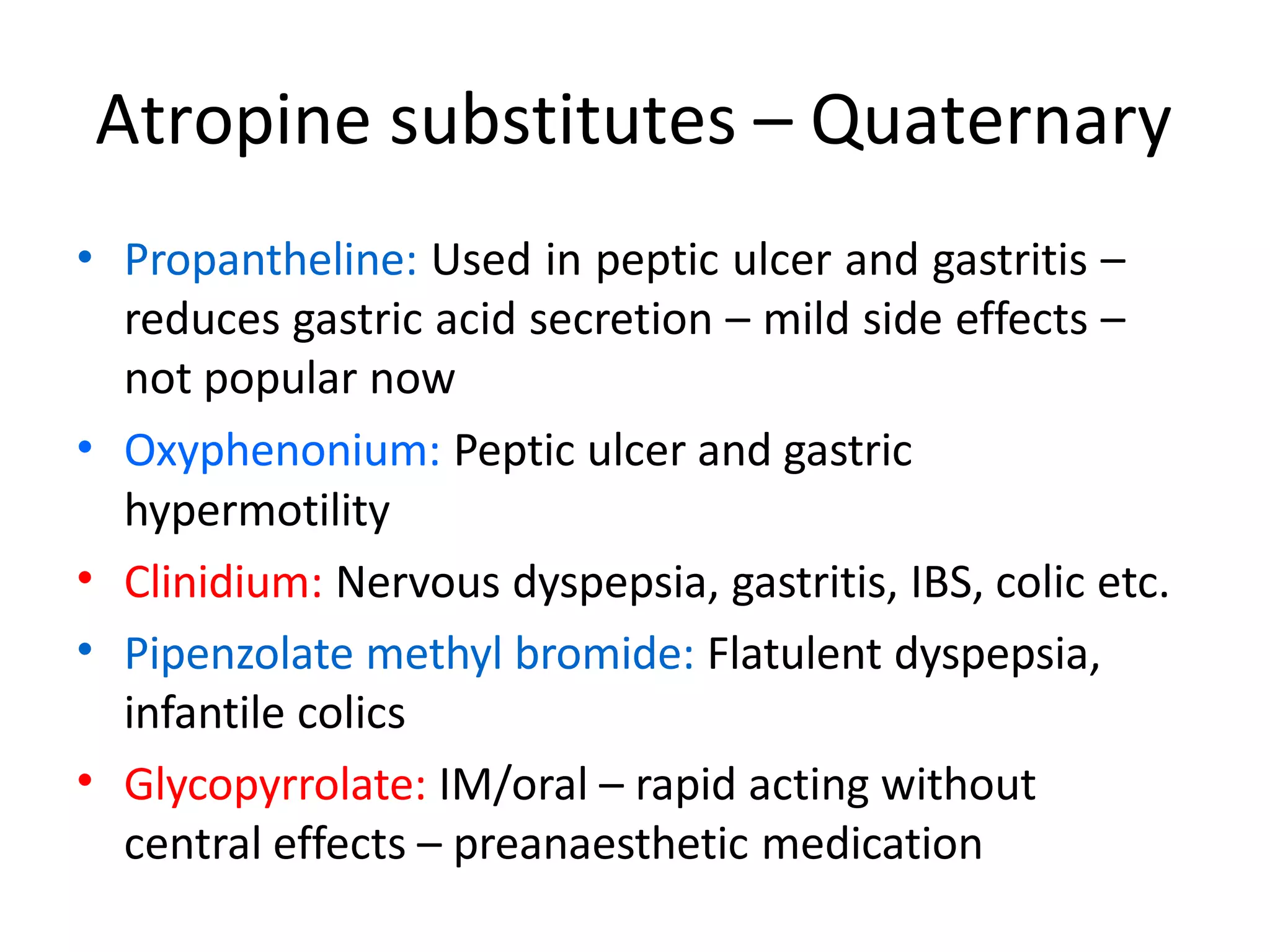
Propantheline: Used in peptic ulcer and gastritis –
reduces gastric acid secretion – mild side effects –
not popular now
Oxyphenonium: Peptic ulcer and gastric
hypermotility
Clinidium: Nervous dyspepsia, gastritis, IBS, colic etc.
Pipenzolate methyl bromide: Flatulent dyspepsia,
infantile colics
Glycopyrrolate: IM/oral – rapid acting without
central effects – preanaesthetic medication
Atropine substitutes –
Tertiary Amines
•
•
•
•
Dicyclomine , valethamate and Pirenzepine
Dicyclomine: Direct SM relaxant and antispasmodic – weak anticholinergic
– Lesser side effects than Atropine
– Also antiemetic – morning sickness
– Atropine toxicity in infants (not recommended below 6 months)
– Dysmenorrhoea and IBS
Valethmate: Dilatation of Cervix in delayed labour (visceral antispasmodic)
Pirenzepine: Selective M1 antagonist – no action on M2 and M3 (no
atropinic side effects)
– Decreases gastric acid secretion - promotes ulcer healing
– Less popular now
Atropine substitutes
- vasicoselective – contd.
• Oxybutynin:
–
–
–
Specific selectivity for receptors in Urinary bladder and salivary gland (M1/M3)
Additional smooth muscle relaxation property and local anaesthetic property
Uses
•
•
•
•
•
Detrussor instability – urinary frequency and incontinence
Spina bifida and nocturnal enuresis
Involuntary voiding in patients with neurologic disease - children with
meningomyelocele
Bladder surgery - urologic surgery
Dose: 5 mg BD/tds or local instillation
•
•
•
Tolterodine – M3 selective–overactive bladder with urinary urgency
Flavoxate – similar to Oxybutynin
Drotaverine: Non anticholinergic smooth muscle relaxant – inhibition of
PDE-4 - elevation of cAMP/cGMP – sm relaxation
–
–
Renal colic, biliary colic, IBS, uterine spasms etc.
No anticholinergic side effects - Dose: 40 – 80 mg tds
Atropine substitutes
- Mydriatics
• Atropine: Slow and long lasting
–
–
–
Onset of action: 30 – 40 minutes
Cycloplegia: 1 – 3 Hours
Duration of action: 7 – 10 days
Homatropine Cyclopentolate Tropicamide
Potency 10 times less Potent Less reliable
Onset of action 45 – 60 min 30 – 60 min 20 – 40 min
Duration of action 1 – 3 days and 1-2
days
1 day 3 – 6 Hours
Children use Unsatisfactory
cycloplegia
Behavioural
abnormality
Mental and
mood changes
Atropine: Therapeutic uses -
antisecretory
1. Preanaesthetic medication: atropine, hyoscine and
glycopyrrolate etc.
–
–
–
– Defn.: Refers to use of drugs before anaesthesia to make it more pleasant and
safe
Irritant GA (ether) – salivary and tracheobronchial secretion
To reduce secretions and also halothane induced ventricular arrhythmia (in
vagal slowing down)
To prevent laryngospasm – increased respiratory secretions cause reflex
laryngospasm
1. Peptic ulcer: Fasting and neurogenic phase only – Gastric
phase not reduced – Not popular anymore
2. Pulmonary embolism: reduces reflex pulmonary secretions
3. Hyperhidrosis
Atropine: Therapeutic uses -
antispasmodic
1. Intestinal and renal colic and abdominal cramps – not in
biliary colic
2. Diarrhoea (nervous and drug induced) – Lomotil --- not in
infective ones
3. Spastic constipation, IBS
4. Pylorospasm, gastric hypermotility, gastritis, nervous
dyspepsia etc.
5. Urinary frequency and urgency and nocturnal enuresis
(children) - ???
6. Dysmenorrhoea
Atropine: Therapeutic uses – Bronchial
asthma, asthmatic bronchitis and COPD
•
•
Reflex vagal activity – bronchoconstriction and
increased secretion – in bronchitis and COPD – lesser
in asthma
Oral Atropine – bronchodilatation
– Disadvantages: dry up secretions in RT – inspissations and
plugging in bronchioles – collapse – plus decreased
mucocilliary clearance
– Inhaled Ipratropium Br – does not decrease secretions
and impair mucociliary clearance - useful in bronchitis and
COPD
– For regular prophylaxis – not to terminate acute attack
Anticholinergics -Mydriatic and
Cycloplegic - Ophthalmic uses
• Used as eye drop or ointment:
– Diagnostic: Atropine 1% ointment is used
•
•
•
•
Measurement of refractive error – mydriasis and cycloplegia
Preferred ones: Homatropine, Tropicamide and cyclopentolate – shorter
action
However – no cycloplegia in children by newer ones
Atropine 1% ointment still preferred in children below 5 yrs
– Ophthalmic examination of retina – fundoscopy (shorter
acting preferred)
– Therapeutic :
• For resting eye: Iritis, iridocyclitis, keratitis, corneal ulcer etc.
• Alternating with miotics (prevention of synechia)
Uses of anticholinergics – contd.
•
•
•
CVS: Myocardial Infarction, Digitalis toxicity – to counteract reflex vagal
bradycardia and partial heart block
Parkinsonism: Mild cases of parkinsonism (early cases), Drug induced
Parkinsonism and adjunct to Levodopa
Motion sickness:
–
–
– Hyoscine (scopolamine) is the drug used – Oral, injection and transdermal
patch
0.2 mg orally given as prophylaxis before journey – lasts 4-6 hours –
transdermal preparations
Not effective in other type of vomiting
•
•
Twilight sleep and maniacal states: Hyoscine - sedation and amnesia – lie
detector
Atropine: Antidote for Anti-ChE & Mushroom poisoning, and to block
Muscarinic effects of Neostigmine, Cobra envenomation
Anticholinergic - ADRs
•
•
•
Commonly occurring but of non serious type
Mydriasis and cycloplegia – using as antisecretory or
Preanaesthetic medication
Belladona Poisoning: Drug overdose and consumption of
seeds of berries of belladona/datura
– Symptoms:
•
•
•
• Dry mouth, difficulty in swallowing and talking
• Dry, flushed and hot skin (face & neck), fever, decreased bowel sound,
dilated pupil, photophobia, difficulty in micturation
Excitement, psychotic behavior, delirium and hallucinations
Hypotension, weak and rapid pulse, respiratory depression and
cardiovascular collapse
Convulsions and coma
Belladona Poisoning - Treatment
• Diagnosis: Methacholine 5 mg or Neostigmine
1 mg SC – no muscarinic effects
• Treatment:
– Gastric lavage in case of ingestion – tannic acid
– Dark Room and cold sponging and ice bags
– Physostigmine 1–3 mg SC or IV
– Maintenance of blood volume, assisted
respiration and Diazepam to control convulsions
– Other supportive measures
Anticholinergic - contraindications
• Glaucoma – Narrow angle (Precipitation of
angle closure)
• BHP – urinary retention
• Acid peptic ulcer diseases (Non-selective
ones) – precipitation of symptoms
Drugs acting on Ganglions
Drugs acting on Autonomic ganglia
•
•
• ACh is excitatory neurotransmitter - parasympathetic
and sympathetic
Drugs which inhibit synthesis or release – interfere
with ganglionic transmission
NN mediate rapid depolarization of ganglion cells
– also present are M1 & M2, adrenergic, dopaminergic,
amino acid, peptidergic receptors - slow – mediate slowly
developing and longer lasting effects
– Released from preganglionic cholinergic terminals – but by
themselves
– One transmitter – one cell junction ... Over simplification
Ganglion stimulants and blockers
•
•
Ganglion stimulants:
– Selective agonists: Nicotine (small dose), Lobeline, DMPP, TMA and
Varenicline
– Non-selective: Acetylcholine, carbachol, Pilocarpine,
Anticholinesterases
Ganglion Blockers:
– Competitive blockers:
• Quaternary compounds: Hexamethonium, Pentolinium
• Secondary/tertiary: Mecamylamine, Pempidine
• Monosulfonium compound: Trimethaphancamforsulfonate
– Persistent depolarizers: Nicotine (large dose) and Anticholinesterases
(large doses)
Nicotine
• Source – alkaloid in Nicotiana tabacum
• Action – stimulation of Para symp and symp
ganglia via NN and NM receptors at low dose
– Large doses – persistent depolarization
• Only Indication – short term nicotine
replacement in tobacco abstinent Subjects
Pharmacotherapy of smoking
cessation
•
•
Difficult to quit - Nicotine dependence – counseling and motivation
Aim of treatment:
–
–
To reduce the craving for satisfying (reward) effects of nicotine
To suppress the physical withdrawal symptoms
•
•
Drugs: Nicotine replacement, Partial agonists of α4β2 Nicotinic receptors
(Varenicline) and antidepressants (Bupropion)
Nicotine transdermal: once daily on the hip/abdomen/chest/upper arm –
supresses nicotine withdrawal but craving only partially (10, 20, 30 cm2
patches)
– Also nicotine chewing gum - alternative of patches (NULIFE 1, 2, 4 mg
chewing gums)
– ADRs of nicotine replacement: headache, dyspepsia, abdominal cramps, loose
motion, flu like symptoms etc
Varenicline
•
•
Partial agonists of α4β2 NR receptor
MOA: Reinforcing effects mediated by α4β2 NR – nucleus
accumbens and mesolimbic areas
–
–
–
– Normally, activation of α4β2 NR by nicotine – induces DA release –
satisfaction/reward and reinforcing effect
PA activity of varenicline - nicotine substitution, but blocks reward effects of
smoking
Reduce craving and withdrawal symptoms
Comparable to nicotine replacement and Bupropion
•
•
•
ADRs: Mood changes, irrational behaviour, appetite and taste
disturbances, sleep disorder and agitation – suicidal thoughts
Bupropion: atypical antidepressant – discussed elsewhere
Ganglion blockers – no clinical use anymore
Summary
• Atropine and its Pharmacological Effects
– Therapeutic uses of Atropine
– Mechanism of Mydriasis and Cycloplegia
• Names of Atropine Substitutes with their Uses
– Details of Atropine Substitutes – Ipratropium
bromide, Dicyclomine, Oxybutynin
• Treatment of Atropine Poisoning
• Names of Ganglion Stimulants and Blockers
Drugs – antismoking drugs (short note)
THANK YOU
In Last class ……
• Discussed on Pharmacological actions of
Atropine on –
• CNS
• CVS
• Eye

Anticholinergic Drugs

  • 1.
    ANTI-CHOLINERGIC DRUGS Dr. Dwividendra KumarNim Assistant Professor Department of Pharmacology Motilal Nehru Medical College, Prayagraj (U.P)
  • 2.
    Introduction • Drugs whichblock Cholinoreceptors have important clinical effects, some of which are of great clinical value • What are the Cholinoreceptors learned so far? - RECALL ! • Muscarinic and Nicotinic – M1, M2, M3, M4 and M5 – NN and NM
  • 3.
    Cholinergic Receptors • • • • • • Conventionally –Anticholinergic drugs are those which block actions of Ach autonomic effectors and I the CNS exerted through Muscarinic receptors Nicotinic (NN) antagonists – ganglion blockers NM Blockers – neuromuscular blockers Atropine is the prototype – many synthetic and semi synthetics are available now All are competitive antagonists Guinea pig Ileum – demonstration
  • 4.
    Classification – anticholinergic drugs • • • • • Natural:Atropine and Hyoscine (scopolamine) Semisynthetic derivatives: Homatropine, Atropine methonitrate, Hyoscine butylbromide, Ipratropium bromide, Tiotropium bromide Synthetic Compounds: Mydriatics: Cyclopentolate and Tropicamide Antisecretory-antispasmodics:   Quartenary ammonium compounds: Propantheline, Oxyphenonium, Clidinium, Pipenzolate methylbromide, Glycopyrrolate, Isopropamide Tertiary amines: Dicyclomine, Valethamate, Pirenzepine • • • Vasicoselective: Oxybutynin, Flvoxate, Tolterodine Antiprkinsonian: Trihexyphenidyl (Benzhexol), Procyclidine, Biperiden Additionally – TCAs, Phenothiazines and antihistaminics
  • 5.
    Atropine as Prototype • • • • Atropine(hyoscyamine) is found in the plant Atropa belladonna, or deadly nightshade Also in Datura stramonium, also known as jimsonweed (Jamestown weed) or thorn apple Scopolamine (hyoscine) occurs in Hyoscyamus niger Atropos is the name of one of the Fates, mythical beings who controlled the destinies of humans (Clotho, Lachesis, and Atropos) Datura stramonium Atropa belladona
  • 6.
    Atropine - Chemistry • • • • Atropine:Ester of tropic acid (aromatic acid) + tropine Scopolamine: Ester of tropic acid (aromatic acid) + scopine Chemically tropine and scopine are closely similar Most of the actions of both are similar
  • 7.
    Atropine – Mechanismof Action • Atropine causes reversible (surmountable) blockade of cholinomimetic actions at muscarinic receptors – blockade by a small dose of atropine can be overcome by a larger concentration of acetylcholine or equivalent muscarinic agonist • Atropine is highly selective for muscarinic receptors • Does not distinguish between the M1, M2, and M3 • Some quaternary amine antimuscarinic agents have significant ganglion-blocking actions
  • 8.
    Atropine - Pharmacokinetics Absorption: •The natural alkaloids and most tertiary antimuscarinic drugs are well absorbed from the gut and conjunctiva – some even over the skin (scopolamine) • Penetrates cornea freely • Quaternary ones – only upto 30% Distribution: • Atropine and the other tertiary agents are widely distributed in the body • Scopolamine is rapidly and fully distributed into the central nervous system where it has greater effects than most other antimuscarinic drugs • Quaternary derivatives are poorly taken up by the brain
  • 9.
    Metabolism: – Atropine ismetabolized in liver by conjugation and 60% excretes unchanged in urine – Effects disappear quickly within 2 Hrs except eye – Hyoscine is more completely metabolized Preparations: Atropine IM or IV; Hyoscine – Oral/IM/transdermal
  • 10.
    Pharmacological actions -CNS • • • • • • Overall CNS stimulant At low dose - Atropine has only peripheral effects and minimal stimulant effect on CNS – low entry Scopolamine has more marked central effects (depressant) – amnesia and drowsiness Atropine stimulates many medullary centres – vagal, respiratory and vasomotor Depresses vestibular excitation – antimotion sickness property Blocks basal ganglia cholinergic over activity – blocks tremor, rigidity
  • 11.
    Pharmacological actions ofAtropine - CVS • Heart: Moderate and high doses: TACHYCARDIA (Blockade of M2 receptor on SA node - vagal tone decreases HR) • Higher the vagal tone – more Bradycardia - in young adults • AVN – Atropine abbreviates refractory period of AVN– facilitates AV conduction rate (reduced PR interval in ECG) • IM/SC injection initially – transient BRADYCARDIA – may be due to inhibition of prejunctional postsynaptic M1 autoreceptor inhibition (not due to stimulation of vagal centre) • Evidenced by Pirenzepine (selective M1 blocker) injection does not cross BBB • BP: No consistent effect – tachycardia and VMC stimulation – raises BP; but histamine release and direct vasodilator action counteract
  • 12.
    Pharmacological actions, Atropine-Eye • • • • • • MYDRIASIS Topicalatropine and other antimuscarinic drugs - results in unopposed sympathetic dilator activity and mydriasis Cycloplegia and abolition of light reflex - desirable in Ophthalmology Photophobia and blurring of near vision IOP rises: hazardous in narrow angle glaucoma Dry Eye: Not desirable
  • 13.
    Effect of Scopolamine Ciliarymuscles recover earlier than sphincter pupillae
  • 14.
    Atropine on SmoothMuscle • • • Respiratory: Bronchodilatation and reduction in airway resistance – COPD and asthma patients – Also antagonizes vagal mediated over activity due to Histamine, PG, leucotrienes etc. Urinary: Relaxation of ureter & bladder – urinary retention in older males with BHP – Sometimes useful in increasing bladder capacity and controlling detrussor hyperreflexia - neurogenic bladder/enuresis Visceral SM: Relaxation – mediated by M3 blockade – Tone and amplitude of contraction of Stomach and Intestine reduced • Passage of chyme reduced – CONSTIPATON and relieve of SPASM – But, less peristalsis suppression – ENS – More effective to exogenous ACh administration
  • 15.
    Atropine on Glands • • • • • • Decreasessalivary, sweat, tracheobronchial and lachrymal secretions (M3 blockade) – dryness of mouth, dry skin and conjunctiva and difficulty in talking and swallowing Stomach (M1): decreases acid, pepsin and mucus secretions – pH of gastric contents may increase – in empty stomach But pH not interfered– as also decreases bicarbonate (HCO3) secretion – Higher doses required to cause acidity Atropine is less efficacious than H2 blockers No effect on intestinal and pancreatic secretion No effect on bile production
  • 16.
    Pharmacological actions of Atropine– contd. • Temperature: Increases – decrease sweating + stimulation of temperature regulating centre in hypothalumus • Local anaesthetic action: on cornea • Enhances ACh and NA release – PARADOXICAL • Sensitivity of organs – Saliva, sweat, bronchial secretion > smooth muscle of intestine and bladder > gastric gland and smooth muscle
  • 17.
  • 18.
    Atropine Substitutes • • • Semisynthetic: Mydriatic,antispasmodic, bronchodilator etc. Synthetic: Mydriatic, antisecretory-antispasmodic (quaternary - antisecretory or tertiary), vasicoselective, antiparkinsoian Quaternary compounds (for peripheral action only in GIT): – Incomplete oral absorption – Poor CNS and eye penetration – Slow elimination – longer acting – Higher Nicotinic blocking property – postural hypotension and impotence – Neuromuscular blockade at higher doses
  • 19.
    Individual drugs –atropine substitutes - semisynthetic • • • • Hyoscine Butylbromide: Oesophageal and GIT spastic conditions – Buscopan – Oral/IM Atropine methonitrate: Abdominal colics and hypercidity – Oral/IM Ipratropium Bromide: Selective action on Bronchial SM - dilatation – Does not alter volume and cosistency of respiratory secretion – Enhanced mucocilliary clearance (contrast to Atropine) – Slowly acting (slow onset and late peak) Bronchodilator - 1-2 Hrs (prophylactic use) – contrast to sympathomimetics – 4-6 Hrs – Acts mainly on larger Central airways (contrast to sympathomimetics) – More effective in COPD than Asthma – ADRs: cough, bad taste and nervousness – rare systemic effects Tiotropium bromide: Ipratropium congener – longer acting and more M1/M3 selective
  • 20.
    Atropine substitutes –Quaternary • • • • • Propantheline: Used in peptic ulcer and gastritis – reduces gastric acid secretion – mild side effects – not popular now Oxyphenonium: Peptic ulcer and gastric hypermotility Clinidium: Nervous dyspepsia, gastritis, IBS, colic etc. Pipenzolate methyl bromide: Flatulent dyspepsia, infantile colics Glycopyrrolate: IM/oral – rapid acting without central effects – preanaesthetic medication
  • 21.
    Atropine substitutes – TertiaryAmines • • • • Dicyclomine , valethamate and Pirenzepine Dicyclomine: Direct SM relaxant and antispasmodic – weak anticholinergic – Lesser side effects than Atropine – Also antiemetic – morning sickness – Atropine toxicity in infants (not recommended below 6 months) – Dysmenorrhoea and IBS Valethmate: Dilatation of Cervix in delayed labour (visceral antispasmodic) Pirenzepine: Selective M1 antagonist – no action on M2 and M3 (no atropinic side effects) – Decreases gastric acid secretion - promotes ulcer healing – Less popular now
  • 22.
    Atropine substitutes - vasicoselective– contd. • Oxybutynin: – – – Specific selectivity for receptors in Urinary bladder and salivary gland (M1/M3) Additional smooth muscle relaxation property and local anaesthetic property Uses • • • • • Detrussor instability – urinary frequency and incontinence Spina bifida and nocturnal enuresis Involuntary voiding in patients with neurologic disease - children with meningomyelocele Bladder surgery - urologic surgery Dose: 5 mg BD/tds or local instillation • • • Tolterodine – M3 selective–overactive bladder with urinary urgency Flavoxate – similar to Oxybutynin Drotaverine: Non anticholinergic smooth muscle relaxant – inhibition of PDE-4 - elevation of cAMP/cGMP – sm relaxation – – Renal colic, biliary colic, IBS, uterine spasms etc. No anticholinergic side effects - Dose: 40 – 80 mg tds
  • 23.
    Atropine substitutes - Mydriatics •Atropine: Slow and long lasting – – – Onset of action: 30 – 40 minutes Cycloplegia: 1 – 3 Hours Duration of action: 7 – 10 days Homatropine Cyclopentolate Tropicamide Potency 10 times less Potent Less reliable Onset of action 45 – 60 min 30 – 60 min 20 – 40 min Duration of action 1 – 3 days and 1-2 days 1 day 3 – 6 Hours Children use Unsatisfactory cycloplegia Behavioural abnormality Mental and mood changes
  • 24.
    Atropine: Therapeutic uses- antisecretory 1. Preanaesthetic medication: atropine, hyoscine and glycopyrrolate etc. – – – – Defn.: Refers to use of drugs before anaesthesia to make it more pleasant and safe Irritant GA (ether) – salivary and tracheobronchial secretion To reduce secretions and also halothane induced ventricular arrhythmia (in vagal slowing down) To prevent laryngospasm – increased respiratory secretions cause reflex laryngospasm 1. Peptic ulcer: Fasting and neurogenic phase only – Gastric phase not reduced – Not popular anymore 2. Pulmonary embolism: reduces reflex pulmonary secretions 3. Hyperhidrosis
  • 25.
    Atropine: Therapeutic uses- antispasmodic 1. Intestinal and renal colic and abdominal cramps – not in biliary colic 2. Diarrhoea (nervous and drug induced) – Lomotil --- not in infective ones 3. Spastic constipation, IBS 4. Pylorospasm, gastric hypermotility, gastritis, nervous dyspepsia etc. 5. Urinary frequency and urgency and nocturnal enuresis (children) - ??? 6. Dysmenorrhoea
  • 26.
    Atropine: Therapeutic uses– Bronchial asthma, asthmatic bronchitis and COPD • • Reflex vagal activity – bronchoconstriction and increased secretion – in bronchitis and COPD – lesser in asthma Oral Atropine – bronchodilatation – Disadvantages: dry up secretions in RT – inspissations and plugging in bronchioles – collapse – plus decreased mucocilliary clearance – Inhaled Ipratropium Br – does not decrease secretions and impair mucociliary clearance - useful in bronchitis and COPD – For regular prophylaxis – not to terminate acute attack
  • 27.
    Anticholinergics -Mydriatic and Cycloplegic- Ophthalmic uses • Used as eye drop or ointment: – Diagnostic: Atropine 1% ointment is used • • • • Measurement of refractive error – mydriasis and cycloplegia Preferred ones: Homatropine, Tropicamide and cyclopentolate – shorter action However – no cycloplegia in children by newer ones Atropine 1% ointment still preferred in children below 5 yrs – Ophthalmic examination of retina – fundoscopy (shorter acting preferred) – Therapeutic : • For resting eye: Iritis, iridocyclitis, keratitis, corneal ulcer etc. • Alternating with miotics (prevention of synechia)
  • 28.
    Uses of anticholinergics– contd. • • • CVS: Myocardial Infarction, Digitalis toxicity – to counteract reflex vagal bradycardia and partial heart block Parkinsonism: Mild cases of parkinsonism (early cases), Drug induced Parkinsonism and adjunct to Levodopa Motion sickness: – – – Hyoscine (scopolamine) is the drug used – Oral, injection and transdermal patch 0.2 mg orally given as prophylaxis before journey – lasts 4-6 hours – transdermal preparations Not effective in other type of vomiting • • Twilight sleep and maniacal states: Hyoscine - sedation and amnesia – lie detector Atropine: Antidote for Anti-ChE & Mushroom poisoning, and to block Muscarinic effects of Neostigmine, Cobra envenomation
  • 29.
    Anticholinergic - ADRs • • • Commonlyoccurring but of non serious type Mydriasis and cycloplegia – using as antisecretory or Preanaesthetic medication Belladona Poisoning: Drug overdose and consumption of seeds of berries of belladona/datura – Symptoms: • • • • Dry mouth, difficulty in swallowing and talking • Dry, flushed and hot skin (face & neck), fever, decreased bowel sound, dilated pupil, photophobia, difficulty in micturation Excitement, psychotic behavior, delirium and hallucinations Hypotension, weak and rapid pulse, respiratory depression and cardiovascular collapse Convulsions and coma
  • 30.
    Belladona Poisoning -Treatment • Diagnosis: Methacholine 5 mg or Neostigmine 1 mg SC – no muscarinic effects • Treatment: – Gastric lavage in case of ingestion – tannic acid – Dark Room and cold sponging and ice bags – Physostigmine 1–3 mg SC or IV – Maintenance of blood volume, assisted respiration and Diazepam to control convulsions – Other supportive measures
  • 31.
    Anticholinergic - contraindications •Glaucoma – Narrow angle (Precipitation of angle closure) • BHP – urinary retention • Acid peptic ulcer diseases (Non-selective ones) – precipitation of symptoms
  • 32.
    Drugs acting onGanglions
  • 33.
    Drugs acting onAutonomic ganglia • • • ACh is excitatory neurotransmitter - parasympathetic and sympathetic Drugs which inhibit synthesis or release – interfere with ganglionic transmission NN mediate rapid depolarization of ganglion cells – also present are M1 & M2, adrenergic, dopaminergic, amino acid, peptidergic receptors - slow – mediate slowly developing and longer lasting effects – Released from preganglionic cholinergic terminals – but by themselves – One transmitter – one cell junction ... Over simplification
  • 34.
    Ganglion stimulants andblockers • • Ganglion stimulants: – Selective agonists: Nicotine (small dose), Lobeline, DMPP, TMA and Varenicline – Non-selective: Acetylcholine, carbachol, Pilocarpine, Anticholinesterases Ganglion Blockers: – Competitive blockers: • Quaternary compounds: Hexamethonium, Pentolinium • Secondary/tertiary: Mecamylamine, Pempidine • Monosulfonium compound: Trimethaphancamforsulfonate – Persistent depolarizers: Nicotine (large dose) and Anticholinesterases (large doses)
  • 35.
    Nicotine • Source –alkaloid in Nicotiana tabacum • Action – stimulation of Para symp and symp ganglia via NN and NM receptors at low dose – Large doses – persistent depolarization • Only Indication – short term nicotine replacement in tobacco abstinent Subjects
  • 36.
    Pharmacotherapy of smoking cessation • • Difficultto quit - Nicotine dependence – counseling and motivation Aim of treatment: – – To reduce the craving for satisfying (reward) effects of nicotine To suppress the physical withdrawal symptoms • • Drugs: Nicotine replacement, Partial agonists of α4β2 Nicotinic receptors (Varenicline) and antidepressants (Bupropion) Nicotine transdermal: once daily on the hip/abdomen/chest/upper arm – supresses nicotine withdrawal but craving only partially (10, 20, 30 cm2 patches) – Also nicotine chewing gum - alternative of patches (NULIFE 1, 2, 4 mg chewing gums) – ADRs of nicotine replacement: headache, dyspepsia, abdominal cramps, loose motion, flu like symptoms etc
  • 37.
    Varenicline • • Partial agonists ofα4β2 NR receptor MOA: Reinforcing effects mediated by α4β2 NR – nucleus accumbens and mesolimbic areas – – – – Normally, activation of α4β2 NR by nicotine – induces DA release – satisfaction/reward and reinforcing effect PA activity of varenicline - nicotine substitution, but blocks reward effects of smoking Reduce craving and withdrawal symptoms Comparable to nicotine replacement and Bupropion • • • ADRs: Mood changes, irrational behaviour, appetite and taste disturbances, sleep disorder and agitation – suicidal thoughts Bupropion: atypical antidepressant – discussed elsewhere Ganglion blockers – no clinical use anymore
  • 38.
    Summary • Atropine andits Pharmacological Effects – Therapeutic uses of Atropine – Mechanism of Mydriasis and Cycloplegia • Names of Atropine Substitutes with their Uses – Details of Atropine Substitutes – Ipratropium bromide, Dicyclomine, Oxybutynin • Treatment of Atropine Poisoning • Names of Ganglion Stimulants and Blockers Drugs – antismoking drugs (short note)
  • 39.
  • 40.
    In Last class…… • Discussed on Pharmacological actions of Atropine on – • CNS • CVS • Eye