ALPHA RECEPTOR
BLOCKERS
Dr. S P Srinivas Nayak, PharmD, (MSc).
Assistant Professor, Sultan-ul-Uloom
college of Pharmacy, Hyderabad,
Telangana, India.
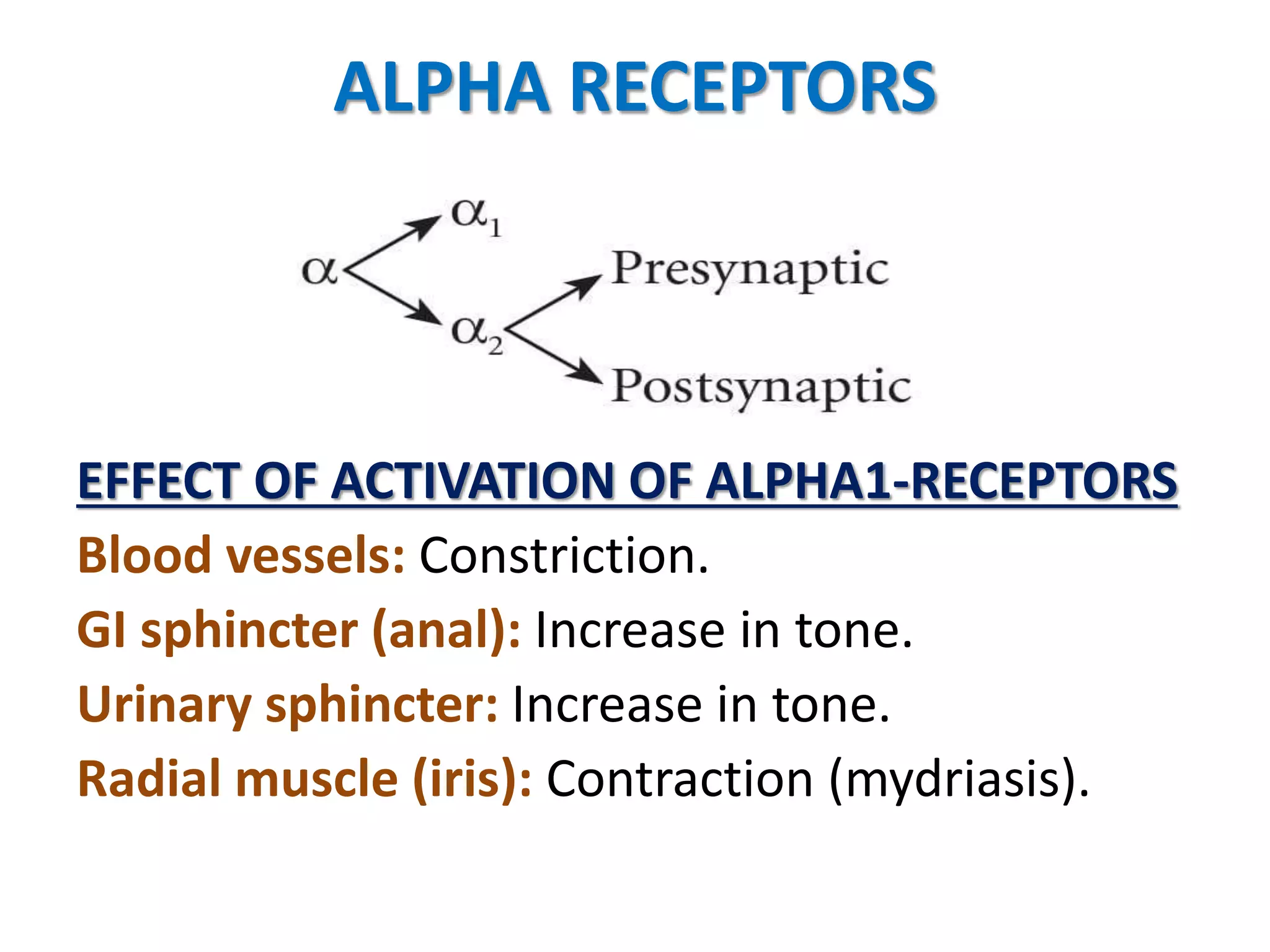
ALPHA RECEPTORS
EFFECT OF ACTIVATION OF ALPHA1-RECEPTORS
Blood vessels: Constriction.
GI sphincter (anal): Increase in tone.
Urinary sphincter: Increase in tone.
Radial muscle (iris): Contraction (mydriasis).
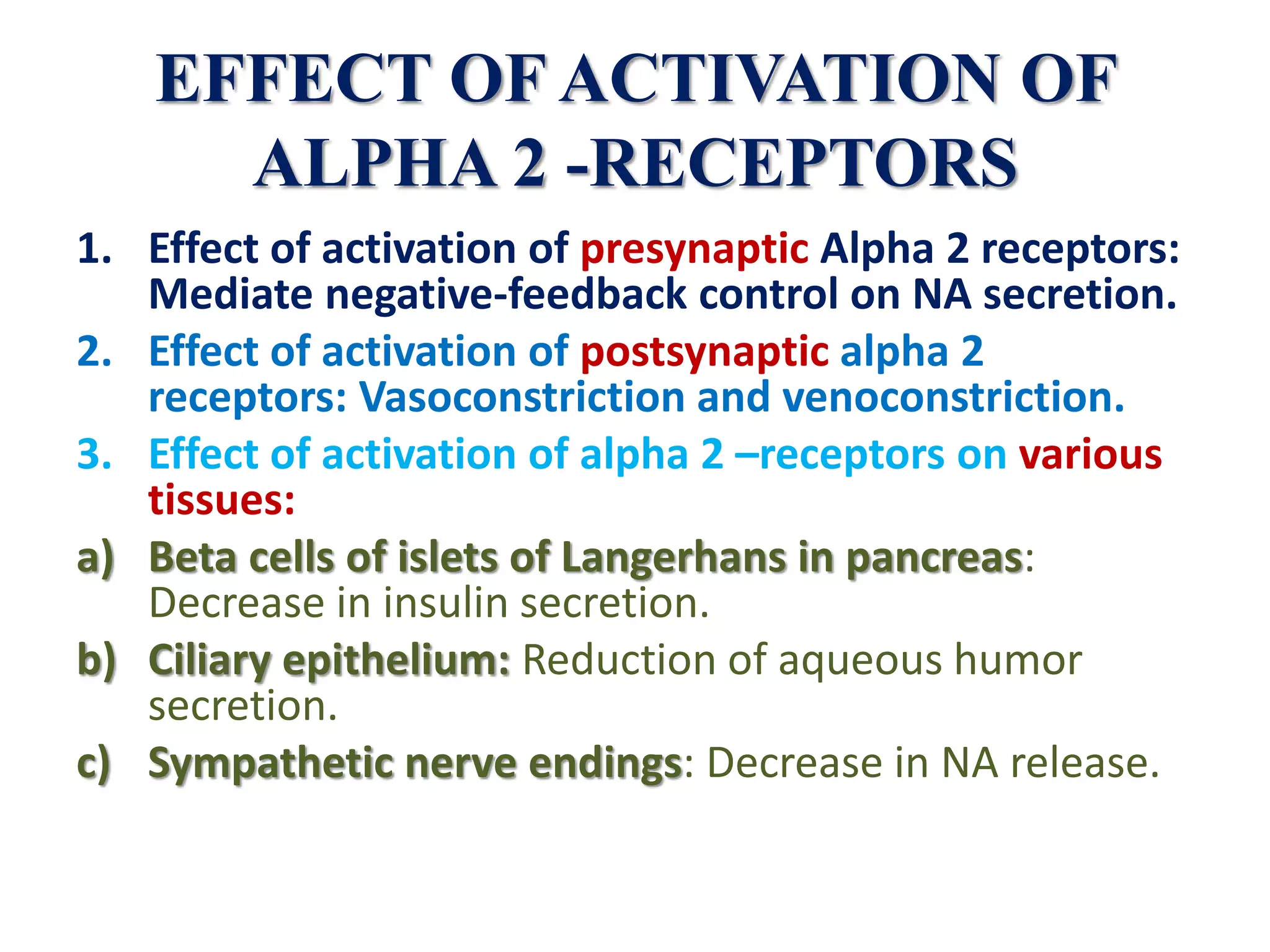
EFFECT OF ACTIVATION OF
ALPHA 2 -RECEPTORS
1. Effect of activation of presynaptic Alpha 2 receptors:
Mediate negative-feedback control on NA secretion.
2. Effect of activation of postsynaptic alpha 2
receptors: Vasoconstriction and venoconstriction.
3. Effect of activation of alpha 2 –receptors on various
tissues:
a) Beta cells of islets of Langerhans in pancreas:
Decrease in insulin secretion.
b) Ciliary epithelium: Reduction of aqueous humor
secretion.
c) Sympathetic nerve endings: Decrease in NA release.
Pharmacology of Alpha Blockers
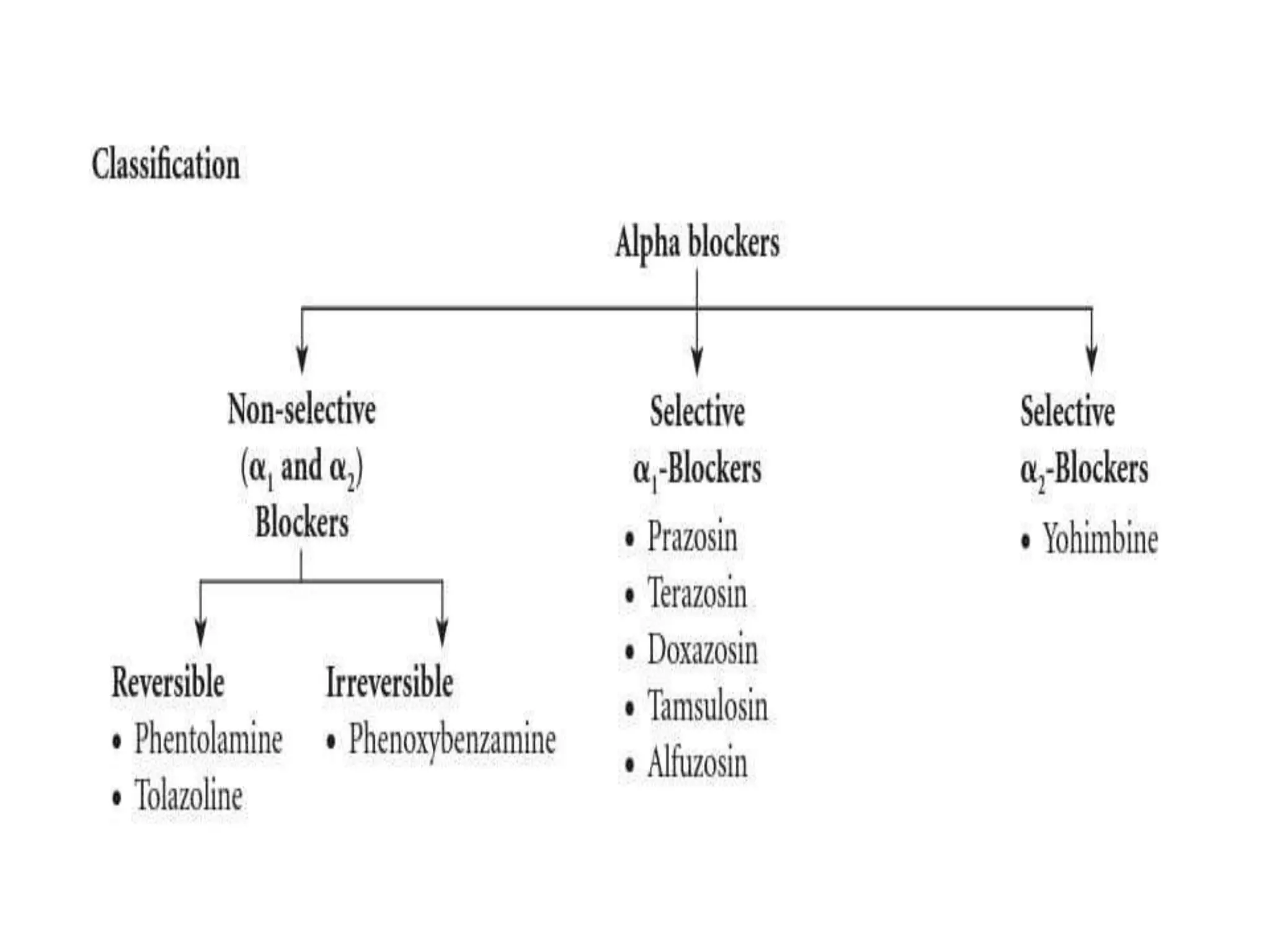
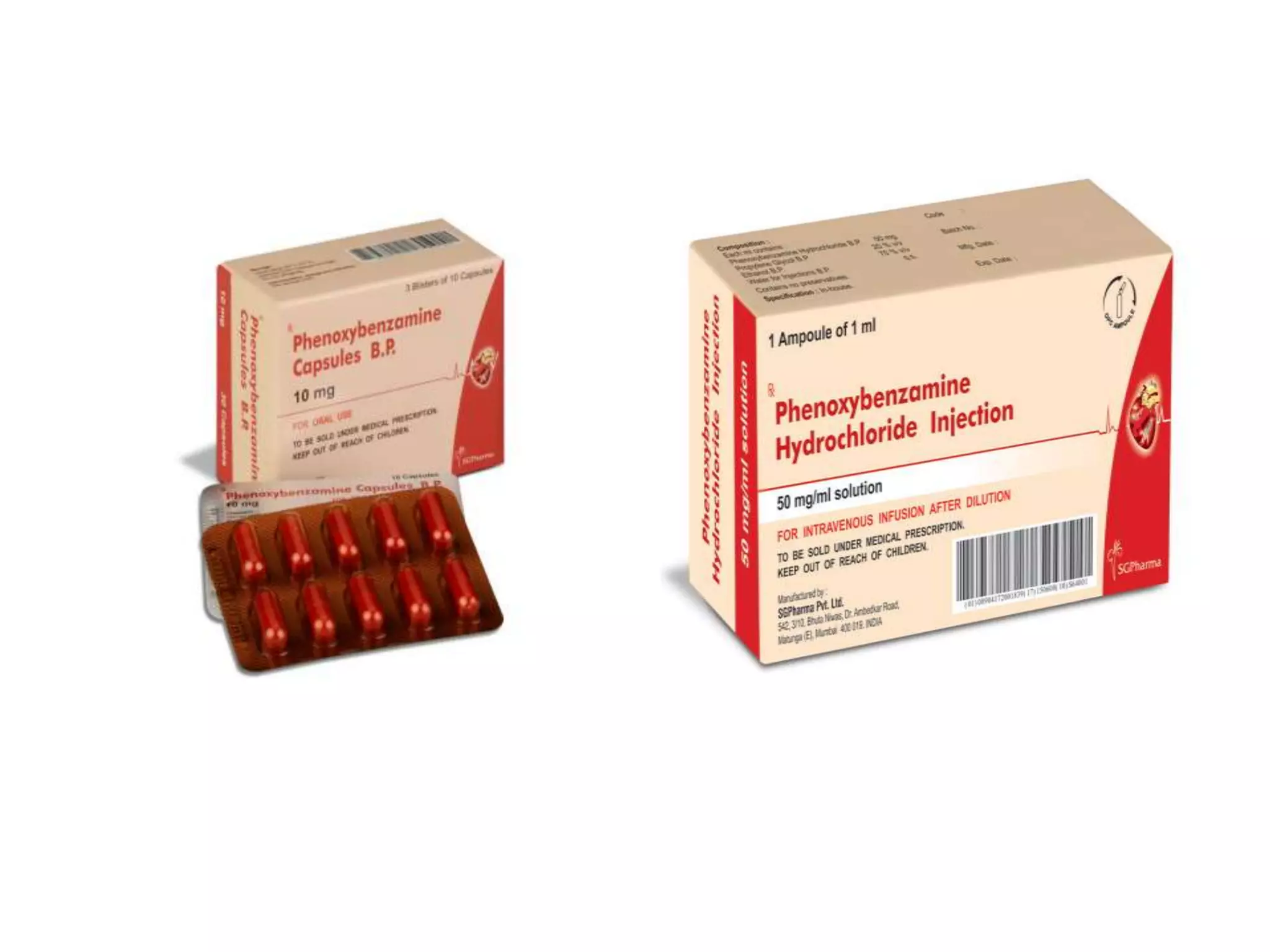
• PHENOXYBENZAMINE
• it is a nonselective irreversible alpha blocker that blocks
both alpha1 and alpha2-receptors.
• It binds covalently to alpha-receptors and causes
irreversible blockade. It also inhibits the reuptake of NA
into the adrenergic nerve endings.
Phrmacolgical Actions:(mixed action)
1. reduces Peripheral vascular resistance due to the blockade
of vascular alpha 1-receptors.
2. Increased release of NA from the adrenergic nerve endings
due to the blockade of presynaptic alpha 2-receptors. This
may cause cardiac stimulation and produce tachycardia,
palpitation, cardiac arrhythmias, etc.
Use: pheochromocytoma
PHENTOLAMINE
• Phentolamine is an imidazoline derivative. It competitively
blocks the effects of NA at both alpha 1 and alpha2
receptors. It can also block 5-HT receptors, K+ channels and
cause histamine release from mast cells.
• Phentolamine is given intravenously
and has rapid onset but short duration of action.
• It is used intraoperatively during surgery of
phaeochromocytoma and
• in hypertensive emergencies
• Adverse effects :They include tachycardia,
• palpitation, arrhythmias; angina and MI may be
precipitated.
SELECTIVE ALPHA 1-
BLOCKERS
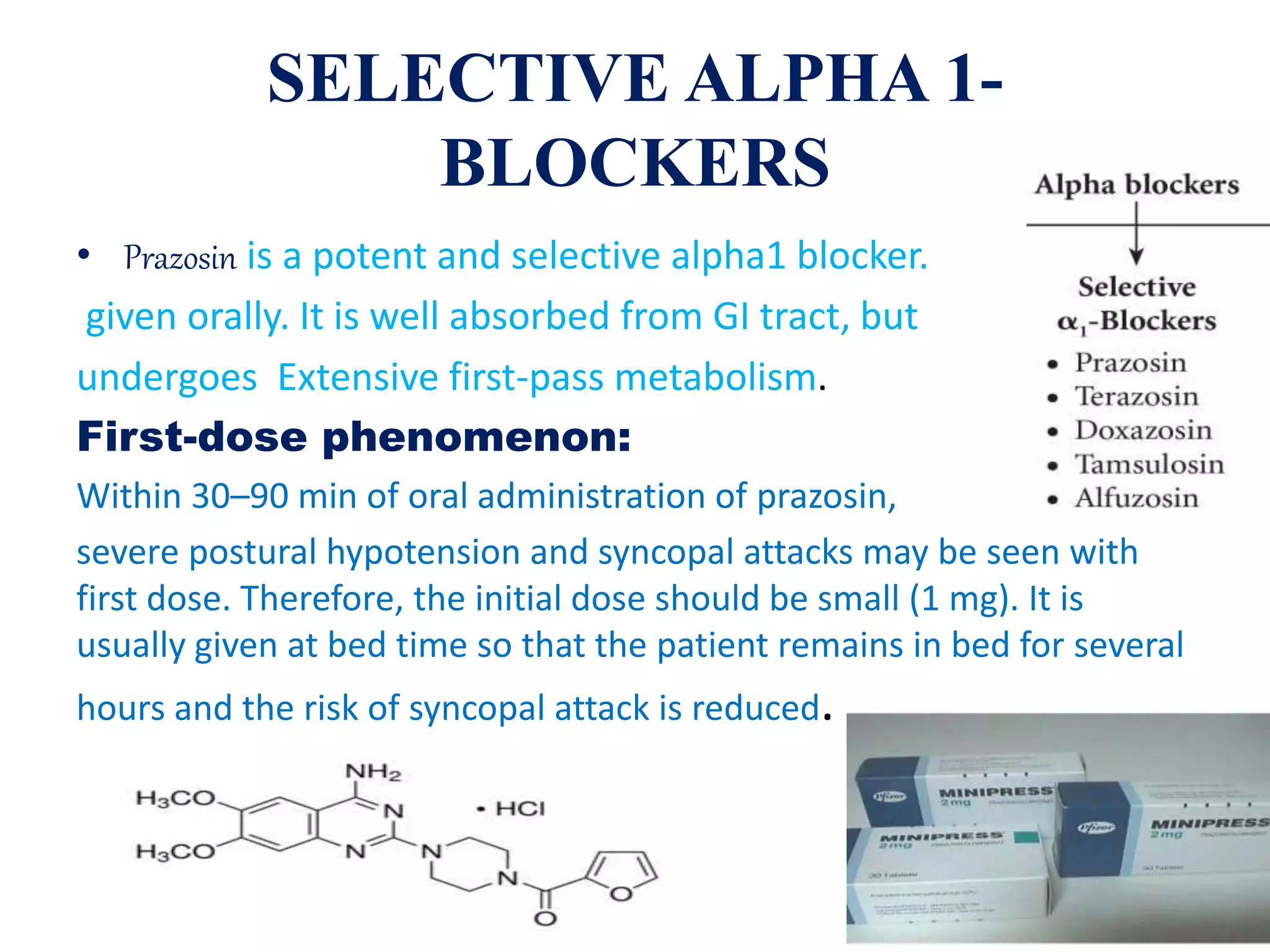
• Prazosin is a potent and selective alpha1 blocker.
given orally. It is well absorbed from GI tract, but
undergoes Extensive first-pass metabolism.
First-dose phenomenon:
Within 30–90 min of oral administration of prazosin,
severe postural hypotension and syncopal attacks may be seen with
first dose. Therefore, the initial dose should be small (1 mg). It is
usually given at bed time so that the patient remains in bed for several
hours and the risk of syncopal attack is reduced.
OTHER SELECTIVE ALPHA1-
BLOCKERS
• Terazosin is similar to prazosin, but less potent
than prazosin. It is almost completely absorbed
after oral administration and has a longer
duration of action.
• Doxazosin is the longest-acting, selective alpha 1-
blocker. The haemodynamic effects,
bioavailability and extent of metabolism are
similar to prazosin.
• Alfuzosin blocks all subtypes of alpha 1-receptors
(alpha 1A, 1B and 1D). It is orally effective and
used in benign prostatic hyperplasia (BPH)
TAMSULOSIN
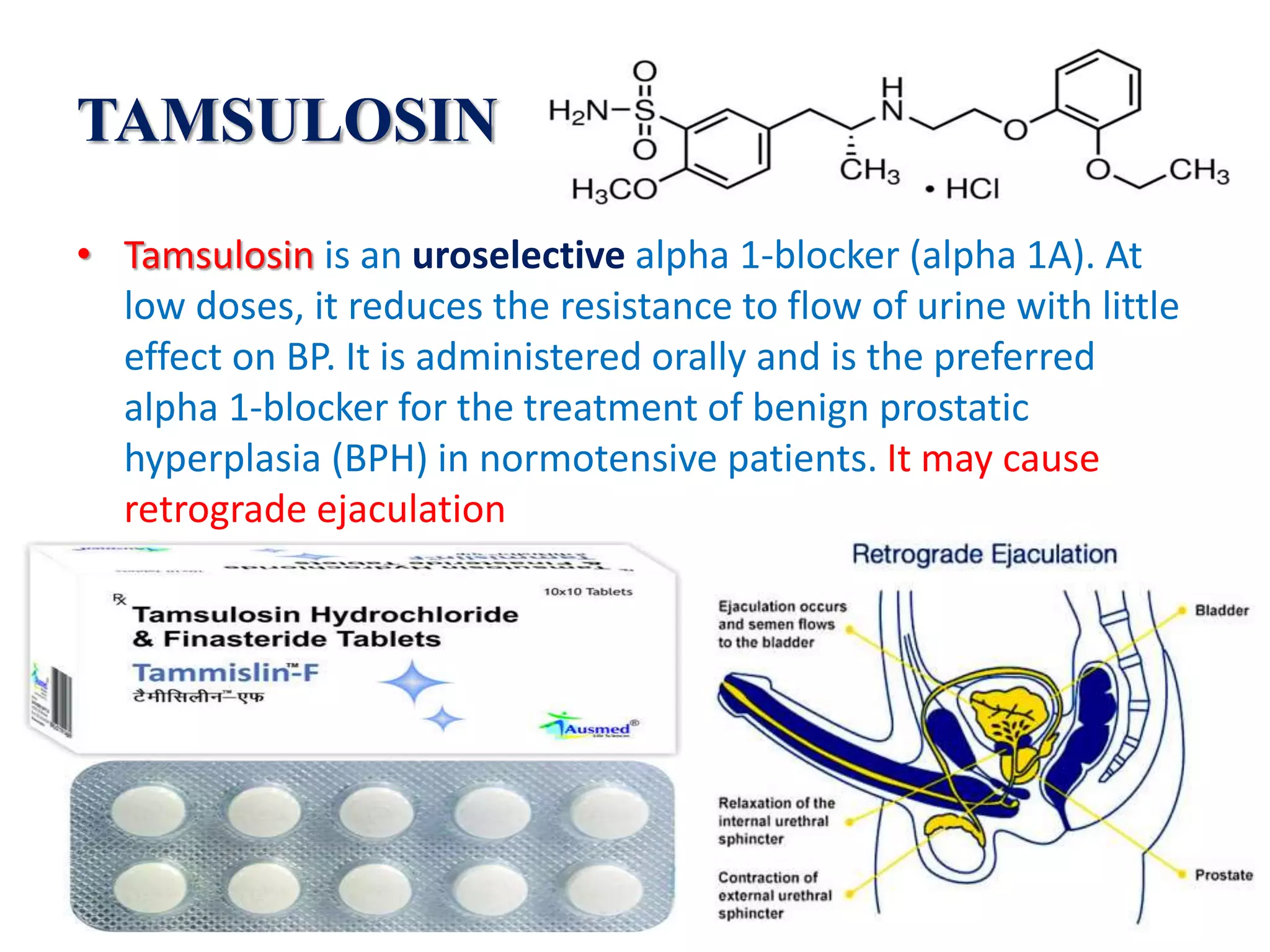
• Tamsulosin is an uroselective alpha 1-blocker (alpha 1A). At
low doses, it reduces the resistance to flow of urine with little
effect on BP. It is administered orally and is the preferred
alpha 1-blocker for the treatment of benign prostatic
hyperplasia (BPH) in normotensive patients. It may cause
retrograde ejaculation
YOHIMBINE
• Yohimbine An alkaloid from West African plant
Yohimbehe. It is a relatively selective α2 blocker with
short duration of action. Also blocks 5-HT receptors.
Heart rate and BP are generally elevated due to
increased central sympathetic outflow as well as
peripheral NA release.
• Other CNS effects include excitation, tremor, ADH
release (antidiuresis), nausea and vomiting. It may
cause congestion of genitals and has been claimed to
be an aphrodisiac. This effect is only psychological, but
can overcome psychogenic impotence in some
patients. There are no valid indications for clinical use
of yohimbine.
ERGOT ALKALOIDS
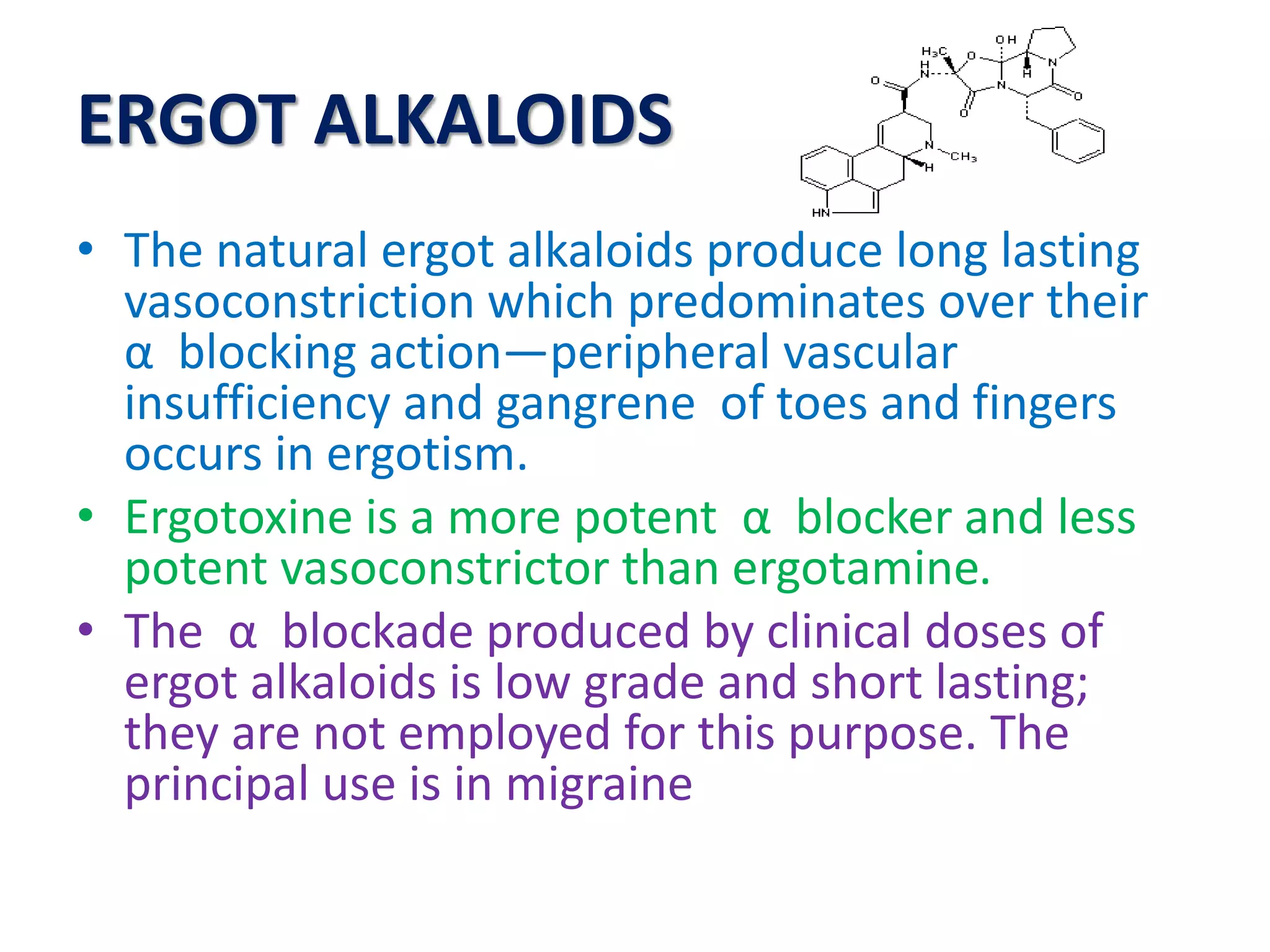
• The natural ergot alkaloids produce long lasting
vasoconstriction which predominates over their
α blocking action—peripheral vascular
insufficiency and gangrene of toes and fingers
occurs in ergotism.
• Ergotoxine is a more potent α blocker and less
potent vasoconstrictor than ergotamine.
• The α blockade produced by clinical doses of
ergot alkaloids is low grade and short lasting;
they are not employed for this purpose. The
principal use is in migraine
THERAPEUTIC USES OF ALPHA-
BLOCKERS
• Pheochromocytoma
• Hypertensive emergencies
• Essential hypertension
• Benign prostatic hyperplasia
• Tissue necrosis
• Kidney stones
• MIGRAINE
THANK YOU

Alpha blockers PHARMACOLOGY

  • 1.
    ALPHA RECEPTOR BLOCKERS Dr. SP Srinivas Nayak, PharmD, (MSc). Assistant Professor, Sultan-ul-Uloom college of Pharmacy, Hyderabad, Telangana, India.
  • 2.
    ALPHA RECEPTORS EFFECT OFACTIVATION OF ALPHA1-RECEPTORS Blood vessels: Constriction. GI sphincter (anal): Increase in tone. Urinary sphincter: Increase in tone. Radial muscle (iris): Contraction (mydriasis).
  • 3.
    EFFECT OF ACTIVATIONOF ALPHA 2 -RECEPTORS 1. Effect of activation of presynaptic Alpha 2 receptors: Mediate negative-feedback control on NA secretion. 2. Effect of activation of postsynaptic alpha 2 receptors: Vasoconstriction and venoconstriction. 3. Effect of activation of alpha 2 –receptors on various tissues: a) Beta cells of islets of Langerhans in pancreas: Decrease in insulin secretion. b) Ciliary epithelium: Reduction of aqueous humor secretion. c) Sympathetic nerve endings: Decrease in NA release.
  • 7.
    Pharmacology of AlphaBlockers • PHENOXYBENZAMINE • it is a nonselective irreversible alpha blocker that blocks both alpha1 and alpha2-receptors. • It binds covalently to alpha-receptors and causes irreversible blockade. It also inhibits the reuptake of NA into the adrenergic nerve endings. Phrmacolgical Actions:(mixed action) 1. reduces Peripheral vascular resistance due to the blockade of vascular alpha 1-receptors. 2. Increased release of NA from the adrenergic nerve endings due to the blockade of presynaptic alpha 2-receptors. This may cause cardiac stimulation and produce tachycardia, palpitation, cardiac arrhythmias, etc. Use: pheochromocytoma
  • 10.
    PHENTOLAMINE • Phentolamine isan imidazoline derivative. It competitively blocks the effects of NA at both alpha 1 and alpha2 receptors. It can also block 5-HT receptors, K+ channels and cause histamine release from mast cells. • Phentolamine is given intravenously and has rapid onset but short duration of action. • It is used intraoperatively during surgery of phaeochromocytoma and • in hypertensive emergencies • Adverse effects :They include tachycardia, • palpitation, arrhythmias; angina and MI may be precipitated.
  • 11.
    SELECTIVE ALPHA 1- BLOCKERS •Prazosin is a potent and selective alpha1 blocker. given orally. It is well absorbed from GI tract, but undergoes Extensive first-pass metabolism. First-dose phenomenon: Within 30–90 min of oral administration of prazosin, severe postural hypotension and syncopal attacks may be seen with first dose. Therefore, the initial dose should be small (1 mg). It is usually given at bed time so that the patient remains in bed for several hours and the risk of syncopal attack is reduced.
  • 12.
    OTHER SELECTIVE ALPHA1- BLOCKERS •Terazosin is similar to prazosin, but less potent than prazosin. It is almost completely absorbed after oral administration and has a longer duration of action. • Doxazosin is the longest-acting, selective alpha 1- blocker. The haemodynamic effects, bioavailability and extent of metabolism are similar to prazosin. • Alfuzosin blocks all subtypes of alpha 1-receptors (alpha 1A, 1B and 1D). It is orally effective and used in benign prostatic hyperplasia (BPH)
  • 13.
    TAMSULOSIN • Tamsulosin isan uroselective alpha 1-blocker (alpha 1A). At low doses, it reduces the resistance to flow of urine with little effect on BP. It is administered orally and is the preferred alpha 1-blocker for the treatment of benign prostatic hyperplasia (BPH) in normotensive patients. It may cause retrograde ejaculation
  • 14.
    YOHIMBINE • Yohimbine Analkaloid from West African plant Yohimbehe. It is a relatively selective α2 blocker with short duration of action. Also blocks 5-HT receptors. Heart rate and BP are generally elevated due to increased central sympathetic outflow as well as peripheral NA release. • Other CNS effects include excitation, tremor, ADH release (antidiuresis), nausea and vomiting. It may cause congestion of genitals and has been claimed to be an aphrodisiac. This effect is only psychological, but can overcome psychogenic impotence in some patients. There are no valid indications for clinical use of yohimbine.
  • 15.
    ERGOT ALKALOIDS • Thenatural ergot alkaloids produce long lasting vasoconstriction which predominates over their α blocking action—peripheral vascular insufficiency and gangrene of toes and fingers occurs in ergotism. • Ergotoxine is a more potent α blocker and less potent vasoconstrictor than ergotamine. • The α blockade produced by clinical doses of ergot alkaloids is low grade and short lasting; they are not employed for this purpose. The principal use is in migraine
  • 17.
    THERAPEUTIC USES OFALPHA- BLOCKERS • Pheochromocytoma • Hypertensive emergencies • Essential hypertension • Benign prostatic hyperplasia • Tissue necrosis • Kidney stones • MIGRAINE
  • 18.