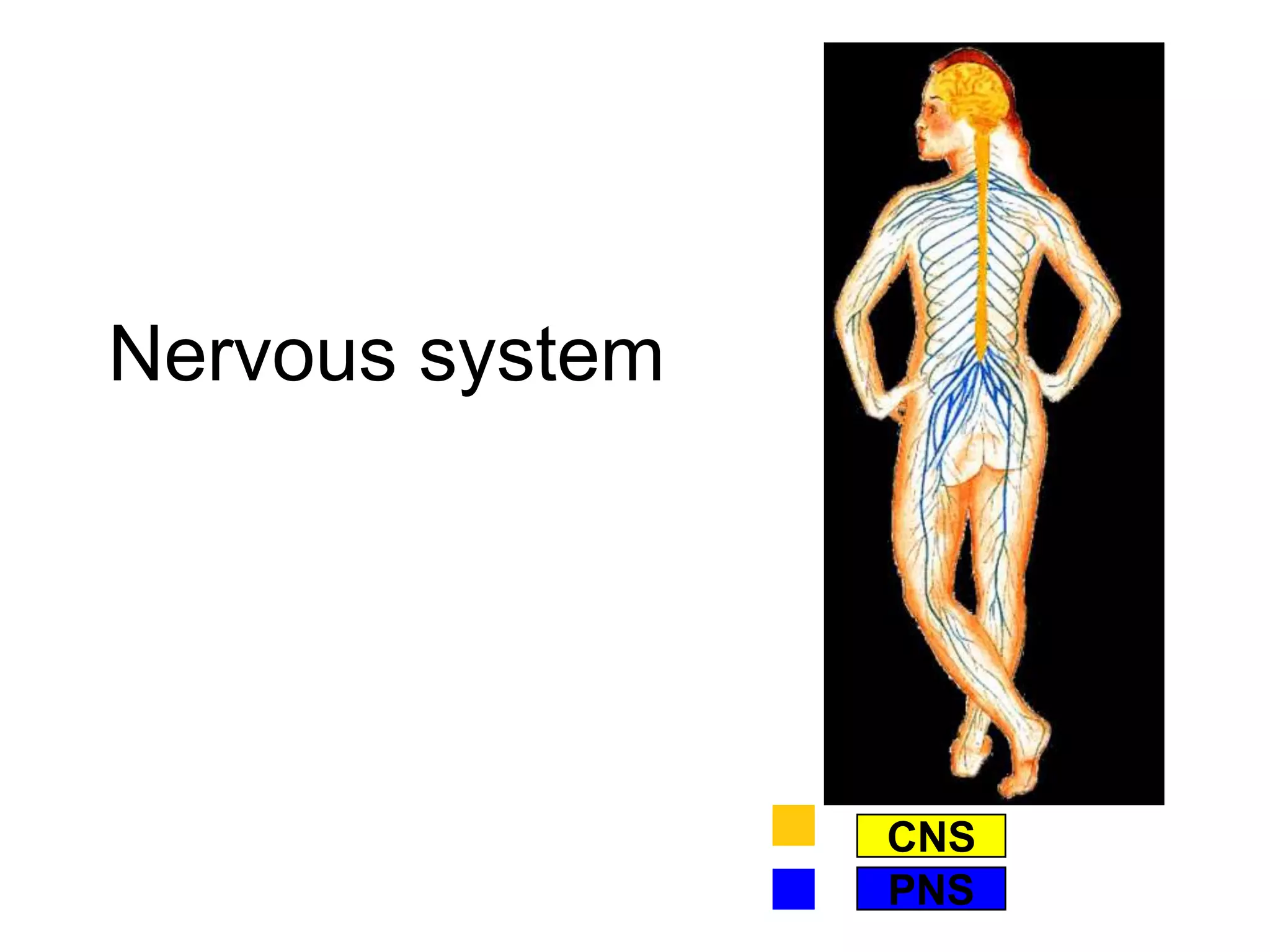
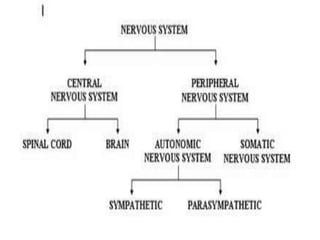
Nervous system
Peripheral Nervous System
CNS
PNS
PNS
• Consists of bundles of sensory and motor
neurons
• It relaying information between the central
nervous system and muscles or sensory
organs.
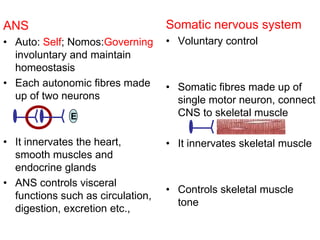
ANS
• Auto: Self; Nomos:Governing
involuntary and maintain
homeostasis
• Each autonomic fibres made
up of two neurons
• It innervates the heart,
smooth muscles and
endocrine glands
• ANS controls visceral
functions such as circulation,
digestion, excretion etc.,
Somatic nervous system
• Voluntary control
• Somatic fibres made up of
single motor neuron, connect
CNS to skeletal muscle
• It innervates skeletal muscle
• Controls skeletal muscle
tone
E
ANS
• Afferent (Sensory) Sensory organs to CNS
• Efferent (Motor) CNS to effector cells.
• Motor responses are auto regulatory in nature.
Regulates unconscious body functions such as:
– All exocrine and some endocrine secretions
– heart rate
– Blood pressure
– Some metabolic functions
Divisions:-
–Sympathetic
–Parasympathetic
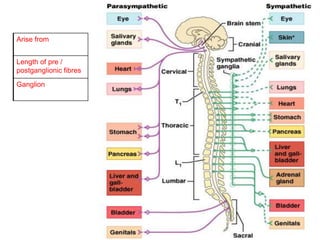
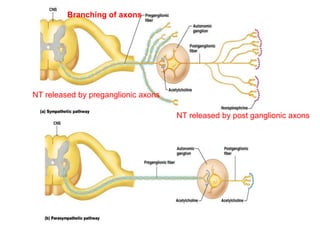
Arise from
Length of pre /
postganglionic fibres
Ganglion
Branching of axons
NT released by preganglionic axons
NT released by post ganglionic axons
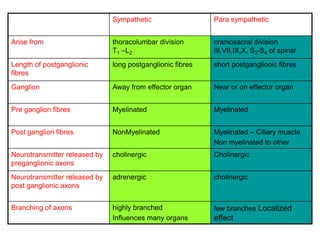
Sympathetic Para sympathetic
Arise from thoracolumbar division
T1 –L2
craniosacral division
III,VII,IX,X, S2-S4 of spinal
Length of postganglionic
fibres
long postganglionic fibres short postganglionic fibres
Ganglion Away from effector organ Near or on effector organ
Pre ganglion fibres Myelinated Myelinated
Post ganglion fibres NonMyelinated Myelinated – Ciliary muscle
Non myelinated to other
Neurotransmitter released by
preganglionic axons
cholinergic Cholinergic
Neurotransmitter released by
post ganglionic axons
adrenergic cholinergic
Branching of axons highly branched
Influences many organs
few branches Localized
effect
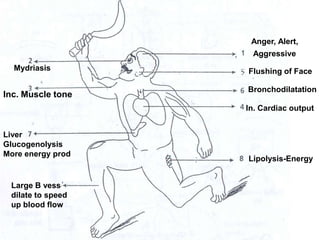
Anger, Alert,
Aggressive
Flushing of Face
Bronchodilatation
Mydriasis
In. Cardiac output
Inc. Muscle tone
Lipolysis-Energy
Liver
Glucogenolysis
More energy prod
Large B vessels
dilate to speed
up blood flow
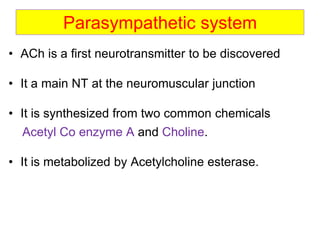
Parasympathetic system
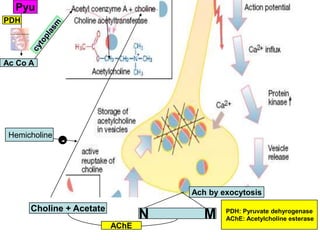
• ACh is a first neurotransmitter to be discovered
• It a main NT at the neuromuscular junction
• It is synthesized from two common chemicals
Acetyl Co enzyme A and Choline.
• It is metabolized by Acetylcholine esterase.
• Cholinomimetics, mimic the action of Ach
c/s parasympathomimetics”
• All parasympathetic fibres release Ach.
• External Ach is no therapeutic value due to its ultra
short acting.
• Hypothalamus is major controlling centre
N M
Choline + Acetate
Pyu
PDH
Ac Co A
Ach by exocytosis
Hemicholine
-
AChE
PDH: Pyruvate dehyrogenase
AChE: Acetylcholine esterase
Metabolism:- In synaptic cleft, Ach is rapidly hydrolyzed by
acetyl cholinesterase (AChE) enzyme
Two type of cholinesterases.
True And Pseudo cholinesterase
True cholinesterase:
• Found in cholinergic neurons, ganglia, RBCs and NMJ.
• Highly specific for Ach, other acetylesters (methacholine
and bethanechol)
Pseudo cholinesterase/ butyrylcholinesterase /
Plasma choline esterase :
• Synthesized in liver
• found in plasma and intestine .
• Actions are non specific
• It hydrolyzed Ach, benzoylcholine and
butyrylcholine esters
• Genetically variation
• atypicalcholine esterase slowly hydrolyzesis
• Typical choline (Fast acetylates)
N receptors
• The cholinergic receptors are divided into
Nicotinic and Muscarinic.
• Nicotinic receptors located
– NMJ and Autonomic ganglia
– brain (located presynaptically) facilitatory role in
release of other NT like DA and Glutamate.
• N receptor subtypes are muscle type (NM),
neuronal type (NN) and central nicotinic
receptors.
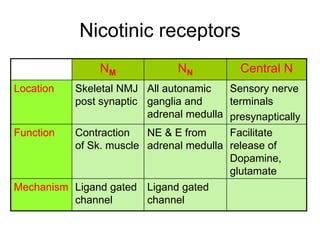
Nicotinic receptors
NM NN Central N
Location Skeletal NMJ
post synaptic
All autonamic
ganglia and
adrenal medulla
Sensory nerve
terminals
presynaptically
Function Contraction
of Sk. muscle
NE & E from
adrenal medulla
Facilitate
release of
Dopamine,
glutamate
Mechanism Ligand gated
channel
Ligand gated
channel
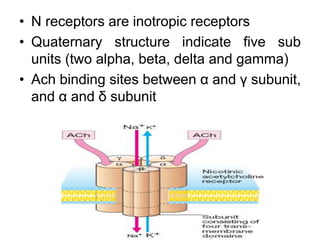
• N receptors are inotropic receptors
• Quaternary structure indicate five sub
units (two alpha, beta, delta and gamma)
• Ach binding sites between α and γ subunit,
and α and δ subunit
Mechanism of action
• Ach interacts with nicotinic Ach receptor, it
opens Na+ channel and Na+ ions flow into
the membrane
• Causes a depolarization, and result in
EPP.
• It cause excitatory on skeletal muscle.
Response is fast and short lived.
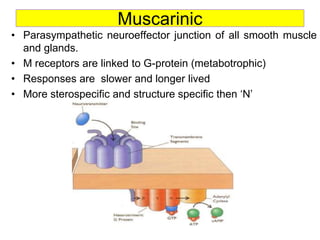
Muscarinic
• Parasympathetic neuroeffector junction of all smooth muscle
and glands.
• M receptors are linked to G-protein (metabotrophic)
• Responses are slower and longer lived
• More sterospecific and structure specific then „N‟
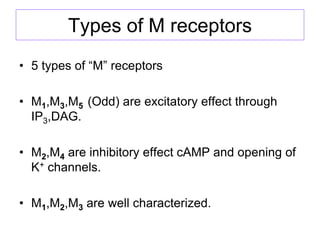
Types of M receptors
• 5 types of “M” receptors
• M1,M3,M5 (Odd) are excitatory effect through
IP3,DAG.
• M2,M4 are inhibitory effect cAMP and opening of
K+ channels.
• M1,M2,M3 are well characterized.
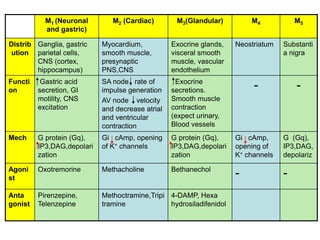
M1 (Neuronal
and gastric)
M2 (Cardiac) M3(Glandular) M4 M5
Distrib
ution
Ganglia, gastric
parietal cells,
CNS (cortex,
hippocampus)
Myocardium,
smooth muscle,
presynaptic
PNS,CNS
Exocrine glands,
visceral smooth
muscle, vascular
endothelium
Neostriatum Substanti
a nigra
Functi
on
Gastric acid
secretion, GI
motility, CNS
excitation
SA node rate of
impulse generation
AV node velocity
and decrease atrial
and ventricular
contraction
Exocrine
secretions.
Smooth muscle
contraction
(expect urinary,
Blood vessels
- -
Mech G protein (Gq),
IP3,DAG,depolari
zation
Gi cAmp, opening
of K+ channels
G protein (Gq),
IP3,DAG,depolari
zation
Gi cAmp,
opening of
K+ channels
G (Gq),
IP3,DAG,
depolariz
Agoni
st
Oxotremorine Methacholine Bethanechol
- -
Anta
gonist
Pirenzepine,
Telenzepine
Methoctramine,Tripi
tramine
4-DAMP, Hexa
hydrosiladifenidol
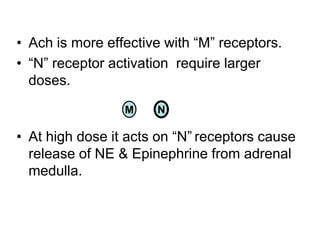
• Ach is more effective with “M” receptors.
• “N” receptor activation require larger
doses.
• At high dose it acts on “N” receptors cause
release of NE & Epinephrine from adrenal
medulla.
M N
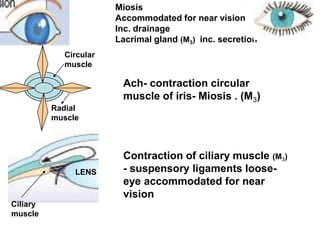
Ach- contraction circular
muscle of iris- Miosis . (M3)
Contraction of ciliary muscle (M3)
- suspensory ligaments loose-
eye accommodated for near
vision
Miosis
Accommodated for near vision
Inc. drainage
Lacrimal gland (M3) inc. secretion
LENS
Ciliary
muscle
Circular
muscle
Radial
muscle
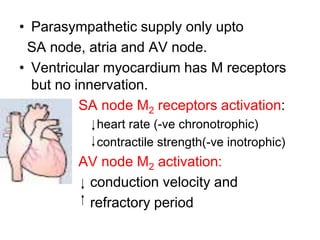
• Parasympathetic supply only upto
SA node, atria and AV node.
• Ventricular myocardium has M receptors
but no innervation.
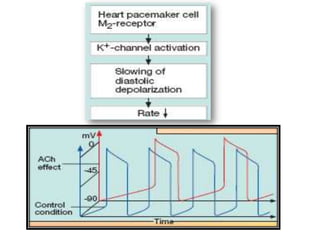
• SA node M2 receptors activation:
– heart rate (-ve chronotrophic)
– contractile strength(-ve inotrophic)
• AV node M2 activation:
conduction velocity and
refractory period
RP RP
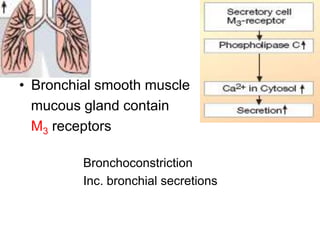
• Bronchial smooth muscle
mucous gland contain
M3 receptors
Bronchoconstriction
Inc. bronchial secretions
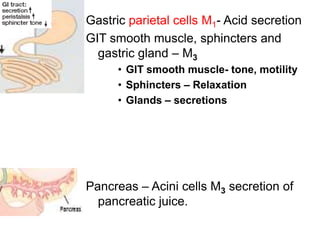
Gastric parietal cells M1- Acid secretion
GIT smooth muscle, sphincters and
gastric gland – M3
• GIT smooth muscle- tone, motility
• Sphincters – Relaxation
• Glands – secretions
Pancreas – Acini cells M3 secretion of
pancreatic juice.
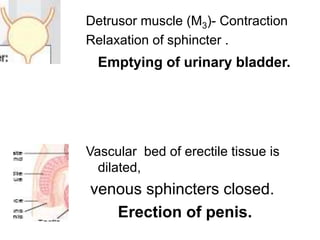
Detrusor muscle (M3)- Contraction
Relaxation of sphincter .
Emptying of urinary bladder.
Vascular bed of erectile tissue is
dilated,
venous sphincters closed.
Erection of penis.
• Arteries have no parasympathetic, but M
receptors.
• Release EDRF, cause vasodilatation.
• Exogenous Ach cause fall in BP, it evoke
baroreceptor reflex, result sympathetic
discharge at heart.
• Bardycardia initial, after followed by
tachycardia.
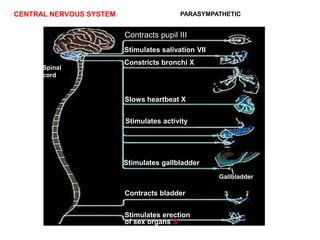
CENTRAL NERVOUS SYSTEM
Brain
PARASYMPATHETIC
Spinal
cord
Stimulates salivation VII
Constricts bronchi X
Slows heartbeat X
Stimulates activity
Contracts bladder
Stimulates erection
of sex organs S
Stimulates gallbladder
Gallbladder
Contracts pupil III
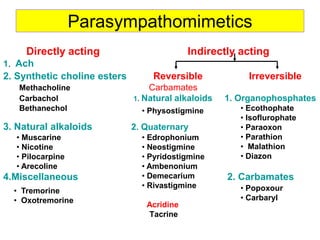
Parasympathomimetics
Directly acting Indirectly acting
1. Ach
2. Synthetic choline esters Reversible Irreversible
Methacholine Carbamates
Carbachol 1. Natural alkaloids 1. Organophosphates
Bethanechol
3. Natural alkaloids 2. Quaternary
4.Miscellaneous 2. Carbamates
Acridine
Tacrine
• Edrophonium
• Neostigmine
• Pyridostigmine
• Ambenonium
• Demecarium
• Rivastigmine • Popoxour
• Carbaryl
• Tremorine
• Oxotremorine
• Muscarine
• Nicotine
• Pilocarpine
• Arecoline
• Physostigmine • Ecothophate
• Isoflurophate
• Paraoxon
• Parathion
• Malathion
• Diazon
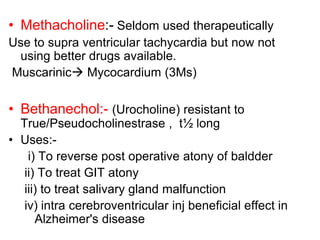
• Methacholine:- Seldom used therapeutically
Use to supra ventricular tachycardia but now not
using better drugs available.
Muscarinic Mycocardium (3Ms)
• Bethanechol:- (Urocholine) resistant to
True/Pseudocholinestrase , t½ long
• Uses:-
i) To reverse post operative atony of baldder
ii) To treat GIT atony
iii) to treat salivary gland malfunction
iv) intra cerebroventricular inj beneficial effect in
Alzheimer's disease
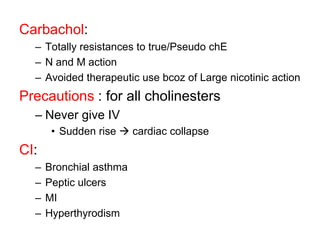
Carbachol:
– Totally resistances to true/Pseudo chE
– N and M action
– Avoided therapeutic use bcoz of Large nicotinic action
Precautions : for all cholinesters
– Never give IV
• Sudden rise  cardiac collapse
CI:
– Bronchial asthma
– Peptic ulcers
– MI
– Hyperthyrodism
Pilocarpine (natural)
• Obtained from the leaves of Pilocrapus
microphyllus.
• Tertiary amine cross BBB
• Prominent Muscarinic action.
• Increases all the secretions .
• Have complex effect on CVS, small doses
decreases BP but larger doses have opposite
action. (Ganglionic stimulation NN stimulation)
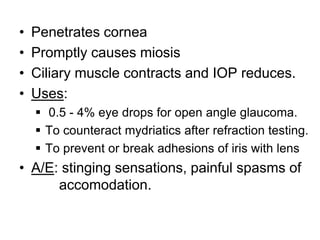
• Penetrates cornea
• Promptly causes miosis
• Ciliary muscle contracts and IOP reduces.
• Uses:
 0.5 - 4% eye drops for open angle glaucoma.
 To counteract mydriatics after refraction testing.
 To prevent or break adhesions of iris with lens
• A/E: stinging sensations, painful spasms of
accomodation.
• Muscarine :source Amantia muscaria
Not used therapeutically
• Arecoiline: Found in Beetel nuts Areca
catechu
Muscrinic as well as nicotinic action
Not used therapeutically
Side effects:- result of over stimulation
of the parasympathetic system .
• Cardiovascular:
– Bradycardia, hypotension, conduction
abnormalities (AV block and cardiac arrest)
• CNS:
– Headache, dizziness, convulsions
• Gastrointestinal:
– Abdominal cramps, increased secretions,
nausea, vomiting
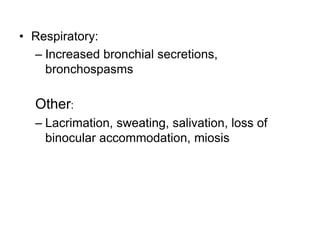
• Respiratory:
– Increased bronchial secretions,
bronchospasms
Other:
– Lacrimation, sweating, salivation, loss of
binocular accommodation, miosis
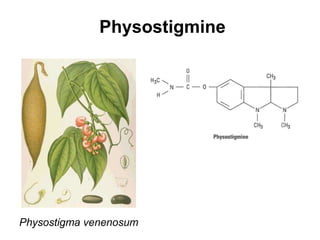
Physostigmine
Physostigma venenosum
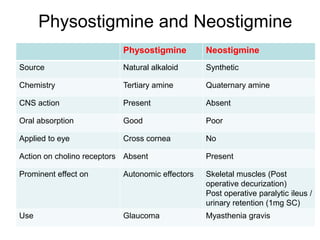
Physostigmine and Neostigmine
Physostigmine Neostigmine
Source Natural alkaloid Synthetic
Chemistry Tertiary amine Quaternary amine
CNS action Present Absent
Oral absorption Good Poor
Applied to eye Cross cornea No
Action on cholino receptors Absent Present
Prominent effect on Autonomic effectors Skeletal muscles (Post
operative decurization)
Post operative paralytic ileus /
urinary retention (1mg SC)
Use Glaucoma Myasthenia gravis
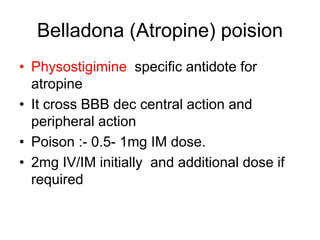
Belladona (Atropine) poision
• Physostigimine specific antidote for
atropine
• It cross BBB dec central action and
peripheral action
• Poison :- 0.5- 1mg IM dose.
• 2mg IV/IM initially and additional dose if
required
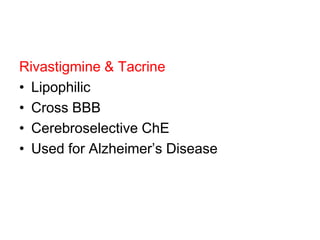
Rivastigmine & Tacrine
• Lipophilic
• Cross BBB
• Cerebroselective ChE
• Used for Alzheimer‟s Disease
Glaucoma
• Glaucoma is an increased intraocular
pressure.
• If persistent it leads to optic nerve damage
result in blindness.
• Glaucoma is caused by impaired drainage
or inc. aqueous humor.
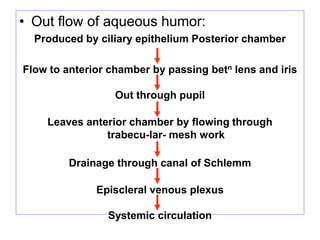
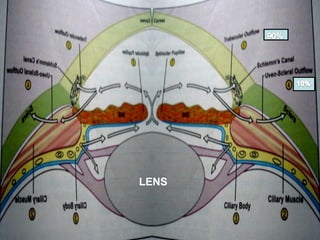
• Out flow of aqueous humor:
Produced by ciliary epithelium Posterior chamber
Flow to anterior chamber by passing betn lens and iris
Out through pupil
Leaves anterior chamber by flowing through
trabecu-lar- mesh work
Drainage through canal of Schlemm
Episcleral venous plexus
Systemic circulation
LENS
3 Types of glaucoma
1.Primary (after trauma)
2.secondary (followed by cataract operation)
3.congenital.(By birth)
-Primary / secondary glaucoma Physostigmine in
combination with pilocarpine used.
-Congenital glaucoma hardly respond to drug
therapy, except surgery.
Primary glaucoma is subdivided to 2 types
1. Narrow angle
2. Open angle
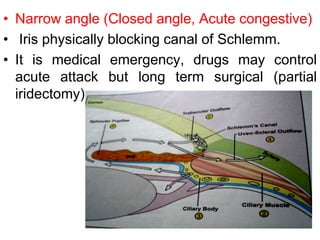
• Narrow angle (Closed angle, Acute congestive)
• Iris physically blocking canal of Schlemm.
• It is medical emergency, drugs may control
acute attack but long term surgical (partial
iridectomy)
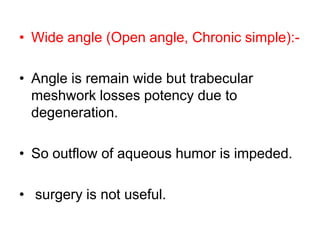
• Wide angle (Open angle, Chronic simple):-
• Angle is remain wide but trabecular
meshwork losses potency due to
degeneration.
• So outflow of aqueous humor is impeded.
• surgery is not useful.
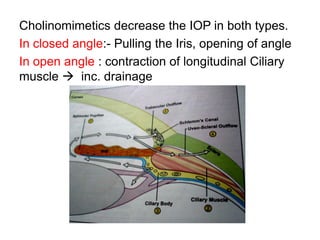
Cholinomimetics decrease the IOP in both types.
In closed angle:- Pulling the Iris, opening of angle
In open angle : contraction of longitudinal Ciliary
muscle  inc. drainage
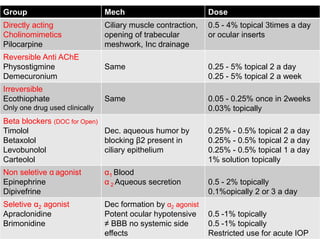
Group Mech Dose
Directly acting
Cholinomimetics
Pilocarpine
Ciliary muscle contraction,
opening of trabecular
meshwork, Inc drainage
0.5 - 4% topical 3times a day
or ocular inserts
Reversible Anti AChE
Physostigmine
Demecuronium
Same 0.25 - 5% topical 2 a day
0.25 - 5% topical 2 a week
Irreversible
Ecothiophate
Only one drug used clinically
Same 0.05 - 0.25% once in 2weeks
0.03% topically
Beta blockers (DOC for Open)
Timolol
Betaxolol
Levobunolol
Carteolol
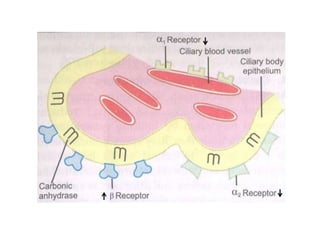
Dec. aqueous humor by
blocking β2 present in
ciliary epithelium
0.25% - 0.5% topical 2 a day
0.25% - 0.5% topical 1 a day
1% solution topically
Non seletive α agonist
Epinephrine
Dipivefrine
α1 Blood
α 2 Aqueous secretion 0.5 - 2% topically
0.1%opically 2 or 3 a day
Seletive α2 agonist
Apraclonidine
Brimonidine
Dec formation by α2 agonist
Potent ocular hypotensive
≠ BBB no systemic side
effects
0.5 -1% topically
0.5 -1% topically
Restricted use for acute IOP
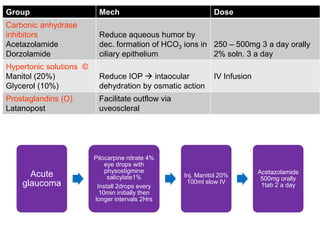
Group Mech Dose
Carbonic anhydrase
inhibitors
Acetazolamide
Dorzolamide
Reduce aqueous humor by
dec. formation of HCO3 ions in
ciliary epithelium
250 – 500mg 3 a day orally
2% soln. 3 a day
Hypertonic solutions ©
Manitol (20%)
Glycerol (10%)
Reduce IOP  intaocular
dehydration by osmatic action
IV Infusion
Prostaglandins (O)
Latanopost
Facilitate outflow via
uveoscleral
Acute
glaucoma
Pilocarpine nitrate 4%
eye drops with
physostigmine
salicylate1%
Install 2drops every
10min initially then
longer intervals 2Hrs
Inj. Manitol 20%
100ml slow IV
Acetazolamide
500mg orally
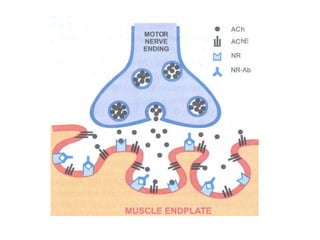
1tab 2 a day
Myasthenia gravis
• Autoimmuno disorder
• Occurs 1 in 10,000
• It is associated with production of IgG
antibody that binds to Ach receptors at
post junctional motor end plate
• Fast moving muscles are affected first
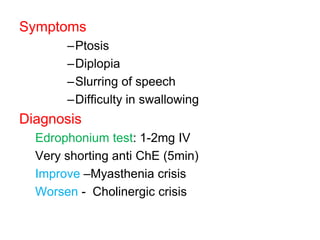
Symptoms
–Ptosis
–Diplopia
–Slurring of speech
–Difficulty in swallowing
Diagnosis
Edrophonium test: 1-2mg IV
Very shorting anti ChE (5min)
Improve –Myasthenia crisis
Worsen - Cholinergic crisis
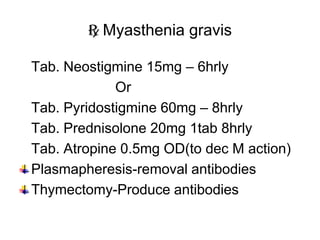
R Myasthenia gravis
Tab. Neostigmine 15mg – 6hrly
Or
Tab. Pyridostigmine 60mg – 8hrly
Tab. Prednisolone 20mg 1tab 8hrly
Tab. Atropine 0.5mg OD(to dec M action)
Plasmapheresis-removal antibodies
Thymectomy-Produce antibodies
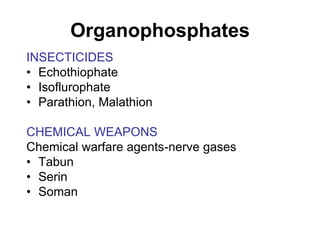
Organophosphates
INSECTICIDES
• Echothiophate
• Isoflurophate
• Parathion, Malathion
CHEMICAL WEAPONS
Chemical warfare agents-nerve gases
• Tabun
• Serin
• Soman
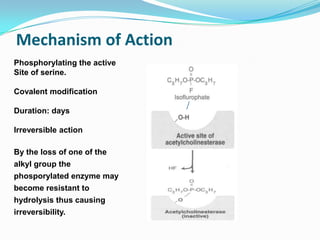
Mechanism of Action
Phosphorylating the active
Site of serine.
Covalent modification
Duration: days
Irreversible action
By the loss of one of the
alkyl group the
phosporylated enzyme may
become resistant to
hydrolysis thus causing
irreversibility.
Uses of AChE
Ecothiophate
• Quaternary compound
• Water soluble
• Don‟t cross BBB
• Used as miotic and management of
glaucoma (Ophthalmic solution 0.05- 0.25%)
• Potent and longer acting
• No local irritation
Isofluorophosphate :
• oil in character cause local irritation
Effects
• Cardiovascular:
Bradycardia, hypotension
• Gastrointestinal:
Nausea, vomiting, diarrhea
• Urinary tract:
Incontinence, urinary urgency
• Glands:
Salivation, lacrimation, sweating
• Eye:
Miosis, blurred vision
• Respiratory
bronchoconstriction, bronchial secretion
Toxicity of AChE Inhibitors
2. Skeletal Muscle: Fasciculations, weakness, paralysis
3. CNS: Ataxia, confusion, convulsions, coma, paralysis
4. Death:
Respiratory depression due to bronchoconstriction, increased
secretions, paralysis of diaphragm and intercostals muscles and
central respiratory depression
Treatment of AChE Poisoning
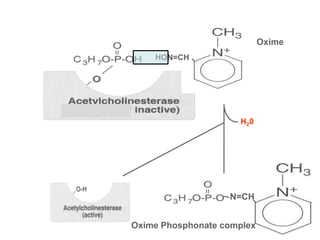
Atropine
Reverses muscarinic but not nicotinic
AchE reactivating drugs
Pralidoxime (Pyrindine 2-Aldoxime Methylcholride 2-PAM):
HON=CH
H20
N=CH
Oxime
Oxime Phosphonate complex
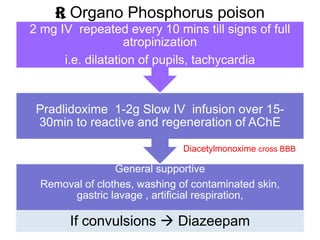
General supportive
Removal of clothes, washing of contaminated skin,
gastric lavage , artificial respiration,
If convulsions  Diazeepam
Pradlidoxime 1-2g Slow IV infusion over 15-
30min to reactive and regeneration of AChE
2 mg IV repeated every 10 mins till signs of full
atropinization
i.e. dilatation of pupils, tachycardia
R Organo Phosphorus poison
Diacetylmonoxime cross BBB
Thank Q

Ans (parasympathetic)

  • 1.
  • 3.
    PNS • Consists ofbundles of sensory and motor neurons • It relaying information between the central nervous system and muscles or sensory organs.
  • 4.
    ANS • Auto: Self;Nomos:Governing involuntary and maintain homeostasis • Each autonomic fibres made up of two neurons • It innervates the heart, smooth muscles and endocrine glands • ANS controls visceral functions such as circulation, digestion, excretion etc., Somatic nervous system • Voluntary control • Somatic fibres made up of single motor neuron, connect CNS to skeletal muscle • It innervates skeletal muscle • Controls skeletal muscle tone E
  • 5.
    ANS • Afferent (Sensory)Sensory organs to CNS • Efferent (Motor) CNS to effector cells. • Motor responses are auto regulatory in nature. Regulates unconscious body functions such as: – All exocrine and some endocrine secretions – heart rate – Blood pressure – Some metabolic functions
  • 6.
  • 7.
    Arise from Length ofpre / postganglionic fibres Ganglion
  • 8.
    Branching of axons NTreleased by preganglionic axons NT released by post ganglionic axons
  • 9.
    Sympathetic Para sympathetic Arisefrom thoracolumbar division T1 –L2 craniosacral division III,VII,IX,X, S2-S4 of spinal Length of postganglionic fibres long postganglionic fibres short postganglionic fibres Ganglion Away from effector organ Near or on effector organ Pre ganglion fibres Myelinated Myelinated Post ganglion fibres NonMyelinated Myelinated – Ciliary muscle Non myelinated to other Neurotransmitter released by preganglionic axons cholinergic Cholinergic Neurotransmitter released by post ganglionic axons adrenergic cholinergic Branching of axons highly branched Influences many organs few branches Localized effect
  • 10.
    Anger, Alert, Aggressive Flushing ofFace Bronchodilatation Mydriasis In. Cardiac output Inc. Muscle tone Lipolysis-Energy Liver Glucogenolysis More energy prod Large B vessels dilate to speed up blood flow
  • 11.
    Parasympathetic system • AChis a first neurotransmitter to be discovered • It a main NT at the neuromuscular junction • It is synthesized from two common chemicals Acetyl Co enzyme A and Choline. • It is metabolized by Acetylcholine esterase.
  • 12.
    • Cholinomimetics, mimicthe action of Ach c/s parasympathomimetics” • All parasympathetic fibres release Ach. • External Ach is no therapeutic value due to its ultra short acting. • Hypothalamus is major controlling centre
  • 13.
    N M Choline +Acetate Pyu PDH Ac Co A Ach by exocytosis Hemicholine - AChE PDH: Pyruvate dehyrogenase AChE: Acetylcholine esterase
  • 14.
    Metabolism:- In synapticcleft, Ach is rapidly hydrolyzed by acetyl cholinesterase (AChE) enzyme Two type of cholinesterases. True And Pseudo cholinesterase True cholinesterase: • Found in cholinergic neurons, ganglia, RBCs and NMJ. • Highly specific for Ach, other acetylesters (methacholine and bethanechol)
  • 15.
    Pseudo cholinesterase/ butyrylcholinesterase/ Plasma choline esterase : • Synthesized in liver • found in plasma and intestine . • Actions are non specific • It hydrolyzed Ach, benzoylcholine and butyrylcholine esters • Genetically variation • atypicalcholine esterase slowly hydrolyzesis • Typical choline (Fast acetylates)
  • 16.
    N receptors • Thecholinergic receptors are divided into Nicotinic and Muscarinic. • Nicotinic receptors located – NMJ and Autonomic ganglia – brain (located presynaptically) facilitatory role in release of other NT like DA and Glutamate. • N receptor subtypes are muscle type (NM), neuronal type (NN) and central nicotinic receptors.
  • 17.
    Nicotinic receptors NM NNCentral N Location Skeletal NMJ post synaptic All autonamic ganglia and adrenal medulla Sensory nerve terminals presynaptically Function Contraction of Sk. muscle NE & E from adrenal medulla Facilitate release of Dopamine, glutamate Mechanism Ligand gated channel Ligand gated channel
  • 18.
    • N receptorsare inotropic receptors • Quaternary structure indicate five sub units (two alpha, beta, delta and gamma) • Ach binding sites between α and γ subunit, and α and δ subunit
  • 19.
    Mechanism of action •Ach interacts with nicotinic Ach receptor, it opens Na+ channel and Na+ ions flow into the membrane • Causes a depolarization, and result in EPP. • It cause excitatory on skeletal muscle. Response is fast and short lived.
  • 20.
    Muscarinic • Parasympathetic neuroeffectorjunction of all smooth muscle and glands. • M receptors are linked to G-protein (metabotrophic) • Responses are slower and longer lived • More sterospecific and structure specific then „N‟
  • 21.
    Types of Mreceptors • 5 types of “M” receptors • M1,M3,M5 (Odd) are excitatory effect through IP3,DAG. • M2,M4 are inhibitory effect cAMP and opening of K+ channels. • M1,M2,M3 are well characterized.
  • 22.
    M1 (Neuronal and gastric) M2(Cardiac) M3(Glandular) M4 M5 Distrib ution Ganglia, gastric parietal cells, CNS (cortex, hippocampus) Myocardium, smooth muscle, presynaptic PNS,CNS Exocrine glands, visceral smooth muscle, vascular endothelium Neostriatum Substanti a nigra Functi on Gastric acid secretion, GI motility, CNS excitation SA node rate of impulse generation AV node velocity and decrease atrial and ventricular contraction Exocrine secretions. Smooth muscle contraction (expect urinary, Blood vessels - - Mech G protein (Gq), IP3,DAG,depolari zation Gi cAmp, opening of K+ channels G protein (Gq), IP3,DAG,depolari zation Gi cAmp, opening of K+ channels G (Gq), IP3,DAG, depolariz Agoni st Oxotremorine Methacholine Bethanechol - - Anta gonist Pirenzepine, Telenzepine Methoctramine,Tripi tramine 4-DAMP, Hexa hydrosiladifenidol
  • 23.
    • Ach ismore effective with “M” receptors. • “N” receptor activation require larger doses. • At high dose it acts on “N” receptors cause release of NE & Epinephrine from adrenal medulla. M N
  • 24.
    Ach- contraction circular muscleof iris- Miosis . (M3) Contraction of ciliary muscle (M3) - suspensory ligaments loose- eye accommodated for near vision Miosis Accommodated for near vision Inc. drainage Lacrimal gland (M3) inc. secretion LENS Ciliary muscle Circular muscle Radial muscle
  • 25.
    • Parasympathetic supplyonly upto SA node, atria and AV node. • Ventricular myocardium has M receptors but no innervation. • SA node M2 receptors activation: – heart rate (-ve chronotrophic) – contractile strength(-ve inotrophic) • AV node M2 activation: conduction velocity and refractory period
  • 26.
  • 27.
    • Bronchial smoothmuscle mucous gland contain M3 receptors Bronchoconstriction Inc. bronchial secretions
  • 28.
    Gastric parietal cellsM1- Acid secretion GIT smooth muscle, sphincters and gastric gland – M3 • GIT smooth muscle- tone, motility • Sphincters – Relaxation • Glands – secretions Pancreas – Acini cells M3 secretion of pancreatic juice.
  • 29.
    Detrusor muscle (M3)-Contraction Relaxation of sphincter . Emptying of urinary bladder. Vascular bed of erectile tissue is dilated, venous sphincters closed. Erection of penis.
  • 30.
    • Arteries haveno parasympathetic, but M receptors. • Release EDRF, cause vasodilatation. • Exogenous Ach cause fall in BP, it evoke baroreceptor reflex, result sympathetic discharge at heart. • Bardycardia initial, after followed by tachycardia.
  • 31.
    CENTRAL NERVOUS SYSTEM Brain PARASYMPATHETIC Spinal cord Stimulatessalivation VII Constricts bronchi X Slows heartbeat X Stimulates activity Contracts bladder Stimulates erection of sex organs S Stimulates gallbladder Gallbladder Contracts pupil III
  • 32.
    Parasympathomimetics Directly acting Indirectlyacting 1. Ach 2. Synthetic choline esters Reversible Irreversible Methacholine Carbamates Carbachol 1. Natural alkaloids 1. Organophosphates Bethanechol 3. Natural alkaloids 2. Quaternary 4.Miscellaneous 2. Carbamates Acridine Tacrine • Edrophonium • Neostigmine • Pyridostigmine • Ambenonium • Demecarium • Rivastigmine • Popoxour • Carbaryl • Tremorine • Oxotremorine • Muscarine • Nicotine • Pilocarpine • Arecoline • Physostigmine • Ecothophate • Isoflurophate • Paraoxon • Parathion • Malathion • Diazon
  • 33.
    • Methacholine:- Seldomused therapeutically Use to supra ventricular tachycardia but now not using better drugs available. Muscarinic Mycocardium (3Ms) • Bethanechol:- (Urocholine) resistant to True/Pseudocholinestrase , t½ long • Uses:- i) To reverse post operative atony of baldder ii) To treat GIT atony iii) to treat salivary gland malfunction iv) intra cerebroventricular inj beneficial effect in Alzheimer's disease
  • 34.
    Carbachol: – Totally resistancesto true/Pseudo chE – N and M action – Avoided therapeutic use bcoz of Large nicotinic action Precautions : for all cholinesters – Never give IV • Sudden rise  cardiac collapse CI: – Bronchial asthma – Peptic ulcers – MI – Hyperthyrodism
  • 35.
    Pilocarpine (natural) • Obtainedfrom the leaves of Pilocrapus microphyllus. • Tertiary amine cross BBB • Prominent Muscarinic action. • Increases all the secretions . • Have complex effect on CVS, small doses decreases BP but larger doses have opposite action. (Ganglionic stimulation NN stimulation)
  • 36.
    • Penetrates cornea •Promptly causes miosis • Ciliary muscle contracts and IOP reduces. • Uses:  0.5 - 4% eye drops for open angle glaucoma.  To counteract mydriatics after refraction testing.  To prevent or break adhesions of iris with lens • A/E: stinging sensations, painful spasms of accomodation.
  • 37.
    • Muscarine :sourceAmantia muscaria Not used therapeutically • Arecoiline: Found in Beetel nuts Areca catechu Muscrinic as well as nicotinic action Not used therapeutically
  • 38.
    Side effects:- resultof over stimulation of the parasympathetic system . • Cardiovascular: – Bradycardia, hypotension, conduction abnormalities (AV block and cardiac arrest) • CNS: – Headache, dizziness, convulsions • Gastrointestinal: – Abdominal cramps, increased secretions, nausea, vomiting
  • 39.
    • Respiratory: – Increasedbronchial secretions, bronchospasms Other: – Lacrimation, sweating, salivation, loss of binocular accommodation, miosis
  • 40.
  • 41.
    Physostigmine and Neostigmine PhysostigmineNeostigmine Source Natural alkaloid Synthetic Chemistry Tertiary amine Quaternary amine CNS action Present Absent Oral absorption Good Poor Applied to eye Cross cornea No Action on cholino receptors Absent Present Prominent effect on Autonomic effectors Skeletal muscles (Post operative decurization) Post operative paralytic ileus / urinary retention (1mg SC) Use Glaucoma Myasthenia gravis
  • 42.
    Belladona (Atropine) poision •Physostigimine specific antidote for atropine • It cross BBB dec central action and peripheral action • Poison :- 0.5- 1mg IM dose. • 2mg IV/IM initially and additional dose if required
  • 43.
    Rivastigmine & Tacrine •Lipophilic • Cross BBB • Cerebroselective ChE • Used for Alzheimer‟s Disease
  • 44.
    Glaucoma • Glaucoma isan increased intraocular pressure. • If persistent it leads to optic nerve damage result in blindness. • Glaucoma is caused by impaired drainage or inc. aqueous humor.
  • 45.
    • Out flowof aqueous humor: Produced by ciliary epithelium Posterior chamber Flow to anterior chamber by passing betn lens and iris Out through pupil Leaves anterior chamber by flowing through trabecu-lar- mesh work Drainage through canal of Schlemm Episcleral venous plexus Systemic circulation
  • 46.
  • 47.
    3 Types ofglaucoma 1.Primary (after trauma) 2.secondary (followed by cataract operation) 3.congenital.(By birth) -Primary / secondary glaucoma Physostigmine in combination with pilocarpine used. -Congenital glaucoma hardly respond to drug therapy, except surgery. Primary glaucoma is subdivided to 2 types 1. Narrow angle 2. Open angle
  • 48.
    • Narrow angle(Closed angle, Acute congestive) • Iris physically blocking canal of Schlemm. • It is medical emergency, drugs may control acute attack but long term surgical (partial iridectomy)
  • 49.
    • Wide angle(Open angle, Chronic simple):- • Angle is remain wide but trabecular meshwork losses potency due to degeneration. • So outflow of aqueous humor is impeded. • surgery is not useful.
  • 50.
    Cholinomimetics decrease theIOP in both types. In closed angle:- Pulling the Iris, opening of angle In open angle : contraction of longitudinal Ciliary muscle  inc. drainage
  • 52.
    Group Mech Dose Directlyacting Cholinomimetics Pilocarpine Ciliary muscle contraction, opening of trabecular meshwork, Inc drainage 0.5 - 4% topical 3times a day or ocular inserts Reversible Anti AChE Physostigmine Demecuronium Same 0.25 - 5% topical 2 a day 0.25 - 5% topical 2 a week Irreversible Ecothiophate Only one drug used clinically Same 0.05 - 0.25% once in 2weeks 0.03% topically Beta blockers (DOC for Open) Timolol Betaxolol Levobunolol Carteolol Dec. aqueous humor by blocking β2 present in ciliary epithelium 0.25% - 0.5% topical 2 a day 0.25% - 0.5% topical 2 a day 0.25% - 0.5% topical 1 a day 1% solution topically Non seletive α agonist Epinephrine Dipivefrine α1 Blood α 2 Aqueous secretion 0.5 - 2% topically 0.1%opically 2 or 3 a day Seletive α2 agonist Apraclonidine Brimonidine Dec formation by α2 agonist Potent ocular hypotensive ≠ BBB no systemic side effects 0.5 -1% topically 0.5 -1% topically Restricted use for acute IOP
  • 53.
    Group Mech Dose Carbonicanhydrase inhibitors Acetazolamide Dorzolamide Reduce aqueous humor by dec. formation of HCO3 ions in ciliary epithelium 250 – 500mg 3 a day orally 2% soln. 3 a day Hypertonic solutions © Manitol (20%) Glycerol (10%) Reduce IOP  intaocular dehydration by osmatic action IV Infusion Prostaglandins (O) Latanopost Facilitate outflow via uveoscleral Acute glaucoma Pilocarpine nitrate 4% eye drops with physostigmine salicylate1% Install 2drops every 10min initially then longer intervals 2Hrs Inj. Manitol 20% 100ml slow IV Acetazolamide 500mg orally 1tab 2 a day
  • 54.
    Myasthenia gravis • Autoimmunodisorder • Occurs 1 in 10,000 • It is associated with production of IgG antibody that binds to Ach receptors at post junctional motor end plate • Fast moving muscles are affected first
  • 55.
    Symptoms –Ptosis –Diplopia –Slurring of speech –Difficultyin swallowing Diagnosis Edrophonium test: 1-2mg IV Very shorting anti ChE (5min) Improve –Myasthenia crisis Worsen - Cholinergic crisis
  • 57.
    R Myasthenia gravis Tab.Neostigmine 15mg – 6hrly Or Tab. Pyridostigmine 60mg – 8hrly Tab. Prednisolone 20mg 1tab 8hrly Tab. Atropine 0.5mg OD(to dec M action) Plasmapheresis-removal antibodies Thymectomy-Produce antibodies
  • 58.
    Organophosphates INSECTICIDES • Echothiophate • Isoflurophate •Parathion, Malathion CHEMICAL WEAPONS Chemical warfare agents-nerve gases • Tabun • Serin • Soman
  • 59.
    Mechanism of Action Phosphorylatingthe active Site of serine. Covalent modification Duration: days Irreversible action By the loss of one of the alkyl group the phosporylated enzyme may become resistant to hydrolysis thus causing irreversibility.
  • 60.
    Uses of AChE Ecothiophate •Quaternary compound • Water soluble • Don‟t cross BBB • Used as miotic and management of glaucoma (Ophthalmic solution 0.05- 0.25%) • Potent and longer acting • No local irritation Isofluorophosphate : • oil in character cause local irritation
  • 61.
    Effects • Cardiovascular: Bradycardia, hypotension •Gastrointestinal: Nausea, vomiting, diarrhea • Urinary tract: Incontinence, urinary urgency • Glands: Salivation, lacrimation, sweating • Eye: Miosis, blurred vision • Respiratory bronchoconstriction, bronchial secretion
  • 62.
    Toxicity of AChEInhibitors 2. Skeletal Muscle: Fasciculations, weakness, paralysis 3. CNS: Ataxia, confusion, convulsions, coma, paralysis 4. Death: Respiratory depression due to bronchoconstriction, increased secretions, paralysis of diaphragm and intercostals muscles and central respiratory depression
  • 63.
    Treatment of AChEPoisoning Atropine Reverses muscarinic but not nicotinic AchE reactivating drugs Pralidoxime (Pyrindine 2-Aldoxime Methylcholride 2-PAM):
  • 64.
  • 65.
    General supportive Removal ofclothes, washing of contaminated skin, gastric lavage , artificial respiration, If convulsions  Diazeepam Pradlidoxime 1-2g Slow IV infusion over 15- 30min to reactive and regeneration of AChE 2 mg IV repeated every 10 mins till signs of full atropinization i.e. dilatation of pupils, tachycardia R Organo Phosphorus poison Diacetylmonoxime cross BBB
  • 66.

Editor's Notes

  • #22 K+ cause hype polarization
  • #30 Sympathetic Ejaculation of semen
  • #31 EDRF Endothelium derived relaxing factors (NO)
  • #34 Seldom= rare
  • #35 MI Conduction block. Hyperthyroidism  caridc arrhythmia , atrialfibirilation
  • #45 Blinking 15-20/min, lacrimal glands inverted by sympathetic , Antierior chamber 250µl, Post 50µl
  • #46 Antierior chamber 250
  • #48 Physostigmine = Indirectly acting reversible natural p.sym. Trauma=Physical injury CONGENITAL= By birth
  • #56 Diplopia= Double vision, ptosis = Dropping of an organ or part like eye & abdominal muscle
  • #63 Ataxia=