MR. MANGESH BANSOD
ASST PROF
SDDVCPRC PANVEL
ORGANIZATION AND FUNCTION OF ANS
ORGANIZATION AND FUNCTION
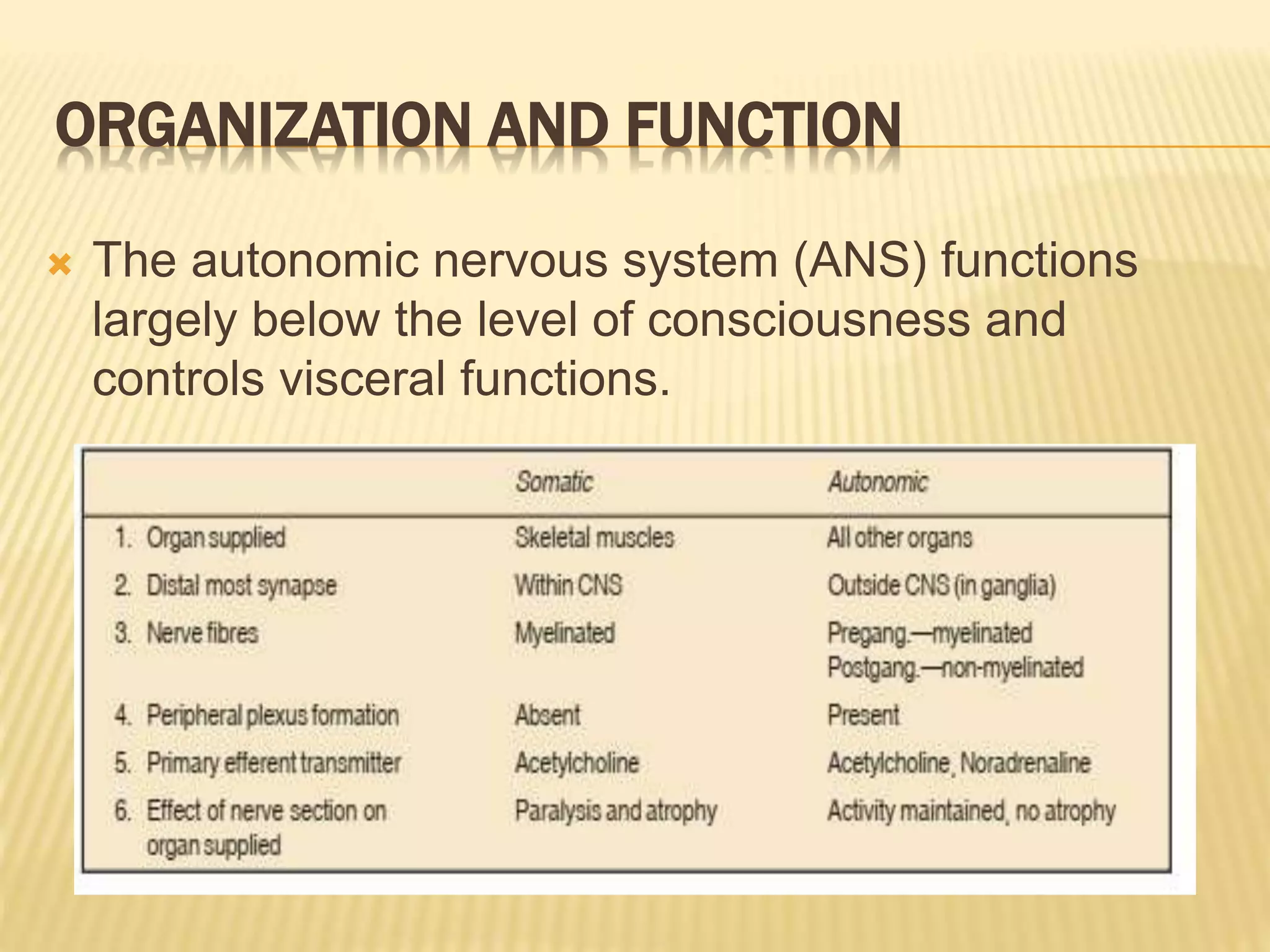
 The autonomic nervous system (ANS) functions
largely below the level of consciousness and
controls visceral functions.
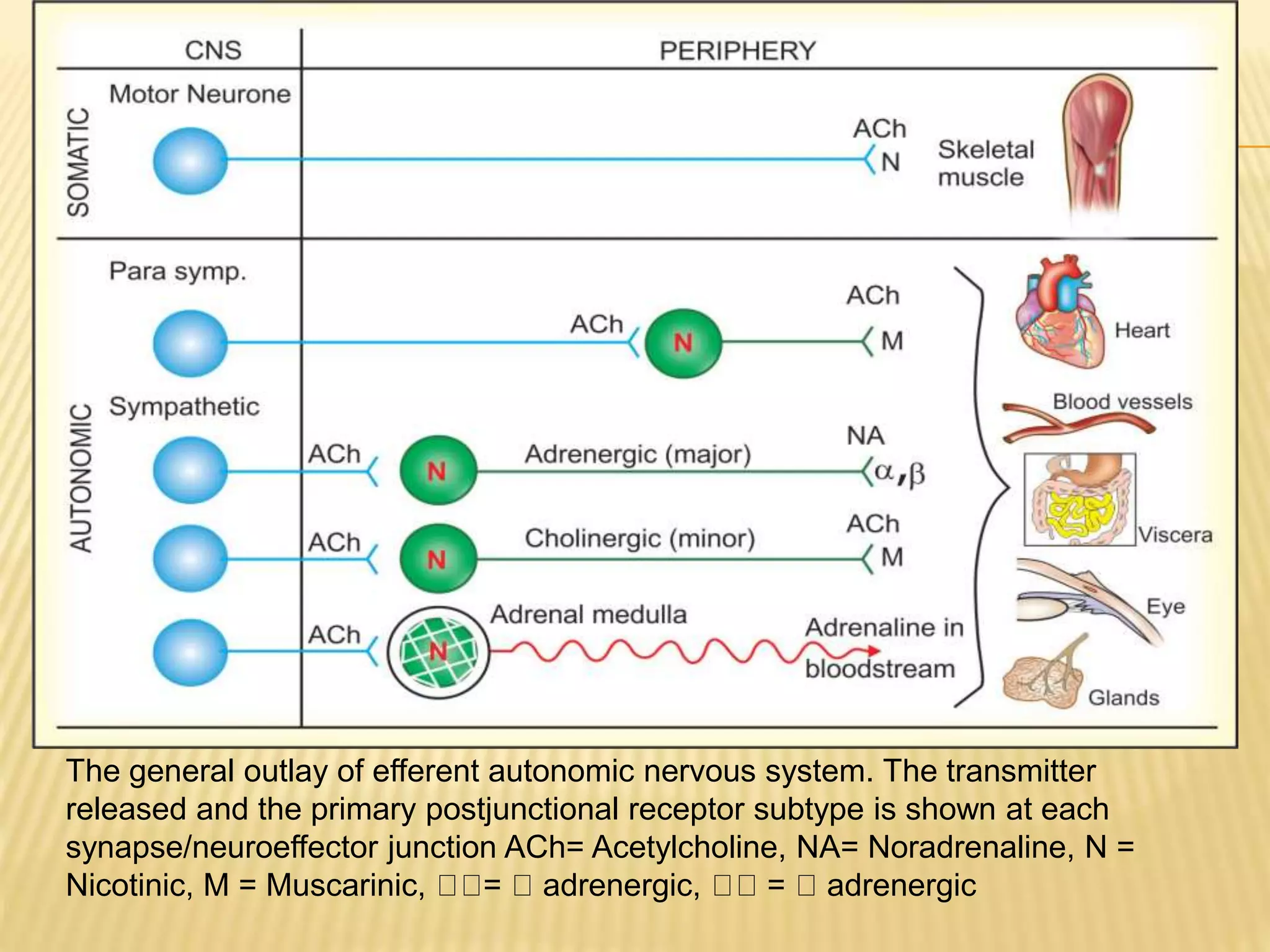
The general outlay of efferent autonomic nervous system. The transmitter
released and the primary postjunctional receptor subtype is shown at each
synapse/neuroeffector junction ACh= Acetylcholine, NA= Noradrenaline, N =
Nicotinic, M = Muscarinic, = adrenergic, = adrenergic
NEUROHUMORAL TRANSMISSION
 Steps in neurohumoral transmission
I. Impulse conduction
II. Transmitter release
III. Transmitter action on postjunctional
membrane
IV. Postjunctional activity
V. Termination of transmitter action
I. IMPULSE CONDUCTION
 Stimulation or arrival of an electrical impulse
causes a sudden increase in Na+
conductance depolarization and
overshoot (reverse polarization: inside
becoming 20 mV positive); K+ ions then
move out in the direction of their
concentration gradient and repolarization is
achieved.
II. TRANSMITTER RELEASE
 The transmitter (excitatory or inhibitory) is stored
in prejunctional nerve endings within ‘synaptic
vesicles’
Diagrammatic
representation of
steps in excitatory
and inhibitory
neurohumoral
transmission:
EPSP = Excitatory
postsynaptic
potential; IPSP =
Inhibitory
postsynaptic
potential
III. TRANSMITTER ACTION ON POSTJUNCTIONAL MEMBRANE
A. Parasympathetic neurone: The
primary transmitter acetylcholine
(ACh) is rapidly hydrolysed by a
specific enzyme
acetylcholinesterase (AChE) located
strategically on the synaptic
membrane. A common co-transmitter
is vasoactive
intestinal peptide (VIP), which on
release diffuses slowly to be degraded
by peptidases at distant sites. It may
act on the same as well as
neighbouring effectors.
B. Sympathetic neurone: The primary
transmitter noradrenaline (NA) is
largely taken back into the neurone by
membranebound norepinephrine
transporter (NET) and recycled. A
minor fraction diffuses away. One of
the cotransmitters is neuropeptide Y
(NPY), which on release meets the
same fate as VIP.
C. Gabaergic neurone: The amino
acid transmitter gamma-aminobutyric
acid (GABA) released into the
synaptic cleft
is partly taken up into the neurone by
GABA transporter (GAT), as well as
into neighbouring glial cells. Some of
IV. POSTJUNCTIONAL ACTIVITY
 A suprathreshold EPSP generates a
propagated postjunctional AP which results in
nerve impulse (in neurone), contraction (in
muscle) or secretion (in gland).
 An IPSP stabilizes the postjunctional
membrane and resists depolarizing stimuli
V. TERMINATION OF TRANSMITTER ACTION
 The various mechanisms of termination of
transmitter action are depicted in Fig. .
 Following its combination with the receptor,
the transmitter is either locally degraded (e.g.
ACh) or is partly taken back into the
prejunctional neurone by active reuptake and
partly diffuses away (e.g. NA).
COTRANSMISSION
 Most peripheral and central neurones on stimulation
have been shown to release more than one active
substance.
 In the ANS, besides the primary transmitters ACh and
NA, neurones have been found to elaborate purines
(ATP, adenosine), peptides (vasoactive intestinal
peptide or VIP, neuropeptide-Y or NPY, substance P,
enkephalins, somatostatin, etc.), nitric oxide (NO) and
prostaglandins as co cotransmitters
COTRANSMISSION
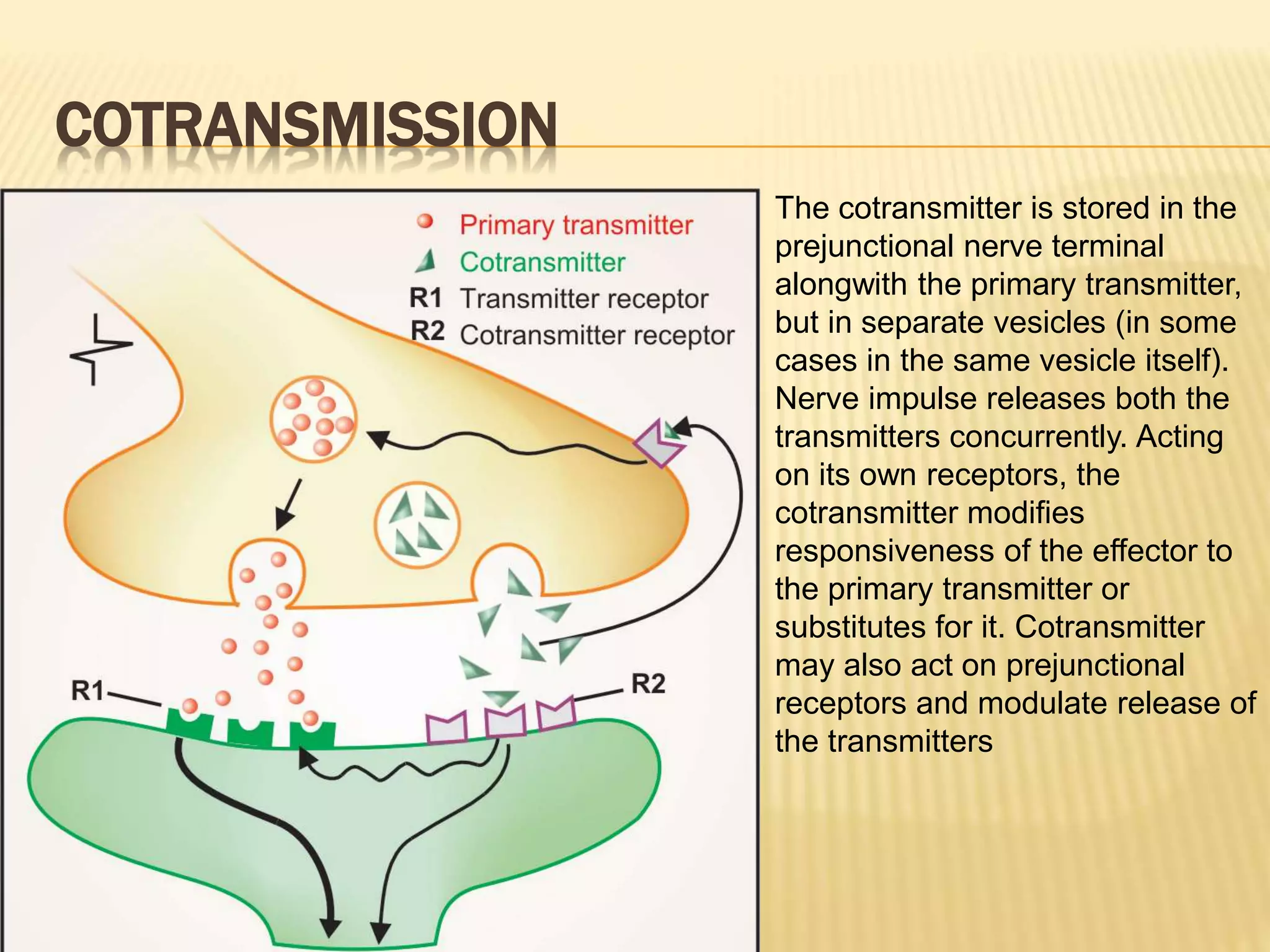
The cotransmitter is stored in the
prejunctional nerve terminal
alongwith the primary transmitter,
but in separate vesicles (in some
cases in the same vesicle itself).
Nerve impulse releases both the
transmitters concurrently. Acting
on its own receptors, the
cotransmitter modifies
responsiveness of the effector to
the primary transmitter or
substitutes for it. Cotransmitter
may also act on prejunctional
receptors and modulate release of
the transmitters
Thank you

Organization and function of ans

  • 1.
    MR. MANGESH BANSOD ASSTPROF SDDVCPRC PANVEL ORGANIZATION AND FUNCTION OF ANS
  • 2.
    ORGANIZATION AND FUNCTION The autonomic nervous system (ANS) functions largely below the level of consciousness and controls visceral functions.
  • 3.
    The general outlayof efferent autonomic nervous system. The transmitter released and the primary postjunctional receptor subtype is shown at each synapse/neuroeffector junction ACh= Acetylcholine, NA= Noradrenaline, N = Nicotinic, M = Muscarinic, = adrenergic, = adrenergic
  • 4.
    NEUROHUMORAL TRANSMISSION  Stepsin neurohumoral transmission I. Impulse conduction II. Transmitter release III. Transmitter action on postjunctional membrane IV. Postjunctional activity V. Termination of transmitter action
  • 5.
    I. IMPULSE CONDUCTION Stimulation or arrival of an electrical impulse causes a sudden increase in Na+ conductance depolarization and overshoot (reverse polarization: inside becoming 20 mV positive); K+ ions then move out in the direction of their concentration gradient and repolarization is achieved.
  • 6.
    II. TRANSMITTER RELEASE The transmitter (excitatory or inhibitory) is stored in prejunctional nerve endings within ‘synaptic vesicles’ Diagrammatic representation of steps in excitatory and inhibitory neurohumoral transmission: EPSP = Excitatory postsynaptic potential; IPSP = Inhibitory postsynaptic potential
  • 7.
    III. TRANSMITTER ACTIONON POSTJUNCTIONAL MEMBRANE A. Parasympathetic neurone: The primary transmitter acetylcholine (ACh) is rapidly hydrolysed by a specific enzyme acetylcholinesterase (AChE) located strategically on the synaptic membrane. A common co-transmitter is vasoactive intestinal peptide (VIP), which on release diffuses slowly to be degraded by peptidases at distant sites. It may act on the same as well as neighbouring effectors. B. Sympathetic neurone: The primary transmitter noradrenaline (NA) is largely taken back into the neurone by membranebound norepinephrine transporter (NET) and recycled. A minor fraction diffuses away. One of the cotransmitters is neuropeptide Y (NPY), which on release meets the same fate as VIP. C. Gabaergic neurone: The amino acid transmitter gamma-aminobutyric acid (GABA) released into the synaptic cleft is partly taken up into the neurone by GABA transporter (GAT), as well as into neighbouring glial cells. Some of
  • 8.
    IV. POSTJUNCTIONAL ACTIVITY A suprathreshold EPSP generates a propagated postjunctional AP which results in nerve impulse (in neurone), contraction (in muscle) or secretion (in gland).  An IPSP stabilizes the postjunctional membrane and resists depolarizing stimuli
  • 9.
    V. TERMINATION OFTRANSMITTER ACTION  The various mechanisms of termination of transmitter action are depicted in Fig. .  Following its combination with the receptor, the transmitter is either locally degraded (e.g. ACh) or is partly taken back into the prejunctional neurone by active reuptake and partly diffuses away (e.g. NA).
  • 10.
    COTRANSMISSION  Most peripheraland central neurones on stimulation have been shown to release more than one active substance.  In the ANS, besides the primary transmitters ACh and NA, neurones have been found to elaborate purines (ATP, adenosine), peptides (vasoactive intestinal peptide or VIP, neuropeptide-Y or NPY, substance P, enkephalins, somatostatin, etc.), nitric oxide (NO) and prostaglandins as co cotransmitters
  • 11.
    COTRANSMISSION The cotransmitter isstored in the prejunctional nerve terminal alongwith the primary transmitter, but in separate vesicles (in some cases in the same vesicle itself). Nerve impulse releases both the transmitters concurrently. Acting on its own receptors, the cotransmitter modifies responsiveness of the effector to the primary transmitter or substitutes for it. Cotransmitter may also act on prejunctional receptors and modulate release of the transmitters
  • 12.