BROAD SPECTRUM ANTIBIOTICS

 TETRACYCLINES
 CHLORAMPHENICOL
 Tetra cyclines have four cyclic ring
 Produced by genus Streptomyces
Tetracycline divided into:
a) Naturally occurring:
Tetracycline
Oxytetracycline

Chlortetracycline
Demeclocycline

b) Semisynthetic occurring:
Doxycycline
Meclocycline
Methacycline

Minocycline
Lymecycline
Rolitetracycline
CLASSIFICATION OF TETRACYCLINES
 GROUP I :
(6-10hr)

 GROUP II :
(12-13hr)

GROUP III :
(18-20hrs)

Chlortetracycline
Tetracycline
Oxytetracycline
Demeclocycline
Methacycline
Doxycycline
Minocycline
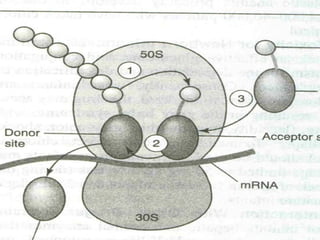
Mechanism of Action
BACTERIOSTATIC

1. Drug enter by :
 Active Transport (+Ve)
 Porin channels (-Ve)
Enter into periplasmic place
Protein Carrier system

Inner cytoplasmic membrane
Binds to 30s ribosome
Inhibits attach of aminoacyl t RNA to “A”site
Inhibition of protein synthesis
ANTIMICROBIAL SPECTRUM
 G +ve Bacilli :
* Clostridia

* Corynebacteria

* B. Anthracis

* P. acnes

 G –ve Bacilli :
* V. Cholerae
* H. ducryi
* Y. pestis

* Brucella
* H. pylori
* Y. enterocolitica

 G +ve Cocci :
* Streptococci

* Staphylococci

 G –ve Cocci :
* N. gonococci

* N. meningococci
ANTIMICROBIAL SPECTRUM cont…

 Rickettiae
 Chlamydiae
 Mycoplasma
 Actinomyces
 Spirochetes
 Entamoeba
 Plasmodia
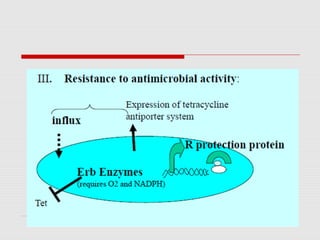
RESISTANCE
1. Active transport Mechanism
2. Pumping Out of Drug

√

3. Protective Protein – Microorganism
4. Complete Cross Resistance
5. Partial Cross Resistance
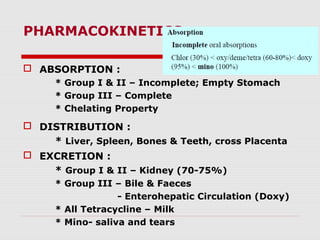
PHARMACOKINETICS
 ABSORPTION :
* Group I & II – Incomplete; Empty Stomach
* Group III – Complete
* Chelating Property

 DISTRIBUTION :
* Liver, Spleen, Bones & Teeth, cross Placenta
 EXCRETION :
* Group I & II – Kidney (70-75%)
* Group III – Bile & Faeces
- Enterohepatic Circulation (Doxy)
* All Tetracycline – Milk
* Mino- saliva and tears
ADVERSE EFFECTS
1. LOCAL IRRITANCY (IM)
2. HEPATOTOXICITY

(preg., Inc. blood urea levels)

3. NEPHROTOXICITY (I &II)
4. TOXICITY TO TEETH & BONES
5. PHOTOSENSITIVITY –III

(Sun burn, Doxy)
ADVERSE EFFECTS

cont…

6.

VESTIBULAR TOXICITY –III

7.

SUPERINFECTION

8.

HYPERSENSITIVITY

9.

Pseudotumor cerebri (Adults) & Bulging

(acc.lipid cells of inner ear)

fontanelles
10. DIABETES INSIPIDUS LIKE CONDITION

(Mino, Anti ADH action)
THERAPEUTIC USES


FIRST CHOICE DRUG :

1. Venereal Diseases
2. Chlamydieal Infections
3. Brucellosis (with streptomycin)
4. Atypical Pneumonia
5. Plague prophylaxis
6. Cholera
7. Rickettseial Infections (Doxy)
8. Relapsing Fever (Doxy)
THERAPEUTIC USES


SEACOND CHOICE DRUG :

 To Penicillin
* Tetanus * Anthrax *Actinomycosis

 To Cotrimoxazole : E. coli infection
 To Streptomycin

: Tulaeremia

 To Ciprofloxacin

: Gonorrhoea &
Syphilis

 Azithromycin

: Chlamydial Infection
THERAPEUTIC USES

cont…

 MISCELLANEOUS CONDITION :
1. Amoebiasis
2. Malaria
3. Acne
4. COPD
 MINOCYCLINE:
1. Meningococal meningitis
2. Community Acquired Pneumonia
3. Chronic Intestinal Amoebiasis
Glycylcyclins
 Synthetic deriv. of Minocyclines
 Potent than Mino
 Effect Gm +ve, -Ve, aerobes,
Anaerobes, resistant tetracyclines
 Same mech, resistance
CHLORAMPHENICOL
CHLORAMPHENICOL
MECHANISM OF ACTION :
 Inhibits Protein Synthesis
: 50 s Ribosomes (Inhibit formation
of peptide bond)
 High Doses : Inhibits Mammalian
Mitochondrial Protein Synthesis
ANTIMICROBIAL SPECTRUM
 BACTERIOSTATIC
 BACTERIOCIDAL – H. influenzae
 BROAD SPECTRUM as TETRACYCLINES
Additional Spectrum:
 HIGHLY ACTIVE– Salmonella
 MORE ACTIVE

-

H. influenzae, B. pertusis,
Klebsiella & Anaerobes

 LESS ACTIVE

–

G+ve cocci, Spirochetes.

 INACTIVE

–

Entamoeba & Plasmodia
RESISTANCE
1. Transfer of R Factor
2. Formation of Acetyl Transferase
3. Decreased Permeability
4. Lowered Affinity of Bacterial
Ribosome
PHARMACOKINETICS
 Oral Absorption

: Complete

 Distribution

: CSF, Bile, Synovial Memb
Milk, Placenta.

 Metabolism

: Conjugation in Liver

 Excretion

: Unchanged in Urine
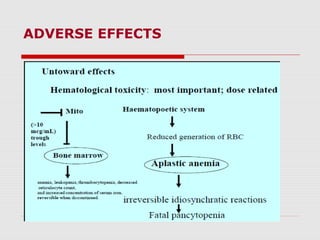
ADVERSE EFFECTS
ADVERSE EFFECTS
1. Bone Marrow Toxicity
 Non Dose Related (3-4g/day for 1-2week)
Inhibition of mitochondrial enzymes
 Dose Related
 Aplastic Anaemia
 Thrombocytopenia
 Agranulocytosis

1. Gray Baby Syndrome
2. Superinfection
3. Irritative Effects
THERAPEUTIC USES
1. H. Influenza Meningitis
2. Anaerobic Infections
3. Enteric Fever
4. Intraocular Infection
5. As Second Choice Drug :
 To Tetracycline : Cholera, Brucelosis, etc.
 To Erythromycin: Whooping Cough
 To Penicillin

: Meningitis

 To Cotrimoxazole : Shigella Dysentry
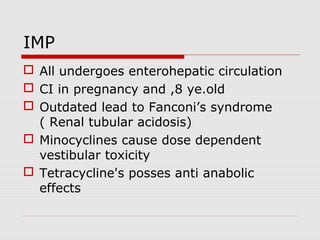
IMP
 All undergoes enterohepatic circulation
 CI in pregnancy and ,8 ye.old
 Outdated lead to Fanconi’s syndrome
( Renal tubular acidosis)
 Minocyclines cause dose dependent
vestibular toxicity
 Tetracycline's posses anti anabolic
effects
7. broad spectrum ab

7. broad spectrum ab

  • 1.
    BROAD SPECTRUM ANTIBIOTICS TETRACYCLINES  CHLORAMPHENICOL
  • 3.
     Tetra cyclineshave four cyclic ring  Produced by genus Streptomyces
  • 4.
    Tetracycline divided into: a)Naturally occurring: Tetracycline Oxytetracycline Chlortetracycline Demeclocycline b) Semisynthetic occurring: Doxycycline Meclocycline Methacycline Minocycline Lymecycline Rolitetracycline
  • 5.
    CLASSIFICATION OF TETRACYCLINES GROUP I : (6-10hr)  GROUP II : (12-13hr) GROUP III : (18-20hrs) Chlortetracycline Tetracycline Oxytetracycline Demeclocycline Methacycline Doxycycline Minocycline
  • 6.
    Mechanism of Action BACTERIOSTATIC 1.Drug enter by :  Active Transport (+Ve)  Porin channels (-Ve) Enter into periplasmic place Protein Carrier system Inner cytoplasmic membrane Binds to 30s ribosome Inhibits attach of aminoacyl t RNA to “A”site Inhibition of protein synthesis
  • 7.
    ANTIMICROBIAL SPECTRUM  G+ve Bacilli : * Clostridia * Corynebacteria * B. Anthracis * P. acnes  G –ve Bacilli : * V. Cholerae * H. ducryi * Y. pestis * Brucella * H. pylori * Y. enterocolitica  G +ve Cocci : * Streptococci * Staphylococci  G –ve Cocci : * N. gonococci * N. meningococci
  • 8.
    ANTIMICROBIAL SPECTRUM cont… Rickettiae  Chlamydiae  Mycoplasma  Actinomyces  Spirochetes  Entamoeba  Plasmodia
  • 9.
    RESISTANCE 1. Active transportMechanism 2. Pumping Out of Drug √ 3. Protective Protein – Microorganism 4. Complete Cross Resistance 5. Partial Cross Resistance
  • 11.
    PHARMACOKINETICS  ABSORPTION : *Group I & II – Incomplete; Empty Stomach * Group III – Complete * Chelating Property  DISTRIBUTION : * Liver, Spleen, Bones & Teeth, cross Placenta  EXCRETION : * Group I & II – Kidney (70-75%) * Group III – Bile & Faeces - Enterohepatic Circulation (Doxy) * All Tetracycline – Milk * Mino- saliva and tears
  • 12.
    ADVERSE EFFECTS 1. LOCALIRRITANCY (IM) 2. HEPATOTOXICITY (preg., Inc. blood urea levels) 3. NEPHROTOXICITY (I &II) 4. TOXICITY TO TEETH & BONES 5. PHOTOSENSITIVITY –III (Sun burn, Doxy)
  • 13.
    ADVERSE EFFECTS cont… 6. VESTIBULAR TOXICITY–III 7. SUPERINFECTION 8. HYPERSENSITIVITY 9. Pseudotumor cerebri (Adults) & Bulging (acc.lipid cells of inner ear) fontanelles 10. DIABETES INSIPIDUS LIKE CONDITION (Mino, Anti ADH action)
  • 14.
    THERAPEUTIC USES  FIRST CHOICEDRUG : 1. Venereal Diseases 2. Chlamydieal Infections 3. Brucellosis (with streptomycin) 4. Atypical Pneumonia 5. Plague prophylaxis 6. Cholera 7. Rickettseial Infections (Doxy) 8. Relapsing Fever (Doxy)
  • 15.
    THERAPEUTIC USES  SEACOND CHOICEDRUG :  To Penicillin * Tetanus * Anthrax *Actinomycosis  To Cotrimoxazole : E. coli infection  To Streptomycin : Tulaeremia  To Ciprofloxacin : Gonorrhoea & Syphilis  Azithromycin : Chlamydial Infection
  • 16.
    THERAPEUTIC USES cont…  MISCELLANEOUSCONDITION : 1. Amoebiasis 2. Malaria 3. Acne 4. COPD  MINOCYCLINE: 1. Meningococal meningitis 2. Community Acquired Pneumonia 3. Chronic Intestinal Amoebiasis
  • 17.
    Glycylcyclins  Synthetic deriv.of Minocyclines  Potent than Mino  Effect Gm +ve, -Ve, aerobes, Anaerobes, resistant tetracyclines  Same mech, resistance
  • 18.
  • 19.
    CHLORAMPHENICOL MECHANISM OF ACTION:  Inhibits Protein Synthesis : 50 s Ribosomes (Inhibit formation of peptide bond)  High Doses : Inhibits Mammalian Mitochondrial Protein Synthesis
  • 20.
    ANTIMICROBIAL SPECTRUM  BACTERIOSTATIC BACTERIOCIDAL – H. influenzae  BROAD SPECTRUM as TETRACYCLINES Additional Spectrum:  HIGHLY ACTIVE– Salmonella  MORE ACTIVE - H. influenzae, B. pertusis, Klebsiella & Anaerobes  LESS ACTIVE – G+ve cocci, Spirochetes.  INACTIVE – Entamoeba & Plasmodia
  • 21.
    RESISTANCE 1. Transfer ofR Factor 2. Formation of Acetyl Transferase 3. Decreased Permeability 4. Lowered Affinity of Bacterial Ribosome
  • 22.
    PHARMACOKINETICS  Oral Absorption :Complete  Distribution : CSF, Bile, Synovial Memb Milk, Placenta.  Metabolism : Conjugation in Liver  Excretion : Unchanged in Urine
  • 23.
  • 24.
    ADVERSE EFFECTS 1. BoneMarrow Toxicity  Non Dose Related (3-4g/day for 1-2week) Inhibition of mitochondrial enzymes  Dose Related  Aplastic Anaemia  Thrombocytopenia  Agranulocytosis 1. Gray Baby Syndrome 2. Superinfection 3. Irritative Effects
  • 25.
    THERAPEUTIC USES 1. H.Influenza Meningitis 2. Anaerobic Infections 3. Enteric Fever 4. Intraocular Infection 5. As Second Choice Drug :  To Tetracycline : Cholera, Brucelosis, etc.  To Erythromycin: Whooping Cough  To Penicillin : Meningitis  To Cotrimoxazole : Shigella Dysentry
  • 26.
    IMP  All undergoesenterohepatic circulation  CI in pregnancy and ,8 ye.old  Outdated lead to Fanconi’s syndrome ( Renal tubular acidosis)  Minocyclines cause dose dependent vestibular toxicity  Tetracycline's posses anti anabolic effects

Editor's Notes

  • #2 Cessatin, bulging fontanelles= unossified space or soft spot lying between cranial bones of the skull of the foetus.
  • #12 I & II food retards absorption. Ca+2, Mg+2, Fe+2, Al+3, milk chelating action
  • #16 Tulaeremia= plague like infectioucs. Transmitted by bite of an infected tick or blood sucking insect. Transmeted through Water/ uncooked food
  • #24 Gray baby syndrome – Abdominal distension, progressive cyanosis ,hyptohermia– occurs due to cannot adequently conjugation, slow rate of flomerular filtration
  • #25 Gray baby syndrome – Abdominal distension, progressive cyanosis ,hyptohermia– occurs due to cannot adequently conjugation, slow rate of flomerular filtration