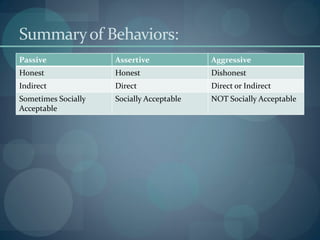
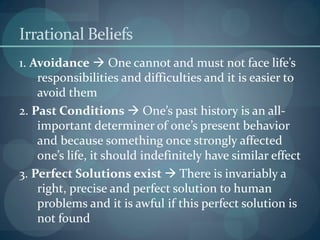
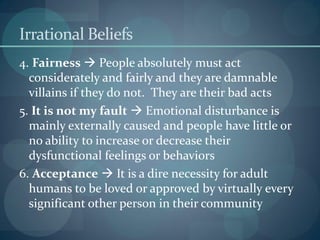
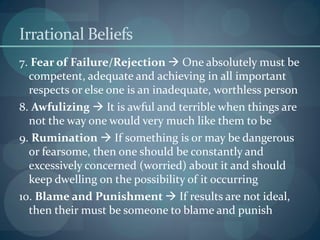
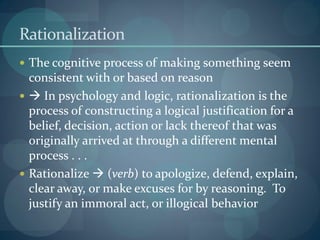
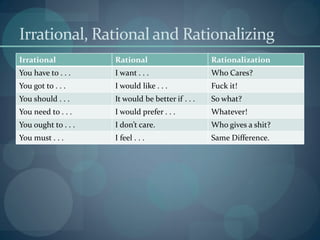
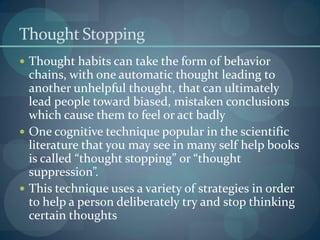
This document provides information on anger management and assertive behavior. It defines anger and discusses how anger becomes problematic when not managed in a healthy way. Expressing anger assertively through open communication is presented as the healthiest approach, as opposed to suppressing or aggressively expressing anger. The document also outlines signs of passive-aggressive behavior and provides tips for becoming more assertive, such as using "I" statements and practicing new behaviors. Irrational beliefs that can contribute to anger are defined, and cognitive techniques like thought stopping are presented as ways to challenge irrational thoughts.