
DR LEE OI WAH
PEGAWAI KESIHATAN KAWASAN II
ANGER MANAGEMENT
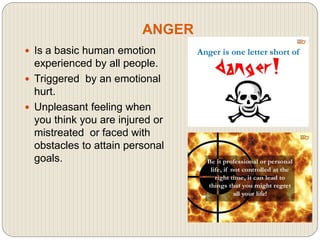
ANGER
 Is a basic human emotion
experienced by all people.
 Triggered by an emotional
hurt.
 Unpleasant feeling when
you think you are injured or
mistreated or faced with
obstacles to attain personal
goals.
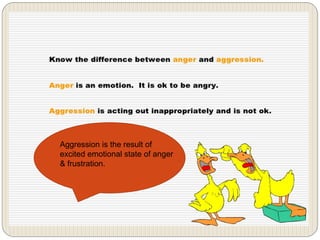
Aggression is the result of
excited emotional state of anger
& frustration.
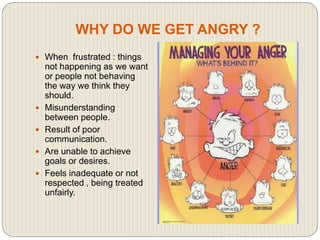
WHY DO WE GET ANGRY ?
 When frustrated : things
not happening as we want
or people not behaving
the way we think they
should.
 Misunderstanding
between people.
 Result of poor
communication.
 Are unable to achieve
goals or desires.
 Feels inadequate or not
respected , being treated
unfairly.
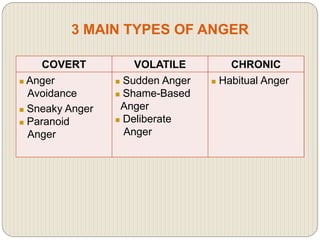
3 MAIN TYPES OF ANGER
COVERT VOLATILE CHRONIC
 Anger
Avoidance
 Sneaky Anger
 Paranoid
Anger
 Sudden Anger
 Shame-Based
Anger
 Deliberate
Anger
 Habitual Anger
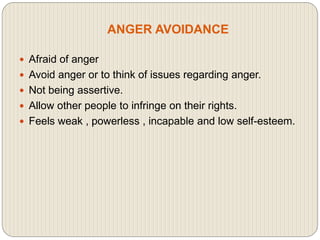
ANGER AVOIDANCE
 Afraid of anger
 Avoid anger or to think of issues regarding anger.
 Not being assertive.
 Allow other people to infringe on their rights.
 Feels weak , powerless , incapable and low self-esteem.
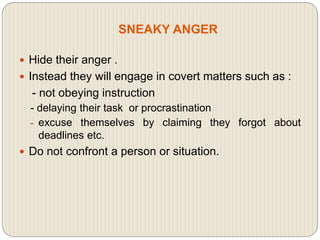
SNEAKY ANGER
 Hide their anger .
 Instead they will engage in covert matters such as :
- not obeying instruction
- delaying their task or procrastination
- excuse themselves by claiming they forgot about
deadlines etc.
 Do not confront a person or situation.
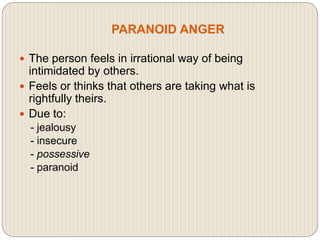
PARANOID ANGER
 The person feels in irrational way of being
intimidated by others.
 Feels or thinks that others are taking what is
rightfully theirs.
 Due to:
- jealousy
- insecure
- possessive
- paranoid
SUDDEN ANGER (OVERWHELMED ANGER)
 Individual unable to control impulse or impatient
 Typically shout or lash out to someone or something
 Anger that easily comes and goes
SHAME BASED ANGER
(JUDGEMENTAL ANGER)
 Individual hurtfully shame the people around him
 Expresses his anger by putting others down and belittling
their capabilities
DELIBERATE ANGER
 The individual want to gain control over the situation
 They use anger to manipulate and bully another
individual to comply with their wants.
CHRONIC ANGER (HABITUAL ANGER)
 Being angry in general with their selves , their life, with
others and even the world.
 Being angry for no apparent reason and at most of the
time.
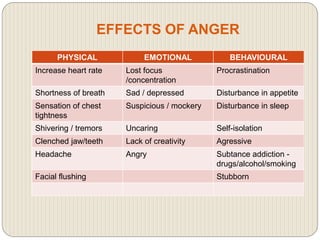
EFFECTS OF ANGER
PHYSICAL EMOTIONAL BEHAVIOURAL
Increase heart rate Lost focus
/concentration
Procrastination
Shortness of breath Sad / depressed Disturbance in appetite
Sensation of chest
tightness
Suspicious / mockery Disturbance in sleep
Shivering / tremors Uncaring Self-isolation
Clenched jaw/teeth Lack of creativity Agressive
Headache Angry Subtance addiction -
drugs/alcohol/smoking
Facial flushing Stubborn
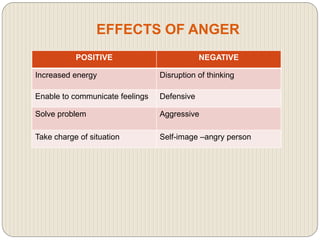
EFFECTS OF ANGER
POSITIVE NEGATIVE
Increased energy Disruption of thinking
Enable to communicate feelings Defensive
Solve problem Aggressive
Take charge of situation Self-image –angry person
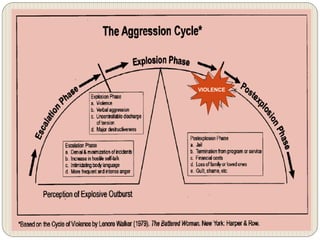
VIOLENCE
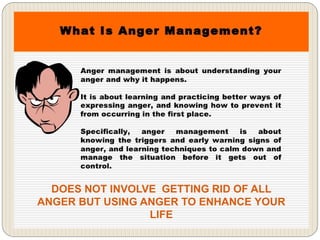
DOES NOT INVOLVE GETTING RID OF ALL
ANGER BUT USING ANGER TO ENHANCE YOUR
LIFE
ANGER MANAGEMENT STRATEGY
Anger management
Anger management
Anger management
Anger management
Anger management
Anger management
Anger management
Anger management
Anger management
Anger management

Anger management

  • 1.
    DR LEE OIWAH PEGAWAI KESIHATAN KAWASAN II ANGER MANAGEMENT
  • 2.
    ANGER  Is abasic human emotion experienced by all people.  Triggered by an emotional hurt.  Unpleasant feeling when you think you are injured or mistreated or faced with obstacles to attain personal goals.
  • 4.
    Aggression is theresult of excited emotional state of anger & frustration.
  • 6.
    WHY DO WEGET ANGRY ?  When frustrated : things not happening as we want or people not behaving the way we think they should.  Misunderstanding between people.  Result of poor communication.  Are unable to achieve goals or desires.  Feels inadequate or not respected , being treated unfairly.
  • 8.
    3 MAIN TYPESOF ANGER COVERT VOLATILE CHRONIC  Anger Avoidance  Sneaky Anger  Paranoid Anger  Sudden Anger  Shame-Based Anger  Deliberate Anger  Habitual Anger
  • 9.
    ANGER AVOIDANCE  Afraidof anger  Avoid anger or to think of issues regarding anger.  Not being assertive.  Allow other people to infringe on their rights.  Feels weak , powerless , incapable and low self-esteem.
  • 10.
    SNEAKY ANGER  Hidetheir anger .  Instead they will engage in covert matters such as : - not obeying instruction - delaying their task or procrastination - excuse themselves by claiming they forgot about deadlines etc.  Do not confront a person or situation.
  • 11.
    PARANOID ANGER  Theperson feels in irrational way of being intimidated by others.  Feels or thinks that others are taking what is rightfully theirs.  Due to: - jealousy - insecure - possessive - paranoid
  • 12.
    SUDDEN ANGER (OVERWHELMEDANGER)  Individual unable to control impulse or impatient  Typically shout or lash out to someone or something  Anger that easily comes and goes
  • 13.
    SHAME BASED ANGER (JUDGEMENTALANGER)  Individual hurtfully shame the people around him  Expresses his anger by putting others down and belittling their capabilities
  • 14.
    DELIBERATE ANGER  Theindividual want to gain control over the situation  They use anger to manipulate and bully another individual to comply with their wants.
  • 15.
    CHRONIC ANGER (HABITUALANGER)  Being angry in general with their selves , their life, with others and even the world.  Being angry for no apparent reason and at most of the time.
  • 16.
    EFFECTS OF ANGER PHYSICALEMOTIONAL BEHAVIOURAL Increase heart rate Lost focus /concentration Procrastination Shortness of breath Sad / depressed Disturbance in appetite Sensation of chest tightness Suspicious / mockery Disturbance in sleep Shivering / tremors Uncaring Self-isolation Clenched jaw/teeth Lack of creativity Agressive Headache Angry Subtance addiction - drugs/alcohol/smoking Facial flushing Stubborn
  • 17.
    EFFECTS OF ANGER POSITIVENEGATIVE Increased energy Disruption of thinking Enable to communicate feelings Defensive Solve problem Aggressive Take charge of situation Self-image –angry person
  • 19.
  • 20.
    DOES NOT INVOLVEGETTING RID OF ALL ANGER BUT USING ANGER TO ENHANCE YOUR LIFE
  • 22.