ANGER : HELPFUL OR
HARMFUL???
Nowshin Nahar
Psycho-Social Counsellor
Eastern University
GROUND RULES
 Mobile off or silent
 No side talk
 Confidentiality
 Respect to others
 Being attentive
 Non-judgmental attitude
OBJECTIVES
 1. Identify your anger triggers
 2. Know your anger cues
 3. Know your anger style
 4. Deal with your anger effectively
 5. goal setting
 A strong feeling of annoyance, displeasure,
or hostility.
 Anger is an EMOTION related to one's
psychological interpretation of having been
offended, wronged or denied and a tendency
to react through retaliation.
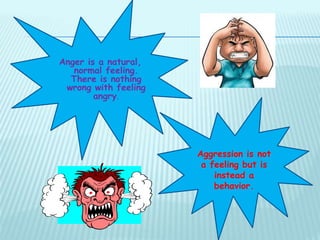
Anger is a natural,
normal feeling.
There is nothing
wrong with feeling
angry.
Aggression is not
a feeling but is
instead a
behavior.
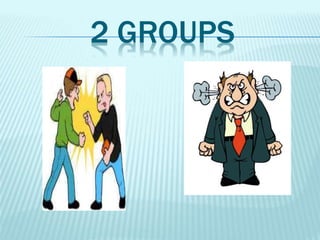
2 GROUPS
When was the last time
you were angry?
Day/week: _____________________
Time: _________________________
Place: _________________________
TRIGGERS
 Something happens & that makes
you angry
 What triggers you does not always
trigger someone else.
3 THINGS TRIGGER YOUR ANGER:
1.You experience a situation or behaviour that you judge is
unfair, hurtful, or in some other way ‘wrong’
2. You feel unable to calmly and easily right the wrong –
this may be because you believe that you lack the skill or
ability to do so, or the person/situation seems bigger than
you can handle
3. The experience is troubling enough that you cannot
simply tolerate it or let it go.
WHAT ARE YOUR TRIGGERS?
 ______________________________
 ______________________________
____
 ______________________________
____
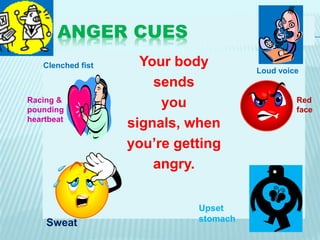
ANGER CUES
Your body
sends
you
signals, when
you’re getting
angry.
Clenched fist
Racing &
pounding
heartbeat
Sweat
Loud voice
Red
face
Upset
stomach
WHAT ARE YOUR CUES?
 ______________________
________
 ______________________
____________
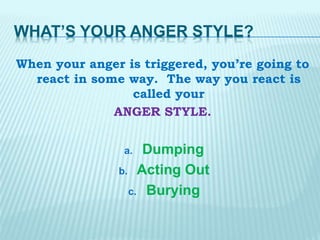
WHAT’S YOUR ANGER STYLE?
When your anger is triggered, you’re going to
react in some way. The way you react is
called your
ANGER STYLE.
a. Dumping
b. Acting Out
c. Burying
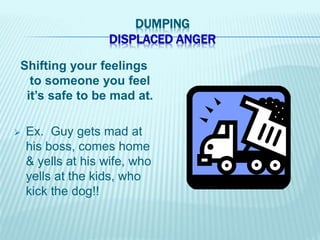
DUMPING
DISPLACED ANGER
Shifting your feelings
to someone you feel
it’s safe to be mad at.
 Ex. Guy gets mad at
his boss, comes home
& yells at his wife, who
yells at the kids, who
kick the dog!!
CONSEQUENCES
 You hurt innocent people
 Relationship problems
 Communication problems
 loneliness
 Problem is not solved
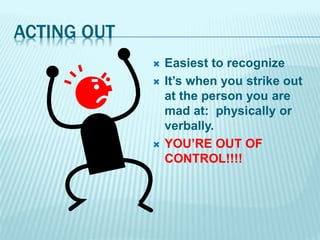
ACTING OUT
 Easiest to recognize
 It’s when you strike out
at the person you are
mad at: physically or
verbally.
 YOU’RE OUT OF
CONTROL!!!!
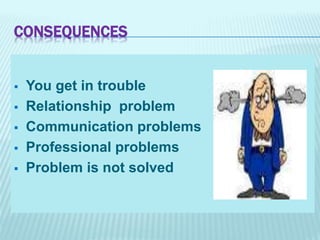
CONSEQUENCES
 You get in trouble
 Relationship problem
 Communication problems
 Professional problems
 Problem is not solved
BURYING (IGNORING)
 When you hold your anger down inside
yourself because you think it isn’t nice to
have those feelings.
 Denying your anger, isn’t dealing with it.
 It can come out in other ways:
headaches, stomachaches, anxious,
depressed, gastric .
 One day you might explode!!
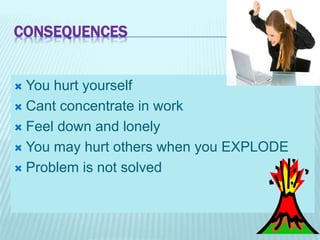
CONSEQUENCES
 You hurt yourself
 Cant concentrate in work
 Feel down and lonely
 You may hurt others when you EXPLODE
 Problem is not solved
HOW DO YOU ACT WHEN ANGRY?
 How did you act when you were
angry? What happened then?
_________________________
_
_________________________
_
If you hold onto anger for a long time, it
causes you problems
Physical – ulcers, diarrhea, frequent colds
and flues, slower wound healing, heart
attacks, headaches, backaches, high blood
pressure
Mental, emotional and spiritual – it
separates you from other people, keep feeling
like a victim, impacts your ability to be grateful
and have a healthy spirit, feeling inadequate,
depression and anxiety
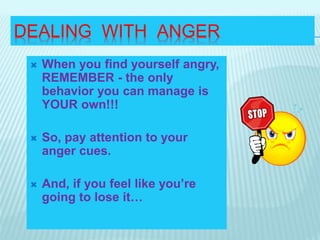
DEALING WITH ANGER
 When you find yourself angry,
REMEMBER - the only
behavior you can manage is
YOUR own!!!
 So, pay attention to your
anger cues.
 And, if you feel like you’re
going to lose it…
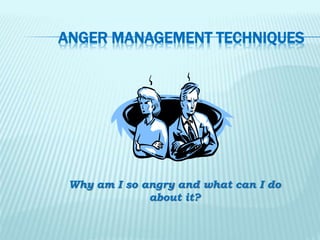
ANGER MANAGEMENT TECHNIQUES
Why am I so angry and what can I do
about it?
Anger is a warning bell that tells
us that something is wrong.
Anger Management does not
involve getting rid of anger but
use anger to enhance your life.
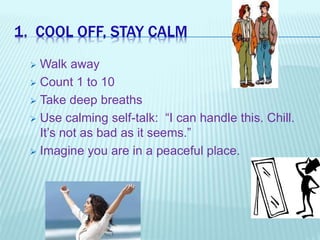
1. COOL OFF, STAY CALM
 Walk away
 Count 1 to 10
 Take deep breaths
 Use calming self-talk: “I can handle this. Chill.
It’s not as bad as it seems.”
 Imagine you are in a peaceful place.
2. GIVE YOURSELF SOME TIME TO SORT THINGS
OUT.
 Write the problem down on paper.
 Think it through. Ask yourself: what really
happened? How was I triggered? What
were my cues.
 Talk it over with a friend or adult you
trust.
3. TURN YOUR ANGRY ENERGY INTO A CHANGE
FOR THE BETTER.
 Channel your angry energy into a physical
activity.
 Try to solve the problem.
 Try to accept situations you can’t change.
 Tell the person making you angry how you
feel.
PRACTICE RELAXATION & MEDITATION
 Breathing
 Breathing relaxation
 Muscular relaxation
 Imaginary
 Mindful
 Emotional Freedom techniques
 What can you do at the next time when you
would feel angry?
__________________________
__________________________
__________________________
POSITIVE EFFECT OF ANGER
Anger can also alert us that something is wrong and that
we need to respond
Anger can motivate us to work harder to accomplish our
goals
Help us to survive
EVERYBODY GETS ANGRY
 That’s just how it is.
 The difference comes in what you do about
it.
SO: GET A GRIP!!!
FEEDBACK
Anger management

Anger management

  • 1.
    ANGER : HELPFULOR HARMFUL??? Nowshin Nahar Psycho-Social Counsellor Eastern University
  • 2.
    GROUND RULES  Mobileoff or silent  No side talk  Confidentiality  Respect to others  Being attentive  Non-judgmental attitude
  • 3.
    OBJECTIVES  1. Identifyyour anger triggers  2. Know your anger cues  3. Know your anger style  4. Deal with your anger effectively  5. goal setting
  • 4.
     A strongfeeling of annoyance, displeasure, or hostility.  Anger is an EMOTION related to one's psychological interpretation of having been offended, wronged or denied and a tendency to react through retaliation.
  • 5.
    Anger is anatural, normal feeling. There is nothing wrong with feeling angry. Aggression is not a feeling but is instead a behavior.
  • 6.
  • 7.
    When was thelast time you were angry? Day/week: _____________________ Time: _________________________ Place: _________________________
  • 8.
    TRIGGERS  Something happens& that makes you angry  What triggers you does not always trigger someone else.
  • 9.
    3 THINGS TRIGGERYOUR ANGER: 1.You experience a situation or behaviour that you judge is unfair, hurtful, or in some other way ‘wrong’ 2. You feel unable to calmly and easily right the wrong – this may be because you believe that you lack the skill or ability to do so, or the person/situation seems bigger than you can handle 3. The experience is troubling enough that you cannot simply tolerate it or let it go.
  • 10.
    WHAT ARE YOURTRIGGERS?  ______________________________  ______________________________ ____  ______________________________ ____
  • 11.
    ANGER CUES Your body sends you signals,when you’re getting angry. Clenched fist Racing & pounding heartbeat Sweat Loud voice Red face Upset stomach
  • 12.
    WHAT ARE YOURCUES?  ______________________ ________  ______________________ ____________
  • 13.
    WHAT’S YOUR ANGERSTYLE? When your anger is triggered, you’re going to react in some way. The way you react is called your ANGER STYLE. a. Dumping b. Acting Out c. Burying
  • 14.
    DUMPING DISPLACED ANGER Shifting yourfeelings to someone you feel it’s safe to be mad at.  Ex. Guy gets mad at his boss, comes home & yells at his wife, who yells at the kids, who kick the dog!!
  • 15.
    CONSEQUENCES  You hurtinnocent people  Relationship problems  Communication problems  loneliness  Problem is not solved
  • 16.
    ACTING OUT  Easiestto recognize  It’s when you strike out at the person you are mad at: physically or verbally.  YOU’RE OUT OF CONTROL!!!!
  • 17.
    CONSEQUENCES  You getin trouble  Relationship problem  Communication problems  Professional problems  Problem is not solved
  • 18.
    BURYING (IGNORING)  Whenyou hold your anger down inside yourself because you think it isn’t nice to have those feelings.  Denying your anger, isn’t dealing with it.  It can come out in other ways: headaches, stomachaches, anxious, depressed, gastric .  One day you might explode!!
  • 19.
    CONSEQUENCES  You hurtyourself  Cant concentrate in work  Feel down and lonely  You may hurt others when you EXPLODE  Problem is not solved
  • 20.
    HOW DO YOUACT WHEN ANGRY?  How did you act when you were angry? What happened then? _________________________ _ _________________________ _
  • 21.
    If you holdonto anger for a long time, it causes you problems Physical – ulcers, diarrhea, frequent colds and flues, slower wound healing, heart attacks, headaches, backaches, high blood pressure Mental, emotional and spiritual – it separates you from other people, keep feeling like a victim, impacts your ability to be grateful and have a healthy spirit, feeling inadequate, depression and anxiety
  • 22.
    DEALING WITH ANGER When you find yourself angry, REMEMBER - the only behavior you can manage is YOUR own!!!  So, pay attention to your anger cues.  And, if you feel like you’re going to lose it…
  • 24.
    ANGER MANAGEMENT TECHNIQUES Whyam I so angry and what can I do about it?
  • 25.
    Anger is awarning bell that tells us that something is wrong. Anger Management does not involve getting rid of anger but use anger to enhance your life.
  • 26.
    1. COOL OFF,STAY CALM  Walk away  Count 1 to 10  Take deep breaths  Use calming self-talk: “I can handle this. Chill. It’s not as bad as it seems.”  Imagine you are in a peaceful place.
  • 27.
    2. GIVE YOURSELFSOME TIME TO SORT THINGS OUT.  Write the problem down on paper.  Think it through. Ask yourself: what really happened? How was I triggered? What were my cues.  Talk it over with a friend or adult you trust.
  • 28.
    3. TURN YOURANGRY ENERGY INTO A CHANGE FOR THE BETTER.  Channel your angry energy into a physical activity.  Try to solve the problem.  Try to accept situations you can’t change.  Tell the person making you angry how you feel.
  • 29.
    PRACTICE RELAXATION &MEDITATION  Breathing  Breathing relaxation  Muscular relaxation  Imaginary  Mindful  Emotional Freedom techniques
  • 30.
     What canyou do at the next time when you would feel angry? __________________________ __________________________ __________________________
  • 31.
    POSITIVE EFFECT OFANGER Anger can also alert us that something is wrong and that we need to respond Anger can motivate us to work harder to accomplish our goals Help us to survive
  • 32.
    EVERYBODY GETS ANGRY That’s just how it is.  The difference comes in what you do about it. SO: GET A GRIP!!!
  • 34.