

PRESENTER:
Dr. V. Jesinda Vedanayagi
HOD of Mental Health Nursing
Sacred Heart Nursing College
Madurai.
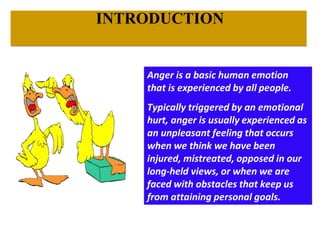
Anger is a basic human emotion
that is experienced by all people.
Typically triggered by an emotional
hurt, anger is usually experienced as
an unpleasant feeling that occurs
when we think we have been
injured, mistreated, opposed in our
long-held views, or when we are
faced with obstacles that keep us
from attaining personal goals.
INTRODUCTION
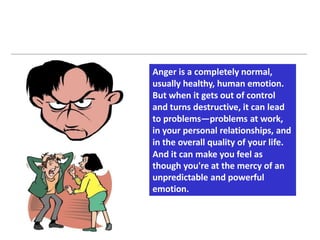
Anger is a completely normal,
usually healthy, human emotion.
But when it gets out of control
and turns destructive, it can lead
to problems—problems at work,
in your personal relationships, and
in the overall quality of your life.
And it can make you feel as
though you're at the mercy of an
unpredictable and powerful
emotion.
de What is anger???
Anger is an emotion characterized by
antagonism toward someone or something you
feel has deliberately done you wrong.
- American Psychological Association
Anger is the strong emotion that you feel
when you think that someone has behaved
in an unfair, cruel, or unacceptable way.
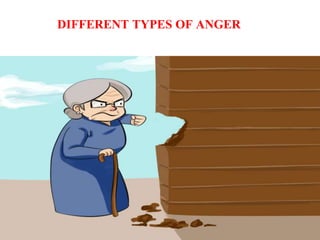
DIFFERENT TYPES OF ANGER
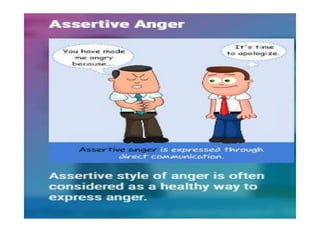
*No damage to the relationship
*No grudge or disrespect
*Do not overact or behave rudely
*No misunderstandings
Accompanied by negative body language
such as ignoring people, avoiding eye
contact.
People tend to bottle up their negative
feelings rather than venting it out.
Appear calm outwardly but they
experience inner turmoil and anxiety.
They vent out their frustration by
gossiping or spreading rumors.
AAA
Aggressive anger:
It is marked by abusive and violent
behavior towards the targeted person. They
convey their displeasure and not to talk and
completely avoid the person.
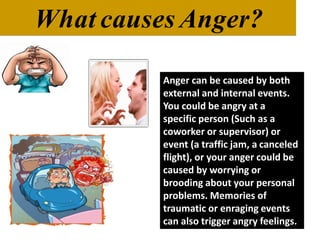
What causes Anger?
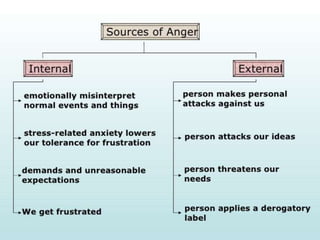
Anger can be caused by both
external and internal events.
You could be angry at a
specific person (Such as a
coworker or supervisor) or
event (a traffic jam, a canceled
flight), or your anger could be
caused by worrying or
brooding about your personal
problems. Memories of
traumatic or enraging events
can also trigger angry feelings.
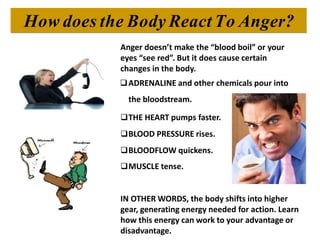
How does the Body React To Anger?
Anger doesn’t make the “blood boil” or your
eyes “see red”. But it does cause certain
changes in the body.
ADRENALINE and other chemicals pour into
the bloodstream.
THE HEART pumps faster.
BLOOD PRESSURE rises.
BLOODFLOW quickens.
MUSCLE tense.
IN OTHER WORDS, the body shifts into higher
gear, generating energy needed for action. Learn
how this energy can work to your advantage or
disadvantage.
WARNING SIGNS OF ANGER
•Muscular tightening , especially
around the jaw and arms
•A sensation of building pressure in
the head
•Sensations of heat and flushing in
the face
•Elevated heart rate, breathing or
sweating.
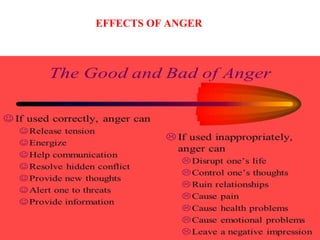
EFFECTS OF ANGER
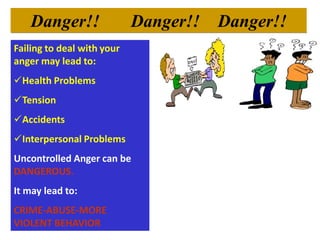
Danger!! Danger!! Danger!!
Failing to deal with your
anger may lead to:
Health Problems
Tension
Accidents
Interpersonal Problems
Uncontrolled Anger can be
DANGEROUS.
It may lead to:
CRIME-ABUSE-MORE
VIOLENT BEHAVIOR
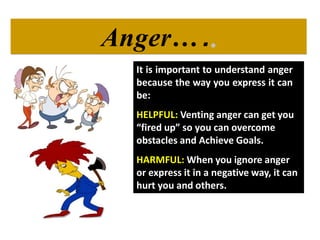
Anger… ..
It is important to understand anger
because the way you express it can
be:
HELPFUL: Venting anger can get you
“fired up” so you can overcome
obstacles and Achieve Goals.
HARMFUL: When you ignore anger
or express it in a negative way, it can
hurt you and others.
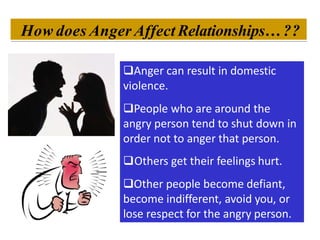
How does Anger Affect Relationships… ??
Anger can result in domestic
violence.
People who are around the
angry person tend to shut down in
order not to anger that person.
Others get their feelings hurt.
Other people become defiant,
become indifferent, avoid you, or
lose respect for the angry person.
ANGER MANAGEMENT
Anger management involves a range
of skills that can help with
recognizing the signs of anger and
handling triggers in a positive way.
MANA
ANGER
MANAGEMENTTThe positive aspects
of anger are that
you have increased
energy, are able to
communicate your
feelings, able to
solve your problems
and can take charge
of the situation. `
MMAA
ANGER
NAGEMENT
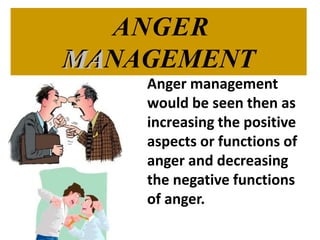
Anger management
would be seen then as
increasing the positive
aspects or functions of
anger and decreasing
the negative functions
of anger.
Importance ofANGERMANAGEMENT
The goal of Anger
Management is to reduce
both your emotional
feelings and the
physiological arousal that
anger causes.
You can't get rid of, or
avoid, the things or the
people that enrage you,
nor can you change them,
but you can learn to
control your reactions.
The following are some TIPS
to prevent/control an Anger
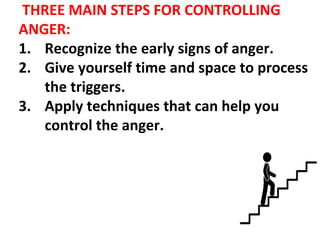
THREE MAIN STEPS FOR CONTROLLING
ANGER:
1. Recognize the early signs of anger.
2. Give yourself time and space to process
the triggers.
3. Apply techniques that can help you
control the anger.
1.Recognizing anger
2.Taking a step back
Buying some time can be fundamental in
limiting an angry response. This can involve
simple measures.
3. Applying management techniques
These can help calm a person or distract
them long enough to process the thoughts
in a constructive way.
THI
1.Think before you speak – Take a few
moments to collect your thoughts before
say anything.
2. Once you're calm, express your anger
As soon as you're thinking clearly, express
your frustration in an assertive way.
3. Get some exercise
If you feel your anger escalating, go for a
brisk walk or run, or spend some time doing
other enjoyable physical activities.
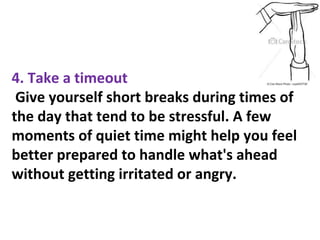
4. Take a timeout
Give yourself short breaks during times of
the day that tend to be stressful. A few
moments of quiet time might help you feel
better prepared to handle what's ahead
without getting irritated or angry.
5. Identify possible solutions
Instead of focusing on what made you mad,
work on resolving the issue at hand.
6. Stick with 'I' statements
To avoid criticizing or placing blame —
which might only increase tension — use "I"
statements to describe the problem. Be
respectful and specific.
7. Don't hold a grudge
Forgiveness is a powerful tool. If you allow
anger and other negative feelings to crowd
out positive feelings, you might find yourself
swallowed up by your own bitterness or
sense of injustice.
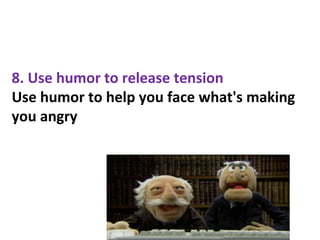
8. Use humor to release tension
Use humor to help you face what's making
you angry
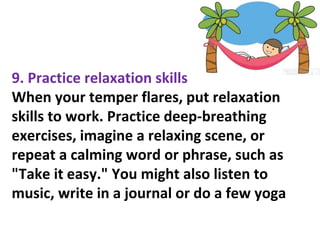
9. Practice relaxation skills
When your temper flares, put relaxation
skills to work. Practice deep-breathing
exercises, imagine a relaxing scene, or
repeat a calming word or phrase, such as
"Take it easy." You might also listen to
music, write in a journal or do a few yoga
10.Find alternative channels for anger: It
can help to express anger in a way that
limits harm to others, such as tearing
newspaper, crushing ice cubes over a sink,
or punching or screaming into a pillow.
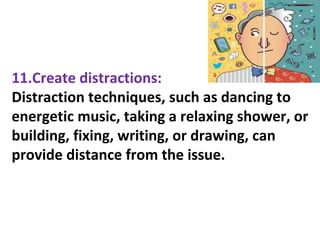
11.Create distractions:
Distraction techniques, such as dancing to
energetic music, taking a relaxing shower, or
building, fixing, writing, or drawing, can
provide distance from the issue.
12. Know when to seek help
Learning to control anger is a challenge for
everyone at times. Seek help for anger
issues if your anger seems out of control
Finally………
Control Your Anger Before it controls you Since…
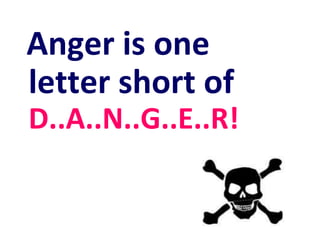
Anger is one
letter short of
D..A..N..G..E..R!
Anger management

Anger management

  • 2.
    PRESENTER: Dr. V. JesindaVedanayagi HOD of Mental Health Nursing Sacred Heart Nursing College Madurai.
  • 3.
    Anger is abasic human emotion that is experienced by all people. Typically triggered by an emotional hurt, anger is usually experienced as an unpleasant feeling that occurs when we think we have been injured, mistreated, opposed in our long-held views, or when we are faced with obstacles that keep us from attaining personal goals. INTRODUCTION
  • 4.
    Anger is acompletely normal, usually healthy, human emotion. But when it gets out of control and turns destructive, it can lead to problems—problems at work, in your personal relationships, and in the overall quality of your life. And it can make you feel as though you're at the mercy of an unpredictable and powerful emotion.
  • 5.
    de What isanger??? Anger is an emotion characterized by antagonism toward someone or something you feel has deliberately done you wrong. - American Psychological Association
  • 6.
    Anger is thestrong emotion that you feel when you think that someone has behaved in an unfair, cruel, or unacceptable way.
  • 7.
  • 9.
    *No damage tothe relationship *No grudge or disrespect *Do not overact or behave rudely *No misunderstandings
  • 11.
    Accompanied by negativebody language such as ignoring people, avoiding eye contact. People tend to bottle up their negative feelings rather than venting it out. Appear calm outwardly but they experience inner turmoil and anxiety. They vent out their frustration by gossiping or spreading rumors.
  • 12.
    AAA Aggressive anger: It ismarked by abusive and violent behavior towards the targeted person. They convey their displeasure and not to talk and completely avoid the person.
  • 20.
    What causes Anger? Angercan be caused by both external and internal events. You could be angry at a specific person (Such as a coworker or supervisor) or event (a traffic jam, a canceled flight), or your anger could be caused by worrying or brooding about your personal problems. Memories of traumatic or enraging events can also trigger angry feelings.
  • 22.
    How does theBody React To Anger? Anger doesn’t make the “blood boil” or your eyes “see red”. But it does cause certain changes in the body. ADRENALINE and other chemicals pour into the bloodstream. THE HEART pumps faster. BLOOD PRESSURE rises. BLOODFLOW quickens. MUSCLE tense. IN OTHER WORDS, the body shifts into higher gear, generating energy needed for action. Learn how this energy can work to your advantage or disadvantage.
  • 23.
    WARNING SIGNS OFANGER •Muscular tightening , especially around the jaw and arms •A sensation of building pressure in the head •Sensations of heat and flushing in the face •Elevated heart rate, breathing or sweating.
  • 24.
  • 25.
    Danger!! Danger!! Danger!! Failingto deal with your anger may lead to: Health Problems Tension Accidents Interpersonal Problems Uncontrolled Anger can be DANGEROUS. It may lead to: CRIME-ABUSE-MORE VIOLENT BEHAVIOR
  • 26.
    Anger… .. It isimportant to understand anger because the way you express it can be: HELPFUL: Venting anger can get you “fired up” so you can overcome obstacles and Achieve Goals. HARMFUL: When you ignore anger or express it in a negative way, it can hurt you and others.
  • 27.
    How does AngerAffect Relationships… ?? Anger can result in domestic violence. People who are around the angry person tend to shut down in order not to anger that person. Others get their feelings hurt. Other people become defiant, become indifferent, avoid you, or lose respect for the angry person.
  • 28.
    ANGER MANAGEMENT Anger managementinvolves a range of skills that can help with recognizing the signs of anger and handling triggers in a positive way.
  • 29.
    MANA ANGER MANAGEMENTTThe positive aspects ofanger are that you have increased energy, are able to communicate your feelings, able to solve your problems and can take charge of the situation. `
  • 31.
    MMAA ANGER NAGEMENT Anger management would beseen then as increasing the positive aspects or functions of anger and decreasing the negative functions of anger.
  • 32.
    Importance ofANGERMANAGEMENT The goalof Anger Management is to reduce both your emotional feelings and the physiological arousal that anger causes. You can't get rid of, or avoid, the things or the people that enrage you, nor can you change them, but you can learn to control your reactions.
  • 33.
    The following aresome TIPS to prevent/control an Anger
  • 34.
    THREE MAIN STEPSFOR CONTROLLING ANGER: 1. Recognize the early signs of anger. 2. Give yourself time and space to process the triggers. 3. Apply techniques that can help you control the anger.
  • 35.
  • 36.
    2.Taking a stepback Buying some time can be fundamental in limiting an angry response. This can involve simple measures.
  • 37.
    3. Applying managementtechniques These can help calm a person or distract them long enough to process the thoughts in a constructive way.
  • 38.
    THI 1.Think before youspeak – Take a few moments to collect your thoughts before say anything.
  • 39.
    2. Once you'recalm, express your anger As soon as you're thinking clearly, express your frustration in an assertive way.
  • 40.
    3. Get someexercise If you feel your anger escalating, go for a brisk walk or run, or spend some time doing other enjoyable physical activities.
  • 41.
    4. Take atimeout Give yourself short breaks during times of the day that tend to be stressful. A few moments of quiet time might help you feel better prepared to handle what's ahead without getting irritated or angry.
  • 42.
    5. Identify possiblesolutions Instead of focusing on what made you mad, work on resolving the issue at hand.
  • 43.
    6. Stick with'I' statements To avoid criticizing or placing blame — which might only increase tension — use "I" statements to describe the problem. Be respectful and specific.
  • 44.
    7. Don't holda grudge Forgiveness is a powerful tool. If you allow anger and other negative feelings to crowd out positive feelings, you might find yourself swallowed up by your own bitterness or sense of injustice.
  • 45.
    8. Use humorto release tension Use humor to help you face what's making you angry
  • 46.
    9. Practice relaxationskills When your temper flares, put relaxation skills to work. Practice deep-breathing exercises, imagine a relaxing scene, or repeat a calming word or phrase, such as "Take it easy." You might also listen to music, write in a journal or do a few yoga
  • 47.
    10.Find alternative channelsfor anger: It can help to express anger in a way that limits harm to others, such as tearing newspaper, crushing ice cubes over a sink, or punching or screaming into a pillow.
  • 48.
    11.Create distractions: Distraction techniques,such as dancing to energetic music, taking a relaxing shower, or building, fixing, writing, or drawing, can provide distance from the issue.
  • 49.
    12. Know whento seek help Learning to control anger is a challenge for everyone at times. Seek help for anger issues if your anger seems out of control
  • 50.
    Finally……… Control Your AngerBefore it controls you Since…
  • 51.
    Anger is one lettershort of D..A..N..G..E..R!