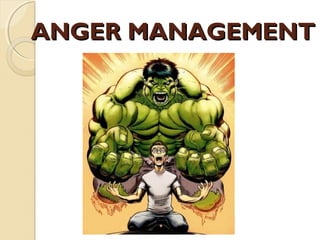
ANGER MANAGEMENT
Presented To:
          Our Course Mentor
       “ Sir Ahmed Ali Memon”


             Presented By:
Zia ur Rehman Danish
Sadaf Kanwal Hamid
Nazish Noor Ullah
Zarfain Nizar
Irfan Nizar
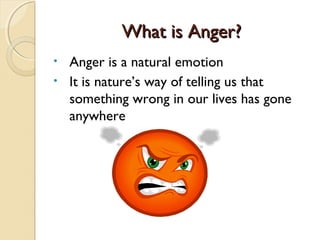
What is Anger?
• Anger is a natural emotion
• It is nature’s way of telling us that
  something wrong in our lives has gone
  anywhere
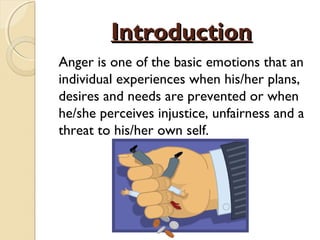
Introduction
Anger is one of the basic emotions that an
individual experiences when his/her plans,
desires and needs are prevented or when
he/she perceives injustice, unfairness and a
threat to his/her own self.
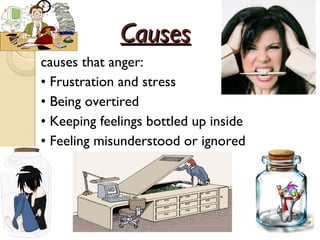
Causes
causes that anger:
• Frustration and stress
• Being overtired
• Keeping feelings bottled up inside
• Feeling misunderstood or ignored
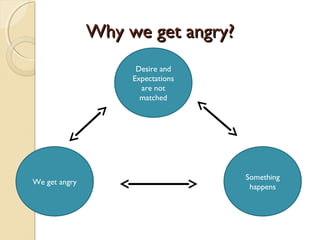
Why we get angry?
                     Desire and
                    Expectations
                      are not
                      matched


                                   Something
We get angry
                                    happens
Which factor that
you Become anger
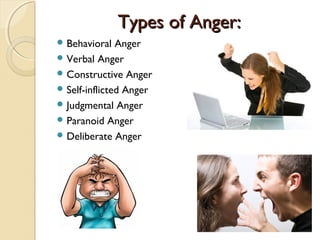
Types of Anger:
 Behavioral   Anger
 Verbal Anger
 Constructive Anger
 Self-inflicted Anger
 Judgmental Anger
 Paranoid Anger
 Deliberate Anger
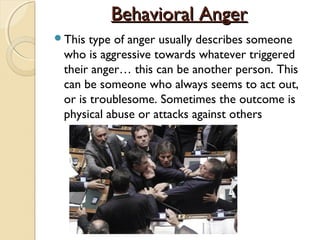
Behavioral Anger
This  type of anger usually describes someone
 who is aggressive towards whatever triggered
 their anger… this can be another person. This
 can be someone who always seems to act out,
 or is troublesome. Sometimes the outcome is
 physical abuse or attacks against others
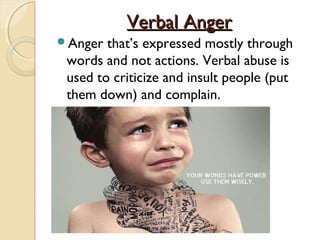
Verbal Anger
Anger  that’s expressed mostly through
 words and not actions. Verbal abuse is
 used to criticize and insult people (put
 them down) and complain.
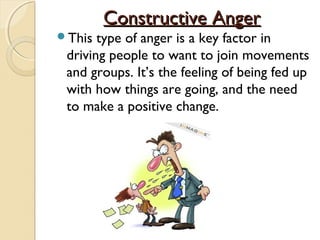
Constructive Anger
This  type of anger is a key factor in
 driving people to want to join movements
 and groups. It’s the feeling of being fed up
 with how things are going, and the need
 to make a positive change.
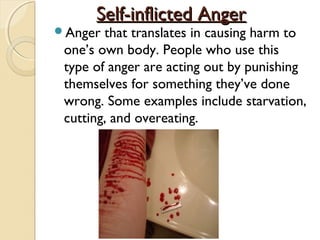
Self-inflicted Anger
Anger  that translates in causing harm to
 one’s own body. People who use this
 type of anger are acting out by punishing
 themselves for something they’ve done
 wrong. Some examples include starvation,
 cutting, and overeating.
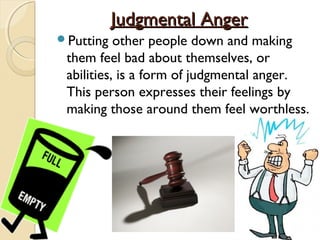
Judgmental Anger
Putting   other people down and making
 them feel bad about themselves, or
 abilities, is a form of judgmental anger.
 This person expresses their feelings by
 making those around them feel worthless.
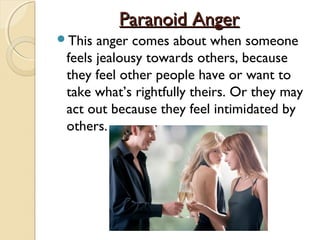
Paranoid Anger
This  anger comes about when someone
 feels jealousy towards others, because
 they feel other people have or want to
 take what’s rightfully theirs. Or they may
 act out because they feel intimidated by
 others.
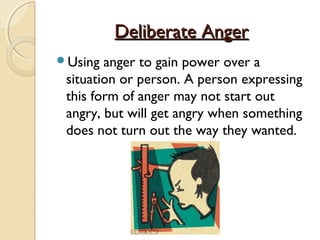
Deliberate Anger
Using  anger to gain power over a
 situation or person. A person expressing
 this form of anger may not start out
 angry, but will get angry when something
 does not turn out the way they wanted.
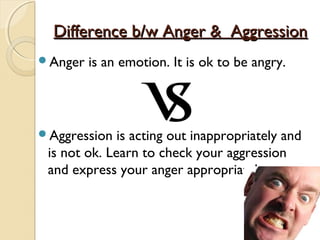
Difference b/w Anger & Aggression
Anger   is an emotion. It is ok to be angry.


Aggression   is acting out inappropriately and
 is not ok. Learn to check your aggression
 and express your anger appropriately.
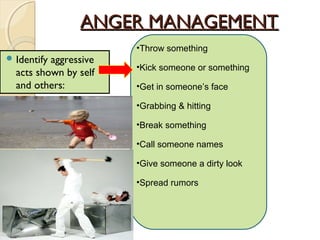
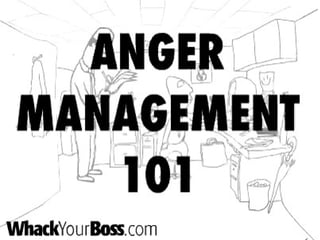
ANGER MANAGEMENT
                       •Throw something
 Identifyaggressive
                       •Kick someone or something
  acts shown by self
  and others:          •Get in someone’s face

                       •Grabbing & hitting

                       •Break something

                       •Call someone names

                       •Give someone a dirty look

                       •Spread rumors
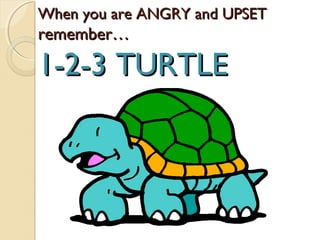
When you are ANGRY and UPSET
remember…

1-2-3 TURTLE
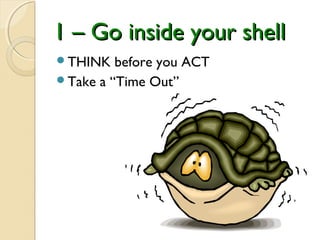
1 – Go inside your shell
THINK   before you ACT
Take a “Time Out”
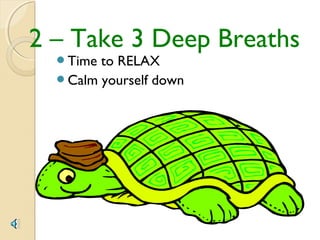
2 – Take 3 Deep Breaths
  Time to RELAX
  Calm yourself down
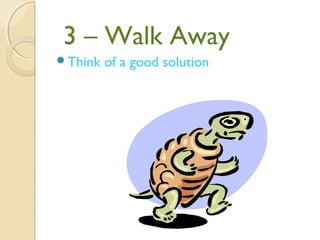
3 – Walk Away
Think   of a good solution
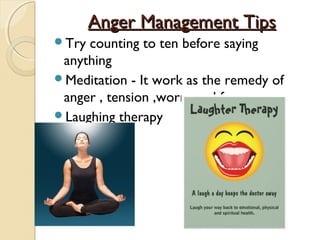
Anger Management Tips
Try counting to ten before saying
 anything
Meditation - It work as the remedy of
 anger , tension ,worry and fear.
Laughing therapy
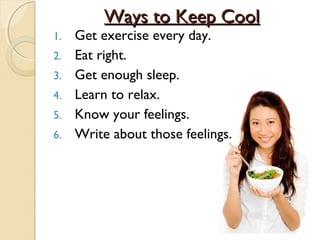
Ways to Keep Cool
1.   Get exercise every day.
2.   Eat right.
3.   Get enough sleep.
4.   Learn to relax.
5.   Know your feelings.
6.   Write about those feelings.
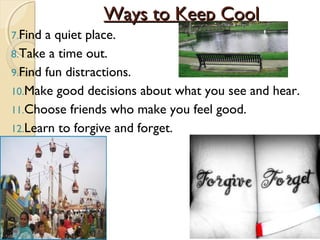
Ways to Keep Cool
7.Find a quiet place.
8.Take a time out.
9.Find fun distractions.
10.Make good decisions about what you see and hear.
11.Choose friends who make you feel good.
12.Learn to forgive and forget.
Over come Techniques
Ways to reduce anger management and over come on
  that by :
 Relaxation Techniques
 Changing Your Thinking
 Problem Solving
 Better Communication
 Changing Your Environment
 Keep a Diary of Your Feelings
 Religious factors
Under Stress what

employee do with

management ????
Conclusion

Anger Management

  • 2.
  • 3.
    Presented To: Our Course Mentor “ Sir Ahmed Ali Memon” Presented By: Zia ur Rehman Danish Sadaf Kanwal Hamid Nazish Noor Ullah Zarfain Nizar Irfan Nizar
  • 4.
    What is Anger? •Anger is a natural emotion • It is nature’s way of telling us that something wrong in our lives has gone anywhere
  • 5.
    Introduction Anger is oneof the basic emotions that an individual experiences when his/her plans, desires and needs are prevented or when he/she perceives injustice, unfairness and a threat to his/her own self.
  • 6.
    Causes causes that anger: •Frustration and stress • Being overtired • Keeping feelings bottled up inside • Feeling misunderstood or ignored
  • 7.
    Why we getangry? Desire and Expectations are not matched Something We get angry happens
  • 9.
  • 10.
    Types of Anger: Behavioral Anger  Verbal Anger  Constructive Anger  Self-inflicted Anger  Judgmental Anger  Paranoid Anger  Deliberate Anger
  • 11.
    Behavioral Anger This type of anger usually describes someone who is aggressive towards whatever triggered their anger… this can be another person. This can be someone who always seems to act out, or is troublesome. Sometimes the outcome is physical abuse or attacks against others
  • 12.
    Verbal Anger Anger that’s expressed mostly through words and not actions. Verbal abuse is used to criticize and insult people (put them down) and complain.
  • 13.
    Constructive Anger This type of anger is a key factor in driving people to want to join movements and groups. It’s the feeling of being fed up with how things are going, and the need to make a positive change.
  • 14.
    Self-inflicted Anger Anger that translates in causing harm to one’s own body. People who use this type of anger are acting out by punishing themselves for something they’ve done wrong. Some examples include starvation, cutting, and overeating.
  • 15.
    Judgmental Anger Putting other people down and making them feel bad about themselves, or abilities, is a form of judgmental anger. This person expresses their feelings by making those around them feel worthless.
  • 16.
    Paranoid Anger This anger comes about when someone feels jealousy towards others, because they feel other people have or want to take what’s rightfully theirs. Or they may act out because they feel intimidated by others.
  • 17.
    Deliberate Anger Using anger to gain power over a situation or person. A person expressing this form of anger may not start out angry, but will get angry when something does not turn out the way they wanted.
  • 18.
    Difference b/w Anger& Aggression Anger is an emotion. It is ok to be angry. Aggression is acting out inappropriately and is not ok. Learn to check your aggression and express your anger appropriately.
  • 19.
    ANGER MANAGEMENT •Throw something  Identifyaggressive •Kick someone or something acts shown by self and others: •Get in someone’s face •Grabbing & hitting •Break something •Call someone names •Give someone a dirty look •Spread rumors
  • 20.
    When you areANGRY and UPSET remember… 1-2-3 TURTLE
  • 21.
    1 – Goinside your shell THINK before you ACT Take a “Time Out”
  • 22.
    2 – Take3 Deep Breaths Time to RELAX Calm yourself down
  • 23.
    3 – WalkAway Think of a good solution
  • 24.
    Anger Management Tips Trycounting to ten before saying anything Meditation - It work as the remedy of anger , tension ,worry and fear. Laughing therapy
  • 25.
    Ways to KeepCool 1. Get exercise every day. 2. Eat right. 3. Get enough sleep. 4. Learn to relax. 5. Know your feelings. 6. Write about those feelings.
  • 26.
    Ways to KeepCool 7.Find a quiet place. 8.Take a time out. 9.Find fun distractions. 10.Make good decisions about what you see and hear. 11.Choose friends who make you feel good. 12.Learn to forgive and forget.
  • 27.
    Over come Techniques Waysto reduce anger management and over come on that by :  Relaxation Techniques  Changing Your Thinking  Problem Solving  Better Communication  Changing Your Environment  Keep a Diary of Your Feelings  Religious factors
  • 28.
    Under Stress what employeedo with management ????
  • 30.