 Draw the human heart and the main blood
vessels in/out of the heart.
 Label the following on your diagram:
 4 chambers
 4 valves
 All blood vessels going into/out of heart
 Using a blue pencil, indicate oxygen-poor blood
flow
 Using a red pencil, indicate oxygen-rich blood
flow
 Cardiac muscle cells can contract spontaneously and
independently
 Regulation of heart activity:
1. Autonomic nervous system
▪ Epinephrine, thyroxine: ↑ heart rate
▪ Low Ca2+
levels: ↓ heart rate
1. Intrinsic conduction system
▪ Built into heart tissue & sets basic rhythm
▪ Pacemaker = Sinoatrial (SA) NodeSinoatrial (SA) Node
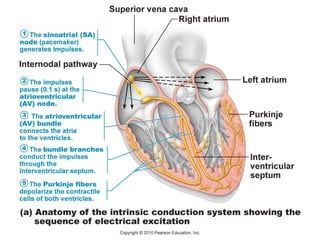
Sequence of action:
1. Sinoatrial (SA) node – right atrium
▪ Generates impulses  Starts each heartbeat
1. Atrioventricular (AV) node – between atria &
ventricles
▪ Atria contract
1. Bundle of His (or AV bundle)
2. Bundle branches – interventricular septum
3. Purkinje fibers – spread within ventricle walls
▪ Ventricles contract
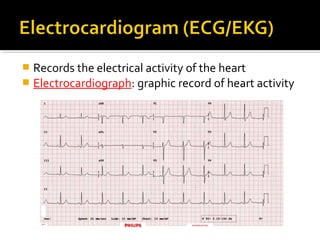
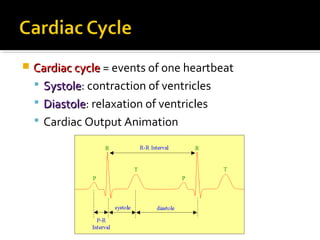
 Records the electrical activity of the heart
 Electrocardiograph: graphic record of heart activity
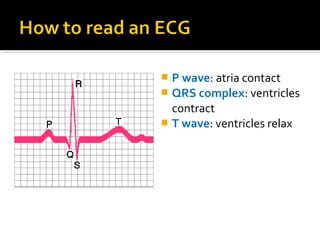
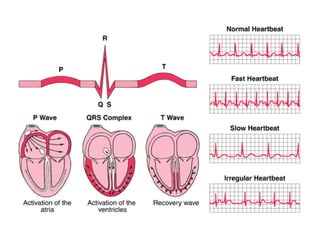
 P wave: atria contact
 QRS complex: ventricles
contract
 T wave: ventricles relax
 Cardiac cycleCardiac cycle = events of one heartbeat
 SystoleSystole: contraction of ventricles
 DiastoleDiastole: relaxation of ventricles
 Cardiac Output Animation
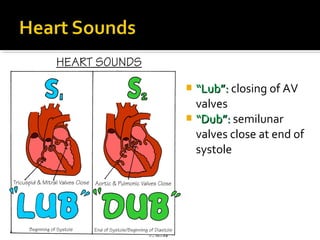
 ““Lub”:Lub”: closing of AV
valves
 ““Dub”:Dub”: semilunar
valves close at end of
systole
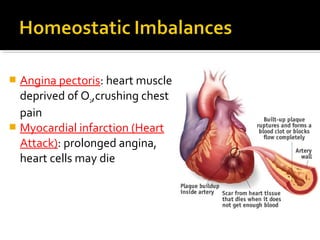
 Angina pectoris: heart muscle
deprived of O2,crushing chest
pain
 Myocardial infarction (Heart
Attack): prolonged angina,
heart cells may die
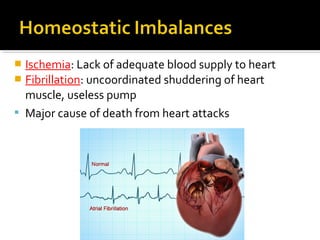
 Ischemia: Lack of adequate blood supply to heart
 Fibrillation: uncoordinated shuddering of heart
muscle, useless pump
 Major cause of death from heart attacks
 Damage to SA node  slower heart rate
 Install artificial pacemaker
 Damage to AV node  Heart block: ventricles beat
at own rate (slower or not at all)
 Tachycardia: rapid heart rate (>100 beats/min)
 Bradycardia: very slow heart rate (<60 beats/min)
 Heart murmur: abnormal or unusual heart sounds
 Often valve problems
 Cardiac Output (CO) = Heart Rate (HR) x Stroke Volume
(SV)
 Stroke volume: volume of blood pumped out by
one ventricle with each best
Average adult:
CO = HR (75 beats/min) x SV (70 ml/beat)
CO = 5250 ml/min
 Progressive weakening of heart
 Low heart efficiency  circulation inadequate to
meet tissue needs
 Caused by:
 Coronary atherosclerosis – clogged coronary
vessels
 Persistent high blood pressure
 Multiple heart attacks – scar tissue

Anatomy & Physiology Lecture Notes - Heart physiology

  • 1.
     Draw thehuman heart and the main blood vessels in/out of the heart.  Label the following on your diagram:  4 chambers  4 valves  All blood vessels going into/out of heart  Using a blue pencil, indicate oxygen-poor blood flow  Using a red pencil, indicate oxygen-rich blood flow
  • 3.
     Cardiac musclecells can contract spontaneously and independently  Regulation of heart activity: 1. Autonomic nervous system ▪ Epinephrine, thyroxine: ↑ heart rate ▪ Low Ca2+ levels: ↓ heart rate 1. Intrinsic conduction system ▪ Built into heart tissue & sets basic rhythm ▪ Pacemaker = Sinoatrial (SA) NodeSinoatrial (SA) Node
  • 4.
    Sequence of action: 1.Sinoatrial (SA) node – right atrium ▪ Generates impulses  Starts each heartbeat 1. Atrioventricular (AV) node – between atria & ventricles ▪ Atria contract 1. Bundle of His (or AV bundle) 2. Bundle branches – interventricular septum 3. Purkinje fibers – spread within ventricle walls ▪ Ventricles contract
  • 7.
     Records theelectrical activity of the heart  Electrocardiograph: graphic record of heart activity
  • 8.
     P wave:atria contact  QRS complex: ventricles contract  T wave: ventricles relax
  • 12.
     Cardiac cycleCardiaccycle = events of one heartbeat  SystoleSystole: contraction of ventricles  DiastoleDiastole: relaxation of ventricles  Cardiac Output Animation
  • 13.
     ““Lub”:Lub”: closingof AV valves  ““Dub”:Dub”: semilunar valves close at end of systole
  • 14.
     Angina pectoris:heart muscle deprived of O2,crushing chest pain  Myocardial infarction (Heart Attack): prolonged angina, heart cells may die
  • 15.
     Ischemia: Lackof adequate blood supply to heart  Fibrillation: uncoordinated shuddering of heart muscle, useless pump  Major cause of death from heart attacks
  • 16.
     Damage toSA node  slower heart rate  Install artificial pacemaker  Damage to AV node  Heart block: ventricles beat at own rate (slower or not at all)  Tachycardia: rapid heart rate (>100 beats/min)  Bradycardia: very slow heart rate (<60 beats/min)  Heart murmur: abnormal or unusual heart sounds  Often valve problems
  • 17.
     Cardiac Output(CO) = Heart Rate (HR) x Stroke Volume (SV)  Stroke volume: volume of blood pumped out by one ventricle with each best Average adult: CO = HR (75 beats/min) x SV (70 ml/beat) CO = 5250 ml/min
  • 18.
     Progressive weakeningof heart  Low heart efficiency  circulation inadequate to meet tissue needs  Caused by:  Coronary atherosclerosis – clogged coronary vessels  Persistent high blood pressure  Multiple heart attacks – scar tissue