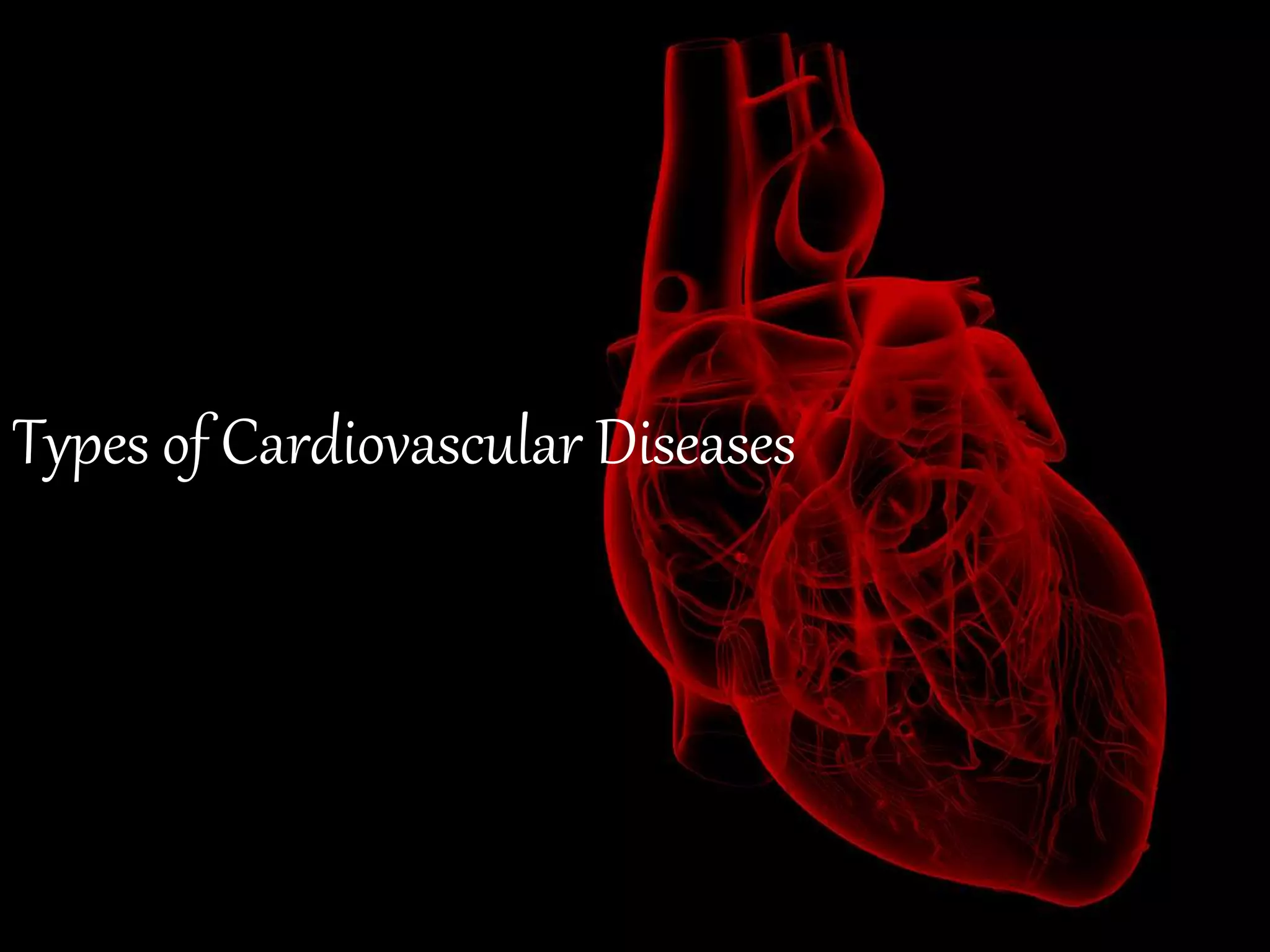
Types of Cardiovascular Diseases
Blood flow to the heart, brain or body can be reduced
as the result of a blood clot (thrombosis), or by a build-up of
fatty deposits inside an artery that cause the artery to harden
and narrow (atherosclerosis).
Cardiovascular disease
(CVD) is a general term
that describes a disease
of the heart or blood
vessels.
There are four main types of CVD. They are:
• Coronary heart disease
• Stroke
• Peripheral arterial disease
• Aortic disease
Types of Cardiovascular Diseases
Coronary heart disease
Coronary heart disease (CHD) occurs when
the flow of oxygen-rich blood to your heart is
blocked or reduced by a build-up of
fatty material (atheroma) in the coronary
arteries.
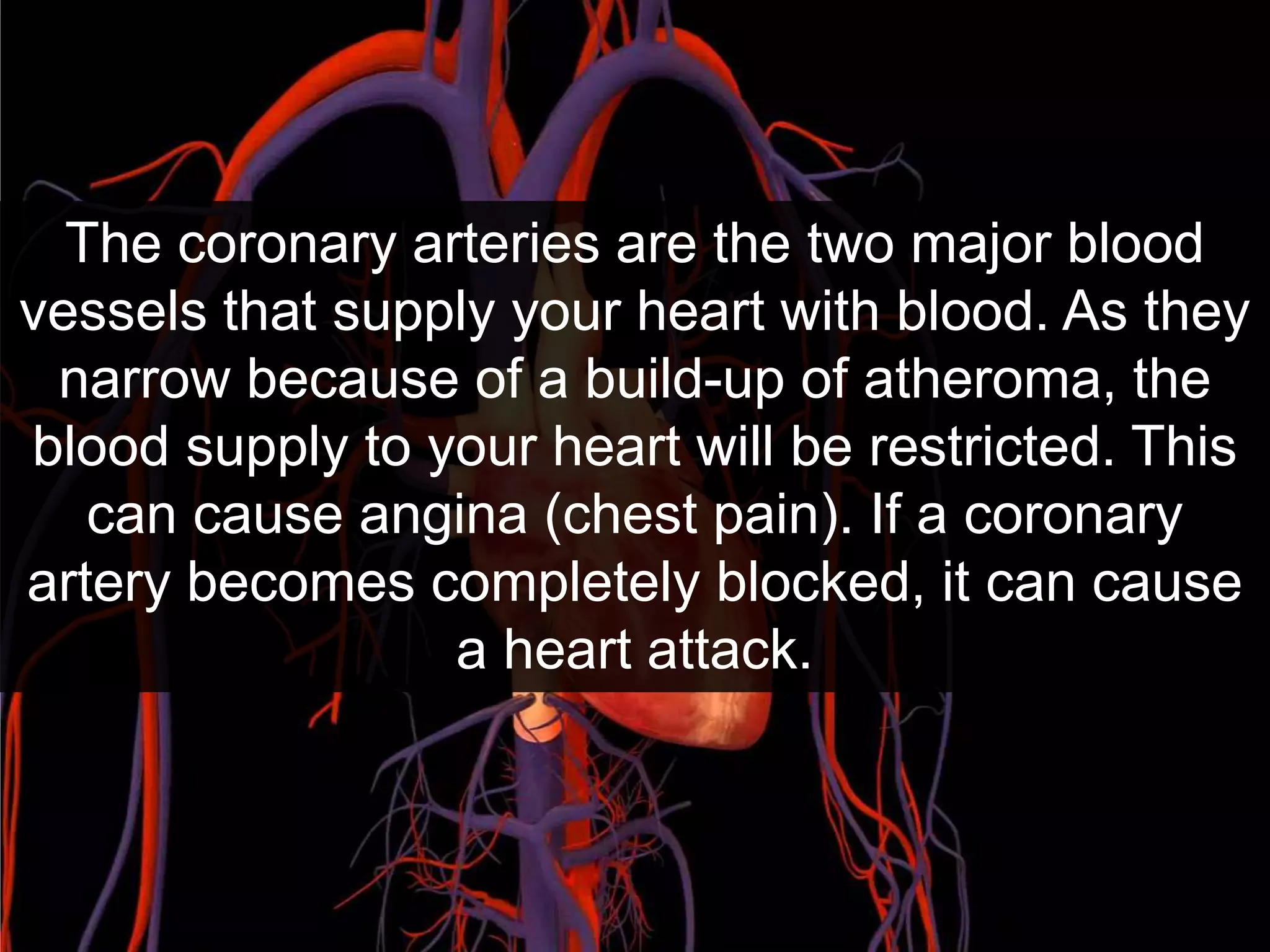
The coronary arteries are the two major blood
vessels that supply your heart with blood. As they
narrow because of a build-up of atheroma, the
blood supply to your heart will be restricted. This
can cause angina (chest pain). If a coronary
artery becomes completely blocked, it can cause
a heart attack.
A stroke is a serious medical condition that
occurs when the blood supply to part of the brain
is cut off.
Like all organs, the brain needs a constant supply
of oxygen and nutrients to function properly. This
is provided by the blood, so if your blood flow is
restricted or stopped, brain cells will begin to die.
This can cause brain damage and possibly death.
Stroke
Peripheral arterial disease
Peripheral arterial disease, also known as peripheral vascular disease, occurs when
there's a blockage in the arteries to your limbs (usually your legs).
The most common symptom of peripheral arterial disease is pain in your legs when
walking. This is usually in one or both of your thighs, hips or calves.
The pain can feel like cramp, a dull pain or a sensation of heaviness in your leg
muscles. It usually comes and goes, and gets worse during exercise that uses your
legs, such as walking or climbing stairs.
Aortic disease
The aorta is the largest blood vessel in the body. It carries blood from
your heart to the rest of your body.
The most common type of aortic disease is an aortic aneurysm, where
the wall of the aorta becomes weakened and bulges outwards. You'll
usually experience pain in your chest, back or abdomen (tummy).
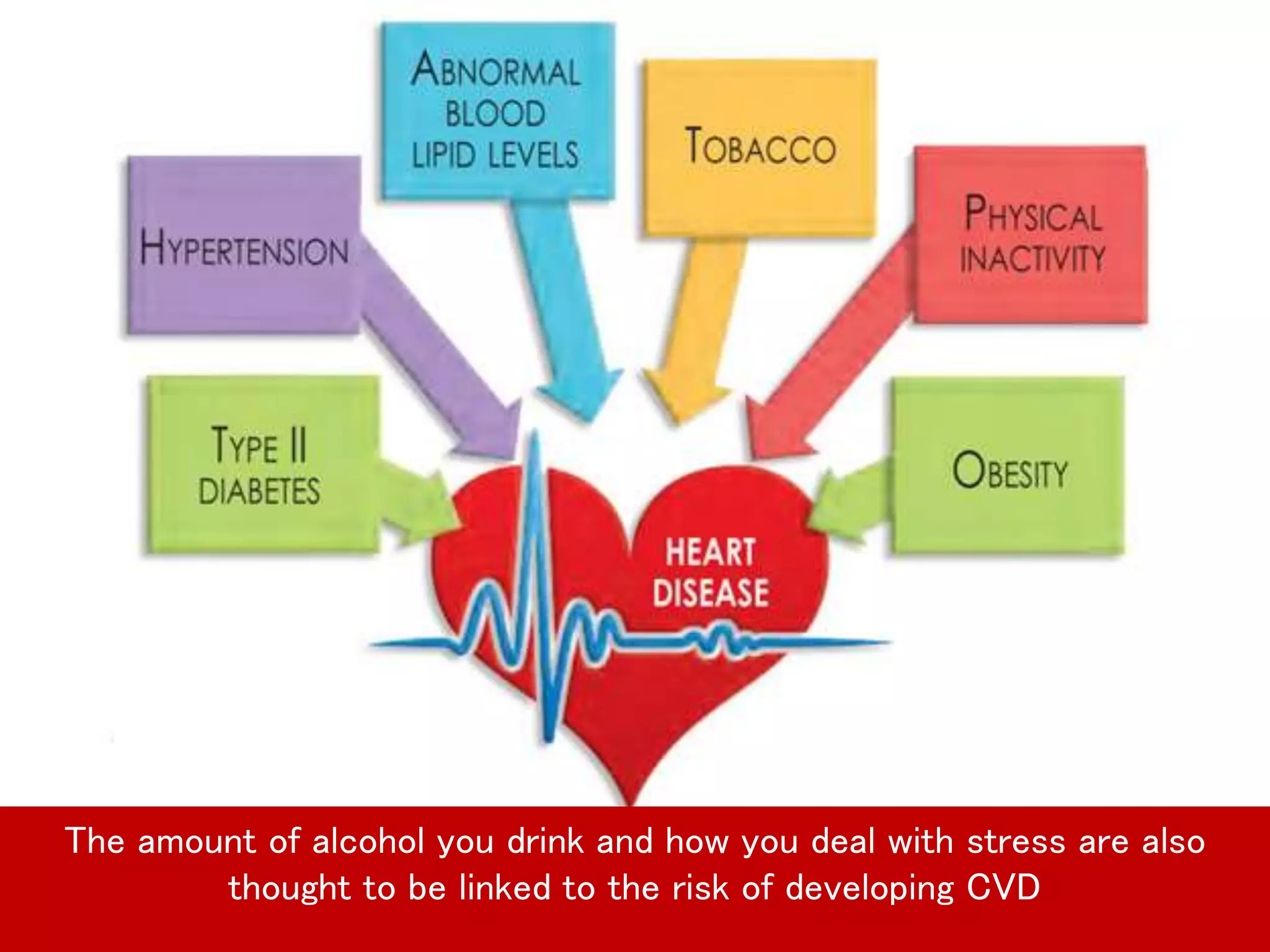
The amount of alcohol you drink and how you deal with stress are also
thought to be linked to the risk of developing CVD
CVD in Children
Evidence shows that eating and drinking habits established
during childhood can continue for many years into
adulthood.
Four important things to consider are the amount of:
• fat in your child's diet
• salt in your child's diet
• sugar in your child's diet
• exercise your child does
Types of cardiovascular diseases

Types of cardiovascular diseases

  • 1.
  • 2.
    Blood flow tothe heart, brain or body can be reduced as the result of a blood clot (thrombosis), or by a build-up of fatty deposits inside an artery that cause the artery to harden and narrow (atherosclerosis). Cardiovascular disease (CVD) is a general term that describes a disease of the heart or blood vessels.
  • 3.
    There are fourmain types of CVD. They are: • Coronary heart disease • Stroke • Peripheral arterial disease • Aortic disease Types of Cardiovascular Diseases
  • 4.
    Coronary heart disease Coronaryheart disease (CHD) occurs when the flow of oxygen-rich blood to your heart is blocked or reduced by a build-up of fatty material (atheroma) in the coronary arteries.
  • 5.
    The coronary arteriesare the two major blood vessels that supply your heart with blood. As they narrow because of a build-up of atheroma, the blood supply to your heart will be restricted. This can cause angina (chest pain). If a coronary artery becomes completely blocked, it can cause a heart attack.
  • 6.
    A stroke isa serious medical condition that occurs when the blood supply to part of the brain is cut off. Like all organs, the brain needs a constant supply of oxygen and nutrients to function properly. This is provided by the blood, so if your blood flow is restricted or stopped, brain cells will begin to die. This can cause brain damage and possibly death. Stroke
  • 8.
    Peripheral arterial disease Peripheralarterial disease, also known as peripheral vascular disease, occurs when there's a blockage in the arteries to your limbs (usually your legs). The most common symptom of peripheral arterial disease is pain in your legs when walking. This is usually in one or both of your thighs, hips or calves. The pain can feel like cramp, a dull pain or a sensation of heaviness in your leg muscles. It usually comes and goes, and gets worse during exercise that uses your legs, such as walking or climbing stairs.
  • 9.
    Aortic disease The aortais the largest blood vessel in the body. It carries blood from your heart to the rest of your body. The most common type of aortic disease is an aortic aneurysm, where the wall of the aorta becomes weakened and bulges outwards. You'll usually experience pain in your chest, back or abdomen (tummy).
  • 11.
    The amount ofalcohol you drink and how you deal with stress are also thought to be linked to the risk of developing CVD
  • 12.
    CVD in Children Evidenceshows that eating and drinking habits established during childhood can continue for many years into adulthood. Four important things to consider are the amount of: • fat in your child's diet • salt in your child's diet • sugar in your child's diet • exercise your child does