Ch. 1 Warm-Up 
1. How is anatomy different from physiology? 
2. What are the levels of organization of the 
human body from smallest  largest? 
3. List the 11 organ systems of the body.
Ch. 1 Warm-Up 
1. List the functional characteristics necessary to 
maintain life. 
2. List the survival needs of the body.
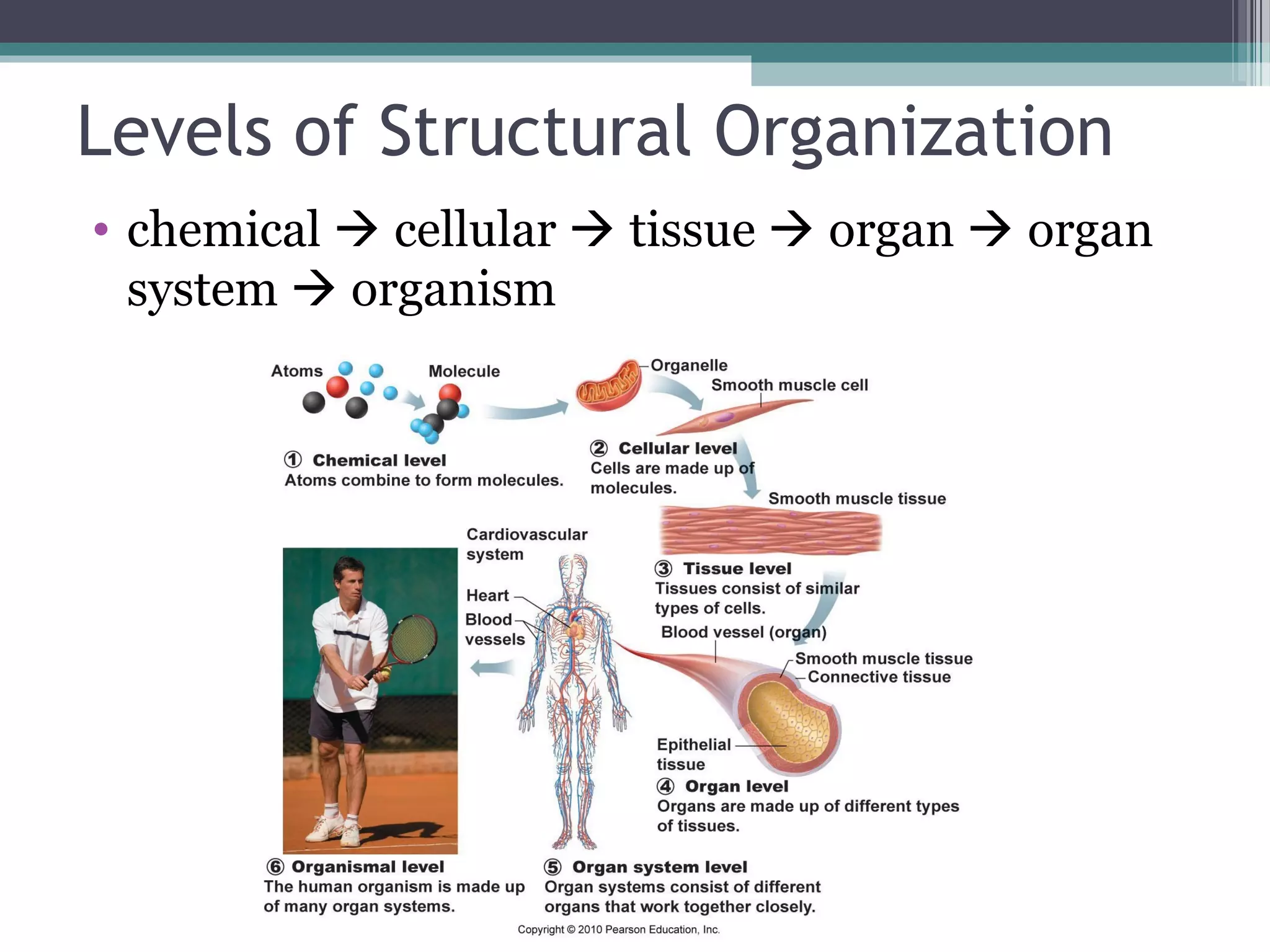
Ch. 1 Warm-Up 
1. What is the anatomical position? Describe or 
draw it. 
2. How are the following cuts or planes made? 
a) Frontal 
b) Oblique 
c) Transverse 
d) Sagittal 
3. What type of cut would separate the brain into 
anterior and posterior parts?
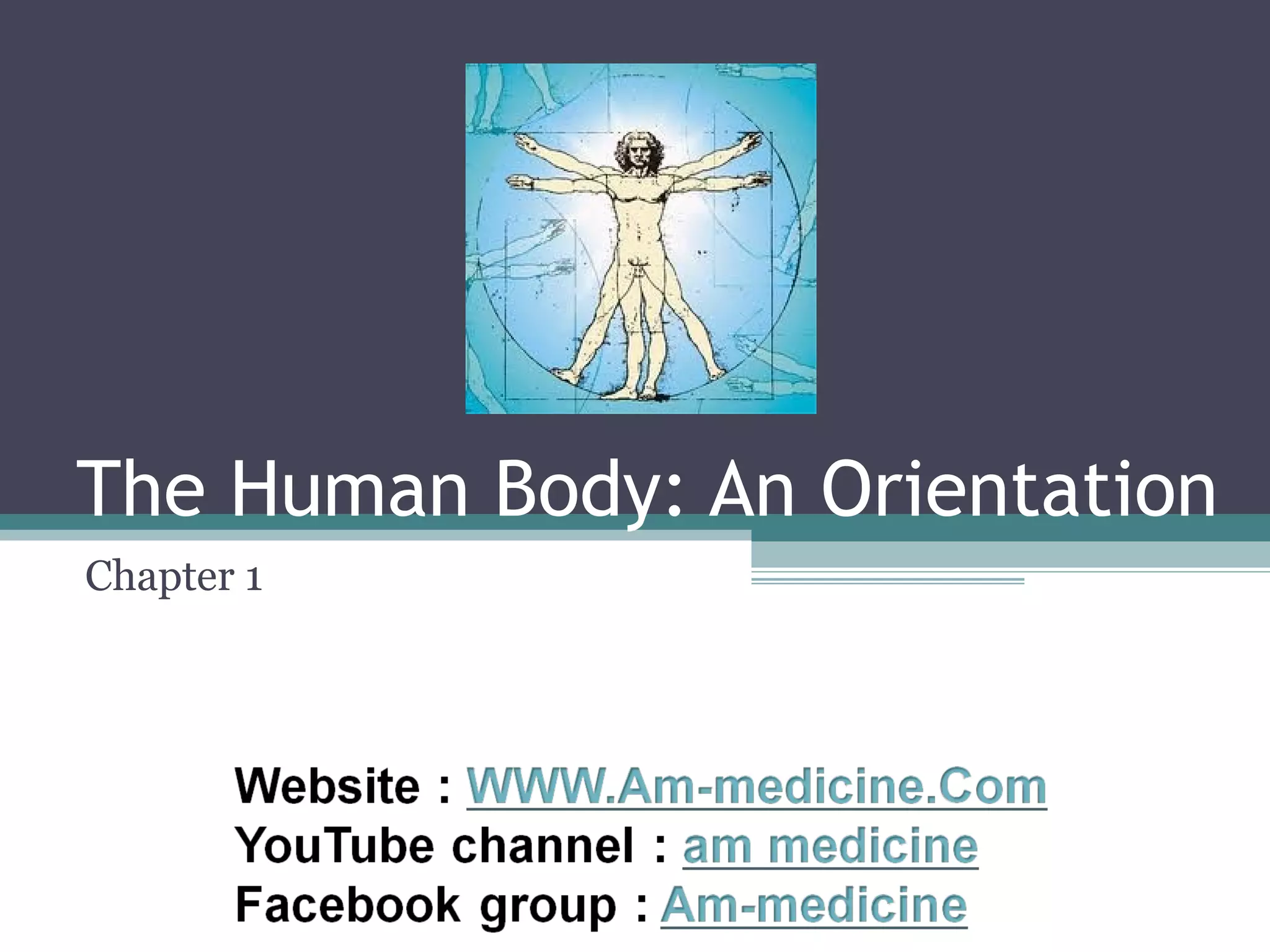
The Human Body: An Orientation 
Chapter 1
Objectives: 
• Explain how structure complements function 
• Name the levels of structural organization 
• List the functions necessary for life 
• List the survival needs of the body 
• Define homeostasis and explain its significance 
• Use correct anatomical terms to describe the 
body
• Anatomy: studies the structure of body parts 
and their relationship to one another 
• Physiology: the function of the body parts 
• Complementarity of Structure & Function 
▫ What a structure can do depends on its specific 
form 
▫ “Structure dictates function”
Subdivisions of Anatomy 
• Gross or Macroscopic 
▫ parts visible to naked eye 
▫ eg. regional, surface, systemic 
• Microscopic 
▫ Cytology: study of cells 
▫ Histology: study of tissues 
• Developmental 
eg. embryology – study changes that occur before 
birth
Physiology 
• Focuses on events at cellular or molecular level 
• Chemical & physical principles
Levels of Structural Organization 
• chemical  cellular  tissue  organ  organ 
system  organism
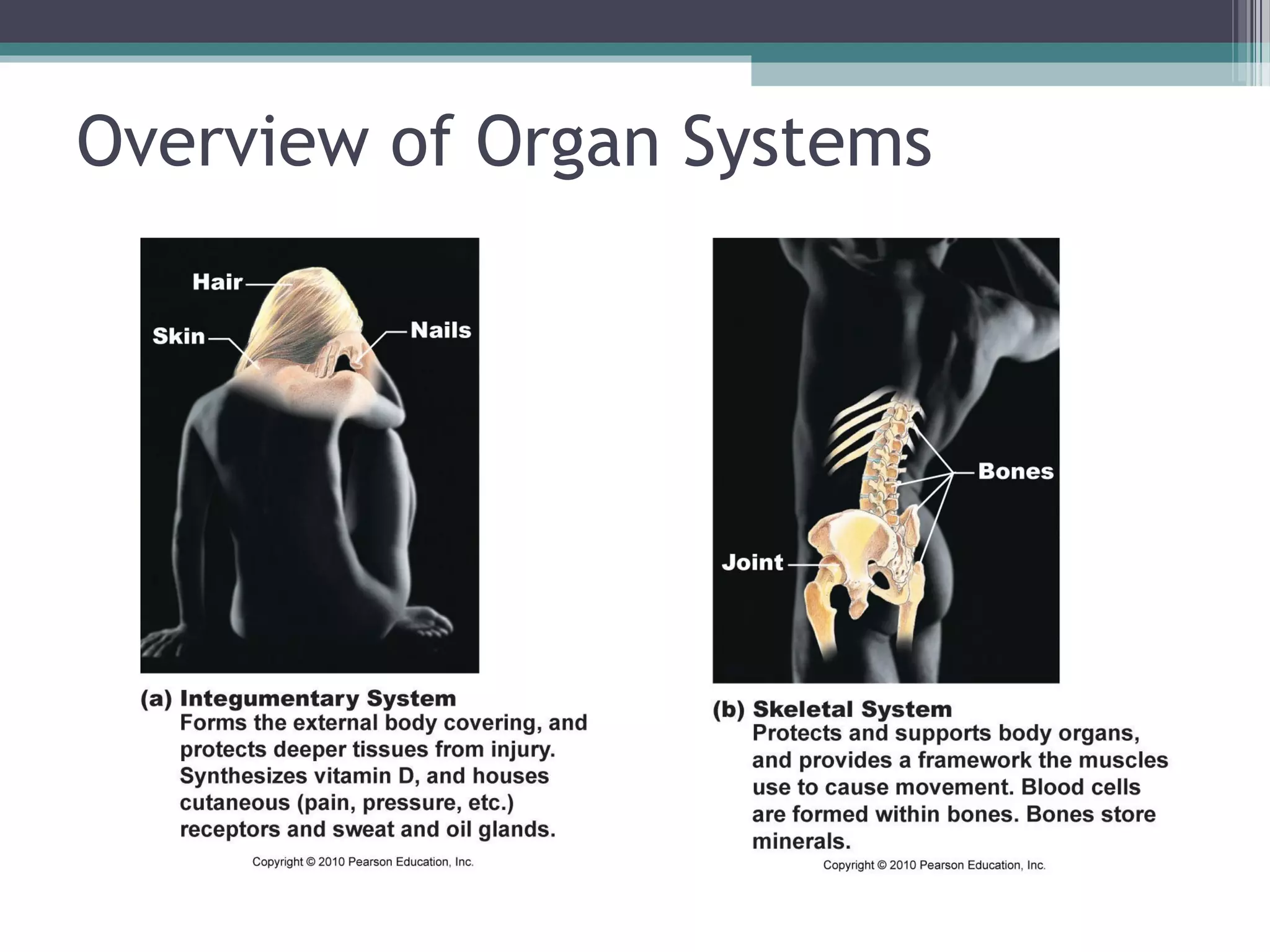
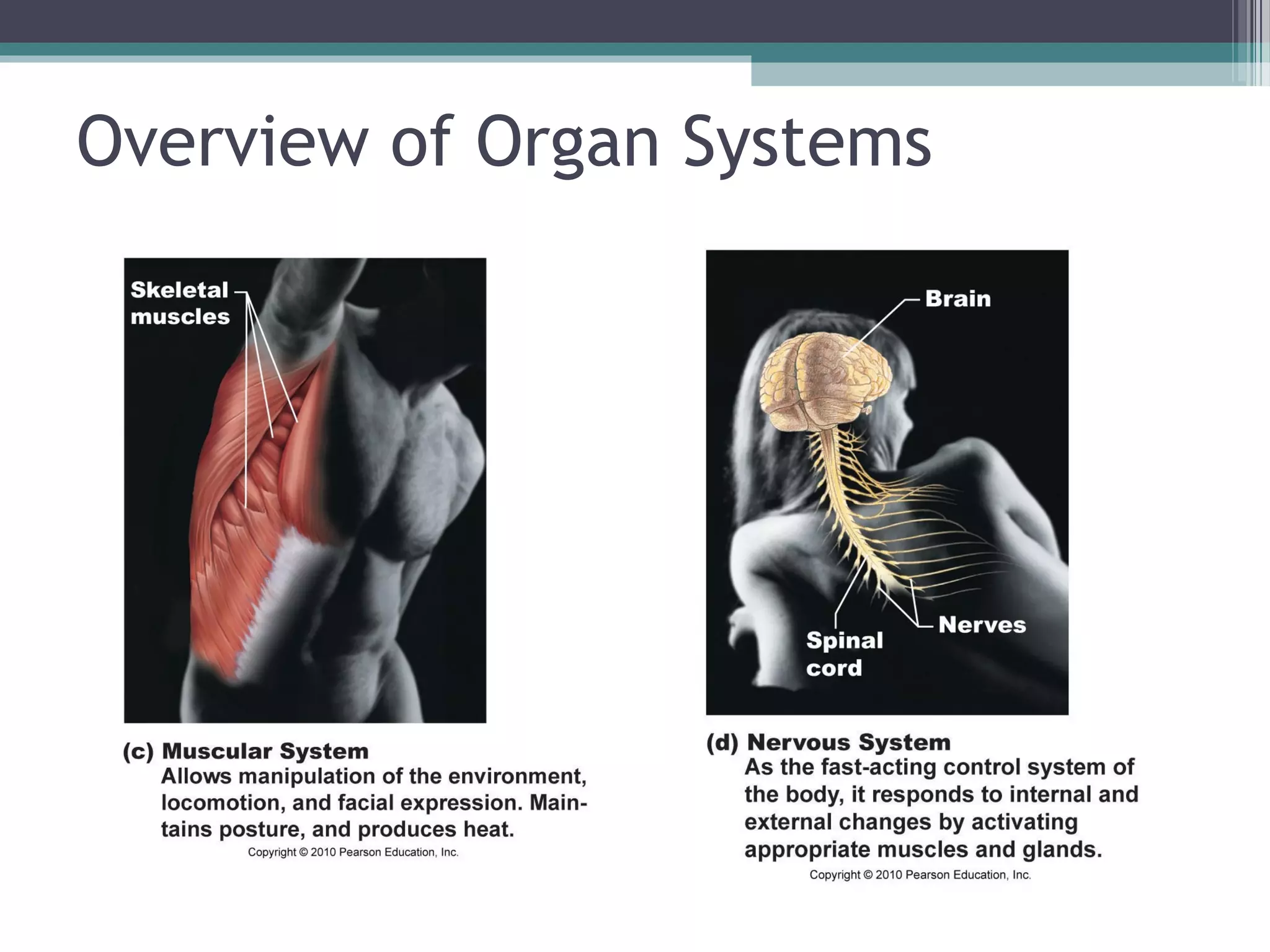
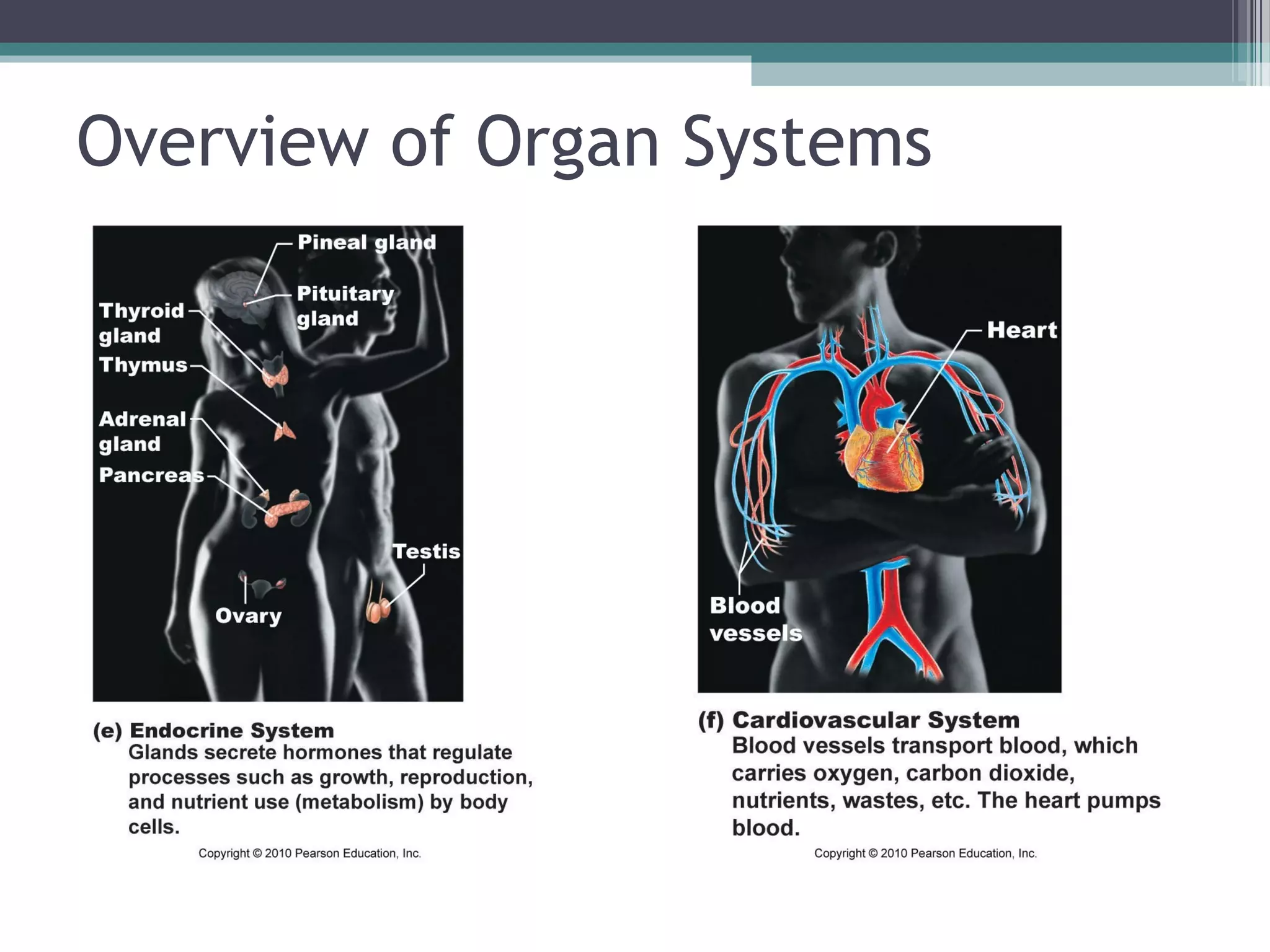
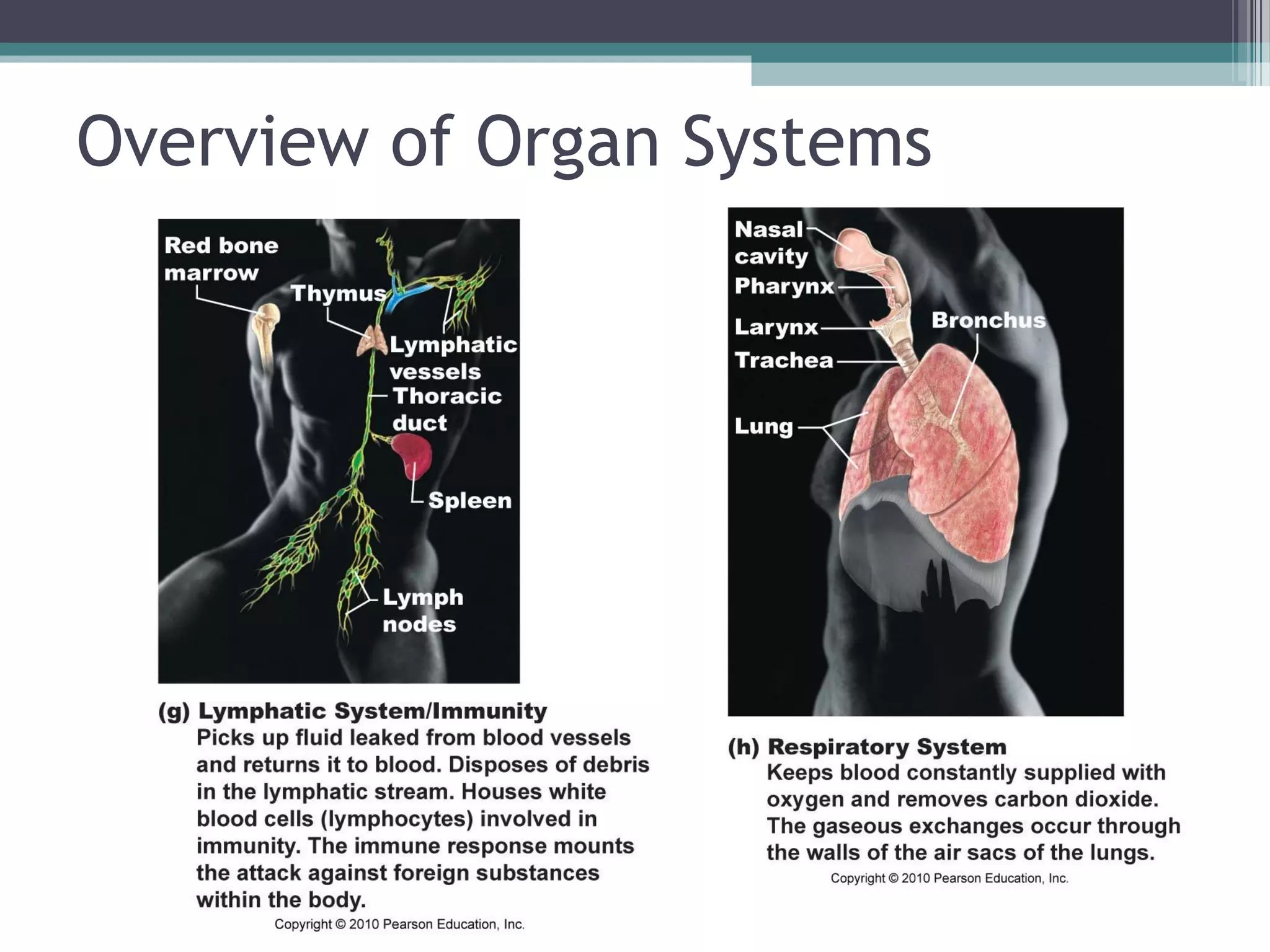
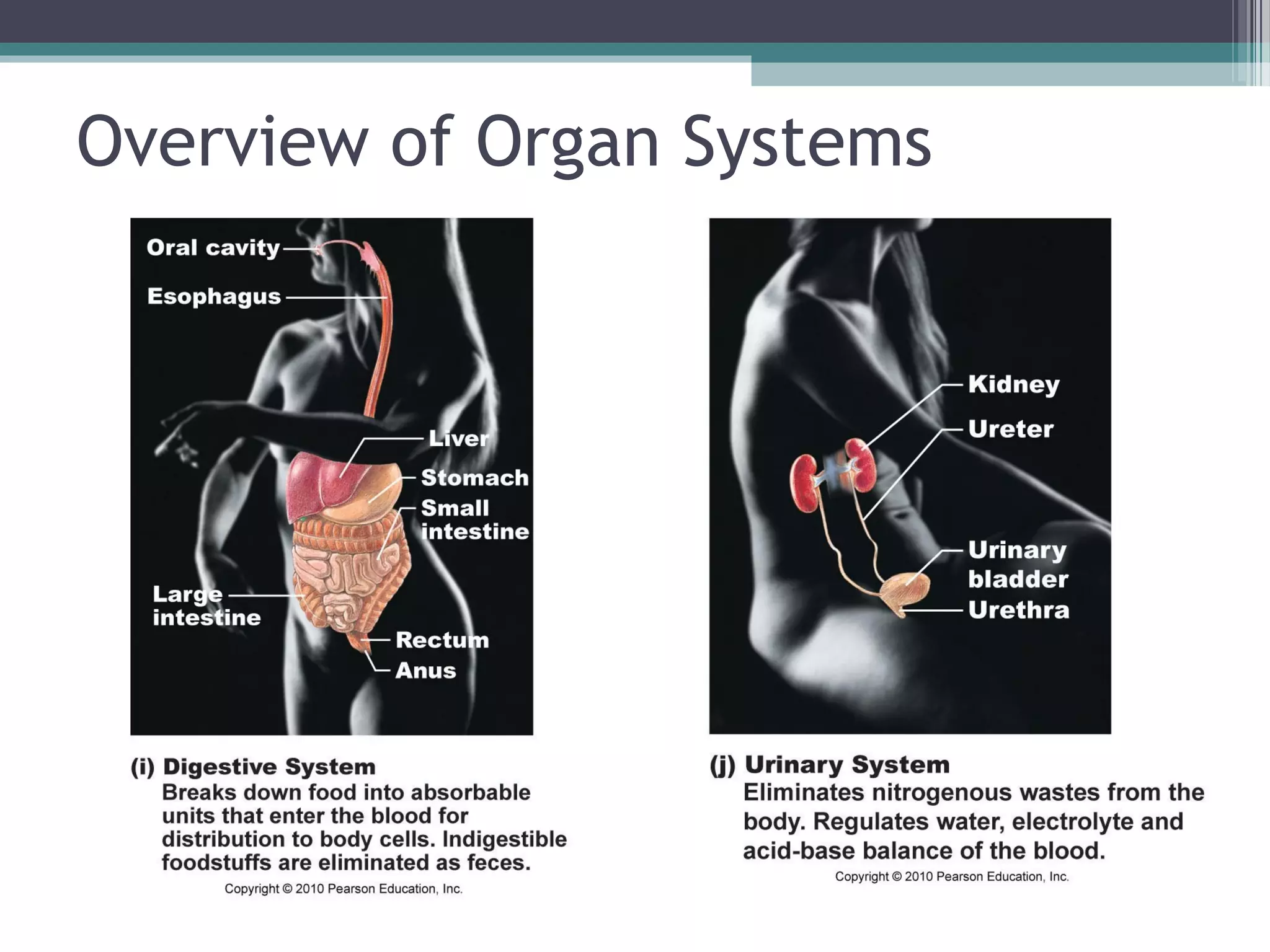
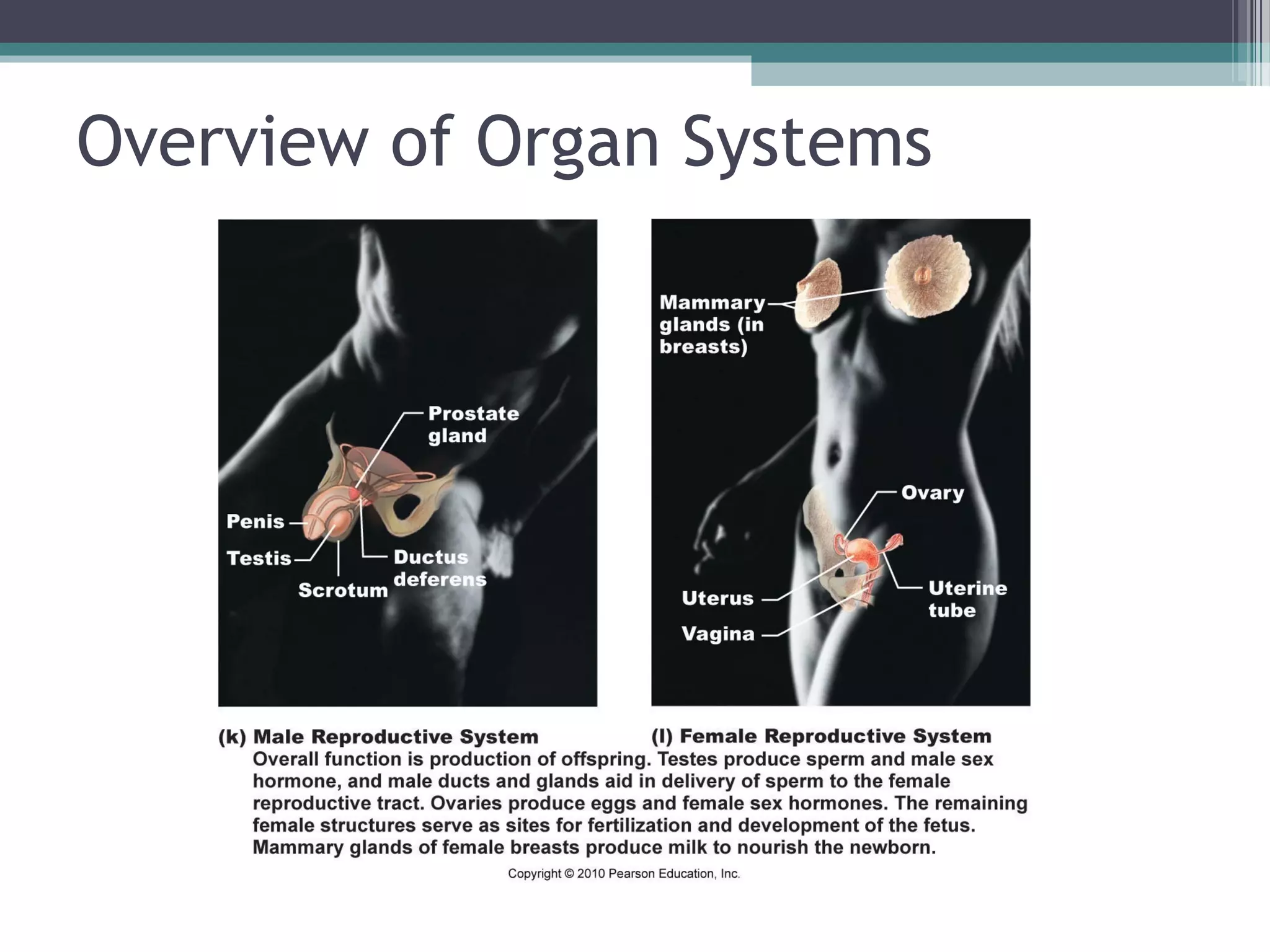
Overview of Organ Systems
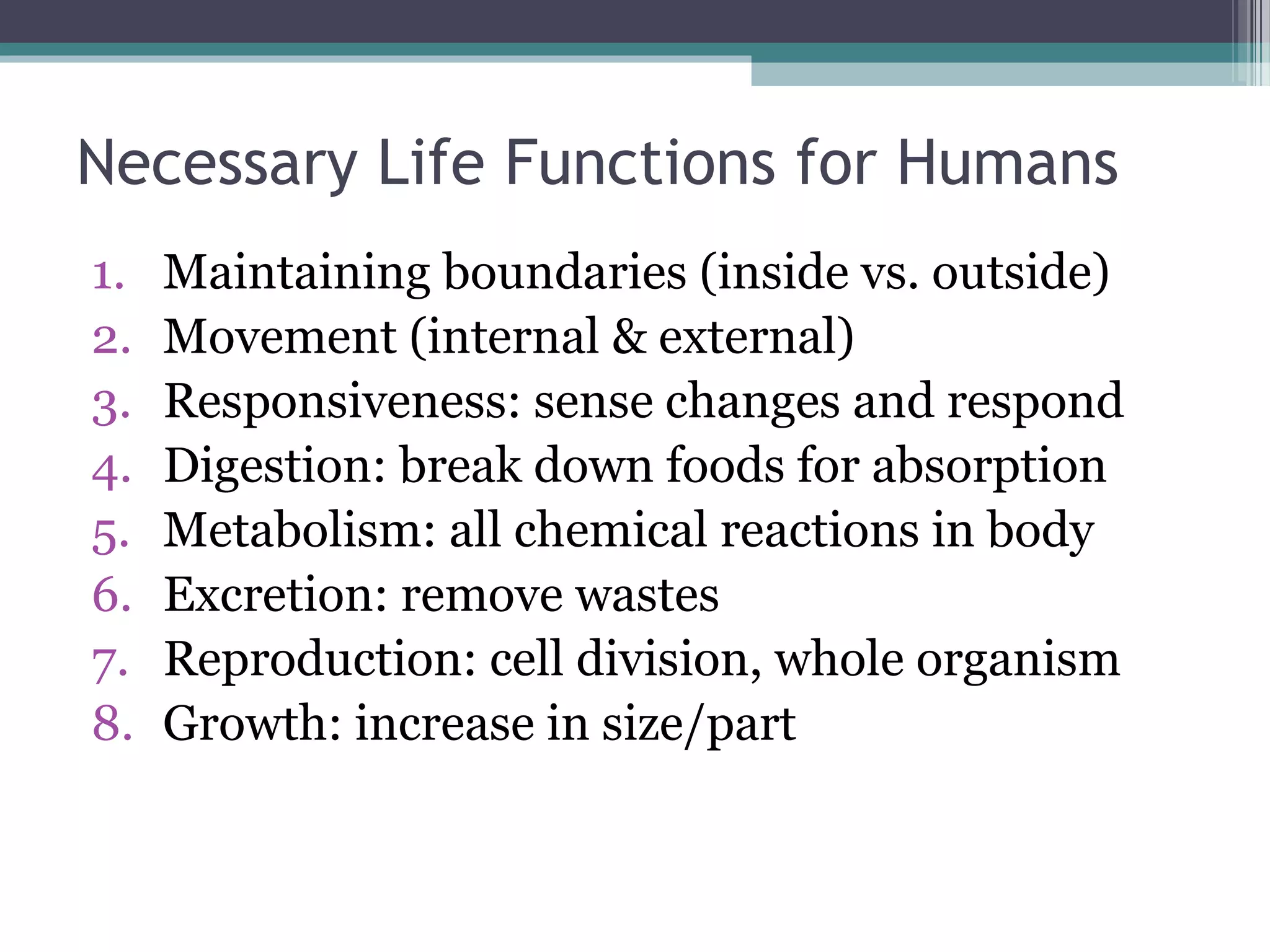
Necessary Life Functions for Humans 
1. Maintaining boundaries (inside vs. outside) 
2. Movement (internal & external) 
3. Responsiveness: sense changes and respond 
4. Digestion: break down foods for absorption 
5. Metabolism: all chemical reactions in body 
6. Excretion: remove wastes 
7. Reproduction: cell division, whole organism 
8. Growth: increase in size/part
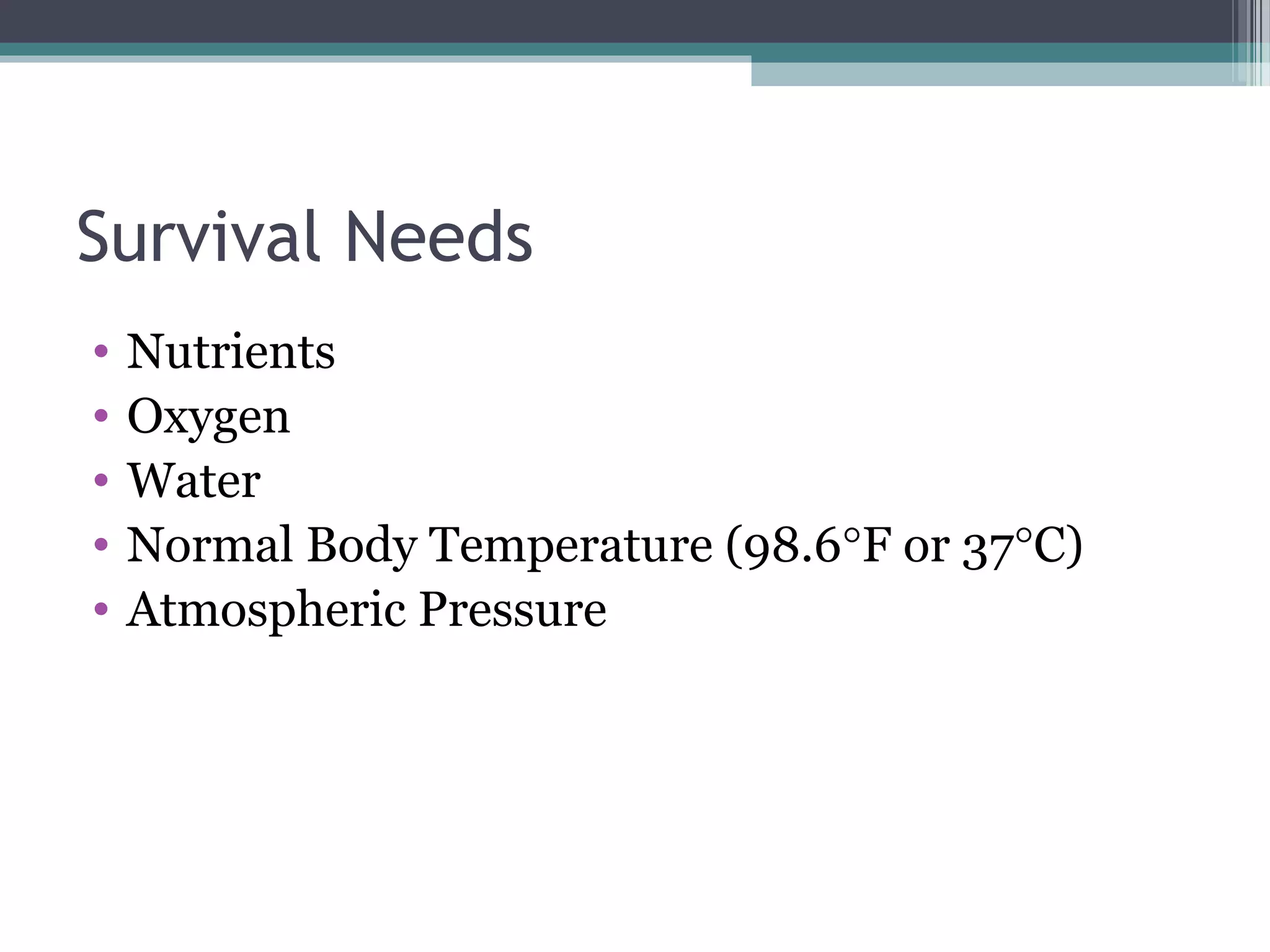
Survival Needs 
• Nutrients 
• Oxygen 
• Water 
• Normal Body Temperature (98.6°F or 37°C) 
• Atmospheric Pressure
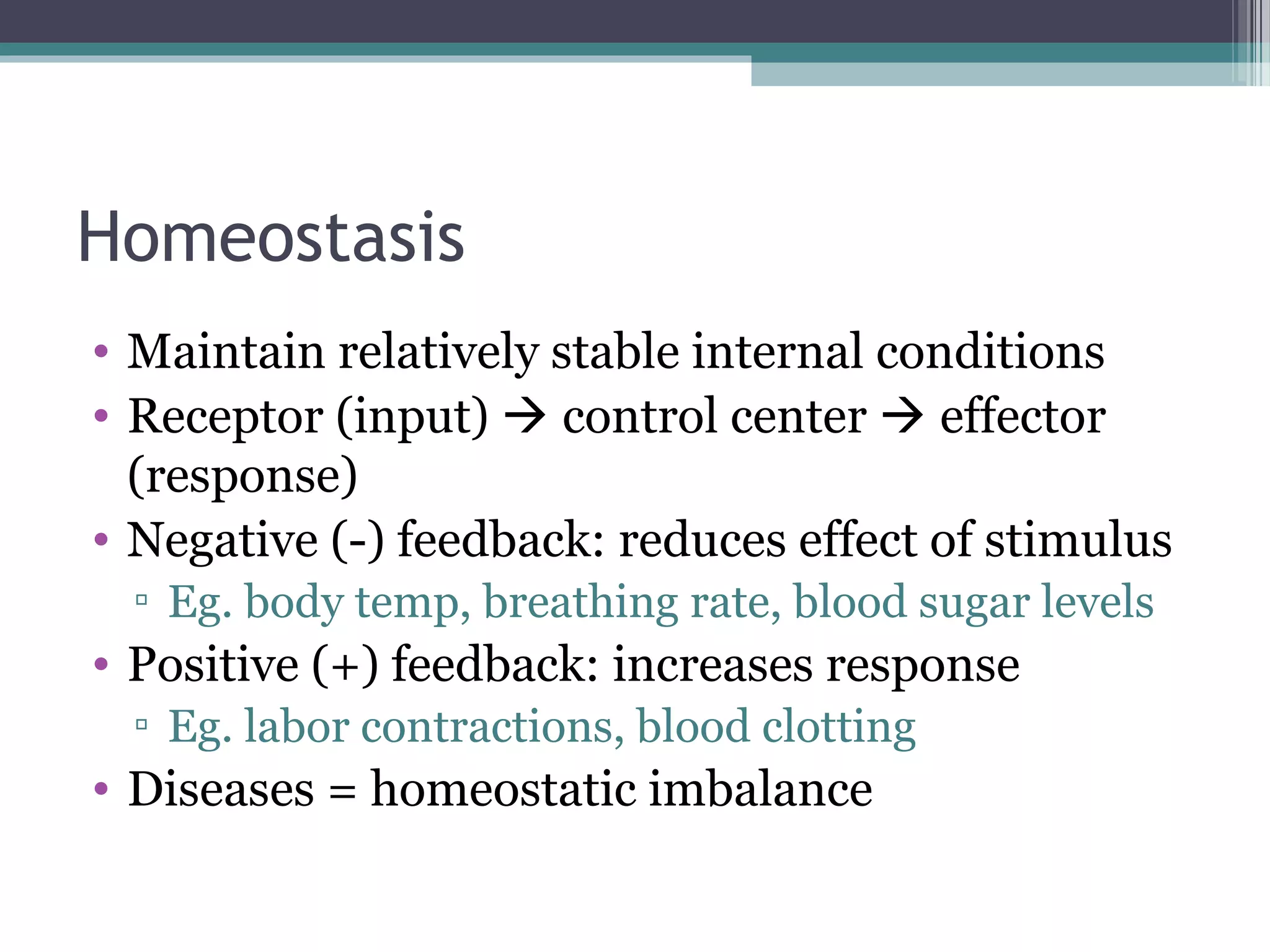
Homeostasis 
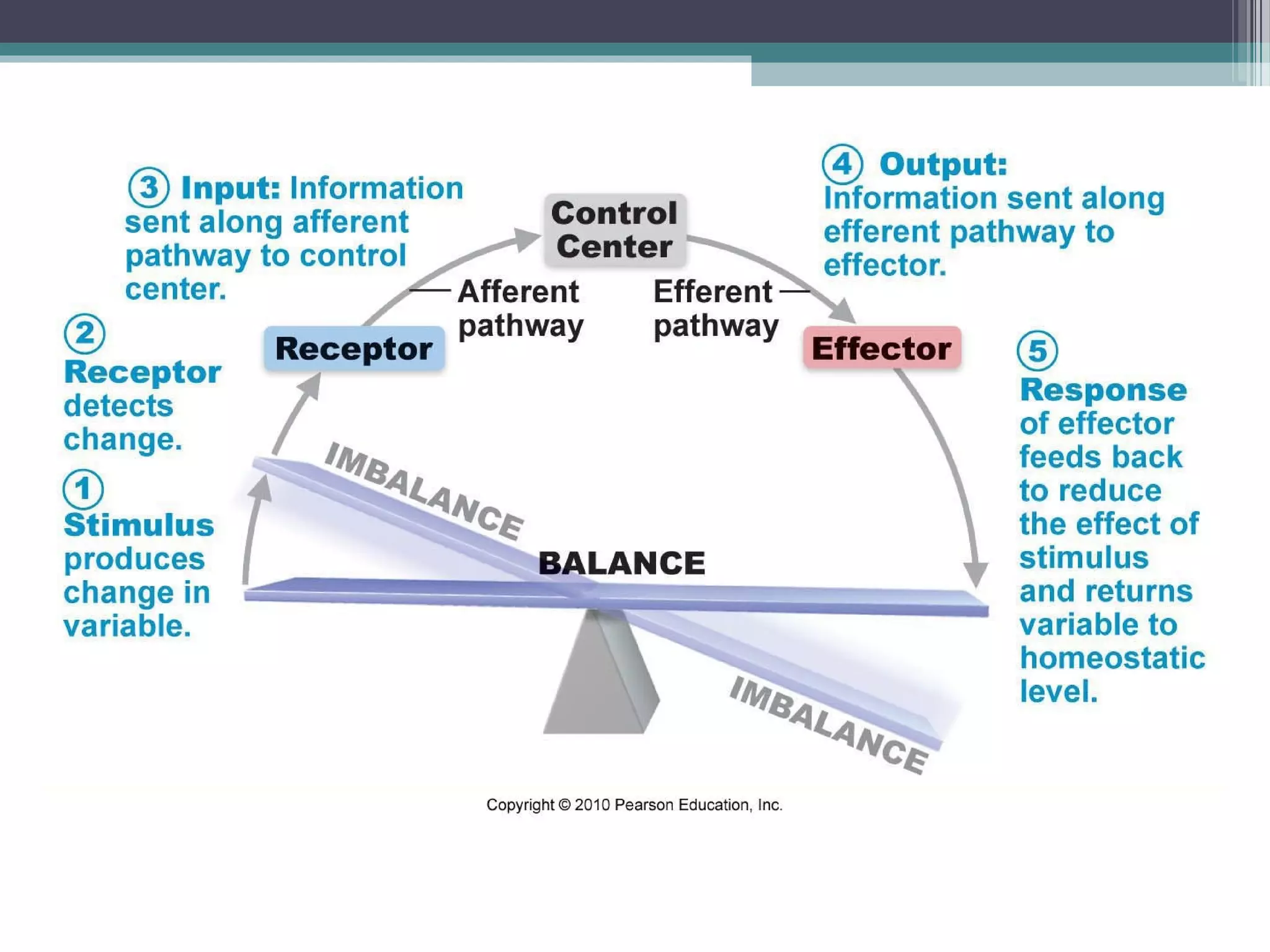
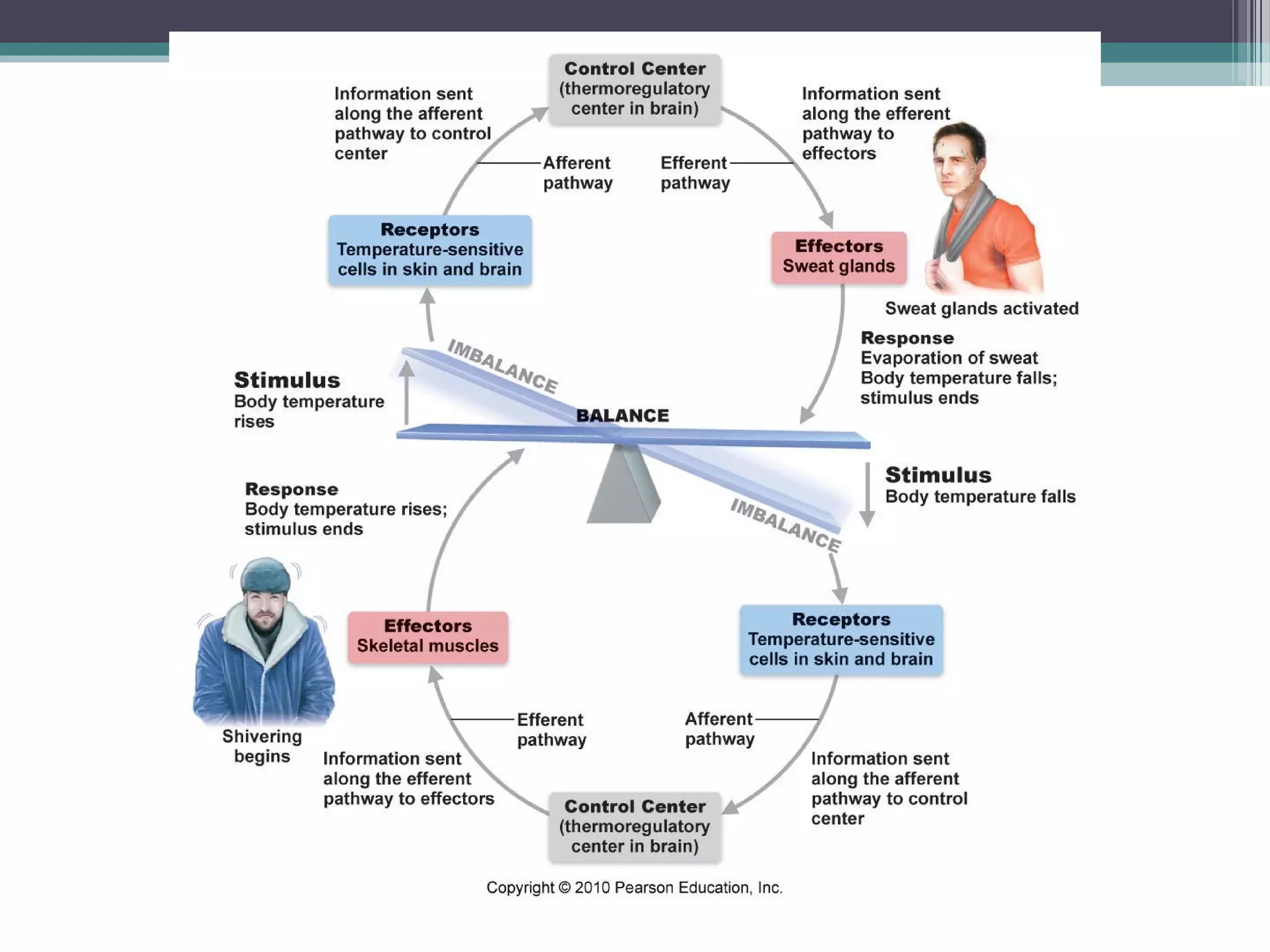
• Maintain relatively stable internal conditions 
• Receptor (input)  control center  effector 
(response) 
• Negative (-) feedback: reduces effect of stimulus 
▫ Eg. body temp, breathing rate, blood sugar levels 
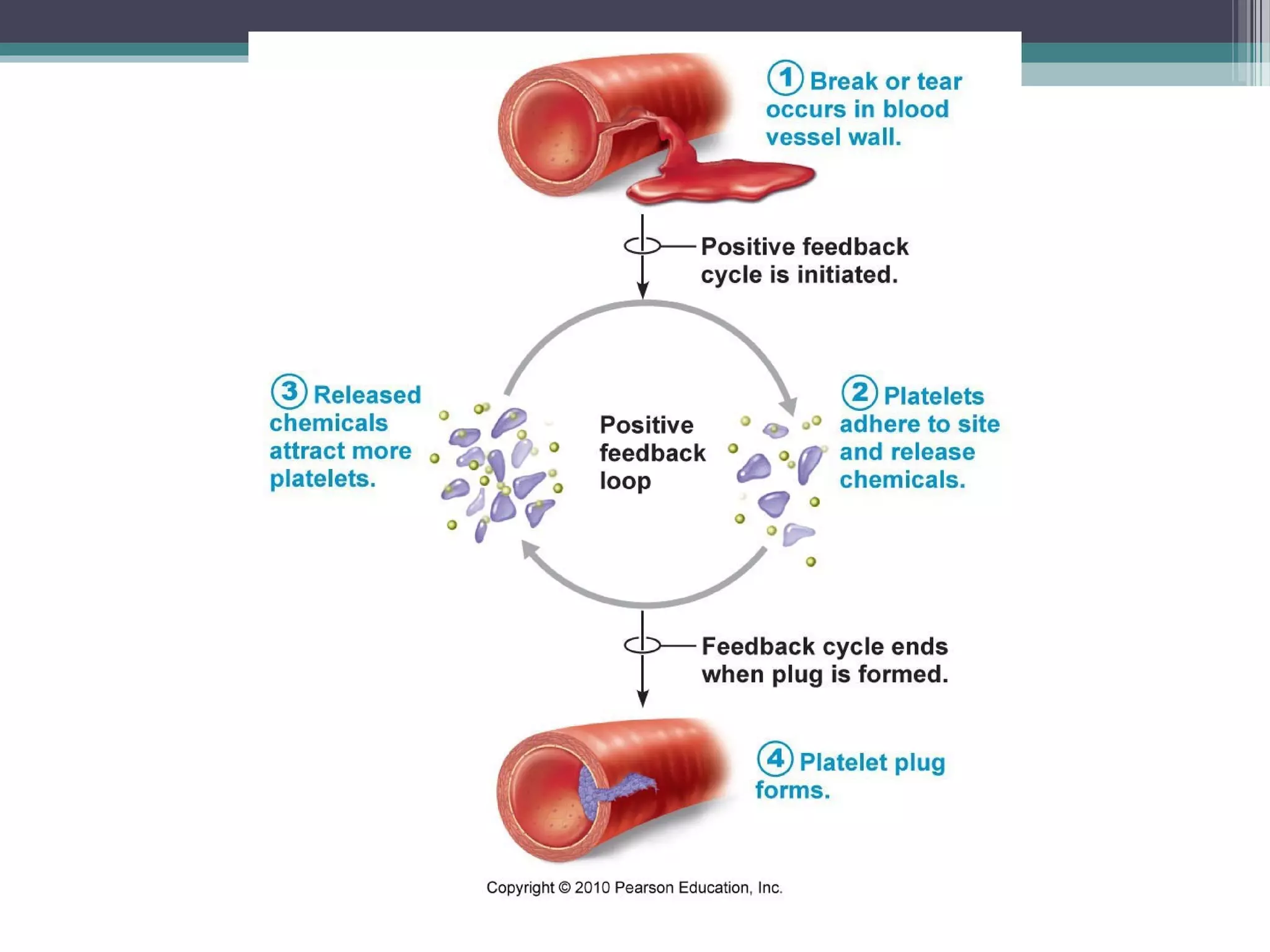
• Positive (+) feedback: increases response 
▫ Eg. labor contractions, blood clotting 
• Diseases = homeostatic imbalance
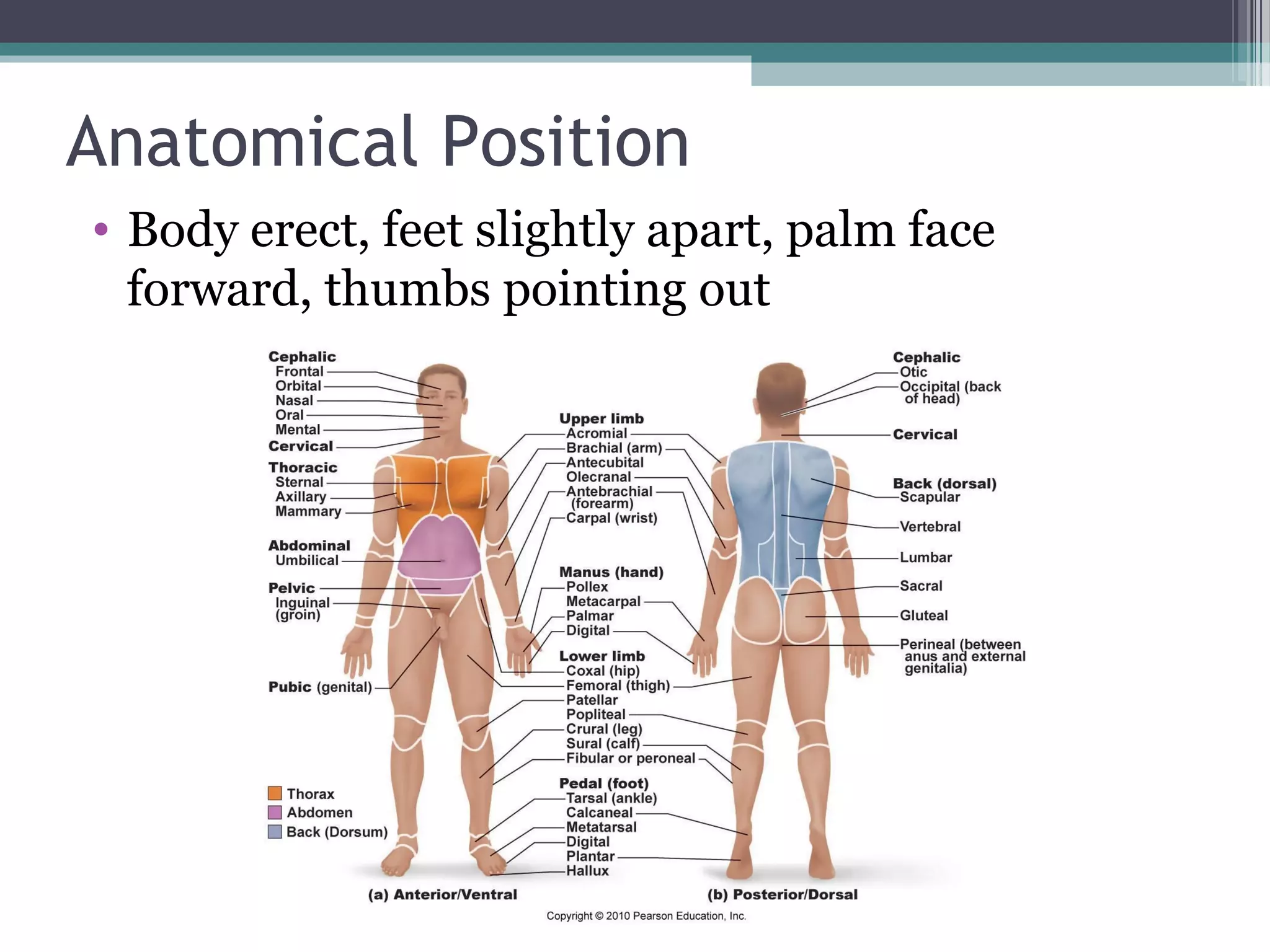
Anatomical Position 
• Body erect, feet slightly apart, palm face 
forward, thumbs pointing out
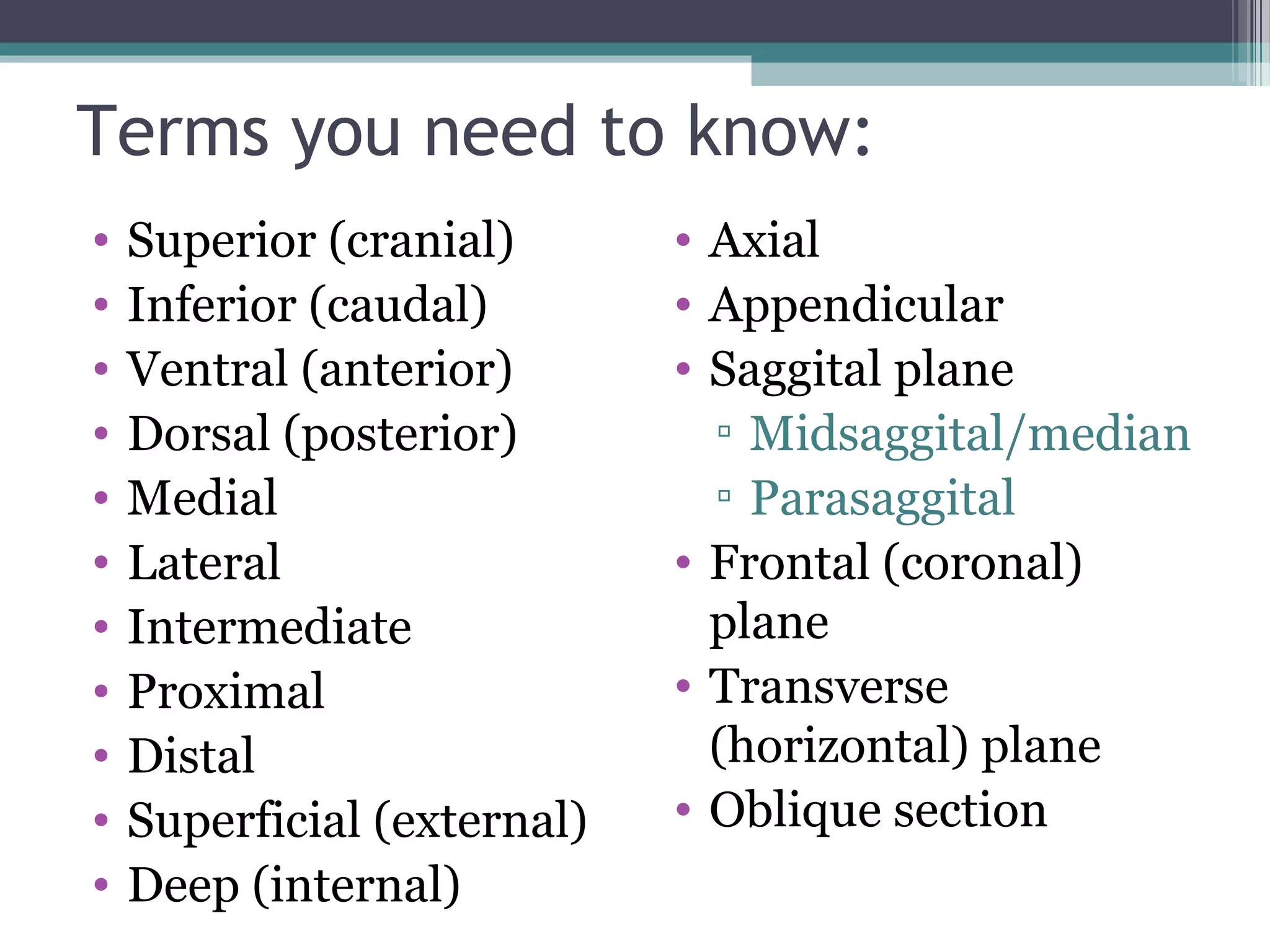
Terms you need to know: 
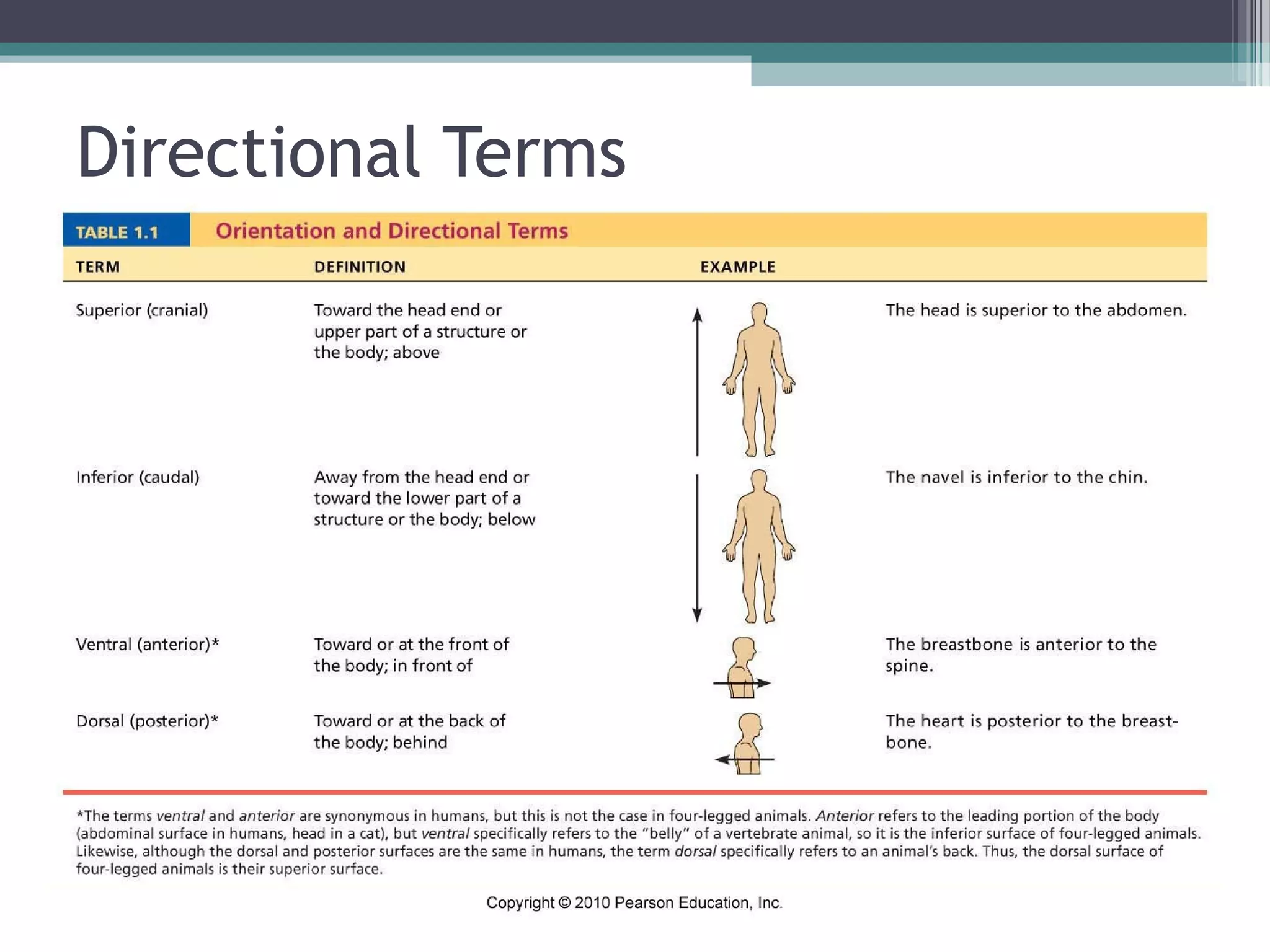
• Superior (cranial) 
• Inferior (caudal) 
• Ventral (anterior) 
• Dorsal (posterior) 
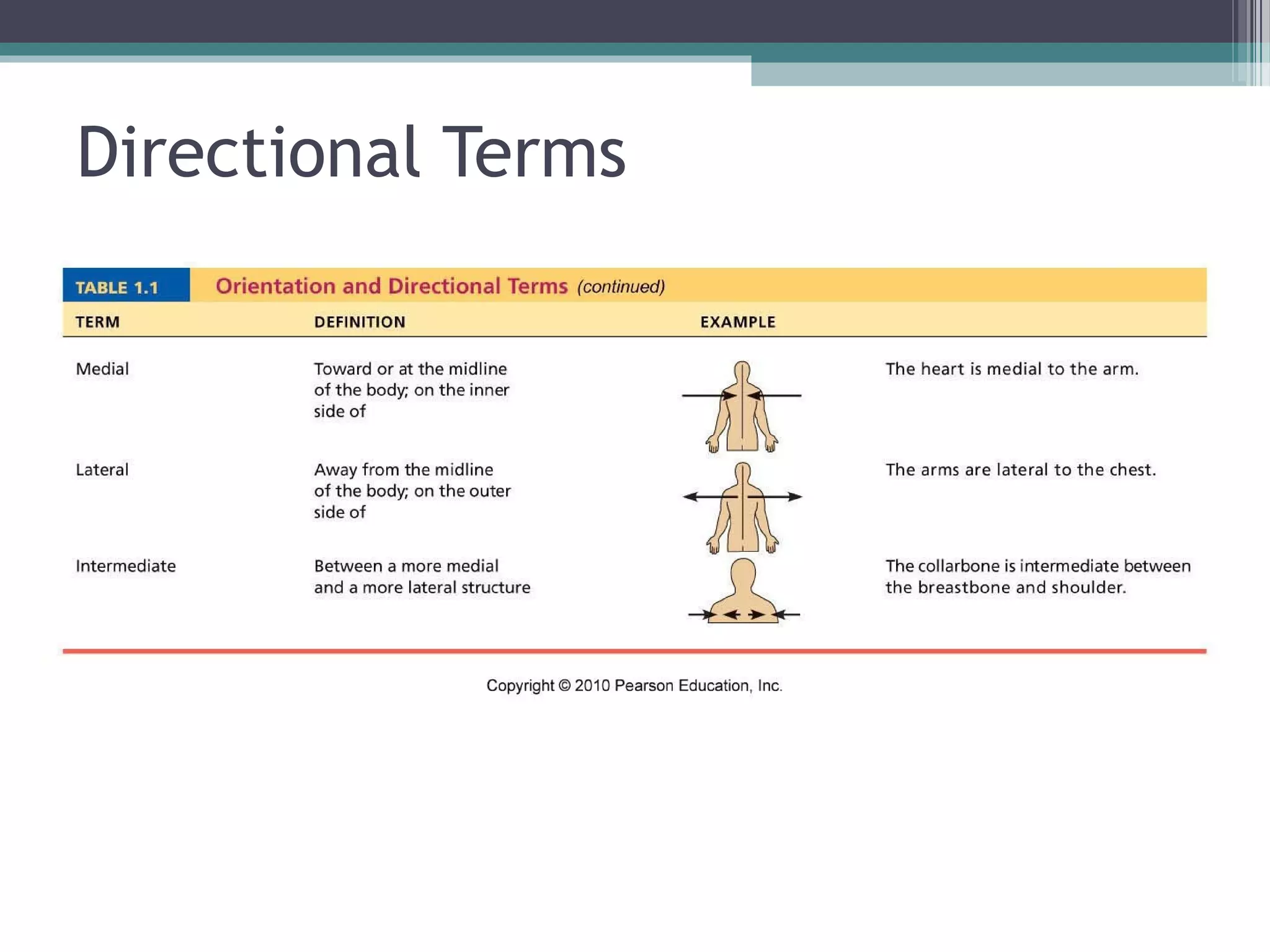
• Medial 
• Lateral 
• Intermediate 
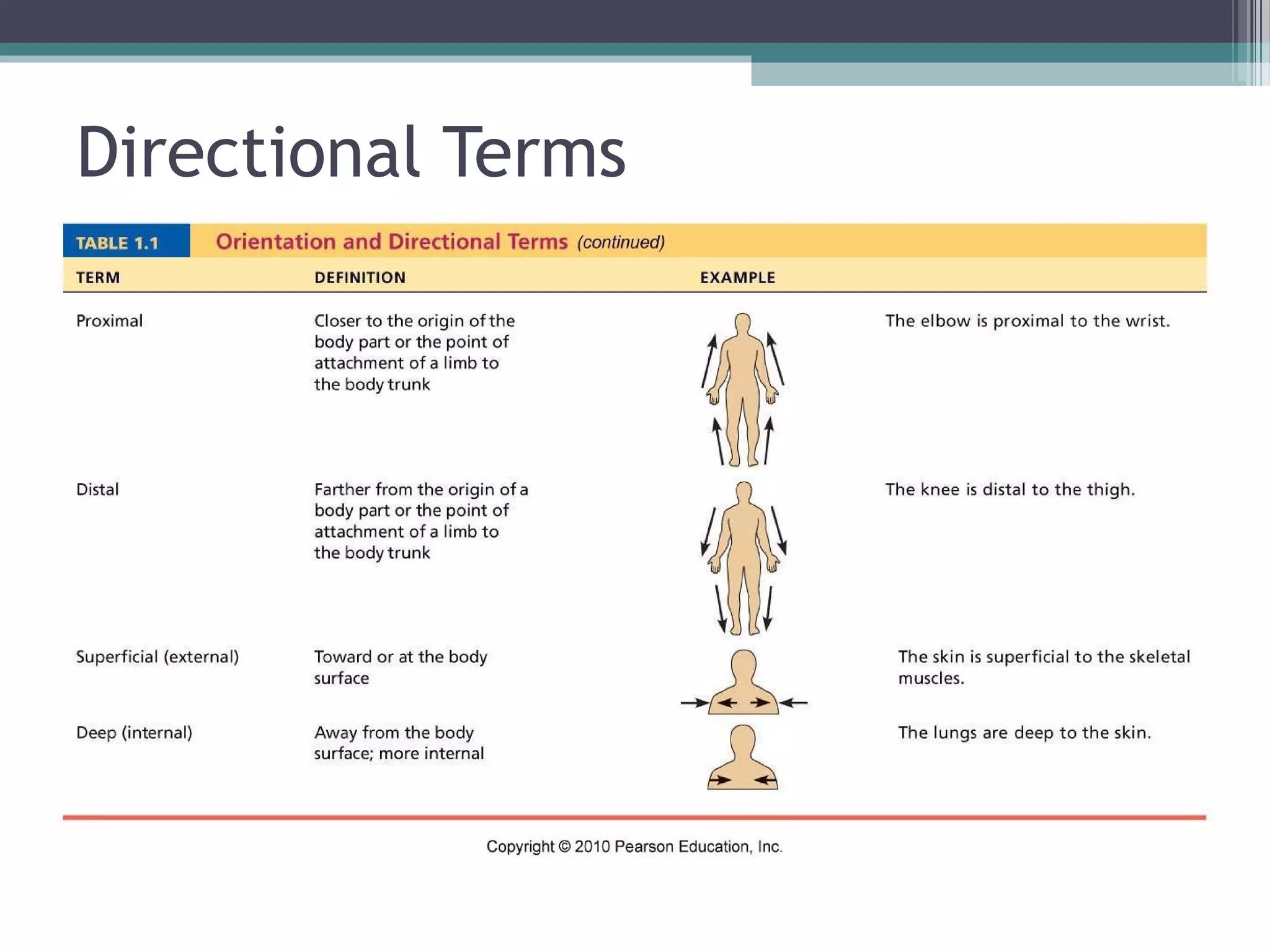
• Proximal 
• Distal 
• Superficial (external) 
• Deep (internal) 
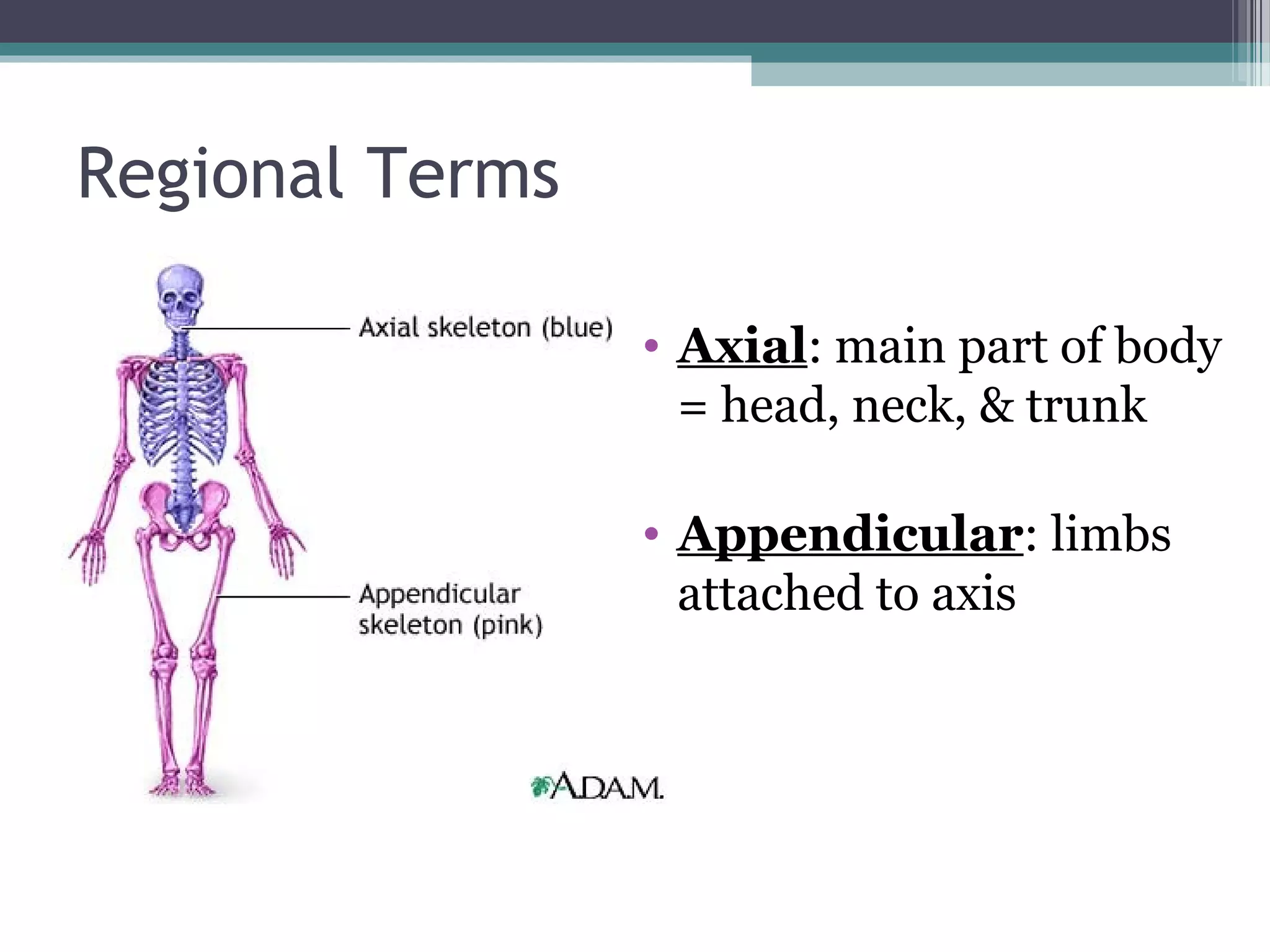
• Axial 
• Appendicular 
• Saggital plane 
▫ Midsaggital/median 
▫ Parasaggital 
• Frontal (coronal) 
plane 
• Transverse 
(horizontal) plane 
• Oblique section
Directional Terms
Directional Terms
Directional Terms
Regional Terms 
• Axial: main part of body 
= head, neck, & trunk 
• Appendicular: limbs 
attached to axis
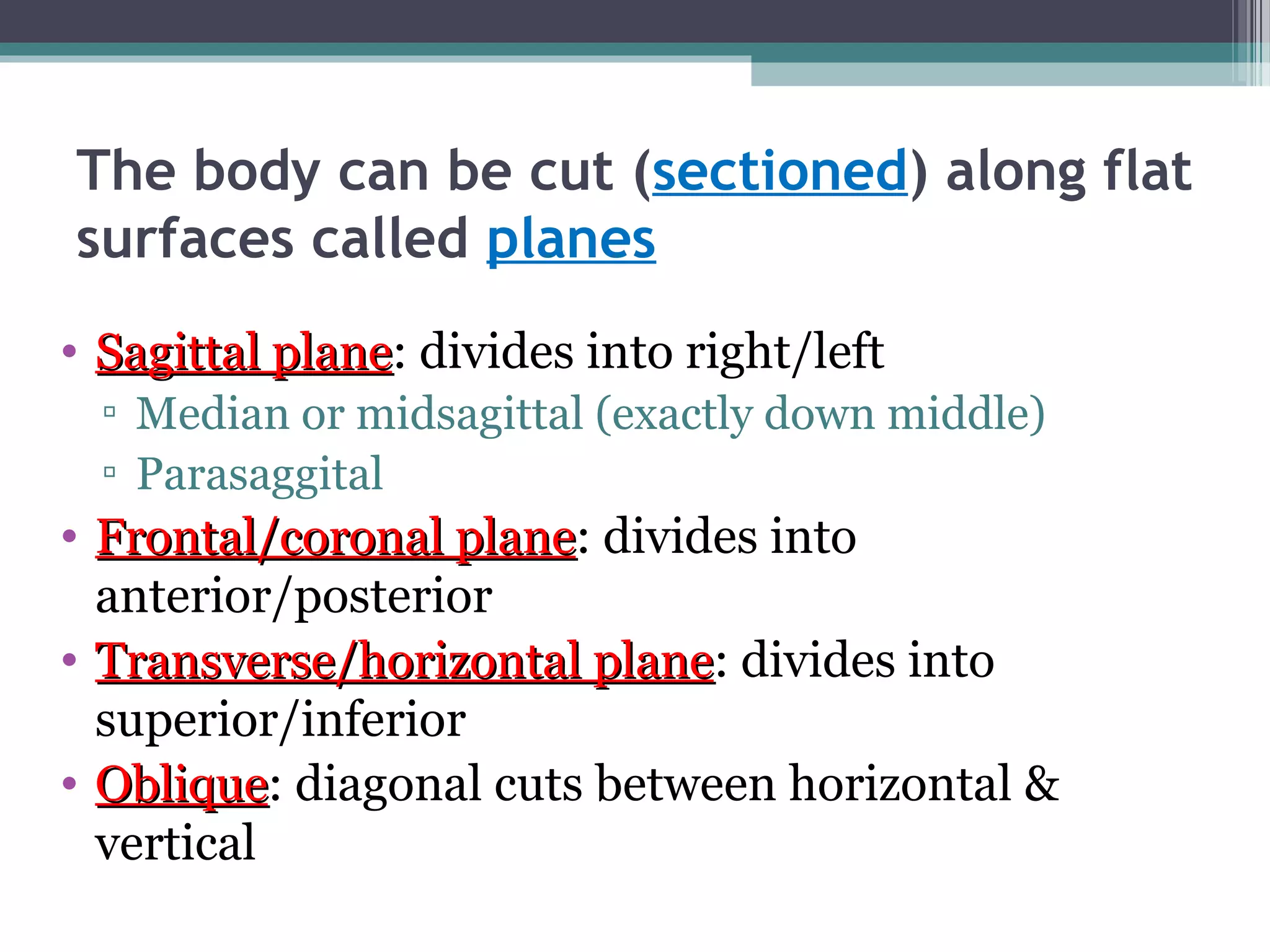
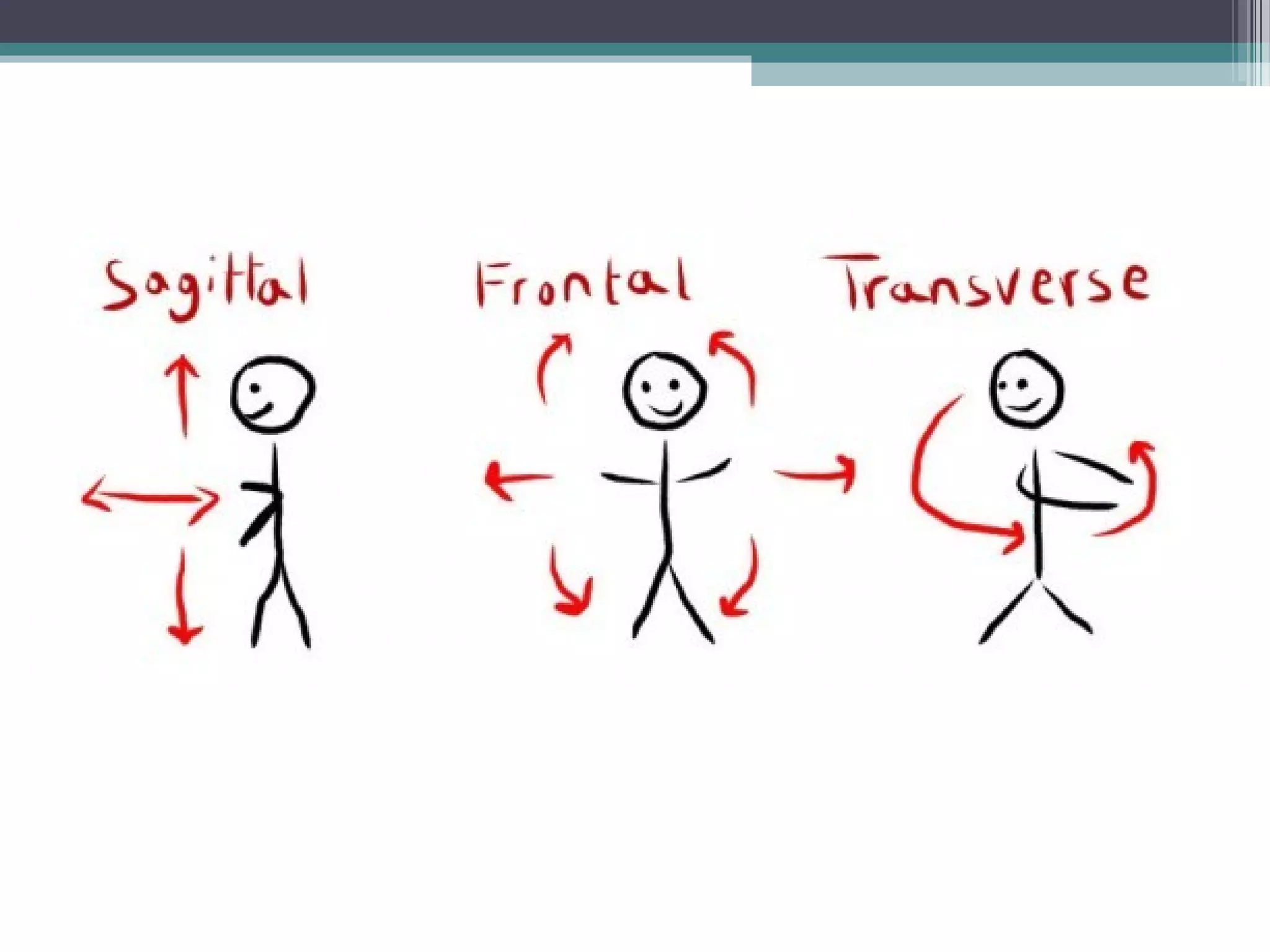
The body can be cut (sectioned) along flat 
surfaces called planes 
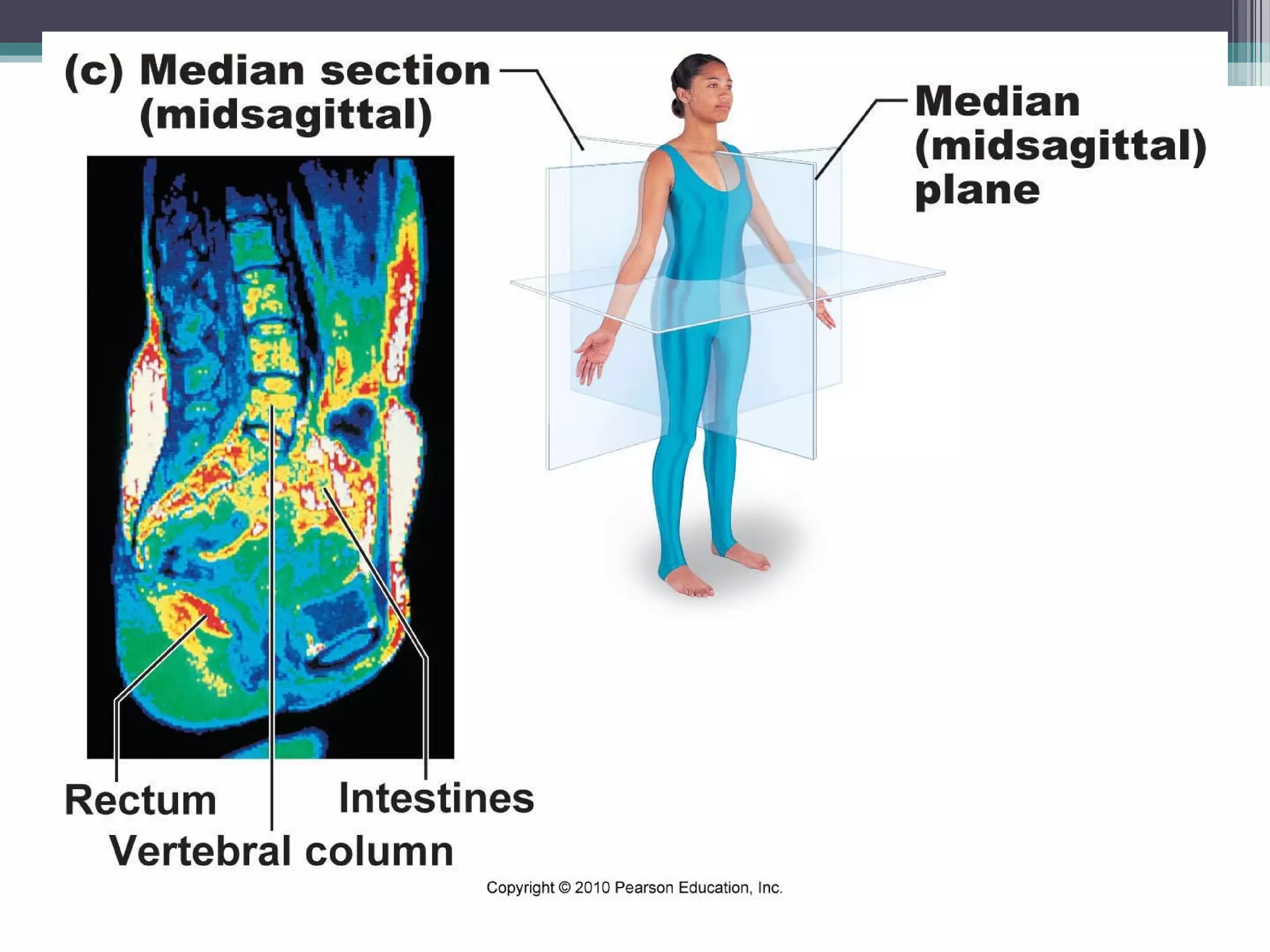
• SSaaggiittttaall ppllaannee: divides into right/left 
▫ Median or midsagittal (exactly down middle) 
▫ Parasaggital 
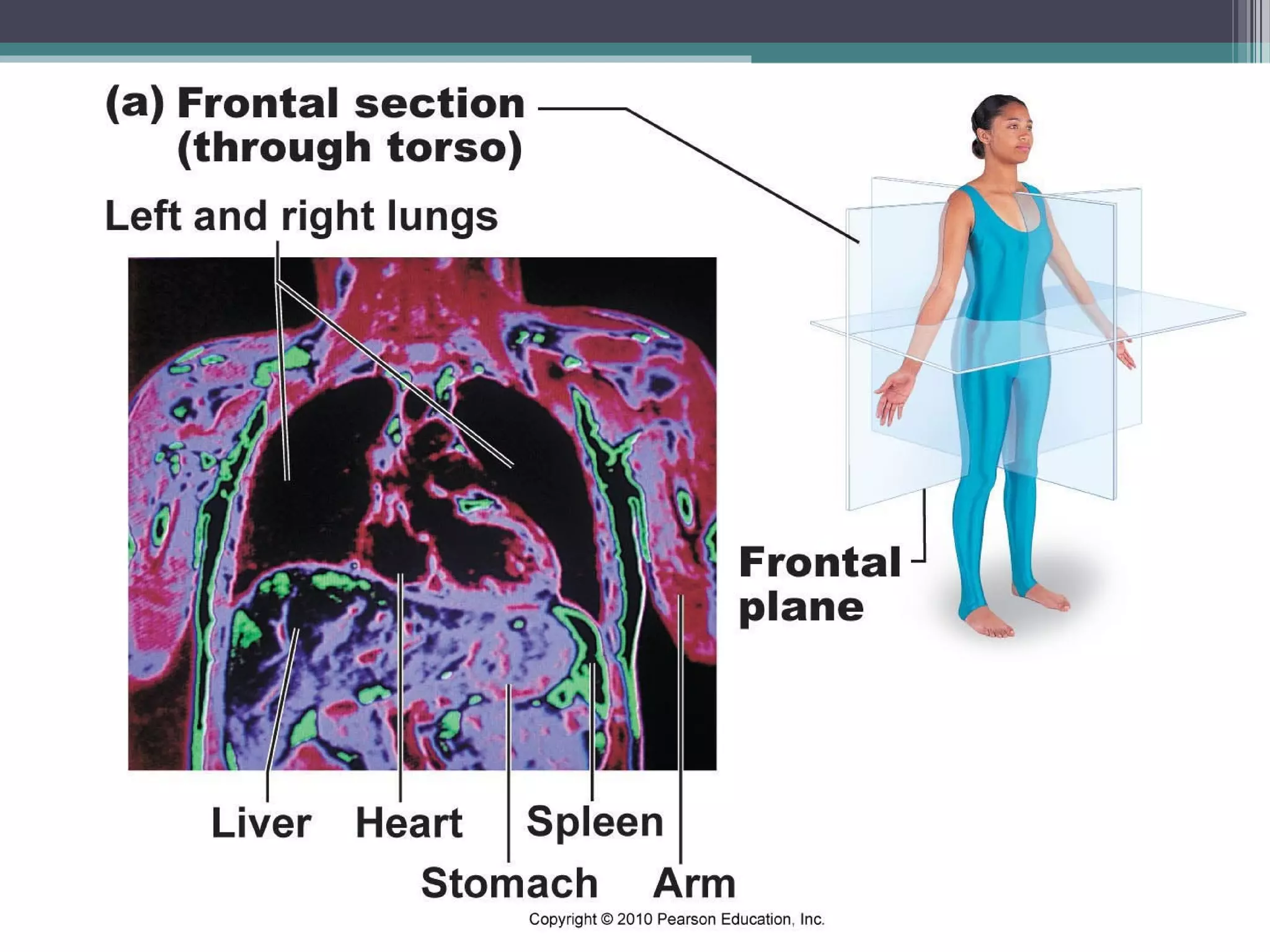
• FFrroonnttaall//ccoorroonnaall ppllaannee: divides into 
anterior/posterior 
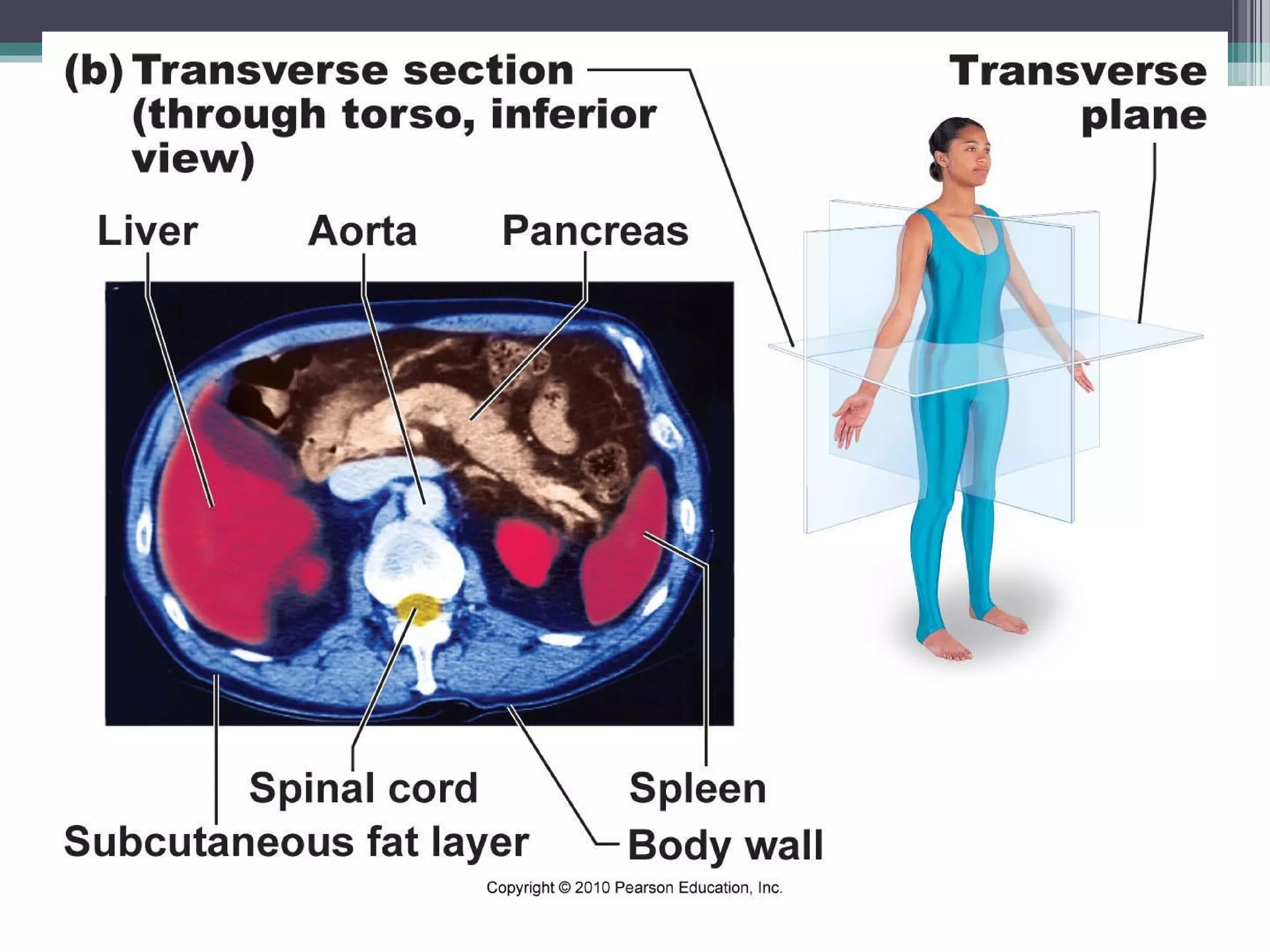
• TTrraannssvveerrssee//hhoorriizzoonnttaall ppllaannee: divides into 
superior/inferior 
• OObblliiqquuee: diagonal cuts between horizontal & 
vertical
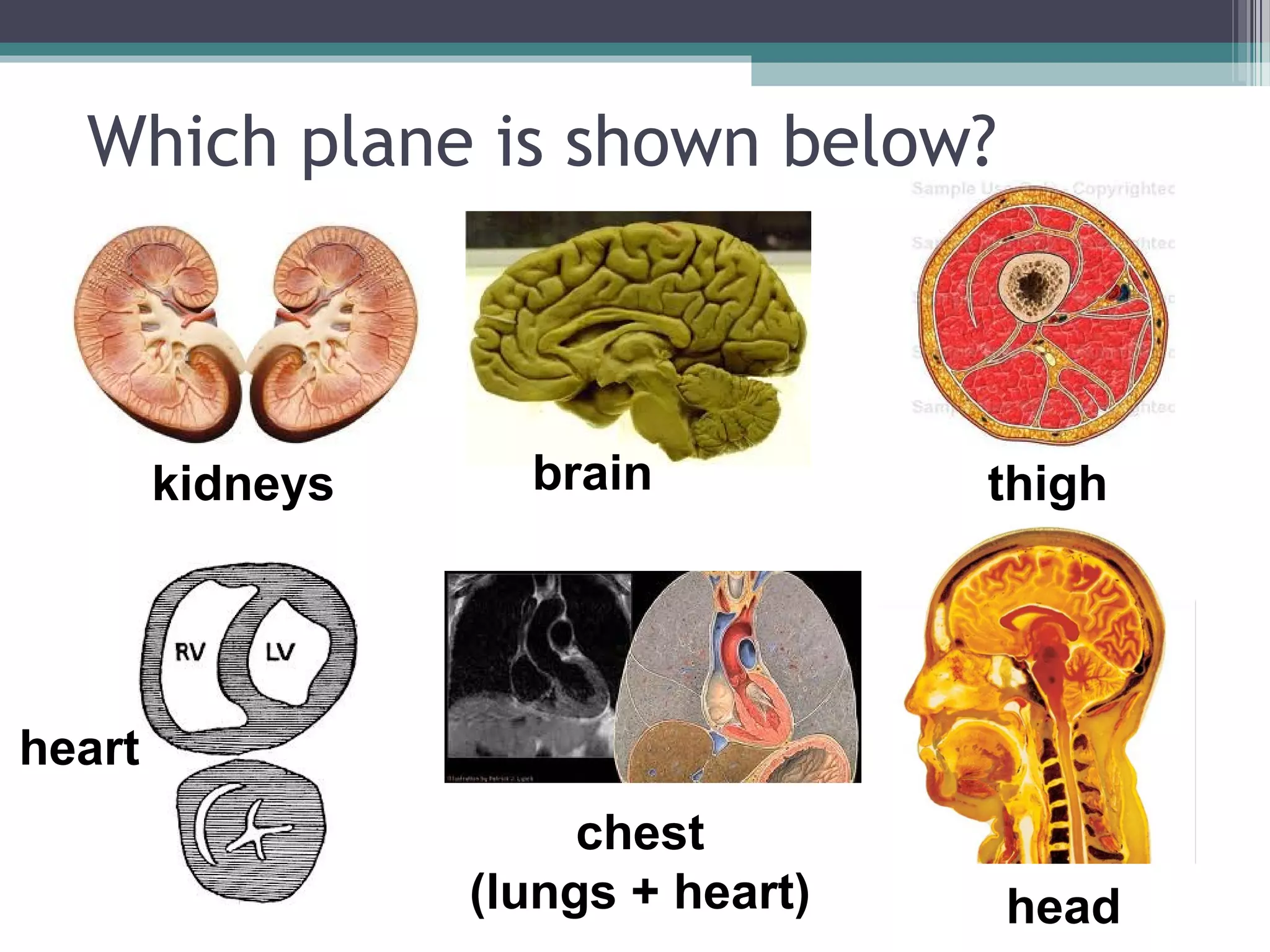
Which plane is shown below? 
kidneys brain thigh 
heart 
head 
chest 
(lungs + heart)
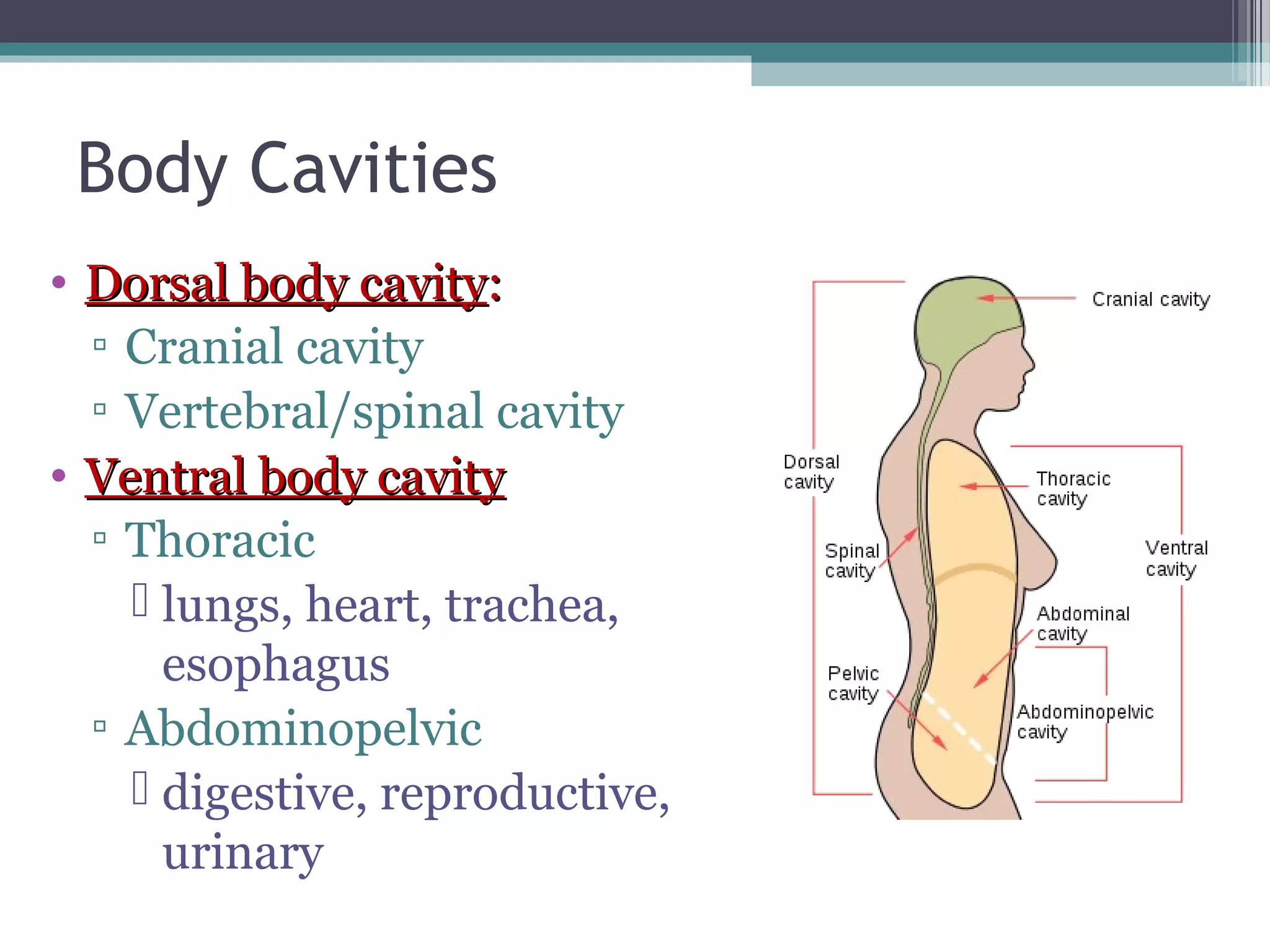
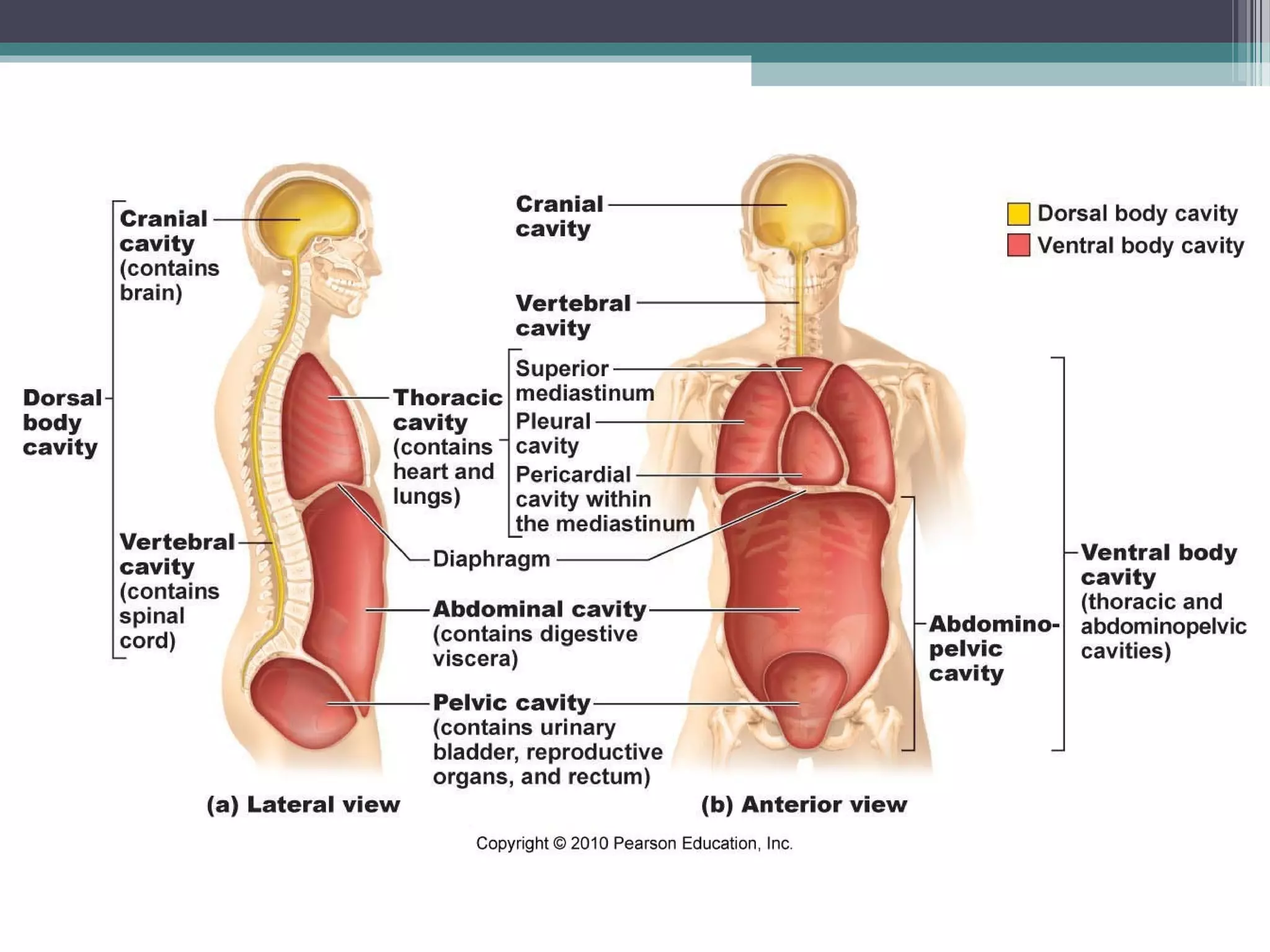
Body Cavities 
• DDoorrssaall bbooddyy ccaavviittyy:: 
▫ Cranial cavity 
▫ Vertebral/spinal cavity 
• VVeennttrraall bbooddyy ccaavviittyy 
▫ Thoracic 
 lungs, heart, trachea, 
esophagus 
▫ Abdominopelvic 
 digestive, reproductive, 
urinary
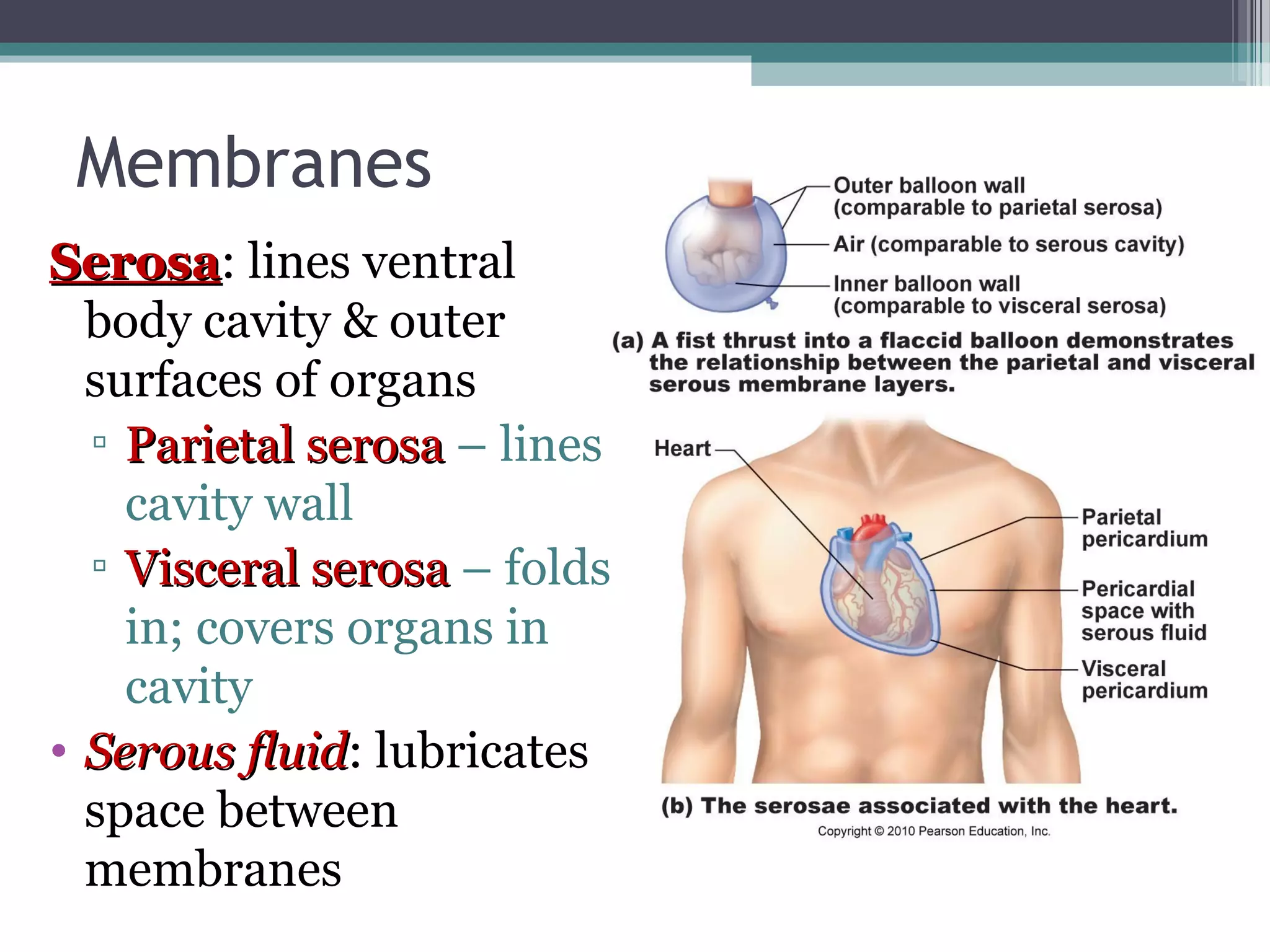
Membranes 
SSeerroossaa: lines ventral 
body cavity & outer 
surfaces of organs 
▫ PPaarriieettaall sseerroossaa – lines 
cavity wall 
▫ VViisscceerraall sseerroossaa – folds 
in; covers organs in 
cavity 
• SSeerroouuss fflluuiidd: lubricates 
space between 
membranes
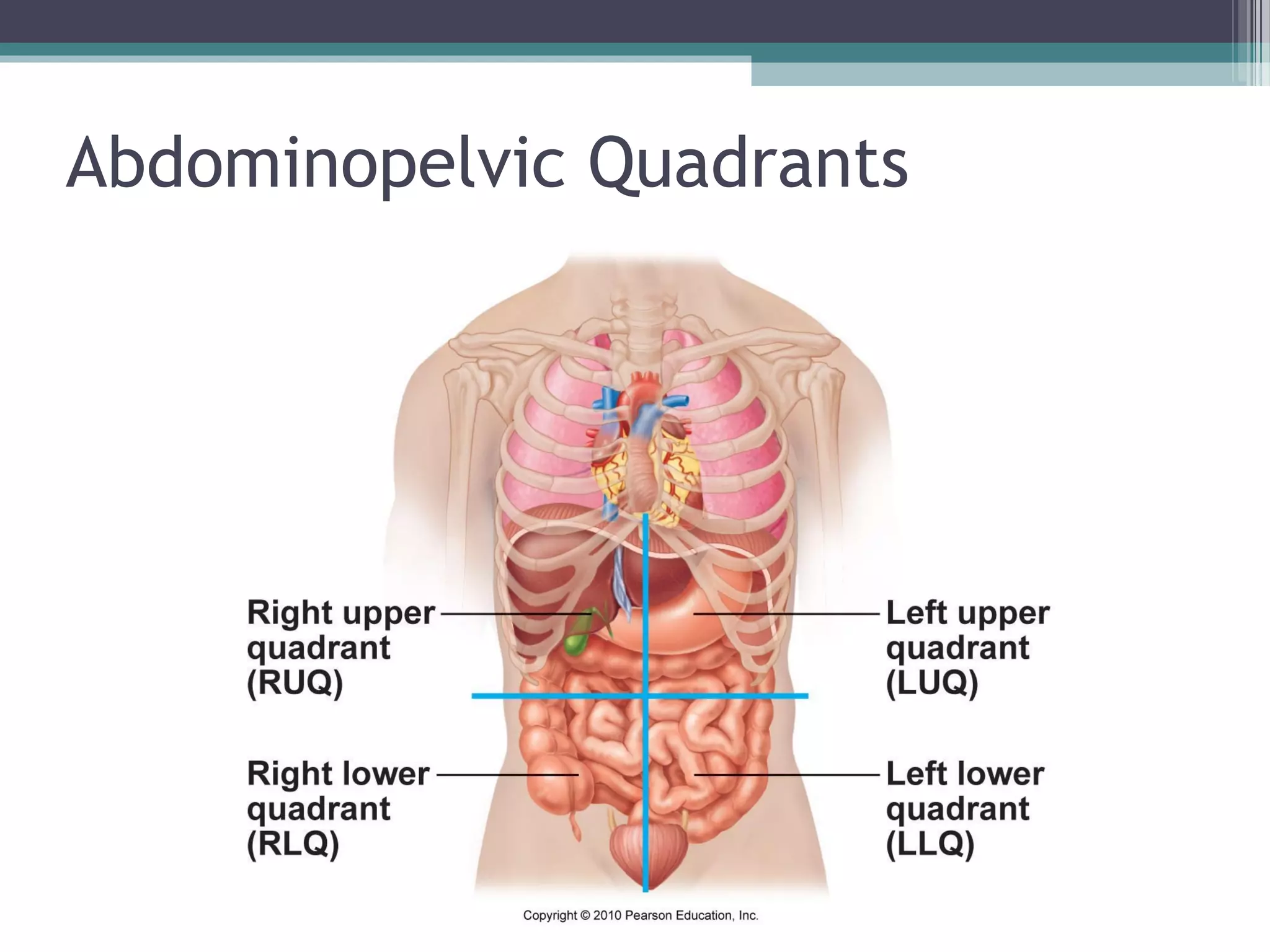
Abdominopelvic Quadrants
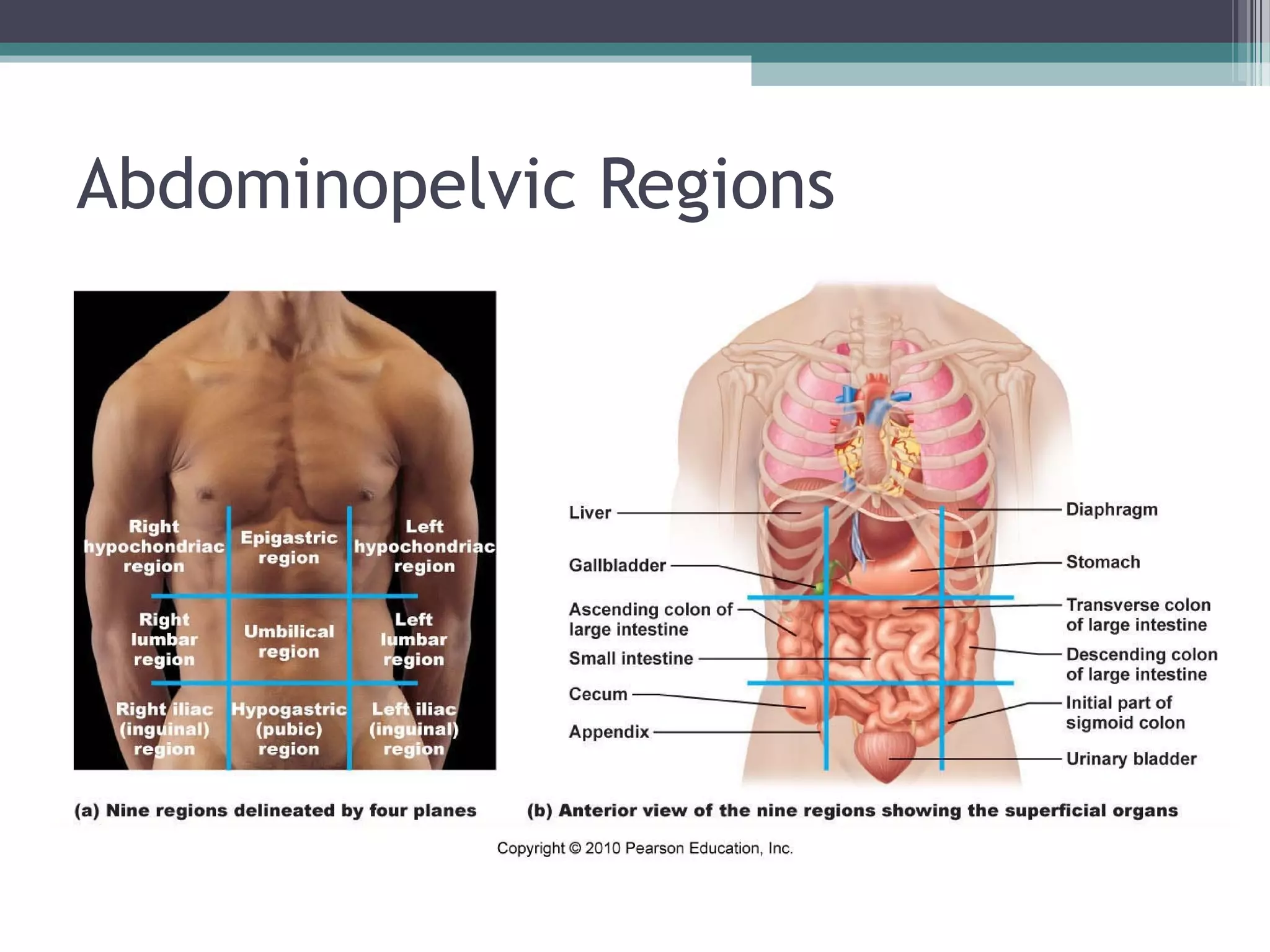
Abdominopelvic Regions

Anatomy & Physiology Lecture Notes - Ch. 1 introduction

  • 1.
    Ch. 1 Warm-Up 1. How is anatomy different from physiology? 2. What are the levels of organization of the human body from smallest  largest? 3. List the 11 organ systems of the body.
  • 2.
    Ch. 1 Warm-Up 1. List the functional characteristics necessary to maintain life. 2. List the survival needs of the body.
  • 3.
    Ch. 1 Warm-Up 1. What is the anatomical position? Describe or draw it. 2. How are the following cuts or planes made? a) Frontal b) Oblique c) Transverse d) Sagittal 3. What type of cut would separate the brain into anterior and posterior parts?
  • 4.
    The Human Body:An Orientation Chapter 1
  • 5.
    Objectives: • Explainhow structure complements function • Name the levels of structural organization • List the functions necessary for life • List the survival needs of the body • Define homeostasis and explain its significance • Use correct anatomical terms to describe the body
  • 6.
    • Anatomy: studiesthe structure of body parts and their relationship to one another • Physiology: the function of the body parts • Complementarity of Structure & Function ▫ What a structure can do depends on its specific form ▫ “Structure dictates function”
  • 7.
    Subdivisions of Anatomy • Gross or Macroscopic ▫ parts visible to naked eye ▫ eg. regional, surface, systemic • Microscopic ▫ Cytology: study of cells ▫ Histology: study of tissues • Developmental eg. embryology – study changes that occur before birth
  • 8.
    Physiology • Focuseson events at cellular or molecular level • Chemical & physical principles
  • 9.
    Levels of StructuralOrganization • chemical  cellular  tissue  organ  organ system  organism
  • 10.
  • 11.
  • 12.
  • 13.
  • 14.
  • 15.
  • 16.
    Necessary Life Functionsfor Humans 1. Maintaining boundaries (inside vs. outside) 2. Movement (internal & external) 3. Responsiveness: sense changes and respond 4. Digestion: break down foods for absorption 5. Metabolism: all chemical reactions in body 6. Excretion: remove wastes 7. Reproduction: cell division, whole organism 8. Growth: increase in size/part
  • 17.
    Survival Needs •Nutrients • Oxygen • Water • Normal Body Temperature (98.6°F or 37°C) • Atmospheric Pressure
  • 18.
    Homeostasis • Maintainrelatively stable internal conditions • Receptor (input)  control center  effector (response) • Negative (-) feedback: reduces effect of stimulus ▫ Eg. body temp, breathing rate, blood sugar levels • Positive (+) feedback: increases response ▫ Eg. labor contractions, blood clotting • Diseases = homeostatic imbalance
  • 23.
    Anatomical Position •Body erect, feet slightly apart, palm face forward, thumbs pointing out
  • 24.
    Terms you needto know: • Superior (cranial) • Inferior (caudal) • Ventral (anterior) • Dorsal (posterior) • Medial • Lateral • Intermediate • Proximal • Distal • Superficial (external) • Deep (internal) • Axial • Appendicular • Saggital plane ▫ Midsaggital/median ▫ Parasaggital • Frontal (coronal) plane • Transverse (horizontal) plane • Oblique section
  • 25.
  • 26.
  • 27.
  • 28.
    Regional Terms •Axial: main part of body = head, neck, & trunk • Appendicular: limbs attached to axis
  • 29.
    The body canbe cut (sectioned) along flat surfaces called planes • SSaaggiittttaall ppllaannee: divides into right/left ▫ Median or midsagittal (exactly down middle) ▫ Parasaggital • FFrroonnttaall//ccoorroonnaall ppllaannee: divides into anterior/posterior • TTrraannssvveerrssee//hhoorriizzoonnttaall ppllaannee: divides into superior/inferior • OObblliiqquuee: diagonal cuts between horizontal & vertical
  • 34.
    Which plane isshown below? kidneys brain thigh heart head chest (lungs + heart)
  • 35.
    Body Cavities •DDoorrssaall bbooddyy ccaavviittyy:: ▫ Cranial cavity ▫ Vertebral/spinal cavity • VVeennttrraall bbooddyy ccaavviittyy ▫ Thoracic  lungs, heart, trachea, esophagus ▫ Abdominopelvic  digestive, reproductive, urinary
  • 37.
    Membranes SSeerroossaa: linesventral body cavity & outer surfaces of organs ▫ PPaarriieettaall sseerroossaa – lines cavity wall ▫ VViisscceerraall sseerroossaa – folds in; covers organs in cavity • SSeerroouuss fflluuiidd: lubricates space between membranes
  • 38.
  • 39.