1. Name the organs forming the respiratory
passageway from the nasal cavity to the
alveoli of the lungs.
2. Explain how the respiratory muscles cause
volume changes that lead to breathing.
3. Sally has a vital lung capacity of 3900 ml.
Her tidal volume is 400 ml. Her expiratory
reserve volume is 1000 ml. What is her
inspiratory reserve volume?
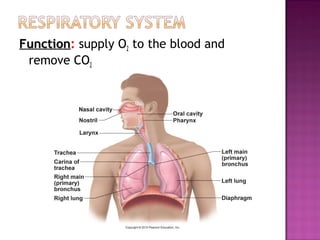
FunctionFunction: supply O2 to the blood and
remove CO2
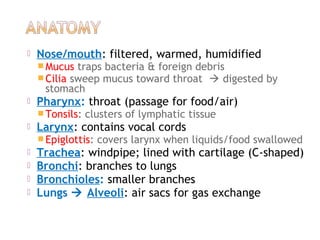
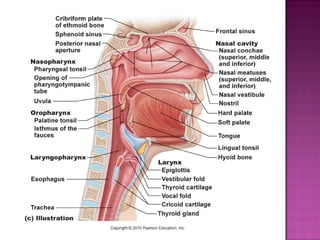
 Nose/mouth: filtered, warmed, humidified
Mucus traps bacteria & foreign debris
Cilia sweep mucus toward throat  digested by
stomach
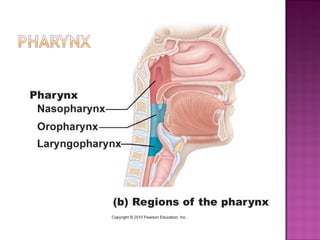
 Pharynx: throat (passage for food/air)
Tonsils: clusters of lymphatic tissue
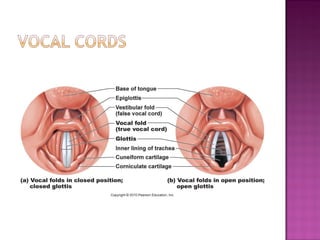
 Larynx: contains vocal cords
Epiglottis: covers larynx when liquids/food swallowed
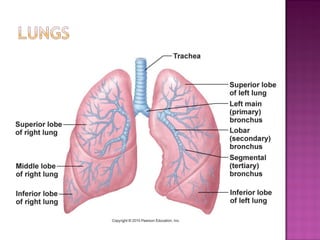
 Trachea: windpipe; lined with cartilage (C-shaped)
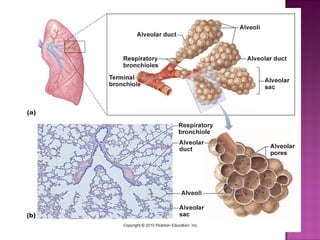
 Bronchi: branches to lungs
 Bronchioles: smaller branches
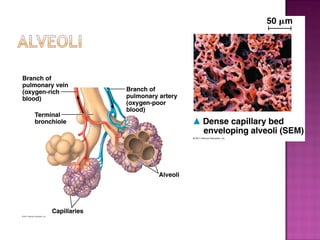
 Lungs  Alveoli: air sacs for gas exchange
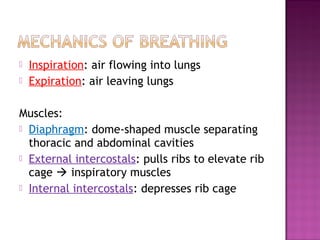
 Inspiration: air flowing into lungs
 Expiration: air leaving lungs
Muscles:
 Diaphragm: dome-shaped muscle separating
thoracic and abdominal cavities
 External intercostals: pulls ribs to elevate rib
cage  inspiratory muscles
 Internal intercostals: depresses rib cage
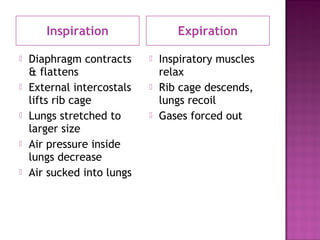
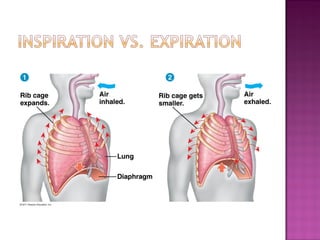
Inspiration Expiration
 Diaphragm contracts
& flattens
 External intercostals
lifts rib cage
 Lungs stretched to
larger size
 Air pressure inside
lungs decrease
 Air sucked into lungs
 Inspiratory muscles
relax
 Rib cage descends,
lungs recoil
 Gases forced out
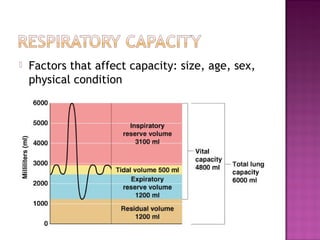
 Factors that affect capacity: size, age, sex,
physical condition
 Vital Capacity (VC): total exchangeable air
VC = TV + IRV + ERV
Tidal Volume (TV): amount of air in/out during
normal breath (~500ml)
Inspiratory Reserve Volume (IRV): forced in air
over tidal volume (~3100)
Expiratory Reserve Volume (ERV): air forcibly
exhaled (~1200)
Residual Volume (RV): air still left in lungs (~1200)
 allows gas exchange to continue between
breaths
 Used to measure respiratory capacities
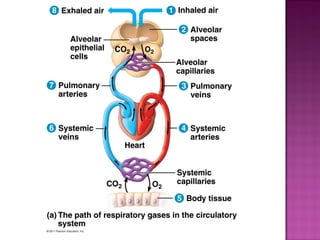
 OxygenOxygen: attaches to hemoglobin molecules
inside RBC’s
 HemoglobinHemoglobin: respiratory pigment, contains 4
heme groups with iron (Fe)
Carbon dioxideCarbon dioxide:
 Transported as bicarbonate
ions (70%)
 Bound to hemoglobin (23%)
 Dissolved in plasma (7%)
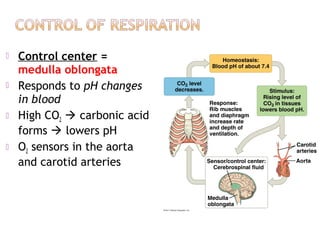
 Control center =
medulla oblongata
 Responds to pH changes
in blood
 High CO2  carbonic acid
forms  lowers pH
 O2 sensors in the aorta
and carotid arteries
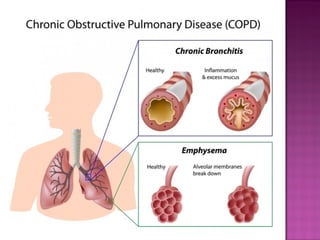
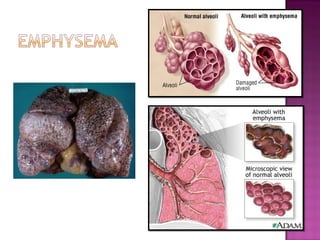
 Group of lung diseases  blocks airflow and
makes breathing difficult
 Emphysema (lose elasticity of lung tissue) &
chronic bronchitis (excess mucus)
 Features:
1. History of smoking
2. Labored breathing (wheezing, shortness of
breath)
3. Coughing & frequent pulmonary infections
4. Hypoxic (inadequate O2 delivery – bluish skin)
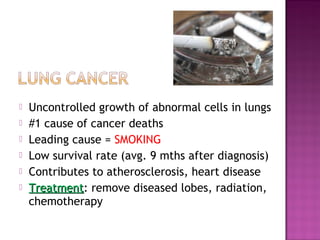
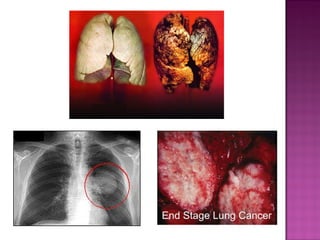
 Uncontrolled growth of abnormal cells in lungs
 #1 cause of cancer deaths
 Leading cause = SMOKING
 Low survival rate (avg. 9 mths after diagnosis)
 Contributes to atherosclerosis, heart disease
 TreatmentTreatment: remove diseased lobes, radiation,
chemotherapy
 Asthma: inflamed, hypersensitive bronchial
passages that respond to irritants
 Bronchitis: bronchi swollen and clogged
 Pneumonia: inflammation of lung caused by
infection
 Tuberculosis (TB): infectious disease caused by
M. tuberculosis bacterium

Anatomy & Physiology Lecture Notes - Respiratory system

  • 1.
    1. Name theorgans forming the respiratory passageway from the nasal cavity to the alveoli of the lungs. 2. Explain how the respiratory muscles cause volume changes that lead to breathing. 3. Sally has a vital lung capacity of 3900 ml. Her tidal volume is 400 ml. Her expiratory reserve volume is 1000 ml. What is her inspiratory reserve volume?
  • 3.
    FunctionFunction: supply O2to the blood and remove CO2
  • 4.
     Nose/mouth: filtered,warmed, humidified Mucus traps bacteria & foreign debris Cilia sweep mucus toward throat  digested by stomach  Pharynx: throat (passage for food/air) Tonsils: clusters of lymphatic tissue  Larynx: contains vocal cords Epiglottis: covers larynx when liquids/food swallowed  Trachea: windpipe; lined with cartilage (C-shaped)  Bronchi: branches to lungs  Bronchioles: smaller branches  Lungs  Alveoli: air sacs for gas exchange
  • 12.
     Inspiration: airflowing into lungs  Expiration: air leaving lungs Muscles:  Diaphragm: dome-shaped muscle separating thoracic and abdominal cavities  External intercostals: pulls ribs to elevate rib cage  inspiratory muscles  Internal intercostals: depresses rib cage
  • 13.
    Inspiration Expiration  Diaphragmcontracts & flattens  External intercostals lifts rib cage  Lungs stretched to larger size  Air pressure inside lungs decrease  Air sucked into lungs  Inspiratory muscles relax  Rib cage descends, lungs recoil  Gases forced out
  • 15.
     Factors thataffect capacity: size, age, sex, physical condition
  • 16.
     Vital Capacity(VC): total exchangeable air VC = TV + IRV + ERV Tidal Volume (TV): amount of air in/out during normal breath (~500ml) Inspiratory Reserve Volume (IRV): forced in air over tidal volume (~3100) Expiratory Reserve Volume (ERV): air forcibly exhaled (~1200) Residual Volume (RV): air still left in lungs (~1200)  allows gas exchange to continue between breaths
  • 17.
     Used tomeasure respiratory capacities
  • 18.
     OxygenOxygen: attachesto hemoglobin molecules inside RBC’s  HemoglobinHemoglobin: respiratory pigment, contains 4 heme groups with iron (Fe)
  • 19.
    Carbon dioxideCarbon dioxide: Transported as bicarbonate ions (70%)  Bound to hemoglobin (23%)  Dissolved in plasma (7%)
  • 20.
     Control center= medulla oblongata  Responds to pH changes in blood  High CO2  carbonic acid forms  lowers pH  O2 sensors in the aorta and carotid arteries
  • 22.
     Group oflung diseases  blocks airflow and makes breathing difficult  Emphysema (lose elasticity of lung tissue) & chronic bronchitis (excess mucus)  Features: 1. History of smoking 2. Labored breathing (wheezing, shortness of breath) 3. Coughing & frequent pulmonary infections 4. Hypoxic (inadequate O2 delivery – bluish skin)
  • 25.
     Uncontrolled growthof abnormal cells in lungs  #1 cause of cancer deaths  Leading cause = SMOKING  Low survival rate (avg. 9 mths after diagnosis)  Contributes to atherosclerosis, heart disease  TreatmentTreatment: remove diseased lobes, radiation, chemotherapy
  • 27.
     Asthma: inflamed,hypersensitive bronchial passages that respond to irritants  Bronchitis: bronchi swollen and clogged  Pneumonia: inflammation of lung caused by infection  Tuberculosis (TB): infectious disease caused by M. tuberculosis bacterium