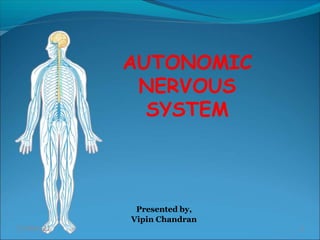
AUTONOMIC
NERVOUS
SYSTEM
Presented by,
Vipin Chandran
17-Mar-21 1
INTRODUCTION
● The peripheral nervous system, or PNS,
consists of the cranial nerves, spinal nerves and
ganglia.
● The peripheral nervous system subdivided
into:
1. Autonomic nervous system:
- sympathetic nervous system
- parasympathetic nervous system
2. Somatic nervous system
3. Enteric nervous system
17-Mar-21 2
●The autonomic nervous system (ANS or visceral nervous
system) is the part of the peripheral nervous system that acts as
a control system functioning largely below the level of
consciousness, and controls function.
●Responsible for control of “involuntary” or visceral bodily
function:
➢ Cardiovascular
➢ Respiratory
➢ Digestive
➢ Urinary
➢ Reproductive functions
➢ Key role in the bodies response to stress
AUTONOMIC NERVOUS SYSTEM
17-Mar-21 3
● The autonomic nervous system (ANS) regulates the
activities of cardiac muscle, smooth muscle, and
glands.
17-Mar-21 4
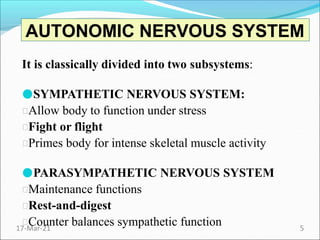
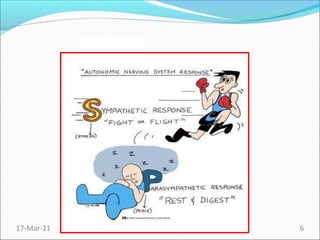
It is classically divided into two subsystems:
●SYMPATHETIC NERVOUS SYSTEM:
Allow body to function under stress
Fight or flight
Primes body for intense skeletal muscle activity
●PARASYMPATHETIC NERVOUS SYSTEM
Maintenance functions
Rest-and-digest
Counter balances sympathetic function
AUTONOMIC NERVOUS SYSTEM
17-Mar-21 5
17-Mar-21 6
17-Mar-21 7
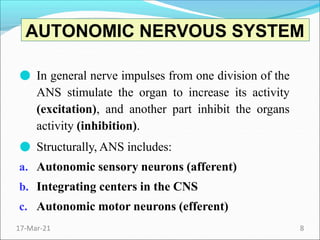
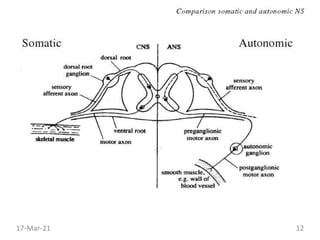
● In general nerve impulses from one division of the
ANS stimulate the organ to increase its activity
(excitation), and another part inhibit the organs
activity (inhibition).
● Structurally, ANS includes:
a. Autonomic sensory neurons (afferent)
b. Integrating centers in the CNS
c. Autonomic motor neurons (efferent)
AUTONOMIC NERVOUS SYSTEM
17-Mar-21 8
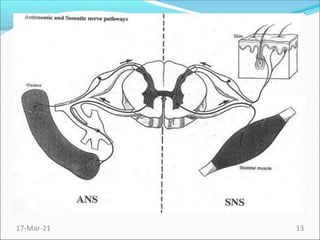
Comparison Somatic and
Autonomic Nervous
System
17-Mar-21 9
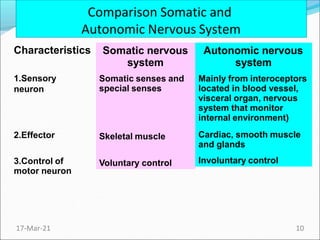
Characteristics
1.Sensory
neuron
2.Effector
3.Control of
motor neuron
Somatic nervous
system
Somatic senses and
special senses
Skeletal muscle
Voluntary control
Autonomic nervous
system
Mainly from interoceptors
located in blood vessel,
visceral organ, nervous
system that monitor
internal environment)
Cardiac, smooth muscle
and glands
Involuntary control
Comparison Somatic and
Autonomic Nervous System
17-Mar-21 10
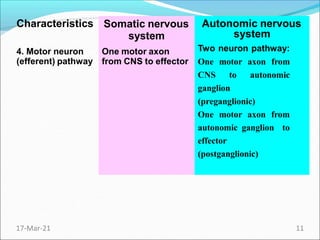
Characteristics Autonomic nervous
4. Motor neuron
(efferent) pathway
Somatic nervous
system
One motor axon
from CNS to effector
system
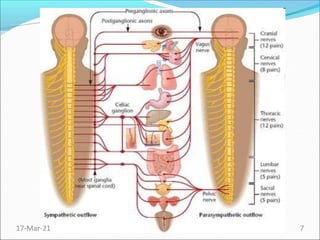
Two neuron pathway:
One motor axon from
CNS to autonomic
ganglion
(preganglionic)
One motor axon from
autonomic ganglion to
effector
(postganglionic)
17-Mar-21 11
17-Mar-21 12
17-Mar-21 13
EFFECTS OF SYMPATHETIC
NERVOUS SYSTEM
●The sympathetic system prepares the body to meet
emergency demands and is primarily involved with
processes that expend energy. During physical or
emotional stress, the sympathetic division dominates the
parasympathetic system, initiating a series of activities
known as the fight-or-flight response.
●In addition, there is activation of the adrenal medulla,
causing secretion of norepinephrine and epinephrine as
hormones to greatly heighten the response.
17-Mar-21 14
●Cardiovascular System
●Increasing heart beat
●Increase blood supply to cardiac muscle (dilate the
coronary artery)
●Constrict the blood vessel in secretory glands of
digestive system
●Accelerates blood coagulation because of
vasoconstriction.
17-Mar-21 15
●Respiratory system
●Causes smooth muscle relaxation and therefore
dilatation of the airways, especially bronchioles.
●Allowing a greater amount of air to enter the
lungs at each inspiration, and increase the
respiratory rate.
●Deal with 'fight and flight' situation.
17-Mar-21 16
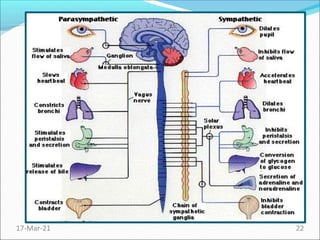
●Digestive and urinary system
●Liver increase conversion of glycogen to glucose
●Stomach and small intestine; smooth muscle
contraction (peristalsis) and secretion of digestive
juices are inhibited.
●Adrenal gland; stimulated to secrete adrenaline and
noradrenaline which potentiate and sustain the effect
of sympathetic stimulation
●Urethral and anal sphincter; muscle tone increase,
inhibit micturition and defecation.
●Bladder walls relaxes
●Metabolic rate increase
17-Mar-21 17
●Eye
●Dilating the pupil
●Opening the eyes open wide and giving the
appearance of alertness and excitement
●Skin
●Increase sweat secretion, leading to increased
heat loss from the body
●Contract the arrector pili muscle on the skin
●Constrict the peripheral blood vessel increasing
blood supply available to active organs, e.g heart
and skeletal muscle.
17-Mar-21 18
●The parasympathetic nervous system is an energy
conservation-restorative system. It regulates those
activities that conserve and restore body energy during
times of rest and digest.
●The parasympathetic nervous system dominates over
sympathetic activity in the glands and smooth muscle of
the gut, stimulating glandular secretion and the gut
movements necessary for food to be digested and
absorbed.
●Salivation, lacrimation, urination, and defecation, all
controlled by the parasympathetic nervous system.
EFFECTS OF PARASYMPATHETIC
NERVOUS SYSTEM
17-Mar-21 19
● Cardiovascular System
●Decrease the rate and force of the heartbeat
●Constrict the coronary artery reducing the
blood supply to cardiac muscle
●Respiratory
●Produces contraction of smooth muscle in
airway walls causing their constriction, e.g.
bronchioles and bronchi
●Eye
●Constricting the pupil
●The eyelids tend to closed, giving the
appearance of sleepiness.
17-Mar-21 20
Digestive and urinary system
●Liver: conversion of glucose to glycogen and
secretion of bile are increased.
●Stomach and small intestine: Motility and secretion
are increased together with the rate of digestion and
absorption of food.
●Pancreas: secretion of pancreatic juice and the
hormone insulin are increase.
●Urethral and anal sphincter: relaxation in
urethral and anal sphincter, micturition and
defecation occurs.
17-Mar-21 21
17-Mar-21 22
17-Mar-21 23

Autonomic nervous system

  • 1.
  • 2.
    INTRODUCTION ● The peripheralnervous system, or PNS, consists of the cranial nerves, spinal nerves and ganglia. ● The peripheral nervous system subdivided into: 1. Autonomic nervous system: - sympathetic nervous system - parasympathetic nervous system 2. Somatic nervous system 3. Enteric nervous system 17-Mar-21 2
  • 3.
    ●The autonomic nervoussystem (ANS or visceral nervous system) is the part of the peripheral nervous system that acts as a control system functioning largely below the level of consciousness, and controls function. ●Responsible for control of “involuntary” or visceral bodily function: ➢ Cardiovascular ➢ Respiratory ➢ Digestive ➢ Urinary ➢ Reproductive functions ➢ Key role in the bodies response to stress AUTONOMIC NERVOUS SYSTEM 17-Mar-21 3
  • 4.
    ● The autonomicnervous system (ANS) regulates the activities of cardiac muscle, smooth muscle, and glands. 17-Mar-21 4
  • 5.
    It is classicallydivided into two subsystems: ●SYMPATHETIC NERVOUS SYSTEM: Allow body to function under stress Fight or flight Primes body for intense skeletal muscle activity ●PARASYMPATHETIC NERVOUS SYSTEM Maintenance functions Rest-and-digest Counter balances sympathetic function AUTONOMIC NERVOUS SYSTEM 17-Mar-21 5
  • 6.
  • 7.
  • 8.
    ● In generalnerve impulses from one division of the ANS stimulate the organ to increase its activity (excitation), and another part inhibit the organs activity (inhibition). ● Structurally, ANS includes: a. Autonomic sensory neurons (afferent) b. Integrating centers in the CNS c. Autonomic motor neurons (efferent) AUTONOMIC NERVOUS SYSTEM 17-Mar-21 8
  • 9.
    Comparison Somatic and AutonomicNervous System 17-Mar-21 9
  • 10.
    Characteristics 1.Sensory neuron 2.Effector 3.Control of motor neuron Somaticnervous system Somatic senses and special senses Skeletal muscle Voluntary control Autonomic nervous system Mainly from interoceptors located in blood vessel, visceral organ, nervous system that monitor internal environment) Cardiac, smooth muscle and glands Involuntary control Comparison Somatic and Autonomic Nervous System 17-Mar-21 10
  • 11.
    Characteristics Autonomic nervous 4.Motor neuron (efferent) pathway Somatic nervous system One motor axon from CNS to effector system Two neuron pathway: One motor axon from CNS to autonomic ganglion (preganglionic) One motor axon from autonomic ganglion to effector (postganglionic) 17-Mar-21 11
  • 12.
  • 13.
  • 14.
    EFFECTS OF SYMPATHETIC NERVOUSSYSTEM ●The sympathetic system prepares the body to meet emergency demands and is primarily involved with processes that expend energy. During physical or emotional stress, the sympathetic division dominates the parasympathetic system, initiating a series of activities known as the fight-or-flight response. ●In addition, there is activation of the adrenal medulla, causing secretion of norepinephrine and epinephrine as hormones to greatly heighten the response. 17-Mar-21 14
  • 15.
    ●Cardiovascular System ●Increasing heartbeat ●Increase blood supply to cardiac muscle (dilate the coronary artery) ●Constrict the blood vessel in secretory glands of digestive system ●Accelerates blood coagulation because of vasoconstriction. 17-Mar-21 15
  • 16.
    ●Respiratory system ●Causes smoothmuscle relaxation and therefore dilatation of the airways, especially bronchioles. ●Allowing a greater amount of air to enter the lungs at each inspiration, and increase the respiratory rate. ●Deal with 'fight and flight' situation. 17-Mar-21 16
  • 17.
    ●Digestive and urinarysystem ●Liver increase conversion of glycogen to glucose ●Stomach and small intestine; smooth muscle contraction (peristalsis) and secretion of digestive juices are inhibited. ●Adrenal gland; stimulated to secrete adrenaline and noradrenaline which potentiate and sustain the effect of sympathetic stimulation ●Urethral and anal sphincter; muscle tone increase, inhibit micturition and defecation. ●Bladder walls relaxes ●Metabolic rate increase 17-Mar-21 17
  • 18.
    ●Eye ●Dilating the pupil ●Openingthe eyes open wide and giving the appearance of alertness and excitement ●Skin ●Increase sweat secretion, leading to increased heat loss from the body ●Contract the arrector pili muscle on the skin ●Constrict the peripheral blood vessel increasing blood supply available to active organs, e.g heart and skeletal muscle. 17-Mar-21 18
  • 19.
    ●The parasympathetic nervoussystem is an energy conservation-restorative system. It regulates those activities that conserve and restore body energy during times of rest and digest. ●The parasympathetic nervous system dominates over sympathetic activity in the glands and smooth muscle of the gut, stimulating glandular secretion and the gut movements necessary for food to be digested and absorbed. ●Salivation, lacrimation, urination, and defecation, all controlled by the parasympathetic nervous system. EFFECTS OF PARASYMPATHETIC NERVOUS SYSTEM 17-Mar-21 19
  • 20.
    ● Cardiovascular System ●Decreasethe rate and force of the heartbeat ●Constrict the coronary artery reducing the blood supply to cardiac muscle ●Respiratory ●Produces contraction of smooth muscle in airway walls causing their constriction, e.g. bronchioles and bronchi ●Eye ●Constricting the pupil ●The eyelids tend to closed, giving the appearance of sleepiness. 17-Mar-21 20
  • 21.
    Digestive and urinarysystem ●Liver: conversion of glucose to glycogen and secretion of bile are increased. ●Stomach and small intestine: Motility and secretion are increased together with the rate of digestion and absorption of food. ●Pancreas: secretion of pancreatic juice and the hormone insulin are increase. ●Urethral and anal sphincter: relaxation in urethral and anal sphincter, micturition and defecation occurs. 17-Mar-21 21
  • 22.
  • 23.