Download as PDF, PPTX
- 1 / 14

- 2 / 14
- 3 / 14
 Most read
- 4 / 14
 Most read
- 5 / 14
 Most read
- 6 / 14
- 7 / 14
- 8 / 14
- 9 / 14
- 10 / 14
- 11 / 14
- 12 / 14
- 13 / 14
- 14 / 14


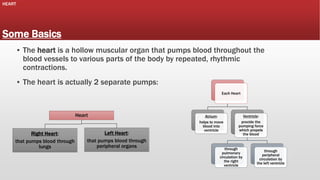
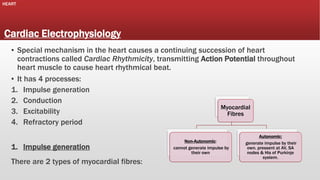
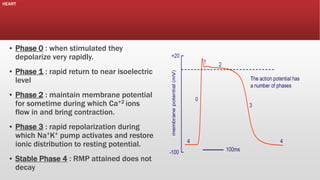
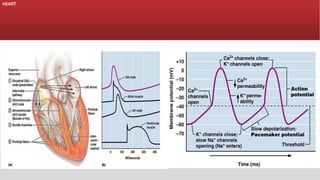
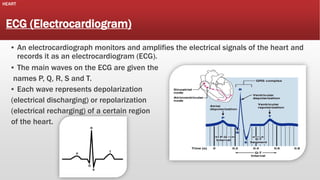
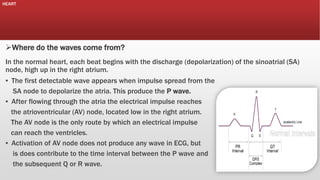
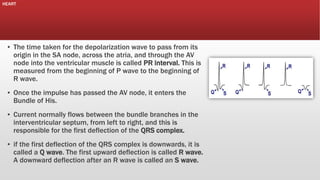
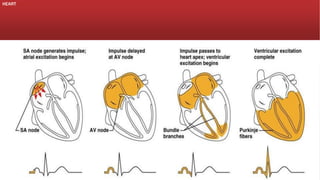
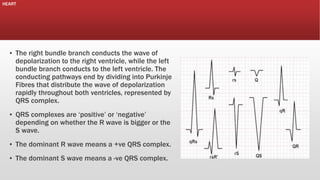
The heart is a hollow muscular organ composed of two pumps - the right heart pumps blood through the lungs while the left heart pumps blood through the body. The heart's rhythm is controlled by a conduction system that generates electrical impulses, causing the muscles to contract. These electrical impulses can be monitored by an electrocardiogram (ECG), which shows distinct waves representing the depolarization and repolarization of the heart's chambers during each heartbeat. The P wave corresponds to atrial depolarization, the QRS complex corresponds to ventricular depolarization, and the T wave corresponds to ventricular repolarization.


