Alternate Synthetic Fuels
V. Santhanam
Departmentof Chemistry
SCSVMV
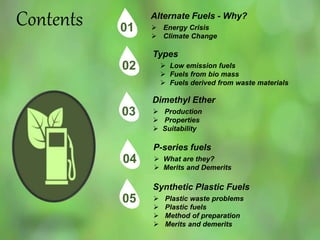
Contents 01  Energy Crisis
 Climate Change
Alternate Fuels - Why?
03  Production
 Properties
 Suitability
Dimethyl Ether
04  What are they?
 Merits and Demerits
P-series fuels
05  Plastic waste problems
 Plastic fuels
 Method of preparation
 Merits and demerits
Synthetic Plastic Fuels
02  Low emission fuels
 Fuels from bio mass
 Fuels derived from waste materials
Types
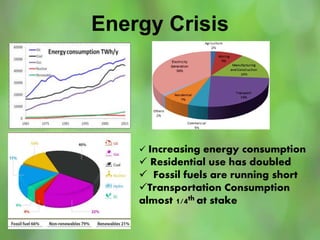
Energy Crisis
 Increasing energy consumption
 Residential use has doubled
 Fossil fuels are running short
Transportation Consumption
almost 1/4th at stake
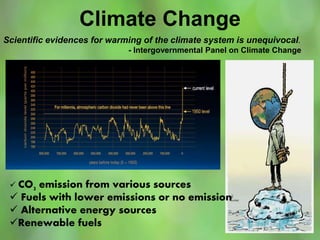
Climate Change
Scientific evidences for warming of the climate system is unequivocal.
- Intergovernmental Panel on Climate Change
 CO2 emission from various sources
 Fuels with lower emissions or no emission
 Alternative energy sources
Renewable fuels
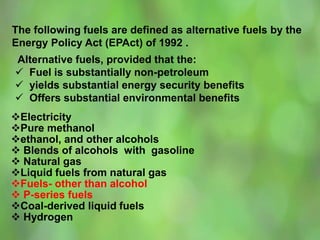
The following fuels are defined as alternative fuels by the
Energy Policy Act (EPAct) of 1992 .
Alternative fuels, provided that the:
 Fuel is substantially non-petroleum
 yields substantial energy security benefits
 Offers substantial environmental benefits
Electricity
Pure methanol
ethanol, and other alcohols
 Blends of alcohols with gasoline
 Natural gas
Liquid fuels from natural gas
Fuels- other than alcohol
 P-series fuels
Coal-derived liquid fuels
 Hydrogen
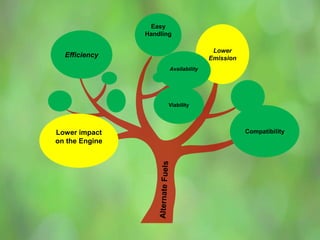
Easy
Handling
Compatibility
Lower
EmissionEfficiency
Lower impact
on the Engine
Availability
Viability
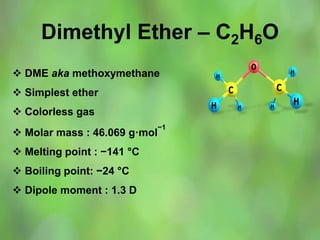
 DME aka methoxymethane
 Simplest ether
 Colorless gas
 Molar mass : 46.069 g·mol
−1
 Melting point : −141 °C
 Boiling point: −24 °C
 Dipole moment : 1.3 D
Dimethyl Ether – C2H6O
Production:
 DME can be produced from biomass, methanol, and fossil
fuels.
 The likely feedstock of choice for large-scale DME
production is natural gas.
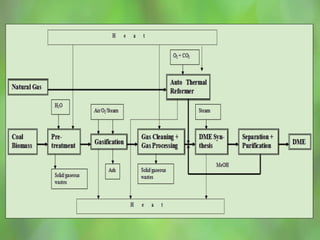
 DME can be produced directly from synthesis gas
produced from natural gas, coal, or biomass.
 It can also be produced indirectly from methanol via a
dehydration reaction.
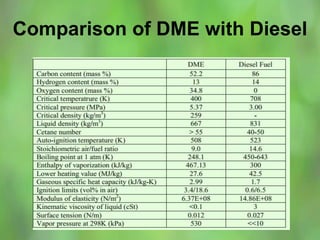
Comparison of DME with Diesel
 DME is an synthetic alternative to diesel for
compression ignition diesel engines.
 DME requires 75 psi pressure to be in liquid form,
which must be kept in pressurized storage tanks at an
ambient temperature.
 The use of DME in vehicles requires fuel injection
system specifically developed to operate on DME.
 There have been a number of DME vehicle
demonstrations, in a case 10 vehicles ran for 750,000
miles with out a glitch.
Benefits
Dimethyl ether has several fuel properties that make it
attractive for use in diesel engines
 High cetane number
 Efficiency and power rating are same for DME and
diesel
 Because of its lack of carbon-to-carbon bonds it
virtually eliminate particulate emission.
 However, DME has half the energy density of diesel
fuel, requiring a fuel tank twice as large as that needed
for diesel.
• Diesel-Like Performance
• Simpler engine results in lower maintenance costs
• No spark plug required
• Compression ignited, resulting in higher efficiency
• Sulfur-free
• Easier to control NOx
• Meets or exceeds strict emissions standards
• Non-toxic
• Rapid, low pressure dispensing
• Spillage will not contaminate soil
• Cost-Competitive
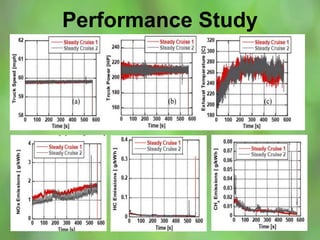
Performance Study
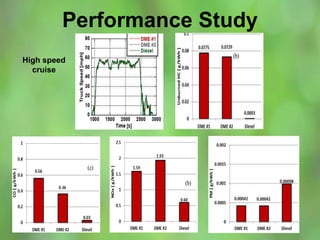
Performance Study
High speed
cruise
Demerits
 Highly inflammable.
 Higher vapor pressure.
 Requires pressurized tanks.
 Requires modification of fuel feed system.
 Energy density is about half of diesel.
 NOx emission is higher
 Higher emission of hydrocarbons.
P-Series Fuels
 Renewable, non-petroleum, liquid fuels that can
substitute for gasoline.
 They are a blend of approximately 25 ingredients.
 About 32.5% is liquid by-products, known as "C5+" or
"pentanes-plus", which are left over when natural gas is
processed for transport and marketing.
 Ethanol, from corn, comprises about 35%
 Remaining 32.5% is MeTHF, an ether derived from
lignocelullosic biomass (waste paper / Food waste / Agro
wastes)
P-Series Fuels - Advantages
1. The need for non-petroleum energy sources
2. Affordability
3. Solid waste management
- control over a large portion of the generated trash
stream without relying on burning or burying.
- The feedstock is chemically digested - no combustion
with the accompanying toxic air emissions.
- Using feedstock with a negative cost.
 Much like gasoline, P-Series fuels range from 89-93 octane
(mid-grade to premium). Can be formulated specifically for
winter or summer use.
 Refueling with P-Series is as quick and familiar as with
gasoline.
The basic capability for utilizing P-Series in vehicles has
already been incorporated into methanol/ethanol flexible-fuel
vehicles (FFV's).
FFV's are designed to operate on alcohol, on gasoline, or
on any mixture of the two.
Plastic! Plastic!! Everywhere!!!
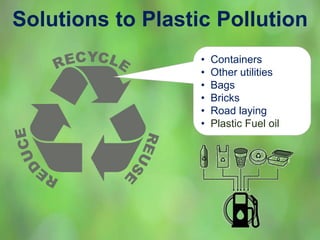
Solutions to Plastic Pollution
• Containers
• Other utilities
• Bags
• Bricks
• Road laying
• Plastic Fuel oil
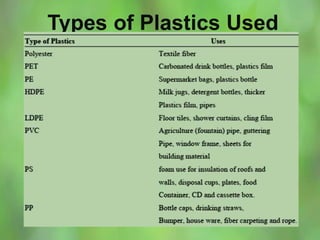
Types of Plastics Used
Fuel from Used Plastics
Non-recycled plastics into an array of fuels:
•Plastics are collected and sorted for recycling.
•They are heated in an oxygen-free environment, melted and
vaporized into gases.
•The gases are condensed into a variety of useful products.
• No combustion.
•Depending on the specific technology, products can include
synthetic crude or refined fuels.
The Technology: Pyrolysis
Thermal degradation process in the absence of oxygen.
 No COX, NOX, SOX
 Breaks large hydrocarbon chain into smaller ones
 Requires higher temperature and high reaction time.
 Resulting fluid have low octane value, higher pour
point of diesel and high residue content .
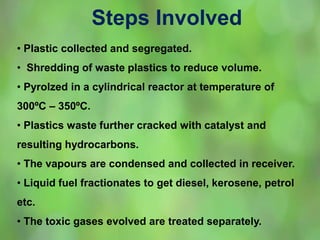
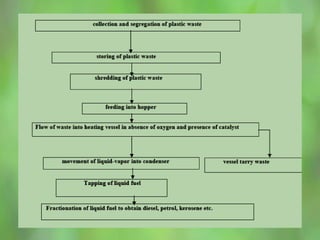
Steps Involved
• Plastic collected and segregated.
• Shredding of waste plastics to reduce volume.
• Pyrolzed in a cylindrical reactor at temperature of
300ºC – 350ºC.
• Plastics waste further cracked with catalyst and
resulting hydrocarbons.
• The vapours are condensed and collected in receiver.
• Liquid fuel fractionates to get diesel, kerosene, petrol
etc.
• The toxic gases evolved are treated separately.
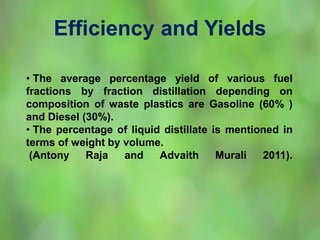
Efficiency and Yields
• The average percentage yield of various fuel
fractions by fraction distillation depending on
composition of waste plastics are Gasoline (60% )
and Diesel (30%).
• The percentage of liquid distillate is mentioned in
terms of weight by volume.
(Antony Raja and Advaith Murali 2011).
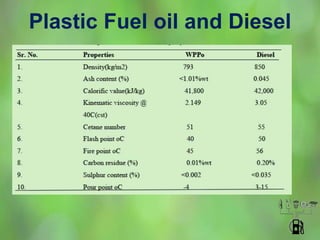
Plastic Fuel oil and Diesel
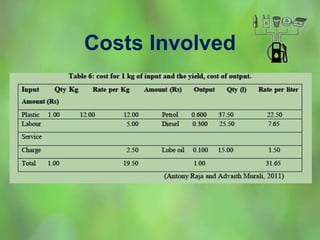
Costs Involved
Alternate synthetic fuels

Alternate synthetic fuels

  • 1.
    Alternate Synthetic Fuels V.Santhanam Departmentof Chemistry SCSVMV
  • 2.
    Contents 01 Energy Crisis  Climate Change Alternate Fuels - Why? 03  Production  Properties  Suitability Dimethyl Ether 04  What are they?  Merits and Demerits P-series fuels 05  Plastic waste problems  Plastic fuels  Method of preparation  Merits and demerits Synthetic Plastic Fuels 02  Low emission fuels  Fuels from bio mass  Fuels derived from waste materials Types
  • 3.
    Energy Crisis  Increasingenergy consumption  Residential use has doubled  Fossil fuels are running short Transportation Consumption almost 1/4th at stake
  • 4.
    Climate Change Scientific evidencesfor warming of the climate system is unequivocal. - Intergovernmental Panel on Climate Change  CO2 emission from various sources  Fuels with lower emissions or no emission  Alternative energy sources Renewable fuels
  • 5.
    The following fuelsare defined as alternative fuels by the Energy Policy Act (EPAct) of 1992 . Alternative fuels, provided that the:  Fuel is substantially non-petroleum  yields substantial energy security benefits  Offers substantial environmental benefits Electricity Pure methanol ethanol, and other alcohols  Blends of alcohols with gasoline  Natural gas Liquid fuels from natural gas Fuels- other than alcohol  P-series fuels Coal-derived liquid fuels  Hydrogen
  • 6.
  • 7.
     DME akamethoxymethane  Simplest ether  Colorless gas  Molar mass : 46.069 g·mol −1  Melting point : −141 °C  Boiling point: −24 °C  Dipole moment : 1.3 D Dimethyl Ether – C2H6O
  • 8.
    Dimethyl Ether –C2H6O Production:  DME can be produced from biomass, methanol, and fossil fuels.  The likely feedstock of choice for large-scale DME production is natural gas.  DME can be produced directly from synthesis gas produced from natural gas, coal, or biomass.  It can also be produced indirectly from methanol via a dehydration reaction.
  • 10.
    Comparison of DMEwith Diesel
  • 11.
     DME isan synthetic alternative to diesel for compression ignition diesel engines.  DME requires 75 psi pressure to be in liquid form, which must be kept in pressurized storage tanks at an ambient temperature.  The use of DME in vehicles requires fuel injection system specifically developed to operate on DME.  There have been a number of DME vehicle demonstrations, in a case 10 vehicles ran for 750,000 miles with out a glitch.
  • 12.
    Benefits Dimethyl ether hasseveral fuel properties that make it attractive for use in diesel engines  High cetane number  Efficiency and power rating are same for DME and diesel  Because of its lack of carbon-to-carbon bonds it virtually eliminate particulate emission.  However, DME has half the energy density of diesel fuel, requiring a fuel tank twice as large as that needed for diesel.
  • 13.
    • Diesel-Like Performance •Simpler engine results in lower maintenance costs • No spark plug required • Compression ignited, resulting in higher efficiency • Sulfur-free • Easier to control NOx • Meets or exceeds strict emissions standards • Non-toxic • Rapid, low pressure dispensing • Spillage will not contaminate soil • Cost-Competitive
  • 14.
  • 15.
  • 16.
    Demerits  Highly inflammable. Higher vapor pressure.  Requires pressurized tanks.  Requires modification of fuel feed system.  Energy density is about half of diesel.  NOx emission is higher  Higher emission of hydrocarbons.
  • 18.
    P-Series Fuels  Renewable,non-petroleum, liquid fuels that can substitute for gasoline.  They are a blend of approximately 25 ingredients.  About 32.5% is liquid by-products, known as "C5+" or "pentanes-plus", which are left over when natural gas is processed for transport and marketing.  Ethanol, from corn, comprises about 35%  Remaining 32.5% is MeTHF, an ether derived from lignocelullosic biomass (waste paper / Food waste / Agro wastes)
  • 19.
    P-Series Fuels -Advantages 1. The need for non-petroleum energy sources 2. Affordability 3. Solid waste management - control over a large portion of the generated trash stream without relying on burning or burying. - The feedstock is chemically digested - no combustion with the accompanying toxic air emissions. - Using feedstock with a negative cost.
  • 20.
     Much likegasoline, P-Series fuels range from 89-93 octane (mid-grade to premium). Can be formulated specifically for winter or summer use.  Refueling with P-Series is as quick and familiar as with gasoline. The basic capability for utilizing P-Series in vehicles has already been incorporated into methanol/ethanol flexible-fuel vehicles (FFV's). FFV's are designed to operate on alcohol, on gasoline, or on any mixture of the two.
  • 21.
  • 22.
    Solutions to PlasticPollution • Containers • Other utilities • Bags • Bricks • Road laying • Plastic Fuel oil
  • 23.
  • 24.
    Fuel from UsedPlastics Non-recycled plastics into an array of fuels: •Plastics are collected and sorted for recycling. •They are heated in an oxygen-free environment, melted and vaporized into gases. •The gases are condensed into a variety of useful products. • No combustion. •Depending on the specific technology, products can include synthetic crude or refined fuels.
  • 25.
    The Technology: Pyrolysis Thermaldegradation process in the absence of oxygen.  No COX, NOX, SOX  Breaks large hydrocarbon chain into smaller ones  Requires higher temperature and high reaction time.  Resulting fluid have low octane value, higher pour point of diesel and high residue content .
  • 26.
    Steps Involved • Plasticcollected and segregated. • Shredding of waste plastics to reduce volume. • Pyrolzed in a cylindrical reactor at temperature of 300ºC – 350ºC. • Plastics waste further cracked with catalyst and resulting hydrocarbons. • The vapours are condensed and collected in receiver. • Liquid fuel fractionates to get diesel, kerosene, petrol etc. • The toxic gases evolved are treated separately.
  • 28.
    Efficiency and Yields •The average percentage yield of various fuel fractions by fraction distillation depending on composition of waste plastics are Gasoline (60% ) and Diesel (30%). • The percentage of liquid distillate is mentioned in terms of weight by volume. (Antony Raja and Advaith Murali 2011).
  • 29.
    Plastic Fuel oiland Diesel
  • 30.