CONVERSION OF WASTE PLASTIC INTO
FUEL
SUBMITTED BY-
MOHD ASIF SIDDIQUE
1305251022
IET LUCKNOW
CONTENTS
 What is waste to fuel
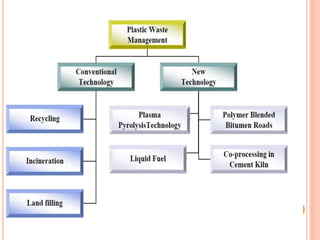
 Technologies used
 Pyrolysis
 Principal of pyrolysis
 Process of pyrolysis
 Parts of pyrolysis machine
 Advantages
WASTE TO FUEL
 Waste-to-energy or energy-from-waste is the
process of generating energy in the form of
electricity ,heat or fuel from waste.
 WtE is a form of energy recovery.
 Most WtE processes produce energy directly
through combustion, or produce a combustible fuel
commodity, such as methane, methanol, ethanol or
synthetic fuels.
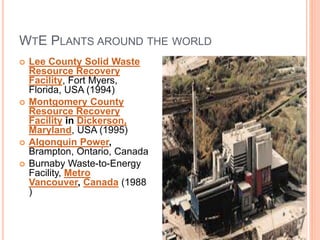
WTE PLANTS AROUND THE WORLD
 Lee County Solid Waste
Resource Recovery
Facility, Fort Myers,
Florida, USA (1994)
 Montgomery County
Resource Recovery
Facility in Dickerson,
Maryland, USA (1995)
 Algonquin Power,
Brampton, Ontario, Canada
 Burnaby Waste-to-Energy
Facility, Metro
Vancouver, Canada (1988
)
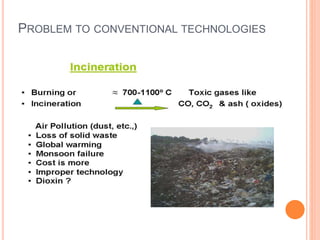
PROBLEM TO CONVENTIONAL TECHNOLOGIES
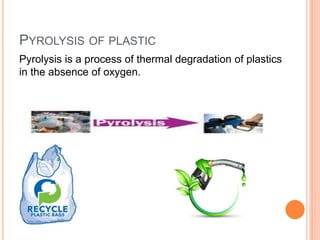
PYROLYSIS OF PLASTIC
Pyrolysis is a process of thermal degradation of plastics
in the absence of oxygen.
PRINCIPAL OF PYROLYSIS
 All plastics are polymers mostly containing carbon and
hydrogen and few other elements like chlorine, nitrogen, etc.
 When this long chain of polymers breaks at certain points, or
when lower molecular weight fractions are formed, this is
termed as degradation of polymers. This is reverse of
polymerization or de-polymerization.
 If such breaking of long polymeric chain or scission of bonds
occurs randomly, it is called Random depolymerization. Here
the polymer degrades to lower molecular fragments.
 In the process of conversion of waste plastics into fuels,
random depolymerization is carried out in a specially designed
reactor in the absence of oxygen and in the presence of coal
and certain catalytic additives. The maximum reaction
temperature is 350°C.
 There is total conversion of waste plastics into value-added
fuel products.
PROCESS
 The process consists of two steps:
i) Random de-polymerization
Under controlled reaction conditions, plastics materials
undergo random depolymerization and are converted into three
products:
a) Solid Fuel i.e., Coke
b) Liquid Fuel i.e., Combination of Gasoline, Kerosene,
Diesel and Lube Oil
c) Gaseous Fuel i.e., LPG range gas
ii) Fractional Distillation
 Separation of various liquid fuels by virtue of the difference in
their boiling points.
 One important factor of the quality of the liquid fuel is that the
sulphur content is less than 0.002ppm which is much lower
than the level found in regular fuel.
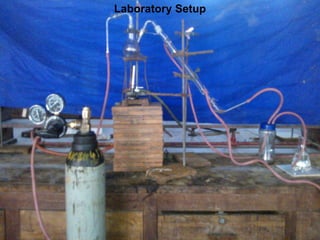
Laboratory Setup
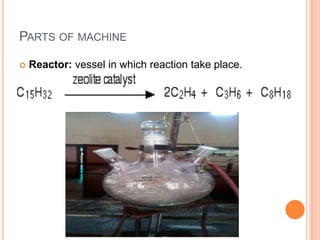
PARTS OF MACHINE
 Reactor: vessel in which reaction take place.
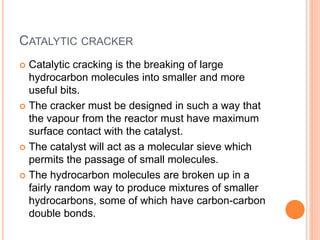
CATALYTIC CRACKER
 Catalytic cracking is the breaking of large
hydrocarbon molecules into smaller and more
useful bits.
 The cracker must be designed in such a way that
the vapour from the reactor must have maximum
surface contact with the catalyst.
 The catalyst will act as a molecular sieve which
permits the passage of small molecules.
 The hydrocarbon molecules are broken up in a
fairly random way to produce mixtures of smaller
hydrocarbons, some of which have carbon-carbon
double bonds.
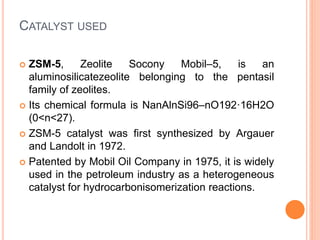
CATALYST USED
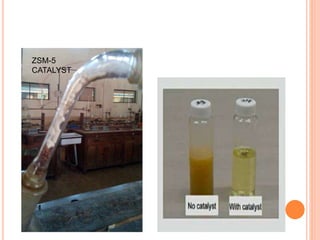
 ZSM-5, Zeolite Socony Mobil–5, is an
aluminosilicatezeolite belonging to the pentasil
family of zeolites.
 Its chemical formula is NanAlnSi96–nO192·16H2O
(0<n<27).
 ZSM-5 catalyst was first synthesized by Argauer
and Landolt in 1972.
 Patented by Mobil Oil Company in 1975, it is widely
used in the petroleum industry as a heterogeneous
catalyst for hydrocarbonisomerization reactions.
ZSM-5
CATALYST
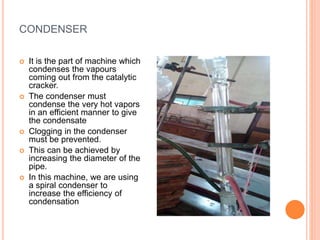
CONDENSER
 It is the part of machine which
condenses the vapours
coming out from the catalytic
cracker.
 The condenser must
condense the very hot vapors
in an efficient manner to give
the condensate
 Clogging in the condenser
must be prevented.
 This can be achieved by
increasing the diameter of the
pipe.
 In this machine, we are using
a spiral condenser to
increase the efficiency of
condensation
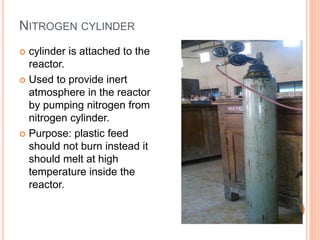
NITROGEN CYLINDER
 cylinder is attached to the
reactor.
 Used to provide inert
atmosphere in the reactor
by pumping nitrogen from
nitrogen cylinder.
 Purpose: plastic feed
should not burn instead it
should melt at high
temperature inside the
reactor.
ADVANTAGES
 Problem of disposal of waste plastic is solved.
 Waste plastic is converted into high value fuels.
 Environmental pollution is controlled.
 Industrial and automobile fuel requirement shall be
fulfilled to some extent at lower price.
 No pollutants are created during cracking of
plastics.
 The crude oil and the gas can be used for
generation of electricity
THANK YOU

waste plastic fuel

  • 1.
    CONVERSION OF WASTEPLASTIC INTO FUEL SUBMITTED BY- MOHD ASIF SIDDIQUE 1305251022 IET LUCKNOW
  • 2.
    CONTENTS  What iswaste to fuel  Technologies used  Pyrolysis  Principal of pyrolysis  Process of pyrolysis  Parts of pyrolysis machine  Advantages
  • 3.
    WASTE TO FUEL Waste-to-energy or energy-from-waste is the process of generating energy in the form of electricity ,heat or fuel from waste.  WtE is a form of energy recovery.  Most WtE processes produce energy directly through combustion, or produce a combustible fuel commodity, such as methane, methanol, ethanol or synthetic fuels.
  • 4.
    WTE PLANTS AROUNDTHE WORLD  Lee County Solid Waste Resource Recovery Facility, Fort Myers, Florida, USA (1994)  Montgomery County Resource Recovery Facility in Dickerson, Maryland, USA (1995)  Algonquin Power, Brampton, Ontario, Canada  Burnaby Waste-to-Energy Facility, Metro Vancouver, Canada (1988 )
  • 6.
  • 7.
    PYROLYSIS OF PLASTIC Pyrolysisis a process of thermal degradation of plastics in the absence of oxygen.
  • 8.
    PRINCIPAL OF PYROLYSIS All plastics are polymers mostly containing carbon and hydrogen and few other elements like chlorine, nitrogen, etc.  When this long chain of polymers breaks at certain points, or when lower molecular weight fractions are formed, this is termed as degradation of polymers. This is reverse of polymerization or de-polymerization.  If such breaking of long polymeric chain or scission of bonds occurs randomly, it is called Random depolymerization. Here the polymer degrades to lower molecular fragments.  In the process of conversion of waste plastics into fuels, random depolymerization is carried out in a specially designed reactor in the absence of oxygen and in the presence of coal and certain catalytic additives. The maximum reaction temperature is 350°C.  There is total conversion of waste plastics into value-added fuel products.
  • 9.
    PROCESS  The processconsists of two steps: i) Random de-polymerization Under controlled reaction conditions, plastics materials undergo random depolymerization and are converted into three products: a) Solid Fuel i.e., Coke b) Liquid Fuel i.e., Combination of Gasoline, Kerosene, Diesel and Lube Oil c) Gaseous Fuel i.e., LPG range gas ii) Fractional Distillation  Separation of various liquid fuels by virtue of the difference in their boiling points.  One important factor of the quality of the liquid fuel is that the sulphur content is less than 0.002ppm which is much lower than the level found in regular fuel.
  • 11.
  • 12.
    PARTS OF MACHINE Reactor: vessel in which reaction take place.
  • 13.
    CATALYTIC CRACKER  Catalyticcracking is the breaking of large hydrocarbon molecules into smaller and more useful bits.  The cracker must be designed in such a way that the vapour from the reactor must have maximum surface contact with the catalyst.  The catalyst will act as a molecular sieve which permits the passage of small molecules.  The hydrocarbon molecules are broken up in a fairly random way to produce mixtures of smaller hydrocarbons, some of which have carbon-carbon double bonds.
  • 14.
    CATALYST USED  ZSM-5,Zeolite Socony Mobil–5, is an aluminosilicatezeolite belonging to the pentasil family of zeolites.  Its chemical formula is NanAlnSi96–nO192·16H2O (0<n<27).  ZSM-5 catalyst was first synthesized by Argauer and Landolt in 1972.  Patented by Mobil Oil Company in 1975, it is widely used in the petroleum industry as a heterogeneous catalyst for hydrocarbonisomerization reactions.
  • 15.
  • 16.
    CONDENSER  It isthe part of machine which condenses the vapours coming out from the catalytic cracker.  The condenser must condense the very hot vapors in an efficient manner to give the condensate  Clogging in the condenser must be prevented.  This can be achieved by increasing the diameter of the pipe.  In this machine, we are using a spiral condenser to increase the efficiency of condensation
  • 17.
    NITROGEN CYLINDER  cylinderis attached to the reactor.  Used to provide inert atmosphere in the reactor by pumping nitrogen from nitrogen cylinder.  Purpose: plastic feed should not burn instead it should melt at high temperature inside the reactor.
  • 18.
    ADVANTAGES  Problem ofdisposal of waste plastic is solved.  Waste plastic is converted into high value fuels.  Environmental pollution is controlled.  Industrial and automobile fuel requirement shall be fulfilled to some extent at lower price.  No pollutants are created during cracking of plastics.  The crude oil and the gas can be used for generation of electricity
  • 19.