Alternative Fuels
Need for Alternate FuelsWorld today is facing the pinch of rising energy consumption. Green house gas emissions and global warming is also in the forefront of critical issues.India is ranked 6th in terms of energy demands but its domestic crude oil production satisfies only ¼th of our current demands.
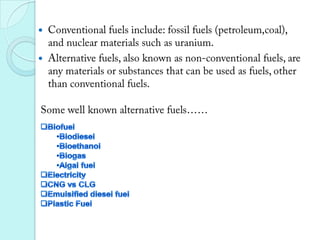
Conventional fuels include: fossil fuels (petroleum,coal), and nuclear materials such as uranium. Alternative fuels, also known as non-conventional fuels, are any materials or substances that can be used as fuels, other than conventional fuels.
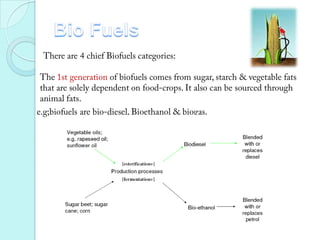
Bio Fuels      There are 4 chief Biofuels categories:The 1st generation of biofuels comes from sugar, starch & vegetable fats that are solely dependent on food-crops. It also can be sourced through animal fats.   e.g;biofuels are bio-diesel, Bioethanol & biogas.
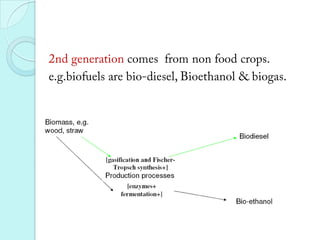
2nd generation comes  from non food crops.e.g.biofuels are bio-diesel, Bioethanol & biogas.
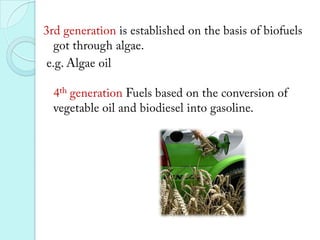
3rd generation is established on the basis of biofuels got through algae.  e.g. Algae oil4th generation Fuels based on the conversion of vegetable oil and biodiesel into gasoline.
Bio DieselIt can be manufactured from vegetable oils such as palm, rapeseed, soy, linseed, jatropha and coconut oil.
 Avoiding the need for expensive additional infrastructure.
Reduction of unburned hydrocarbons, carbon monoxide, and particulate matter.
Biodiesel and Bioalcohol contains no sulphur. It has natural lubricity and thus lubricity enhancing additive is required.BioethanolBrazil stands 1st in terms of Biofuel consumption.
According to UNCTAD report, Brazil uses pure ethanol in 20% of their vehicles and a 22 to 26 % ethanol-petrol blend in the rest of their vehicles.
CO emission from automobiles decreased from 50g/km in 1980 to 5.8g/km in 1995
The USA and Australia use a 10% ethanol blend.
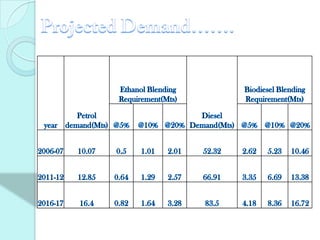
India is 4th largest producer and the government mandated the use of a 5% ethanol blend in petrol sold in nine sugarcane producing states.Projected Demand…….
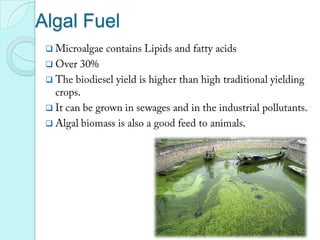
Algal FuelMicroalgae contains Lipids and fatty acids
Over 30%
The biodiesel yield is higher than high traditional yielding  crops.
It can be grown in sewages and in the industrial pollutants.
Algal biomass is also a good feed to animals.Natural GasNatural gas is produced either from gas wells
or in conjunction with crude oil production.

D:\Semester\5th Sem\Ppt\Alternative Fuels

  • 1.
  • 2.
    Need for AlternateFuelsWorld today is facing the pinch of rising energy consumption. Green house gas emissions and global warming is also in the forefront of critical issues.India is ranked 6th in terms of energy demands but its domestic crude oil production satisfies only ¼th of our current demands.
  • 3.
    Conventional fuels include:fossil fuels (petroleum,coal), and nuclear materials such as uranium. Alternative fuels, also known as non-conventional fuels, are any materials or substances that can be used as fuels, other than conventional fuels.
  • 4.
    Bio Fuels There are 4 chief Biofuels categories:The 1st generation of biofuels comes from sugar, starch & vegetable fats that are solely dependent on food-crops. It also can be sourced through animal fats. e.g;biofuels are bio-diesel, Bioethanol & biogas.
  • 5.
    2nd generation comes from non food crops.e.g.biofuels are bio-diesel, Bioethanol & biogas.
  • 6.
    3rd generation isestablished on the basis of biofuels got through algae. e.g. Algae oil4th generation Fuels based on the conversion of vegetable oil and biodiesel into gasoline.
  • 7.
    Bio DieselIt canbe manufactured from vegetable oils such as palm, rapeseed, soy, linseed, jatropha and coconut oil.
  • 8.
    Avoiding theneed for expensive additional infrastructure.
  • 9.
    Reduction of unburnedhydrocarbons, carbon monoxide, and particulate matter.
  • 10.
    Biodiesel and Bioalcoholcontains no sulphur. It has natural lubricity and thus lubricity enhancing additive is required.BioethanolBrazil stands 1st in terms of Biofuel consumption.
  • 11.
    According to UNCTADreport, Brazil uses pure ethanol in 20% of their vehicles and a 22 to 26 % ethanol-petrol blend in the rest of their vehicles.
  • 12.
    CO emission fromautomobiles decreased from 50g/km in 1980 to 5.8g/km in 1995
  • 13.
    The USA andAustralia use a 10% ethanol blend.
  • 14.
    India is 4thlargest producer and the government mandated the use of a 5% ethanol blend in petrol sold in nine sugarcane producing states.Projected Demand…….
  • 15.
    Algal FuelMicroalgae containsLipids and fatty acids
  • 16.
  • 17.
    The biodiesel yieldis higher than high traditional yielding crops.
  • 18.
    It can begrown in sewages and in the industrial pollutants.
  • 19.
    Algal biomass isalso a good feed to animals.Natural GasNatural gas is produced either from gas wells
  • 20.
    or in conjunctionwith crude oil production.

Editor's Notes

  • #3 All these make it imperative that the search for alternative fuels is taken in right earnest.
  • #8 In fossil fuels,sulphur is present when it is released in the atmosphere it could cause acid rain. In many instances, Biodiesel is mixed with petroleum-based diesel to create a Biodiesel blend, which can then be sold into the general diesel market…It refers to mono-alkyl esters of long chain fatty acids derived from palm oil through a process known as ‘transesterification’.
  • #10 As biofuel is the fuel which directly derived from biomass, biodiesel needs a special process to transform its source from the biomass to a fuel.