Amity School of Engineering
and Technology
HARSH GUPTA
M.Tech. (Automobile Engineering)
 World today is facing the pinch of rising energy
consumption.
 Green house gas emissions and global warming is also in
the forefront of critical issues.
 India is ranked 6th in terms of energy demands but its
domestic crude oil production satisfies only ¼th of our
current demands.
 Conventional fuels include: fossil fuels (petroleum,coal),
and nuclear materials such as uranium.
 Alternative fuels, also known as non-conventional fuels, are
any materials or substances that can be used as fuels, other
than conventional fuels.
Some well known alternative fuels……
There are 4 chief Biofuels categories:
The 1st generation of biofuels comes from sugar, starch & vegetable fats
that are solely dependent on food-crops. It also can be sourced through
animal fats.
e.g;biofuels are bio-diesel, Bioethanol & biogas.
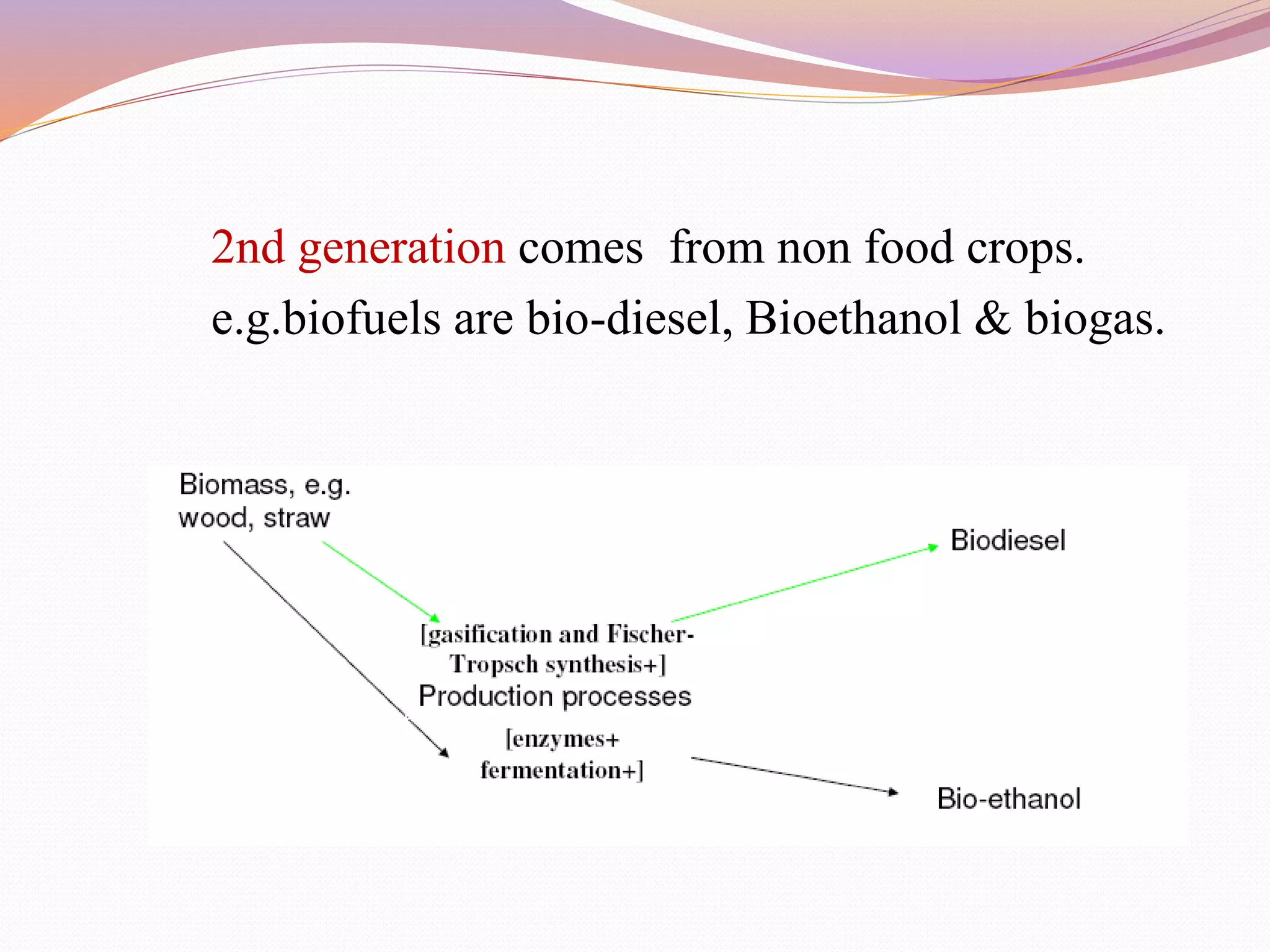
2nd generation comes from non food crops.
e.g.biofuels are bio-diesel, Bioethanol & biogas.
3rd generation is established on the basis of biofuels
got through algae.
e.g. Algae oil
4th generation Fuels based on the conversion of
vegetable oil and biodiesel into gasoline.
It can be manufactured from vegetable oils such as palm,
rapeseed, soy, linseed, jatropha and coconut oil.
 Avoiding the need for expensive additional infrastructure.
Reduction of unburned hydrocarbons, carbon monoxide,
and particulate matter.
Biodiesel and Bioalcohol contains no sulphur. It has
natural lubricity and thus lubricity enhancing additive is
required.
Brazil stands 1st in terms of Biofuel consumption.
According to UNCTAD report, Brazil uses pure ethanol in
20% of their vehicles and a 22 to 26 % ethanol-petrol
blend in the rest of their vehicles.
CO emission from automobiles decreased from 50g/km in
1980 to 5.8g/km in 1995
The USA and Australia use a 10% ethanol blend.
India is 4th largest producer and the government mandated
the use of a 5% ethanol blend in petrol sold in nine
sugarcane producing states.
AlgalFuel
Microalgae contains Lipids and fatty acids
Over 30%
The biodiesel yield is higher than high traditional yielding
crops.
It can be grown in sewages and in the industrial pollutants.
Algal biomass is also a good feed to animals.
Natural gas is produced either from gas wells
or in conjunction with crude oil production.
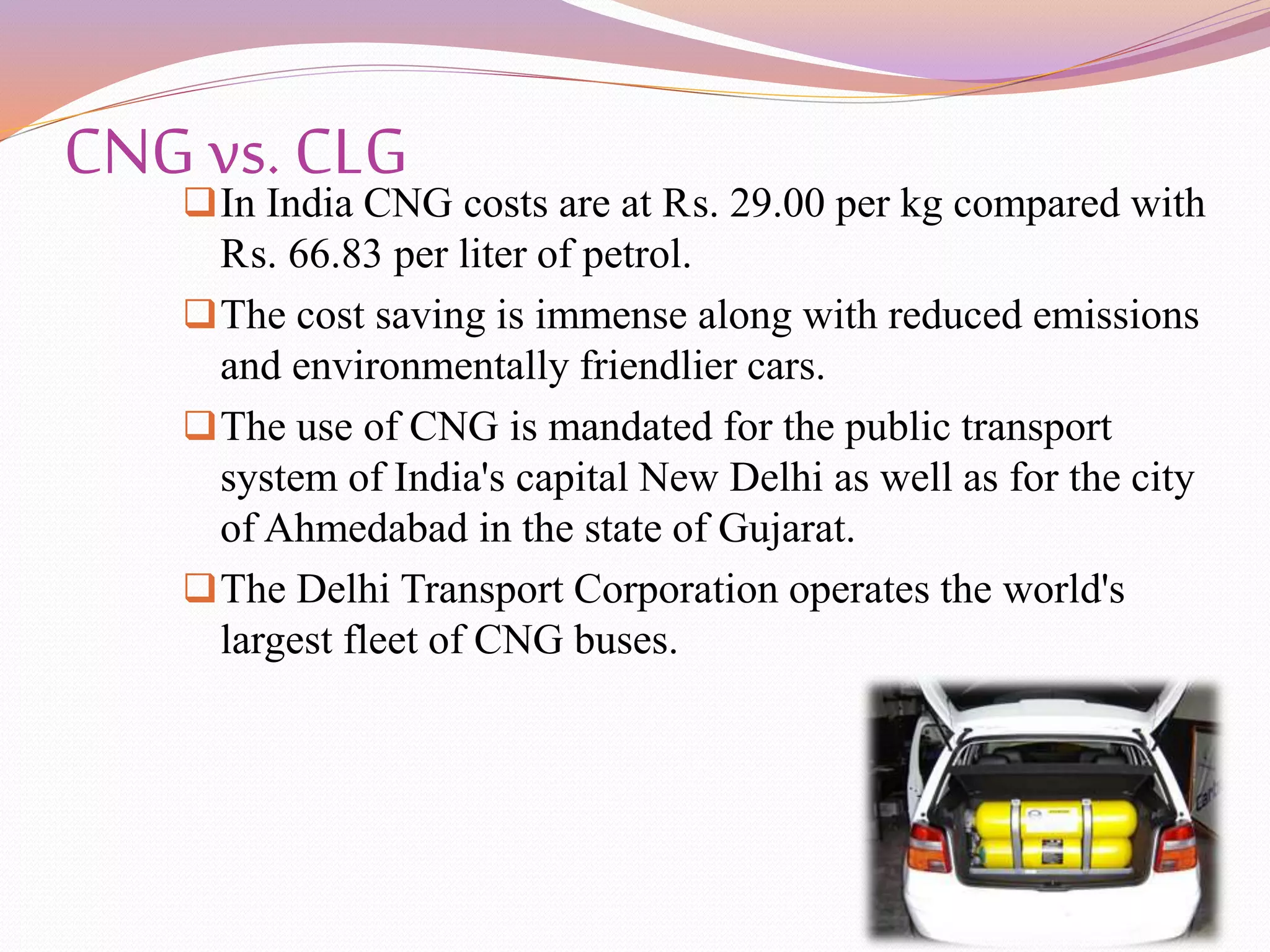
Because of the gaseous nature of this fuel, it
must be stored onboard a vehicle in either a
compressed gaseous state or in a liquefied state
 A natural gas vehicle can be less expensive to
operate than a comparable conventionally fueled
vehicle depending on natural gas prices.
CNG vs. CLGIn India CNG costs are at ₨. 29.00 per kg compared with
₨. 66.83 per liter of petrol.
The cost saving is immense along with reduced emissions
and environmentally friendlier cars.
The use of CNG is mandated for the public transport
system of India's capital New Delhi as well as for the city
of Ahmedabad in the state of Gujarat.
The Delhi Transport Corporation operates the world's
largest fleet of CNG buses.
Biogas
 During production, there is a solid byproduct called
digestate. This can be used as a biofuel or fertilizer. Biogas
consists of methane.
Low-cost, renewable source of energy.
Because of the gaseous nature of this fuel, it must be stored
onboard a vehicle in either a compressed gaseous state or in
a liquefied state.
A biogas-powered train has been in service in Sweden since
2005
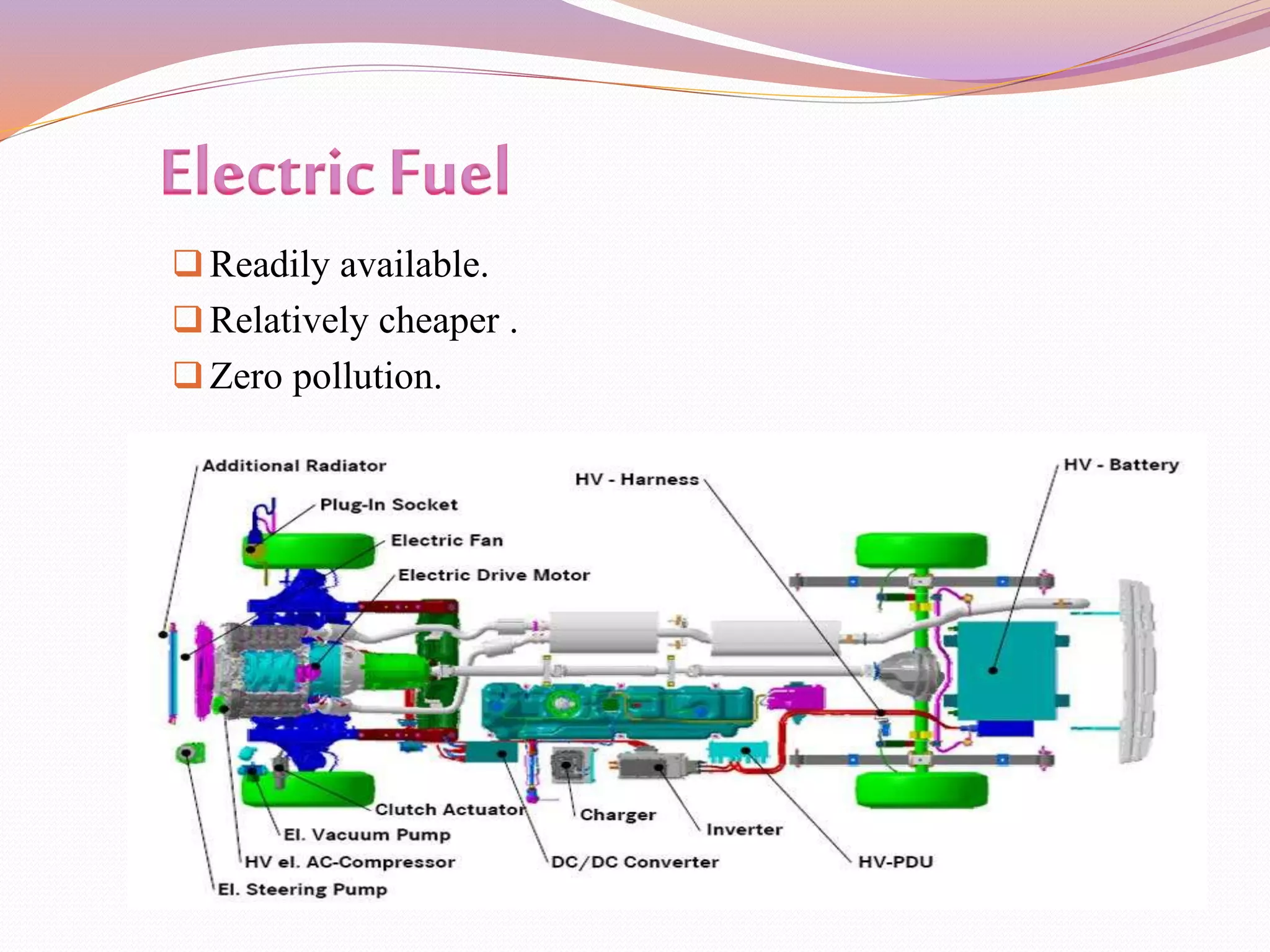
 Electricity is used as fuel in the form of batteries and fuel
cells.
 Fuel Cells are more promising because they use other
fuels to create the electrical energy
• A fuel cell uses a hydrogen and oxygen reaction resulting in the production of
energy
• If pure hydrogen is used the car produces only two by-products: Water and
Heat.
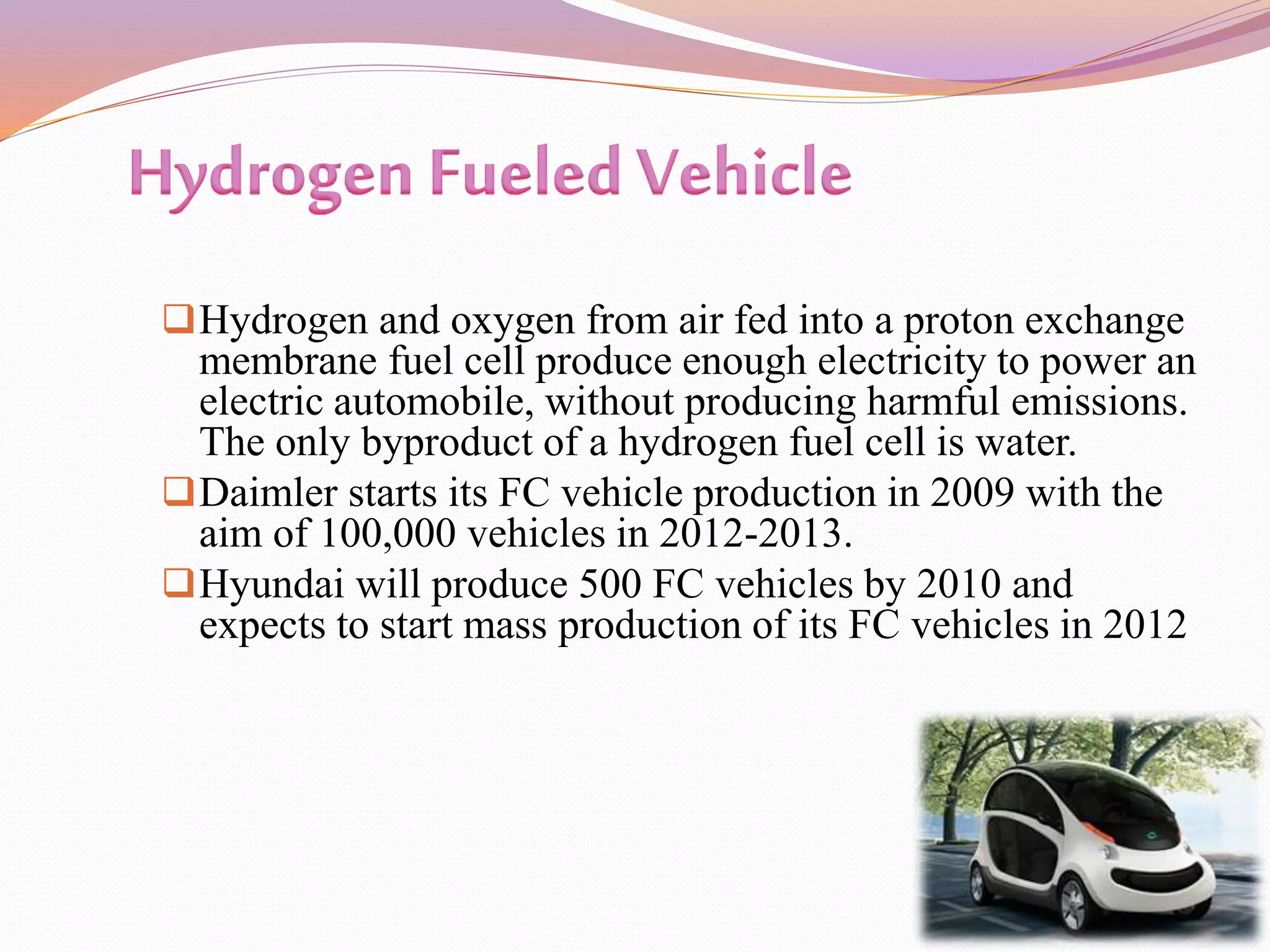
e.g. Hydrogen fuel car
• For electric cars it would mean no emissions
• Although batteries have a short range, vehicles that use them can be used in
communities to get around
• For fuel cells, if hydrogen is used it can have a longer range vehicle with no
emissions.
Hydrogen and oxygen from air fed into a proton exchange
membrane fuel cell produce enough electricity to power an
electric automobile, without producing harmful emissions.
The only byproduct of a hydrogen fuel cell is water.
Daimler starts its FC vehicle production in 2009 with the
aim of 100,000 vehicles in 2012-2013.
Hyundai will produce 500 FC vehicles by 2010 and
expects to start mass production of its FC vehicles in 2012
Readily available.
Relatively cheaper .
Zero pollution.
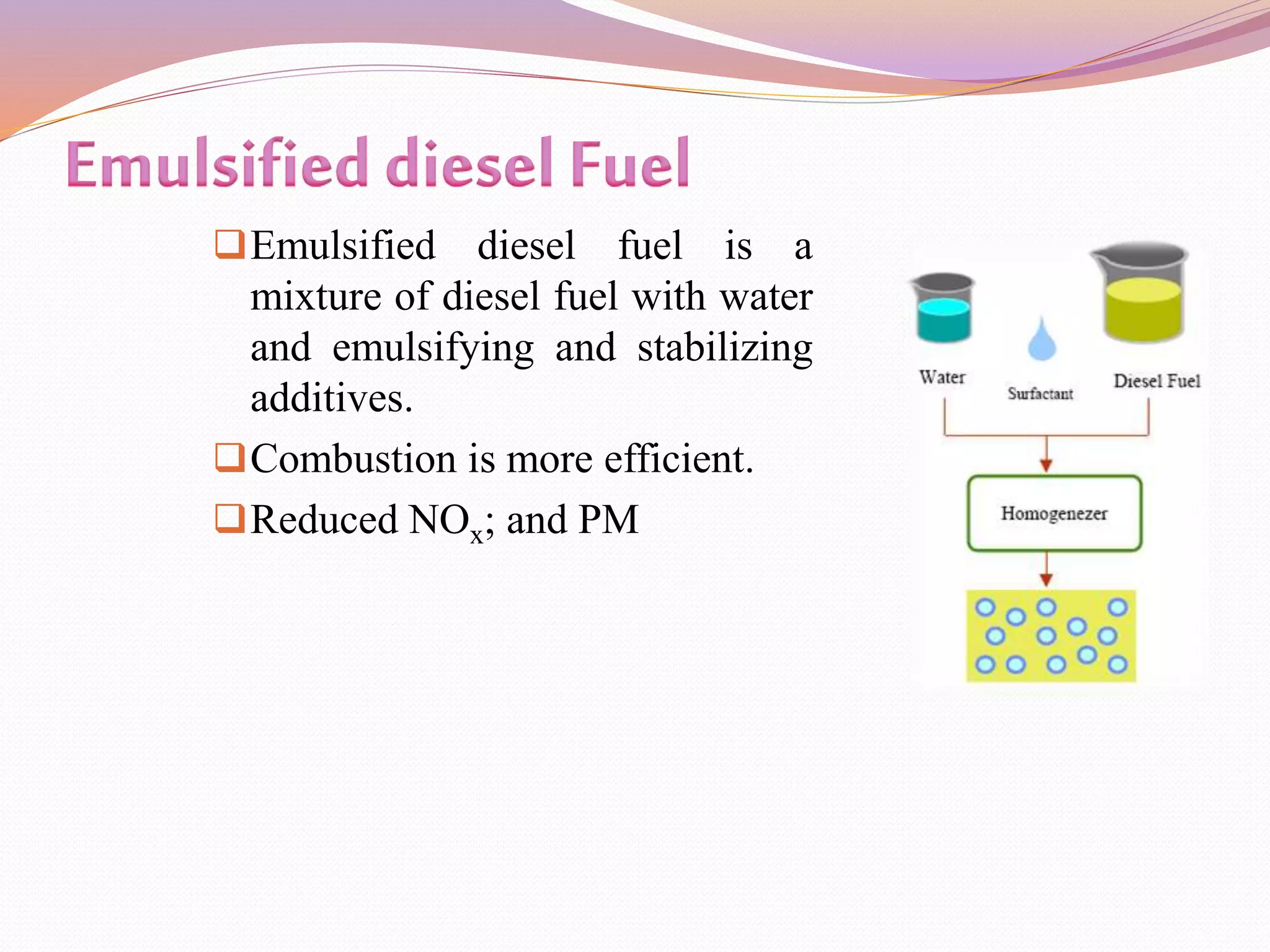
Emulsified diesel fuel is a
mixture of diesel fuel with water
and emulsifying and stabilizing
additives.
Combustion is more efficient.
Reduced NOx; and PM
 The process involves heating shredded plastic waste with
coal and a secret chemical. This yields around 1 litre of
crude oil for every kilogram of waste plastic.
 Using infra-red energy to remove hydrocarbons from
plastic without the use of a catalyst, transforming 82% of
the original plastic material into fuel.
presentation on alternative fuels

presentation on alternative fuels

  • 1.
    Amity School ofEngineering and Technology HARSH GUPTA M.Tech. (Automobile Engineering)
  • 3.
     World todayis facing the pinch of rising energy consumption.  Green house gas emissions and global warming is also in the forefront of critical issues.  India is ranked 6th in terms of energy demands but its domestic crude oil production satisfies only ¼th of our current demands.
  • 4.
     Conventional fuelsinclude: fossil fuels (petroleum,coal), and nuclear materials such as uranium.  Alternative fuels, also known as non-conventional fuels, are any materials or substances that can be used as fuels, other than conventional fuels. Some well known alternative fuels……
  • 5.
    There are 4chief Biofuels categories: The 1st generation of biofuels comes from sugar, starch & vegetable fats that are solely dependent on food-crops. It also can be sourced through animal fats. e.g;biofuels are bio-diesel, Bioethanol & biogas.
  • 6.
    2nd generation comesfrom non food crops. e.g.biofuels are bio-diesel, Bioethanol & biogas.
  • 7.
    3rd generation isestablished on the basis of biofuels got through algae. e.g. Algae oil 4th generation Fuels based on the conversion of vegetable oil and biodiesel into gasoline.
  • 8.
    It can bemanufactured from vegetable oils such as palm, rapeseed, soy, linseed, jatropha and coconut oil.  Avoiding the need for expensive additional infrastructure. Reduction of unburned hydrocarbons, carbon monoxide, and particulate matter. Biodiesel and Bioalcohol contains no sulphur. It has natural lubricity and thus lubricity enhancing additive is required.
  • 9.
    Brazil stands 1stin terms of Biofuel consumption. According to UNCTAD report, Brazil uses pure ethanol in 20% of their vehicles and a 22 to 26 % ethanol-petrol blend in the rest of their vehicles. CO emission from automobiles decreased from 50g/km in 1980 to 5.8g/km in 1995 The USA and Australia use a 10% ethanol blend. India is 4th largest producer and the government mandated the use of a 5% ethanol blend in petrol sold in nine sugarcane producing states.
  • 11.
    AlgalFuel Microalgae contains Lipidsand fatty acids Over 30% The biodiesel yield is higher than high traditional yielding crops. It can be grown in sewages and in the industrial pollutants. Algal biomass is also a good feed to animals.
  • 12.
    Natural gas isproduced either from gas wells or in conjunction with crude oil production. Because of the gaseous nature of this fuel, it must be stored onboard a vehicle in either a compressed gaseous state or in a liquefied state  A natural gas vehicle can be less expensive to operate than a comparable conventionally fueled vehicle depending on natural gas prices.
  • 13.
    CNG vs. CLGInIndia CNG costs are at ₨. 29.00 per kg compared with ₨. 66.83 per liter of petrol. The cost saving is immense along with reduced emissions and environmentally friendlier cars. The use of CNG is mandated for the public transport system of India's capital New Delhi as well as for the city of Ahmedabad in the state of Gujarat. The Delhi Transport Corporation operates the world's largest fleet of CNG buses.
  • 14.
    Biogas  During production,there is a solid byproduct called digestate. This can be used as a biofuel or fertilizer. Biogas consists of methane. Low-cost, renewable source of energy. Because of the gaseous nature of this fuel, it must be stored onboard a vehicle in either a compressed gaseous state or in a liquefied state. A biogas-powered train has been in service in Sweden since 2005
  • 15.
     Electricity isused as fuel in the form of batteries and fuel cells.  Fuel Cells are more promising because they use other fuels to create the electrical energy
  • 16.
    • A fuelcell uses a hydrogen and oxygen reaction resulting in the production of energy • If pure hydrogen is used the car produces only two by-products: Water and Heat. e.g. Hydrogen fuel car • For electric cars it would mean no emissions • Although batteries have a short range, vehicles that use them can be used in communities to get around • For fuel cells, if hydrogen is used it can have a longer range vehicle with no emissions.
  • 17.
    Hydrogen and oxygenfrom air fed into a proton exchange membrane fuel cell produce enough electricity to power an electric automobile, without producing harmful emissions. The only byproduct of a hydrogen fuel cell is water. Daimler starts its FC vehicle production in 2009 with the aim of 100,000 vehicles in 2012-2013. Hyundai will produce 500 FC vehicles by 2010 and expects to start mass production of its FC vehicles in 2012
  • 18.
  • 19.
    Emulsified diesel fuelis a mixture of diesel fuel with water and emulsifying and stabilizing additives. Combustion is more efficient. Reduced NOx; and PM
  • 20.
     The processinvolves heating shredded plastic waste with coal and a secret chemical. This yields around 1 litre of crude oil for every kilogram of waste plastic.  Using infra-red energy to remove hydrocarbons from plastic without the use of a catalyst, transforming 82% of the original plastic material into fuel.

Editor's Notes

  • #4 All these make it imperative that the search for alternative fuels is taken in right earnest.
  • #9 In fossil fuels,sulphur is present when it is released in the atmosphere it could cause acid rain. In many instances, Biodiesel is mixed with petroleum-based diesel to create a Biodiesel blend, which can then be sold into the general diesel market…It refers to mono-alkyl esters of long chain fatty acids derived from palm oil through a process known as ‘transesterification’.
  • #11 As biofuel is the fuel which directly derived from biomass, biodiesel needs a special process to transform its source from the biomass to a fuel.