ADOLESCENT HIPADOLESCENT HIPADOLESCENT HIPADOLESCENT HIP
What does the parents
complain of ?
Limping
Pain in hip
Knee pain
What could it be due to ?
 Transient synovitis
 Perthes disease
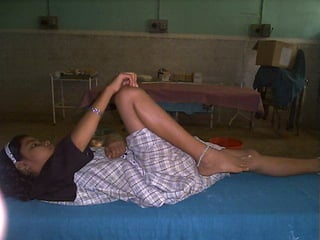
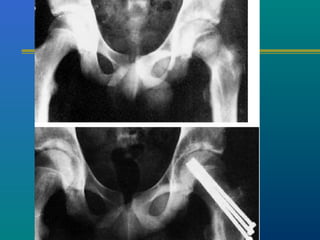
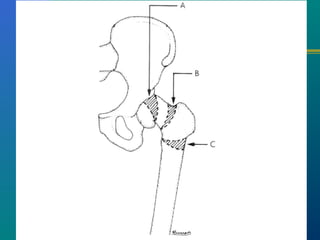
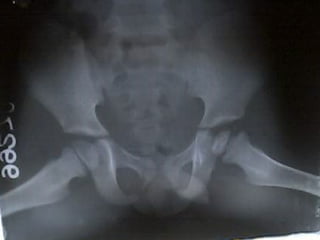
 Slipped capital femoral epiphysis
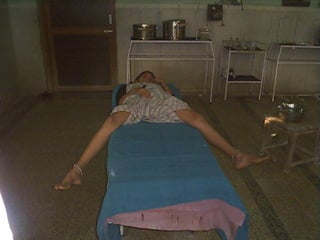
 Idiopathic Chondrolysis
 Septic arthritis
 Tuberculous arthritis
 Trauma
 Tumours
TRANSIENT SYNOVITIS HIPTRANSIENT SYNOVITIS HIP
Benign self limiting
Most common cause of hip
pain in children
AETIOLOGYAETIOLOGY
 Unknown
 Trauma
 Allergic manifestation
 infection
SYNOVITIS HIPSYNOVITIS HIP
 Unilateral hip pain
 3 – 18 years
 Limb and antalgic gait
 ROM restricted
DIAGNOSIS IS BY
EXCLUSION
INVESTIGATIONSINVESTIGATIONS
Usually within normal limits
USG – joint effusion
Complete resolution is theComplete resolution is the
rule usually within 3-4rule usually within 3-4
weeksweeks
TREATMENTTREATMENT
 Strict bed rest and non-weight
bearing
 Skin traction – recurrent symptoms
SEPTIC ARTHRITISSEPTIC ARTHRITIS
True orthopaedic emergency
Any age – common in infants
and children
Clinical features
Febrile and toxic
Swollen and painful joint
Pseudoparalysis
The key to treatment
is early diagnosis
with a high index of
suspicion and early
removal of pus from
the joint.
Investigations
Raised total count
Raised ESR
Raised CRP
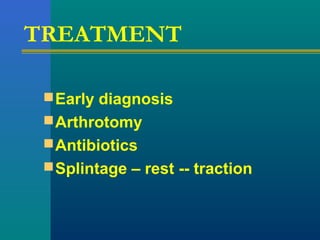
TREATMENT
Early diagnosis
Arthrotomy
Antibiotics
Splintage – rest -- traction
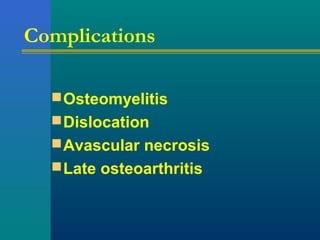
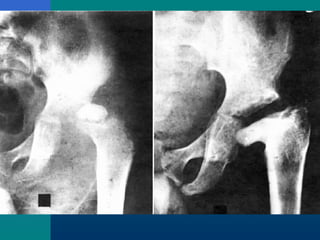
Complications
Osteomyelitis
Dislocation
Avascular necrosis
Late osteoarthritis
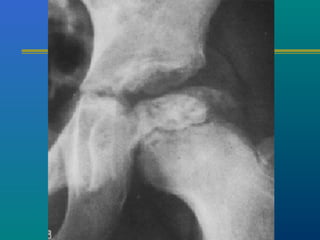
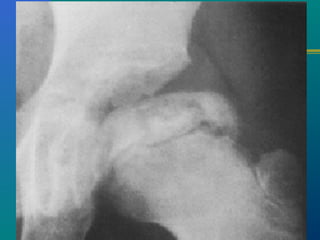
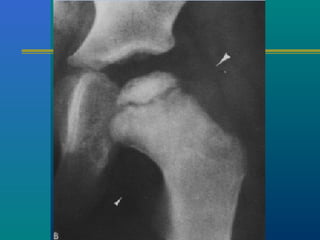
SLIPPED CAPITALSLIPPED CAPITAL
FEMORAL EPIPHYSISFEMORAL EPIPHYSIS
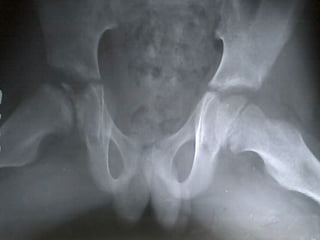
A true adolescent problem
Gradual or acute slip
through the capital
femoral physis
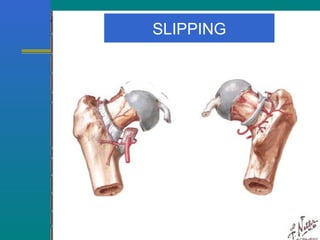
SLIPPING
SLIPPED CAPITAL FEMORALSLIPPED CAPITAL FEMORAL
EPIPHYSISEPIPHYSIS
clinical profile pictureclinical profile picture
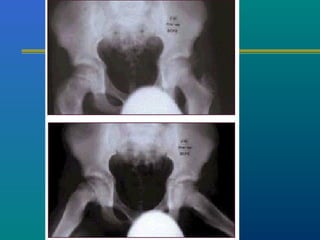
SCFE
Boys more than girls
Left more than right
Bilateral – 20 %
Etiology
Exact cause – unknown
Hormonal
Trauma
Mechanical factors
Classification
Preslip
Acute
Chronic
Acute on chronic
Preslip
Weakness or pain in the thigh or
knee
Limitation of internal rotation
X-ray – widening of the physis
Acute
 Less than 3 weeks duration
 Trauma – may be insignificant
 Bedridden – antalgic gait
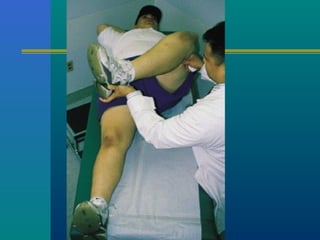
 Shortening
 External rotation deformity
 Axis deviation
Acute on chronic
Mild trauma results in
increase in the prodromal
pain present for more than 3
weeks
Chronic
Intermittent pain present for
more than 3 weeks.
Investigations
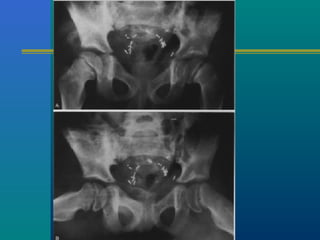
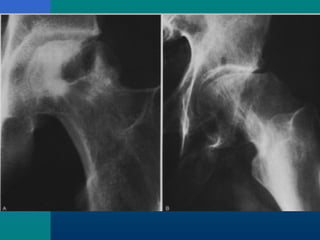
X-ray – AP
Frog leg lateral view
( contraindicated when
suspecting acute slip)
Eyes
do not see
what mind
does not know
It is true
about reading
x-rays also
Goal of treatment
 Promote early physeal closure
 Prevent additional slipping
 Relieve pain
 Correct deformity
 Restore function of hip
 Prevent complications
Conservative management
Rest
Analgesics
Surgical treatment is the
standard
Surgical options
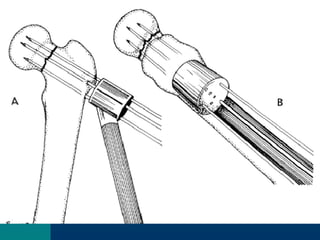
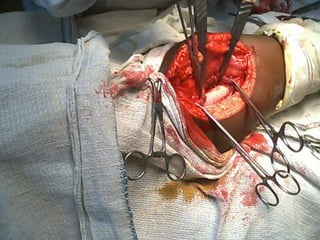
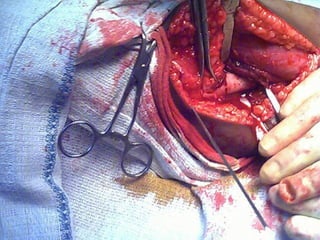
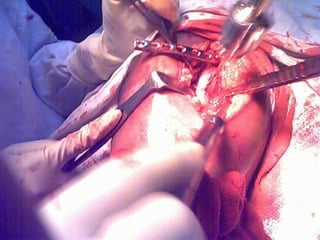
Insitu pinning
Reduction and fixation
Corrective osteotomies
Insitu pinning
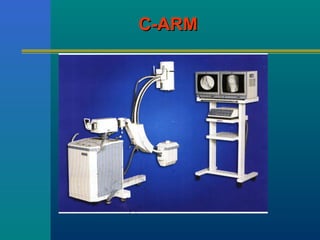
Image intensifier control
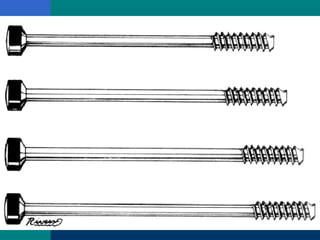
Cannulated screw fixation
C-ARMC-ARM
Complications
Chondrolysis
Avascular necrosis
Secondary osteoarthritis
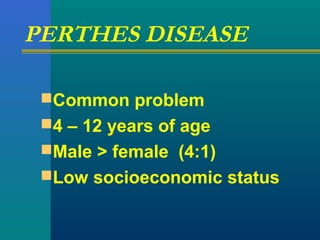
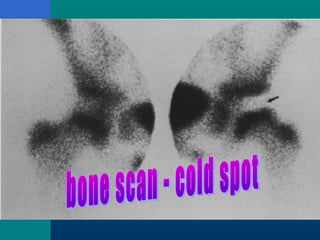
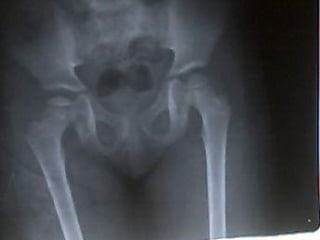
PERTHES DISEASE
Common problem
4 – 12 years of age
Male > female (4:1)
Low socioeconomic status
Late onset Perthes after
the age of 9 years.
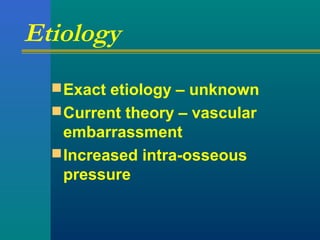
Etiology
Exact etiology – unknown
Current theory – vascular
embarrassment
Increased intra-osseous
pressure
This results in avascular
necrosis of the capital
femoral epiphysis.
Clinical features
Painless limping
CLINICAL PROFILE
Abduction-Internal rotation
limited
Flexion variably limited
Adduction deformity
Limb-length discrepancy
INVESTIGATIONS
X-ray --- AP & FROG LEG
LATERAL
Sclerosis of the epiphysis
Collapse of the epiphysis
Subchondral fracture
MRI – to know the shape
of the cartilage
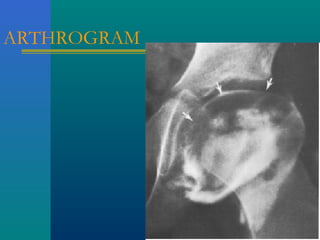
ARTHROGRAM
ARTHROGRAM
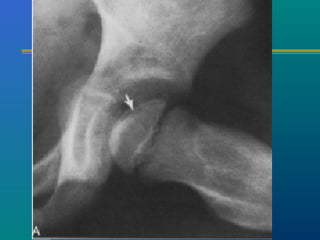
Subchondral fracture
heralds the onset of
clinical Perthes.
MANAGEMENT
Depends on stage of disease
Shape of the head
Management of complications
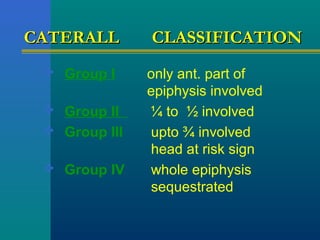
CATERALLCATERALL CLASSIFICATIONCLASSIFICATION
 Group I only ant. part of
epiphysis involved
 Group II ¼ to ½ involved
 Group III upto ¾ involved
head at risk sign
 Group IV whole epiphysis
sequestrated
Guiding principle in the
treatment is the
containment of the
femoral head in the
acetabulum.
Treatment options
Conservative
Surgical
Supervised neglect
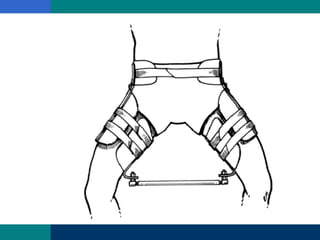
In the initial synovitis stage
treatment is by skin
traction
Conservative treatment
Time consuming
Difficult for parents and child
Psychological problems
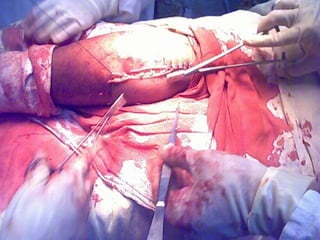
Surgical treatment
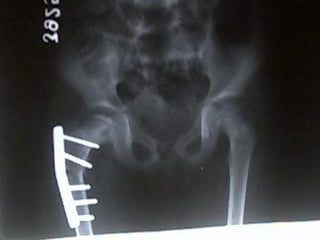
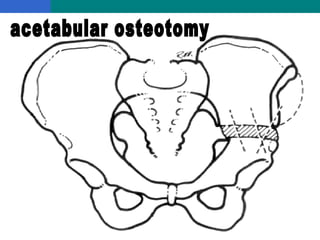
Contain head by osteotomies
Femoral or acetabular
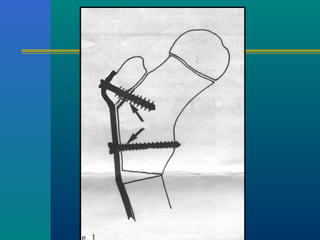
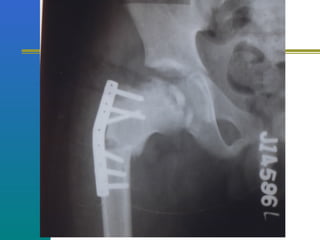
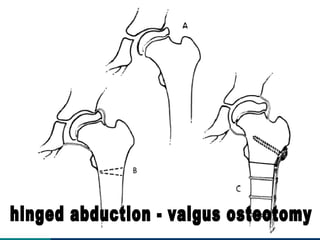
Varus derotation osteotomy of
femur commonly done
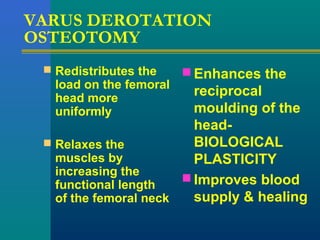
VARUS DEROTATION
OSTEOTOMY
 Redistributes the
load on the femoral
head more
uniformly
 Relaxes the
muscles by
increasing the
functional length
of the femoral neck
 Enhances the
reciprocal
moulding of the
head-
BIOLOGICAL
PLASTICITY
 Improves blood
supply & healing
Complications
Hinged abduction
Chondrolysis
Secondary osteoarthritis
TB HIPTB HIP
Not so uncommon in our
practice
Family history of TB
TB HIPTB HIP
Limp – commonest presentation
Night cries
Stiffness
Wasting
Fever
Weight loss
TB HIPTB HIP
Raised ESR
Mantoux test
X-ray
PCR
IgM antibody assay
Biopsy
TB HIP- X-RAYTB HIP- X-RAY
 Osteoporosis
 Travelling acetabulum
 Dislocated hip
 Mortar and pestle appearance
 Perthes type
 Protrusio acetabuli
 Destruction of head
TB HIPTB HIP
 ATT
 Traction
 Splintage
 Surgery – last resort
IDIOPATHIC
CHONDROLYSIS
Progressive destruction
of articular cartilage with
effusion and joint space
narrowing.
Girls -- 9 – 18 years
Insidious onset
Pain
Limping
Stiffness
Investigations
X-ray -- joint space
narrowing
Blood – within normal limits
MRI
TREATMENT
NSAID’s
Aggressive physical therapy
(CPM)
Periodic traction
Bed rest
Prolonged non - weight bearing
Questions & Comments
Adolescent hip

Adolescent hip