Dr (Major) Parthasarathy S
Pg Resident,MS Orthopaedics
Stanley Medical College,Chennai
Ref:Campbell’s operative orhopaedics 13th
edition
 Greek word
 Spondylo(spine)
 olisthesis(slip)
 First described by Herbinaux(Obstetrician) in
1782
 Ant translation of cephalad vertebra relative
to adjacent caudal vertebra
 Anteriorely directed vector created by
contraction of erector spinae muscle &force
of gravity acting on upper body mass
 Not seen in children before ambulation
 Failure of anatomic structures
 Facets
 Posterior bony arch
 pedicles
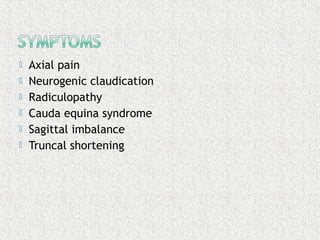
 Axial pain
 Neurogenic claudication
 Radiculopathy
 Cauda equina syndrome
 Sagittal imbalance
 Truncal shortening
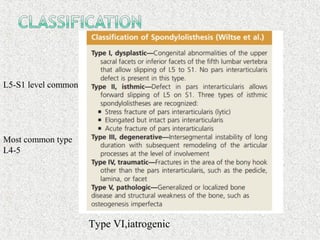
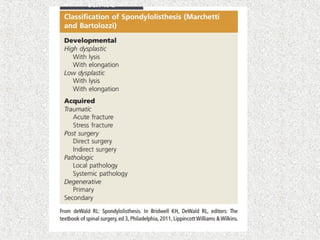
Type VI,iatrogenic
Most common type
L4-5
L5-S1 level common
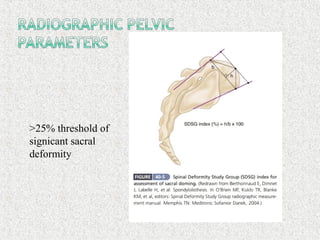
>25% threshold of
signicant sacral
deformity
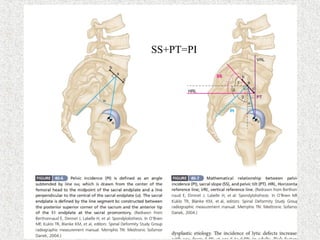
SS+PT=PI
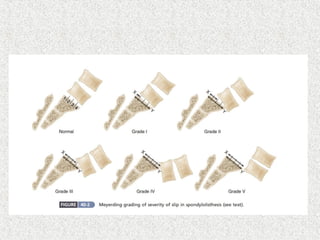
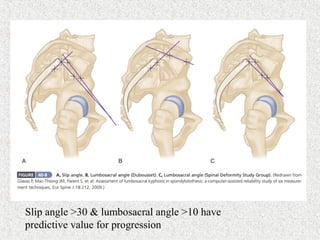
Slip angle >30 & lumbosacral angle >10 have
predictive value for progression
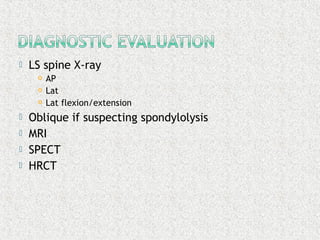
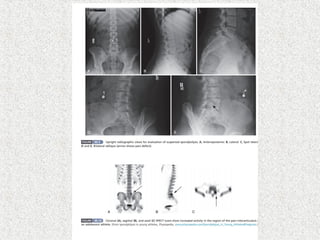
 LS spine X-ray
 AP
 Lat
 Lat flexion/extension
 Oblique if suspecting spondylolysis
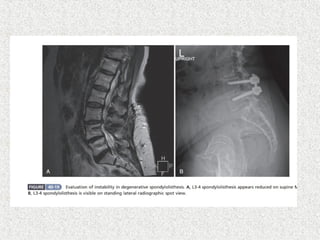
 MRI
 SPECT
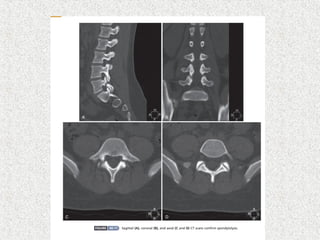
 HRCT
 Absence of significant neurological deficit
 Translation <1-2mm
 Control acute sympoms then trunk
stabilisation exercise & physiotherapy
 Epidural steroid
 Back pain not controlled in 6 months-surgery
 Repair of pars interartcularis defect
 No spondylolisthesis
 No degenerative disc changes in that level
 No degenerative facet changes
 No dysplastic changes
 Method – pedicle screw fixation & bone
grafting
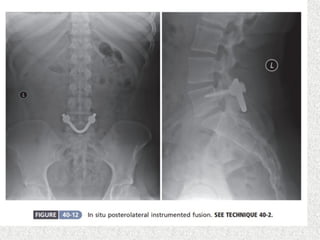
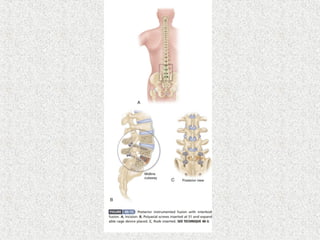
 Instrumented posterolateral fusion(wiltse &
spencer)
 No significant neurological symptom
 Good spinal alignment
 Sufficient surface area >2cm2 of transverse process
 Less surface area for posterolateral fusion
 Posterior only approach with circumferential
fusion(posteior/transforaminal lumbar interbody
fusion PLIF/TLIF)
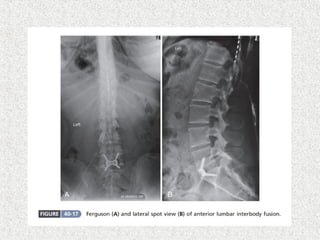
 Ant lumbar interbody fusion with post supplemental
fixation
 Used if small transverse process
 Salvage procedure if non union in posterolateral
fusion
 Patients with neurological symptom
 Direct/indirect decompression also needed
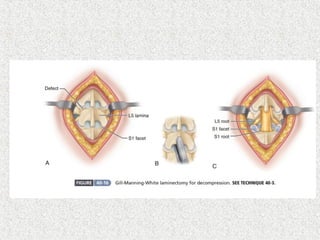
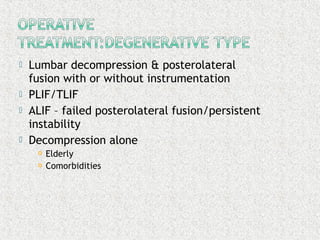
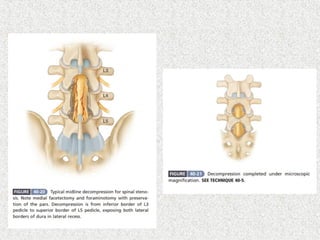
 Lumbar decompression & posterolateral
fusion with or without instrumentation
 PLIF/TLIF
 ALIF – failed posterolateral fusion/persistent
instability
 Decompression alone
 Elderly
 Comorbidities
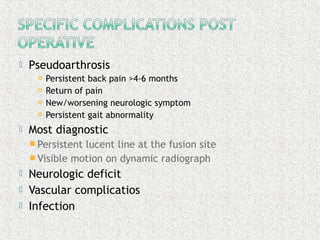
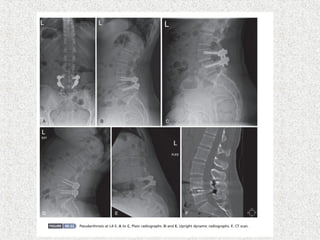
 Pseudoarthrosis
 Persistent back pain >4-6 months
 Return of pain
 New/worsening neurologic symptom
 Persistent gait abnormality
 Most diagnostic
 Persistent lucent line at the fusion site
 Visible motion on dynamic radiograph
 Neurologic deficit
 Vascular complicatios
 Infection
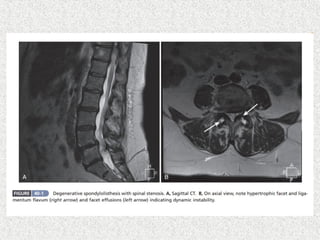
Spondylolisthesis
Spondylolisthesis

Spondylolisthesis

  • 1.
    Dr (Major) ParthasarathyS Pg Resident,MS Orthopaedics Stanley Medical College,Chennai Ref:Campbell’s operative orhopaedics 13th edition
  • 2.
     Greek word Spondylo(spine)  olisthesis(slip)  First described by Herbinaux(Obstetrician) in 1782  Ant translation of cephalad vertebra relative to adjacent caudal vertebra
  • 3.
     Anteriorely directedvector created by contraction of erector spinae muscle &force of gravity acting on upper body mass  Not seen in children before ambulation  Failure of anatomic structures  Facets  Posterior bony arch  pedicles
  • 5.
     Axial pain Neurogenic claudication  Radiculopathy  Cauda equina syndrome  Sagittal imbalance  Truncal shortening
  • 6.
    Type VI,iatrogenic Most commontype L4-5 L5-S1 level common
  • 11.
  • 12.
  • 13.
    Slip angle >30& lumbosacral angle >10 have predictive value for progression
  • 14.
     LS spineX-ray  AP  Lat  Lat flexion/extension  Oblique if suspecting spondylolysis  MRI  SPECT  HRCT
  • 18.
     Absence ofsignificant neurological deficit  Translation <1-2mm  Control acute sympoms then trunk stabilisation exercise & physiotherapy  Epidural steroid  Back pain not controlled in 6 months-surgery
  • 19.
     Repair ofpars interartcularis defect  No spondylolisthesis  No degenerative disc changes in that level  No degenerative facet changes  No dysplastic changes  Method – pedicle screw fixation & bone grafting
  • 20.
     Instrumented posterolateralfusion(wiltse & spencer)  No significant neurological symptom  Good spinal alignment  Sufficient surface area >2cm2 of transverse process  Less surface area for posterolateral fusion  Posterior only approach with circumferential fusion(posteior/transforaminal lumbar interbody fusion PLIF/TLIF)  Ant lumbar interbody fusion with post supplemental fixation  Used if small transverse process  Salvage procedure if non union in posterolateral fusion  Patients with neurological symptom  Direct/indirect decompression also needed
  • 25.
     Lumbar decompression& posterolateral fusion with or without instrumentation  PLIF/TLIF  ALIF – failed posterolateral fusion/persistent instability  Decompression alone  Elderly  Comorbidities
  • 27.
     Pseudoarthrosis  Persistentback pain >4-6 months  Return of pain  New/worsening neurologic symptom  Persistent gait abnormality  Most diagnostic  Persistent lucent line at the fusion site  Visible motion on dynamic radiograph  Neurologic deficit  Vascular complicatios  Infection