Downloaded 2,154 times
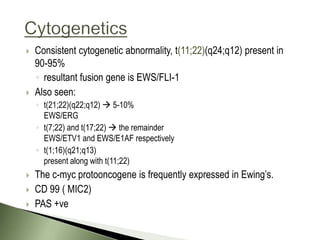
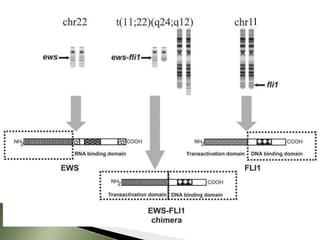
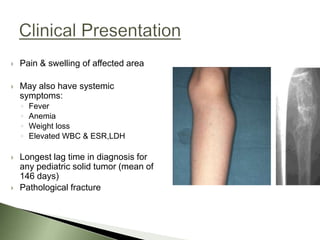
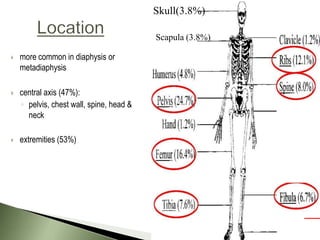
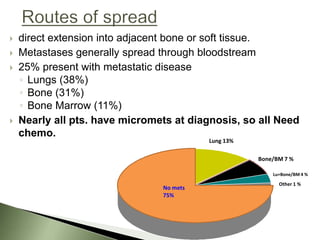
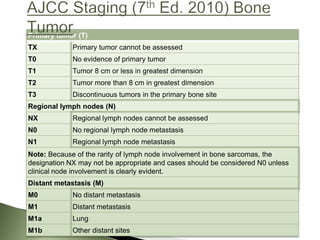
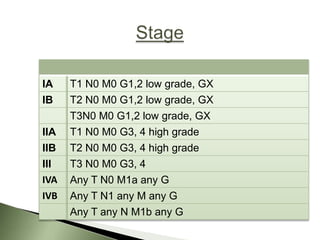
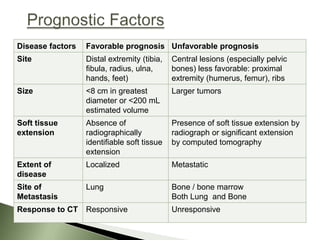
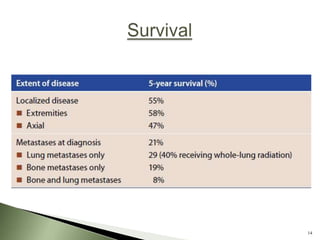
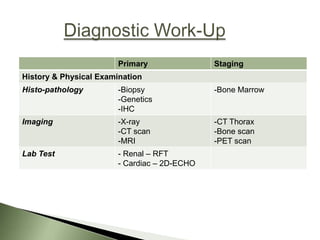
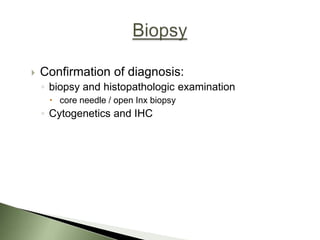
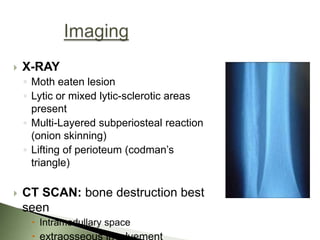
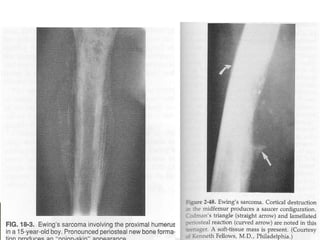
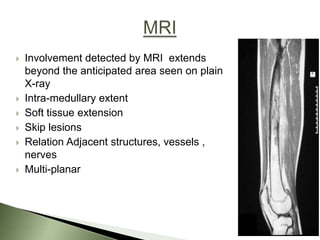
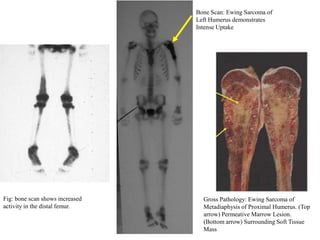
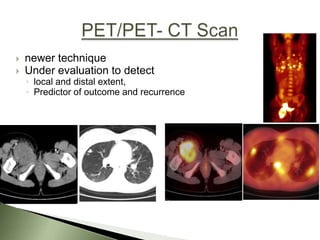
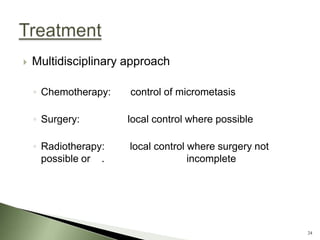
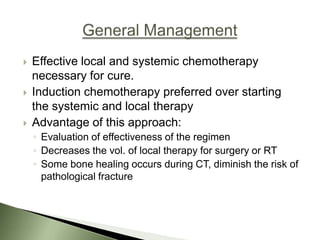
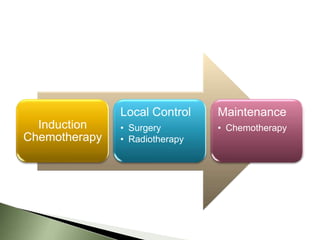

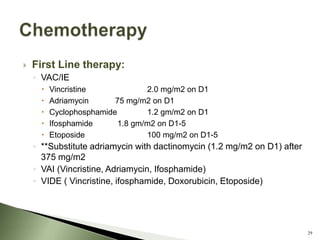
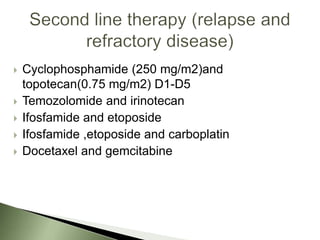
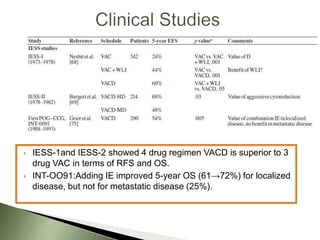
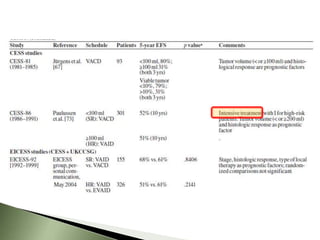
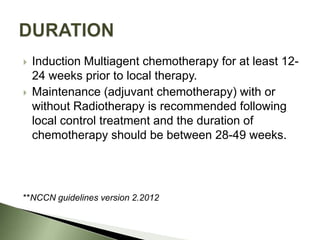


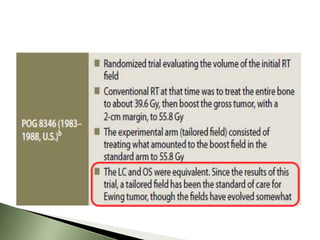
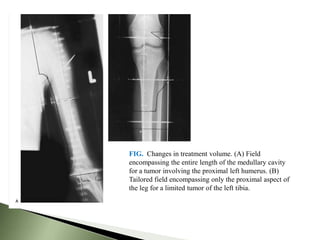
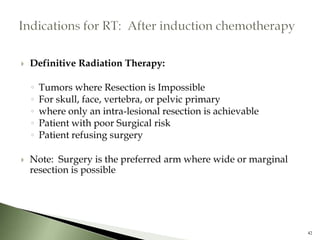
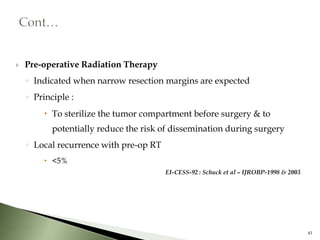
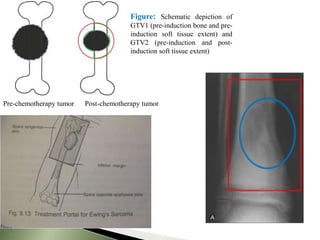
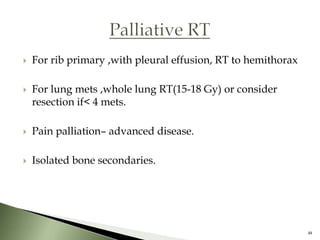
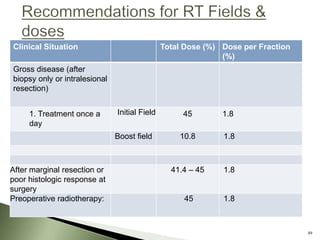
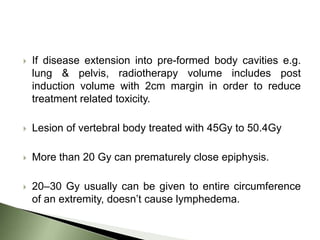
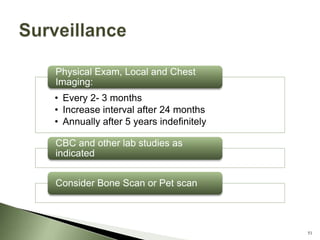
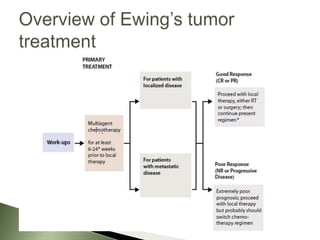
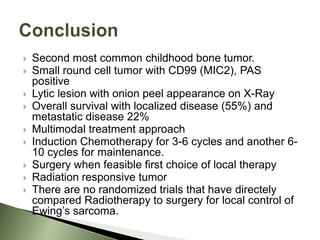


Ewing's sarcoma is the second most common bone tumor in children, primarily affecting those aged 5-25 and characterized by unknown origin, often linked to cytogenetic abnormalities. Diagnosis typically involves a combination of imaging, biopsy, and laboratory tests, with treatment requiring a multidisciplinary approach including chemotherapy, surgery, and radiotherapy. The prognosis varies based on factors such as tumor size and location, with overall survival rates of 55% for localized disease and 22% for metastatic disease.


![Osteosarcoma[2]](https://cdn.slidesharecdn.com/ss_thumbnails/osteosarcoma2-130423123803-phpapp01-thumbnail.jpg?width=640&height=640&fit=bounds)


