ACUTE 
SUPPURATIVE 
OTITIS MEDIA 
BY: 
NEHIL NIGAM
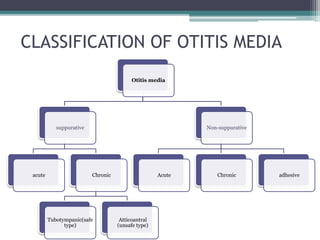
CLASSIFICATION OF OTITIS MEDIA 
Otitis media 
suppurative 
acute Chronic 
Tubotympanic(safe 
type) 
Atticoantral 
(unsafe type) 
Non-suppurative 
Acute Chronic adhesive
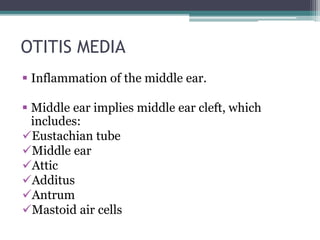
OTITIS MEDIA 
 Inflammation of the middle ear. 
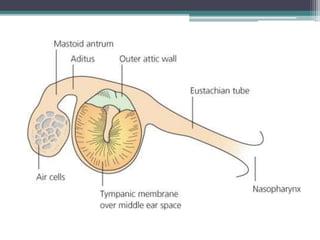
 Middle ear implies middle ear cleft, which 
includes: 
Eustachian tube 
Middle ear 
Attic 
Additus 
Antrum 
Mastoid air cells
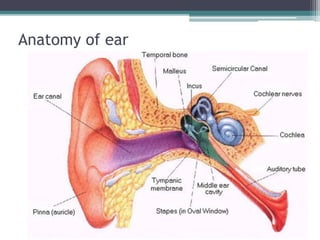
Anatomy of ear
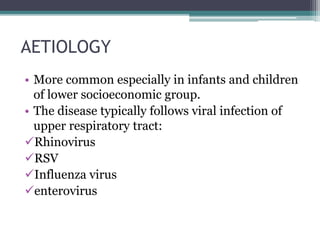
AETIOLOGY 
• More common especially in infants and children 
of lower socioeconomic group. 
• The disease typically follows viral infection of 
upper respiratory tract: 
Rhinovirus 
RSV 
Influenza virus 
enterovirus
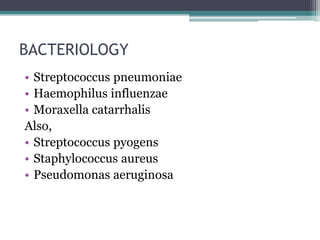
BACTERIOLOGY 
• Streptococcus pneumoniae 
• Haemophilus influenzae 
• Moraxella catarrhalis 
Also, 
• Streptococcus pyogens 
• Staphylococcus aureus 
• Pseudomonas aeruginosa
ROUTES OF INFECTION 
1. Via Eustachian tube. 
2. Via external ear. 
3. Blood-borne.
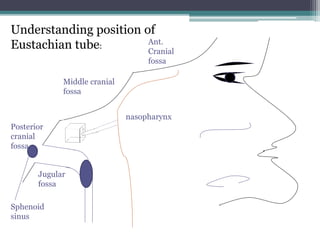
Understanding position of 
Eustachian tube: 
Ant. 
Cranial 
fossa 
Middle cranial 
fossa 
Posterior 
cranial 
fossa 
Jugular 
fossa 
Sphenoid 
sinus 
nasopharynx
Normal functions of Eustachian tube 
• Normally Eustachian tube is closed. 
• Functions: 
Ventilation and thus regulation of middle ear pressure 
Protection against 
Nasopharyngeal reflux of nasopharyngeal 
sound pressure secretions 
Clearance of middle ear secretions
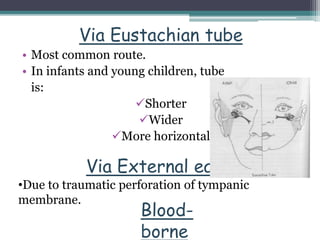
Via Eustachian tube 
• Most common route. 
• In infants and young children, tube 
is: 
Shorter 
Wider 
More horizontal 
Via External ear 
•Due to traumatic perforation of tympanic 
membrane. 
Blood-borne
PREDISPOSING FACTORS 
Anything that interferes with the normal functioning 
of Eustachian tube, predisposes to middle ear 
infection, like: 
1. Recurrent attacks of common cold 
2. URI 
3. Measles, diphtheria or whooping cough 
4. Infection of tonsils and adenoids 
5. Chronic rhinitis 
6. Sinusitis 
7. Nasal allergy 
8. Tumors of nasopharynx, packing of nose or 
nasopharynx for epistaxis 
9. Cleft palate. 
10. Down syndrome
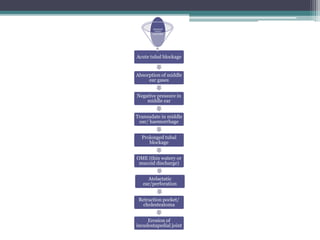
PREDISP 
OSING 
FACTORS 
Acute tubal blockage 
Absorption of middle 
ear gases 
Negative pressure in 
middle ear 
Transudate in middle 
ear/ haemorrhage 
Prolonged tubal 
blockage 
OME (thin watery or 
mucoid discharge) 
Atelactatic 
ear/perforation 
Retraction pocket/ 
cholesteatoma 
Erosion of 
incudostapedial joint
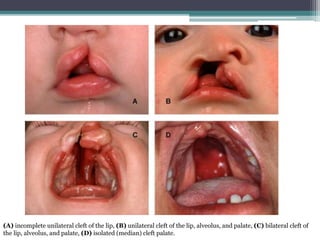
(A) incomplete unilateral cleft of the lip, (B) unilateral cleft of the lip, alveolus, and palate, (C) bilateral cleft of 
the lip, alveolus, and palate, (D) isolated (median) cleft palate.
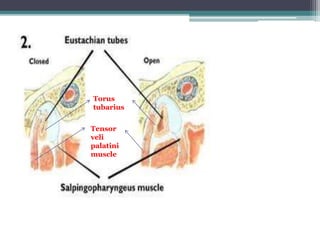
Torus 
tubarius 
Tensor 
veli 
palatini 
muscle
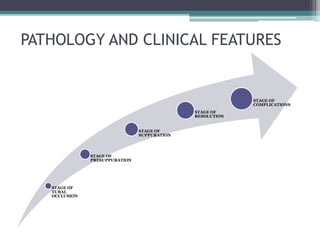
PATHOLOGY AND CLINICAL FEATURES 
STAGE OF 
TUBAL 
OCCLUSION 
STAGE OF 
PRESUPPURATION 
STAGE OF 
SUPPURATION 
STAGE OF 
RESOLUTION 
STAGE OF 
COMPLICATIONS
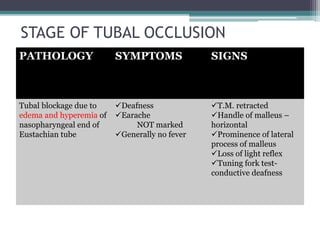
STAGE OF TUBAL OCCLUSION 
PATHOLOGY SYMPTOMS SIGNS 
Tubal blockage due to 
edema and hyperemia of 
nasopharyngeal end of 
Eustachian tube 
Deafness 
Earache 
NOT marked 
Generally no fever 
T.M. retracted 
Handle of malleus – 
horizontal 
Prominence of lateral 
process of malleus 
Loss of light reflex 
Tuning fork test-conductive 
deafness
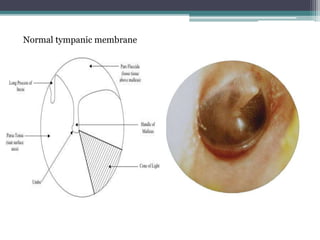
Normal tympanic membrane
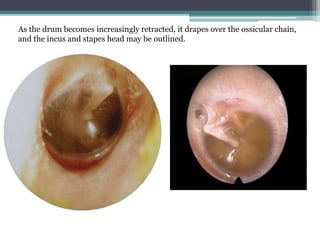
As the drum becomes increasingly retracted, it drapes over the ossicular chain, 

and the incus and stapes head may be outlined.
STAGE OF PRESUPPURATION 
PATHOLOGY SYMPTOMS SIGNS 
Pyogenic organisms 
invade tympanic cavity 
Hyperemia of lining of 
tympanic cavity 
Inflammatory exudate 
in middle ear 
Tympanic membrane-congested 
Marked throbbing 
headache 
Adults – deafness and 
tinnitus 
Children – high degree 
of fever and restlesness 
Congestion of pars 
tensa 
Cartwheel appearance 
of pars tensa 
Later- congestion of 
whole tympanic 
membrane 
Tuning fork test-conductive 
deafness 
found
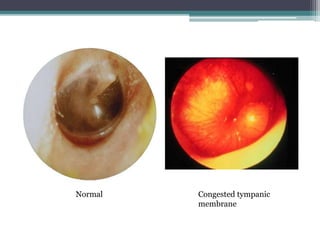
Normal Congested tympanic 
membrane
STAGE OF SUPPURATION 
PATHOLOGY SYMPTOMS SIGNS 
Marked pus formation 
in middle ear 
May extend upto 
mastoid air cells 
Excruciating earache 
Deafness increases 
Children- fever 102- 
103 degree F 
Vomiting 
Convulsions 
Redness and bulging in 
tympanic membrane 
handle of malleus-engulfed 
Yellow spot on T.M. 
where rupture imminent 
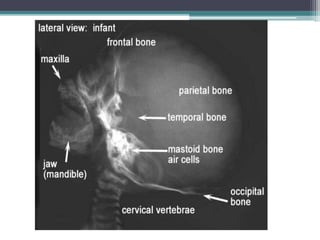
X-ray of mastoid-clouding 
of air cells
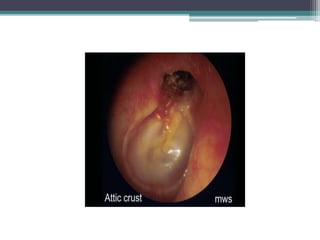
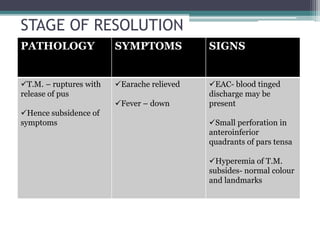
STAGE OF RESOLUTION 
PATHOLOGY SYMPTOMS SIGNS 
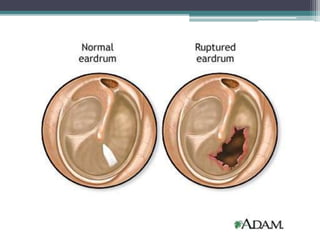
T.M. – ruptures with 
release of pus 
Hence subsidence of 
symptoms 
Earache relieved 
Fever – down 
EAC- blood tinged 
discharge may be 
present 
Small perforation in 
anteroinferior 
quadrants of pars tensa 
Hyperemia of T.M. 
subsides- normal colour 
and landmarks
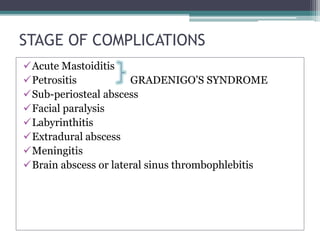
STAGE OF COMPLICATIONS 
Acute Mastoiditis 
Petrositis GRADENIGO’S SYNDROME 
Sub-periosteal abscess 
Facial paralysis 
Labyrinthitis 
Extradural abscess 
Meningitis 
Brain abscess or lateral sinus thrombophlebitis
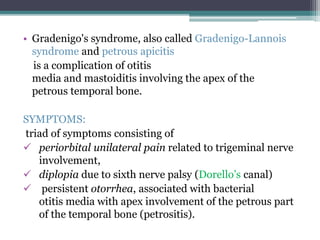
• Gradenigo's syndrome, also called Gradenigo-Lannois 
syndrome and petrous apicitis 
is a complication of otitis 
media and mastoiditis involving the apex of the 
petrous temporal bone. 
SYMPTOMS: 
triad of symptoms consisting of 
 periorbital unilateral pain related to trigeminal nerve 
involvement, 
 diplopia due to sixth nerve palsy (Dorello’s canal) 
 persistent otorrhea, associated with bacterial 
otitis media with apex involvement of the petrous part 
of the temporal bone (petrositis).
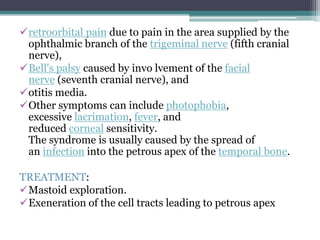
retroorbital pain due to pain in the area supplied by the 
ophthalmic branch of the trigeminal nerve (fifth cranial 
nerve), 
Bell's palsy caused by invo lvement of the facial 
nerve (seventh cranial nerve), and 
otitis media. 
Other symptoms can include photophobia, 
excessive lacrimation, fever, and 
reduced corneal sensitivity. 
The syndrome is usually caused by the spread of 
an infection into the petrous apex of the temporal bone. 
TREATMENT: 
Mastoid exploration. 
Exeneration of the cell tracts leading to petrous apex
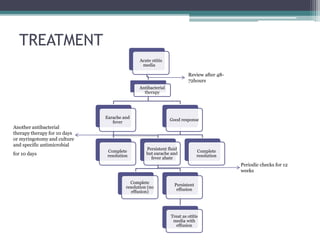
TREATMENT 
Acute otitis 
media 
Antibacterial 
therapy 
Earache and 
fever 
Complete 
resolution 
Review after 48- 
72hours 
Good response 
Persistent fluid 
but earache and 
fever abate 
Complete 
resolution (no 
effusion) 
Persistent 
effusion 
Treat as otitis 
media with 
effusion 
Complete 
resolution 
Another antibacterial 
therapy therapy for 10 days 
or myringotomy and culture 
and specific antimicrobial 
for 10 days 
Periodic checks for 12 
weeks
DRUGS 
 Antimicrobial agents: 
 Amoxicillin 
 Ampicillin 
 co-amoxiclav 
 Erythromycin 
 Cephalosporins 
 Decongestant nasal drops: 
 Ephedrine
Oral nasal decongestants: 
Pseudoephedrine 
Analgesics: 
Paracetamaol 
Ear toilet: 
Dry local heat 
Myringotomy: incising the drum to evacuate 
pus.
• Indications of myringotomy: 
 Bulging drum and acute pain 
 Incomplete resolution 
 drum remains full with persistent conductive 
deafness 
 Persistent effusion beyond 12 weeks 
 Onset of complications like facial nerve 
paralysis or labyrinthitis 
 Serous otitis media 
 Non suppurative otitis media
PREVENTION 
Routine childhood vaccination against: 
pneumococci (with pneumococcal conjugate 
vaccine), 
 H. influenzae type B, and 
influenza 
decreases the incidence of AOM. 
Infants should not sleep with a bottle, and 
elimination of household smoking may decrease 
incidence.
acute suppurative otitis media

acute suppurative otitis media

  • 1.
    ACUTE SUPPURATIVE OTITISMEDIA BY: NEHIL NIGAM
  • 2.
    CLASSIFICATION OF OTITISMEDIA Otitis media suppurative acute Chronic Tubotympanic(safe type) Atticoantral (unsafe type) Non-suppurative Acute Chronic adhesive
  • 3.
    OTITIS MEDIA Inflammation of the middle ear.  Middle ear implies middle ear cleft, which includes: Eustachian tube Middle ear Attic Additus Antrum Mastoid air cells
  • 4.
  • 6.
    AETIOLOGY • Morecommon especially in infants and children of lower socioeconomic group. • The disease typically follows viral infection of upper respiratory tract: Rhinovirus RSV Influenza virus enterovirus
  • 7.
    BACTERIOLOGY • Streptococcuspneumoniae • Haemophilus influenzae • Moraxella catarrhalis Also, • Streptococcus pyogens • Staphylococcus aureus • Pseudomonas aeruginosa
  • 8.
    ROUTES OF INFECTION 1. Via Eustachian tube. 2. Via external ear. 3. Blood-borne.
  • 9.
    Understanding position of Eustachian tube: Ant. Cranial fossa Middle cranial fossa Posterior cranial fossa Jugular fossa Sphenoid sinus nasopharynx
  • 11.
    Normal functions ofEustachian tube • Normally Eustachian tube is closed. • Functions: Ventilation and thus regulation of middle ear pressure Protection against Nasopharyngeal reflux of nasopharyngeal sound pressure secretions Clearance of middle ear secretions
  • 12.
    Via Eustachian tube • Most common route. • In infants and young children, tube is: Shorter Wider More horizontal Via External ear •Due to traumatic perforation of tympanic membrane. Blood-borne
  • 13.
    PREDISPOSING FACTORS Anythingthat interferes with the normal functioning of Eustachian tube, predisposes to middle ear infection, like: 1. Recurrent attacks of common cold 2. URI 3. Measles, diphtheria or whooping cough 4. Infection of tonsils and adenoids 5. Chronic rhinitis 6. Sinusitis 7. Nasal allergy 8. Tumors of nasopharynx, packing of nose or nasopharynx for epistaxis 9. Cleft palate. 10. Down syndrome
  • 14.
    PREDISP OSING FACTORS Acute tubal blockage Absorption of middle ear gases Negative pressure in middle ear Transudate in middle ear/ haemorrhage Prolonged tubal blockage OME (thin watery or mucoid discharge) Atelactatic ear/perforation Retraction pocket/ cholesteatoma Erosion of incudostapedial joint
  • 15.
    (A) incomplete unilateralcleft of the lip, (B) unilateral cleft of the lip, alveolus, and palate, (C) bilateral cleft of the lip, alveolus, and palate, (D) isolated (median) cleft palate.
  • 16.
    Torus tubarius Tensor veli palatini muscle
  • 17.
    PATHOLOGY AND CLINICALFEATURES STAGE OF TUBAL OCCLUSION STAGE OF PRESUPPURATION STAGE OF SUPPURATION STAGE OF RESOLUTION STAGE OF COMPLICATIONS
  • 18.
    STAGE OF TUBALOCCLUSION PATHOLOGY SYMPTOMS SIGNS Tubal blockage due to edema and hyperemia of nasopharyngeal end of Eustachian tube Deafness Earache NOT marked Generally no fever T.M. retracted Handle of malleus – horizontal Prominence of lateral process of malleus Loss of light reflex Tuning fork test-conductive deafness
  • 19.
  • 20.
    As the drumbecomes increasingly retracted, it drapes over the ossicular chain, and the incus and stapes head may be outlined.
  • 21.
    STAGE OF PRESUPPURATION PATHOLOGY SYMPTOMS SIGNS Pyogenic organisms invade tympanic cavity Hyperemia of lining of tympanic cavity Inflammatory exudate in middle ear Tympanic membrane-congested Marked throbbing headache Adults – deafness and tinnitus Children – high degree of fever and restlesness Congestion of pars tensa Cartwheel appearance of pars tensa Later- congestion of whole tympanic membrane Tuning fork test-conductive deafness found
  • 22.
  • 23.
    STAGE OF SUPPURATION PATHOLOGY SYMPTOMS SIGNS Marked pus formation in middle ear May extend upto mastoid air cells Excruciating earache Deafness increases Children- fever 102- 103 degree F Vomiting Convulsions Redness and bulging in tympanic membrane handle of malleus-engulfed Yellow spot on T.M. where rupture imminent X-ray of mastoid-clouding of air cells
  • 26.
    STAGE OF RESOLUTION PATHOLOGY SYMPTOMS SIGNS T.M. – ruptures with release of pus Hence subsidence of symptoms Earache relieved Fever – down EAC- blood tinged discharge may be present Small perforation in anteroinferior quadrants of pars tensa Hyperemia of T.M. subsides- normal colour and landmarks
  • 28.
    STAGE OF COMPLICATIONS Acute Mastoiditis Petrositis GRADENIGO’S SYNDROME Sub-periosteal abscess Facial paralysis Labyrinthitis Extradural abscess Meningitis Brain abscess or lateral sinus thrombophlebitis
  • 29.
    • Gradenigo's syndrome,also called Gradenigo-Lannois syndrome and petrous apicitis is a complication of otitis media and mastoiditis involving the apex of the petrous temporal bone. SYMPTOMS: triad of symptoms consisting of  periorbital unilateral pain related to trigeminal nerve involvement,  diplopia due to sixth nerve palsy (Dorello’s canal)  persistent otorrhea, associated with bacterial otitis media with apex involvement of the petrous part of the temporal bone (petrositis).
  • 30.
    retroorbital pain dueto pain in the area supplied by the ophthalmic branch of the trigeminal nerve (fifth cranial nerve), Bell's palsy caused by invo lvement of the facial nerve (seventh cranial nerve), and otitis media. Other symptoms can include photophobia, excessive lacrimation, fever, and reduced corneal sensitivity. The syndrome is usually caused by the spread of an infection into the petrous apex of the temporal bone. TREATMENT: Mastoid exploration. Exeneration of the cell tracts leading to petrous apex
  • 31.
    TREATMENT Acute otitis media Antibacterial therapy Earache and fever Complete resolution Review after 48- 72hours Good response Persistent fluid but earache and fever abate Complete resolution (no effusion) Persistent effusion Treat as otitis media with effusion Complete resolution Another antibacterial therapy therapy for 10 days or myringotomy and culture and specific antimicrobial for 10 days Periodic checks for 12 weeks
  • 32.
    DRUGS  Antimicrobialagents:  Amoxicillin  Ampicillin  co-amoxiclav  Erythromycin  Cephalosporins  Decongestant nasal drops:  Ephedrine
  • 33.
    Oral nasal decongestants: Pseudoephedrine Analgesics: Paracetamaol Ear toilet: Dry local heat Myringotomy: incising the drum to evacuate pus.
  • 34.
    • Indications ofmyringotomy:  Bulging drum and acute pain  Incomplete resolution  drum remains full with persistent conductive deafness  Persistent effusion beyond 12 weeks  Onset of complications like facial nerve paralysis or labyrinthitis  Serous otitis media  Non suppurative otitis media
  • 35.
    PREVENTION Routine childhoodvaccination against: pneumococci (with pneumococcal conjugate vaccine),  H. influenzae type B, and influenza decreases the incidence of AOM. Infants should not sleep with a bottle, and elimination of household smoking may decrease incidence.