
Arooba Asmat
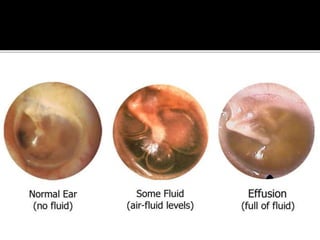
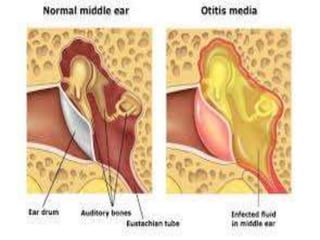
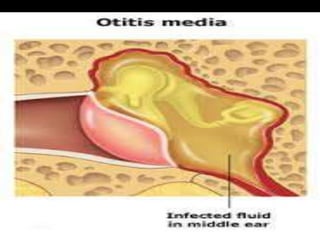
 Acute inflammation of middle ear.
 Caused by PYOGENIC ORGANISMS.
 More common in infants and children f lower
socioeconomic group.
 Follows viral infection of upper respiratory
tract.
 Via eustachian tube
 Via external ear
 Blood borne
 Recurrent attacks of common cold.
 Upper respiratory tract infections.
 Extanthematous fever like measels ,
diaphtheria or wooping cough.
 Infections of tonsils and adenoids.
 Nasal allergy.
 Chronic rhinitis and sinusitis.
 Cleft palate
 Tumors of nasopharynx
 Streptococcus pneumoniae 30%
 Haemophilus influenza 20%
 Moraxella catarrhalis 12%
 Streptococcus pyrogenes
 Staphylococcus aureus
 Pseudomonas aeruginosa
 Stage of tubal occlusion
 Stage of presuppuration
 Stage of suppuration
 Stage of resolution
 Stage of complication
 Oedema and hyperaemia of nasopharyngeal
end of eustacian tube blocks the tube leading
to absorption of air and negative
intratumpanicpressure.
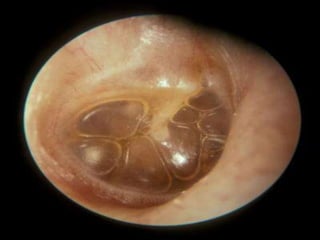
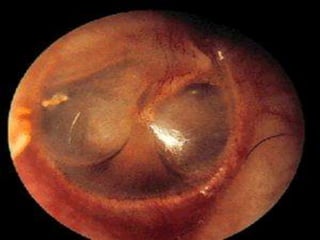
 RetractedT.M
 Symptoms
 Deafness
 Earache
 No fever
 Signs
 RetractedT.M
 Loss of light reflex
 Conductive deafness
 Prolonged
 Hyperaemia of lining
 Inflammatory exudate appears in middle ear
 T.M become ingested
 Symptoms
 Earache
 Disturbed sleep
 Deafness and tinnitus
 Fever in children and restlessness
 Signs
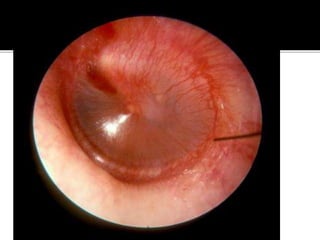
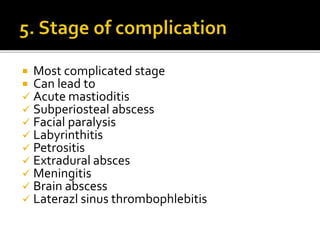
 Congestion of pars tensa
 Leash of blood vessels appear along the handle
of malleus
 Cart-wheel appearance
 T.M become red
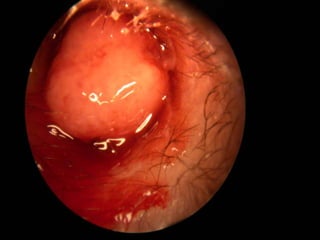
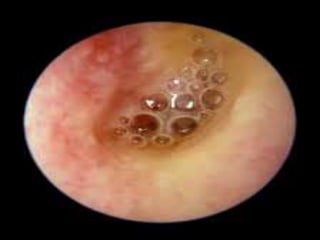
 Formation of pus in middle ear.
 Tympanic membrane starts bulging to the
point of repture
 Symptoms
 Earache
 Deafness increases
 Fever 102-103 F
 Vomiting
 Signs
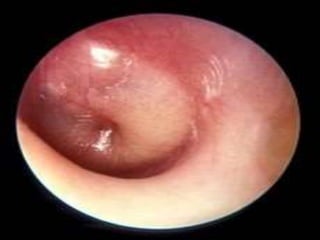
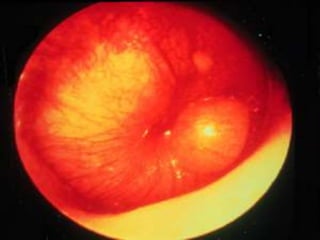
 T.M appears red and bulging
 Loss of landmarks
 Yellow spot onT.M
 Tenderness
 Clotting of air cells because of exudate
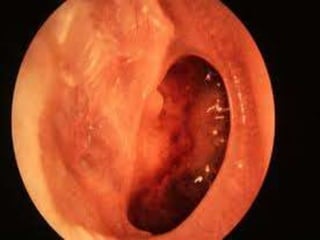
 Tympanic membrane reptures with release of
pus
 Inflamation process begins to resolve
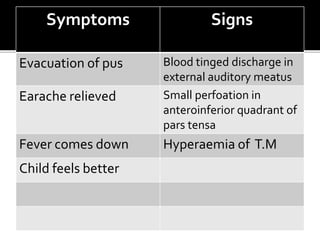
Symptoms Signs
Evacuation of pus Blood tinged discharge in
external auditory meatus
Earache relieved Small perfoation in
anteroinferior quadrant of
pars tensa
Fever comes down Hyperaemia of T.M
Child feels better
 Most complicated stage
 Can lead to
 Acute mastioditis
 Subperiosteal abscess
 Facial paralysis
 Labyrinthitis
 Petrositis
 Extradural absces
 Meningitis
 Brain abscess
 Laterazl sinus thrombophlebitis
Thanks

Acute suppurative otitis media

  • 1.
  • 5.
     Acute inflammationof middle ear.  Caused by PYOGENIC ORGANISMS.
  • 6.
     More commonin infants and children f lower socioeconomic group.  Follows viral infection of upper respiratory tract.
  • 7.
     Via eustachiantube  Via external ear  Blood borne
  • 8.
     Recurrent attacksof common cold.  Upper respiratory tract infections.  Extanthematous fever like measels , diaphtheria or wooping cough.  Infections of tonsils and adenoids.  Nasal allergy.  Chronic rhinitis and sinusitis.  Cleft palate  Tumors of nasopharynx
  • 9.
     Streptococcus pneumoniae30%  Haemophilus influenza 20%  Moraxella catarrhalis 12%  Streptococcus pyrogenes  Staphylococcus aureus  Pseudomonas aeruginosa
  • 10.
     Stage oftubal occlusion  Stage of presuppuration  Stage of suppuration  Stage of resolution  Stage of complication
  • 11.
     Oedema andhyperaemia of nasopharyngeal end of eustacian tube blocks the tube leading to absorption of air and negative intratumpanicpressure.  RetractedT.M
  • 13.
     Symptoms  Deafness Earache  No fever  Signs  RetractedT.M  Loss of light reflex  Conductive deafness
  • 14.
     Prolonged  Hyperaemiaof lining  Inflammatory exudate appears in middle ear  T.M become ingested
  • 15.
     Symptoms  Earache Disturbed sleep  Deafness and tinnitus  Fever in children and restlessness  Signs  Congestion of pars tensa  Leash of blood vessels appear along the handle of malleus  Cart-wheel appearance  T.M become red
  • 16.
     Formation ofpus in middle ear.  Tympanic membrane starts bulging to the point of repture
  • 17.
     Symptoms  Earache Deafness increases  Fever 102-103 F  Vomiting  Signs  T.M appears red and bulging  Loss of landmarks  Yellow spot onT.M  Tenderness  Clotting of air cells because of exudate
  • 18.
     Tympanic membranereptures with release of pus  Inflamation process begins to resolve
  • 19.
    Symptoms Signs Evacuation ofpus Blood tinged discharge in external auditory meatus Earache relieved Small perfoation in anteroinferior quadrant of pars tensa Fever comes down Hyperaemia of T.M Child feels better
  • 20.
     Most complicatedstage  Can lead to  Acute mastioditis  Subperiosteal abscess  Facial paralysis  Labyrinthitis  Petrositis  Extradural absces  Meningitis  Brain abscess  Laterazl sinus thrombophlebitis
  • 30.