Secretory Otitis Media

Dr. Mohammed Shafeeq.
SECRETORY OTITIS MEDIA
●

Synonyms –

–

Serous Otitis Media/

–

Mucoid Otitis Media/

–

●

Otitis media with effusion/

'GLUE EAR'

Hippocrates in 450 BC
SECRETORY OTITIS MEDIA
●

●

It is an insidious onset inflammation of
the middle ear characterized by
accumulation of non-purulent effusion in
the middle ear cleft
Incidence –

Most commonly seen in school going
children (3-8yrs age group)
SECRETORY OTITIS MEDIA

●

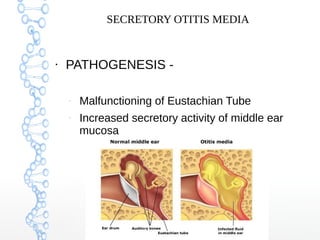
PATHOGENESIS –

–

Malfunctioning of Eustachian Tube
Increased secretory activity of middle ear
mucosa
●

ET dysfunction
–

–

–

Politzer in 1867
Eustachian tube fails to aerate middle ear
and also unable to drain secretions due to
functional ET obstruction (decreased tubal
stiffness/inefficient opening mechanism.
Results in inadequate ventilation of middle
ear with resulting negative middle ear
pressure
●

Increased secretory activity of middle
ear mucosa –

–

Brieger in 1914
As a result of inflammatory response –
hypertrophy of middle ear mucosa –
hyperplasia of mucous glands – Increased
secretions
●

ETIOLOGY –

ET dysfunction : Adenoid hypertrophy,
Chronic rhinitis/sinusitis, Chronic tonsillitis/
Benign/Malignant tumours of oropharynx,
palatal defects

–

Allergy

–

Unresolved AOM

–

Viral infections
●

MICROBIOLOGY Bacteria – S. pneumoniae, H. Influenzae (60%)
Others – Staph. aureus, B. catarrhalis, group A
Streptococcus.

Virus – Respiratory Syncytial Virus (RSV)
●

SYMPTOMS –

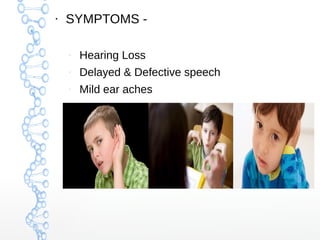
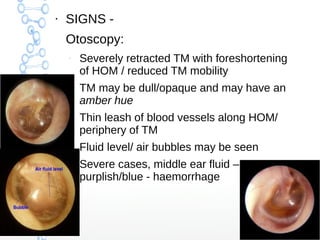
Hearing Loss

–

Delayed & Defective speech

–

Mild ear aches
●

SIGNS Otoscopy:
–

–

–

–

–

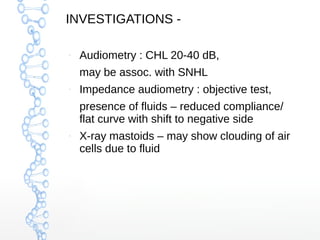
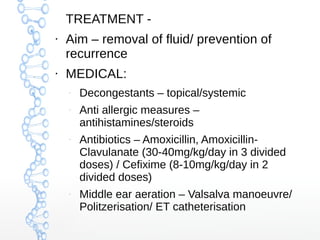
Severely retracted TM with foreshortening
of HOM / reduced TM mobility
TM may be dull/opaque and may have an
amber hue
Thin leash of blood vessels along HOM/
periphery of TM
Fluid level/ air bubbles may be seen
Severe cases, middle ear fluid –
purplish/blue - haemorrhage
INVESTIGATIONS –

Audiometry : CHL 20-40 dB,
may be assoc. with SNHL

–

Impedance audiometry : objective test,
presence of fluids – reduced compliance/
flat curve with shift to negative side

–

X-ray mastoids – may show clouding of air
cells due to fluid
TREATMENT ●

●

Aim – removal of fluid/ prevention of
recurrence
MEDICAL:
–

–

–

–

Decongestants – topical/systemic
Anti allergic measures –
antihistamines/steroids
Antibiotics – Amoxicillin, AmoxicillinClavulanate (30-40mg/kg/day in 3 divided
doses) / Cefixime (8-10mg/kg/day in 2
divided doses)
Middle ear aeration – Valsalva manoeuvre/
Politzerisation/ ET catheterisation
●

SURGICAL –

Myringotomy & aspiration of fluid

–

Ventilation tube/Grommet insertion

–

●

●

Surgical treatment of causative factor
(adenoidectomy / tonsillectomy)

Myringotomy with grommet insertion with/without
adenoidectomy has become ultimate treatment in
chronic SOM.
Indications for surgery in SOM :
–

Chronic effusion more than 3 months

–

CHL > 15 db

–

Nasopharyngeal neoplasms for which RT may
be necessary
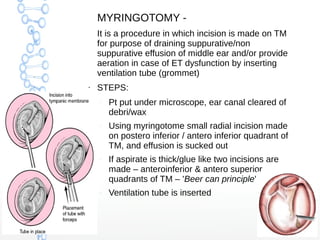
MYRINGOTOMY It is a procedure in which incision is made on TM
for purpose of draining suppurative/non
suppurative effusion of middle ear and/or provide
aeration in case of ET dysfunction by inserting
ventilation tube (grommet)
●

STEPS:
–

–

–

–

Pt put under microscope, ear canal cleared of
debri/wax
Using myringotome small radial incision made
on postero inferior / antero inferior quadrant of
TM, and effusion is sucked out
If aspirate is thick/glue like two incisions are
made – anteroinferior & antero superior
quadrants of TM – 'Beer can principle'
Ventilation tube is inserted
●

Myringotomy – Post OP care :
–

In SOM wad of cotton is left for 24-48hrs

–

TM incision heals rapidly

–

No water entry for atleast 1 week

–

●

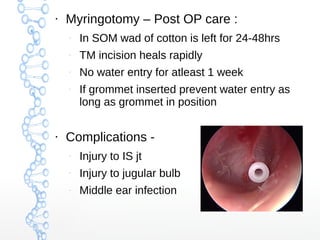
If grommet inserted prevent water entry as
long as grommet in position

Complications –

Injury to IS jt

–

Injury to jugular bulb

–

Middle ear infection
COMPLICATIONS ●

Atelectasis of middle ear

●

Ossicular necrosis

●

Tympanosclerosis

●

Retraction pockets & Cholesteatoma

●

Cholesterol granuloma
Thank You

Secretory otitis media

  • 1.
    Secretory Otitis Media Dr.Mohammed Shafeeq.
  • 2.
    SECRETORY OTITIS MEDIA ● Synonyms– – Serous Otitis Media/ – Mucoid Otitis Media/ – ● Otitis media with effusion/ 'GLUE EAR' Hippocrates in 450 BC
  • 3.
    SECRETORY OTITIS MEDIA ● ● Itis an insidious onset inflammation of the middle ear characterized by accumulation of non-purulent effusion in the middle ear cleft Incidence – Most commonly seen in school going children (3-8yrs age group)
  • 4.
    SECRETORY OTITIS MEDIA ● PATHOGENESIS– – Malfunctioning of Eustachian Tube Increased secretory activity of middle ear mucosa
  • 5.
    ● ET dysfunction – – – Politzer in1867 Eustachian tube fails to aerate middle ear and also unable to drain secretions due to functional ET obstruction (decreased tubal stiffness/inefficient opening mechanism. Results in inadequate ventilation of middle ear with resulting negative middle ear pressure
  • 6.
    ● Increased secretory activityof middle ear mucosa – – Brieger in 1914 As a result of inflammatory response – hypertrophy of middle ear mucosa – hyperplasia of mucous glands – Increased secretions
  • 7.
    ● ETIOLOGY – ET dysfunction: Adenoid hypertrophy, Chronic rhinitis/sinusitis, Chronic tonsillitis/ Benign/Malignant tumours of oropharynx, palatal defects – Allergy – Unresolved AOM – Viral infections
  • 8.
    ● MICROBIOLOGY Bacteria –S. pneumoniae, H. Influenzae (60%) Others – Staph. aureus, B. catarrhalis, group A Streptococcus. Virus – Respiratory Syncytial Virus (RSV)
  • 9.
    ● SYMPTOMS – Hearing Loss – Delayed& Defective speech – Mild ear aches
  • 10.
    ● SIGNS Otoscopy: – – – – – Severely retractedTM with foreshortening of HOM / reduced TM mobility TM may be dull/opaque and may have an amber hue Thin leash of blood vessels along HOM/ periphery of TM Fluid level/ air bubbles may be seen Severe cases, middle ear fluid – purplish/blue - haemorrhage
  • 11.
    INVESTIGATIONS – Audiometry :CHL 20-40 dB, may be assoc. with SNHL – Impedance audiometry : objective test, presence of fluids – reduced compliance/ flat curve with shift to negative side – X-ray mastoids – may show clouding of air cells due to fluid
  • 12.
    TREATMENT ● ● Aim –removal of fluid/ prevention of recurrence MEDICAL: – – – – Decongestants – topical/systemic Anti allergic measures – antihistamines/steroids Antibiotics – Amoxicillin, AmoxicillinClavulanate (30-40mg/kg/day in 3 divided doses) / Cefixime (8-10mg/kg/day in 2 divided doses) Middle ear aeration – Valsalva manoeuvre/ Politzerisation/ ET catheterisation
  • 13.
    ● SURGICAL – Myringotomy &aspiration of fluid – Ventilation tube/Grommet insertion – ● ● Surgical treatment of causative factor (adenoidectomy / tonsillectomy) Myringotomy with grommet insertion with/without adenoidectomy has become ultimate treatment in chronic SOM. Indications for surgery in SOM : – Chronic effusion more than 3 months – CHL > 15 db – Nasopharyngeal neoplasms for which RT may be necessary
  • 14.
    MYRINGOTOMY It isa procedure in which incision is made on TM for purpose of draining suppurative/non suppurative effusion of middle ear and/or provide aeration in case of ET dysfunction by inserting ventilation tube (grommet) ● STEPS: – – – – Pt put under microscope, ear canal cleared of debri/wax Using myringotome small radial incision made on postero inferior / antero inferior quadrant of TM, and effusion is sucked out If aspirate is thick/glue like two incisions are made – anteroinferior & antero superior quadrants of TM – 'Beer can principle' Ventilation tube is inserted
  • 15.
    ● Myringotomy – PostOP care : – In SOM wad of cotton is left for 24-48hrs – TM incision heals rapidly – No water entry for atleast 1 week – ● If grommet inserted prevent water entry as long as grommet in position Complications – Injury to IS jt – Injury to jugular bulb – Middle ear infection
  • 16.
    COMPLICATIONS ● Atelectasis ofmiddle ear ● Ossicular necrosis ● Tympanosclerosis ● Retraction pockets & Cholesteatoma ● Cholesterol granuloma
  • 17.