OTOSCLEROSIS
Mr. Binu Babu
M.Sc. Nursing
Mrs. Jincy Ealias
M.Sc. Nursing
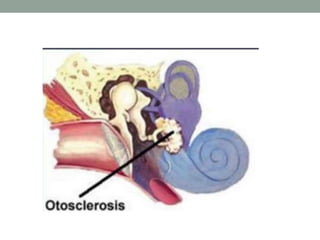
• Otosclerosis is the “hardening of the ear” results from
abnormal bone growth in the middle ear that cause
hearing loss.
• Otosclerosis is a disease of otic capsule in which new
vascular spongy bone formation causes ankylosis or
fixation of the foot plate of the stapes and results in
progressive conductive hearing loss.
• Usually begin in one ear but may eventually affect both
ears.
ETIOLOGY
• Exact cause not known.
• Heredity: Family history of deafness is present in 50% of
cases.
• Sex: females are affected twice as often as males.
• Age of onset: usually occurs between 20-30 years of age.
• Pregnancy: Otosclerosis may be initiated or aggravated by
pregnancy but never caused by it.
• Other factors:
• Metabolic disorder
• Endocrinal disorder
• Focal infection
• Viral infection - measles
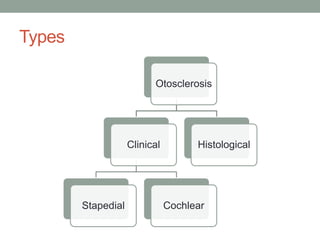
Types
Otosclerosis
Clinical
Stapedial Cochlear
Histological
1. Clinical Otosclerosis
• Two sub types
1. Stapedial Otosclerosis : it causes stapes fixation and results
conductive deafness
1. Cochlear Otosclerosis : it involves region of round window and
may cause senso-neural hearing loss due to liberation of toxic
materials.
2. Histological Otosclerosis: remains asymptomatic and
cause neither conductive nor senso-neural hearing loss,
but is revealed only at postmortem
Stages
1. Early or spongiotic phase (otospongiosis)
2. Late or sclerotic phase
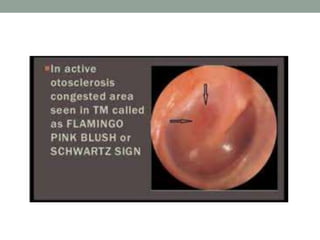
1. Early or spongiotic phase (otospongiosis)
Osteolytic resorption of bone develops a spongy
appearance. It causes vascular dilation bone surrounding
blood vessels. This can be seen grossly as red hue behind
the tympanic membrane termed “Schwartze's sign”.
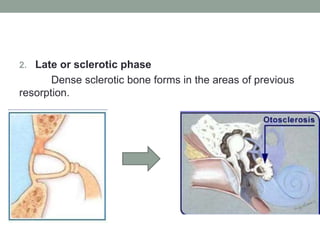
2. Late or sclerotic phase
Dense sclerotic bone forms in the areas of previous
resorption.
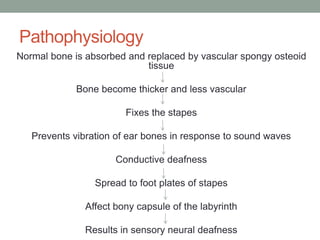
Pathophysiology
Normal bone is absorbed and replaced by vascular spongy osteoid
tissue
Bone become thicker and less vascular
Fixes the stapes
Prevents vibration of ear bones in response to sound waves
Conductive deafness
Spread to foot plates of stapes
Affect bony capsule of the labyrinth
Results in sensory neural deafness
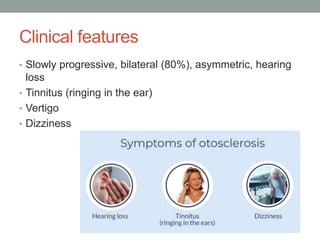
Clinical features
• Slowly progressive, bilateral (80%), asymmetric, hearing
loss
• Tinnitus (ringing in the ear)
• Vertigo
• Dizziness
Diagnostic measures
• History collection
• Physical examination
• Rinne test- Bone conduction is better than air conduction
• Weber test- laterization to affected ear
• Audiogram : to confirm hearing loss
• Otoscopic examination : revels normal tympanic
membrane or Schwartze sign is observed in 10% of
patients.
Management
• No known nonsurgical treatment for otosclerosis.
• The use of sodium fluoride can mature the abnormal spongy
bone growth and prevent the breakdown of the bone tissue.
• Sodium fluoride for 2 years, with calcium , arrests the rapid
progress of otosclerosis.
• (Fluoride ion replaces hydroxyl group in bone forming
fluorapatite. It resistant to resorption. It increases calcification
of new bone and causes maturation of active foci of
otosclerosis)
• Hearing aid if needed
Surgical Management
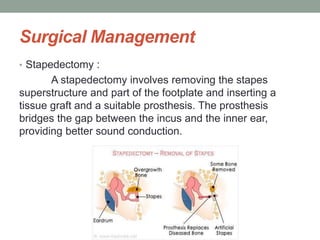
• Stapedectomy :
A stapedectomy involves removing the stapes
superstructure and part of the footplate and inserting a
tissue graft and a suitable prosthesis. The prosthesis
bridges the gap between the incus and the inner ear,
providing better sound conduction.
• Stapedotomy
Performed by drilling a small hole in the stapes
footplate with micro drill or laser, and the insertion of a
piston like prosthesis.
Post operative management
• Operated ear upside for 24 hrs after surgery.
• Monitor vital signs
• Observe for bleeding or drainage.
• Caution in ambulation: as dizziness may occur
• Antibiotic & Analgesic: to control infection & pain
• Medicated ribbon gauze pack removed after 5-7 days
Patient education
• Balance disturbance or true vertigo may occur during the
postoperative period for several days.
• Avoid sudden movements.
• hearing may fade the first few weeks after surgery
because of the blood clot that forms in the ear canal. As
the clot shrinks, hearing will gradually improve.
• Do not lie on operated ear
• Do not blow the nose
• Cough or sneeze with mouth open to reduce pressure on
the ear
• No heavy lifting for at least 2 weeks
• Avoid water entry into ear for 2 months.

Otosclerosis

  • 1.
    OTOSCLEROSIS Mr. Binu Babu M.Sc.Nursing Mrs. Jincy Ealias M.Sc. Nursing
  • 2.
    • Otosclerosis isthe “hardening of the ear” results from abnormal bone growth in the middle ear that cause hearing loss. • Otosclerosis is a disease of otic capsule in which new vascular spongy bone formation causes ankylosis or fixation of the foot plate of the stapes and results in progressive conductive hearing loss. • Usually begin in one ear but may eventually affect both ears.
  • 4.
    ETIOLOGY • Exact causenot known. • Heredity: Family history of deafness is present in 50% of cases. • Sex: females are affected twice as often as males. • Age of onset: usually occurs between 20-30 years of age. • Pregnancy: Otosclerosis may be initiated or aggravated by pregnancy but never caused by it. • Other factors: • Metabolic disorder • Endocrinal disorder • Focal infection • Viral infection - measles
  • 5.
  • 6.
    1. Clinical Otosclerosis •Two sub types 1. Stapedial Otosclerosis : it causes stapes fixation and results conductive deafness 1. Cochlear Otosclerosis : it involves region of round window and may cause senso-neural hearing loss due to liberation of toxic materials. 2. Histological Otosclerosis: remains asymptomatic and cause neither conductive nor senso-neural hearing loss, but is revealed only at postmortem
  • 7.
    Stages 1. Early orspongiotic phase (otospongiosis) 2. Late or sclerotic phase
  • 8.
    1. Early orspongiotic phase (otospongiosis) Osteolytic resorption of bone develops a spongy appearance. It causes vascular dilation bone surrounding blood vessels. This can be seen grossly as red hue behind the tympanic membrane termed “Schwartze's sign”.
  • 10.
    2. Late orsclerotic phase Dense sclerotic bone forms in the areas of previous resorption.
  • 11.
    Pathophysiology Normal bone isabsorbed and replaced by vascular spongy osteoid tissue Bone become thicker and less vascular Fixes the stapes Prevents vibration of ear bones in response to sound waves Conductive deafness Spread to foot plates of stapes Affect bony capsule of the labyrinth Results in sensory neural deafness
  • 12.
    Clinical features • Slowlyprogressive, bilateral (80%), asymmetric, hearing loss • Tinnitus (ringing in the ear) • Vertigo • Dizziness
  • 13.
    Diagnostic measures • Historycollection • Physical examination • Rinne test- Bone conduction is better than air conduction • Weber test- laterization to affected ear • Audiogram : to confirm hearing loss • Otoscopic examination : revels normal tympanic membrane or Schwartze sign is observed in 10% of patients.
  • 14.
    Management • No knownnonsurgical treatment for otosclerosis. • The use of sodium fluoride can mature the abnormal spongy bone growth and prevent the breakdown of the bone tissue. • Sodium fluoride for 2 years, with calcium , arrests the rapid progress of otosclerosis. • (Fluoride ion replaces hydroxyl group in bone forming fluorapatite. It resistant to resorption. It increases calcification of new bone and causes maturation of active foci of otosclerosis) • Hearing aid if needed
  • 15.
    Surgical Management • Stapedectomy: A stapedectomy involves removing the stapes superstructure and part of the footplate and inserting a tissue graft and a suitable prosthesis. The prosthesis bridges the gap between the incus and the inner ear, providing better sound conduction.
  • 16.
    • Stapedotomy Performed bydrilling a small hole in the stapes footplate with micro drill or laser, and the insertion of a piston like prosthesis.
  • 17.
    Post operative management •Operated ear upside for 24 hrs after surgery. • Monitor vital signs • Observe for bleeding or drainage. • Caution in ambulation: as dizziness may occur • Antibiotic & Analgesic: to control infection & pain • Medicated ribbon gauze pack removed after 5-7 days
  • 18.
    Patient education • Balancedisturbance or true vertigo may occur during the postoperative period for several days. • Avoid sudden movements. • hearing may fade the first few weeks after surgery because of the blood clot that forms in the ear canal. As the clot shrinks, hearing will gradually improve. • Do not lie on operated ear • Do not blow the nose • Cough or sneeze with mouth open to reduce pressure on the ear • No heavy lifting for at least 2 weeks • Avoid water entry into ear for 2 months.