CSOM - TUBOTYMPANIC
DEFINITION

       CSOM is a long standing infection of a
part    or   whole     of   middle   ear   cleft
characterised     by    ear   discharge    and
permanent perforation.
EPIDEMIOLOGY
Higher in developing countries
     - poor socioeconomic standards
     - poor nutrition
     - lack of health education

Affects both sexes

All age groups
TYPES
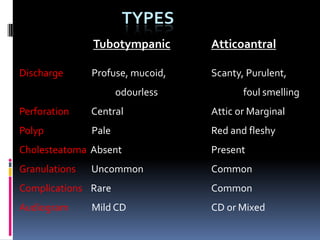
               Tubotympanic       Atticoantral

Discharge      Profuse, mucoid,   Scanty, Purulent,
                      odourless          foul smelling
Perforation    Central            Attic or Marginal
Polyp          Pale               Red and fleshy
Cholesteatoma Absent              Present
Granulations   Uncommon           Common
Complications Rare                Common
Audiogram      Mild CD            CD or Mixed
TUBOTYMPANIC
Aetiology

Sequela of acute otitis media
Ascending infections via eustachian tube from
     infected tonsils, adenoids, infected sinuses
Allergy to ingestants such as milk, egg,fish etc.
PATHOLOGICAL CHANGES

1. Perforation of Pars tensa
     central perforation


2. Middle ear mucosa
     inactive – normal
     active – oedematous and velvety
3. Polyp
     smooth mass of oedematous and
     inflammed mucosa ; pale

4. Ossicular chain

    intact and mobile
    necrosis of long process of incus
5. Tympanosclerosis
     hyalinisation and calcification of
        subepithelial conn. tissue.
        white chalky deposits on
        ossicles, promontory, joints, tendons, ov
        al window and round window.
6. Fibrosis and adhesions
        due to healing process
BACTERIOLOGY

Aerobic
 Ps. aeruginosa
 Proteus
 E coli
 Staph aureus
Anaerobic
 Bact. fragilis
 Anaerobic streptococci
CLINICAL FEATURES
1. Ear discharge
  Non offensive, mucoid or mucopurulent.

  Constant or intermittent.


2. Perforation
   Central - anterior, posterior or inferior to
     handle of malleus.
  Small, medium or large.
3. Hearing loss
     Conductive
     Round window shielding effect
          Hears better in the presence of
          discharge than dry ear.
     Long standing cases – mixed type

4. Middle ear mucosa
     Pale pink and moist – normal
    Red oedematous and swollen - inflammed
INVESTIGATIONS
1. Examination under microscope
     Granulations
     Status of ossicular chain
     Ingrowth of sq epithelium from edges
                    of perforation
     Tympanosclerosis
     Adhesions
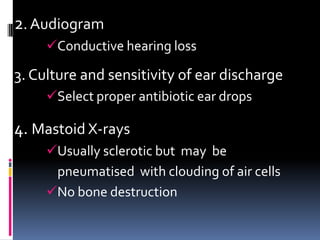
2. Audiogram
     Conductive hearing loss

3. Culture and sensitivity of ear discharge
     Select proper antibiotic ear drops

4. Mastoid X-rays
     Usually sclerotic but may be
      pneumatised with clouding of air cells
     No bone destruction
TREATMENT


to control infection
eliminate ear discharge
correct hearing loss
1. Aural toilet

  - remove discharge and debris from ear

    dry mopping with absorbent cotton buds

    suction clearance under microscope

    irrigation with sterile NS
2. Ear drops
    Neomycin, Polymyxin,
         Chloromycetin, Gentamycin
     Steroids


3. Systemic antibiotics
    a/c exacerbation of c/c infected ear
4. Precautions
    keep water out of ear

    hard nose blowing avoided


5. Treatment of contributory cause
    infected tonsils, adenoids, nasal
     allergy
6. Surgical treatment
    aural polyps and granulations if
          present

7. Reconstructive surgery
    myringoplasty
CSOM TUBO TYMPANIC DISEASE

CSOM TUBO TYMPANIC DISEASE

  • 1.
  • 2.
    DEFINITION CSOM is a long standing infection of a part or whole of middle ear cleft characterised by ear discharge and permanent perforation.
  • 3.
    EPIDEMIOLOGY Higher in developingcountries - poor socioeconomic standards - poor nutrition - lack of health education Affects both sexes All age groups
  • 4.
    TYPES Tubotympanic Atticoantral Discharge Profuse, mucoid, Scanty, Purulent, odourless foul smelling Perforation Central Attic or Marginal Polyp Pale Red and fleshy Cholesteatoma Absent Present Granulations Uncommon Common Complications Rare Common Audiogram Mild CD CD or Mixed
  • 5.
    TUBOTYMPANIC Aetiology Sequela of acuteotitis media Ascending infections via eustachian tube from infected tonsils, adenoids, infected sinuses Allergy to ingestants such as milk, egg,fish etc.
  • 6.
    PATHOLOGICAL CHANGES 1. Perforationof Pars tensa  central perforation 2. Middle ear mucosa  inactive – normal  active – oedematous and velvety
  • 7.
    3. Polyp  smooth mass of oedematous and inflammed mucosa ; pale 4. Ossicular chain  intact and mobile  necrosis of long process of incus
  • 8.
    5. Tympanosclerosis  hyalinisation and calcification of subepithelial conn. tissue.  white chalky deposits on ossicles, promontory, joints, tendons, ov al window and round window. 6. Fibrosis and adhesions  due to healing process
  • 9.
    BACTERIOLOGY Aerobic  Ps. aeruginosa Proteus  E coli  Staph aureus Anaerobic  Bact. fragilis  Anaerobic streptococci
  • 10.
    CLINICAL FEATURES 1. Eardischarge Non offensive, mucoid or mucopurulent. Constant or intermittent. 2. Perforation Central - anterior, posterior or inferior to handle of malleus. Small, medium or large.
  • 11.
    3. Hearing loss Conductive Round window shielding effect Hears better in the presence of discharge than dry ear. Long standing cases – mixed type 4. Middle ear mucosa Pale pink and moist – normal Red oedematous and swollen - inflammed
  • 12.
    INVESTIGATIONS 1. Examination undermicroscope  Granulations  Status of ossicular chain  Ingrowth of sq epithelium from edges of perforation  Tympanosclerosis  Adhesions
  • 13.
    2. Audiogram Conductive hearing loss 3. Culture and sensitivity of ear discharge Select proper antibiotic ear drops 4. Mastoid X-rays Usually sclerotic but may be pneumatised with clouding of air cells No bone destruction
  • 14.
    TREATMENT to control infection eliminateear discharge correct hearing loss
  • 15.
    1. Aural toilet - remove discharge and debris from ear  dry mopping with absorbent cotton buds  suction clearance under microscope  irrigation with sterile NS
  • 16.
    2. Ear drops Neomycin, Polymyxin, Chloromycetin, Gentamycin  Steroids 3. Systemic antibiotics a/c exacerbation of c/c infected ear
  • 17.
    4. Precautions keep water out of ear hard nose blowing avoided 5. Treatment of contributory cause infected tonsils, adenoids, nasal allergy
  • 18.
    6. Surgical treatment aural polyps and granulations if present 7. Reconstructive surgery myringoplasty