AKSHAY B K
11M2303
 It is the acute inflammation of sinus mucosa.
 Most commonly involved sinus is maxillary sinus(ethmoid »frontal
»sphenoid sinuses)
Multisinusitis
 SINUSITIS
Pansinusitis
Open type
 SINUSITIS
Closed type
BACTERIOLOGY:
Streptococcus pneumoniae, Haemophilus influenzae, Moraxella catarrhalis,
Streptococcus pyogenes, Satphylococcus aureus, Klebsiella pneumoniae .Anaerobic
infections are seen in sinusitis of dental origin.
A) EXCITING CAUSES :
 Nasal infections: Viral rhinitis followed by bacterial invasion.
 Swimming and diving: infected water enters sinuses through ostia.
 Trauma: Compound fractures or penetrating injuries.
 Dental infections.
B) PREDISPOSING CAUSES :
LOCAL:
 Obstruction to sinus ventilation and drainage ( DNS,hypertrophic
turbinates, polyp,edema of ostia, neoplasms, edema of ostia).
 Stasis of secretions in nasal cavity( Cystic fibrosis ,enlarged adenoids,
choanal atresia)
 Previous attacks of sinusitis.
GENERAL
 Environment: Cold and wet climate.
 Poor general health: Exanthematous fever (measles,chickenpox),nutritional
deficiencies, systemic disorders.
AETIOLOGY:
 Dental infections(periapical dental abscess, oroantral fistula).
 Viral rhinitis followed by bacterial invasion.
 Diving and swimming.
 Trauma (fractures and penetrating injuries).
Clinical features :
 Constitutional symptoms.
 Headache.
 Pain.
 Tenderness.
 Redness and edema of cheek.
 Nasal discharge.
 Postnasal discharge.
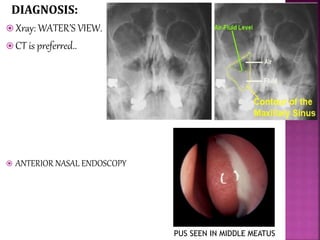
DIAGNOSIS:
 Xray: WATER’S VIEW.
 CT is preferred..
 ANTERIOR NASAL ENDOSCOPY
PUS SEEN IN MIDDLE MEATUS
CT CORONAL SECTION
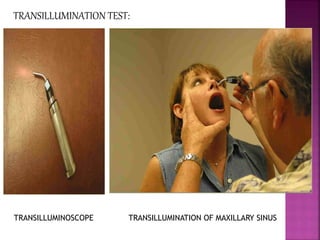
TRANSILLUMINATION OF MAXILLARY SINUS
TRANSILLUMINATION TEST:
TRANSILLUMINOSCOPE
TREATMENT:
MEDICAL
 Antimicrobial drugs( ampicillin/amoxicillin/erythromycin)
 Nasal decongestant drops ( 0.1% oxy or xylometazoline).
 Steam inhalation.
 Analgesics.
 Hot fomentation.
SURGICAL
 Antral lavage
NASAL SPRAYS
AETIOLOGY:
 Viral rhinitis followed by bacterial invasion.
 Diving and swimming.
 Trauma (fractures and penetrating injuries).
 Oedema of middle meatus 2⁰ to ipsilateral maxillary sinus infection.
CLINICAL FEATURES:
 Frontal headache.(OFFICE HEADACHE)
 Tenderness.
 Oedema of upper eyelid.
 Nasal discharge.
DIAGNOSIS:
 Xray: WATER”S VIEW/LATERAL VIEW.
 CT is preferred.
TREATMENT:
MEDICAL
 Antimicrobial drugs.
 Nasal decongestant drops.
 Steam inhalation.
 Analgesics.
 Hot fomentation.
SURGICAL
Trephination of frontal sinus.
AETIOLOGY:
 Associated with infection of other sinuses.
CLINICAL FEATURES:
 Pain.
 Oedema of lids.
 Nasal discharge(middle or superior meatus).
 Swelling of the middle turbinate.
DIAGNOSIS:
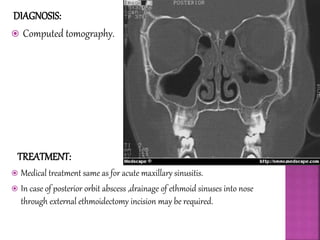
 Computed tomography.
TREATMENT:
 Medical treatment same as for acute maxillary sinusitis.
 In case of posterior orbit abscess ,drainage of ethmoid sinuses into nose
through external ethmoidectomy incision may be required.
AETIOLOGY:
 As a part of pansinusitis.
 Associated with infection of posterior ethmoid sinuses.
CLINICAL FEATURES:
 Headache.
 Postnasal discharge.
DIAGNOSIS:
 Xray/CT.
 TREATMENT:
 Medical treatment same as for acute maxillary sinusitis.
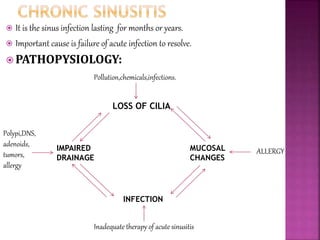
 It is the sinus infection lasting for months or years.
 Important cause is failure of acute infection to resolve.
 PATHOPYSIOLOGY:
LOSS OF CILIA
Pollution,chemicals,infections.
IMPAIRED
DRAINAGE
Polypi,DNS,
adenoids,
tumors,
allergy
INFECTION
Inadequate therapy of acute sinusitis
MUCOSAL
CHANGES
ALLERGY
PATHOLOGY:
 Destruction and healing of sinus mucosa.
 Hypertrophic sinusitis.
 Atrophic sinusitis.
 Submucosa infiltrated with lymphocytes and plasma cells.
CLINICAL FEATURES:
 Similar to acute sinusitis but of lesser severity.
 Purulent nasal discharge is the commonest complaint.
 Foul smelling discharge( anerobic infections).
 Local pain and tenderness are not marked.
 Nasal stuffiness and anosmia(in some patients).
DIAGNOSIS:
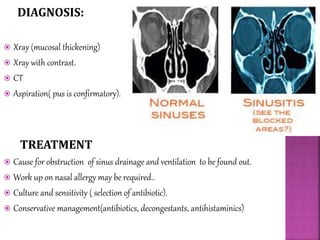
 Xray (mucosal thickening)
 Xray with contrast.
 CT
 Aspiration( pus is confirmatory).
TREATMENT
 Cause for obstruction of sinus drainage and ventilation to be found out.
 Work up on nasal allergy may be required..
 Culture and sensitivity ( selection of antibiotic).
 Conservative management(antibiotics, decongestants, antihistaminics)
SURGICAL TREATMENT:
 CHRONIC MAXILLARY SINUSITIS
 Antral puncture and irrigation.
 Intranasal antrostomy.
 Caldwell-luc operation.
ANTRAL PUNCTURE
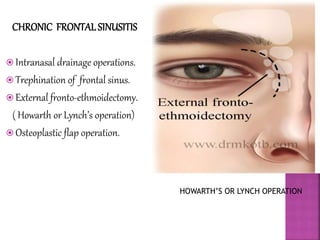
CHRONIC FRONTALSINUSITIS
 Intranasal drainage operations.
 Trephination of frontal sinus.
 External fronto-ethmoidectomy.
( Howarth or Lynch’s operation)
 Osteoplastic flap operation.
HOWARTH’S OR LYNCH OPERATION
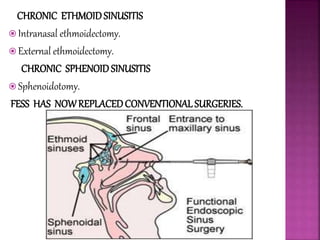
CHRONIC ETHMOIDSINUSITIS
 Intranasal ethmoidectomy.
 External ethmoidectomy.
CHRONIC SPHENOIDSINUSITIS
 Sphenoidotomy.
FESS HAS NOWREPLACEDCONVENTIONAL SURGERIES.
Acute and chronic sinusitis

Acute and chronic sinusitis

  • 1.
  • 3.
     It isthe acute inflammation of sinus mucosa.  Most commonly involved sinus is maxillary sinus(ethmoid »frontal »sphenoid sinuses) Multisinusitis  SINUSITIS Pansinusitis Open type  SINUSITIS Closed type
  • 4.
    BACTERIOLOGY: Streptococcus pneumoniae, Haemophilusinfluenzae, Moraxella catarrhalis, Streptococcus pyogenes, Satphylococcus aureus, Klebsiella pneumoniae .Anaerobic infections are seen in sinusitis of dental origin. A) EXCITING CAUSES :  Nasal infections: Viral rhinitis followed by bacterial invasion.  Swimming and diving: infected water enters sinuses through ostia.  Trauma: Compound fractures or penetrating injuries.  Dental infections.
  • 5.
    B) PREDISPOSING CAUSES: LOCAL:  Obstruction to sinus ventilation and drainage ( DNS,hypertrophic turbinates, polyp,edema of ostia, neoplasms, edema of ostia).  Stasis of secretions in nasal cavity( Cystic fibrosis ,enlarged adenoids, choanal atresia)  Previous attacks of sinusitis. GENERAL  Environment: Cold and wet climate.  Poor general health: Exanthematous fever (measles,chickenpox),nutritional deficiencies, systemic disorders.
  • 7.
    AETIOLOGY:  Dental infections(periapicaldental abscess, oroantral fistula).  Viral rhinitis followed by bacterial invasion.  Diving and swimming.  Trauma (fractures and penetrating injuries). Clinical features :  Constitutional symptoms.  Headache.  Pain.  Tenderness.  Redness and edema of cheek.  Nasal discharge.  Postnasal discharge.
  • 8.
    DIAGNOSIS:  Xray: WATER’SVIEW.  CT is preferred..  ANTERIOR NASAL ENDOSCOPY PUS SEEN IN MIDDLE MEATUS
  • 9.
  • 10.
    TRANSILLUMINATION OF MAXILLARYSINUS TRANSILLUMINATION TEST: TRANSILLUMINOSCOPE
  • 11.
    TREATMENT: MEDICAL  Antimicrobial drugs(ampicillin/amoxicillin/erythromycin)  Nasal decongestant drops ( 0.1% oxy or xylometazoline).  Steam inhalation.  Analgesics.  Hot fomentation. SURGICAL  Antral lavage NASAL SPRAYS
  • 12.
    AETIOLOGY:  Viral rhinitisfollowed by bacterial invasion.  Diving and swimming.  Trauma (fractures and penetrating injuries).  Oedema of middle meatus 2⁰ to ipsilateral maxillary sinus infection. CLINICAL FEATURES:  Frontal headache.(OFFICE HEADACHE)  Tenderness.  Oedema of upper eyelid.  Nasal discharge.
  • 13.
    DIAGNOSIS:  Xray: WATER”SVIEW/LATERAL VIEW.  CT is preferred. TREATMENT: MEDICAL  Antimicrobial drugs.  Nasal decongestant drops.  Steam inhalation.  Analgesics.  Hot fomentation.
  • 14.
  • 15.
    AETIOLOGY:  Associated withinfection of other sinuses. CLINICAL FEATURES:  Pain.  Oedema of lids.  Nasal discharge(middle or superior meatus).  Swelling of the middle turbinate.
  • 16.
    DIAGNOSIS:  Computed tomography. TREATMENT: Medical treatment same as for acute maxillary sinusitis.  In case of posterior orbit abscess ,drainage of ethmoid sinuses into nose through external ethmoidectomy incision may be required.
  • 17.
    AETIOLOGY:  As apart of pansinusitis.  Associated with infection of posterior ethmoid sinuses. CLINICAL FEATURES:  Headache.  Postnasal discharge. DIAGNOSIS:  Xray/CT.  TREATMENT:  Medical treatment same as for acute maxillary sinusitis.
  • 18.
     It isthe sinus infection lasting for months or years.  Important cause is failure of acute infection to resolve.  PATHOPYSIOLOGY: LOSS OF CILIA Pollution,chemicals,infections. IMPAIRED DRAINAGE Polypi,DNS, adenoids, tumors, allergy INFECTION Inadequate therapy of acute sinusitis MUCOSAL CHANGES ALLERGY
  • 19.
    PATHOLOGY:  Destruction andhealing of sinus mucosa.  Hypertrophic sinusitis.  Atrophic sinusitis.  Submucosa infiltrated with lymphocytes and plasma cells. CLINICAL FEATURES:  Similar to acute sinusitis but of lesser severity.  Purulent nasal discharge is the commonest complaint.  Foul smelling discharge( anerobic infections).  Local pain and tenderness are not marked.  Nasal stuffiness and anosmia(in some patients).
  • 20.
    DIAGNOSIS:  Xray (mucosalthickening)  Xray with contrast.  CT  Aspiration( pus is confirmatory). TREATMENT  Cause for obstruction of sinus drainage and ventilation to be found out.  Work up on nasal allergy may be required..  Culture and sensitivity ( selection of antibiotic).  Conservative management(antibiotics, decongestants, antihistaminics)
  • 21.
    SURGICAL TREATMENT:  CHRONICMAXILLARY SINUSITIS  Antral puncture and irrigation.  Intranasal antrostomy.  Caldwell-luc operation. ANTRAL PUNCTURE
  • 22.
    CHRONIC FRONTALSINUSITIS  Intranasaldrainage operations.  Trephination of frontal sinus.  External fronto-ethmoidectomy. ( Howarth or Lynch’s operation)  Osteoplastic flap operation. HOWARTH’S OR LYNCH OPERATION
  • 23.
    CHRONIC ETHMOIDSINUSITIS  Intranasalethmoidectomy.  External ethmoidectomy. CHRONIC SPHENOIDSINUSITIS  Sphenoidotomy. FESS HAS NOWREPLACEDCONVENTIONAL SURGERIES.