ACTIVITY BASED
LEARNING
VANISREE . S
20UED053
PHYSICAL SCIENCE AND ENGLISH
Click to add text
ACTIVITY
 The quality or state of being active.
 The behavior or actions of a particular
kind
 Something that is done as work or for
a particular purpose.
 Something that is done for pleasure
and that usually involves a group of
people.
Example for activity
 Acting
 Performing
 Demonstration
 Playing a game
 Writing
 Thinking
 Questioning
 Operating something etc…
Activity based learning
 An activity or activities used in an
educational process to make student
learn
 Activity based learning is the
methodology where the children of
different ages are grouped together in
one class and learn at their own pace
through teacher- facilitated exercises.
Continues…
 Learning through and from activities.
 Activity based learning means that the
teacher incorporates activities of some
type in teaching to make students
learn.
 Using an activity or activities as a
base for learning.
History of ABL
 Activity based learning started by
British man David Horsburgh.
 Activity based learning started during
world war II.
 David Horsburgh started teaching in
Rishi valley school and he joined in
the British council and worked for
many year.
 After voluntary retirement he started
Neel bagh school in kolar district.
Continuous…
 Neel Bagh school has a diverse
curriculum which included music,
carpentry, sewing, gardening and
school subjects.
 Teaching materials were
systematically planned with different
learning activities.
 He was the stepping stone for Activity
based learning.
Activity based learning in primary
education
 Activity based teaching method, involves
learning through listening, thinking,
understanding, planning, communicating,
interacting, cooperating, playing, all in joy
manner.
 It develops effective relationship between the
teacher and student.
 The idea of activity based learning is rooted
in the common nation that children are active
learners rather than passive recipients of the
information.
 If the child is provided the opportunity to
explore by their own and provided an
optimum learning environment then the
learning becomes joyful and long-lasting.
Continuous…
 It is comprehensive action oriented program.
 It aims at bringing out the hidden skills and to improve
knowledge and all round development of childrens.
 The ABL in is contemporary from was first undertaken
by the Chennai corporation in 13 schools on a trial
basis in 2003, has been adopted by all the 270 primary
school in the district.
 First designed and tested by the Rishi valley school in
Andhra Pradesh in the 90’s, the activity based learning
systems has been successfully implemented in several
Indian states.
 Tamil Nadu UNICEF supported the Chennai
cooperation to introduce the ABL methods in the
Government schools.
Types of Activity based
learning
 Dramatization
 Quizzes
 Group discussion
 Role play
 Educational game
 Brainstorming
 Problem solving
 Field work
 Experimentation
 Concept mapping
 Debates
 Discovery learning
 Project
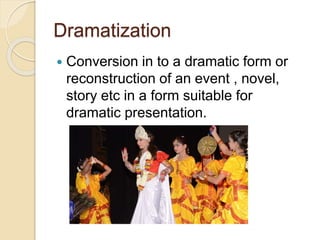
Dramatization
 Conversion in to a dramatic form or
reconstruction of an event , novel,
story etc in a form suitable for
dramatic presentation.
Quizzes
 Competitive activity in which
participants should give the answers
to he question in a prescribed span of
time following some pre- determined
rules.
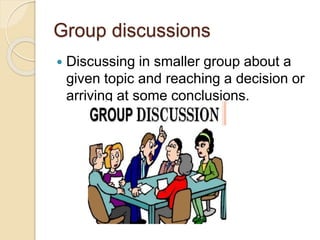
Group discussions
 Discussing in smaller group about a
given topic and reaching a decision or
arriving at some conclusions.
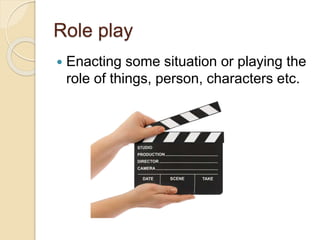
Role play
 Enacting some situation or playing the
role of things, person, characters etc.
Educational Games
 These are games that are designed to
help student to learn about certain
subjects, enhance concepts,
understand different contents, learn a
skill etc.
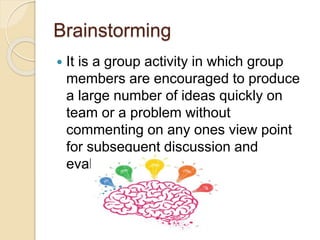
Brainstorming
 It is a group activity in which group
members are encouraged to produce
a large number of ideas quickly on
team or a problem without
commenting on any ones view point
for subsequent discussion and
evaluation.
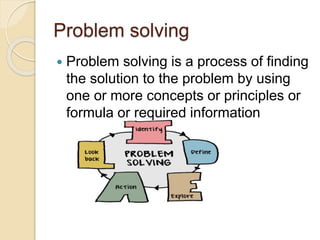
Problem solving
 Problem solving is a process of finding
the solution to the problem by using
one or more concepts or principles or
formula or required information
Field work
 Going to the real life situation for
observing the phenomenon, collect
relevant data, process and analyze
the data and arrive at conclusions.
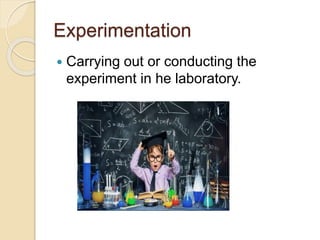
Experimentation
 Carrying out or conducting the
experiment in he laboratory.
Concept mapping
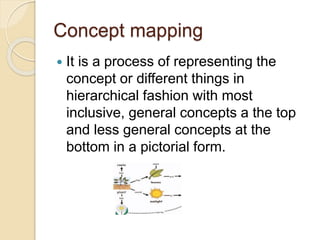
 It is a process of representing the
concept or different things in
hierarchical fashion with most
inclusive, general concepts a the top
and less general concepts at the
bottom in a pictorial form.
Debates
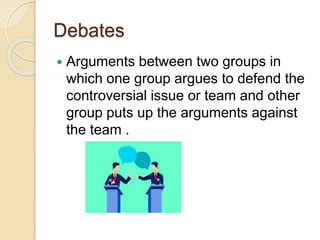
 Arguments between two groups in
which one group argues to defend the
controversial issue or team and other
group puts up the arguments against
the team .
Discovery learning
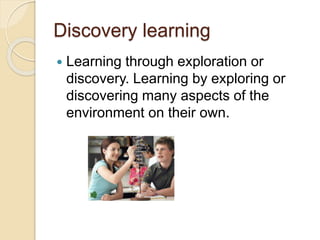
 Learning through exploration or
discovery. Learning by exploring or
discovering many aspects of the
environment on their own.
Project
 It is a practical unit of activity having
educational value and aimed at
achieving one or more definite goals
of understanding, involves
investigation and solution of problems,
planned and carried out to completion
by pupils in a natural ‘real life’
situation.
Needs of Activity based
learning
 Children can learn more when they
learn in their surrounding
environment.
 Activity based learning helps students
learn and retain information.
 Its encourage students to get
physically and mentally involved in the
learning process.
 It used to learn on their own.
 It used for actively participate and
involve in learning.
How to Organize of Activity
based learning
 Decide Instructional Goals
 Understand the learners cognitive
level and characteristics.
 Consider the nature of the subject.
 Know the time available for achieving
the instructional goals.
 Availability of human and non human
resources.
 Select or design the suitable activities.
Continuous…
 Prepare for implementing that in the
class.
 Provide for link between different
activities and previous knowledge.
 Implement it in the classroom.
 Follow it up and bring about required
changes in the activities for better use.
Uses of ABL
 Reinforces important material,
concepts and skills.
 Provide more frequent and immediate
feedback to student.
 Provides students with an opportunity
to think about, talk about and process
course material.
 Create personal connection to the
material for students, which increases
their motivation to learn.
Thank you

Activity based learning

  • 1.
    ACTIVITY BASED LEARNING VANISREE .S 20UED053 PHYSICAL SCIENCE AND ENGLISH Click to add text
  • 2.
    ACTIVITY  The qualityor state of being active.  The behavior or actions of a particular kind  Something that is done as work or for a particular purpose.  Something that is done for pleasure and that usually involves a group of people.
  • 3.
    Example for activity Acting  Performing  Demonstration  Playing a game  Writing  Thinking  Questioning  Operating something etc…
  • 4.
    Activity based learning An activity or activities used in an educational process to make student learn  Activity based learning is the methodology where the children of different ages are grouped together in one class and learn at their own pace through teacher- facilitated exercises.
  • 5.
    Continues…  Learning throughand from activities.  Activity based learning means that the teacher incorporates activities of some type in teaching to make students learn.  Using an activity or activities as a base for learning.
  • 6.
    History of ABL Activity based learning started by British man David Horsburgh.  Activity based learning started during world war II.  David Horsburgh started teaching in Rishi valley school and he joined in the British council and worked for many year.  After voluntary retirement he started Neel bagh school in kolar district.
  • 7.
    Continuous…  Neel Baghschool has a diverse curriculum which included music, carpentry, sewing, gardening and school subjects.  Teaching materials were systematically planned with different learning activities.  He was the stepping stone for Activity based learning.
  • 8.
    Activity based learningin primary education  Activity based teaching method, involves learning through listening, thinking, understanding, planning, communicating, interacting, cooperating, playing, all in joy manner.  It develops effective relationship between the teacher and student.  The idea of activity based learning is rooted in the common nation that children are active learners rather than passive recipients of the information.  If the child is provided the opportunity to explore by their own and provided an optimum learning environment then the learning becomes joyful and long-lasting.
  • 9.
    Continuous…  It iscomprehensive action oriented program.  It aims at bringing out the hidden skills and to improve knowledge and all round development of childrens.  The ABL in is contemporary from was first undertaken by the Chennai corporation in 13 schools on a trial basis in 2003, has been adopted by all the 270 primary school in the district.  First designed and tested by the Rishi valley school in Andhra Pradesh in the 90’s, the activity based learning systems has been successfully implemented in several Indian states.  Tamil Nadu UNICEF supported the Chennai cooperation to introduce the ABL methods in the Government schools.
  • 10.
    Types of Activitybased learning  Dramatization  Quizzes  Group discussion  Role play  Educational game  Brainstorming  Problem solving  Field work  Experimentation  Concept mapping  Debates  Discovery learning  Project
  • 11.
    Dramatization  Conversion into a dramatic form or reconstruction of an event , novel, story etc in a form suitable for dramatic presentation.
  • 12.
    Quizzes  Competitive activityin which participants should give the answers to he question in a prescribed span of time following some pre- determined rules.
  • 13.
    Group discussions  Discussingin smaller group about a given topic and reaching a decision or arriving at some conclusions.
  • 14.
    Role play  Enactingsome situation or playing the role of things, person, characters etc.
  • 15.
    Educational Games  Theseare games that are designed to help student to learn about certain subjects, enhance concepts, understand different contents, learn a skill etc.
  • 16.
    Brainstorming  It isa group activity in which group members are encouraged to produce a large number of ideas quickly on team or a problem without commenting on any ones view point for subsequent discussion and evaluation.
  • 17.
    Problem solving  Problemsolving is a process of finding the solution to the problem by using one or more concepts or principles or formula or required information
  • 18.
    Field work  Goingto the real life situation for observing the phenomenon, collect relevant data, process and analyze the data and arrive at conclusions.
  • 19.
    Experimentation  Carrying outor conducting the experiment in he laboratory.
  • 20.
    Concept mapping  Itis a process of representing the concept or different things in hierarchical fashion with most inclusive, general concepts a the top and less general concepts at the bottom in a pictorial form.
  • 21.
    Debates  Arguments betweentwo groups in which one group argues to defend the controversial issue or team and other group puts up the arguments against the team .
  • 22.
    Discovery learning  Learningthrough exploration or discovery. Learning by exploring or discovering many aspects of the environment on their own.
  • 23.
    Project  It isa practical unit of activity having educational value and aimed at achieving one or more definite goals of understanding, involves investigation and solution of problems, planned and carried out to completion by pupils in a natural ‘real life’ situation.
  • 24.
    Needs of Activitybased learning  Children can learn more when they learn in their surrounding environment.  Activity based learning helps students learn and retain information.  Its encourage students to get physically and mentally involved in the learning process.  It used to learn on their own.  It used for actively participate and involve in learning.
  • 25.
    How to Organizeof Activity based learning  Decide Instructional Goals  Understand the learners cognitive level and characteristics.  Consider the nature of the subject.  Know the time available for achieving the instructional goals.  Availability of human and non human resources.  Select or design the suitable activities.
  • 26.
    Continuous…  Prepare forimplementing that in the class.  Provide for link between different activities and previous knowledge.  Implement it in the classroom.  Follow it up and bring about required changes in the activities for better use.
  • 27.
    Uses of ABL Reinforces important material, concepts and skills.  Provide more frequent and immediate feedback to student.  Provides students with an opportunity to think about, talk about and process course material.  Create personal connection to the material for students, which increases their motivation to learn.
  • 28.