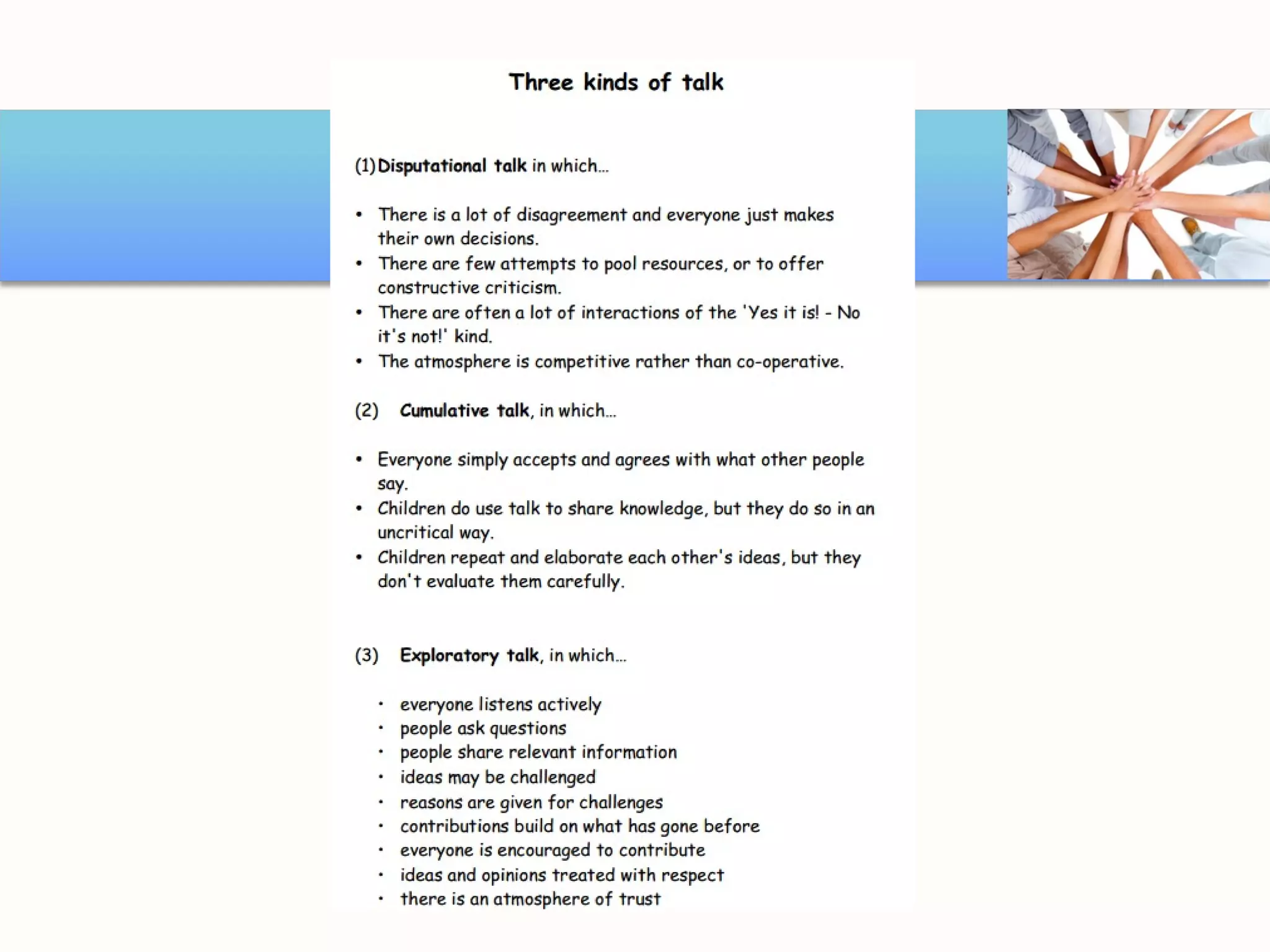
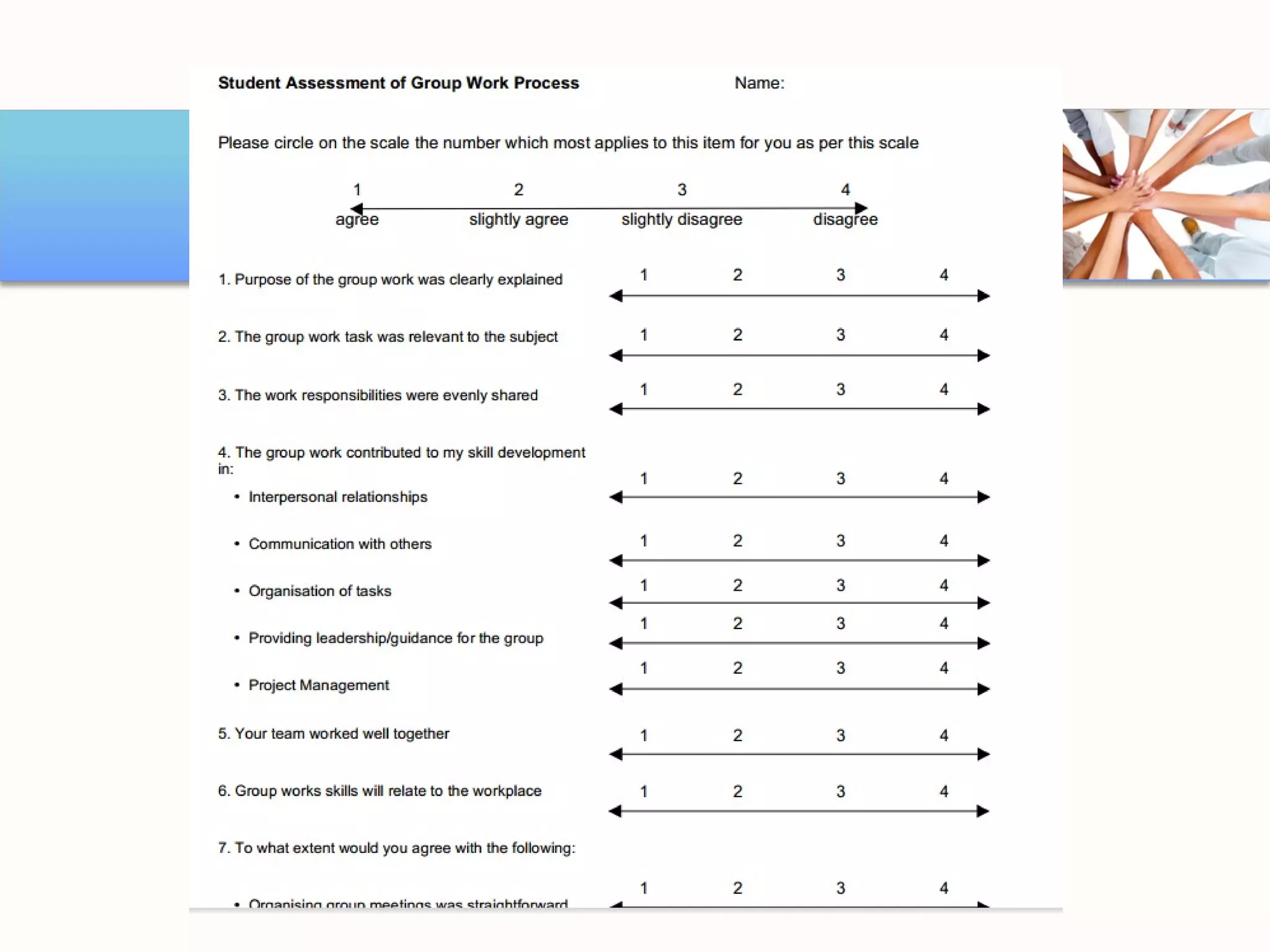



Strategies
 to encourage students to
 work effectively in teams
Daniela Munca-Aftenev, ETRC Spring 2013 School
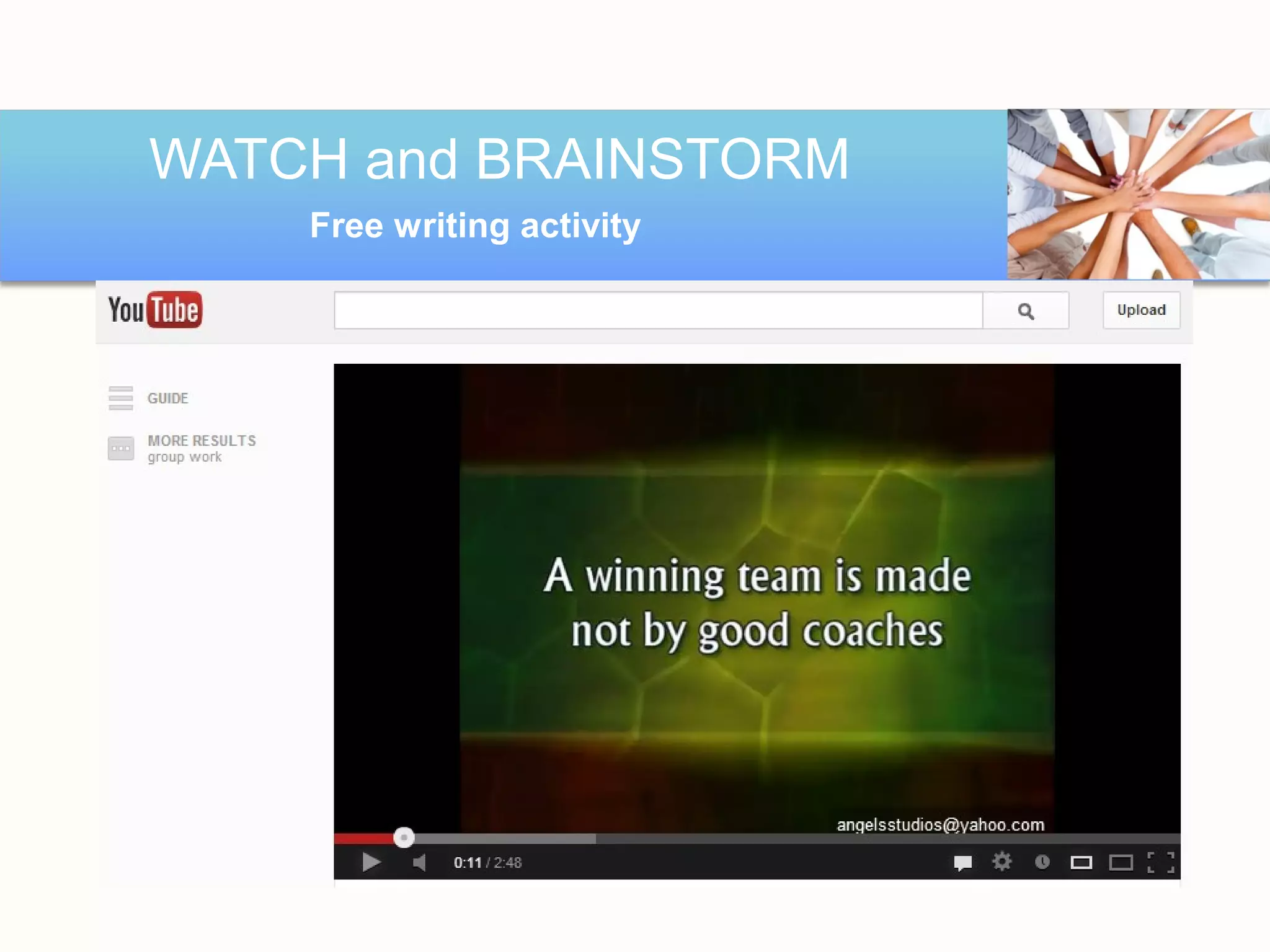
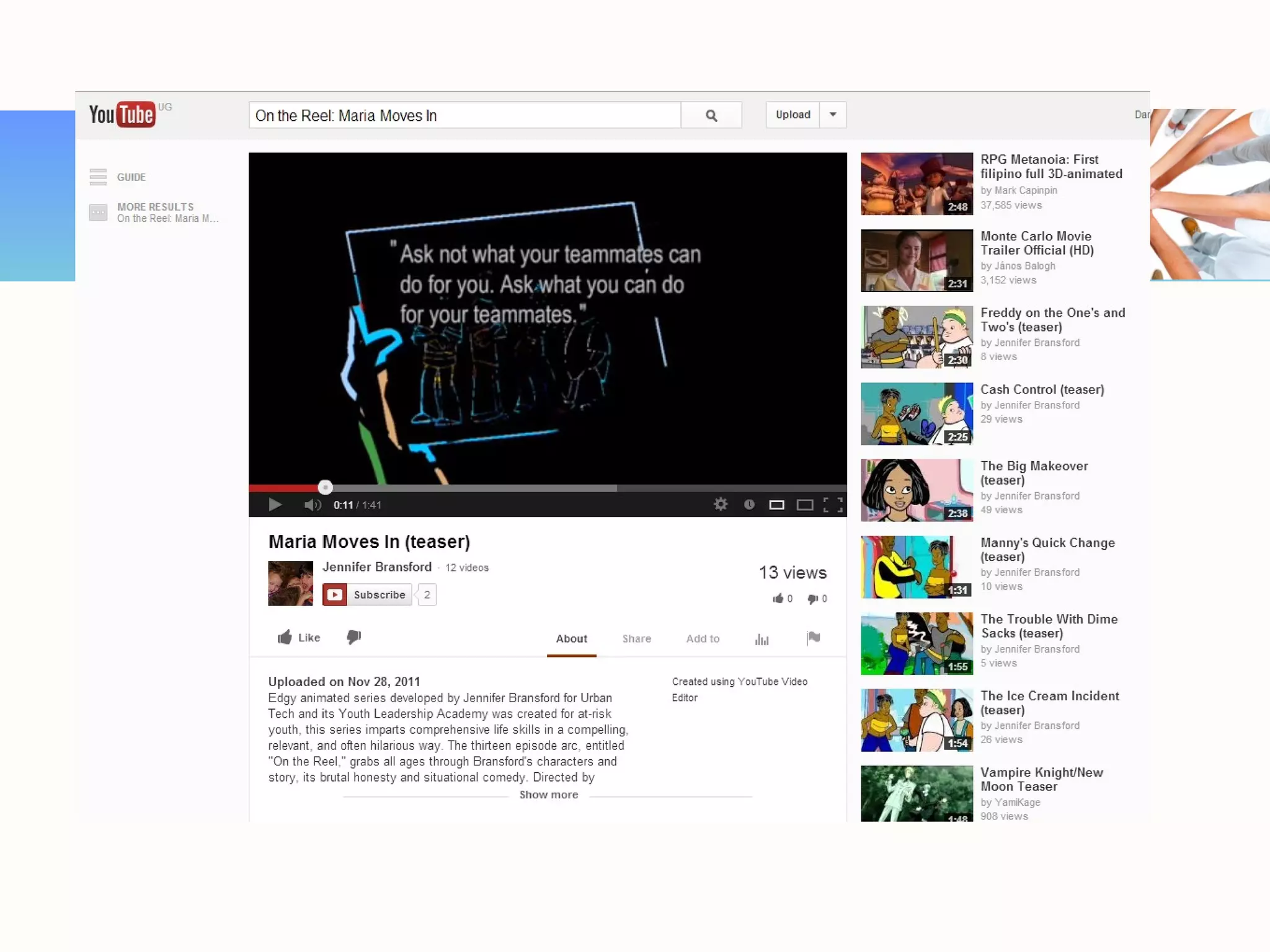
WATCH and BRAINSTORM
      Free writing activity


How is the video connected to teaching
              students ?
Task 1
• Work in groups of 5
• Roles: note taker, artist, Web expert, creative
  coordinator, content coorinator
• “Best Teacher Website”
• Design the website: layout, structure,
  components
• Create a name
• How the website will improve the overall
  collaboration of teachers with students and
  school administration
Task 2


• Work in 2 teams per 5 members
• 2 Evaluators who will observe the
  teams
• Build the tallest structure possible
  using the materials provided
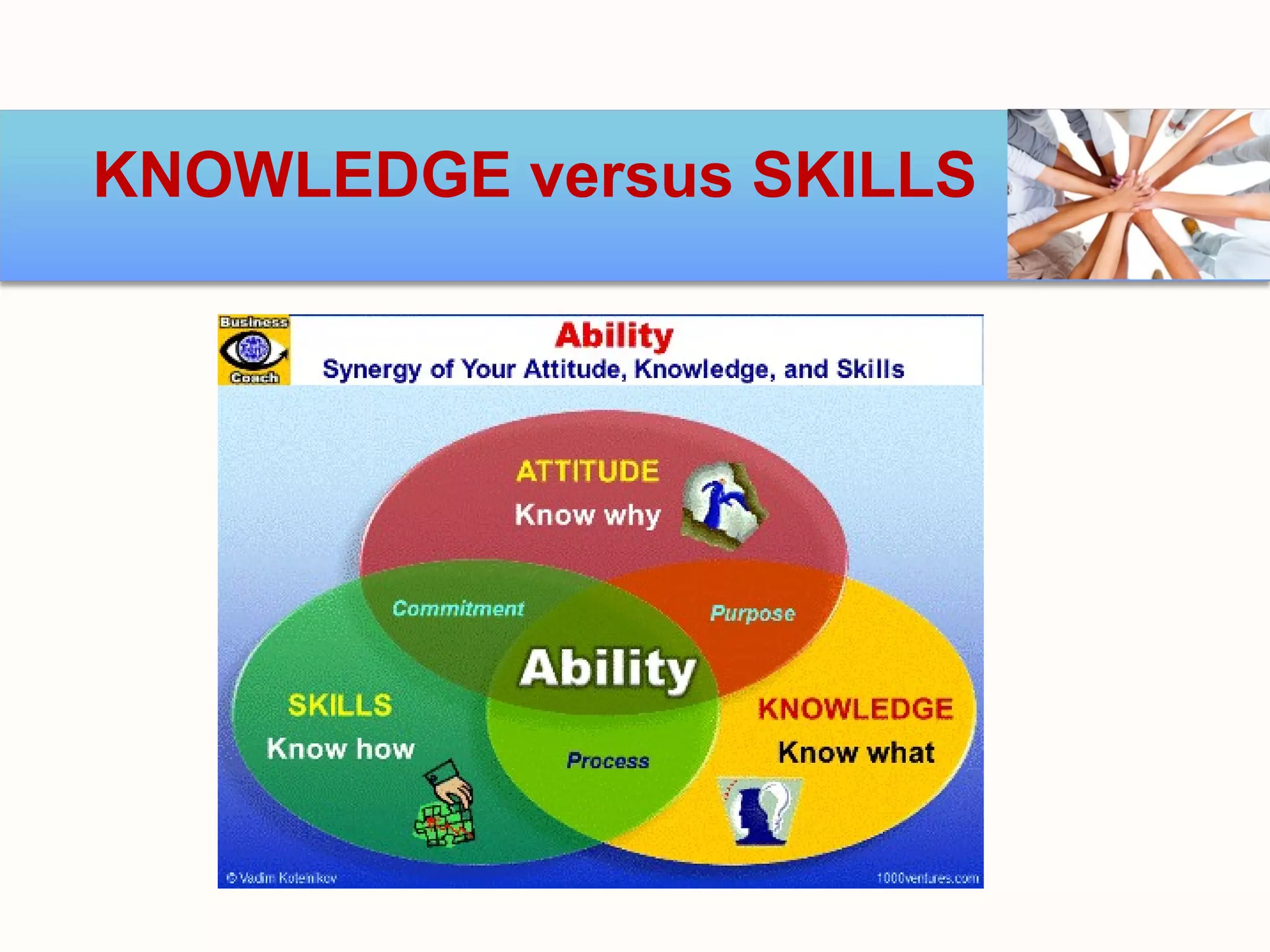
KNOWLEDGE versus SKILLS
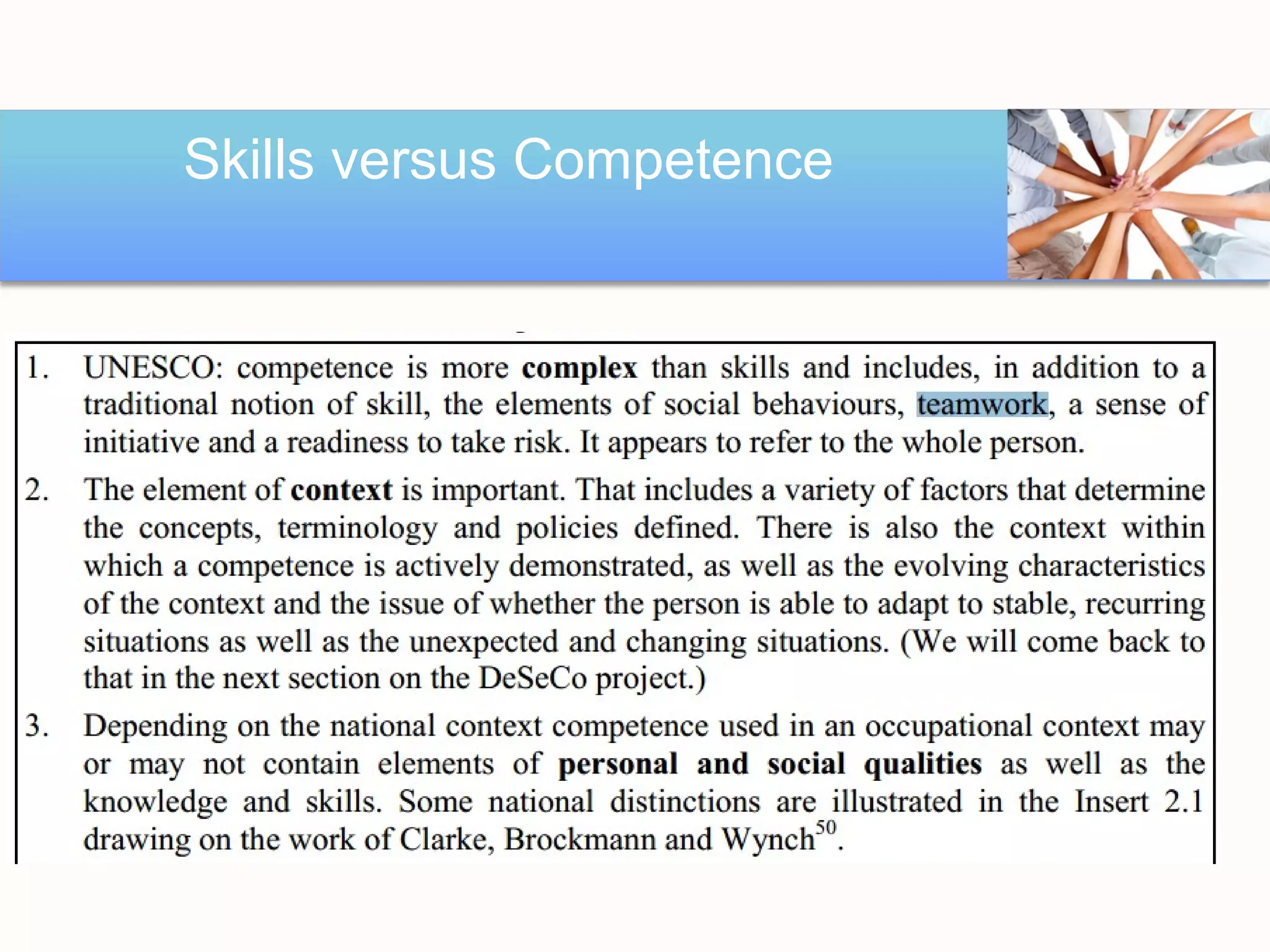
Skills versus Competence
The shift from Topic based curriculum to
     Competence based curriculum

• change of paradigm from teacher-centered to student-centered
• revision of the traditional methodologies and roles of teachers
• teachers are increasingly becoming facilitators of learning
• organizing teamwork, managing classroom activity
• more of T time is likely to be spent supporting individuals and less on
whole class teaching
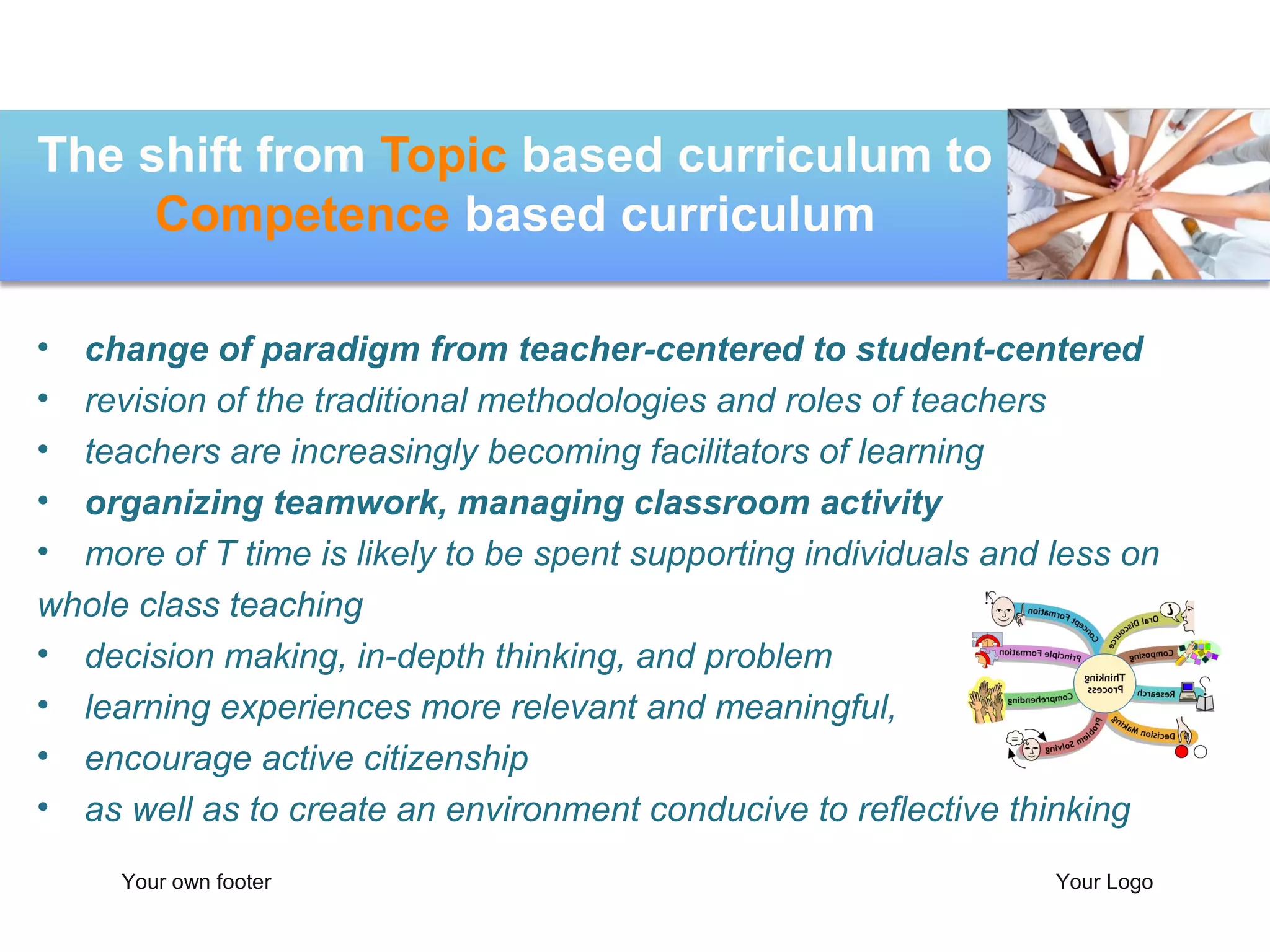
• decision making, in-depth thinking, and problem
• learning experiences more relevant and meaningful,
• encourage active citizenship
• as well as to create an environment conducive to reflective thinking
     Your own footer                                              Your Logo
The countries that seem to be particularly
        successful in implementing policies
       of cross-curricular key competences:

                       Efficiently use the following instruments:
•   Setting appropriate curriculum goals and standards;
•   Developing teacher competences;
•   Shaping school practices:
•   Giving appropriate feedback through assessment and evaluation.
•   The application of effective competence development oriented
•   Innovative learning environments
•   Intensive use of ICT facilities
•   Frequent and meaningful project work and teamwork,
•   New assessment methods
•   Various individualized techniques of organizing learning
       Your own footer                                            Your Logo
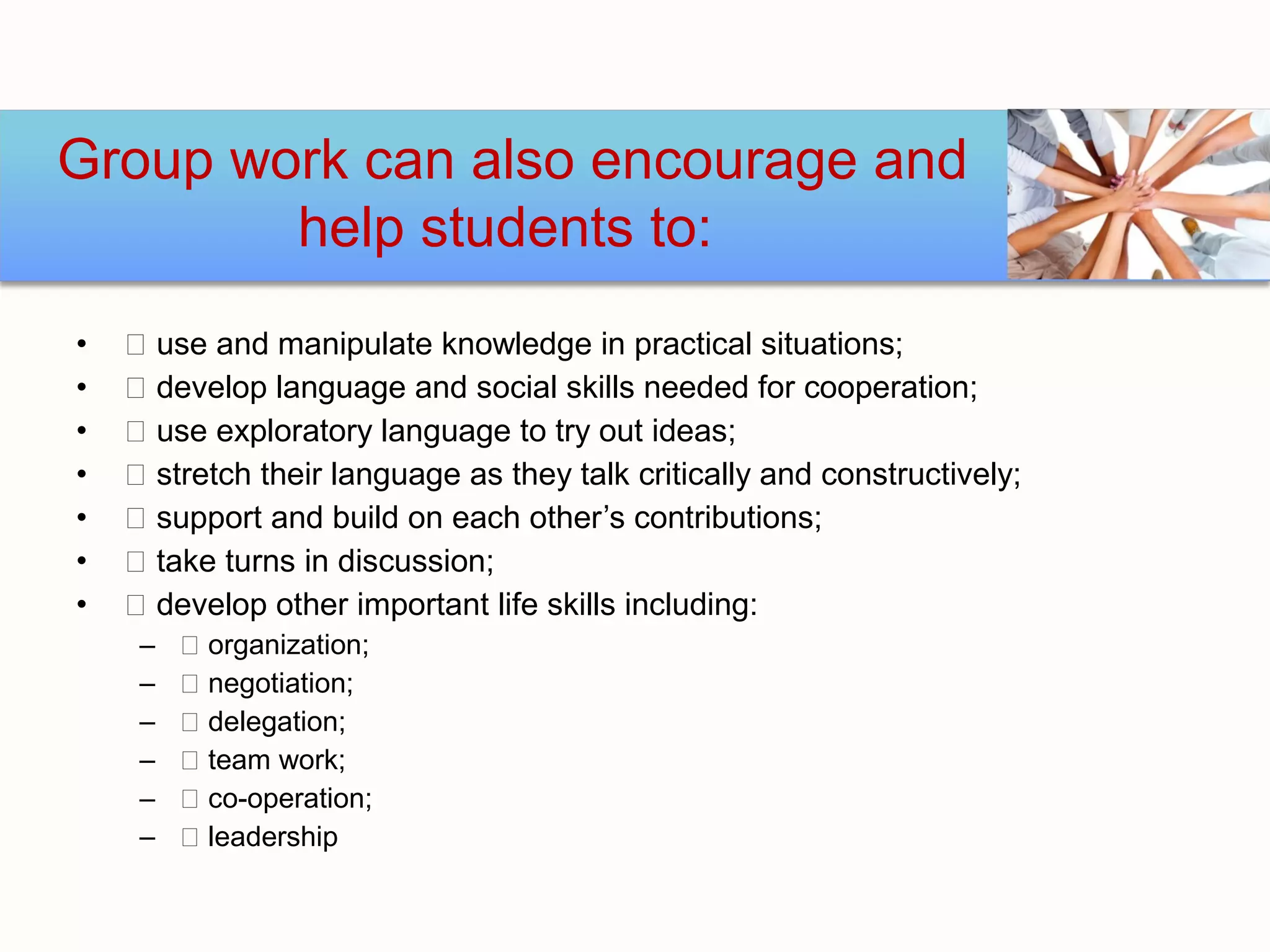
Group work can also encourage and
        help students to:
•    use and manipulate knowledge in practical situations;
•    develop language and social skills needed for cooperation;
•    use exploratory language to try out ideas;
•    stretch their language as they talk critically and constructively;
•    support and build on each other’s contributions;
•    take turns in discussion;
•    develop other important life skills including:
     –    organization;
     –    negotiation;
     –    delegation;
     –    team work;
     –    co-operation;
     –    leadership
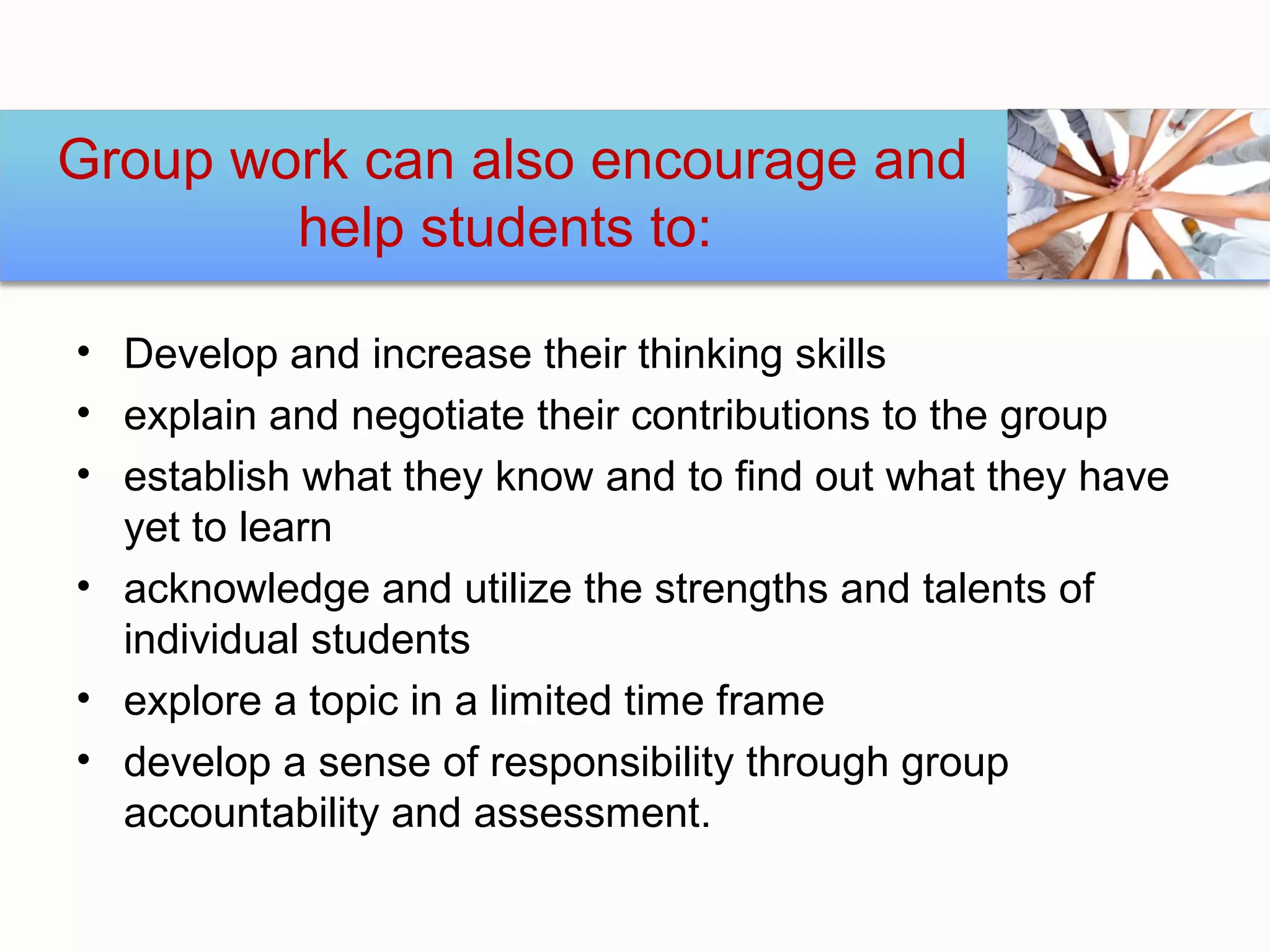
Group work can also encourage and
        help students to:

• Develop and increase their thinking skills
• explain and negotiate their contributions to the group
• establish what they know and to find out what they have
  yet to learn
• acknowledge and utilize the strengths and talents of
  individual students
• explore a topic in a limited time frame
• develop a sense of responsibility through group
  accountability and assessment.
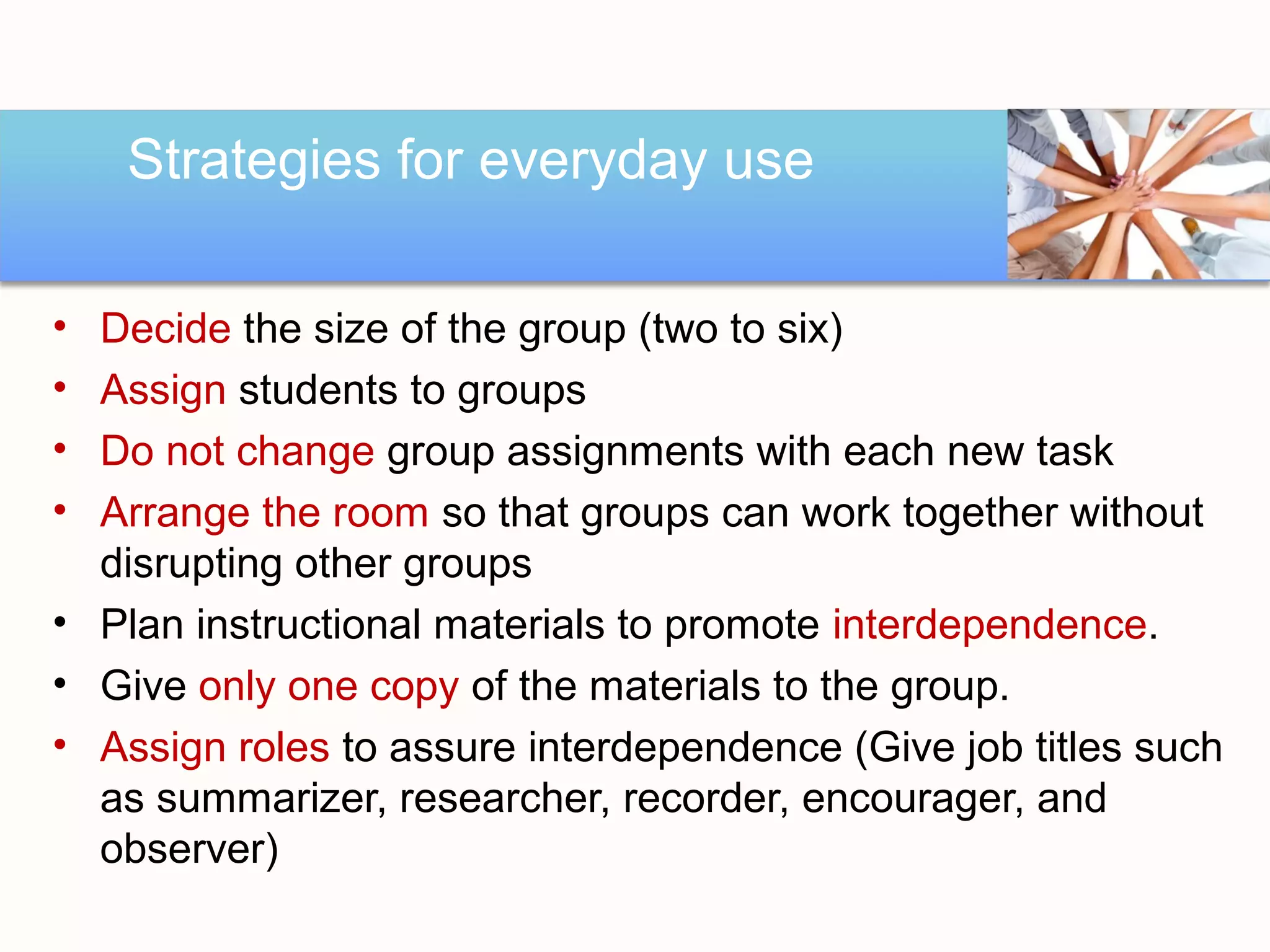
Strategies for everyday use

• Decide the size of the group (two to six)
• Assign students to groups
• Do not change group assignments with each new task
• Arrange the room so that groups can work together without
  disrupting other groups
• Plan instructional materials to promote interdependence.
• Give only one copy of the materials to the group.
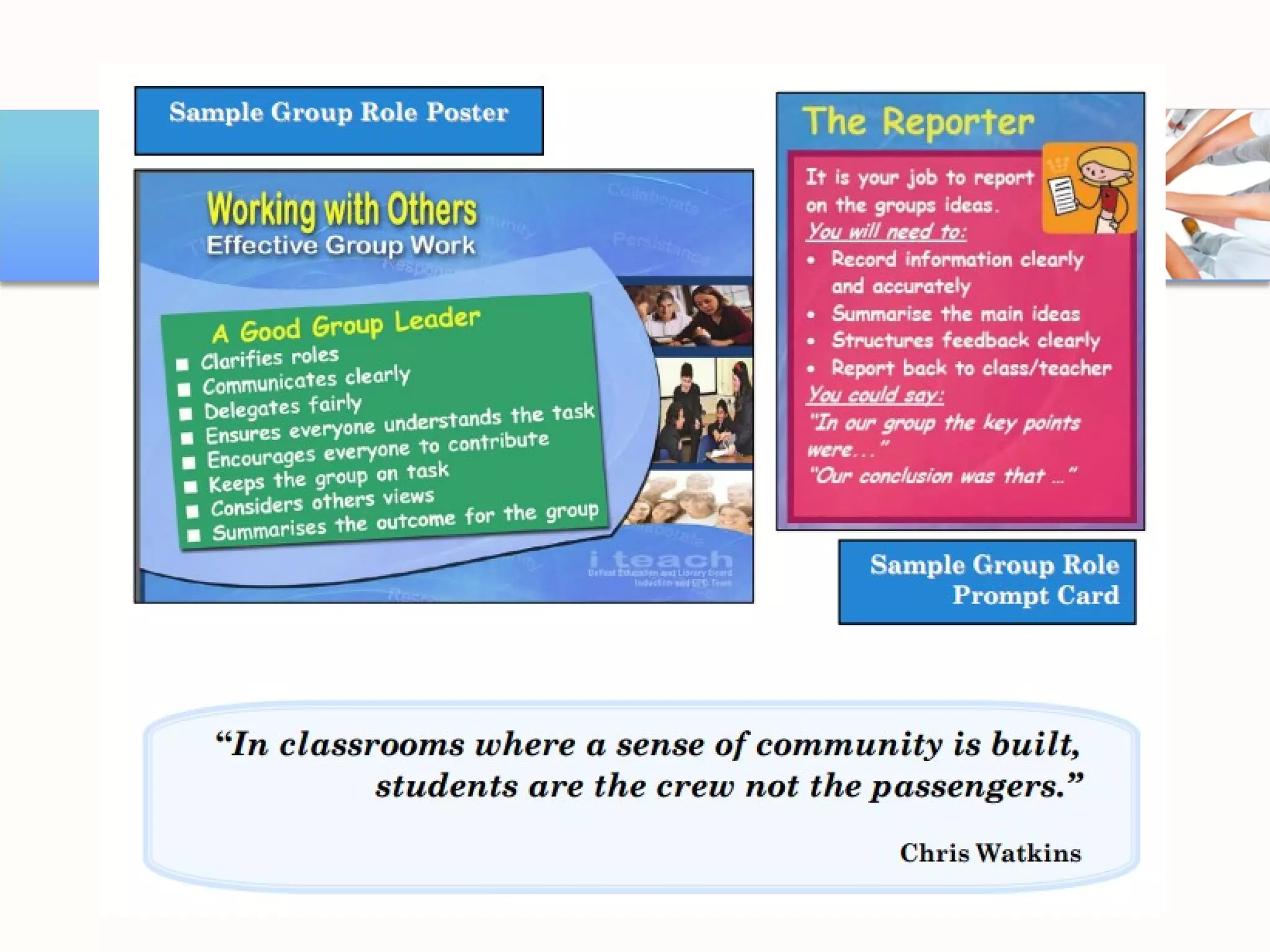
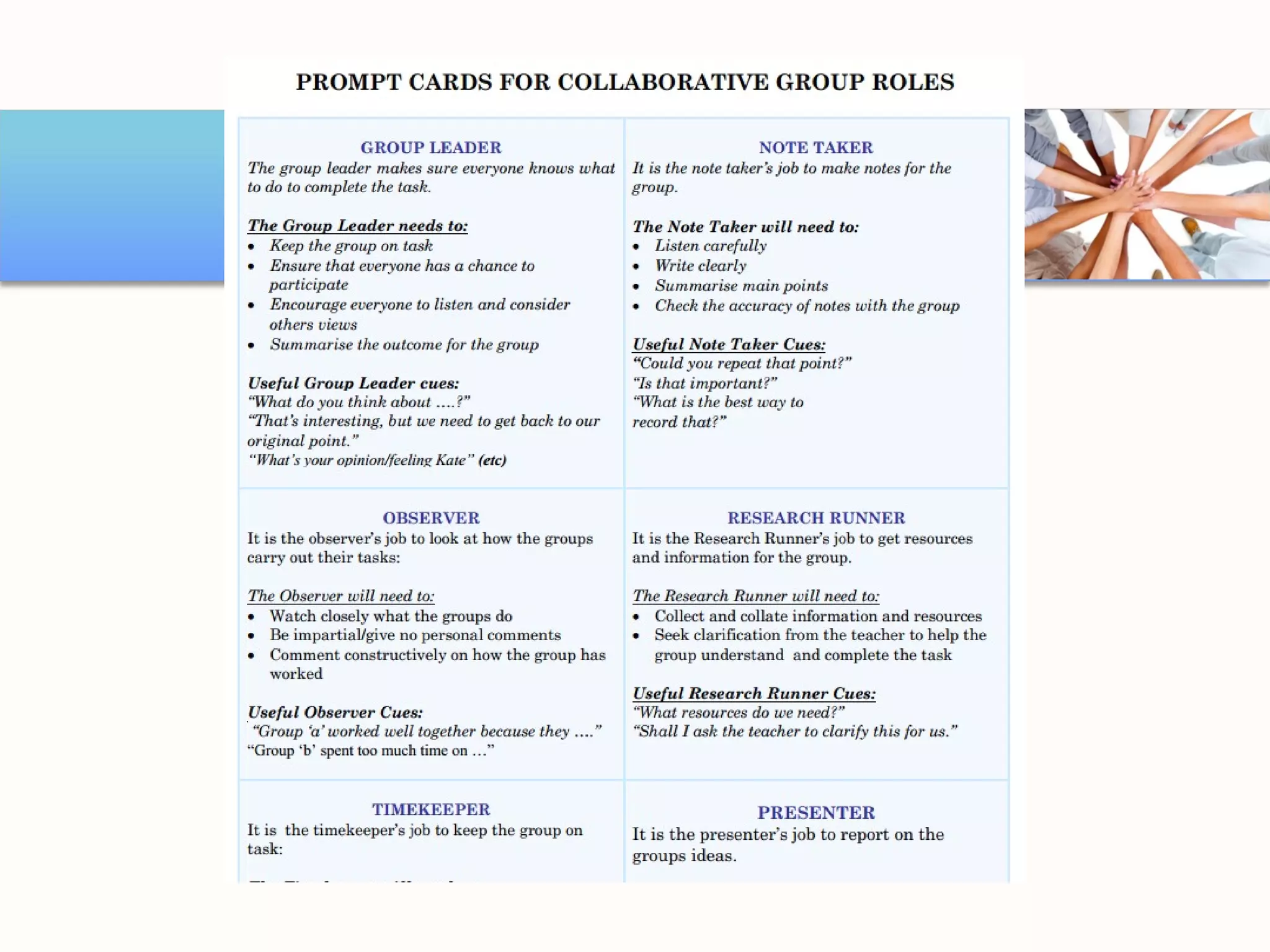
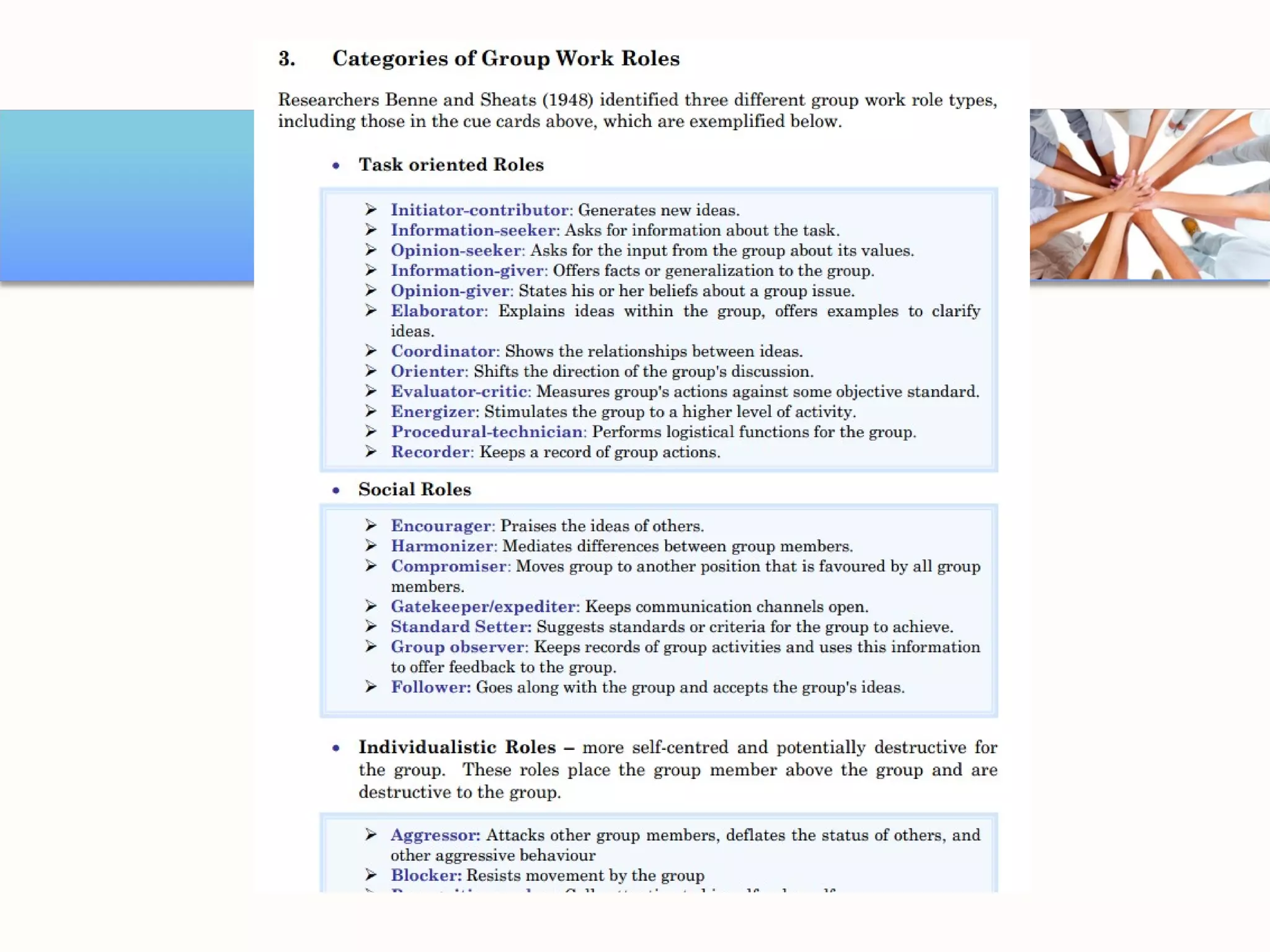
• Assign roles to assure interdependence (Give job titles such
  as summarizer, researcher, recorder, encourager, and
  observer)
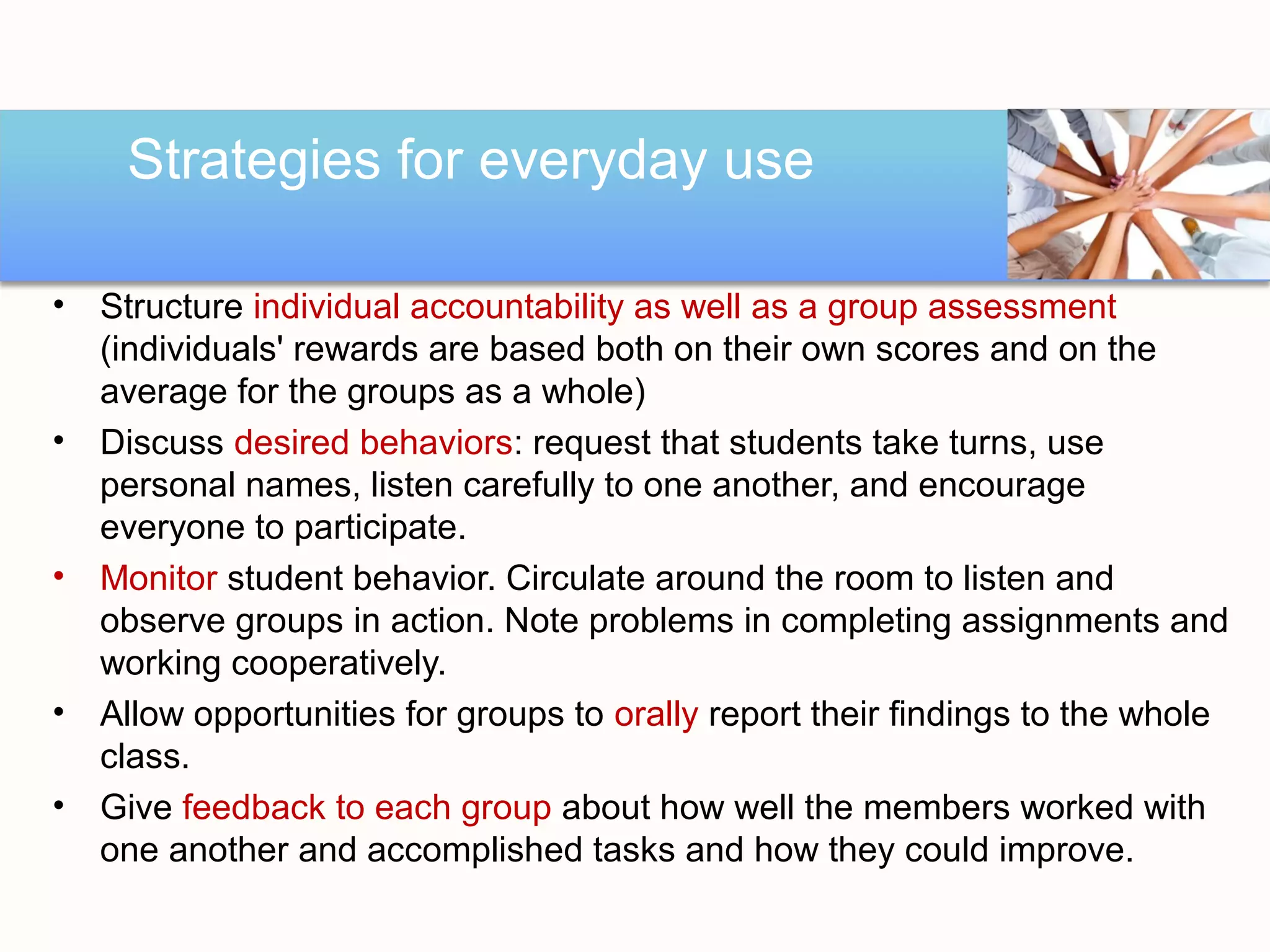
Strategies for everyday use

•   Structure individual accountability as well as a group assessment
    (individuals' rewards are based both on their own scores and on the
    average for the groups as a whole)
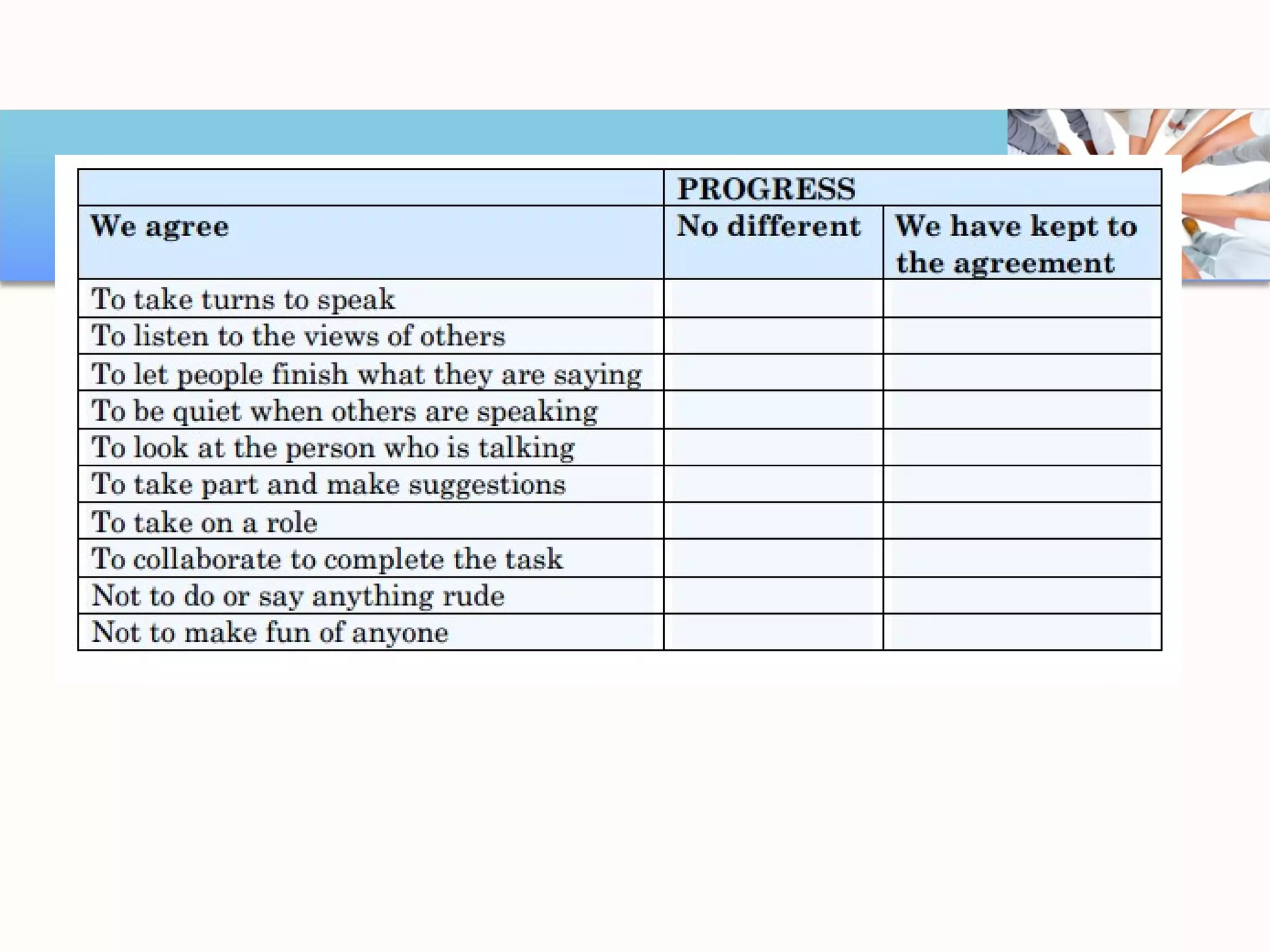
•   Discuss desired behaviors: request that students take turns, use
    personal names, listen carefully to one another, and encourage
    everyone to participate.
•   Monitor student behavior. Circulate around the room to listen and
    observe groups in action. Note problems in completing assignments and
    working cooperatively.
•   Allow opportunities for groups to orally report their findings to the whole
    class.
•   Give feedback to each group about how well the members worked with
    one another and accomplished tasks and how they could improve.
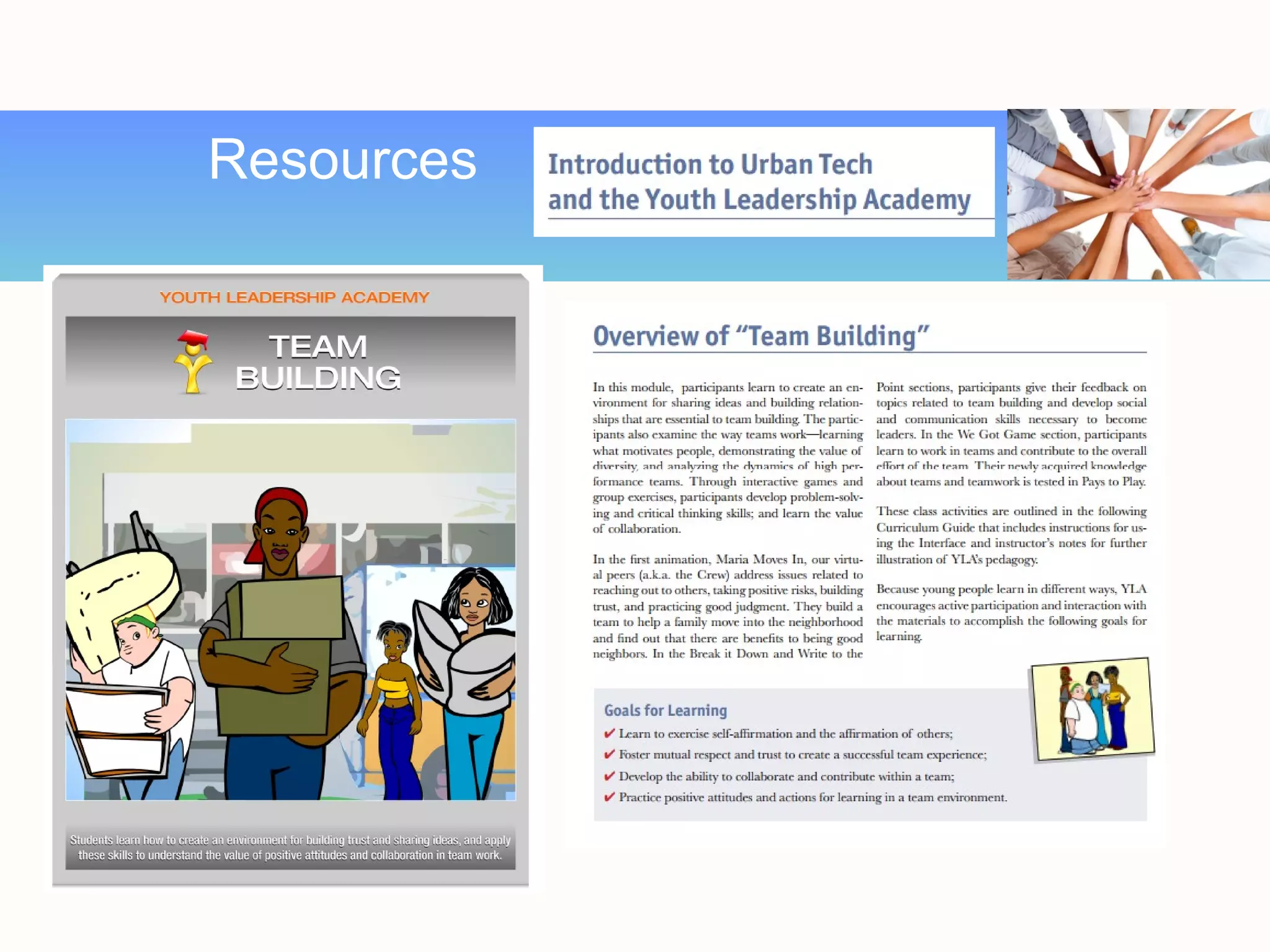
Resources
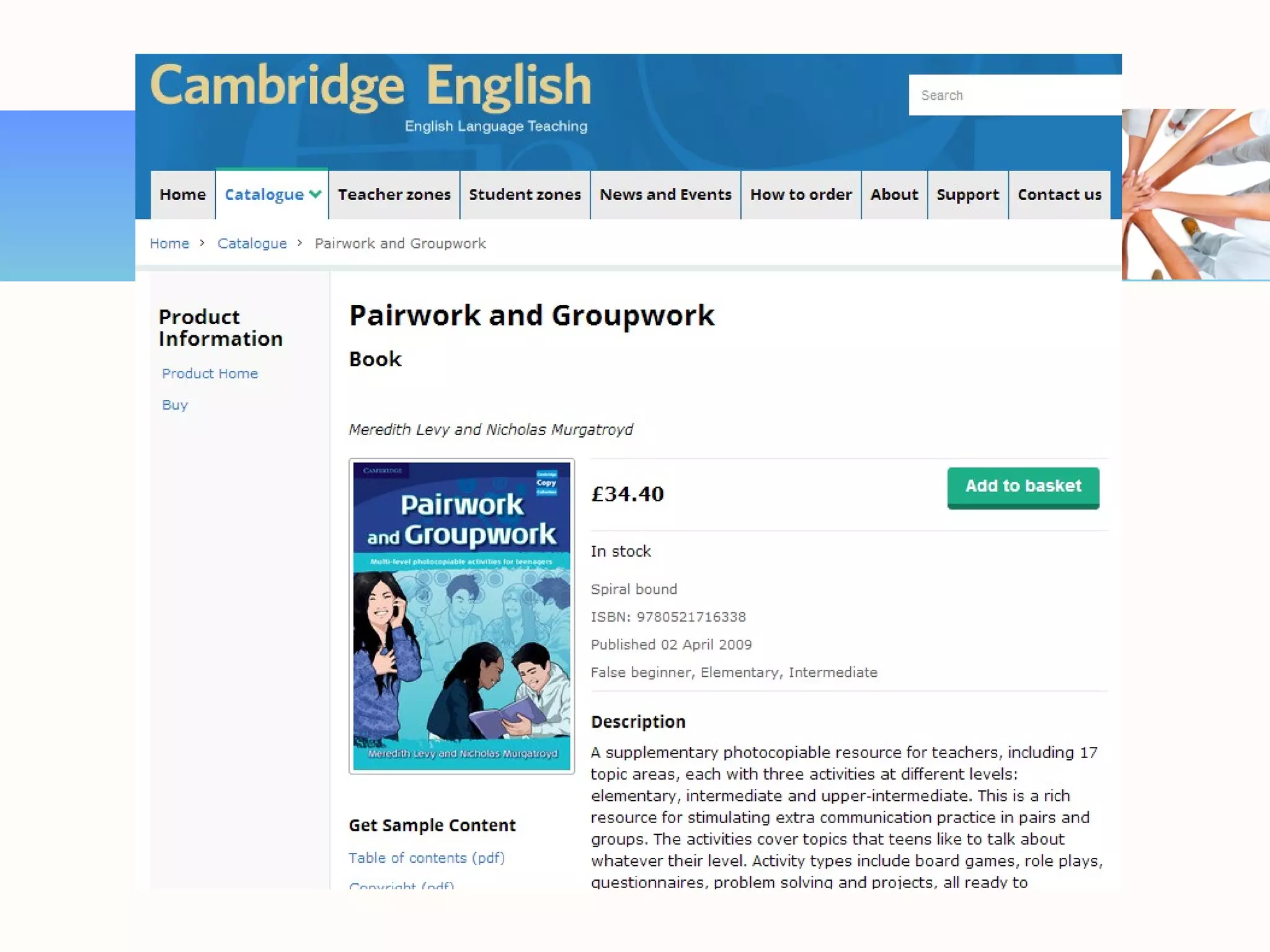
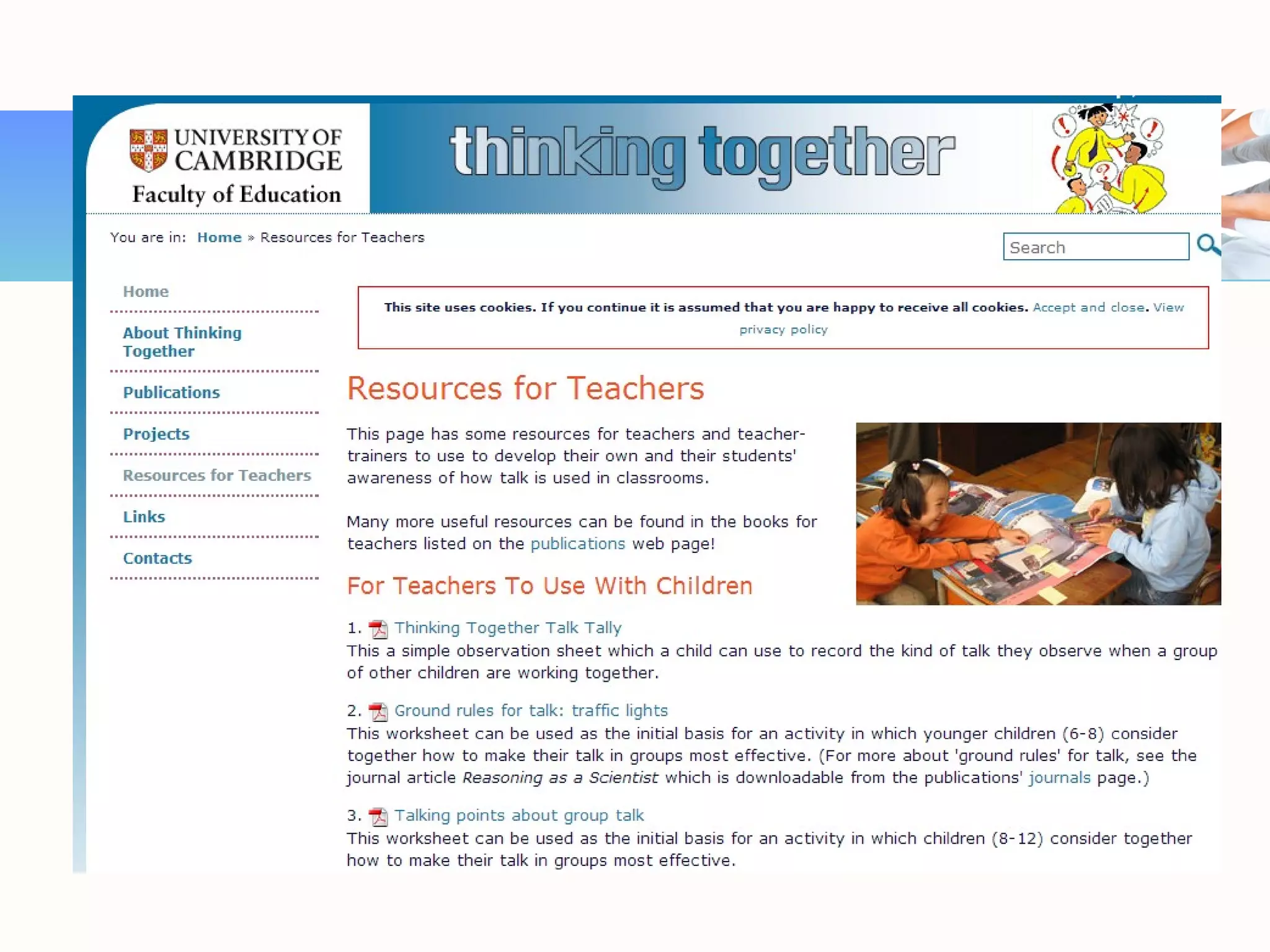
Tips from personal experience
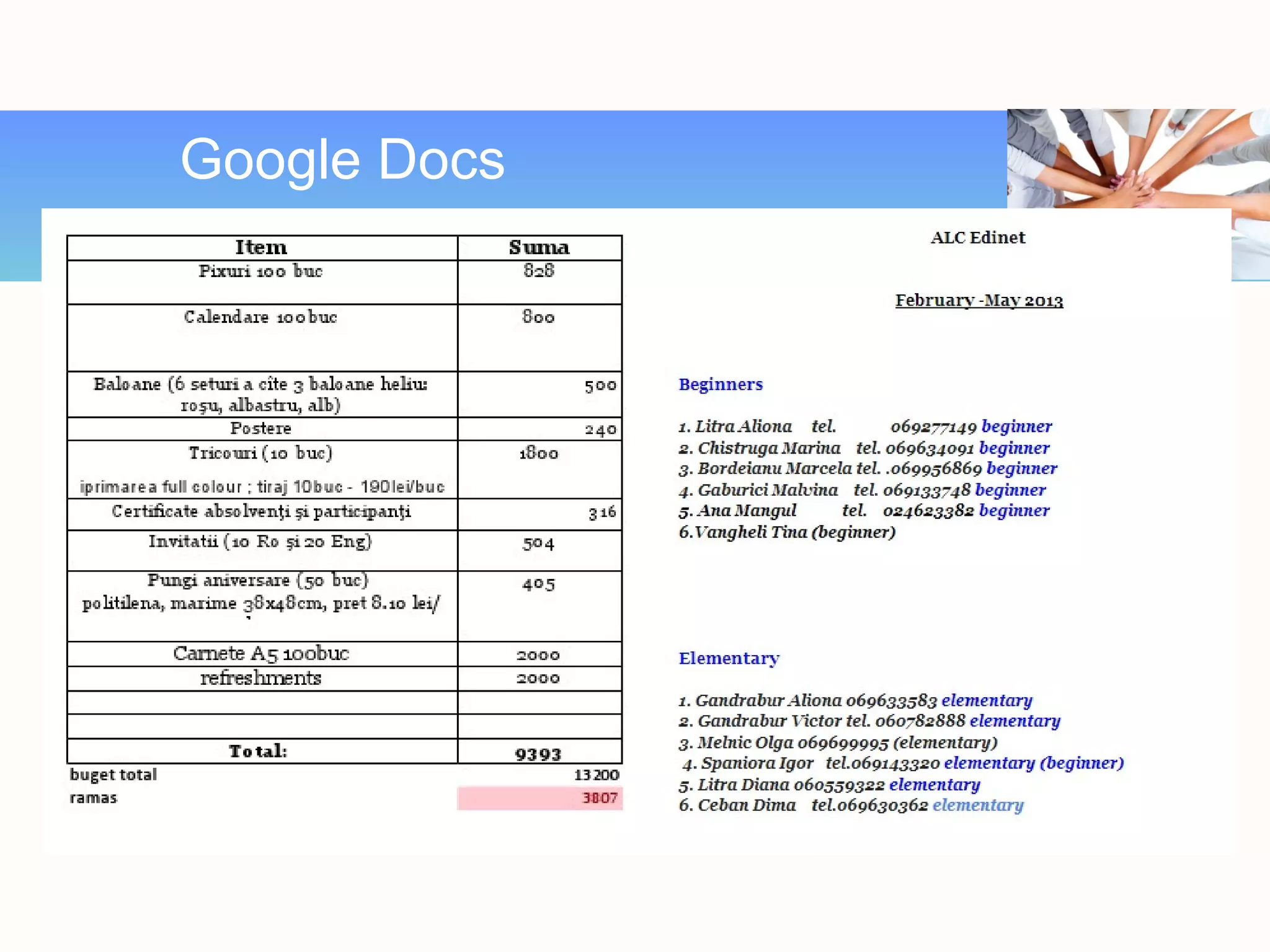
Google Docs
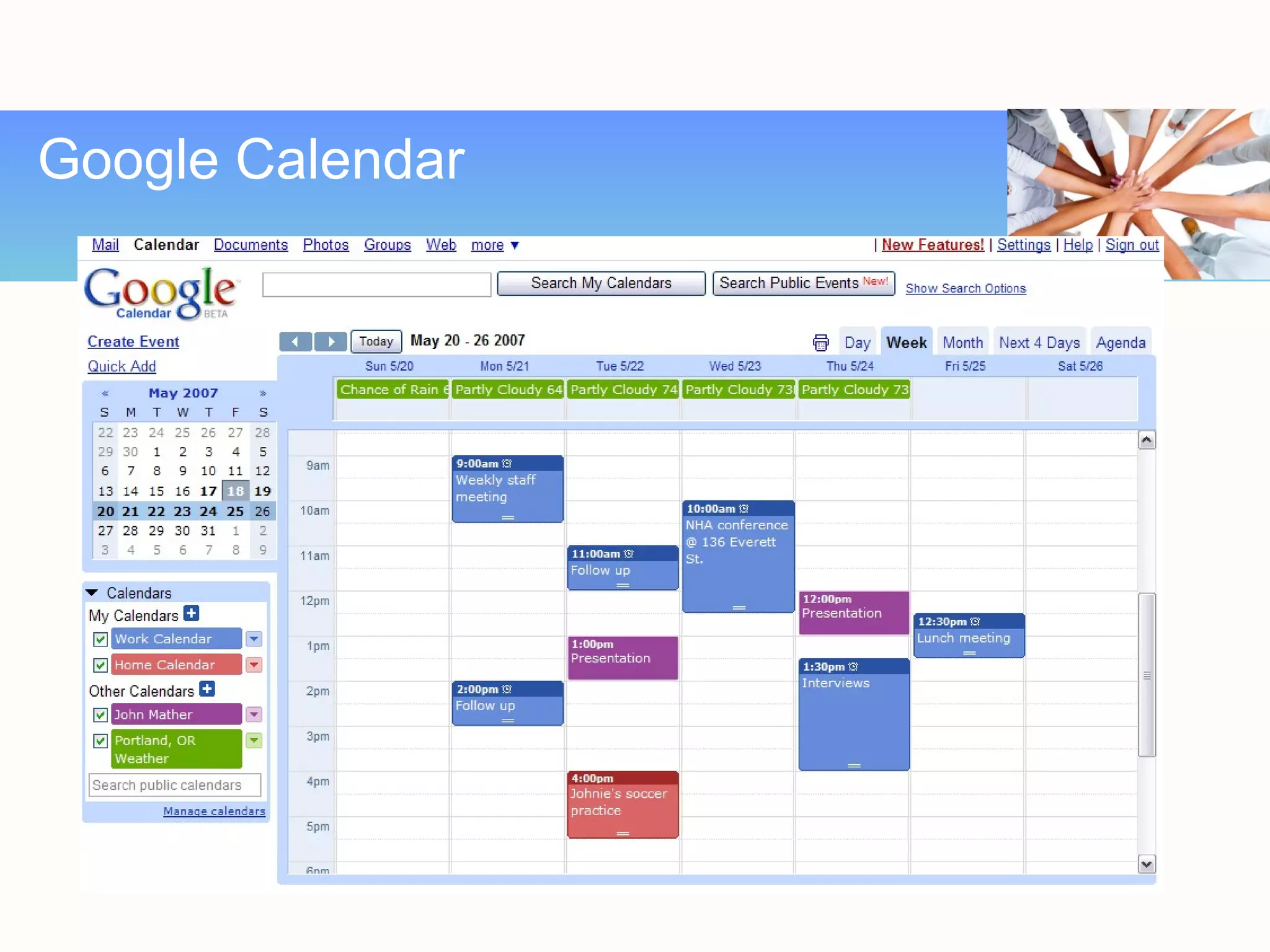
Google Calendar
THANK YOU!


             Your Logo

Working in teams groupwork

  • 1.
    Strategies to encouragestudents to work effectively in teams Daniela Munca-Aftenev, ETRC Spring 2013 School
  • 2.
    WATCH and BRAINSTORM Free writing activity How is the video connected to teaching students ?
  • 3.
    Task 1 • Workin groups of 5 • Roles: note taker, artist, Web expert, creative coordinator, content coorinator • “Best Teacher Website” • Design the website: layout, structure, components • Create a name • How the website will improve the overall collaboration of teachers with students and school administration
  • 4.
    Task 2 • Workin 2 teams per 5 members • 2 Evaluators who will observe the teams • Build the tallest structure possible using the materials provided
  • 6.
  • 7.
  • 8.
    The shift fromTopic based curriculum to Competence based curriculum • change of paradigm from teacher-centered to student-centered • revision of the traditional methodologies and roles of teachers • teachers are increasingly becoming facilitators of learning • organizing teamwork, managing classroom activity • more of T time is likely to be spent supporting individuals and less on whole class teaching • decision making, in-depth thinking, and problem • learning experiences more relevant and meaningful, • encourage active citizenship • as well as to create an environment conducive to reflective thinking Your own footer Your Logo
  • 9.
    The countries thatseem to be particularly successful in implementing policies of cross-curricular key competences: Efficiently use the following instruments: • Setting appropriate curriculum goals and standards; • Developing teacher competences; • Shaping school practices: • Giving appropriate feedback through assessment and evaluation. • The application of effective competence development oriented • Innovative learning environments • Intensive use of ICT facilities • Frequent and meaningful project work and teamwork, • New assessment methods • Various individualized techniques of organizing learning Your own footer Your Logo
  • 13.
    Group work canalso encourage and help students to: •  use and manipulate knowledge in practical situations; •  develop language and social skills needed for cooperation; •  use exploratory language to try out ideas; •  stretch their language as they talk critically and constructively; •  support and build on each other’s contributions; •  take turns in discussion; •  develop other important life skills including: –  organization; –  negotiation; –  delegation; –  team work; –  co-operation; –  leadership
  • 14.
    Group work canalso encourage and help students to: • Develop and increase their thinking skills • explain and negotiate their contributions to the group • establish what they know and to find out what they have yet to learn • acknowledge and utilize the strengths and talents of individual students • explore a topic in a limited time frame • develop a sense of responsibility through group accountability and assessment.
  • 15.
    Strategies for everydayuse • Decide the size of the group (two to six) • Assign students to groups • Do not change group assignments with each new task • Arrange the room so that groups can work together without disrupting other groups • Plan instructional materials to promote interdependence. • Give only one copy of the materials to the group. • Assign roles to assure interdependence (Give job titles such as summarizer, researcher, recorder, encourager, and observer)
  • 16.
    Strategies for everydayuse • Structure individual accountability as well as a group assessment (individuals' rewards are based both on their own scores and on the average for the groups as a whole) • Discuss desired behaviors: request that students take turns, use personal names, listen carefully to one another, and encourage everyone to participate. • Monitor student behavior. Circulate around the room to listen and observe groups in action. Note problems in completing assignments and working cooperatively. • Allow opportunities for groups to orally report their findings to the whole class. • Give feedback to each group about how well the members worked with one another and accomplished tasks and how they could improve.
  • 23.
  • 28.
  • 31.
  • 32.
  • 33.
    THANK YOU! Your Logo