Downloaded 47 times


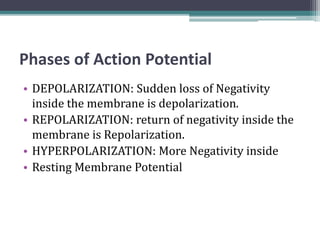
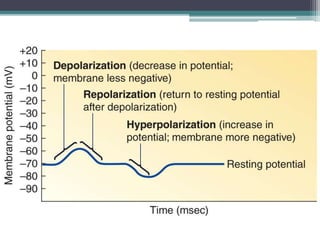
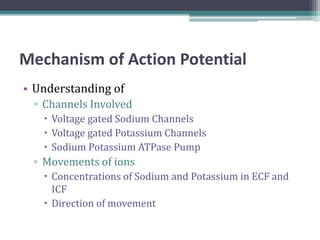
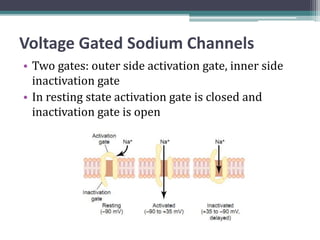
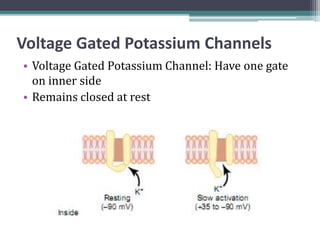
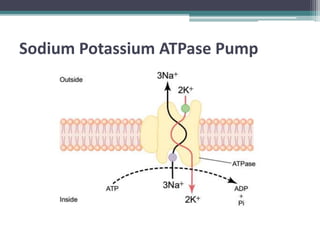
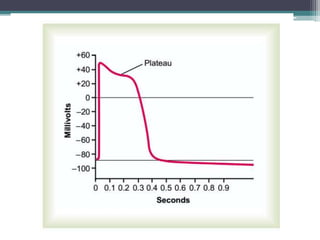

Action potential is a rapid change in membrane potential that leads to a temporary reversal where the inside becomes positive. Key properties include its abrupt onset, limited amplitude, short duration, compliance with the all-or-none law, self-propagation, and a refractory period. The mechanism involves voltage-gated sodium and potassium channels, resulting in phases of depolarization, repolarization, and hyperpolarization, with specific importance in cardiac muscle's plateau phase for prolonged contraction and refractory periods.


